

Manufacturing deals move slowly, often taking significant time to close. Manufacturing sales cycles average about 379 days from initial research to closure, meaning the buying process can extend well beyond a year. During this time, B2B content marketing must remain relevant and informative so it continues to support your target audience as they research solutions and evaluate suppliers.

Manufacturing sales cycles average about 379 days, so companies need content that supports long evaluations and the extended buyer’s journey. A strong content marketing strategy for manufacturers helps shorten timelines by building trust. High quality content and technical content marketing industrial expertise help skeptical engineers and procurement teams evaluate solutions confidently.
B2B content marketing creates valuable resources that attract business buyers, guide them through long purchasing decisions, and build authority without aggressive selling. For manufacturers, this often includes technical documentation, manufacturing whitepaper marketing, B2B case study marketing industrial examples, and educational blog posts written for engineers, procurement specialists, and operations managers.
Ninety-seven percent of content marketers now maintain formal content marketing strategies. This is not a coincidence. Content marketing success happens because it matches how modern buyers research products and suppliers.
97% of B2B marketers now maintain documented strategies. Manufacturers benefit from the same approach because buyers prefer reviewing informative content, specifications, and technical insights independently before contacting the sales team.

A strong manufacturing blog strategy helps buyers evaluate solutions at their own pace while moving through the marketing funnel.
Manufacturing content marketing differs significantly from consumer marketing. Industrial brands are not chasing viral trends or social media hype. Instead, manufacturers answer technical questions, demonstrate deep knowledge of a buyer’s production environment, and provide valuable content that justifies premium pricing.
Examples include white papers on material science, B2B video marketing manufacturing demonstrations, and detailed case studies that include real performance metrics. These content assets perform the educational work that the sales team previously handled manually.
More than 41% of marketers measure content marketing success through sales influence, according to recent marketing statistics. For manufacturers, this means identifying which content assets influence purchase decisions and contribute to lead generation. Tracking these insights helps companies understand how content supports buyers and drives measurable business outcomes.
You cannot sell a CNC machine the same way you sell sneakers. Manufacturing purchases involve multiple stakeholders with different priorities. A production manager cares about efficiency, while a CFO focuses on ROI and long-term cost savings. Your content strategy must address both perspectives.
Traditional advertising interrupts buyers, while content marketing educates them. When someone researches a $200,000 piece of equipment, they value technical documentation, comparison guides, and industry insights rather than promotional advertising.
Manufacturers possess deep technical expertise. Turning that knowledge into thought leadership manufacturing content creates a competitive advantage and builds trust with potential customers.
Manufacturing marketers face a unique challenge. Buyers often spend months evaluating options before making a purchase decision. Content marketing solves this challenge by remaining present throughout the entire customer journey. A blog post, white paper, or case study created months earlier can still influence purchasing decisions later in the buyer’s journey.
The economics also work in favor of manufacturers. Once created, content assets continue generating more leads and attracting potential clients over time. Unlike paid advertising campaigns, these resources improve search visibility and generate ongoing lead generation opportunities.
Because of this long-term value, content marketing for industrial companies is widely considered a relatively low-cost channel within the overall marketing mix.
No buyer wants to risk their reputation by selecting an unknown supplier for critical industrial equipment. Research shows that 66% of B2B buyers expect tailored messaging across brand interactions. Buyers often compare multiple suppliers and review success stories, research reports, and valuable data before making a decision. This highlights the importance of B2B segmentation. Quality content positions your company as the safe choice.

When your content marketing efforts consistently demonstrate expertise and provide industry insights, buyers develop confidence long before speaking with the sales team. This trust-building happens at scale. One strong case study can influence multiple deals simultaneously.
Remember those 379-day sales cycles? Manufacturers can reduce this timeline by establishing strong early brand interactions through B2B content marketing. Content helps pre-qualify leads. By the time prospects contact your sales team, they have already consumed blog posts, white papers, videos, and other content assets.
They understand your capabilities. They recognize your expertise. In many cases, they have already decided that your company is a strong contender. This allows the sales team to focus on closing opportunities rather than basic education.
Manufacturing executives value marketing strategies that produce measurable results. One reason content marketing success continues growing is that performance can be tracked through valuable data and lead generation metrics.

For example, email marketing delivers an average ROI of 36:1, meaning companies generate approximately $36 in revenue for every $1 invested. Beyond ROI, content marketing produces compounding returns. A blog article published today can continue generating leads years later. A well-planned manufacturing blog strategy can attract potential customers and improve search visibility long after publication.
Manufacturers can measure results by tracking leads from content distribution channels, analyzing engagement with landing pages, and comparing closing times between informed prospects and cold leads.
Manufacturing content marketing requires a different approach than consumer marketing. Industrial buyers are not driven by impulse purchases or emotional messaging. Instead, they require technical knowledge and performance data that justify significant capital expenditures.
Effective B2B content types manufacturing companies use include technical guides, white papers, research reports, and thought leadership content. Understanding these differences prevents manufacturers from investing in tactics that succeed in consumer markets but fail in industrial markets.
Consumer purchases happen quickly, but B2B manufacturing deals often extend across quarters or even years. Because of this extended buyer’s journey, manufacturers need content assets that remain useful throughout long evaluation periods. Evergreen valuable content helps prospects research solutions while building confidence in your expertise.
A comprehensive guide explaining how to select industrial valves can remain useful for years, while a short article covering temporary industry news quickly becomes outdated.
Large manufacturing purchases rarely involve a single decision maker. Content must address engineers, plant managers, procurement specialists, and financial executives simultaneously. Each stakeholder evaluates a purchase differently.
Engineers need technical specifications. Financial leaders want ROI calculations. Plant managers require installation and training information. Creating multiple content types tailored to each buyer persona ensures that your content strategy supports different audiences throughout the buyer’s journey.
Manufacturing buyers respect substance over style. Engineers and technicians quickly recognize marketing fluff and dismiss it. Instead, they value informative content, technical explanations, and real-world performance data.
Providing detailed technical content marketing industrial resources allows manufacturers to stand out from competitors that rely on vague marketing messages. This level of expertise strengthens thought leadership and builds trust with potential customers.
Not all content formats work equally well for manufacturers. Companies need formats that handle technical complexity, build credibility, and provide the detailed information business buyers demand.
Focus on content formats that consistently generate qualified leads and support B2B manufacturing lead generation content strategies.
White papers remain one of the most powerful tools in B2B content marketing for manufacturing. They allow companies to explore technical topics in depth while positioning themselves as industry authorities. Buyers often exchange contact information for valuable content that solves real technical challenges.
Effective manufacturing whitepaper marketing focuses on industry challenges, emerging technologies, and process improvements supported by original research.
Nothing convinces skeptical buyers like documented success stories. Case studies provide third party validation and demonstrate how a solution performs in real production environments. They answer the critical question every prospect asks: "Will this work for us?"
Structure case studies around the customer’s challenge, the implemented solution, and measurable results supported by valuable data.
Check out how we helped a B2B industrial distributor achieve 3x revenue growth for an example of compelling case study storytelling.
Blogs answer the questions potential customers are actively searching online. Each article targets specific search queries related to your industry, products, or technical processes. Over time, a strong manufacturing blog strategy builds a library of high quality blog posts that attract organic traffic.
Educational topics perform better than promotional ones. For example, a guide explaining how to select the right industrial lubricant will usually outperform a promotional article about a specific product. Consistency matters. Publishing a few well-researched articles each month produces stronger results than frequent low-quality posts.
For manufacturers in specialized niches, learn how to create compelling content even in "boring" industries.
Manufacturers can combine several visual formats to explain complex products and generate qualified leads. Video content helps demonstrate equipment performance, installation processes, and maintenance procedures in real production environments, making technical concepts easier to understand.
Webinars allow companies to deliver educational presentations, share industry insights, and capture contact information from interested prospects who are often highly qualified leads. Infographics simplify complex manufacturing data by presenting technical information through clear visual formats that decision makers can quickly review and share internally. Using these visual formats together helps manufacturers communicate technical value more clearly while supporting engagement and lead generation.
Random content creation wastes resources. Manufacturers need systematic strategies aligned with clear business objectives. Your content marketing strategy determines what content to create, which target audience to reach, and how success will be measured.
Content marketing must support measurable business goals. Companies may focus on entering new markets, launching new products, or increasing lead generation.
Setting clear targets helps measure content marketing success and align marketing efforts with the goals of the sales team.
Manufacturing marketers cannot rely on generic buyer personas. You need detailed insights into purchasing agents, engineers, and operations leaders. Each role has unique concerns and priorities.
Interviewing existing customers and analyzing industry discussions helps uncover common pain points and valuable content ideas.
For manufacturers targeting industrial buyers, explore proven strategies for reaching B2B industrial audiences.
Different types of content support different stages of the purchasing process. Early-stage prospects research problems and solutions. Mid-stage prospects compare alternatives. Late-stage prospects need proof and reassurance before committing.
Consistency matters more than volume in B2B content marketing. Planning a manufacturing content calendar helps companies organize topics, assign responsibilities, and maintain consistent publication schedules. Balance different content types such as blog posts, white papers, videos, and case studies.
Timing matters. Learn when to publish content for maximum visibility in your industry.
Producing high-quality content requires investment. Manufacturers should budget for writers, designers, and video production while leveraging in-house expertise. Engineers often possess valuable technical knowledge that can become powerful content assets.
Promotion is also essential. Creating content is only part of the process. Content distribution channels must be used effectively to reach the right business audience.
AI-powered marketing tools have become a major priority for many companies. Research shows that 45% of B2B marketers plan to increase investment in AI tools by 2026, helping teams scale content creation and improve productivity.

Following established best practices helps manufacturing companies avoid common mistakes and achieve results more quickly. Many industrial companies struggle with content marketing because they publish inconsistent content or focus on the wrong topics. By applying proven strategies used by successful manufacturing marketers, companies can build a more predictable and scalable content program.
Manufacturing marketing requires a balance between technical accuracy and clear communication. Buyers in industrial sectors expect reliable information backed by data, real-world experience, and credible expertise. When companies follow structured content practices, they create valuable resources that build trust with potential customers and strengthen long-term visibility in search engines.
One of the most important principles in manufacturing content marketing is prioritizing quality over quantity. A single well-researched guide, case study, or whitepaper can generate leads for years, while multiple low-value posts rarely deliver results. Industrial buyers expect accurate high quality content supported by credible sources and original research.
Well-developed blog posts or technical resources that address real challenges provide valuable content for engineers, procurement teams, and decision makers. Investing in thorough research and expert review ensures accuracy while strengthening authority and trust among potential customers evaluating industrial solutions.
Manufacturing content performs best when it demonstrates real outcomes instead of general claims. Industrial buyers prefer evidence such as case studies, visual demonstrations, and measurable results that show how solutions work in real environments. Photos, diagrams, and screenshots help simplify complex systems and create clearer understanding for multiple audiences, including engineers and decision makers.
Case studies and real-world examples also highlight success stories, helping manufacturers present credible industry insights. This type of quality content builds trust with other businesses while addressing common pain points buyers experience during research. When prospects see verified results supported by data, they are far more confident in evaluating and selecting the right manufacturing solution.
Even the most informative content cannot generate results if potential buyers cannot find it. Search engine optimization plays a critical role in manufacturing content marketing because many industrial buyers begin their research with online searches.
Effective SEO begins with keyword research. Manufacturers should identify the search phrases their potential customers actually use when researching equipment, components, or services. Tools such as Google Keyword Planner, Ahrefs, or SEMrush can help identify realistic search opportunities within specific industrial niches.
Once relevant keywords are identified, they should be incorporated naturally into headings, titles, and body text. Overusing keywords or inserting them awkwardly can harm readability and search performance. Instead, keywords should appear in a way that supports clear communication while signaling relevance to search engines.
Internal linking also helps improve search visibility. Linking related articles, case studies, or product pages allows search engines to better understand the structure of the website and the relationships between topics. Over time, this structured content network improves the likelihood of ranking for valuable industry keywords.
Industrial professionals often have limited time to read technical materials, so content should be structured for quick understanding. Clear headings, short paragraphs, and logical sections make information easier to scan. Visual elements such as images, diagrams, and charts also improve readability and help readers identify key insights quickly.
Long resources like whitepapers should include summaries so decision makers can grasp the main points efficiently. At the same time, every piece of content should guide readers toward the next step. Clear calls to action encourage downloads, consultations, or demos while gathering useful feedback from interested prospects.
Manufacturing companies often possess valuable internal knowledge that can be transformed into effective marketing content. Engineers, technicians, and customer service teams regularly answer technical questions and identify common challenges faced by potential customers and existing customers.
Documenting this expertise helps create useful content ideas such as blog posts, troubleshooting guides, or educational resources. Sales teams also contribute insights by sharing objections raised during conversations with potential clients. Turning these insights into informative content, case studies, or comparison guides helps prospects understand solutions and move confidently through the buying process.
For manufacturers in specialized sectors, learn from research-driven approaches that prove content effectiveness.
Producing valuable content is only part of the process. Effective distribution ensures the right audience actually sees the information. Manufacturing buyers often gather in professional networks, industry publications, and search platforms where they follow industry trends and engage with content shared by other businesses.
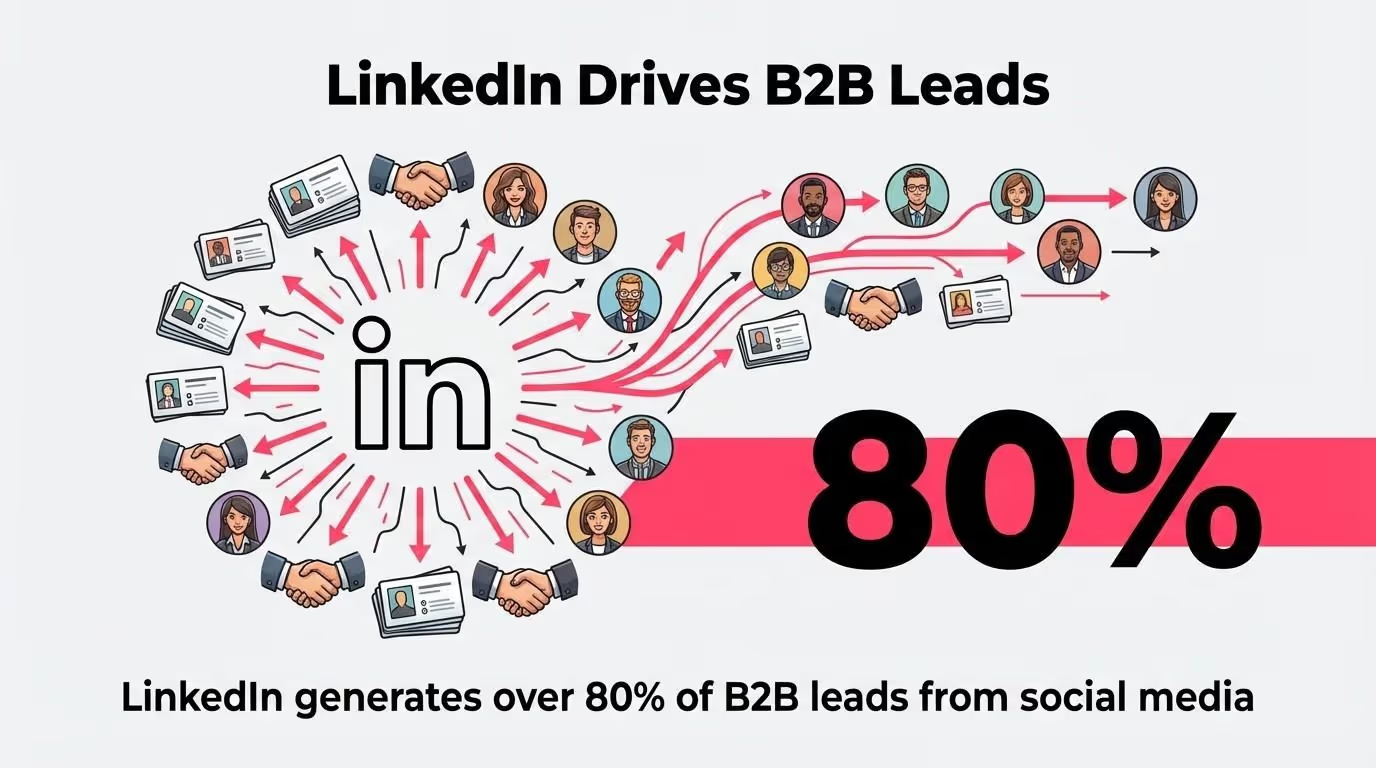
LinkedIn is one of the most important channels for industrial marketing. Companies use it to share articles, publish social media posts, promote whitepapers, and connect with business leaders across specific industries. These discussions help manufacturers demonstrate expertise and build credibility.
Email marketing also remains a powerful distribution channel. Segmented email lists allow companies to send relevant content based on industry, role, or buying stage. Combined with organic search strategies targeting specialized keywords, manufacturers can generate consistent visibility and long-term lead generation.
Manufacturing companies typically expect measurable results from marketing activities. For this reason, content marketing programs should track metrics that demonstrate real business impact rather than focusing only on vanity numbers.
Lead generation metrics are key indicators of content performance. Companies should track which articles, guides, or webinars generate form submissions and inquiries across social media platforms and other paid channels. Evaluating lead quality is also important because a smaller number of qualified prospects often delivers better results than a large volume of unqualified leads. Strong content programs help engage audiences, attract new prospects, and nurture loyal customers over time.
Revenue attribution provides deeper insight into effectiveness. CRM systems can track which content assets prospects interact with before converting, helping marketers understand how content supports multiple audiences. Engagement metrics such as time on page and scroll depth also help teams continuously optimize their content strategy.
Artificial intelligence is becoming a valuable tool for manufacturing marketers. AI platforms help with keyword research, topic discovery, and content performance analysis, allowing teams to automate repetitive tasks and work more efficiently. This is one reason most marketers are integrating AI into their workflow. In modern B2B strategies, content marketing is important for increasing visibility, improving email marketing campaigns, and supporting buyers during the consideration stage of the purchasing process.
AI can also analyze competitor content and identify gaps in industry resources. These insights help manufacturers create content that provide solutions to common challenges while improving authority and search visibility. When used strategically, AI insights support stronger building relationships with potential customers across channels such as blogs, newsletters, webinars, and industry audio platforms like Apple Podcasts.
However, AI should support, not replace, human expertise. Industrial buyers still value practical experience and industry knowledge. Combining AI insights with real-world expertise allows manufacturers to produce credible, high-quality content efficiently.
Manufacturers that invest in consistent, high-quality content marketing often gain a significant competitive advantage. By educating buyers, demonstrating expertise, and addressing real industry challenges, companies can build long-term authority in their markets.
The most effective approach is to begin with one content format and develop it consistently using specialized content strategies. Over time, companies can expand into additional formats such as videos, webinars, or research reports. Consistency matters more than speed, and a steady stream of valuable resources gradually builds a powerful content library.
Manufacturing companies that begin investing in content today will continue benefiting from the visibility and credibility it creates for years to come.