The Ecommerce SEO Agency Built for Spec-Driven, High-SKU Brands

We help ecommerce companies scale profitably by fixing the real bottlenecks: messy product data, weak catalog structure, and content that doesn’t match buyer intent.Our SEO system turns your specs, attributes, and categories into discoverability, revenue, and profitable growth — not just rankings or vanity traffic.

get your game plan

The Importance of Ecommerce SEO in the Age of AI

Why Product Data, Structure & Intent Matter More Than Ever

AI isn’t “changing SEO.” AI is exposing the brands with messy catalogs, weak product data, and generic content — and rewarding the ones with clean structure, enriched attributes, and clear relevance.

If you sell performance parts, PPE, tools, construction supplies, industrial equipment, or any product where specs do the selling, AI-powered search systems can only surface you if they can understand you. That’s why SCUBE approaches SEO differently: we optimize the parts of your catalog that machines rely on to evaluate trust, clarity, and intent.

AI didn’t make SEO obsolete. AI made bad SEO obsolete.

Brands relying on checklist audits and generic content will fade. Brands investing in structured data, clean catalogs, and intent-driven content will dominate the next era of search.

SCUBE builds SEO for the products people rely on — not the ones they impulse-scroll past.

1. Structured, Data-Driven Optimization

AI can only surface what it can understand

AI doesn’t guess — it reads. It pulls signals from your structured data, attributes, product hierarchy, metadata, and page templates. When your catalog is clean and consistent, AI understands exactly what you sell, who it’s for, and when your products should appear.

That’s why we focus on foundational clarity: tightening your category structure, enriching product attributes, standardizing metadata, and applying structured data cleanly across your templates. When your catalog speaks a consistent language, search engines interpret it correctly — and recommend it more often.

Comparison of messy versus clean data. AI can only surface what it can understand

2. Intent-Based Keyword Targeting

Winning in AI-driven search isn’t about stuffing keywords — it’s about mapping the right query to the right product, category, or content asset. We model search intent around real customer problems, compatibility and fitment needs, performance attributes, margin priorities, and revenue potential.

Every keyword we target has a function in the buying journey. Every piece of content has a job. And every job is tied to profit.

3. Authority Built Through Your Industry Ecosystem — Not Shortcuts

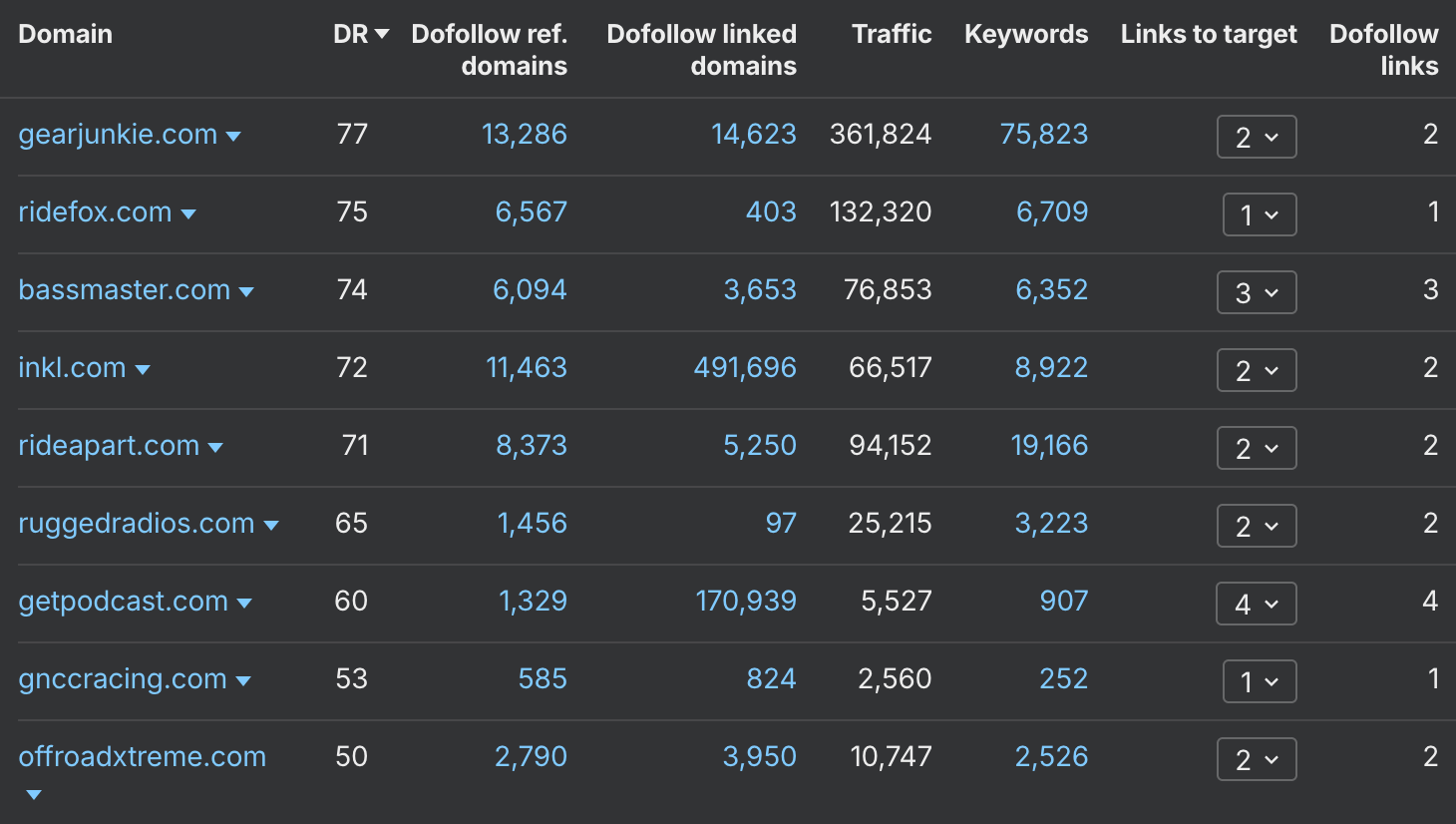
Authority in spec-driven ecommerce isn’t earned through spam links or manipulative tactics — it’s earned by being recognized within your actual industry. We build trust the way technical brands do in the real world: securing citations from manufacturers and distributors, contributing expert commentary through platforms like HARO, and earning placements on reputable industry publications and partner sites.

Our approach is practical and repeatable. We focus on links that reinforce your position in the supply chain and strengthen category authority — not vanity metrics or low-quality placements. When your brand is referenced by the companies and communities that matter, credibility increases naturally — and rankings follow.

4. Content Built From Specs, Not Storytelling

Your customers don’t buy emotions; they buy performance.

Torque, ANSI ratings, lumens, tensile strength, micron filtration, fitment, certifications — these are the details that drive conversion.

We transform your product data, documentation, and internal knowledge into category pages that convert, product pages that rank, and content that builds true topical authority. This is content engineered for clarity and commercial impact.

5. Future-Proofing Through Clean Data & Continuous Optimization

Algorithms change. AI overviews shift. Search patterns evolve.

But the brands with clean catalogs, strong structure, enriched data, fast pages, and consistent content win regardless of the update.

We adapt monthly — using real insights from your catalog, Merchant Center feed, search performance, and buyer behavior to steer strategy in real time. Your SEO doesn’t just keep up with change — it benefits from it.

Why Ecommerce SEO Works for Spec-Driven Brands

Especially When Your Catalog Does the Selling

When someone searches “best ceramic brake pads for F-150,” “ANSI-rated face shield,” or “dock lift alternatives,” they’re not browsing — they’re buying.

That’s why SEO is one of the highest-ROI channels for spec-driven ecommerce: it captures demand at the exact moment a buyer is actively trying to solve a real problem, and positions your products as the solution.

When your catalog, content, and product data communicate that performance clearly, you rank higher, convert better, and grow more profitably.

You Capture Buyers With Real Intent

Spec-driven shoppers don’t stumble into purchases. They enter high-precision queries that reveal exactly what they need — a welding helmet under a certain price, a specific exhaust for a specific engine, a lifting sling in a specific size.

These searches carry extreme buying intent. And when your catalog is structured correctly, SEO plugs your products directly into that moment of demand.

Organic Visibility Compounds Instead of Resetting

Paid ads stop, traffic drops.

SEO keeps working — and compounds over time.

With clean product data, strong categories, and relevant content, more SKUs begin ranking, more long-tail queries trigger your pages, more compatibility searches surface your catalog, and more demand arrives without paying for every click.

This compounding effect stabilizes MER, reduces blended CAC, and creates predictable growth.

SEO Builds Trust Where It Matters Most

Spec-driven buyers don’t trust brands because they “look cool.”

They trust brands that demonstrate clarity and competence — through specifications, certifications, compatibility details, performance claims, documentation, and category expertise.

Ranking well reinforces that trust across SEO, PPC, marketplaces, email, and every other touchpoint.

Visibility becomes validation.

SEO Lowers Acquisition Costs at Scale

Every category and SKU you rank for reduces your exposure to rising CPCs, auction volatility, seasonal spend swings, and platform dependency.

More rankings mean: more revenue from the same budget, more stable MER, lower CAC, and healthier long-term margins.

SEO is one of the few channels where performance improves as costs go down — the opposite of paid media.

GET YOUR GAME PLAN

Most Competitors Ignore the Fundamentals

Side by side example of a good product page that features tables, fitment, clean metadata. And a bad product page that uses generic information, unstructured specs, and missing data.

Your competitors often rely on manufacturer descriptions, thin content, poor category structure, incomplete attributes, and neglected technical SEO. The bar is low — especially in spec-driven categories where clarity is everything.

You don’t win by exploiting loopholes. You win by structuring your catalog, content, and product data better than anyone else in your space.

That’s the durable advantage SCUBE builds.

What Makes Our Ecommerce SEO Program Work

The SCUBE 3-Track System: Technical, Content & Authority

SCUBE's SEO Program
Other Agencies
Getting Started
Execution starts immediately Weeks of audits and PDFs
Fast wins in the first month Little to no execution early
SEO Strategy Foundation
Catalog-first strategy Keyword lists based on volume
Search intent mapped to SKUs, categories, and revenue Generic, repeatable playbooks
Technical SEO Approach
Ongoing technical optimization One-time audits
High-impact fixes that unlock crawl and indexation Long technical roadmaps
Content Strategy
Spec-driven category and product content Blog-heavy content plans
Built from attributes, fitment, and real buyer needs Generic "Top 10" articles
Authority & Link Building
Industry-relevant authority Low-quality guest posts
Manufacturer, distributor, and ecosystem links Link volume over relevance
Reporting & Measurement
Revenue, category visibility, and MER impact Traffic and rankings
SEO tied directly to profit Vanity metrics
Who It's Built For
High-SKU, spec-driven ecommerce Small catalogs
Products where clarity and structure sell Lifestyle or content-first brands

All Running in Parallel. All Focused on Revenue.

Most SEO programs fail because they treat SEO like a linear checklist: 

Month 1 audit > Month 2 planning > Month 3 content > Month 4 “we’ll see.”

That doesn’t work for spec-driven ecommerce. You don’t have time for 50-page audits or 6-month technical overhauls that deliver nothing.

SCUBE’s SEO program is built for speed, clarity, and catalog-scale execution. We run everything through three tracks in parallel — so you see movement fast, and momentum compounds month after month.

Technical SEO

Fix the Structure That Determines How Well Your Catalog Can Rank

Crawl & Indexation Cleanup

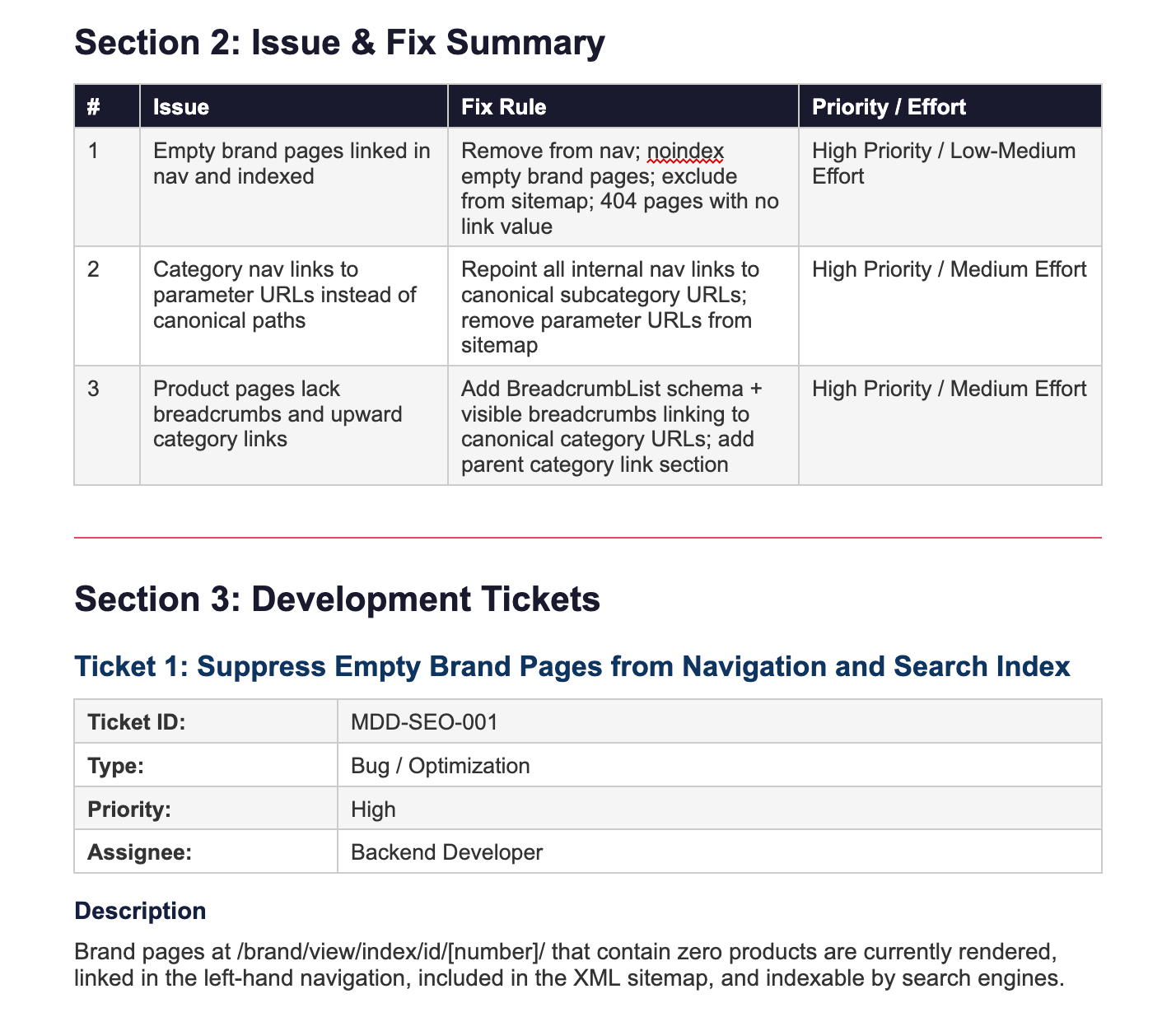
We clear the blockers that prevent your best products from being discovered — fixing crawl traps, removing duplicate or dead-end URLs, tightening indexation rules, and making sure Google spends its crawl budget on pages that can actually rank.

Catalog Architecture That Scales

We refine category hierarchies, product groupings, internal links, and URL patterns so search engines can understand your catalog the same way your customers do. No massive IA overhauls — just the structural improvements that deliver real ranking lift.

Canonicals, Redirects & Legacy Fixes

We stabilize your site by resolving variant duplication, retiring superseded SKUs, cleaning CMS-generated clutter, and making sure every signal points Google toward the version that should rank.

Performance Improvements That Matter

We target the Core Web Vitals issues that impact engagement and revenue — optimizing templates, removing heavy elements, and improving load experience where it affects buyers. No chasing perfect scores; just practical fixes where it counts.

High-Leverage Execution, Not Audits

Instead of a 50-page technical audit, we operate like engineers: fast triage, clear priorities, developer-ready tasks, and tight QA loops. We focus on the 20% of fixes that unlock 80% of the ranking potential for large, spec-driven catalogs.

Content

Turn Specs Into Rankings, Traffic & Conversions

Catalog-Driven Content Strategy

We start with your categories, product types, SKUs, and buying journeys — then map real search intent directly to your taxonomy.

High-Value SEO Assets Built From Product Data

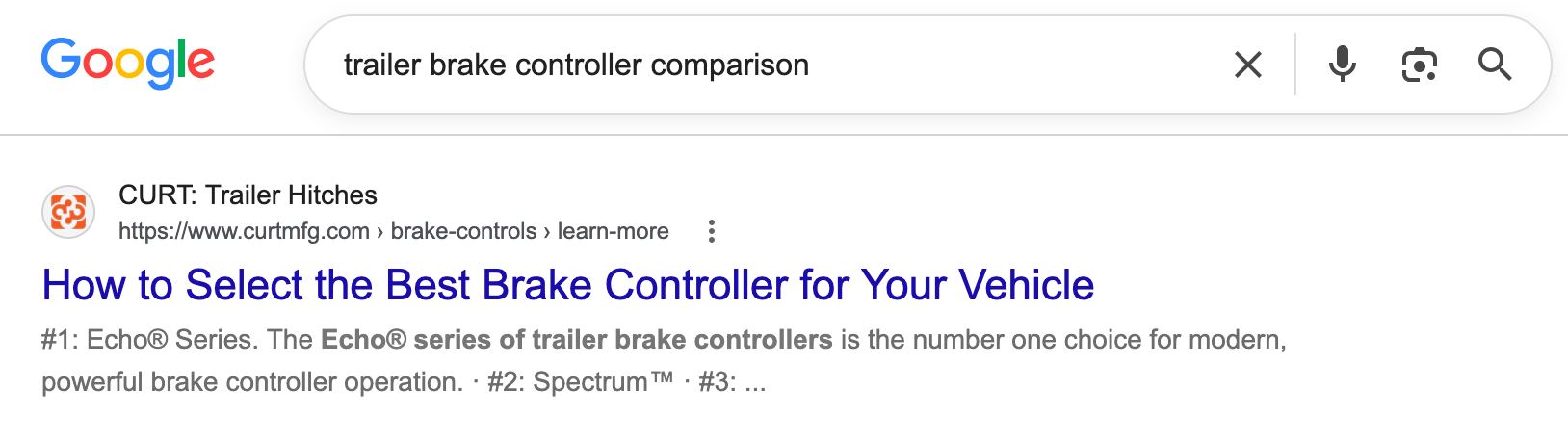
Your specs, documentation, compatibility data, and internal expertise become enriched product pages, stronger category pages, and useful content pieces — comparison explainers, feature breakdowns, how-to guidance — built to help customers choose confidently.

Search Intent Aligned to Revenue Priorities

Every page we create or rewrite has a purpose — improving discoverability, educating buyers, or supporting paid campaigns for higher conversion.

90-Day Content Sprint

We organize execution into a structured sprint: updates, rewrites, and new content that move the revenue needle first.

Human Expertise + AI Acceleration

Our process blends human judgment, AI speed, and SCUBE systems to deliver accurate, scalable content without sacrificing quality.

Authority

Earn Trust Through Expertise, Not Shortcuts

Ecosystem-Driven Authority Framework

We build authority by integrating your brand into the ecosystem where your products already live — manufacturers, distributors, retailers, and respected industry publications. These are the sources search engines trust most, and they form the backbone of our outreach strategy.

High-Quality, Real-World Link Acquisition

Authority comes from legitimate placements, not link schemes. We secure citations through manufacturer and distributor coordination, HARO and expert commentary, and guest contributions to reputable industry sites. Every link reinforces your role in the supply chain and strengthens the categories that matter most.

Strategic Targeting That Supports Category Growth

We don’t chase volume. We focus on the links that lift entire categories — improving SKU visibility, reinforcing spec-driven relevance, and increasing the credibility of your product data. Each placement is chosen to support revenue, not vanity metrics.

Consistent, Repeatable Outreach Process

Our authority work follows a structured workflow: mapping competitor ecosystems, identifying missing placements, coordinating with partners, and executing targeted outreach each month. No spam, no shortcuts — just clean, defensible authority that compounds over time.

Why This System Works

Spec-driven brands don’t need deliverables — they need outcomes. They need better rankings across their highest-value categories, cleaner data that search engines can interpret, stronger category pages that match buyer intent, and content that helps customers choose the right product with confidence.

Your customers rely on specs. Search engines rely on structure.

SCUBE aligns both — and that’s what moves revenue.

Our SEO Process

Fast to Start. High-Leverage. Built for Catalog-Scale Growth.

Most agencies spend months auditing with nothing to show for it.

SCUBE moves immediately. Our process is built for high-SKU catalogs, technical products, and brands where performance, specs, and clarity drive buying decisions. We focus on leverage, move in parallel, and create momentum from day one.

Month 1 — Strategy + Early Execution

Onboarding (First 2 Days)
Set up access, align systems, activate tracking. Fast start, no slowdown.

90-Day Strategy (First 2 Weeks)
We create a clear plan for all three tracks:

  • Technical: structural fixes and indexation priorities
  • Content: category/product copy optimization and updates + new content themes
  • Authority: ecosystem partners, manufacturers, and outreach targets
    This is how we focus on getting authentic, quality backlinks.

This isn’t a giant audit. It's a roadmap focused on getting to execution faster than most agencies.

Execution Begins Immediately
The rest of Month 1 is hands-on implementation across all tracks:

  • fixing indexation issues
  • rewriting high-impact categories or product pages
  • beginning authority mapping and early outreach to start earning backlinks

By the end of Month 1, your SEO engine is already moving.

Month 2 — Full Execution + Reporting

Month 2 is pure execution across all three tracks:

  • technical refinement (crawl paths, URL structure, schema, internal links)
  • content production (enrichment, rewrites, intent mapping, new assets)
  • authority outreach (HARO, partnerships, manufacturer/distributor links)

End of Month 2: Reporting
Clear insights tied to revenue, rankings, MER, and organic contribution.

Month 3 — Execution + Reporting

Same rhythm as Month 2 — everything moves in parallel:

  • technical adjustments based on crawl logs and indexation trends
  • continued content production
  • deeper authority placement and ecosystem outreach

End of Month 3: Reporting
Focus on progress, opportunities, and what’s compounding.

Month 4 = Start of the Next Cycle

The cycle repeats — but smarter.

90-Day Strategy (First 2 Weeks)
We evaluate the previous quarter’s performance, refine priorities, and set the roadmap for the next sprint.

Then Months 4, 5, 6 mirror Months 1, 2, 3:

  • Month 4 = Strategy + Execution
  • Month 5 = Execution + Reporting
  • Month 6 = Execution + Reporting

And every quarter, your catalog becomes more discoverable, your content more relevant, and your authority stronger.

GET YOUR GAME PLAN

Expert Help Beyond SEO

A Multi-Channel Growth Engine for Spec-Driven Ecommerce

SCUBE isn’t a generalist agency. We run a performance system centered on product data, catalog structure, and profitable acquisition across SEO, Google Shopping, PPC, CRO, feeds, and analytics.

Every service plugs into the same growth engine and amplifies the others.

Below is how each discipline supports the system.

Google Shopping / Performance Max

Feed-first management that scales profitably.
We clean and enrich your product data, fix suppressions, structure your PMax around margins and product categories, and build campaigns that merchandise your catalog the way customers actually shop.

LEARN MORE ABOUT SHOPPING & PMAX

Google Ads (Search, Shopping, PMax, YouTube)

Campaigns built around your catalog, not generic keywords.

We separate branded and non-branded demand, eliminate wasted spend, and run full-funnel acquisition designed for SKUs, attributes, and buyer intent — not slogans or buzzwords.

LEARN MORE ABOUT GOOGLE ADS

Microsoft Ads (Bing)

A high-profit extension of your Google strategy.

We replicate and enhance your Shopping and Search architecture for a channel that consistently converts in spec-driven markets.

Meta Ads (Facebook & Instagram)

Creative and audience testing made for performance-driven products.

We focus on specs, reliability, safety, and real-world use cases — highlighting the details that persuade buyers, not lifestyle theatrics.

LEARN MORE ABOUT META

YouTube Ads

Video that educates, persuades, and sells.

We build mid-funnel and remarketing sequences that highlight technical benefits, buyer considerations, and category authority — not vanity views.

Conversion Rate Optimization (CRO)

Turn high-intent traffic into higher revenue.

Using the VECTOR Model, we improve clarity, reduce friction, increase trust, and align messaging so your pages convert at the rate your traffic deserves.

Data Feed Management

Your feed is your marketing engine — we fix it and scale it.

We optimize titles, attributes, categories, variants, and compliance across Google, Microsoft, Meta, and other channels so your catalog is merchandised correctly everywhere it appears.

Reporting & Analytics

Executive-level clarity tied directly to revenue.

We deliver dashboards that show traffic, revenue, MER, contribution margin, and real insights and trends that drive performance. Our team interprets them and have a meaningful discussion with you on what to do next. 

GTM & Tracking

Clean data means clean decisions.

We audit, rebuild, and maintain your tracking across GA4, Google Ads, Meta, and your ecommerce platform so every optimization is grounded in accurate data.

What We Don’t Do

Clear Boundaries. Better Results. Zero Waste.

Great SEO and performance marketing depend on focus. We don’t try to be everything for everyone, and we refuse work that slows momentum, bloats your backlog, or distracts from revenue.

These are the lines we don’t cross — and the reasons your growth engine stays clean.

One-Size-Fits-All SEO Plans

We don’t recycle strategies, templates, or keyword lists. Your catalog, margins, and audience drive a custom plan designed specifically for your business — never a copy-paste playbook.

Vanity Keyword Chasing

We don’t chase the biggest keywords on the internet. High volume means nothing without intent. We focus on the queries tied to specs, use cases, compatibility, and revenue — the ones that actually convert.

Black-Hat or Shortcut Tactics

We don’t stuff keywords, buy spam links, or run schemes that put your domain at risk. Real authority comes from clarity, expertise, and consistency — not shortcuts.

Slow, Bloated Technical Projects

We don’t burn six months on theoretical technical overhauls that never ship. We fix the highest-leverage issues first — fast — so Google can understand and rank your catalog sooner.

Surface-Level Reporting

We don’t hand you charts with “traffic up 3%.” Every report ties SEO and PPC directly to revenue, MER, and gross profit. If it doesn’t affect the bottom line, it doesn’t make the slide.

Set-It-and-Forget-It SEO

We don’t disappear after implementation. Catalogs change. Inventory shifts. Algorithms evolve. We analyze and adjust every month to keep your visibility growing and your moat strengthening.

Who SCUBE Can Help Best

We’re Built for Spec-Driven Commerce

Some agencies chase trendy DTC brands. We don’t.

SCUBE specializes in ecommerce companies that sell functional, performance-driven products — the kind buyers choose based on specs, reliability, and real-world use, not lifestyle storytelling.

If your customers buy with their head, not their heart, you’re in our world.

Perfect Fit

Brands that sell essential, technical, or spec-driven products:

  • Auto parts & performance components
  • Industrial tools & equipment
  • Safety gear & PPE
  • Construction supplies
  • Electrical, HVAC, and contractor products
  • Functional gear for pros, hobbyists, and enthusiasts

What they have in common:

  • Large catalogs with lots of SKUs
  • Buyers who care about fitment, compatibility, specs
  • Value performance over aesthetics
  • Want profitable, scalable growth — not vanity metrics

Might Be a Fit

Brands that mix utility with some lifestyle elements:

  • Outdoor gear
  • Motorsports & tactical niches
  • Hobbyist categories
  • Specialty D2C products with technical attributes

If performance matters more than “vibes,” we can usually help.

Not-So-Great Fit

Brands built mostly on brand identity or emotional storytelling:

  • Fashion & apparel
  • Beauty
  • Luxury home goods
  • Trend-driven consumer products
  • Purely aesthetic lifestyle brands

If the buying decision is emotional, not technical → we’re not your agency.

CONTACT US

Industries We Specialize In

Where Product Data, Specs, and Catalog Scale Matter Most

We work with any serious $7–8 figure ecommerce brand, but SCUBE is especially powerful in industries where specs, technical attributes, and performance data drive the purchase. These are the verticals where our product-data-first approach consistently delivers outsized results.

Automotive Aftermarket & Motorsports

Members of SEMA. Partners to dozens of auto parts brands.

We understand the complexity of fitment, compatibility, ACES/PIES standards, and the realities of competing against marketplaces and brand-owned stores. Our work centers on clarifying data, structuring massive catalogs, and scaling non-branded demand profitably.

Common Challenges We Solve

Messy or incomplete fitment data, overlapping SKUs across large catalogs, margin pressure in competitive markets, structural problems within category architecture, and the difficulty of scaling without relying solely on branded search.

Learn More About Auto Parts SEO & PPC

Construction Supplies & Industrial Equipment

Tools, equipment, electrical components, HVAC, safety, and contractor-grade products.

We understand regulated industries, compliance requirements, and the technical buying journeys that define B2B and prosumer markets. Our system brings clarity to complex catalogs and trust to high-stakes purchases.

Common Challenges We Solve

Communicating specs and certifications clearly, earning trust in risk-averse environments, managing large and diverse product lines, balancing B2B and D2C demand, and navigating the seasonality and project-based rhythms of contractor markets.

Learn More About Industrial SEO & PPC

Safety Gear, PPE & Professional Equipment

Performance, reliability, and compliance matter more than branding. It's important to build clarity across variants, enforce consistent technical content, and scale customer acquisition in environments where accuracy matters.

Common Challenges We Solve

High-SKU complexity, extensive variant structures, technical content gaps, platform compliance issues, and the need to scale new customer acquisition while maintaining strict accuracy.

Powersports, Marine & Recreational Equipment

Fitment accuracy, performance specifications, and application compatibility drive purchasing decisions in this category.

We organize vehicle and engine fitment data, standardize attributes across motorcycles, ATVs, UTVs, personal watercraft, and marine engines, and scale non-branded acquisition for OEM and aftermarket parts without sacrificing accuracy, margin, or seasonal performance.

Common Challenges We Solve

Inconsistent model, year, and engine fitment data, overlapping SKUs across powersports and marine applications, weak faceted navigation for make and model filtering, feed disapprovals caused by missing attributes, seasonal demand volatility, and intense marketplace competition.

Heavy Equipment, Agriculture & Fleet Parts

Downtime, equipment compatibility, and part-level accuracy matter more than branding.

We clarify OEM and aftermarket part numbers, equipment model and year compatibility, and machine-specific fitment across tractors, loaders, excavators, and fleet vehicles, enabling large replacement-parts catalogs to scale non-branded demand without sacrificing accuracy or uptime.

Common Challenges We Solve

Part number sprawl across OEM and aftermarket SKUs, inconsistent compatibility data for equipment models and serial ranges, weak category architecture for replacement and maintenance parts, low visibility for long-tail equipment and part-number searches, and inefficient PPC caused by under-structured product data.

Electrical, Automation & Controls

Voltage ratings, amperage, load requirements, certifications, and exact component specifications drive purchasing decisions.

We structure technical attributes across electrical components, industrial automation systems, PLCs, sensors, drives, and control equipment, improving spec-based discovery and scaling non-branded acquisition across search and shopping without sacrificing accuracy or regulatory compliance.

Common Challenges We Solve

Incomplete or inconsistent electrical and control specifications, weak faceted navigation for voltage, amperage, and rating filters, feed disapprovals caused by missing UL, CE, or CSA certifications, low visibility for long-tail component and spec-based searches, and inefficient PPC driven by under-structured product data.

Tools, Hardware & Fasteners

Specification depth, dimensional accuracy, and subtle product variations drive buying decisions.

We help organize high-volume catalogs across hand tools, power tools, fasteners, fittings, and industrial hardware, standardizing attributes like size, thread type, material, coating, and load ratings to unlock long-tail discovery across search and shopping.

Common Challenges We Solve

SKU sprawl across near-identical products, duplicate listings for bolts, screws, nuts, and fittings, weak long-tail visibility for size and spec-based searches, poor filtering and faceted navigation, and inefficient paid search caused by under-structured product data.

Industrial Safety, Facilities & MRO Supplies

Purchase decisions in this category are driven by compliance standards, replacement frequency, and precise technical requirements.

We work with brands selling safety equipment, facility supplies, and MRO products to organize large replenishment catalogs, align specifications and regulatory attributes, and increase non-branded visibility across search and shopping while maintaining reliability and stock-level trust.

Common Challenges We Solve

Disorganized catalogs spanning safety, maintenance, and operations products, inconsistent specification and compliance metadata, weak internal search and faceted navigation, poor performance for long-tail replenishment and part-based queries, and inefficient ad spend driven by incomplete product data.

Energy, Utilities & Infrastructure Components

Buying decisions in this category hinge on performance ratings, regulatory certifications, and application-specific requirements.

We partner with brands supplying energy, utility, and infrastructure components to organize complex technical catalogs, align compliance and performance attributes, and expand non-branded search visibility in environments where system reliability and regulatory accuracy are critical.

Common Challenges We Solve

Fragmented technical specifications across product lines, evolving regulatory and certification requirements, weak discoverability for long-tail infrastructure and component-level searches, feed disapprovals caused by missing compliance data, and inefficient paid media driven by poorly structured product information.

Aviation Parts & Supplies

Procurement decisions in aviation are driven by airworthiness, certification status, and exact part specifications, the aviation world runs on data and specs.

We work with brands selling aircraft parts, MRO supplies, and aviation components to organize regulated catalogs, align part numbers with certification and traceability data, and grow non-branded visibility across search and shopping channels where accuracy, documentation, and trust are non-negotiable.

Common Challenges We Solve

Complex OEM and aftermarket part numbering, inconsistent airworthiness and traceability records, poor visibility for aircraft-, model-, and part-specific searches, strict platform compliance constraints, and inefficient paid acquisition driven by incomplete or poorly structured product data.

Why SCUBE?

Built for Spec-Driven Brands That Need More Than a Traditional SEO or PPC Agency

Most agencies treat ecommerce like a creative storytelling problem.

We don’t. We treat it like a product data, structure, and profitability problem — because that’s what determines success when you’re selling technical, functional, boring-but-essential products.

SCUBE is built specifically for brands where specs drive decisions and catalog structure drives revenue. Our entire system reflects that.

1. Built for Ecommerce Growth

We’re engineered for high-SKU catalogs, complex product data, and industries where buyers care about torque, fitment, ratings, standards, and reliability — not slogans.

Our experience comes from the trenches: the Parts & Profits YouTube channel, more than 150 articles on product marketing, and partnerships with brands like Jay Leno’s Garage, Hoonigan, Mishimoto, and J.L. Matthews. We don’t just understand technical ecommerce — we publish, teach, and execute it daily.

2. Deep Technical Product Expertise

Specs, certifications, compatibility, materials, attributes — these are the language of your customer, and the foundation of our strategy. We turn your internal documentation and manufacturer data into SEO clarity, Shopping performance, and PPC efficiency.

3. SEO + PPC + Feed Management Working as One System

We don’t run channels in silos. Your product feed, SEO content, Shopping segmentation, category structure, and PPC campaigns all operate inside one shared system designed to increase relevance, reduce CAC, stabilize MER, grow SKU visibility, and scale non-branded revenue.

No fragmentation — just one growth engine.

4. Execution-First, Not Audit-First

We don’t bury you in 50-page reports, six-month audits, or theoretical recommendations. We prioritize the 20% of work that produces 80% of the impact, and you see meaningful movement in the first month.

5. Senior-Only Team (Avg. 8+ Years Experience)

No interns. No junior campaign managers learning on your budget. You work directly with senior operators across SEO, PPC, CRO, feed management, and analytics — people who have solved these problems in your exact industries.

6. Clarity, Communication & Accountability

You get 24-hour response times, full visibility inside Basecamp, clear action plans, and transparent decision-making. No jargon. No black box. No surprises. You always know what’s happening, why it matters, and how it affects revenue.

FAQs: Search Engine Optimization

Straight Answers for Spec-Driven Ecommerce Brands

We work with e commerce businesses that ask hard, technical questions about their ecommerce store SEO and expect clear answers. Below are the questions we hear most often, written for large ecommerce websites with complex site architecture, thousands of web pages, and serious ecommerce SEO efforts.

How long does SEO take to work for an ecommerce website?

Most spec-driven ecommerce sites start seeing meaningful movement within three to six months. The timeline depends on factors like site architecture, page speed, duplicate content, technical debt, keyword difficulty, and how competitive your search engine results pages are.

For larger stores, early wins often come from technical fixes identified in a focused site audit, followed by optimization of product and category pages. Our goal is to generate more organic traffic and more traffic from google search as quickly as possible, without sacrificing long-term stability.

How do you approach keyword research for an e commerce SEO strategy?

We don’t start with a static target keyword list. We start with your store, your catalog, and how potential customers actually search, as well as search volume.

Our ecommerce keyword research process combines the best ecommerce SEO tools that we've vetted, Google Search Console, Google Keyword Planner (a keyword research tool), and internal performance data to generate keyword ideas tied to real search queries. We prioritize relevant keywords, long tail keywords, transactional keywords, and product-focused keywords that align with buying intent.

Every primary keyword we target has a role. Every supporting keyword supports either product discovery, category growth, or informational content that attracts visitors earlier in the funnel.

How important is site structure and ecommerce site architecture for SEO?

Site structure is foundational to successful spec-driven online store SEO performance. If users and search engines can’t easily crawl and understand your site architecture, search rankings stall.

We optimize site architecture by improving internal linking, clarifying category hierarchies, fixing crawl traps, and resolving duplicate content issues. Strong site architecture helps search engines interpret your catalog correctly and surface the right web pages in search engine results.

What’s included in on-page SEO and page optimization for a spec-driven ecommerce site?

On-page optimization includes everything that lives on your ecommerce site itself.

That means title tags and meta, tags and meta descriptions, headings, internal links, product copy, category content, blog posts, and how each page aligns with search intent. We optimize for both users and search engines so pages rank well in organic search and convert once visitors arrive.

Well-written title tags and meta descriptions also increase click-through rates from search engine results pages and improve eligibility for rich snippets.

How do you measure SEO success beyond search engine rankings?

Search engine rankings alone don’t define a successful SEO campaign.

We measure our efforts by looking at website traffic quality, more organic traffic over time, category-level visibility, product-level performance, and revenue contribution. We use Google Analytics and Google Search Console to track how users interact with your site after they click from search results.

If SEO doesn’t attract visitors who convert into customers, it’s not doing its job.

How do SEO and PPC work together for ecommerce businesses?

SEO and PPC perform best when they operate as one system.

Paid search data reveals which search queries, transactional keywords, and product-focused keywords convert fastest. SEO then builds durable organic visibility around those same patterns. This feedback loop improves our main keyword targeting strategy, content prioritization, and overall performance across your ecommerce store.

How do you handle large ecommerce websites with thousands of products and web pages?

This is where our approach stands out.

We use a catalog-first framework built around ecommerce site architecture, canonical control, scalable templates, and product data enrichment. The goal is to ensure every product and category page is indexable, relevant, and mapped to real search intent at scale.

This approach allows even very large ecommerce websites to surface more products in organic search without relying on one-off fixes.

What role do product pages, category pages, and blog posts play in ecommerce SEO?

Product and category pages are the backbone of e commerce SEO.

We optimize them to clearly communicate specifications, compatibility, and differentiators while aligning with how buyers search. How-tos, comparison explainers, feature breakdowns and informational keywords support the funnel by educating the target audience and attracting visitors earlier in the buying journey.

When product data, content, and site structure work together, search engine results improve and conversion performance rises.

How do algorithm updates affect ecommerce SEO strategies?

Algorithm updates impact all ecommerce sites, but not equally.

Online stores with clean site architecture, accurate title tags and meta descriptions, strong internal linking, and consistent optimization tend to maintain search engine rankings and recover faster when changes occur. We monitor performance continuously and adjust SEO efforts as Google search behavior evolves.

Do you provide SEO audits, ecommerce SEO tips, and ongoing optimization?

Yes, but we don’t believe in audit theater.

Instead of delivering a massive PDF, we run a focused site audit to identify high-impact issues related to site structure, duplicate content, page speed, and valuable keyword alignment. From there, we move directly into execution and ongoing optimization.

Our goal is simple: attract more traffic, reach more potential customers, and build a successful SEO campaign that compounds over time.

TESTIMONIALS

What clients say about us

The traits clients value about partnering with SCUBE on their growth projects.

"Thanks to the efforts of the SCUBE Marketing team, the company has hit all of their monthly goals since launching the e-commerce platform in 2019. The ROI in particular exceeded their expectations and credit it to the team's attention to detail and clear communication throughout the partnership."


Brandt Devries
Director of Operations, Weldingstore.com
Lets Talk

Contact us

If you are an ecommerce business with a market-tested product and strong operations that is facing a growth challenge, request a free SCUBE Game Plan.

If you're qualified, we'll provide a Game Plan call (~60 mins) to present the findings. You will walk away with:
 

  • clear KPIs
  • campaign insights
  • 90-day roadmap

After the game plan you will have an opportunity to ask for a proposal.

request a game plan

Thank you!

We received your information. Our Principal Tom Bukevicius will personally reach out to you to schedule a discovery call.
Oops! Something went wrong while submitting the form.