
We manage Google Shopping for ecommerce brands and retailers with large, spec-driven catalogs. Our customers sell products where buyers compare specs before they buy. Think products in auto parts, industrial equipment, safety gear, and tools. Product feed is the foundation of Google Shopping and has to go hand in hand with the ads. It fuels your ads. Google uses your titles for targeting customers and creating ads. If your titles are poor, your ads target the wrong people and present incomplete information.
A lot of marketers like to lump all shopping performance into one bucket. Performance may look fine at the aggregate level, but when you check at the SKU level, you realize that 20% of SKUs drive the performance while the rest of the catalog is dead weight.
Want to see how your catalog is doing in terms of paid ads? Get a Game Plan

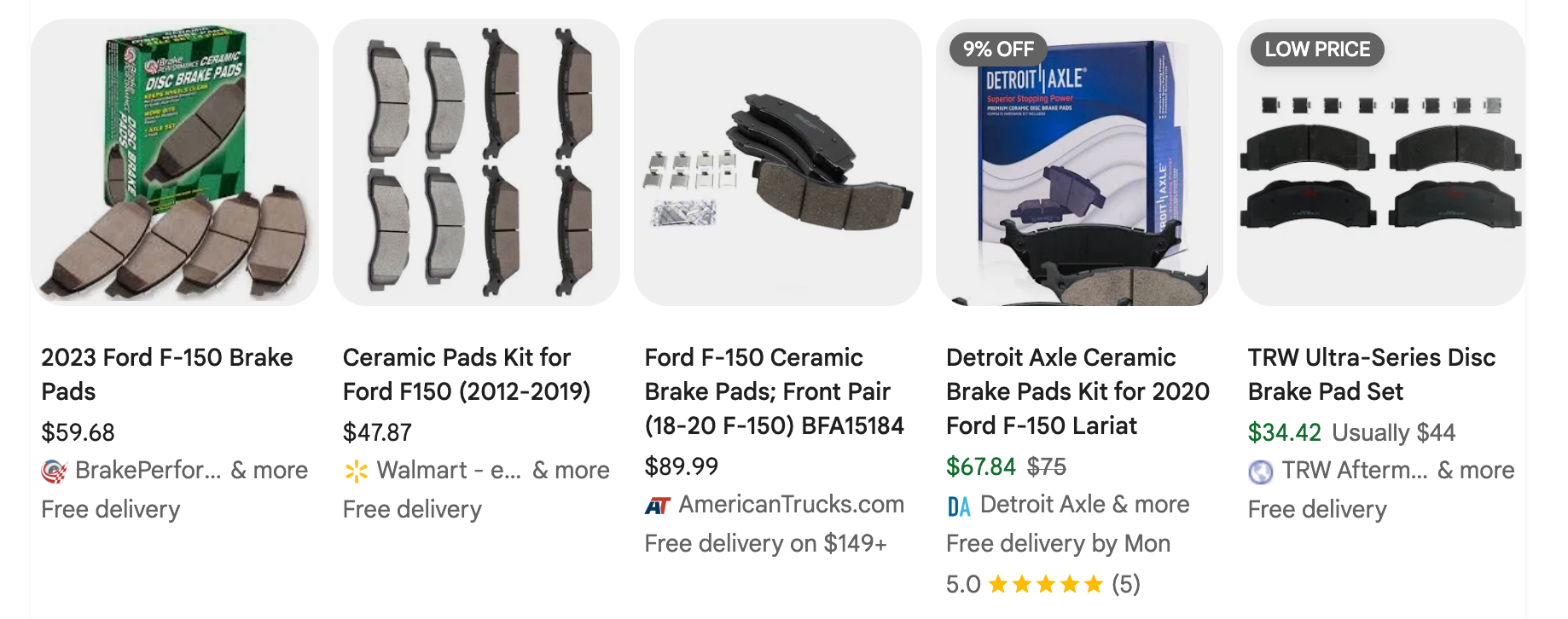
Spend shouldn’t be going into a black box. By structuring your product data, the data that shoppers are using to compare you against your competitors on Google Shopping, you’ll know that clicks are not wasted.
Someone searching for 2020 F-150 brake pads is going to click the Shopping ad that most accurately matches their need. If your product images are vague or the title doesn’t fully contain the fitment details, that click would result in a bounce.
We focus on the feed because messy product data does nobody (customers or retailers) any good.
You need to know how campaigns are doing and that requires proper structure. Without this, if you’re only looking at a dashboard, you’re going to see “simple” numbers that hide what’s working and what’s not.
YouTube and Meta support the Shopping account (remarketing, comparison content, cart recovery) without becoming a second budget competing for credit.
We don’t report every single number. It’s easy to make an account look good by playing with the metrics, but those often don’t get to the real reason we’re doing all of this: profit.

We know when we’re hired, you’re looking to get moving fast. Other agencies will take their time doing audits that can take 30-60 days. We’re set up to get account access and tracking in the first week. Then we create a 90-day plan to work on the feed, structure, and creative. Execution starts by fixing feed errors, improving segmentation and cutting wasted spend. You get reports every 30 days with metrics that tie back to profit: margin and revenue.
We built our Google Shopping agency around spec-driven businesses. Auto parts, boating parts & supplies, heavy equipment, industrial and manufacturing parts, HVAC, plumbing and electrical components. We’re here to help you serve customers that need compatibility and specs over marketing copy.
Spec-Driven vs. Lifestyle Product Content
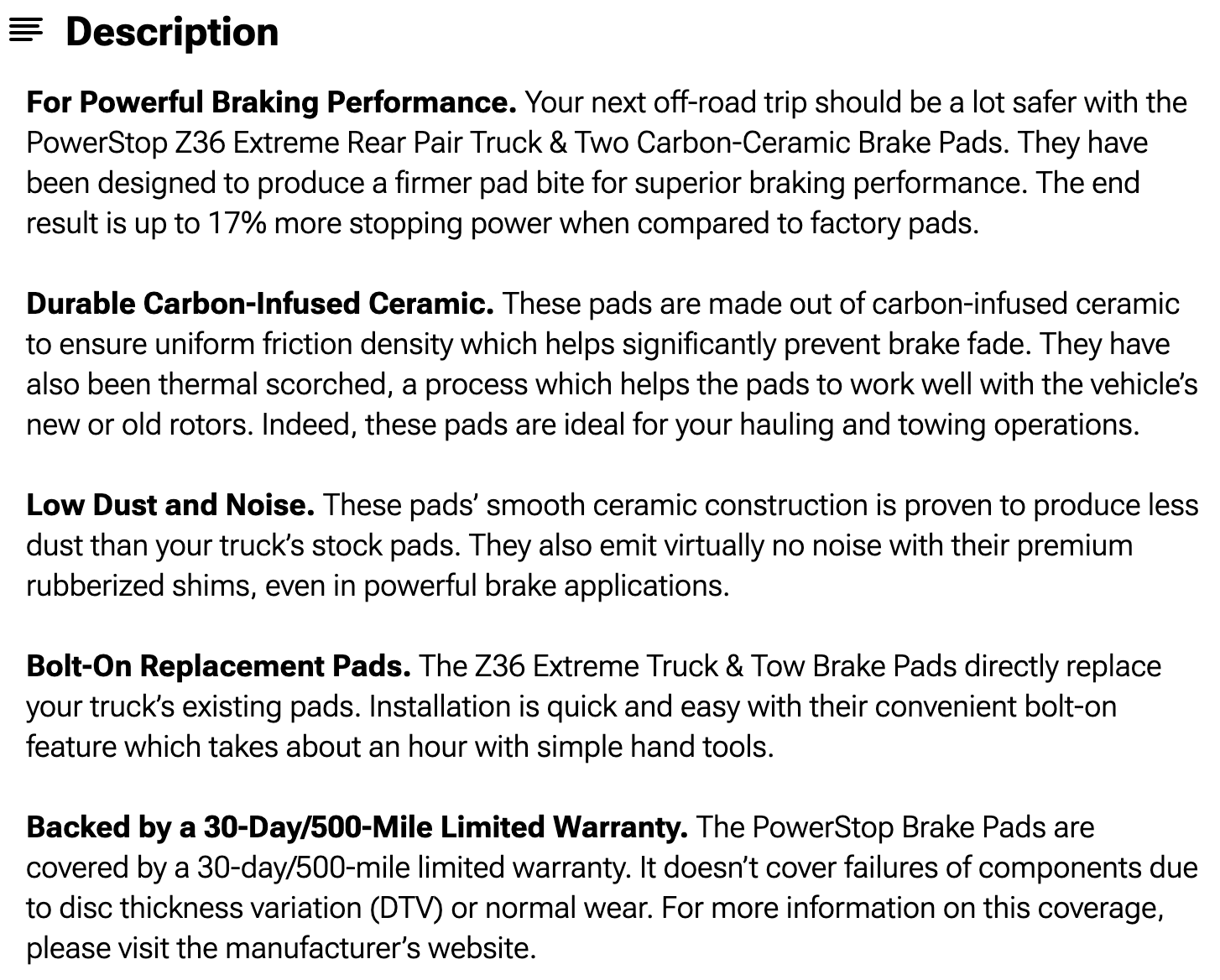

We’re not a fit for brands built on lifestyle or emotional appeal, such as apparel, pet products, home decor.
A performance-cooling-parts manufacturer increased ad spend 53% and revenue 55% while holding a 1200% ROAS, after a full feed rebuild and a broader push across Google, Bing, and Meta.
A B2B fueling-equipment distributor used PPC to land two enterprise accounts worth $23K and $163K combined, with the program running at 1163% ROAS.
A specialty auto parts retailer with 100,000+ SKUs added $530K in profit after ad costs over twelve months, with revenue up 22%, once tracking and the product feed were rebuilt around contribution instead of volume.

"Our ROAS and revenue are improving, and we don't have wasted spend on ads that don't have a return."











You work directly with senior operators. The same people who build the feed structure run the reporting, so nothing gets lost between the two.
Feed and Merchant Center work sits at the center of it. Attribute cleanup, segmentation, custom labels.
Reporting ties back to CAC, MER, and gross profit, metrics that actually affect the business.
We've run this for brands like J.L. Matthews, Jay Leno's Garage, Hoonigan, and Mishimoto, and published most of what we've learned along the way including 250+ articles and a YouTube
We know you want results as soon as possible, which is why we get moving week one. Spend efficiency can get going around month two after feed and segmentation issues are fixed.
Yes, we use it. But if you don’t automate correctly you’ll burn your budget on searches that won’t convert. That’s why correct segmentation and negative keywords are important in our work.
That’s because Google will credit branded traffic (traffic with your company’s name in it) which likely would have converted anyway. To combat this, we track new-customer CAC and blended MER alongside ROAS, so you get a more realistic picture.
We need access to Google Ads, Merchant Center, and your feed source. We’ll audit your current tracking setup in week one.
The SCUBE Game Plan is a focused review of how complex, spec-driven catalogs behave inside paid channels. It’s designed to surface what’s contributing to performance, what’s masking underlying issues, and where structure is quietly working against you. If there’s a fit, we walk through the findings in a ~60 minute conversation, looking at:
The goal is a clearer picture of how the system is behaving, so decisions stop relying on averages or assumptions.


.avif)