
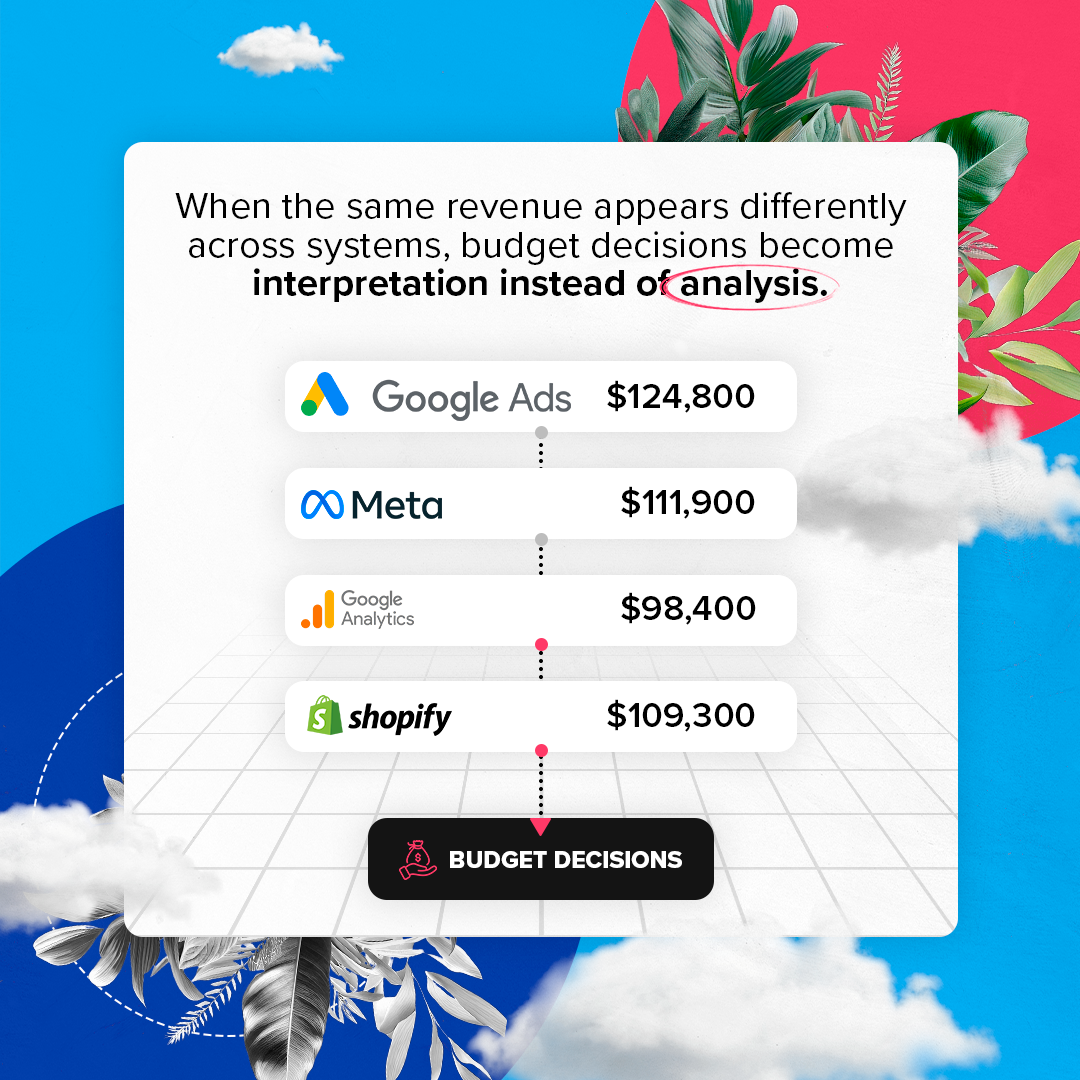
An ecommerce GTM agency should do more than keep dashboards clean. In high-SKU catalogs, the real job is protecting the data that steers spend. When platform reporting separates from financial reality, budget decisions weaken. Google Ads might show $120K in revenue while Shopify shows $102K, and no one can explain the gap.
That gap widens in spec-driven ecommerce. Fitment, attributes, variants, replacements, and filtered states introduce complexity most setups aren’t built to handle. When tracking breaks, it rarely fails loudly. Purchase events fire twice. Product data stops passing correctly. Platforms optimize on incomplete or inflated signals.
This service is for operators managing that complexity. It’s for ecommerce companies that need data to align across GA4, ad platforms, and the backend so optimization holds up under financial scrutiny.
GTM & Tracking Infrastructure is the measurement layer that determines whether growth decisions are accurate or expensive mistakes.
If your reporting no longer lines up with how the business actually performs, we’ll show you where the signal is breaking and what to fix first.












Google Ads shows one version of revenue.
Meta shows another.
GA4 sits somewhere in between.
Your backend ledger tells a different story again.
That’s not an attribution debate. It’s a system failure.
When the same order looks different across platforms, budget decisions weaken. Category performance becomes harder to trust. Spend starts following signals that no longer match financial reality.
This drift rarely comes from one mistake. It compounds quietly:
If your systems don’t tell the same story, the issue is structural.
→ The Game Plan shows where signals drift
Tracking failure doesn’t always suppress performance immediately. It often masks it.
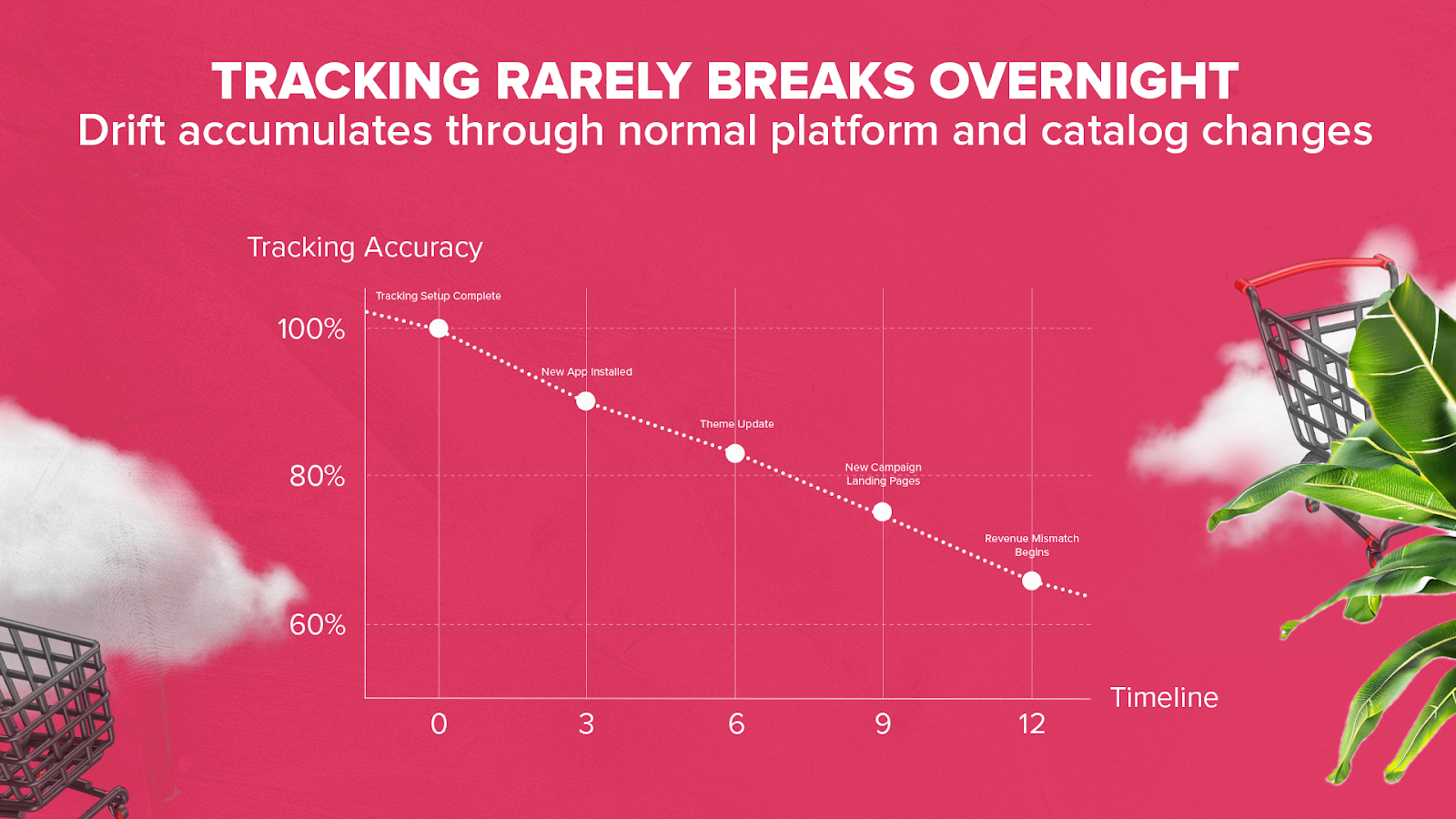
Branded demand and repeat buyers can keep ROAS stable while signal quality degrades. Spend increases because reporting appears to support it.
Then the failure shows up elsewhere:
Platforms don’t need perfect truth. They need a feedback loop. If that loop is noisy, optimization still happens. It just optimizes toward the noise.
By the time the issue is visible, the system has already been trained on the wrong signals.
Tracking doesn’t just describe performance. It shapes it.
Most tracking setups assume simpler environments.
Spec-driven catalogs don’t operate that way.
Tracking breaks at the product level first:
If product identity isn’t stable, product-level reporting stops being reliable.
The cost of bad tracking isn’t just reporting. It’s bad training.
Platforms optimize toward the signals you send them.
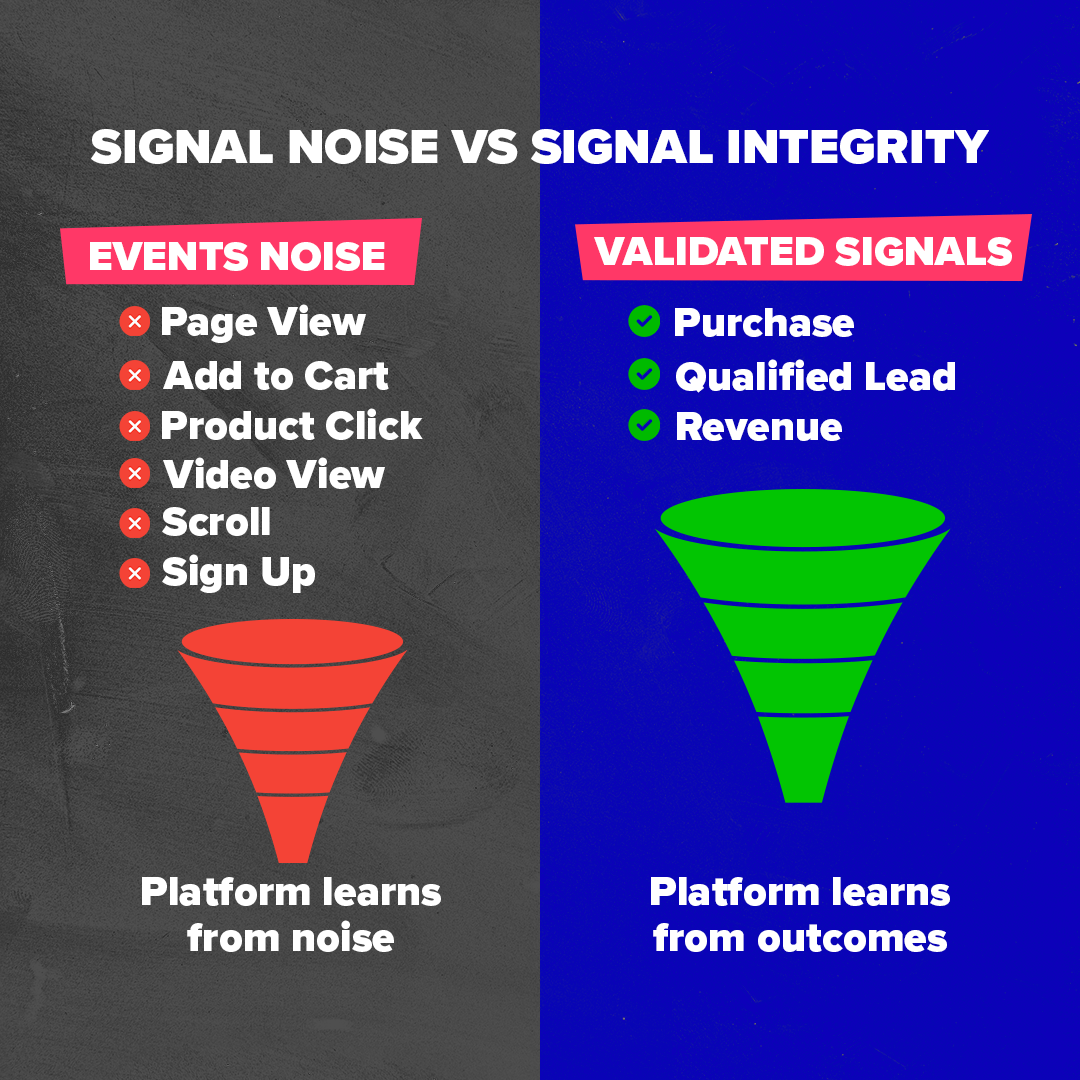
When those signals are wrong:
This is how accounts can look healthy while efficiency erodes underneath them.
A narrow signal set you can trust will outperform a complex setup that quietly corrupts bidding.
Tracking is not a setup task.
A setup ends when tags fire. Infrastructure starts where that stops.
It has to survive:
If it can’t hold under those conditions, it isn’t infrastructure.
Tracking doesn’t just observe performance. It helps steer it.
It influences:
At that point, it’s no longer a technical detail.
It’s part of the operating system behind growth.
That’s why we structure tracking around signal integrity, not implementation volume.
The goal isn’t a “complete” setup.
It’s a system that stays trustworthy as the business changes.
The environment doesn’t stay still:
None of this looks dramatic in isolation. But together, it changes how signals move through the system.
Tracking doesn’t usually break. It drifts.
Revenue starts to drift.
Product-level reporting becomes harder to defend.
Platform behavior becomes less predictable.
The system looks intact while its integrity weakens underneath it.
We don’t try to freeze the system.
We structure it so change doesn’t quietly corrupt the signals that steer spend.
That means:
Perfect attribution is not a real operating standard.
Ecommerce systems are too complex and too distributed:
Trying to eliminate all variance usually creates more noise, not clarity.
We optimize for decision integrity.
That means:
Not perfect. Not theoretical.
Just reliable enough to make real decisions without constant interpretation.
That’s what infrastructure is.
We don’t deliver tracking as a task list.
In spec-driven ecommerce, that model breaks fast. The catalog is complex. Signal paths are interdependent. An unclear scope creates the same problem as bad tracking: motion without decision integrity.
We identify:
This prevents wasted work and unnecessary rebuilds.
Other agencies aim to “do tracking work.”
Our goal is to restore signal integrity where it actually affects spend and decisions.
We don’t work from disconnected requests.
“Add this event.”
“Fix that tag.”
“Check this discrepancy.”
That creates activity. Not a stronger system.
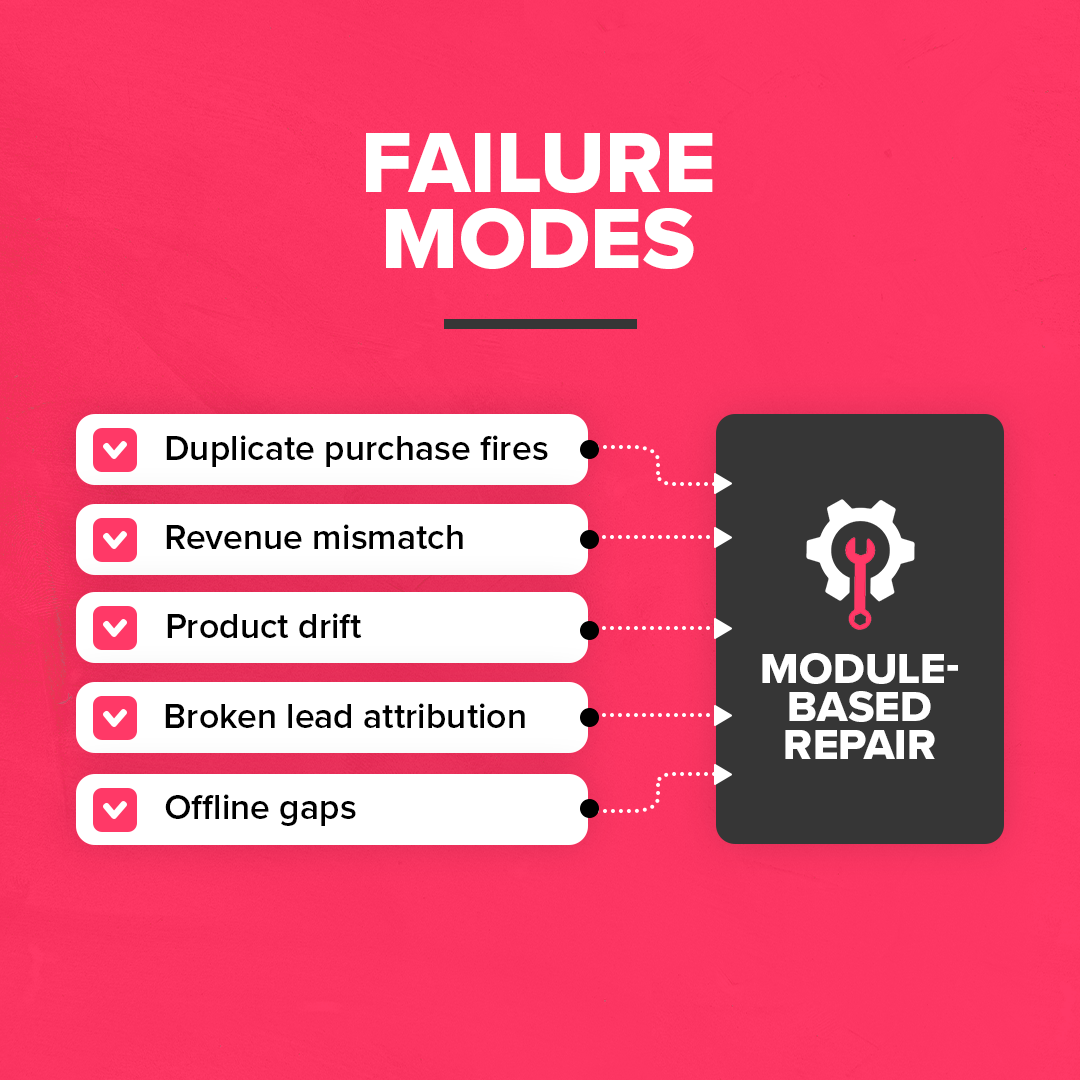
We start from the failure mode:
The same symptom can come from different causes.
A revenue gap isn’t always a revenue problem.
A bidding issue isn’t always a media problem.
A reporting discrepancy isn’t always a dashboard problem.
We fix the underlying structure so the system stays stable after the fix.
Most tracking failures follow repeatable patterns.
We address them through modules.
A module is a bounded solution to a known failure mode, delivered in 1–2 sprints.
Common modules:
This keeps the work focused on what actually breaks, not everything that could be changed.
→ The Game Plan determines whether a structural issue exists
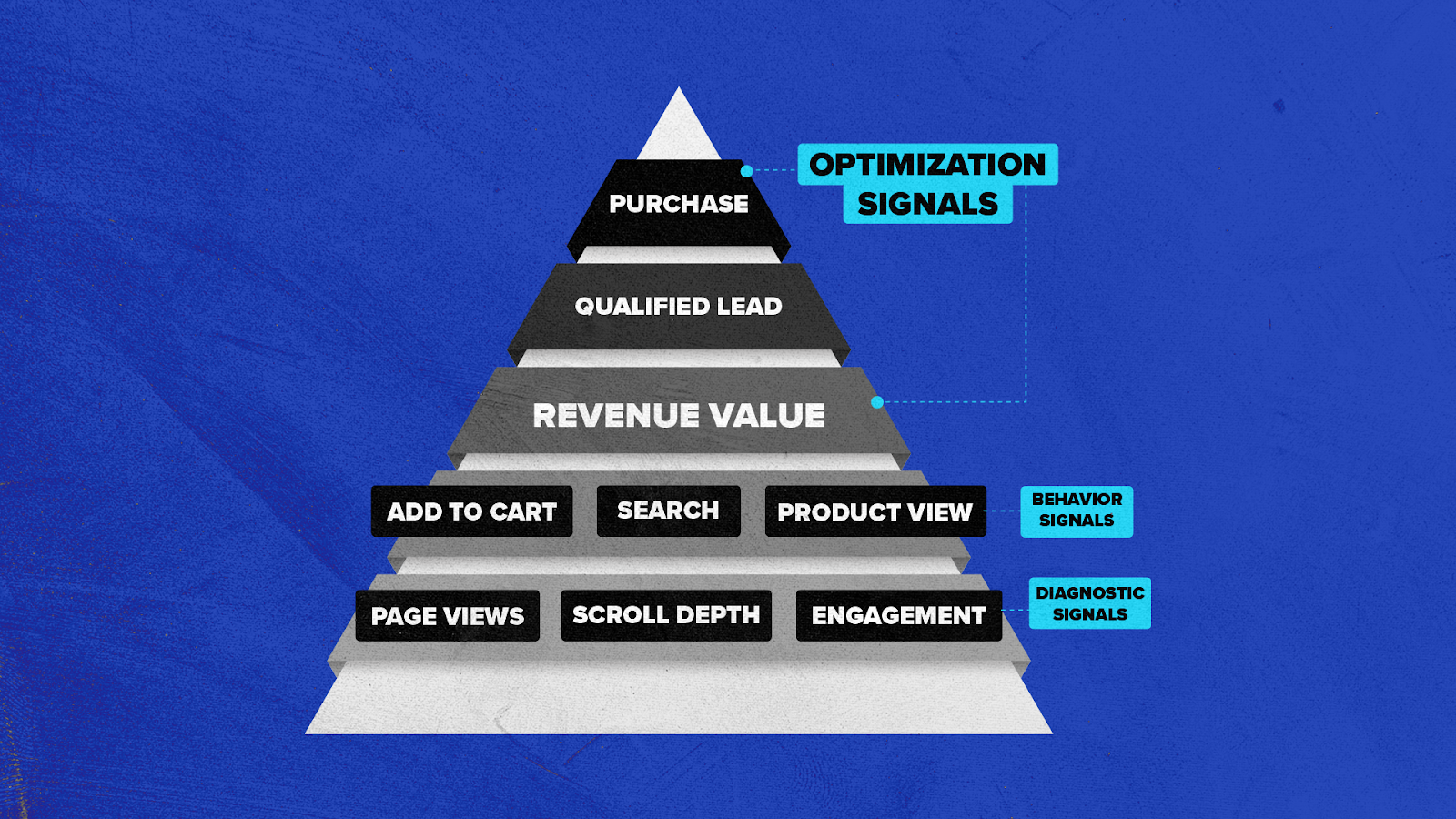
A signal is not useful because it exists. It’s useful because it survives validation.
We don’t trust:
If a signal doesn’t hold up across the system, it doesn’t steer spend.
For example, add-to-cart events often inflate conversion volume without improving revenue efficiency.
Validation includes:
If it fails, it’s a liability.
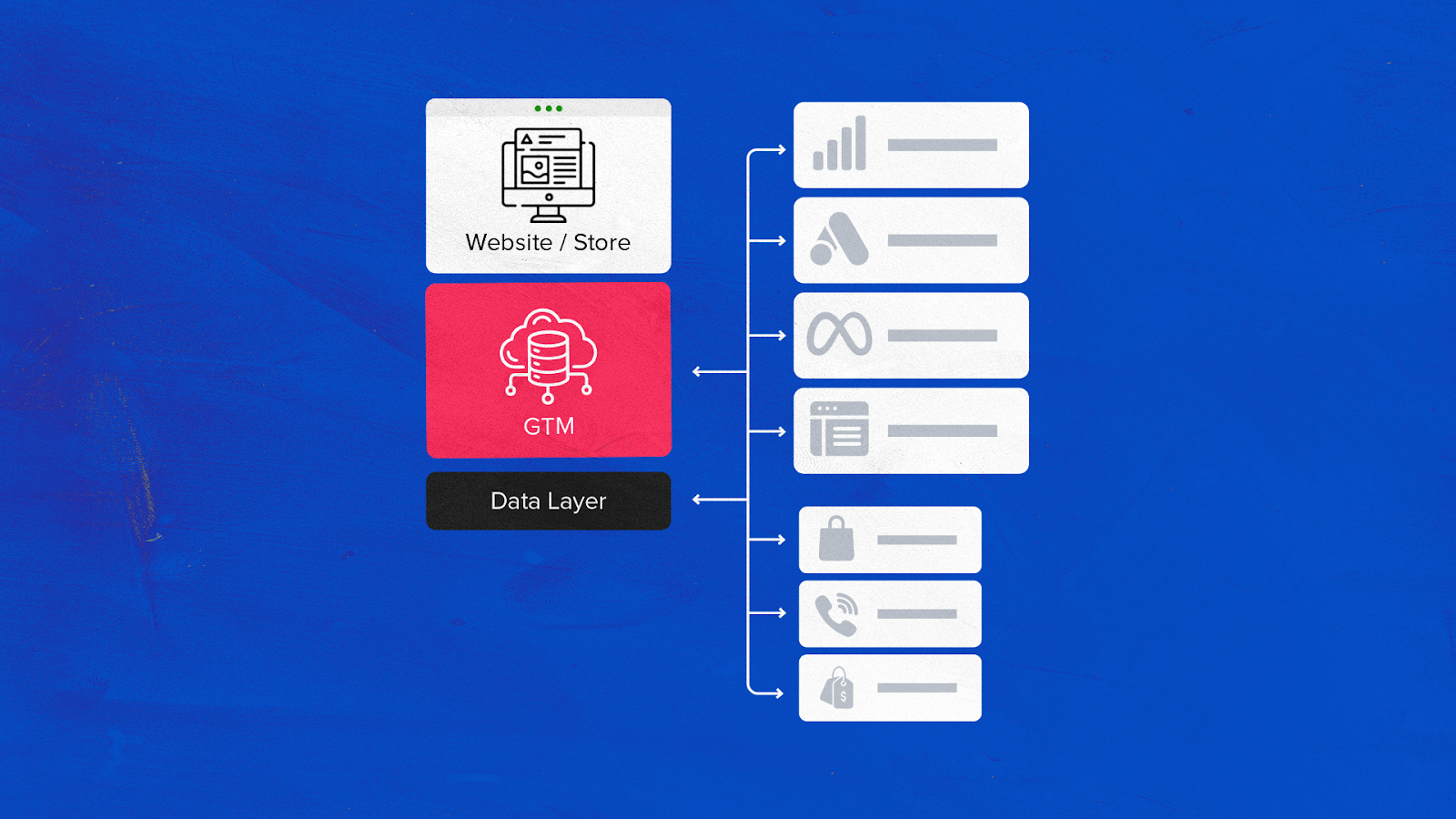
We structure GTM and tracking around signal integrity, not activity.
Spend is guided by data you can actually trust.
This service is built for ecommerce operators managing complexity that standard tracking setups don’t handle well.
The best fits include:
This is for teams that can tell the difference between reporting noise and infrastructure risk.
We work best in spec-driven ecommerce where measurement quality directly impacts how efficiently the business scales.
Common industries:
These environments typically include:
This becomes critical when tracking starts affecting decisions:
At that point, tracking stops being technical cleanup.
It becomes operating infrastructure.
If your reporting feels unreliable, the issue is usually structural
This is not a fit if you’re looking for:
It’s also not a fit for:
We don’t sell certainty. We build systems that hold up under real conditions.
Find What’s Distorting Your Performance Data >
Because they are not your source of truth in the same way. Your ecommerce platform (Shopify, BigCommerce, or another backend system) is your order ledger. Tools like Google Analytics, Adobe Analytics, or other web analytics platforms depend on the measurement layer being implemented and maintained correctly across your tech stack.
If transaction IDs drift, refunds are handled differently, or checkout instrumentation degrades, the gap between marketing data and financial reporting widens. When that happens, teams struggle to interpret data and extract actionable insights from their analytics.
We do not treat that as a simple analytics quirk. Our ecommerce analysts treat it as a parity problem between systems that collect data from various sources across your marketing and operations environment.
Because ad platforms are not your financial ledger. They optimize from the signals they receive, using their own attribution models, conversion windows, and event coverage.
That means the numbers you see in paid platforms are designed to guide optimization, not reconcile perfectly with backend revenue. A gap does not automatically mean the setup is broken. But if that gap is large or inconsistent, it becomes difficult to interpret data and extract valuable insights about performance.
Our analytics experts focus on tightening the measurement layer so marketing data from paid platforms, web analytics, and backend revenue systems stays close enough to support real decision making and uncover growth opportunities.
Not always. Server-side tracking can improve durability in the right environment, but it is not the starting point for every store.
If the base signal structure is weak, server-side tracking often adds complexity before it adds clarity. Instead, we focus first on cleaning the measurement layer so your marketing data is reliable across your tech stack.
Once the fundamentals are stable, server-side implementations can help ecommerce analysts collect cleaner data from various sources, protect signal quality, and keep your analytics infrastructure up to date as privacy requirements evolve.
Yes, when those signals materially affect how marketing budgets are allocated.
In many industries, online analytics alone cannot fully capture customer behavior. Phone calls, offline orders, and assisted conversions often influence customer lifetime value and overall marketing performance.
When those signals matter, we integrate them into the measurement system so ecommerce analysts can combine web analytics, social media analytics, email marketing analytics, and offline conversion feedback into a unified view of performance.
The goal is not to track everything. The goal is to produce actionable insights that help teams interpret data accurately and identify new growth opportunities.
Usually, yes. Most stores do not need a full rebuild.
Instead, the work focuses on isolating broken signal paths, stabilizing conversion events, and fixing the pieces of the measurement layer that quietly corrupt bidding and reporting.
Our analytics experts often uncover low hanging fruits during this process. Duplicate conversions, inconsistent transaction IDs, and broken attribution paths are common issues that prevent businesses from extracting valuable insights from their marketing data.
By addressing these failure modes, ecommerce analysts can uncover growth opportunities and improve conversion rates without rebuilding the entire analytics system.
Some variance is normal.
The goal of modern data analysis is not perfect agreement across systems. Platforms collect data differently, and attribution models will always introduce some variance.
The real question is whether the difference between marketing data and financial reporting is stable, explainable, and small enough for teams to make consistent decisions.
When analytics systems are structured correctly, ecommerce analysts can interpret data across various sources, identify trends, and uncover actionable insights without constantly debating which numbers are correct.
That level of consistency is what allows organizations to uncover new growth opportunities and drive growth confidently.
No. No serious data science or analytics consultancy should promise that.
Customer behavior spans multiple devices, channels, and touchpoints. Social media analytics, email marketing analytics, web analytics, and offline interactions all capture different parts of the journey.
Because of that complexity, perfect attribution is not realistic. Even industry leaders in analytics acknowledge that modern data analysis will always contain some variance.
Our approach focuses instead on building a measurement layer that allows ecommerce analysts to combine marketing data from various sources, identify valuable insights, and evaluate customer lifetime value and lifetime value trends accurately enough to support real business decisions.
That is what ultimately helps clients boost revenue, improve conversion rates, and drive growth.

The traits clients value about partnering with SCUBE on their growth projects.


"Thanks to the efforts of the SCUBE Marketing team, the company has hit all of their monthly goals since launching the e-commerce platform in 2019. The ROI in particular exceeded their expectations and credit it to the team's attention to detail and clear communication throughout the partnership."







The SCUBE Game Plan is a focused review of how complex, spec-driven catalogs behave inside paid channels. It’s designed to surface what’s contributing to performance, what’s masking underlying issues, and where structure is quietly working against you. If there’s a fit, we walk through the findings in a ~60 minute conversation, looking at:
The goal is a clearer picture of how the system is behaving, so decisions stop relying on averages or assumptions.
.avif)