PPC for Industrial Distributors: Optimize for RFQs, Not Clicks

Author:
PPC for Industrial Distributors: Optimize for RFQs, Not Clicks

Most industrial distributors run PPC campaigns the wrong way. They celebrate low cost-per-click and high click-through rates while their sales teams complain about garbage leads.

I've managed PPC campaigns for manufacturers and distributors across metal fabrication, CNC machining, and industrial supply chains. The pattern is always the same. Companies optimize for clicks because that's what Google Ads pushes you toward.

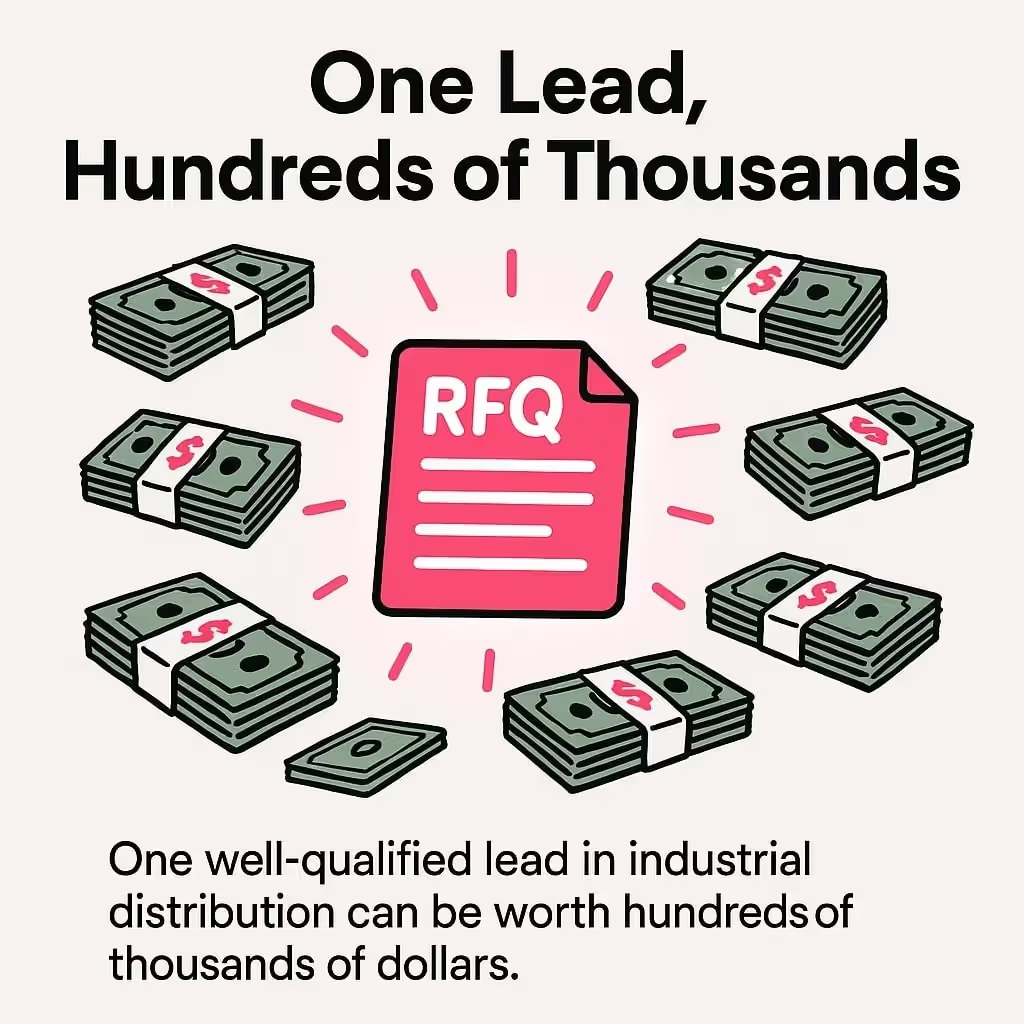
But here's what actually matters: one well-qualified lead in industrial distribution can be worth hundreds of thousands of dollars. A single RFQ for custom machined parts or specialized components can turn into a six-figure contract.

One Lead, Hundreds of Thousands

One high-quality RFQ can be worth six figures—optimize PPC to generate those, not cheap clicks.

That changes everything about how you should run PPC.

This guide shows you how to restructure your PPC campaigns around what actually generates revenue: qualified RFQs from buyers who need what you make or distribute. We'll cover keyword strategy, platform selection, landing page optimization, and measurement frameworks that align with real business outcomes.

You'll learn how to filter out tire-kickers, target decision-makers who control budgets, and build campaigns that your CFO will actually appreciate when reviewing marketing spend.

Why Industrial Distribution PPC Requires a Different Approach

Industrial PPC isn't like consumer marketing. The rules are different because the buying process is fundamentally different.

Consumer PPC focuses on immediate conversions. Someone searches for running shoes, clicks an ad, and buys within minutes. High click volume matters because you need traffic to hit conversion rate targets.

Industrial distribution operates on longer cycles with higher stakes. Engineers research specifications for weeks. Procurement managers compare suppliers across multiple criteria. Decision committees evaluate quality certifications, lead times, and technical capabilities.

Your PPC campaigns need to account for this reality.

The High-Value, Low-Volume Dynamic

In consumer ecommerce, you might celebrate a $50 average order value. In industrial distribution, a single qualified lead can be worth hundreds of thousands of dollars in lifetime contract value.

This flips traditional PPC metrics on their head. A campaign generating 10 qualified RFQs per month at $500 per lead is exponentially more valuable than 1,000 clicks from curiosity seekers at $5 each.

The math changes when your average contract value is $75,000 versus $75.

Multiple Stakeholders Complicate Attribution

Consumer purchases typically involve one person making a quick decision. Industrial purchases involve engineers who specify requirements, procurement managers who negotiate terms, and executives who approve budgets.

Your PPC campaigns need to reach all these stakeholders. An engineer might click your ad while researching technical specifications. Two weeks later, a procurement manager from the same company submits an RFQ after someone forwarded your information internally.

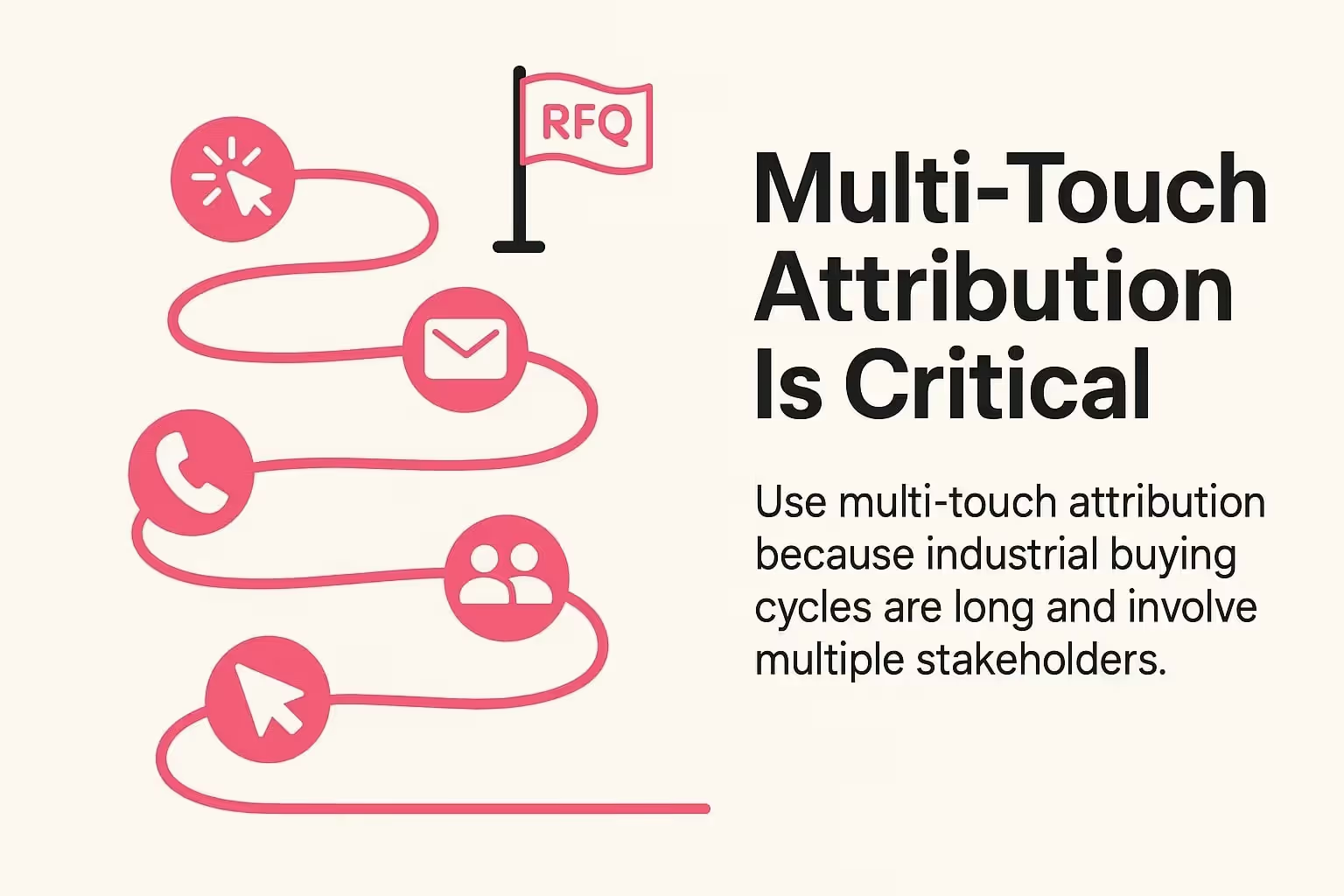
Multi-touch attribution becomes critical because industrial buying cycles are long and involve multiple stakeholders and touchpoints before an RFQ is submitted.

Multi-Touch Attribution Is Critical

Industrial buying involves multiple stakeholders—use multi-touch attribution to see the full impact of your ads.

Technical Specifications Drive Search Behavior

Consumer searches are simple: "red running shoes" or "coffee maker under $100." Industrial searches contain technical specifications: "304 stainless steel sheet metal fabrication" or "CNC machining tolerance ±0.001".

This creates opportunity. Long-tail technical keywords have lower competition and higher intent. Someone searching for specific material grades, tolerances, or certifications is further along in their buying process.

Your keyword strategy should target these specific, technical searches rather than broad industry terms.

The RFQ-Focused Campaign Structure

Traditional PPC campaigns optimize for clicks or website visits. RFQ-focused campaigns optimize for qualified quote requests that turn into revenue.

This requires rethinking your entire campaign structure from keywords to landing pages to conversion tracking.

Define What Qualifies as a Valuable RFQ

Not all RFQs are created equal. A vague inquiry asking "how much for metal parts?" wastes your sales team's time. A detailed request specifying material, quantity, tolerances, and timeline represents a serious buyer.

Start by defining qualification criteria with your sales team. What information do they need to provide an accurate quote? What signals indicate a buyer is ready to move forward?

Common qualification factors include project specifications, required quantities, timeline expectations, and budget parameters.

Structure Campaigns Around Buying Intent

Organize your PPC campaigns to match different stages of industrial buying intent. High-intent campaigns target buyers ready to request quotes. Research campaigns capture early-stage prospects who need more information.

High-intent keywords include phrases like "custom machining quote," "stainless steel fabrication services," or "precision parts manufacturer near me." These searches indicate immediate need.

Research keywords might include "CNC machining capabilities," "metal fabrication processes," or "tolerance specifications explained." These searches indicate exploration rather than immediate buying.

Separate these campaign types to control budgets and messaging appropriately.

Align Landing Pages With RFQ Requirements

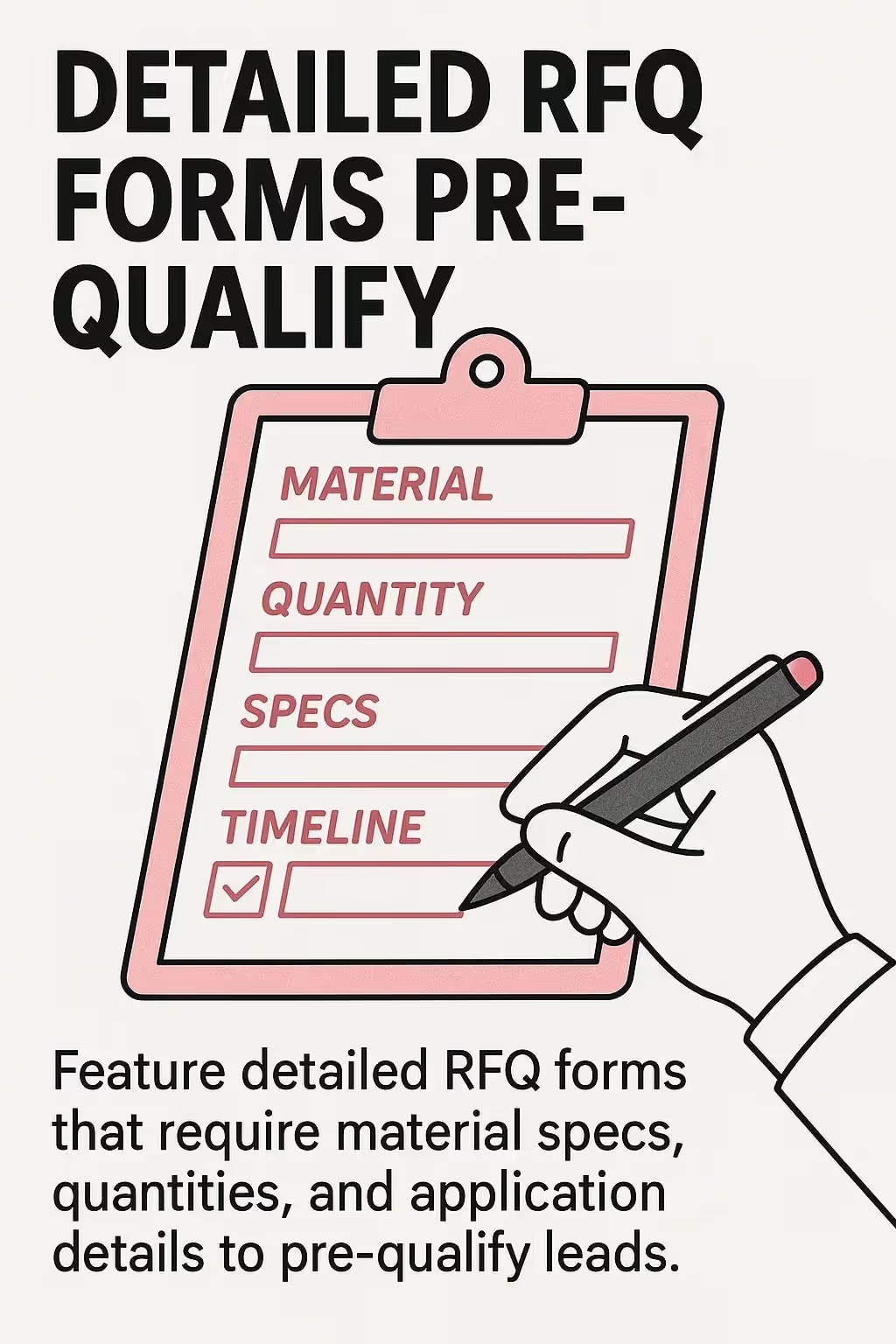
Effective PPC landing pages for industrial distributors should feature detailed RFQ forms that require material specs, quantities, and application details.

Generic contact forms don't work for industrial PPC. You need forms that collect the specific information your sales team requires to provide accurate quotes.

Include fields for material specifications, required quantities, tolerance requirements, delivery timeline, and technical drawings or CAD files. This pre-qualifies leads and gives your team what they need to respond quickly.

Detailed RFQ Forms Pre-Qualify

Detailed RFQ forms that capture specs, quantities, and timelines pre-qualify leads and save your sales team time.

Fast, conversion-focused landing pages make the difference. Landing pages built for conversion should clearly communicate value, address technical buyer concerns, and make the RFQ process seamless.

Keyword Strategy for Industrial Buyers

Your keyword strategy determines whether you attract serious buyers or waste budget on unqualified traffic. Industrial keyword research requires understanding technical language and buyer intent signals.

Target Long-Tail Technical Keywords

Broad keywords like "metal fabrication" or "industrial parts" attract high volumes of irrelevant clicks. Long-tail keywords like "316 stainless steel laser cutting" or "aluminum extrusion with anodizing" attract qualified buyers.

Technical specifications make excellent long-tail keywords because they indicate specific needs. Material grades, manufacturing processes, tolerance levels, and industry certifications all signal buying intent.

Build keyword lists around your actual capabilities and the technical language your customers use when requesting quotes.

Mine Your RFQ History for Keyword Gold

Your existing RFQ submissions contain valuable keyword insights. Review past quote requests to identify the exact phrases customers use when describing their needs.

Look for patterns in how customers specify materials, quantities, processes, and applications. These real-world phrases should become your target keywords.

This approach ensures you target language that actual buyers use rather than industry jargon that sounds good but doesn't match search behavior.

Include Location-Based Keywords for Regional Buyers

Many industrial buyers prefer local or regional suppliers for faster delivery, easier communication, and site visits. Location-based keywords capture this preference.

Target phrases like "CNC machining in Michigan," "metal fabrication near Detroit," or "precision parts manufacturer Ohio." These searches indicate buyers specifically seeking nearby suppliers.

Geographic targeting becomes especially important for heavy or oversized components where shipping costs significantly impact project economics.

Learn more about advanced geographic targeting strategies for PPC campaigns.

Using Negative Keywords to Filter Unqualified Traffic

Negative keywords might be more important than your target keywords in industrial PPC. They prevent your ads from showing for searches that will never generate qualified RFQs.

Block DIY and Consumer-Intent Searches

Industrial distributors don't serve hobbyists or DIY consumers. Add negative keywords that filter out these searches.

Common consumer-intent negatives include: DIY, hobby, home, personal, small, cheap, free, tutorial, how to make, and beginner.

Someone searching "DIY metal fabrication" or "cheap CNC parts" isn't a qualified industrial buyer. Block these terms to preserve budget for serious prospects.

Exclude Job Seekers and Educational Searches

Industrial keywords attract job seekers researching potential employers and students learning about manufacturing processes. Neither group will submit RFQs.

Add negatives like: jobs, career, employment, hiring, salary, resume, school, class, course, training, and degree.

These negatives prevent wasted spend on information seekers rather than buyers.

Filter Competitive and Informational Queries

Searches comparing suppliers or researching industry information rarely convert to immediate RFQs. While some research is normal, heavily informational queries waste budget.

Consider negatives like: compare, versus, reviews, best, top, list, and guide when they don't align with your campaign goals.

Someone searching "best metal fabricators" might be researching options. Someone searching "custom metal fabrication quote" is ready to buy. Focus on the latter.

Continuously Refine Your Negative Keyword List

Review search term reports weekly to identify new negative keywords. Google Ads shows you the actual searches triggering your ads.

Look for patterns in unqualified clicks. If you see multiple clicks from searches containing certain phrases that never convert, add those phrases as negatives.

This ongoing refinement improves campaign efficiency over time by continuously filtering out waste.

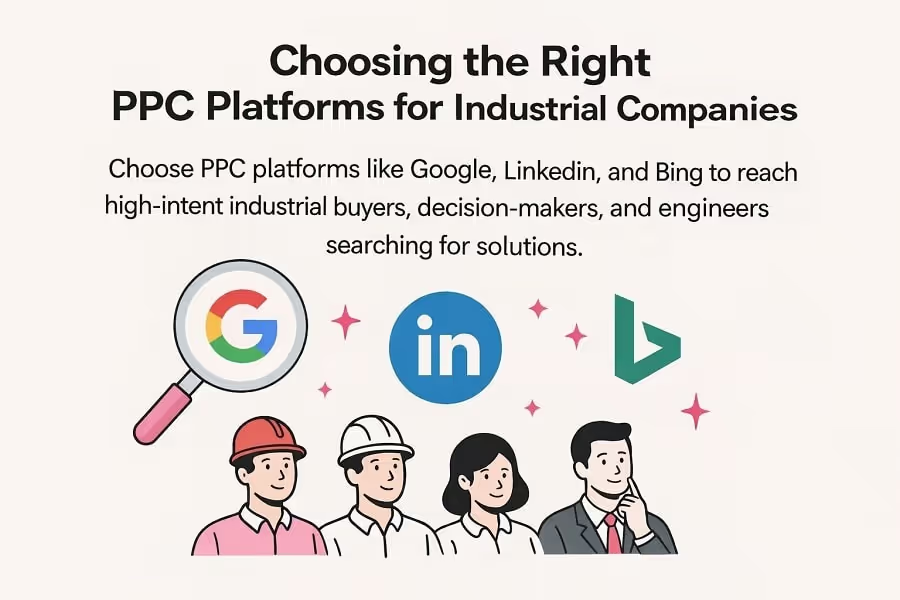
Choosing the Right PPC Platforms for Industrial Distribution

Not all PPC platforms deliver equal value for industrial distributors. Platform selection should match where your target buyers actually search for suppliers.

Google Ads Remains the Primary Platform

Google Ads dominates industrial PPC because engineers and procurement managers start supplier searches on Google. Search ads capture high-intent queries when buyers actively look for solutions.

Focus your Google Ads budget on Search campaigns targeting specific technical keywords. Display and video campaigns typically underperform for direct RFQ generation in industrial sectors.

Google Search captures buyers at the critical moment when they need a supplier.

LinkedIn Ads for Account-Based Targeting

LinkedIn Ads excel at reaching specific decision-makers within target accounts. You can target by job title, company size, industry, and even specific companies.

Use LinkedIn for account-based marketing campaigns targeting known prospects or specific verticals. Target job titles like Procurement Manager, Manufacturing Engineer, Supply Chain Director, and Operations Manager.

LinkedIn costs more per click than Google but delivers highly qualified professional audiences. Budget accordingly based on your target account value.

LinkedIn works best for introducing your capabilities to decision-makers who aren't actively searching but match your ideal customer profile.

Bing Ads Capture Older Demographics

Microsoft Advertising (formerly Bing Ads) reaches an older, more established professional demographic. This often includes senior engineers and executives with purchasing authority.

Bing delivers lower volume than Google but often at lower cost per click. The audience tends to be slightly older and more affluent, which can be advantageous in industrial sectors.

Import your Google Ads campaigns into Microsoft Advertising to test performance with minimal additional work. Adjust bids lower to account for lower search volume.

Avoid Social Platforms for Direct RFQ Generation

Facebook and Instagram underperform for industrial lead generation. Engineers don't browse social media looking for precision machining suppliers.

Social platforms can work for brand awareness or content promotion but rarely drive qualified RFQs. Allocate budget to search-based platforms where buyer intent is clear.

Focus resources on platforms where industrial buyers actually search for suppliers.

Google Ads Best Practices for Industrial Campaigns

Google Ads offers the highest volume of qualified industrial traffic. Proper campaign structure and optimization make the difference between profitable lead generation and wasted budget.

Use Exact and Phrase Match for Technical Terms

Broad match keywords waste budget in industrial PPC. Technical specifications require precise matching to avoid irrelevant clicks.

Use exact match for highly specific terms like material grades or process specifications. Use phrase match for slightly broader terms while maintaining context.

Exact match example: [316 stainless steel fabrication] only matches that exact phrase. Phrase match example: "CNC machining services" matches "precision CNC machining services near me" but not "services for CNC machining training".

This targeting precision prevents budget waste on tangentially related searches.

Write Ad Copy That Speaks Technical Language

Industrial buyers respond to technical specificity, not marketing fluff. Your ad copy should mirror the technical language in your keywords.

Include specific capabilities like tolerance levels, material certifications, equipment capabilities, or industry standards. Mention relevant certifications like ISO 9001, AS9100, or ITAR compliance.

Example: "±0.0005" Tolerance CNC Machining | ISO 9001 Certified | Upload CAD for Instant Quote" performs better than "High-Quality Manufacturing Services | Fast Turnaround | Request Quote Today".

Technical buyers trust specific claims over generic promises.

Implement Conversion Tracking for RFQs

Track RFQ submissions as conversions, not just form completions. Integrating PPC platforms with CRM systems and importing offline conversions ensures optimization is aligned with real revenue outcomes.

Set up Google Ads conversion tracking to fire when someone completes your RFQ form. Assign conversion values based on historical RFQ-to-sale conversion rates and average deal size.

If 20% of RFQs close at an average value of $50,000, each RFQ is worth $10,000 in expected value. Use this to evaluate campaign performance against cost per RFQ.

Learn more about measuring lead generation metrics that matter.

Use Bid Strategies Aligned With Lead Quality

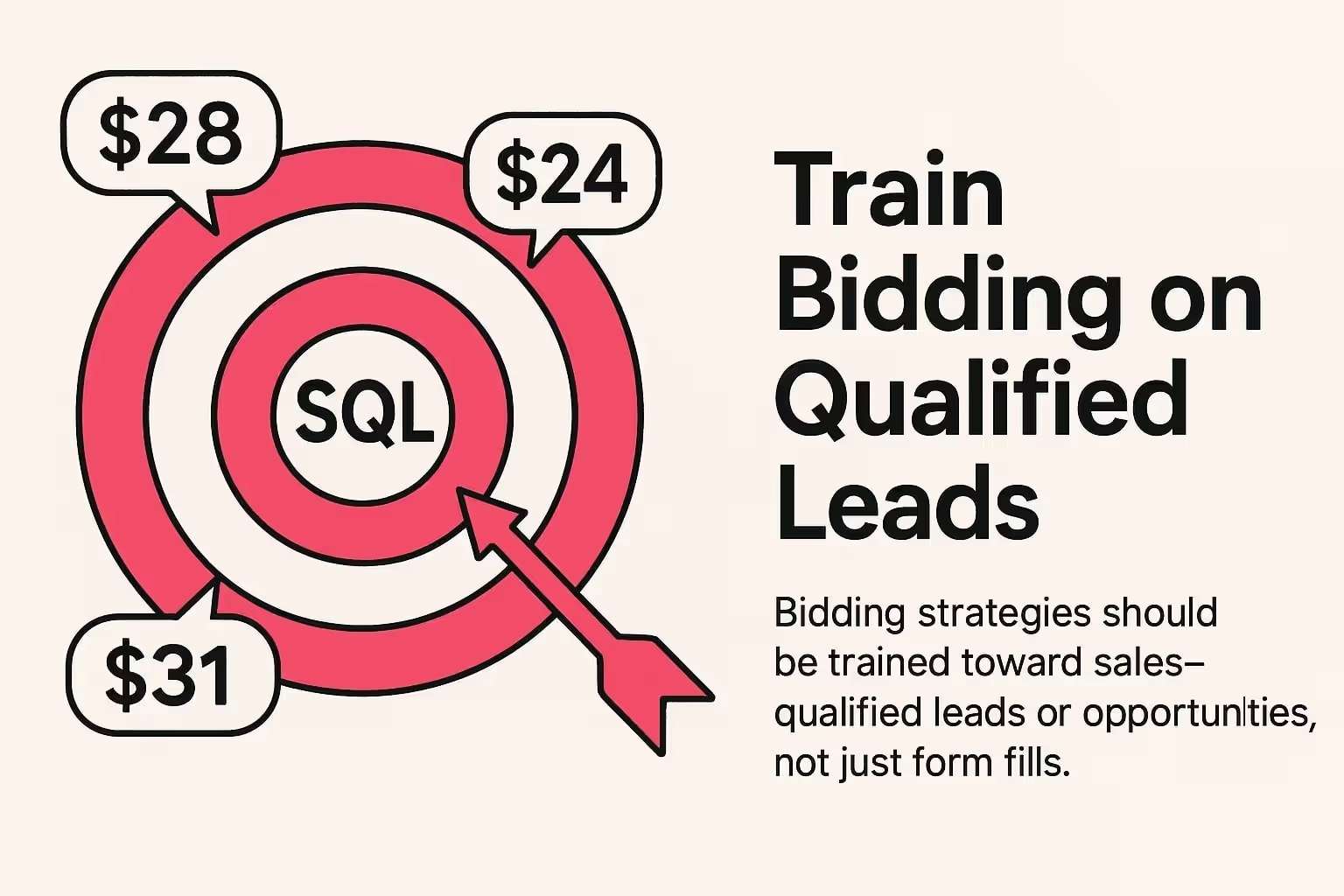
Google's automated bidding strategies can work for industrial campaigns when properly configured. Bidding strategies should be trained toward sales-qualified leads or opportunities.

Train Bidding on Qualified Leads

Train automated bidding on sales-qualified leads or opportunities, not just form fills.

Target CPA (cost per acquisition) bidding works when you have sufficient conversion data and clear cost-per-lead targets. Target ROAS (return on ad spend) works when you can assign revenue values to conversions.

Start with manual CPC bidding while building conversion data. Switch to automated strategies once you have 30+ conversions per month to train the algorithm effectively.

For more on optimization strategies, see our guide on optimizing Google Ads for maximum ROI.

LinkedIn Ads for Reaching B2B Decision-Makers

LinkedIn offers targeting capabilities unavailable on search platforms. You can reach specific job titles at specific companies, making it powerful for account-based marketing in industrial distribution.

Target by Job Function and Seniority

LinkedIn allows precise targeting by job title, function, and seniority level. Build audiences around procurement managers, manufacturing engineers, supply chain directors, and operations executives.

Layer targeting criteria to reach decision-makers at appropriate companies. Target manufacturing engineers at companies with 500+ employees in specific industries like aerospace or medical devices.

This precision ensures your ads reach people with actual purchasing authority rather than junior researchers.

Use Sponsored Content for Awareness

LinkedIn Sponsored Content appears in users' feeds like organic posts. This format works well for introducing your capabilities to cold prospects who match your ideal customer profile.

Create content that demonstrates expertise rather than directly asking for RFQs. Share case studies, technical capabilities, or industry insights that establish credibility.

The goal is awareness and consideration rather than immediate conversion. LinkedIn users aren't actively searching for suppliers like Google users are.

Retarget Website Visitors With Sponsored Messaging

LinkedIn Sponsored Messaging delivers direct messages to targeted professionals. Use it to follow up with people who visited your website but didn't submit an RFQ.

Install the LinkedIn Insight Tag on your website to build retargeting audiences. Target visitors who viewed specific capability pages or spent significant time researching your services.

Keep messages professional and value-focused. Offer to answer technical questions or provide capability statements rather than pushing for immediate quotes.

Expect Higher Costs but Better Quality

Multiple sources show LinkedIn CPCs in the $6-$15 range in competitive B2B industries, while Google CPCs are generally lower (often $3-$10).

The higher cost reflects more precise targeting and professional context. Budget accordingly and evaluate performance based on lead quality rather than volume.

LinkedIn often generates fewer leads at higher cost per lead but with better fit to your ideal customer profile. Quality over quantity matters more in high-value industrial sales.

Crafting Ad Copy That Resonates With Engineers and Procurement

Industrial buyers evaluate suppliers differently than consumers evaluate products. Your ad copy must address technical requirements, quality concerns, and business considerations that matter to professional buyers.

Lead With Specific Capabilities

Generic claims like "high quality" or "fast turnaround" don't differentiate you. Specific capabilities demonstrate real value.

Instead of "precision machining services," try "5-axis CNC machining with ±0.0005" tolerance." Instead of "certified quality," try "AS9100D certified for aerospace applications."

Specificity signals expertise and helps buyers quickly assess fit for their requirements.

Address Common Buyer Concerns

Engineers and procurement managers have consistent concerns when evaluating new suppliers. Address these proactively in your ad copy.

Common concerns include quality certifications, material traceability, lead times, minimum order quantities, and technical support capabilities.

Example: "No Minimum Order | Full Material Traceability | 2-Week Lead Times | Engineering Support Included."

Use Numbers and Specifications

Industrial buyers think in specifications and data. Use numbers to make claims concrete and verifiable.

Instead of "large capacity," specify "75,000 sq ft facility with 50+ CNC machines." Instead of "experienced team," try "100+ years combined engineering experience."

Quantified claims feel more credible and help buyers assess your scale and capabilities.

Include Clear Next Steps

Tell buyers exactly what to do next. "Upload CAD for Instant Quote," "Request Capability Statement," or "Download Technical Specs" provide clear calls to action.

Match the CTA to buyer readiness. High-intent keywords deserve direct quote requests. Research keywords might offer technical resources or capability documents.

Remove friction by being explicit about what happens when they click.

Landing Page Optimization for RFQ Conversion

Your landing page determines whether clicks turn into qualified RFQs. Industrial landing pages need different elements than consumer product pages.

Match Landing Page Content to Ad Promise

Message match between ads and landing pages builds trust and improves conversion rates. If your ad promotes "316 stainless steel fabrication," your landing page should focus on stainless steel capabilities.

Create dedicated landing pages for different services or materials rather than sending all traffic to your homepage. Specific pages convert better than general corporate sites.

Learn more about landing page optimization beyond basic keyword matching.

Design RFQ Forms That Qualify Leads

Your RFQ form should collect the information your sales team needs to provide accurate quotes. Detailed RFQ forms that require material specs, quantities, and application details help pre-qualify leads.

Include fields for project specifications, required materials, quantities, tolerance requirements, delivery timeline, and file uploads for drawings or CAD files.

Longer forms reduce submission volume but improve lead quality. Test different form lengths to find the right balance for your sales process.

Showcase Technical Capabilities and Certifications

Industrial buyers evaluate suppliers based on technical capabilities and quality certifications. Display these prominently on landing pages.

List relevant certifications like ISO 9001, AS9100, ITAR, or industry-specific standards. Showcase equipment capabilities, material expertise, and technical resources.

Include photos of your facility, equipment, and finished parts to provide visual proof of capabilities.

Optimize Page Speed for Mobile Users

Engineers increasingly research suppliers on mobile devices between meetings or while on shop floors. Slow landing pages lose these mobile conversions.

Test landing page speed using Google PageSpeed Insights. Optimize images, minimize code, and reduce server response time to achieve sub-3-second load times.

Mobile-friendly forms with large touch targets and minimal typing requirements improve mobile conversion rates.

For post-conversion optimization, see our guide on improving thank-you page conversions.

Measuring What Actually Matters: ROI and Revenue Metrics

Click-through rates and impressions don't pay your bills. Industrial PPC should be measured by conversions, cost per qualified lead, and return on ad spend rather than click metrics.

Optimize for Conversions, Not Clicks

Measure success by conversions, CPL for qualified leads, and ROAS—not CTR.

Track RFQ Quality, Not Just Quantity

Not all RFQs deserve equal weight. A detailed request from a qualified buyer is worth exponentially more than a vague inquiry from an unqualified prospect.

Work with your sales team to categorize RFQ quality. Define criteria for marketing-qualified leads versus sales-qualified leads. Track how many PPC-generated RFQs meet SQL criteria.

The most relevant KPIs for industrial PPC include RFQ submission volume and quality, quote-to-close conversion rates, average time-to-quote, and marketing-attributed revenue.

Calculate True Cost Per Qualified Lead

Your cost per lead means nothing if those leads don't qualify. Calculate cost per SQL (sales-qualified lead) by dividing total PPC spend by the number of qualified leads your sales team accepts.

If you spend $5,000 generating 50 RFQs but only 10 meet qualification criteria, your cost per qualified lead is $500, not $100.

This metric reveals true campaign efficiency and helps set realistic budget expectations.

Connect PPC to Closed Revenue

The ultimate PPC metric is revenue generated. Integrating PPC platforms with CRM systems and importing offline conversions ensures optimization is aligned with real revenue outcomes.

Track which PPC campaigns, keywords, and ads generate leads that close. Calculate revenue per campaign and compare against ad spend to determine true ROAS.

This requires CRM integration and sales team cooperation but provides the only metric that truly matters: profitability.

For a complete measurement framework, see our guide on conversion rate optimization from analytics to action.

Account for Long Sales Cycles in Attribution

Multi-touch attribution is critical because industrial buying cycles are long and involve multiple stakeholders and touchpoints before an RFQ is submitted.

Someone might click your ad in January, return directly to your site in February, and submit an RFQ in March. Last-click attribution would miss the PPC campaign's role entirely.

Use Google Analytics to review the full customer journey. Implement data-driven attribution models that credit all touchpoints appropriately.

Remarketing Strategies for Long Industrial Sales Cycles

Industrial buyers rarely convert on their first visit. Remarketing keeps your company visible throughout extended research and evaluation periods.

Segment Remarketing Audiences by Engagement Level

Create different remarketing audiences based on how deeply prospects are engaged with your site. Someone who spent 10 minutes reviewing technical specifications shows more interest than someone who bounced after 15 seconds.

Build audiences for capability page visitors, RFQ form abandoners, and deep site explorers. Tailor messaging to each audience's demonstrated interest level.

Higher-engagement audiences deserve higher bids and more aggressive messaging since they're closer to requesting quotes.

Use Sequential Messaging Across the Buyer Journey

Show different remarketing ads based on time since initial visit and pages viewed. Someone who visited two weeks ago needs different messaging than someone who visited yesterday.

Early remarketing ads might reinforce capabilities or share customer testimonials. Later ads might offer direct quote incentives or highlight fast turnaround capabilities.

This sequence mirrors natural buying progression and provides relevant information at each stage.

Retarget RFQ Form Abandoners

People who started your RFQ form but didn't submit represent high-intent prospects. Create a specific remarketing audience for form abandoners.

Show these prospects ads addressing common form completion barriers: "Questions about your project? Our engineers can help" or "Need a capability statement first? Download here."

This audience typically converts at high rates since they've already demonstrated serious interest.

Set Appropriate Frequency Caps

Industrial buyers don't need to see your ads 20 times per day. Excessive frequency annoys prospects rather than persuading them.

Set frequency caps at 3-5 impressions per user per week. Industrial buying decisions happen on business timelines, not impulse, so aggressive remarketing adds little value.

Focus on staying visible without becoming intrusive.

Budget Management and Bid Strategy for Industrial PPC

Industrial PPC budgets should align with lead capacity and sales team bandwidth. There's no point generating 100 RFQs per month if your team can only handle 30 quality quotes.

Start With Lead Capacity Planning

Work with your sales team to determine how many qualified RFQs they can effectively process. Factor in time required for technical review, quote preparation, and follow-up.

Use this capacity to calculate monthly lead targets. If your team can handle 40 qualified RFQs monthly and your qualification rate is 25%, you need 160 total RFQ submissions.

This target drives budget decisions based on cost per lead and historical conversion rates.

Allocate Budget to High-Intent Campaigns

Prioritize spending on campaigns targeting bottom-of-funnel keywords with clear buying intent. Someone searching "custom machining quote" is closer to conversion than someone searching "CNC machining capabilities."

Allocate 60-70% of budget to high-intent campaigns targeting specific services, materials, or quote-related searches. Use the remaining budget for research-stage keywords and remarketing.

This allocation maximizes RFQ generation while maintaining awareness among early-stage researchers.

Test Automated Bidding With Sufficient Data

Google's automated bidding strategies require sufficient conversion data to perform well. Start with manual bidding while building this foundation.

Once you have 30+ conversions per month, test Target CPA bidding. Set your target at your maximum acceptable cost per qualified lead based on customer lifetime value.

Monitor performance closely during the learning period. Automated strategies need 2-4 weeks to optimize effectively.

Reserve Budget for Testing

Allocate 10-20% of budget to testing new keywords, ad variations, landing pages, or platforms. Industrial markets evolve and buyer behavior shifts over time.

Run controlled tests using campaign experiments in Google Ads. Compare new approaches against control groups to measure impact accurately.

Continuous testing prevents campaign stagnation and uncovers new opportunities for improvement.

A/B Testing and Continuous Optimization

Industrial PPC campaigns need ongoing optimization based on performance data. Systematic A/B testing reveals what resonates with your specific audience.

Test One Variable at a Time

Change one element per test to isolate impact. Testing multiple changes simultaneously makes it impossible to determine what drove results.

Test ad headlines separately from descriptions. Test landing page forms separately from page copy. This discipline produces clear insights.

Run tests until reaching statistical significance. Industrial campaigns with lower volume need longer test durations than high-volume consumer campaigns.

Prioritize High-Impact Elements

Focus testing on elements with the largest potential impact. Landing page forms, primary ad headlines, and targeting criteria affect performance more than minor copy tweaks.

Test form length and required fields to find the optimal balance between lead volume and qualification. Test different value propositions in headlines to identify what resonates.

Small improvements to high-impact elements deliver better results than large improvements to minor elements.

Learn From Low-Performing Campaigns

Campaigns that underperform reveal important insights about what doesn't work. Analyze why certain keywords, ads, or landing pages fail to convert.

Look for patterns in search terms that click but don't convert. Review landing page session recordings to identify friction points. Survey lost prospects about why they didn't request quotes.

Understanding failure prevents repeating mistakes and informs future strategy.

Document and Share Learnings

Maintain records of test results, key findings, and optimization decisions. This institutional knowledge prevents redundant testing and informs strategy across channels.

Share PPC insights with your sales and product teams. Campaign data reveals customer priorities, common questions, and competitive positioning that benefits the entire organization.

For more optimization strategies, explore advertising optimization tactics for 2025.

Quick Answers to Common Industrial PPC Questions

How to reduce PPC costs and maximize ROI?

Focus on targeting high-intent keywords and using negative keywords to filter irrelevant traffic. Optimize ad copy and landing pages for conversions. Leverage automated bidding strategies like Target CPA or ROAS once you have sufficient conversion data. Continuously monitor performance and reallocate budget to top-performing campaigns.

What is the most important element when setting up a PPC ad?

Strong alignment between targeted keywords, compelling ad copy, and a relevant landing page. This alignment maximizes Quality Score, improves ad relevance, and increases conversion likelihood. The entire chain from search to RFQ submission must provide a consistent, seamless experience.

Which metric is critical to track when optimizing for profitability?

Cost per qualified lead (CPL) directly measures how much you spend to generate a valuable RFQ. Track CPL alongside quote-to-close rates and return on ad spend to ensure your PPC investment generates positive returns. These metrics matter more than clicks or impressions.

Making PPC Work for Your Industrial Distribution Business

Industrial PPC succeeds when you optimize for business outcomes rather than vanity metrics. Qualified RFQs that turn into revenue matter infinitely more than high click-through rates or low cost-per-click.

The strategies in this guide flip traditional PPC thinking. Target fewer, more specific keywords. Write technical ad copy that filters out unqualified prospects. Build detailed RFQ forms that collect the information your sales team needs. Measure success by closed revenue, not campaign clicks.

Start by implementing negative keywords to eliminate waste. Then rebuild landing pages around your RFQ process requirements. Finally, connect your PPC data to actual sales outcomes through CRM integration.

Your CFO will appreciate PPC much more when you can demonstrate clear ROI from marketing-generated leads that close into six-figure contracts. That's the difference between PPC as an expense and PPC as a growth engine.

Focus on quality over volume. Optimize for RFQs over clicks. Build campaigns around real business outcomes. That's how industrial distribution PPC actually works.

what makes scube
different

Expertise, results & communication

Our customers value boutique agency approach with access to a seasoned team, profit-based goals, and clear communication.

get your game plan