
Here's what most industrial suppliers get wrong about search engine optimization: they chase the big fish keywords and ignore the goldmine sitting right in front of them. Those ultra-specific searches, like "M10 hex bolts stainless steel marine grade 200 pack," drive serious buyers who know exactly what they need. They're not window shopping.
I work with industrial ecommerce businesses every day. The ones who win aren't always the biggest brands with massive budgets. They're the smart operators who understand that long-tail keywords account for the majority of search-driven traffic, with their combined volume often surpassing broader, high-competition terms in industrial markets.
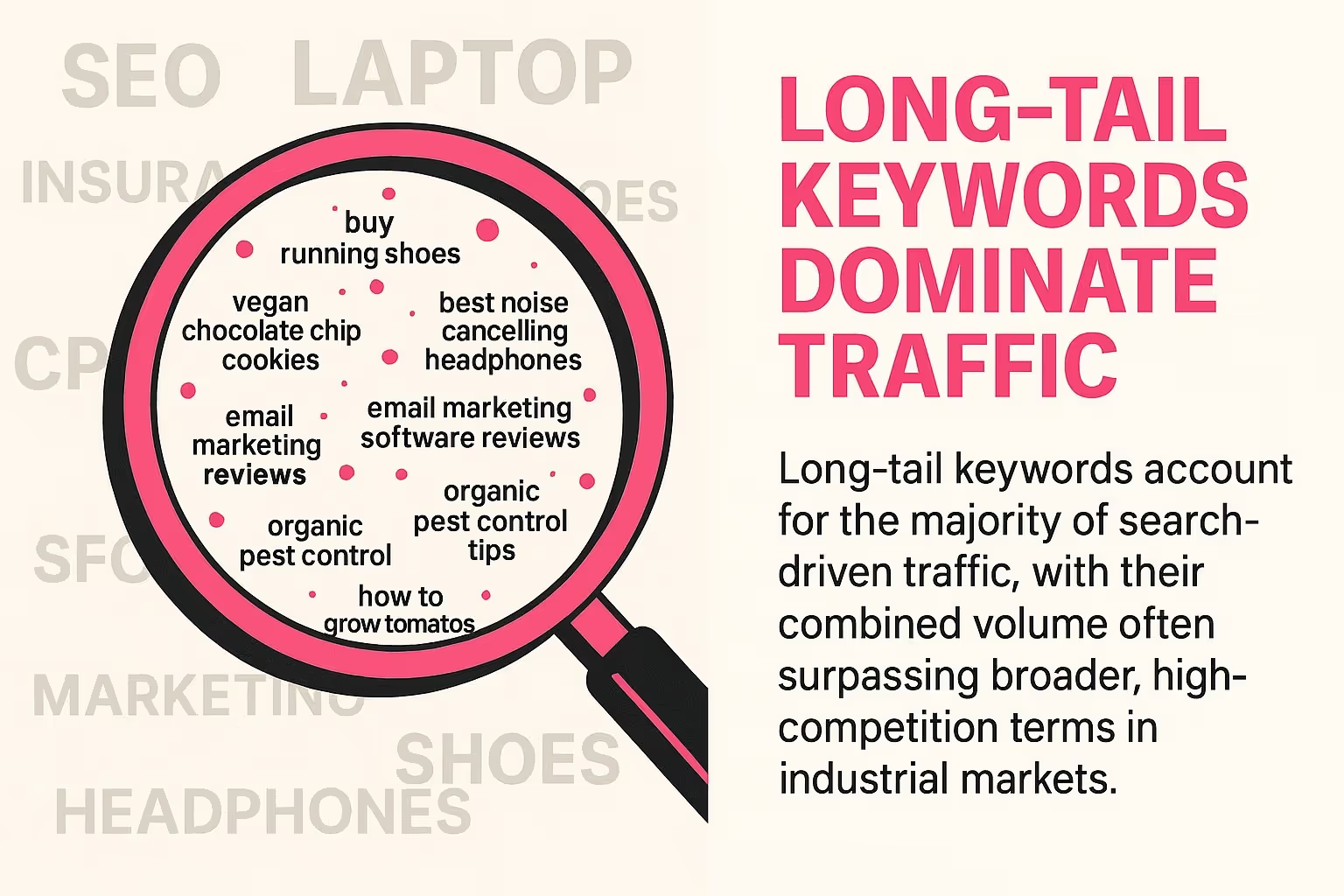
Long-tail keywords collectively drive most search traffic in industrial markets, often surpassing head terms.
Think about it this way: when someone searches "bolts," they might be researching a school project. When they search "M10 x 60mm stainless steel hex bolts A4 marine grade," they're holding a purchase order and need those parts yesterday.
This guide shows you exactly how to find these high-converting industrial keywords, rank for them faster than your competitors, and build a content strategy that turns technical specifications into steady revenue. We'll cover everything from keyword research tools to content creation, with specific tactics for industrial and B2B markets.
Long-tail keywords are specific search phrases, typically three or more words, that describe exactly what someone needs. Instead of "bolts" (a short-tail or head keyword), you get "M10 hex bolts stainless steel metric." Instead of "bearings," you see "6205 deep groove ball bearings ABEC-5 rating." Instead of "dock lift," you see "movable 10,000 lbs cantilever loading dock lift."
The specificity makes all the difference.
These longer phrases have lower search volume than generic terms. That's actually perfect for industrial businesses. Business relevance outweighs search volume, as keywords with low or even zero reported search volume can still drive significant, highly qualified traffic and sales when they closely match your industrial offerings and customer intent.
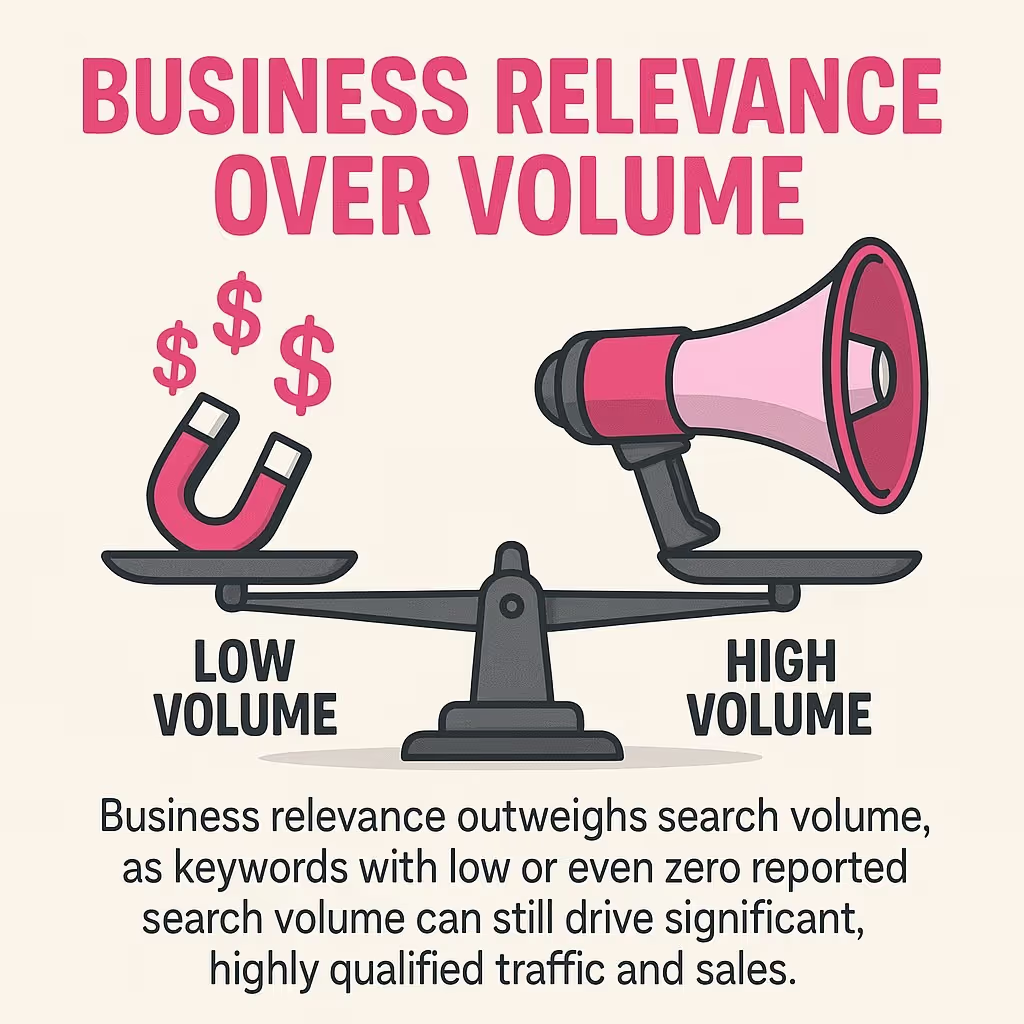
Prioritize business relevance over volume—low or even zero-volume keywords can generate highly qualified traffic and sales.
Lower competition means easier ranking. You're not fighting Amazon or Home Depot for "bolts." You're competing against other specialized suppliers for "M10 x 1.5 pitch hex head cap screws class 10.9." Much better odds.
The conversion rates tell the real story. Someone searching for specific part numbers or technical specifications isn't browsing. They're buying. The targeted traffic you get from long-tail industrial keywords converts at rates that make short-tail keywords look wasteful.
High specificity defines these terms. They include product codes, dimensions, material grades, technical standards, or specific applications. "Hydraulic fittings" becomes "JIC 37-degree flare hydraulic fittings stainless steel."
Lower search volume follows naturally. Fewer people search for exact specifications than generic categories. But those searchers mean business.
Lower keyword difficulty gives you ranking opportunities. Big competitors ignore these terms because the individual search volume looks small. That's your opening.
Clear search intent separates window shoppers from buyers. Long-tail searches reveal exactly what people need, making it simple to match your content to their requirements.
Your typical customer isn't searching for "tools." They're searching "torque wrenches 50-250 ft-lb click type calibrated." The difference matters enormously for your bottom line.
Building a long-tail strategy delivers multiple benefits. You rank faster because competition drops dramatically when you get specific. Your content answers precise questions that broader content can't address.
The targeted traffic you attract already understands what they need. You don't need to educate them about product categories. They need specifications, availability, and pricing. Give them that, and conversions follow naturally.
Voice search continues growing in B2B contexts. Voice search and conversational queries are rising in industrial markets, making natural language and question-based search optimization increasingly important. Long-tail keywords naturally match how people speak their searches.
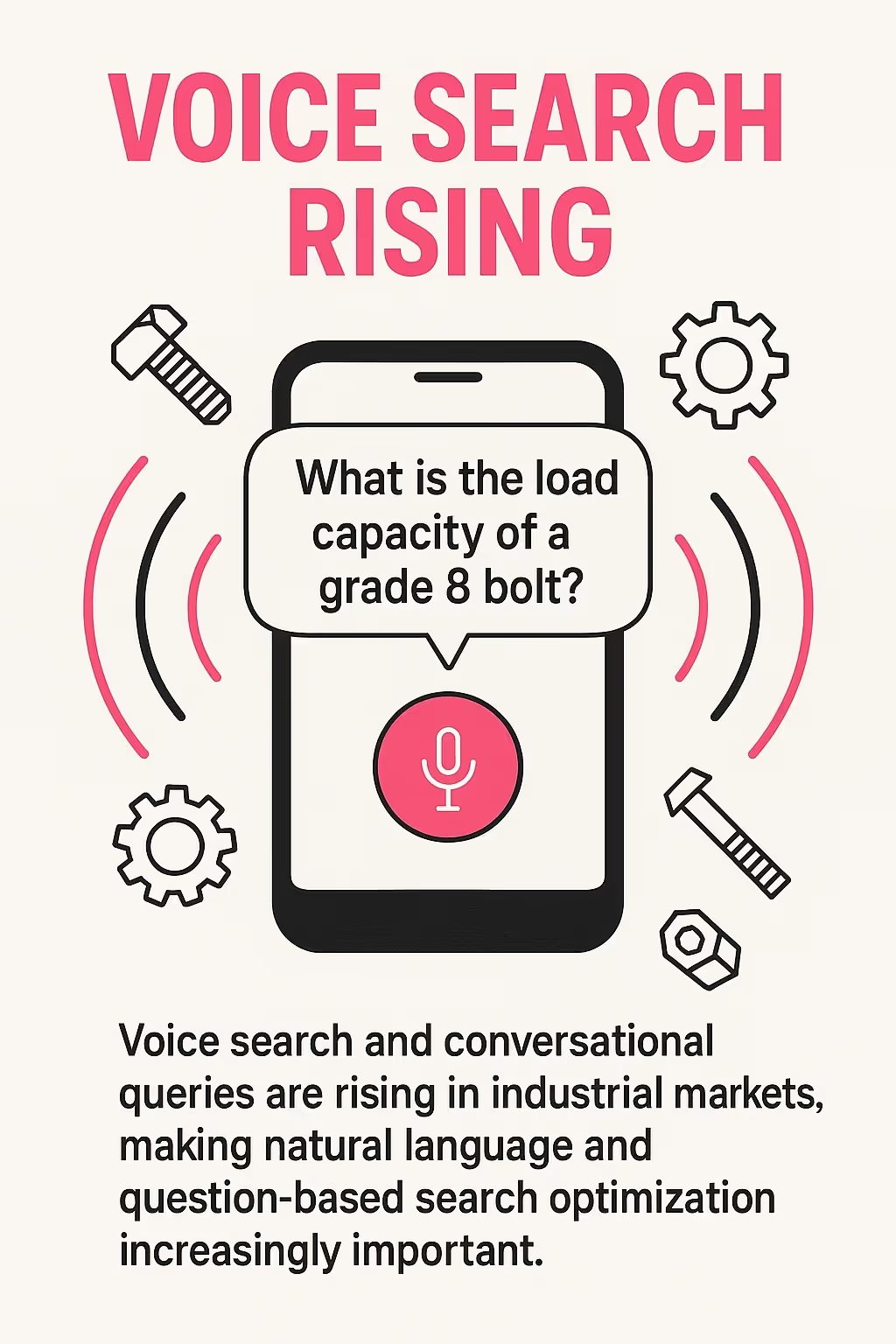
Voice search is rising in industrial contexts—optimize for natural, question-based long-tail queries.
Short-tail keywords (also called head keywords) use one or two words. "Bearings." "Fasteners." "Hydraulics." They get massive search volume, brutal competition, and vague intent.
Long-tail keywords stretch to three, four, or more words. They get specific. They reveal intent. They convert.
The strategy difference matters more than the comparison chart suggests. Short-tail keywords work for brand awareness and top-of-funnel content. Long-tail keywords work for conversions and revenue.
Individual long-tail keywords might only drive 10 or 20 visits monthly. But here's the multiplier effect: target 50 long-tail keywords and you're looking at 500-1,000 highly qualified visitors. Target 200 and you've built a serious traffic engine.
Each keyword represents a specific customer need. Meeting those needs with dedicated content builds authority across your entire product range. Google notices when you comprehensively cover a topic area.
The cumulative search volume from multiple long-tail keywords often exceeds what you'd get from ranking for one competitive head keyword. Plus, you don't need to rank #1 for long-tail terms to get traffic. Positions 3-7 still drive clicks when the keyword matches intent perfectly.
Keyword research for industrial products requires different thinking than consumer goods. Your customers use technical language. They search by part numbers, specifications, and industry standards.
Start with seed keywords. These are your basic product categories: bearings, fasteners, fittings, valves, whatever you sell. Write down 5-10 core product types.
Then expand systematically using these proven methods.
Your best keyword ideas already exist in your business. Check these goldmines first:
Real customer language beats guessing every time. When five different customers ask about "metric grade 8.8 bolts M12," you've found a keyword worth targeting.
Google autocomplete reveals what people actually search. Type your seed keyword into Google and watch the suggestions appear. Try different variations:
Scroll to the bottom of search results for "related searches." These represent common variations people try after their first search. They're clarifying their needs, showing you exactly what information they want.
The "People Also Ask" boxes contain question-based long-tail keywords. These questions make perfect content topics because they show exactly what confuses or interests searchers.
Your competitors already did keyword research. Learn from their work, then find what they're missing.
Visit competitor product pages and category pages. View their page source (right-click, "View Page Source"). Look for keywords in title tags, meta descriptions, and heading tags. These reveal what they're targeting.
Use their site search function with broad terms, then see what specific products and pages appear. This shows how they organize products and what terminology they emphasize.
Competitor keyword analysis through tools (covered next) reveals their full keyword strategy. You're looking for gaps where they haven't created content for specific long-tail variations.
Your support tickets contain keyword gold. What do customers struggle to find? What specifications do they ask about repeatedly? These questions become content opportunities.
Industry forums and technical Q&A sites show real problems people need solved. Visit relevant subreddits, industry forums, and sites like Eng-Tips or Physics Forums. Look for recurring questions about products you sell.
Trade association resources and standards organizations reveal technical terminology. When customers search by ANSI standards, ISO specifications, or SAE ratings, they're using precise long-tail keywords.
Free tools get you started. Paid tools accelerate your research and reveal opportunities you'd miss otherwise. For industrial keywords, you need tools that handle low-volume, high-specificity terms well.
Google Keyword Planner lives inside Google Ads. You need a Google Ads account (free to create) to access it.
Start with "Discover new keywords." Enter your seed keywords or competitor URLs. Google returns hundreds of related terms with search volume data.
Filter results by search volume to focus on long-tail terms. Set the upper limit to 500 or 1,000 monthly searches. This removes the broad head keywords and shows you the specific terms.
The search volume data gets grouped into ranges for non-advertisers. That's fine for initial research. You're looking for patterns and opportunities, not exact numbers.
Export your results regularly. Build a master spreadsheet of potential keywords organized by product category and specificity level.
Semrush excels at competitor analysis and keyword difficulty assessment. The platform provides detailed metrics for every keyword, including competition level and ranking difficulty.
Use the Keyword Magic Tool with your seed keywords. Set filters for keyword length (4+ words) and search volume (under 500 monthly). This surfaces long-tail opportunities immediately.
The keyword difficulty score helps prioritize. For newer sites or specific product pages, target keywords with difficulty scores under 40. These represent achievable ranking opportunities.
Competitor keyword gap analysis shows what your competitors rank for that you don't. Enter your domain and 2-3 competitor domains. Semrush reveals keywords they capture that you're missing. Focus on the long-tail terms where they rank on page one.
Question-based keyword filters isolate queries starting with how, what, where, which, and why. These question keywords make excellent blog topics and FAQ content.
Ahrefs provides similar capabilities to Semrush with slightly different data sources. Many SEO professionals use both tools because they occasionally surface different keywords.
The Keywords Explorer tool starts your research. Enter seed keywords and explore the "Questions" and "Also rank for" reports. These reveal long-tail variations you wouldn't think to search for manually.
Ahrefs' keyword difficulty metric considers backlink profiles of ranking pages. Lower scores mean less established competition. For industrial keywords, difficulty scores under 30 often represent quick wins.
Content Gap analysis works like Semrush's version. Input your site and competitors to find keywords you should target. Filter by search volume and difficulty to focus on achievable long-tail opportunities.
The SERP overview shows you exactly what's ranking for each keyword. Study the top 10 results. Are they product pages, blog posts, or technical resources? This tells you what type of content Google expects for that query.
Answer the Public specializes in question-based searches. Enter your product category and get visualizations of questions people ask.
The tool organizes results by question type: how, what, where, when, why, which, who. Each branch shows multiple variations of questions around your topic.
These questions become blog topics, FAQ sections, and product page content. Someone asking "what grade stainless steel for marine bolts" needs specific information you can provide.
Comparison queries appear in the "versus" section. When people search "hex bolts vs carriage bolts" or "grade 5 vs grade 8 bolts," they're comparing options before buying. Create content answering these comparisons.
Google Search Console shows real searches that led to your site appearing in results. This data is pure gold.
Navigate to Performance, then filter by pages and queries. Look for queries with impressions but low click-through rates. These represent keywords where you rank but don't capture clicks. Optimize those pages to improve performance.
Search for patterns in your query data. If multiple variations of similar long-tail keywords appear, create dedicated content targeting those variations comprehensively.
Filter by position to find keywords where you rank positions 8-20. These represent opportunities where modest optimization could move you to page one. Long-tail keywords are easier to improve because competition is lighter.
Finding keywords is half the battle. Creating content that ranks is where results happen. Industry-specific content formats such as detailed product comparison tables, downloadable spec sheets, installation guides, and case studies differentiate your site in search results.
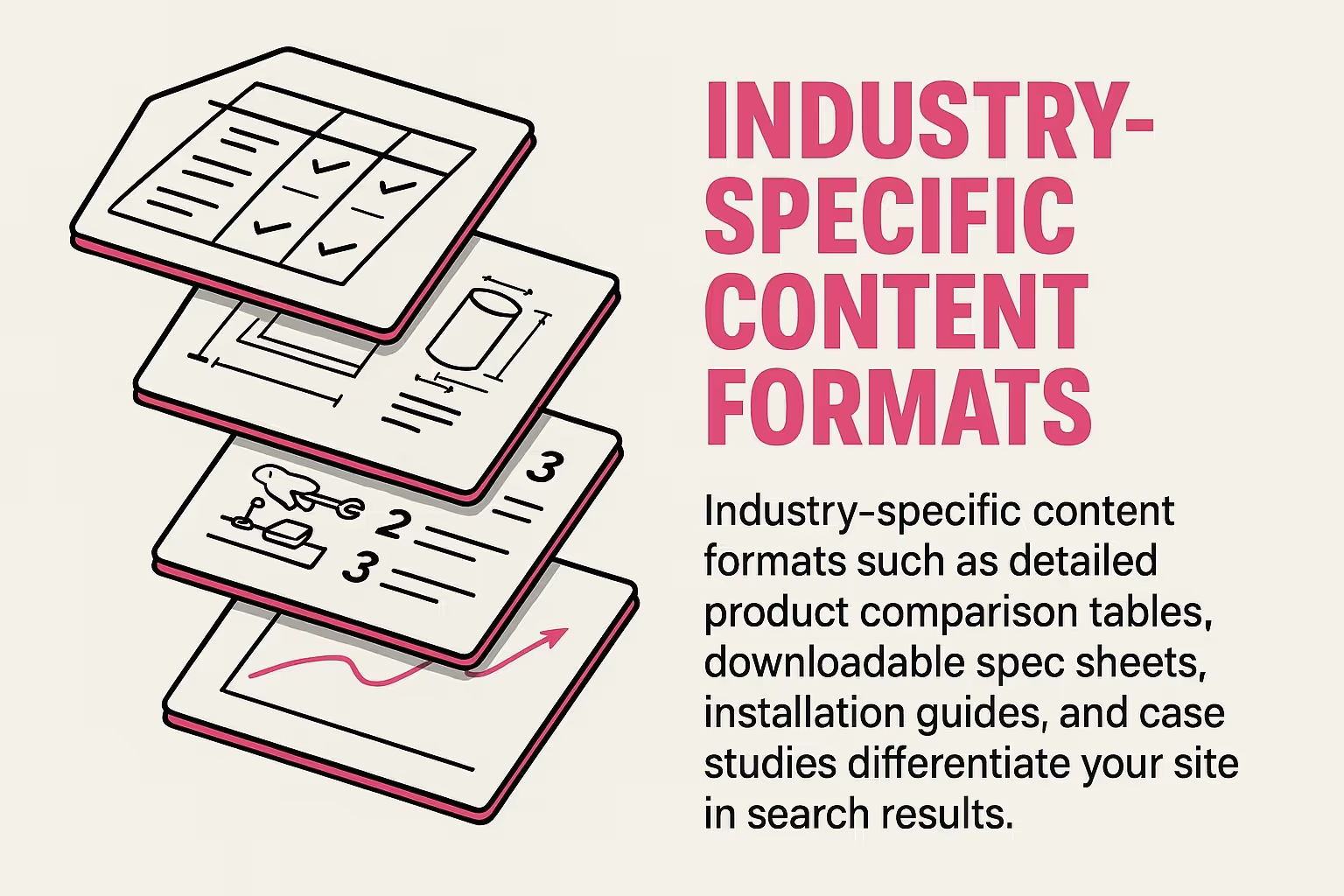
Industry-specific formats—comparison tables, spec sheets, install guides, and case studies—stand out in search results.
Each long-tail keyword needs a home. That might be a product page, category page, blog post, technical guide, or FAQ section. Match content format to search intent.
Product pages work for part-number-specific searches. When someone searches "SKF 6205 bearing," they want that exact product. Your product page should comprehensively cover specifications, applications, pricing, and availability.
Category pages serve broader long-tail terms. "Metric hex bolts stainless steel" fits a category page listing all your metric stainless hex bolts with filters for size, length, and grade.
Blog posts handle educational and question-based keywords. "How to select the right bearing for high-temperature applications" becomes a detailed guide that naturally includes multiple related long-tail keywords.
Comparison pages address versus queries. "Nylon lock nuts vs castle nuts" deserves dedicated content explaining differences, use cases, and helping buyers choose the right option.
Technical resources serve specification and standard-based searches. Create downloadable PDFs for common technical questions, then build landing pages around them optimized for related long-tail keywords.
Place your target keyword in these critical locations:
Use variations naturally throughout the content. Don't repeat the exact keyword awkwardly. Instead, use related terms and synonyms that searchers might also use. Google understands semantic relationships.
Include technical specifications in structured formats. Tables work perfectly for dimensions, material properties, standards compliance, and performance specifications. These help both users and search engines understand your content.
Add schema markup when relevant. Product schema, FAQ schema, and HowTo schema help Google understand your content structure and can earn rich results in search listings.
Longer isn't always better, but thorough beats shallow every time. Answer the searcher's question completely. Then answer the follow-up questions they didn't know to ask.
For product pages targeting specific long-tail keywords, include comprehensive specifications, clear application information, compatibility details, and installation or usage guidance. Add comparison information showing how this product differs from similar options.
For educational content, aim for complete topic coverage. If you're targeting "how to calculate torque for bolt tightening," cover the formula, explain the variables, provide examples, discuss special considerations, and link to related resources.
Study the current top-ranking content for your target keyword. How detailed is their coverage? Match or exceed their depth. If the top result is 1,500 words, plan for at least that much. Quality matters more than pure word count, but you need sufficient depth to compete.
Search intent determines what content format and information angle will rank. Google tries to match results to what searchers actually want, not just what words they used.
Understanding search intent prevents wasted effort. Creating a blog post when searchers want product pages gets you nowhere. Creating product pages when searchers want educational content fails just as completely.
Informational intent drives research and learning. Searchers want knowledge, definitions, explanations, or how-to guidance. Keywords include "what is," "how to," "guide to," and question phrases.
Navigational intent means searchers want a specific website or page. They might search "Parker hydraulic fittings catalog" looking for that exact resource. Your content needs to be that destination.
Commercial intent indicates research before purchase. Searchers compare options, read reviews, and evaluate features. Keywords include "best," "top," "vs," "comparison," "review."
Transactional intent signals ready-to-buy. Searchers want to purchase, download, subscribe, or contact. Keywords include "buy," "price," "quote," "shop," specific part numbers, or "in stock."
The search results page reveals what Google thinks searchers want. Search your target keyword in an incognito window. Study the top 10 results carefully.
What content types dominate? If eight of ten results are product pages, Google believes that's what searchers want. If seven are blog posts or guides, informational intent dominates.
Notice the page angles. For "stainless steel hex bolts," are top results category pages with multiple products, individual product pages for specific sizes, or educational content about choosing stainless steel bolts? This tells you what approach works.
Check featured snippets and People Also Ask boxes. These show additional questions and information Google associates with this keyword. Address these topics in your content for better relevance.
Examine the title and meta description patterns. Do they emphasize price, selection, technical specs, or educational value? Match the emphasis that ranking pages use.
For specification-based searches like "M10 x 1.5 pitch hex bolts class 10.9 metric," searchers want products. Create detailed product pages with complete specifications, multiple product images, clear pricing, and prominent add-to-cart functionality.
For application-based searches like "hydraulic fittings for mobile equipment," searchers need guidance choosing the right products. Create category pages or guides that explain selection criteria, then link to specific products.
For comparison searches like "grade 5 vs grade 8 bolts strength," create dedicated comparison content. Use tables to highlight differences. Recommend appropriate applications for each option. Link to both product types.
For problem-solving searches like "how to prevent bolt loosening in vibration," create educational content first. Explain solutions, discuss product options that help, then naturally link to relevant products like lock nuts, thread locking compound, or spring washers.
Single pages targeting single keywords work. Clusters of related content targeting multiple related keywords work better. Much better.
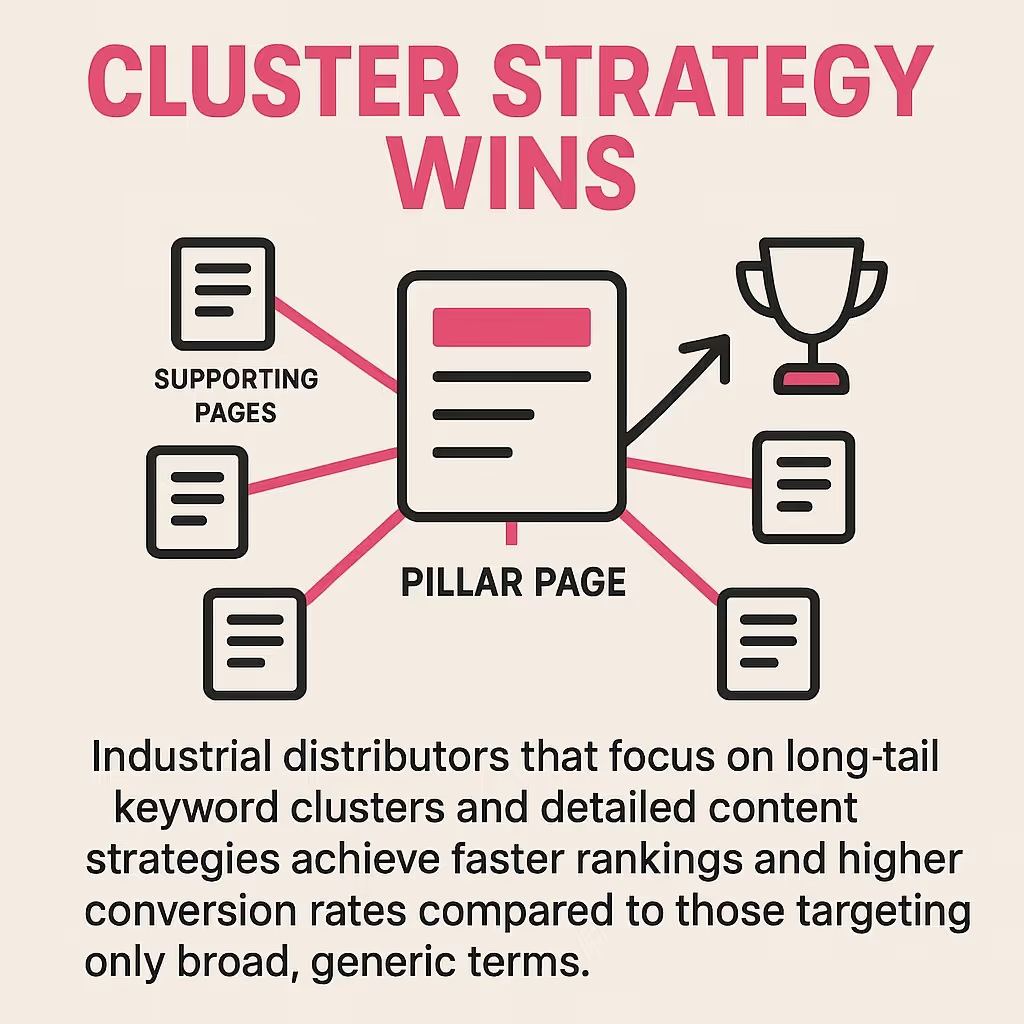
Cluster strategies win: long-tail keyword clusters accelerate rankings and boost conversion rates.
Think of keyword clusters as content families. One pillar page covers the broad topic comprehensively. Multiple supporting pages target specific long-tail variations, all linking back to the pillar and to each other.
Start with your pillar topic. This is a broader category you want to own. For example, "metric fasteners" or "stainless steel hydraulic fittings."
Identify 10-20 related long-tail keywords around that topic. These become your supporting content pieces. For metric fasteners, your long-tail keywords might include:
Create the pillar page first. This comprehensive guide covers metric fasteners broadly: types, sizing systems, strength grades, materials, applications, selection guidance. Target your main keyword but create room for all the supporting topics you'll link to.
Build supporting pages methodically. Each targets one specific long-tail keyword and goes deep on that subtopic. Link from each supporting page to the pillar page and to other relevant supporting pages.
Update the pillar page to link to each new supporting page. This creates a web of interconnected content that signals topical authority to Google.
Internal links distribute authority and help Google understand your site structure. They also keep visitors engaged, moving them from general information to specific products.
For more details on building an effective internal linking system, check out our internal linking strategies guide.
Use descriptive anchor text. Instead of "click here," use "M10 stainless steel hex bolts" or "metric fastener sizing guide." This helps both users and search engines understand the destination.
Link from high-authority pages to important pages you want to rank. Your homepage, popular blog posts, and well-ranking category pages pass authority through their links. Use this strategically.
Create hub pages for major product categories. These pages link to all related product pages and educational content. They become authority centers that boost rankings across entire product lines.
Don't overdo it. 2-5 internal links per 500 words is plenty. Focus on relevant, helpful links that genuinely guide visitors to related information.
Strategy without execution accomplishes nothing. Here's your practical implementation roadmap.
Spend time on this foundation. Use the tools and methods covered earlier to compile 50-100 long-tail keywords relevant to your products.
Organize keywords by product category, search intent, and priority. Your spreadsheet should track: keyword phrase, monthly search volume, keyword difficulty, search intent type, and target page type.
Prioritize keywords by opportunity. Consider difficulty versus search volume. A keyword with 50 monthly searches and difficulty 15 beats a keyword with 200 monthly searches and difficulty 65 for initial targets.
Group related keywords into clusters. Identify which keywords belong together around pillar topics. This organization guides your content planning.
Before creating any content, analyze what's currently ranking. Search each target keyword in incognito mode.
Document the content types ranking: product pages, category pages, blog posts, videos, or other formats. Note the content angle each page takes. What unique value do they provide?
Evaluate content depth. How long are the ranking pages? How detailed is their information? What topics do they cover?
Identify content gaps. What questions aren't the current top results answering? What information do they lack? These gaps are your opportunities to create superior content.
Map each keyword to its ideal content format. Product pages for transactional keywords. Educational content for informational keywords. Comparison pages for commercial intent keywords.
Decide whether to create new pages or optimize existing pages. If you already have a page that partially targets a keyword, enhancing that page often works better than creating a new one.
Plan content depth to match or exceed current rankings. If top results average 1,200 words, plan for 1,500+. If they include comparison tables, plan better tables.
Schedule content creation realistically. Quality beats speed. Better to create one excellent piece weekly than five mediocre pieces. For guidance on optimizing your industrial product pages, see our on-page SEO checklist.
For each page you create or optimize, ensure these elements align with your target keyword:
Make content readable and scannable. Use short paragraphs. Add bullet points for lists. Include tables for specifications. Use images and diagrams where helpful.
Don't stop at one page per keyword. Build clusters of related content that reinforce each other.
Create supplementary blog posts answering related questions. Link these to your main product or category pages. This builds topical authority and captures additional long-tail search traffic.
Add FAQ sections to product pages answering common questions. Use actual customer questions from sales and support interactions.
Update existing content to link to new pages. When you create a new resource, go back through relevant existing pages and add contextual links to the new content.
For more advanced strategies on technical product pages, explore our SEO best practices for product listings.
Rankings take time. Don't expect overnight results. Most pages need 3-6 months to reach their full potential.
Track rankings weekly using Google Search Console or your preferred rank tracking tool. Note which keywords are moving up, which are stuck, and which new keywords your pages start ranking for.
Monitor organic traffic in Google Analytics. Look at landing page performance. Which pages attract the most organic visits? Which have the best engagement metrics?
Measure conversions. Organic traffic means nothing if it doesn't generate leads, quotes, or sales. Set up goal tracking to measure what matters to your business.
Refine based on results. If pages aren't ranking after 90 days, revisit your on-page optimization. Are you matching search intent? Is your content as thorough as competitors? Do you need more internal links pointing to that page?
Industrial buyers search by specifications constantly. Every spec is a potential long-tail keyword.
Create specification-focused landing pages. Instead of just listing "steel pipe," create pages for "schedule 40 steel pipe 4 inch diameter," "schedule 80 steel pipe 2 inch diameter," and every other combination.
Use specification tables strategically. Well-structured tables with complete technical details help rankings. They provide exactly what searchers need and encourage longer time on page.
Include standard compliance in your keyword targeting. "ANSI B18.2.1 hex bolts," "ISO 4762 socket head cap screws," "SAE J429 grade 8 fasteners" are all valuable long-tail keywords.
Adding location modifiers creates additional long-tail opportunities. "Industrial bearings supplier Chicago," "hydraulic hose fittings distributor Texas," or "metric fasteners warehouse Southern California" all represent distinct keywords.
Create location pages if you serve multiple markets. Don't duplicate content, make each location page genuinely useful with local information: nearby customers, regional applications, local inventory, or area-specific case studies.
Include location in product pages naturally when relevant. Mention shipping times to major industrial regions. Reference local industrial applications or common regional requirements.
Some industrial keywords have seasonal patterns. "Winter grade hydraulic fluid," "cold weather grease," or "high-temperature lubricants for summer" reflect seasonal needs.
Create seasonal content in advance. Publish your winter-focused content in early fall so it has time to rank before peak demand.
Update seasonal content annually. Refresh last year's article with current information, new products, and updated specifications. This maintains rankings year after year.
Voice search grows in B2B contexts. Engineers and procurement professionals use voice search in work environments.
Optimize for conversational long-tail keywords. "What is the load capacity of a grade 8 bolt?" gets voice searches. Write content that directly answers these conversational queries.
Use question-based headings. H2 or H3 tags formatted as questions match voice search queries perfectly and often earn featured snippets.
Provide clear, concise answers. Voice assistants pull answers from content that directly addresses questions in 2-3 sentences. Then provide additional detail for readers who want more depth.
You need data to refine your strategy. These metrics tell you what's working and what needs adjustment.
Track rankings for your target keywords. Use position tracking tools or Google Search Console. Monitor weekly changes. Look for steady upward trends rather than obsessing over daily fluctuations.
Measure organic traffic growth by landing page. Which pages attract the most organic visitors? These pages deserve additional internal links and supporting content.
Calculate conversion rates by traffic source and landing page. Long-tail keywords should convert better than generic terms. If they don't, either the keyword doesn't match buyer intent or your page needs optimization.
Monitor impressions and click-through rates in Search Console. High impressions with low clicks mean you're ranking but not attracting clicks. Improve your title and meta description.
Track new keyword discoveries. As you build content, you'll start ranking for keywords you didn't specifically target. These organic keyword wins reveal opportunities for dedicated content.
Search Console provides invaluable data about your actual search performance. Check it weekly.
Filter queries by impressions with position 8-20. These represent keywords where you're close to page one. Often, modest improvements move you up several positions.
Look for high-impression, low-click queries. You're ranking but not getting clicks. Either improve your search result appearance or reconsider if that keyword actually matches your offering.
Export query data regularly. Build a database of all keywords driving impressions. This reveals patterns and opportunities you'd miss looking at the interface alone.
Compare performance periods. How has your organic traffic changed month over month? Which new keywords are you capturing? Which keywords dropped in rankings?
Build a simple spreadsheet or use a tool like Google Data Studio to track your key metrics in one place.
Include these elements in your dashboard: total organic traffic, organic traffic by landing page, top 20 ranking keywords with positions, conversion rate from organic traffic, new keywords ranked this month, and priority keywords still needing improvement.
Review your dashboard weekly for quick checks, monthly for detailed analysis. Use this data to prioritize your content creation and optimization efforts.
Create content that answers specific user questions and incorporates natural phrases with three or more words. Optimize page titles, headings, and body text for these keywords. Use internal linking to connect related topics. Focus on matching user intent for higher engagement.
Start with core topics relevant to your business, then expand using keyword research tools, competitor analysis, and customer questions. Prioritize keywords with low competition and high conversion intent. Group related phrases for content coverage.
Use Google Search Console and Google Analytics to monitor impressions, clicks, rankings, and conversions. Review these metrics regularly to assess which keywords drive traffic and engagement. Adjust your content strategy based on performance data.
The industrial businesses winning in search aren't always the biggest. They're the smartest about matching specific customer needs with targeted content.
You've got the complete framework now. Find long-tail keywords using the tools and methods covered. Analyze search intent so you create the right content format. Build comprehensive pages that answer questions thoroughly. Connect related content through strategic internal linking.
Start small if needed. Pick five high-priority long-tail keywords this week. Create or optimize pages for those keywords. Track results for 90 days. You'll see movement sooner than you expect.
The compound effect builds over time. Twenty optimized pages become forty become a hundred. Each page captures its specific long-tail keywords. The cumulative traffic and conversions add up to serious business results.
Your competitors are probably still chasing "bolts" and "bearings." You'll be capturing "M10 x 60mm stainless steel hex bolts A4 marine grade" and fifty other specific terms that drive actual sales.
That's the difference between hoping for traffic and building a predictable growth engine. Get started today.