Local landing pages for farm equipment dealers are specialized web pages built for individual geographic markets. They help brands rank in organic search results across multiple cities by targeting location-specific keywords and providing unique content relevant to each area.
These location pages go beyond simple contact information. They address the specific needs of farmers in each region, showcase relevant inventory, and establish your dealership as the go-to resource for that community.
Think of them as digital storefronts customized for each market you serve. When a farmer in Des Moines searches for "tractor dealers near me," your Iowa landing page should appear. When someone in Lincoln looks for "combine financing options," your Nebraska page should rank.
The agricultural equipment industry is becoming increasingly digital. The AI in agriculture market is expected to reach USD $2.55 billion in 2025 and grow to USD $7.05 billion by 2030, signaling massive shifts in how farmers research and purchase equipment.

The AI in agriculture market is expected to reach USD 2.55 billion in 2025 and grow to USD 7.05 billion by 2030.
This guide walks you through building local landing pages that actually convert.
Local landing pages are individual web pages created for each geographic area your dealership serves. They're also called location pages or city pages.
Each page targets local SEO keywords specific to that market. Instead of one generic "About Us" page, you create customized pages for Des Moines, Omaha, Lincoln, and every other city in your service area.
Here's what makes them different from regular pages. Local landing pages include location-specific content that speaks directly to farmers in that area. They feature inventory available at that location, testimonials from nearby customers, and information about local agricultural conditions.
For multi-location farm equipment dealerships, these pages solve a critical problem. You can't rely only on your Google Business Profile to capture all the search traffic in your service areas. Many farmers search with specific equipment needs before they're ready to visit a physical location.
Location pages help you appear in those early research searches. When someone types "John Deere dealer Iowa" or "used combine sales Nebraska," your optimized landing pages can rank in the top results.
The key is creating unique content for each page. Search engines penalize duplicate content, so copying and pasting the same text across multiple location pages will hurt your rankings. Each page needs its own perspective, details, and value proposition.
The precision farming market tells us something important. The global precision farming market is valued at USD $14.18 billion in 2025 and is projected to reach USD $43.64 billion by 2034, showing how much technology now drives purchase decisions.
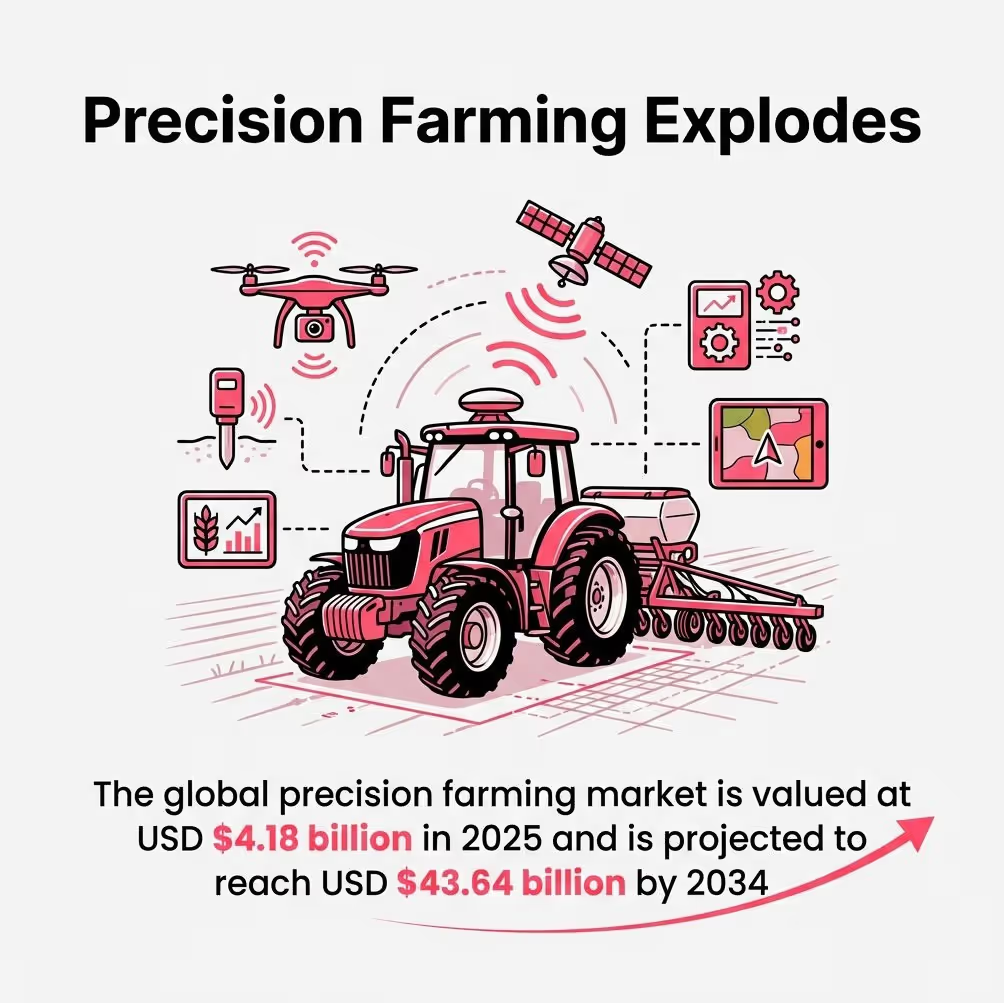
The global precision farming market is valued at USD $14.18 billion in 2025 and is projected to reach USD $43.64 billion by 2034.
Your customers are researching online before they ever set foot on your lot. They're comparing models, reading reviews, checking financing options, and evaluating dealers across multiple locations. If you're not visible in local search results, you're losing opportunities before the conversation even starts.
Local landing pages expand your visibility beyond map pack rankings. The Google Business Profile gets you into local map results, but that's just three positions. Organic search results offer ten spots on the first page, and optimized location pages can capture several of them.
This matters for conversion rates too. Generic pages create friction. When a farmer lands on a page clearly built for their area, featuring familiar landmarks and addressing local farming conditions, they're more likely to engage.
Geographic targeting improves your ad performance as well. When you run PPC campaigns for farm equipment, directing clicks to location-specific landing pages increases relevance scores and conversion rates. The message matches the search intent perfectly.
Consider the typical farm equipment buying journey. It's long, involves multiple stakeholders, and requires significant research. Farmers might spend months evaluating options before making a decision. Location pages let you stay visible throughout that entire process for searches at every stage.
Mobile responsiveness becomes crucial here. Farmers are increasingly using IoT devices, drones, GPS, and AI analytics for crop monitoring and farm management, indicating high mobile technology adoption. Your location pages need to work flawlessly on smartphones and tablets.
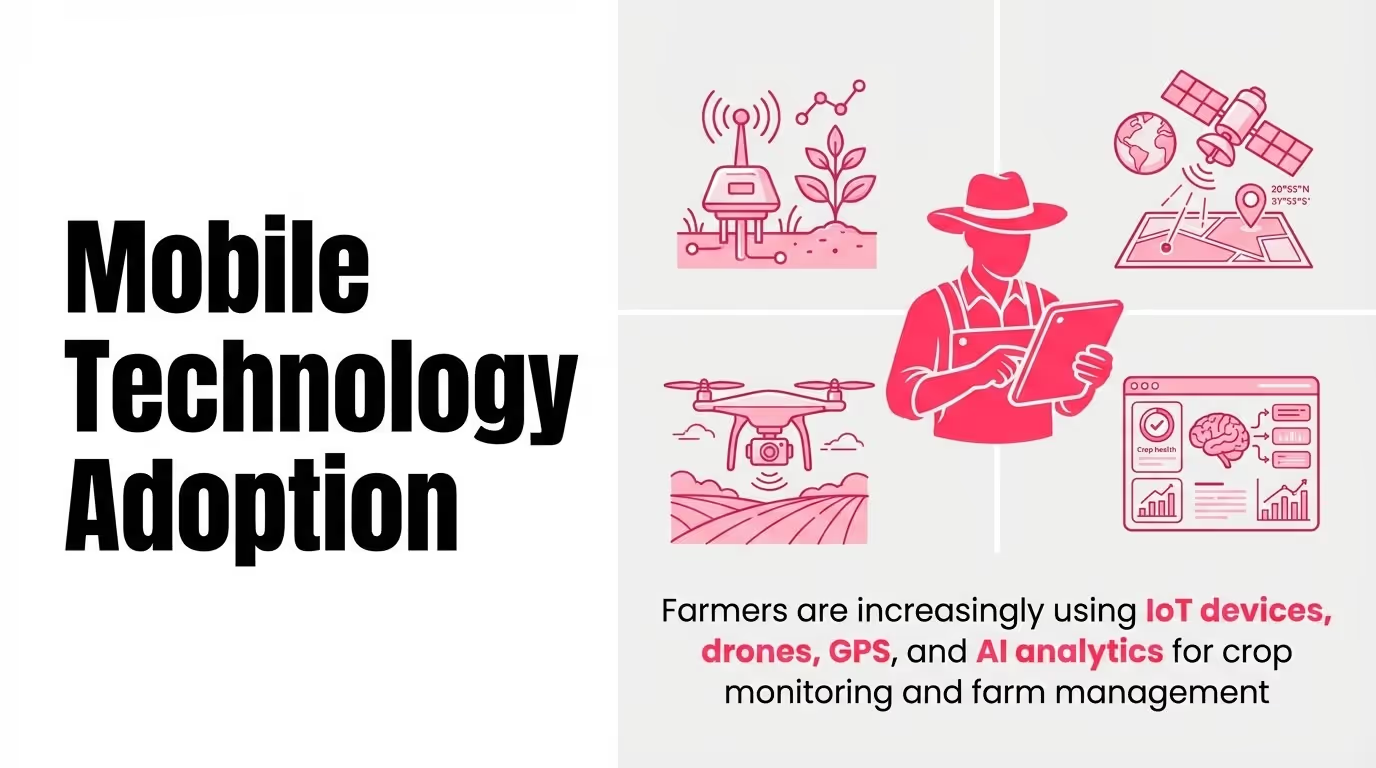
Farmers are increasingly using IoT devices, drones, GPS, and AI analytics for crop monitoring and farm management.
Start with geo-modifiers. These are location terms you add to base keywords.
Your base keywords might include "tractor dealer," "combine sales," "farm equipment financing," or "used agricultural machinery." Add your service cities to create geo-modified keywords: "tractor dealer Des Moines," "combine sales Omaha," "farm equipment financing Lincoln."
But don't stop at city names. Farmers also search using county names, regional terms, and neighboring towns. Someone in rural Iowa might search "tractor dealer Story County" or "farm equipment central Iowa."
Create a spreadsheet with these columns: base keyword, geographic modifier, search volume, competition level, and commercial intent. Tools like Google Keyword Planner help you find actual search volumes for each combination.
Pay attention to "near me" searches too. These have exploded in recent years. When farmers search "John Deere dealer near me" or "tractor parts near me," Google uses their location to show relevant results. Your location pages need to capture this intent.
Look for equipment-specific local searches. Farmers often search for particular models or brands combined with location: "John Deere 8R series Iowa," "Case IH Magnum dealer Nebraska," "New Holland combine financing Kansas."
Service-related searches matter just as much. Don't focus only on equipment sales. Capture maintenance, repair, and parts searches: "tractor repair Des Moines," "combine parts Omaha," "farm equipment service Lincoln."
Seasonal keywords require attention in farm equipment marketing. Search patterns shift dramatically based on planting and harvest seasons. Plan location pages that address seasonal needs: "pre-planting equipment inspection," "harvest equipment financing," "winter equipment storage."
Study what other dealerships rank for in your target markets. Search your geo-modified keywords and examine the top 10 results. What location pages appear? How are they structured?
Check their title tags and meta descriptions. These HTML elements show up in search results and reveal their keyword targeting strategy.
Look at their URL structures. Some dealerships use directories like "/locations/des-moines/" while others use subdomains like "desmoines.dealername.com." Both approaches work, but consistency matters more than the specific structure you choose.
Not all geo-modified keywords deserve equal attention. Prioritize based on search volume, commercial intent, and competitive difficulty.
High-priority keywords combine decent search volume with clear commercial intent. "Tractor financing Des Moines" shows someone ready to buy. "Types of tractors" shows someone still learning.
Create separate keyword clusters for each location page. Each landing page should target 3-5 primary geo-modified keywords plus 10-15 related long-tail phrases. This gives you enough content direction without keyword stuffing.
URL structure influences both SEO performance and user experience. Choose a consistent format and stick with it across all location pages.
The most common approach uses a subdirectory structure: yourcompany.com/locations/city-name/. This keeps all location pages under one domain, consolidating your SEO authority. It's also easier to manage than maintaining separate subdomains.
Use clean, readable URLs with hyphens separating words. "yourcompany.com/locations/des-moines/" works better than "yourcompany.com/loc-dsm-ia" for both users and search engines. The URL should clearly indicate what the page contains.
Consider state and city hierarchy if you operate across multiple states. A structure like "yourcompany.com/iowa/des-moines/" helps organize pages geographically. This becomes especially useful as you scale to dozens of locations.
Avoid duplicate content at the URL level. Never have multiple URLs showing the same content. Each location needs exactly one canonical page. If you need to serve the same area through multiple URLs for technical reasons, implement proper canonical tags.
Your site navigation should make location pages easy to find. Add a "Locations" link to your main menu that opens a dropdown or leads to a location finder page.
The location finder page should list all your service areas with links to individual landing pages. You can organize this alphabetically, by state, or using an interactive map. Whatever format you choose, make sure every location page is accessible within two clicks from your homepage.
Internal linking between location pages matters too. If you serve neighboring cities, link between those pages naturally in the content. A Des Moines page might mention "We also serve nearby Ames and Ankeny" with appropriate links.
Google uses mobile-first indexing. The mobile version of your location pages determines your rankings, not the desktop version.
This means responsive design isn't optional anymore. Your location pages must work perfectly on smartphones and tablets. Test loading speeds, button sizes, form usability, and content readability on actual mobile devices.
Mobile users have different intent patterns. They're often searching while on the go, looking for quick information like phone numbers, addresses, or hours. Make this information immediately visible above the fold on mobile screens.
Here's where most farm equipment dealers fail. They create one template, swap out the city name, and call it done. Search engines see right through this approach.
Each location page needs genuinely unique content that provides real value to farmers in that area. This means research, customization, and actual effort.
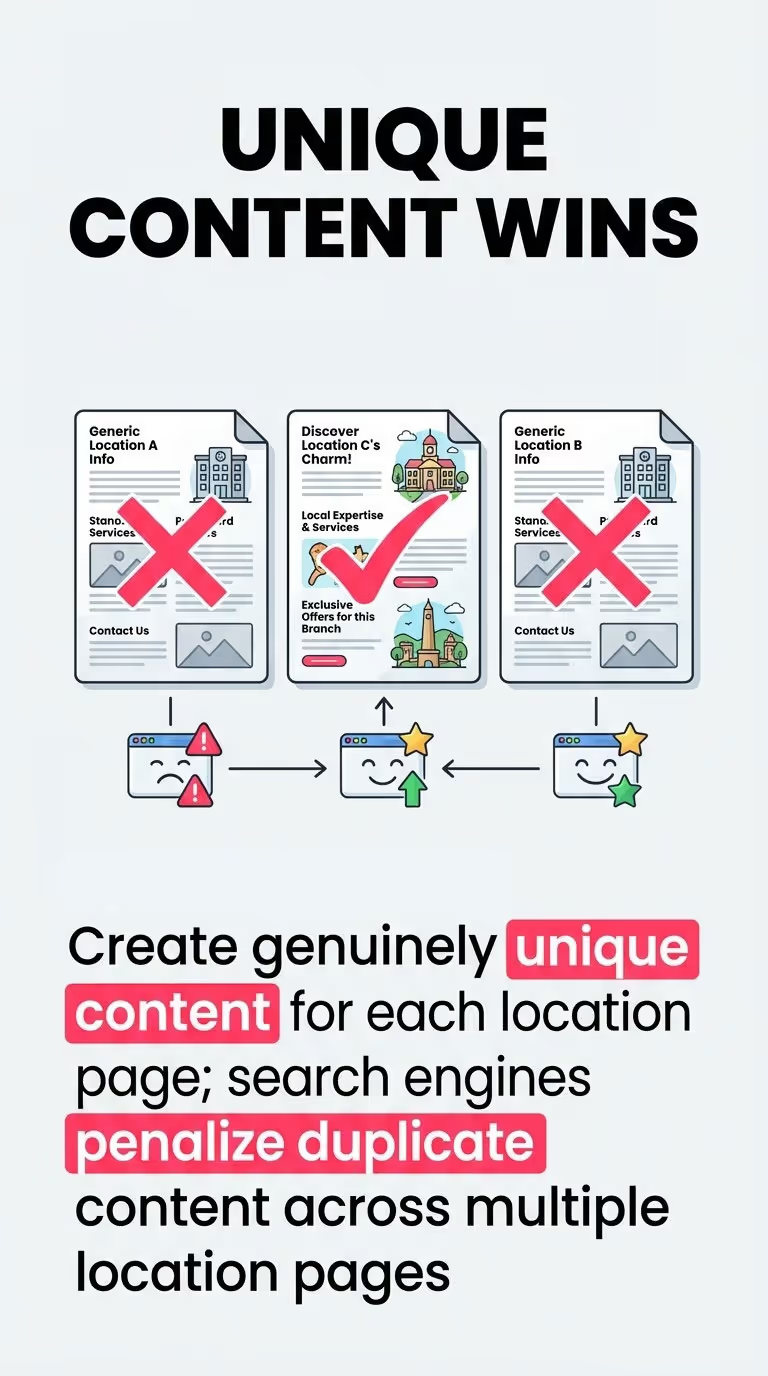
Create genuinely unique content for each location page; search engines penalize duplicate content across multiple location pages.
Start with local farming context. What crops dominate in this region? What are the typical farm sizes? What specific challenges do farmers face here? A Des Moines page should discuss corn and soybean operations differently than a page targeting wheat farmers in Kansas.
Include location-specific inventory information. Which equipment models are available at this location right now? What's popular with farmers in this area? If you have used equipment, show what's actually on the lot.
Feature local customer testimonials. Reviews from farmers in the same area carry more weight than generic testimonials. Include their name, farm location (with permission), and specific details about their experience.
Discuss local events and involvement. Do you sponsor the county fair? Participate in local ag shows? Support FFA chapters? This demonstrates community connection and provides unique content that can't be duplicated across other pages.
Your H1 heading should include the location and primary keyword naturally. "Farm Equipment Dealer Serving Des Moines and Central Iowa" works better than just "Des Moines Location."
The opening paragraphs should immediately establish local relevance. Don't bury the location mention three paragraphs down. Lead with it: "We've served farmers across central Iowa for over 30 years, providing new and used tractors, combines, and implements to operations throughout Polk, Story, and Dallas counties."
Use conversational language that reflects how local farmers actually talk. Farming culture varies by region. Adjust your tone and terminology accordingly while staying authentic to your brand voice.
Yes, you need to include your geo-modified keywords. But forcing them into every sentence creates awful reading experiences and triggers spam filters.
Aim for natural keyword density. Your primary geo-modified keyword should appear in the H1, the first paragraph, one or two H2 or H3 subheadings, and naturally throughout the body content. That's typically 3-5 times in a 1000-word page.
Use variations and related terms. Instead of repeating "tractor dealer Des Moines" ten times, alternate with "farm equipment dealer in Des Moines," "serving Des Moines area farmers," and "central Iowa tractor sales."
Title tags determine whether people click your result in search listings. They're one of the strongest ranking signals for local SEO.
Format your title tag like this: [Service] in [Location] | [Brand Name]. For example: "Farm Equipment Dealer in Des Moines, IA | Miller Ag Equipment." Keep it under 60 characters so it doesn't get cut off in search results.
Include your primary geo-modified keyword in the title tag. This signals exactly what the page is about to both users and search engines.
Meta descriptions don't directly impact rankings, but they dramatically affect click-through rates. Write compelling descriptions that include your location and unique selling proposition.
A strong meta description might read: "Miller Ag Equipment serves Des Moines and central Iowa with new and used tractors, combines, and implements. Family-owned since 1985. Visit our 20-acre lot today." Keep it under 155 characters.
Every image needs descriptive alt text that includes location context when relevant. Don't just write "tractor" as alt text. Use "John Deere 8R tractor at Miller Ag Equipment Des Moines location."
This helps with image search rankings and improves accessibility for visually impaired users. It's also another opportunity to naturally incorporate location keywords.
File names matter too. Before uploading images, rename them descriptively. "IMG_1234.jpg" should become "miller-ag-des-moines-showroom.jpg."
Compress images to improve loading speed. Large image files slow down mobile performance, which hurts rankings and conversion rates. Tools like TinyPNG reduce file sizes without visible quality loss.
Link from your location pages to relevant product pages, service pages, and financing information. This distributes SEO authority throughout your site and helps users navigate to conversion points.
Use descriptive anchor text that includes relevant keywords. Instead of "click here," use "view our current tractor inventory" or "learn about financing options."
Creating an effective landing page requires understanding the core principles of conversion optimization and user experience design, which apply equally to local landing pages.
Link between related location pages naturally. Your Des Moines page might link to nearby Ames or Ankeny pages when discussing your service area coverage.
NAP stands for Name, Address, Phone number. These three elements must appear on every location page in the exact same format you use everywhere online.
NAP consistency affects local search rankings significantly. If your Google Business Profile says "123 Main Street" but your location page says "123 Main St.," search engines see conflicting information and trust your listings less.
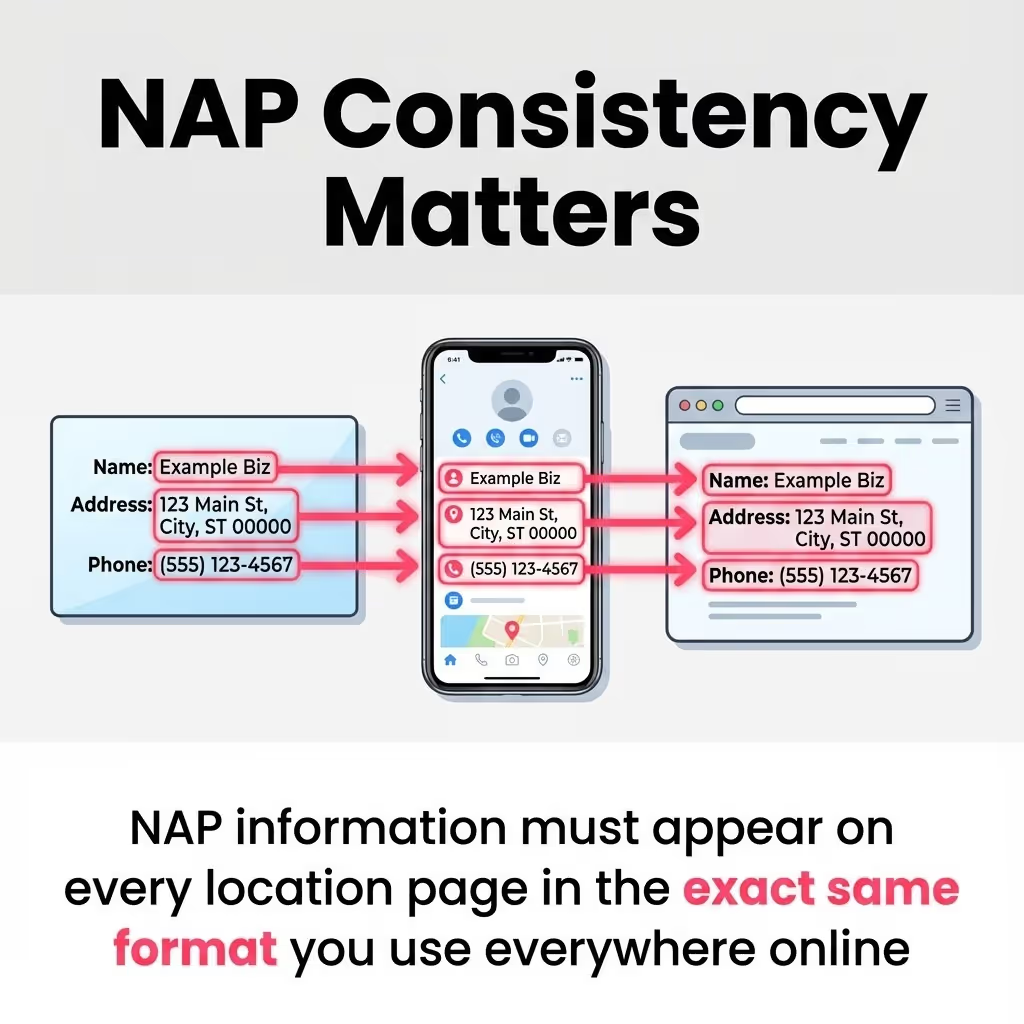
NAP information must appear on every location page in the exact same format you use everywhere online.
Use the same business name format across all platforms. If you're registered as "Miller Ag Equipment, Inc." on Google, don't shorten it to "Miller Ag Equipment" on your website.
Display NAP information prominently above the fold. Farmers visiting your location page often just need your address or phone number quickly. Don't make them hunt for it.
Embed an interactive Google Map showing your dealership location. This helps users get directions and reinforces your geographic relevance to search engines.
The map should be prominent but not dominate the page. Place it in the sidebar or near the top of the content area where it's easily accessible but doesn't push critical content down on mobile devices.
Make sure your Google Business Profile information matches perfectly with the map embedded on your location page. The address, phone number, and business name should be identical.
List your hours of operation clearly. Show different hours for different days if applicable. Many farmers visit dealerships on weekends or need to know if you're open during evening hours.
Provide multiple contact options. Include your phone number (make it click-to-call on mobile), email address, and a contact form. Different customers prefer different communication methods.
Add calls-to-action throughout the page. "Schedule a test drive," "Request a quote," "Talk to a specialist," and "View current inventory" give visitors clear next steps.
Just like landing page readability affects how users engage with your content, the clarity of your contact information determines whether potential customers actually reach out.
Schema markup is code that helps search engines understand your content better. For local landing pages, it's essential.
Implement LocalBusiness schema on every location page. This structured data includes your business name, address, phone number, hours, geographic coordinates, and service area.
Use Schema.org's LocalBusiness vocabulary as your foundation. You can get more specific with subtypes like AutoDealer (which applies to farm equipment dealers).
Here's what your schema markup should include at minimum:
Test your schema markup using Google's Rich Results Test. This tool shows whether your structured data is implemented correctly and identifies any errors.
Your Google Business Profile and location landing pages should work together. In your profile, link directly to the corresponding location page on your website. This tells Google which page is authoritative for that location.
Make sure the information matches perfectly. Any discrepancies between your Google Business Profile and your location page confuse search engines and hurt your local search rankings.
Keep both updated simultaneously. If you change your phone number or hours, update both your Google Business Profile and your location page immediately.
Citations are mentions of your NAP information on other websites. Directories, industry sites, and local business listings all create citations that strengthen local SEO.
Submit each location to relevant directories like Yelp, Yellow Pages, and industry-specific directories for agricultural equipment dealers.
Maintain NAP consistency across all citations. Use the exact same format for your business name, address, and phone number on every directory and listing site.
Look for opportunities to earn backlinks from local organizations. Sponsoring local ag events, supporting FFA programs, or participating in farming associations can generate quality local links pointing to your location pages.
Understanding internal linking strategies helps you connect location pages to your broader site architecture effectively.
Customer reviews build trust faster than anything else you can add to a location page. Display testimonials from farmers in that specific area.
Include full names and farm locations (with permission). "John M." carries less weight than "John Miller, Miller Family Farms, Story County, Iowa." Specific details make testimonials credible.
Feature Google Business Profile reviews directly on your location pages. These verified reviews provide authentic social proof. Most review platforms offer widgets or APIs that make this easy.
Showcase local expertise and involvement. Photos of your team at county fairs, agricultural shows, or farm visits demonstrate community engagement. Farmers want to work with dealers who understand local farming operations.
If you're running location-specific promotions or inventory clearances, feature them prominently on the relevant landing pages. A "Spring Planting Sale - Des Moines Only" creates urgency and improves conversion rates.
Update promotional content regularly. Outdated promotions signal that the page isn't actively maintained, which hurts both user trust and search engine evaluations of content freshness.
Add photos of your actual location. Show your lot, showroom, service facilities, and team. Generic stock photos of tractors don't build location-specific trust.
Video content performs exceptionally well for farm equipment. A short video tour of your Des Moines location provides visual proof and keeps visitors engaged longer, which signals quality to search engines.
Make sure all visual content loads quickly on mobile devices. Compress videos and images appropriately. A slow-loading page frustrates users and tanks your rankings.
Set up location-specific tracking in Google Analytics. Create separate tracking parameters for each landing page so you can measure traffic, engagement, and conversions individually.
Monitor these key metrics for each location page:
Use Google Search Console to track which keywords drive traffic to each location page. This reveals opportunities to optimize for additional geo-modified terms you might have missed.
Compare performance across different locations. If your Omaha page outperforms your Des Moines page significantly, analyze what's different. Better content? More reviews? Stronger local citations?
Test different calls-to-action to see which drives more conversions. "Schedule a Test Drive" might outperform "Request Information" for one location but underperform for another.
Experiment with content layouts. Try moving your contact information higher or lower on the page. Test different heading structures. Small changes can produce meaningful conversion rate improvements.
The principles that apply to avoiding landing page copywriting mistakes help you refine your location pages over time.
Update location pages quarterly at minimum. Add new customer testimonials, refresh promotional content, update inventory information, and revise sections that become outdated.
Search engines favor fresh, regularly updated content. If your location pages sit unchanged for months, rankings gradually decline as competitors publish newer, more current content.
Seasonal updates work especially well for farm equipment. Create content sections that rotate based on planting and harvest cycles. This keeps pages relevant and gives you natural reasons to update content regularly.
Once you've created and optimized location pages for your primary markets, expand to secondary markets. Small towns and rural areas still drive significant farm equipment sales.
Consider service area pages in addition to physical location pages. You might not have a dealership in every small town, but you can create pages targeting broader service regions: "Serving Story County Farmers" or "Central Iowa Farm Equipment."
Build templates that make creating new location pages more efficient, but always customize significantly. Templates should provide structure and save time on design, but content must remain genuinely unique for each location.
Marketing farm equipment online requires strategies specifically adapted to this industry, similar to marketing truck and heavy equipment parts online.
Use location pages as landing pages for geo-targeted Google Ads campaigns. When someone searches "tractor dealer Des Moines" and clicks your ad, they should land on your Des Moines location page, not your generic homepage.
This relevance improves Quality Score, reduces cost per click, and increases conversion rates. The message match between ad copy and landing page content creates a seamless user experience.
Create location-specific ad copy that mirrors your landing page content. If your Des Moines page emphasizes "serving Story County farmers for 30 years," your ads targeting that area should reference the same longevity and local expertise.
Don't create location pages for areas you don't actually serve. Some dealerships build hundreds of location pages for every small town hoping to capture traffic. If you can't genuinely serve those areas, this tactic backfires.
Never use duplicate content across location pages. This bears repeating because it's the most common mistake. Each page needs unique, valuable content or it hurts more than it helps.
Don't neglect mobile optimization. Over half your traffic comes from mobile devices. If location pages don't work perfectly on smartphones, you're losing the majority of potential customers.
Avoid thin content. A location page that's just your NAP information and a map provides no value. Aim for at least 800-1000 words of substantive, useful content per page.
Start with your most important market. Don't try to build 20 location pages simultaneously. Choose your highest-volume location and create one exceptional landing page.
Get the fundamentals right first. Nail the NAP consistency, implement proper schema markup, create genuinely unique content, and optimize all the on-page elements we covered.
Once that first page ranks well and drives conversions, replicate the process for your next location. Use what you learned from the first page to make the second one even better.
Track everything from day one. Set up analytics, monitor rankings, and measure conversions. You can't improve what you don't measure.
Local landing pages aren't a one-time project. They require ongoing optimization, regular updates, and continuous improvement. But the investment pays off in higher visibility, more qualified traffic, and increased equipment sales.
The farmers searching for equipment in your area are online right now. Your location pages determine whether they find you or your competitors.