

Personal protective equipment manufacturers face a massive opportunity in 2026. The global PPE market will reach USD $73.28 billion this year and grow to USD $111.17 billion by 2032 at a 6.1% CAGR. But here's what most PPE companies miss: having a great product means nothing if buyers can't find you online.
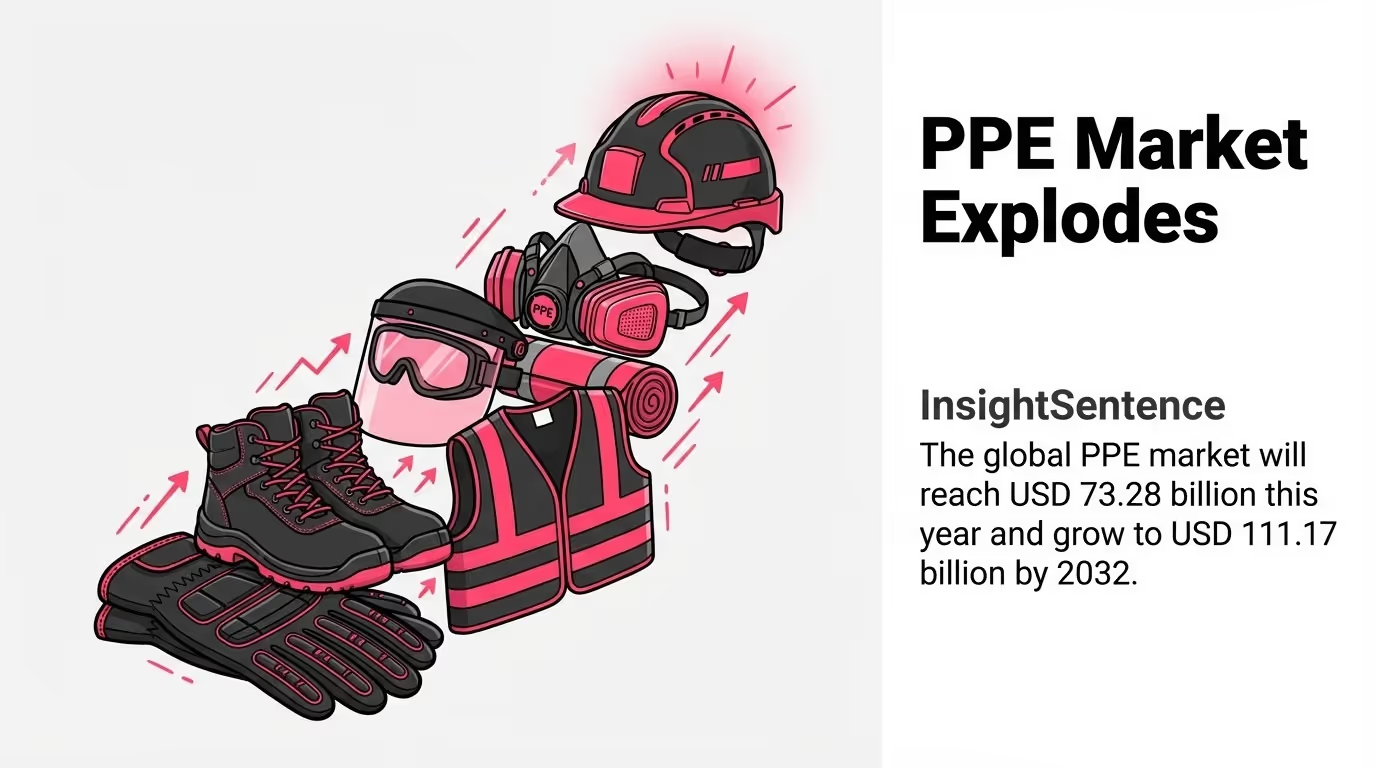
The global PPE market will reach USD $73.28 billion in 2025 and climb to USD $111.17 billion by 2032.
I've seen too many PPE manufacturers rely on outdated sales tactics. They wait for trade show leads. They depend on distributor relationships built decades ago.
That approach is dying fast.
Your B2B buyers research online before they ever talk to a sales rep. They compare specs on your website. They check your LinkedIn presence. They watch your product videos on YouTube.
If your digital marketing strategy isn't firing on all cylinders, you're invisible to the decision-makers with budget authority.
This guide covers the exact digital marketing strategies PPE companies need in 2026. You'll learn how to dominate search results, create content that converts safety managers, and use AI tools to automate repetitive marketing tasks. By the end, you'll have a clear roadmap to generate qualified leads online while your competitors still rely on cold calls.
The PPE industry transformed completely over the past five years. What worked in 2020 won't work now.
B2B buyers changed how they make purchasing decisions. They start their research on Google, not by calling suppliers. They watch product demonstration videos before requesting quotes. They check your social media to verify you're a legitimate manufacturer.
Search engine optimization drives this shift. When a safety manager needs nitrile gloves for a manufacturing facility, they search "bulk nitrile gloves food processing safety" on Google. If your PPE company doesn't rank on page one, you don't exist in their consideration set.
The data backs this up. Another forecast estimates the PPE market will grow from USD $169.40 billion in 2025 to USD $318.22 billion by 2033, at an 8.2% CAGR. That's massive growth, but it comes with increased competition.
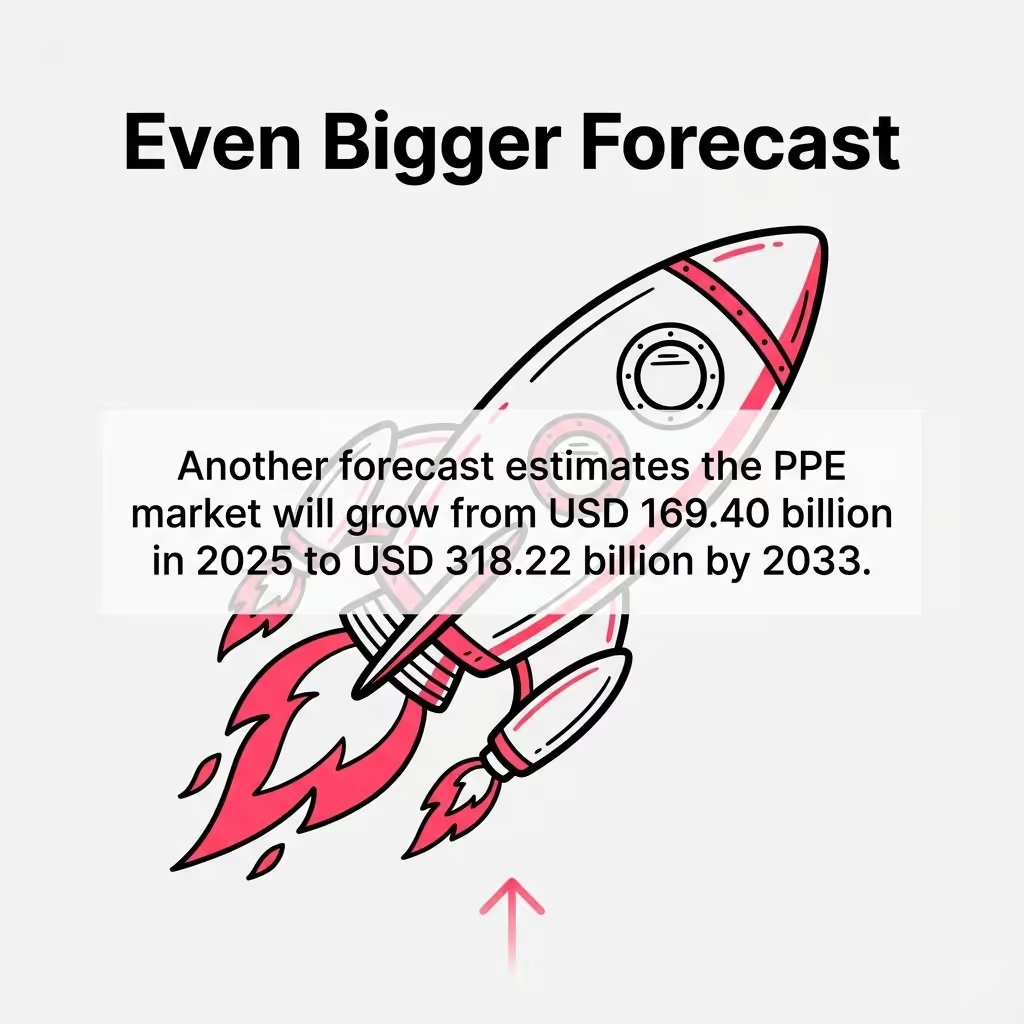
Alternative forecast: USD $169.40 billion in 2025 growing to USD $318.22 billion by 2033.
PPE manufacturers who invest in digital marketing now will capture disproportionate market share. Those who wait will fight for scraps.
Your website acts as your 24/7 sales rep. It answers technical questions about impact resistance ratings. It provides downloadable compliance certifications. It collects lead information while you sleep.
Email marketing nurtures those leads automatically. Pay-per-click advertising puts your products in front of buyers actively searching for PPE solutions right now.
The playing field shifted. Digital marketing isn't optional for PPE companies anymore.
Understanding current market dynamics helps you position your digital marketing strategy effectively.
Healthcare accounts for the largest share of PPE demand. This sector requires a constant supply of gloves, masks, face shields, and protective gowns. But growth opportunities exist in other sectors too.
The oil and gas segment continues growing due to high accident risk in extraction and refining operations. Construction workers need hard hats, safety glasses, and fall protection equipment daily. Food processing facilities require specialized PPE that meets FDA standards.
Metal fabrication shops need welding helmets, heat-resistant gloves, and protective aprons. Each vertical has unique requirements and compliance needs.
Technology integration creates new marketing angles for PPE companies. Bluetooth-enabled PPE for real-time monitoring of worker safety represents a significant trend.

Bluetooth-enabled PPE enables real-time safety monitoring and opens new data-driven value propositions.
Smart helmets with built-in sensors detect impacts and environmental hazards. Connected safety vests monitor worker location and vital signs. Intelligent respirators track air quality and filter efficiency.
The Nordic smart PPE market will grow at a CAGR of 14.87% between 2025 and 2033, with smart helmets as the largest product segment.
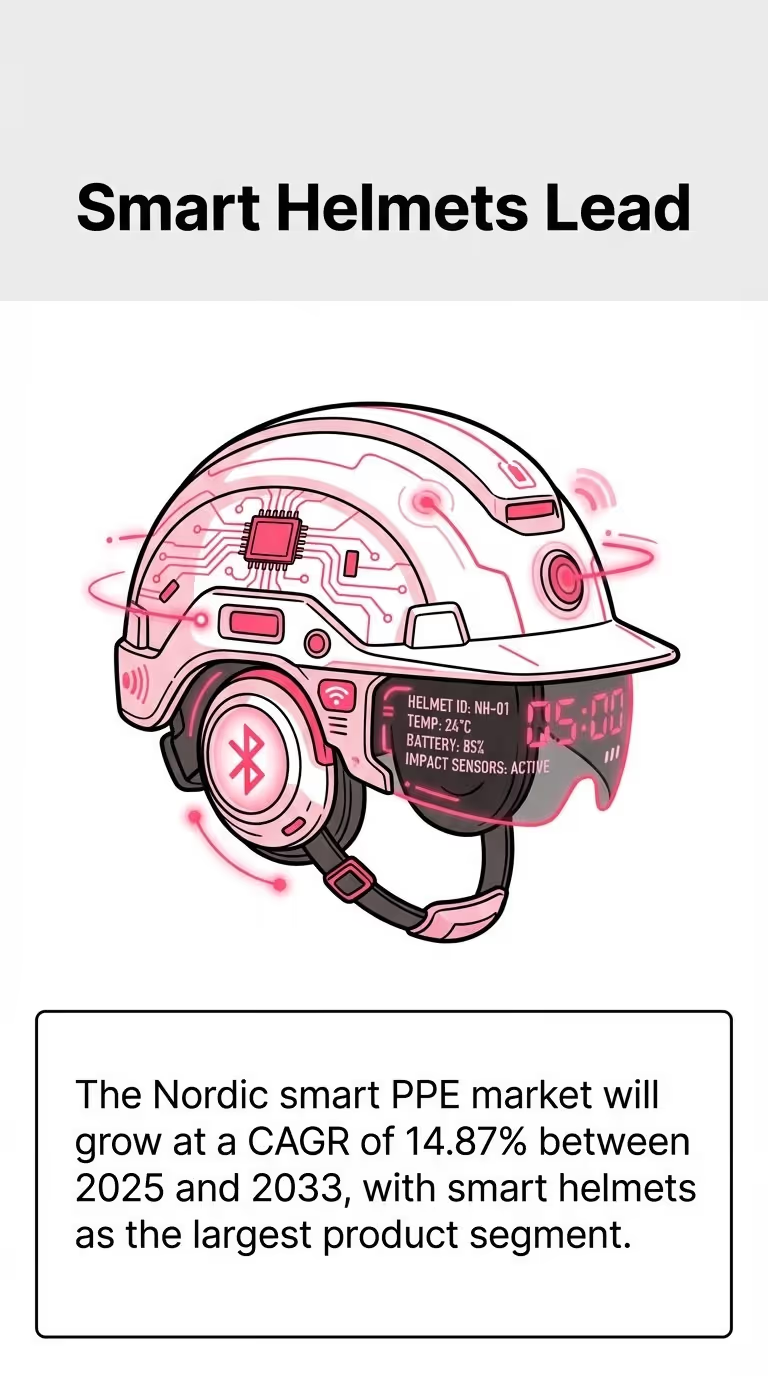
Smart helmets are projected to lead Nordic smart PPE growth at 14.87% CAGR through 2033.
This technology shift requires different content marketing approaches. Your blog posts should explain how IoT sensors improve workplace safety programs. Your videos need to demonstrate data dashboard features. Your email campaigns must address IT integration concerns.
PPE manufacturers face specific obstacles that shape your digital marketing priorities.
Compliance complexity makes content creation harder. You need to accurately explain OSHA standards, ANSI ratings, and industry-specific regulations without legal risk. One incorrect specification on your website could undermine buyer trust.
Long sales cycles require sustained nurturing campaigns. A safety director won't order 10,000 units after one website visit. They'll download your product specs, share with procurement, request samples, and compare three competitors. Your email marketing must support this extended decision process.
Technical products demand educational content. Generic marketing fluff won't work for PPE companies. Buyers need detailed information about material composition, performance testing results, and use case applications.
Global supply chain concerns influence buyer behavior. Your website should address manufacturing locations, inventory levels, and shipping timelines proactively.
Now that you understand the market context, SEO becomes your foundation for digital marketing success. Without strong search rankings, your other marketing efforts won't reach their full potential.
SEO for PPE companies differs from consumer product optimization. Your keywords target procurement managers, safety directors, and facility managers, not individual consumers.
Start with long-tail keywords that indicate purchase intent. "Bulk nitrile gloves wholesale distributor California" converts better than just "gloves" because it shows specific need.
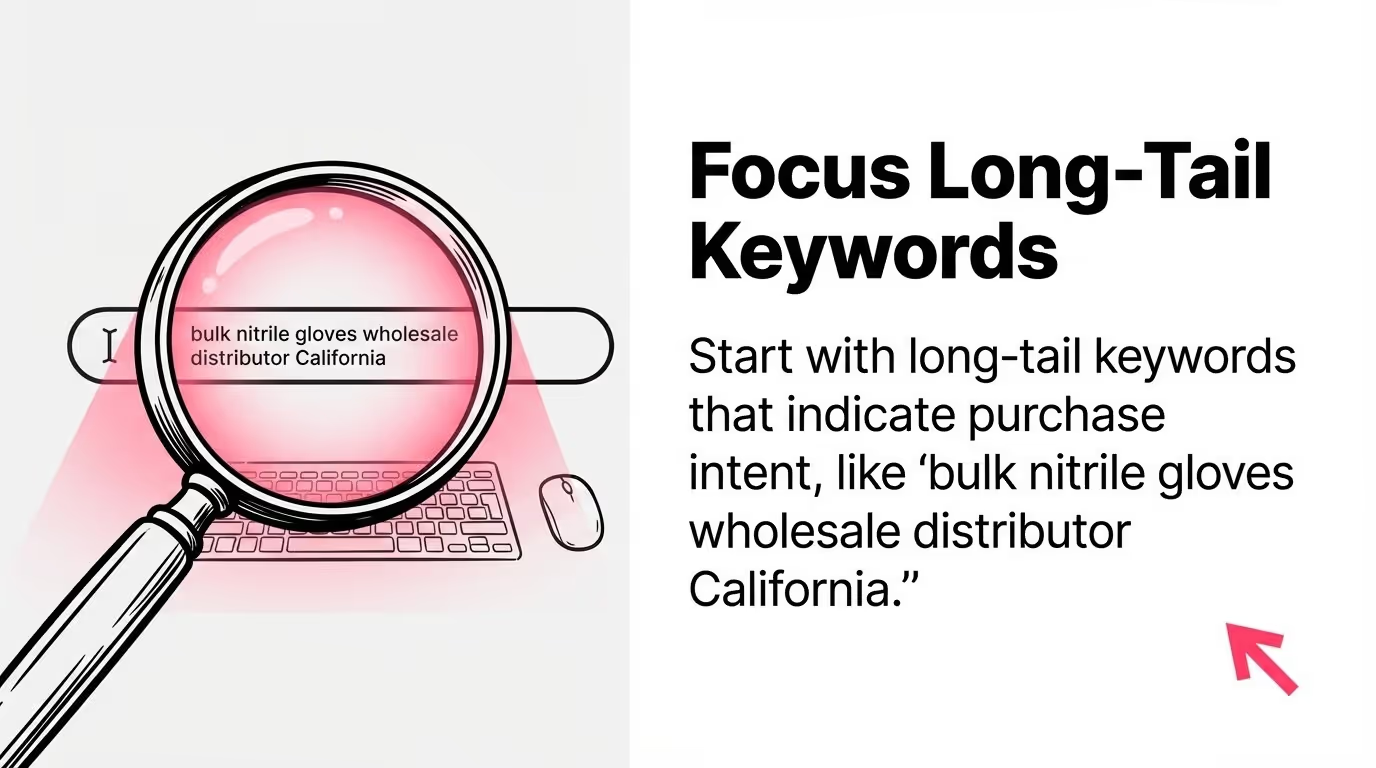
Lead with high-intent long-tail keywords to capture buyers closer to purchase.
Your keyword research should focus on industry-specific terms. Safety managers search for "cut-resistant gloves ANSI A4 rating" or "Class 2 safety vests OSHA compliant." These technical phrases have lower competition and higher conversion rates.
For detailed guidance on industrial keyword targeting, check out our long-tail industrial keywords guide.
Map keywords to buyer journey stages. Awareness-stage searches like "what PPE required for welding operations" need educational blog posts. Decision-stage searches like "order flame-resistant coveralls bulk" need product pages with clear calls-to-action.
Create separate landing pages for each major product category and industry vertical. Your fall protection equipment page should target construction keywords. Your chemical-resistant gloves page should target laboratory and pharmaceutical terms.
Page speed affects search rankings and user experience. A safety manager won't wait 8 seconds for your product specifications to load. They'll click back to Google and visit your competitor.
Optimize images by compressing file sizes without losing quality. Use WebP format when possible. Implement lazy loading so images below the fold don't slow initial page rendering.
Mobile responsiveness is mandatory. Many facility managers research PPE suppliers from tablets while walking job sites. Your website must display perfectly on all screen sizes.
Secure your site with HTTPS encryption. Google prioritizes secure websites in search results. B2B buyers won't trust a PPE supplier with an insecure site.
Create an XML sitemap and submit it to Google Search Console. This helps search engines discover and index all your product pages efficiently.
Every product page needs unique, detailed descriptions. Don't copy manufacturer specs verbatim. Explain how each PPE item solves specific workplace safety challenges.
Include technical specifications that buyers need for compliance verification. List ANSI ratings, OSHA requirements, material composition, and performance test results.
Add structured data markup to product pages. Schema.org markup helps Google understand your products and can generate rich snippets in search results showing price, availability, and ratings.
Use descriptive alt text for product images. "Leather welding gloves ANSI A4 cut-resistant" provides more SEO value than "gloves-image-1.jpg."
Internal linking connects related products and content. Link from your blog post about fall protection to relevant harness and lanyard product pages. Link from general safety gloves category to specific cut-resistant and chemical-resistant subcategories.
With your SEO foundation in place, PPC advertising provides immediate visibility while organic rankings build. Search engine optimization takes months to show results. PPC campaigns can generate leads tomorrow.
Pay-per-click advertising for PPE companies requires different approaches than consumer product campaigns. Your target audience is smaller but higher-value. One converted lead might represent a $50,000 annual account.
Organize campaigns by product category, not by keyword match type. Create separate campaigns for respiratory protection, hand protection, fall protection, and eye protection.
This structure gives better budget control and performance insights. If respiratory products drive higher ROI than hand protection, allocate more budget accordingly.
Use single keyword ad groups (SKAGs) for your highest-value terms. An ad group containing only "industrial safety goggles ANSI Z87" lets you write highly relevant ad copy and landing pages.
Our e-commerce paid search marketing guide covers essential PPC strategies you can't afford to miss.
Implement negative keywords aggressively. Add "costume," "kids," "Halloween," and "toy" as negatives to avoid wasting budget on consumer searches. PPE manufacturers don't want clicks from people looking for toy construction helmets.
Every PPC ad should direct to a specific landing page, not your homepage. If someone searches "flame-resistant coveralls oil field," your landing page should focus exclusively on FR coveralls for oil and gas applications.
Remove navigation menus from landing pages. Every link represents an exit opportunity. Keep visitors focused on one conversion action: requesting a quote or downloading a product catalog.
Display trust signals prominently. Show compliance certifications, safety testing documentation, and client logos (with permission). B2B buyers need proof you're a legitimate manufacturer.
Use clear, specific calls-to-action. "Request bulk pricing quote" converts better than generic "Contact us" buttons. "Download FR clothing compliance guide" works better than "Learn more."
Include technical specifications directly on landing pages. Don't make buyers click through multiple pages to find ANSI ratings or material composition details.
Start with manual CPC bidding to establish baseline performance data. You need conversion tracking properly configured before using automated bidding strategies.
After collecting 30+ conversions, test Target CPA bidding. Set your target cost-per-acquisition based on customer lifetime value. If an average PPE customer is worth $25,000 over three years, you can afford a $500 cost per lead.
Use bid adjustments for high-intent audiences. Increase bids 30-50% for users who previously visited your website. They're already familiar with your brand and more likely to convert.
Adjust bids by time of day and day of week. B2B buyers research during business hours. Running ads at 2 AM wastes budget on accidental clicks and homework research.
For global PPE companies, check out our international PPC strategies guide for driving ROI in multiple markets.
After establishing your paid search presence, social media creates the brand awareness that makes all your other marketing more effective. PPC gets immediate clicks, but social media builds the trust that converts clicks into customers.
B2B social media differs dramatically from consumer marketing. You're not trying to go viral or collect likes. You're positioning your PPE company as an authoritative source that safety professionals trust.
LinkedIn is your primary social platform for reaching decision-makers. Safety directors, procurement managers, and facility supervisors actively use LinkedIn for professional development.
Post educational content twice weekly. Share workplace safety statistics, regulatory updates, and PPE best practices. Each post should provide immediate value without requiring a click.
Create company page content that showcases expertise. Post about new product launches with technical specifications. Share case studies showing how your PPE solutions reduced workplace injuries at client facilities.
Use LinkedIn articles for longer-form content. Write detailed guides on topics like "Selecting the Right Cut-Resistant Gloves for Metal Fabrication" or "Understanding OSHA Fall Protection Requirements for Construction."
Engage with industry groups actively. Join LinkedIn groups for safety professionals, manufacturing managers, and construction supervisors. Answer questions and share insights without overtly promoting your products.
Run LinkedIn Sponsored Content campaigns targeting specific job titles and industries. Promote your best-performing organic content to reach safety managers at companies matching your ideal customer profile.
Video content excels at demonstrating PPE product features and proper usage. YouTube ranks as the second-largest search engine, and many B2B buyers prefer video over text.
Create product demonstration videos for each major PPE category. Show welding gloves withstanding direct flame exposure. Record impact tests on safety helmets. Demonstrate proper donning and doffing procedures for respirators.
Produce safety training content that facilities can use internally. Videos explaining ladder safety, lockout-tagout procedures, or confined space entry requirements attract views from your target audience.
Optimize video titles and descriptions for search. "How to Select Chemical-Resistant Gloves for Laboratory Work" targets specific buyer needs better than "Glove Selection Guide."
Add timestamps in video descriptions so viewers can jump to relevant sections. Include links to product pages in descriptions and pin a comment with quote request information.
Create playlists organized by industry vertical or safety topic. A "Construction Safety Equipment" playlist keeps viewers watching multiple videos and establishes your authority.
These platforms work differently for B2B PPE marketing. You won't generate direct leads like LinkedIn, but you build brand recognition that supports the entire customer journey.
Share workplace safety culture content on Facebook. Post injury prevention tips, safety moment ideas, and recognition of safety milestones. This positions your company as caring about worker wellbeing, not just selling products.
Use Instagram for behind-the-scenes manufacturing content. Show your quality control processes, testing facilities, and production capabilities. Manufacturing transparency builds trust with procurement teams.
Run Facebook retargeting campaigns to website visitors. Show ads featuring the specific product categories they viewed. Retargeting keeps your brand top-of-mind during the extended B2B buying cycle.
Learn more about effective audience targeting on social media to maximize your reach in 2026.
With your social media channels distributing content, you need a steady stream of valuable material that establishes thought leadership. Content marketing fuels your entire digital marketing strategy.
Educational content serves multiple purposes for PPE manufacturers. It improves SEO by targeting relevant keywords. It nurtures leads by answering questions before sales conversations. It positions your company as an expert resource that buyers trust.
Publish blog posts targeting specific buyer questions and pain points. Each post should address one focused topic in depth rather than superficially covering multiple subjects.
Write how-to guides explaining PPE selection for different applications. "How to Choose Safety Eyewear for Metal Grinding Operations" attracts readers actively solving that specific problem.
Create regulatory compliance content updated regularly. Explain OSHA standard changes, new ANSI rating criteria, or industry-specific PPE requirements. Safety professionals constantly need current compliance information.
Develop comparison content helping buyers evaluate options. "Chemical-Resistant Gloves: Nitrile vs. Neoprene vs. Butyl Rubber" helps procurement teams make informed decisions.
Publish industry trend analysis showing expertise. Discuss emerging technologies, changing regulations, or shifting safety priorities in specific sectors.
Update older blog posts annually to maintain SEO value. Add new statistics, refresh outdated information, and expand sections that resonate with readers.
Gated content captures lead information in exchange for valuable resources. This builds your email list for nurturing campaigns.
Create product selection guides as downloadable PDFs. "The Complete Guide to Fall Protection Equipment Selection" provides detailed decision frameworks that safety managers need.
Develop compliance checklists for different industries. A "Food Processing Facility PPE Compliance Checklist" helps safety directors audit their current equipment against regulatory requirements.
Compile specification comparison charts for similar products. A chart comparing 15 different cut-resistant gloves by ANSI rating, dexterity, and price point saves buyers research time.
Produce ROI calculators showing cost savings from better PPE. A calculator estimating reduced injury costs and productivity gains justifies purchasing decisions to finance departments.
Record webinars on technical topics and offer recordings as gated content. "Understanding Arc Flash PPE Requirements" attracts electrical safety professionals.
Real-world examples prove your PPE solutions work in actual workplace conditions. Case studies move prospects from consideration to decision stage.
Structure case studies around customer challenges, implemented solutions, and measurable results. Start with the safety problem: "Manufacturing facility experienced 12 hand injuries annually from metal cutting operations."
Describe your solution specifically: "Implemented Level A4 cut-resistant gloves with enhanced grip coating for all metal fabrication stations."
Quantify results wherever possible: "Hand injuries decreased 83% in the following 12 months, saving an estimated $47,000 in workers compensation costs."
Include customer quotes from safety directors or facility managers. Third-party validation carries more weight than your marketing claims.
Organize case studies by industry vertical on your website. Construction companies want to read construction case studies, not healthcare examples.
Now that you're capturing leads through content downloads and PPC campaigns, email marketing transforms those contacts into customers. Email provides the highest ROI of any digital marketing channel for B2B companies.
Email marketing for PPE manufacturers requires patience and persistence. Your sales cycle might span 6-12 months. Email campaigns keep your company top-of-mind throughout the extended buying process.
Build automated email sequences triggered by specific actions. When someone downloads your fall protection guide, they enter a sequence about fall protection products over the next 60 days.
Start with educational content, not product pitches. Your first email should provide additional value related to their download: "5 Common Fall Protection Mistakes Even Experienced Safety Managers Make."
Gradually introduce product information in later emails. Email three might explain: "How to Evaluate Fall Protection Harness Quality and Durability." Email five could feature: "Our Most Popular Fall Protection Systems for Construction Applications."
Include clear calls-to-action in every email. "Request a product sample kit" or "Schedule a site assessment with our safety specialist" move leads toward purchase decisions.
Segment your email list by industry, company size, and engagement level. A 25-employee machine shop needs different messaging than a 5,000-employee chemical processing facility.
New product emails alert existing customers and prospects to expanded PPE offerings. These campaigns drive immediate interest and sales.
Announce new products with a multi-email sequence. The first email teases the launch: "Introducing Next-Generation Smart Safety Technology." The second email reveals details and opens pre-orders.
Highlight specific improvements over previous products or competitor alternatives. "New ThermalGuard welding gloves provide 40% more heat resistance than our previous model while improving dexterity."
Offer early-bird incentives to email subscribers. "Order in the next 14 days and receive 15% off your first bulk order" rewards engaged contacts.
Include multiple product images and detailed specifications in launch emails. B2B buyers want technical details immediately.
Win back dormant contacts who haven't engaged with your emails in 90+ days. Re-engagement campaigns clean your list and reactivate potential buyers.
Create attention-grabbing subject lines: "We Miss You! Here's What's New in Industrial Safety." Acknowledge the relationship lapse directly.
Offer high-value incentives to re-engage: "Download our 2026 PPE Compliance Guide" or "Request a free safety assessment." Give contacts a compelling reason to respond.
Ask inactive subscribers to update their preferences or unsubscribe. "Tell us what PPE topics interest you most" helps you send more relevant content. Unsubscribes from uninterested contacts improve deliverability rates.
For comprehensive strategies on winning back customers, see our guide on remarketing to abandoned customers.
Your website ties all your digital marketing efforts together. Email campaigns, PPC ads, social media posts, and SEO all drive traffic to your website. If your site doesn't convert visitors into leads, you're wasting your marketing budget.
PPE company websites need to balance technical information with user-friendly navigation. Safety directors need detailed specifications. Procurement teams need pricing information. Facility managers need quick answers about compliance.
Simplify navigation with clear category structures. Organize products by protection type (hand, eye, respiratory, fall, etc.) and by industry (construction, healthcare, manufacturing, etc.). This dual structure accommodates different search patterns.
Implement robust site search functionality. Many B2B visitors know exactly what they need and want to search "ANSI A4 cut-resistant gloves" immediately. Your search should handle technical terms and product codes.
Display contact information prominently on every page. Put phone numbers in the header. Show business hours clearly. Add click-to-call buttons for mobile visitors.
Create sticky navigation bars that remain visible while scrolling. When visitors reach the bottom of a long product page, they shouldn't need to scroll back up to access menus.
Use clear information hierarchy on product pages. Most important details (price, availability, key specs) appear above the fold. Secondary information (detailed specifications, certifications) appears below but remains easily accessible.
Test multiple calls-to-action to find what resonates with PPE buyers. "Request Quote" might convert better than "Contact Sales." "Download Product Specs" might generate more leads than "Learn More."
Reduce form fields to essential information only. B2B buyers abandon long forms. Name, email, company, and phone number suffice for initial contact. Request additional details in follow-up conversations.
Add live chat for immediate support during business hours. Safety managers researching PPE often have quick questions that chat answers faster than phone calls or email.
Display trust signals throughout your site. Show logos of major clients (with permission), industry certifications, years in business, and manufacturing capabilities.
Implement exit-intent popups offering valuable resources. When someone moves to close their browser tab, offer: "Before you go, download our free PPE selection guide."
Design for mobile-first since many facility managers research on tablets while on job sites. Your website must function perfectly on smartphones and tablets.
Use responsive design that adapts layouts automatically. Product images should resize proportionally. Text should remain readable without zooming. Buttons should be large enough for finger taps.
Optimize page load speed aggressively on mobile. Compress images heavily. Minimize CSS and JavaScript. Enable browser caching. Mobile users on job sites often have slower cellular connections.
Simplify mobile navigation with hamburger menus. Full desktop navigation doesn't work on small screens. Prioritize the most important actions (search, categories, contact) in mobile menus.
Test forms on mobile devices extensively. Multi-step forms work better than single long forms on mobile. Break quote requests into 3-4 short screens instead of one long page.
With your foundational digital marketing systems operating, artificial intelligence and automation multiply your efficiency. AI tools handle repetitive tasks so you can focus on strategy and customer relationships.
Marketing automation for PPE companies streamlines lead nurturing, content creation, and campaign management. Small marketing teams can accomplish what previously required large departments.
AI writing tools help generate first drafts of product descriptions faster. Tools like Jasper or Copy.ai create initial content you refine with technical accuracy and brand voice.

Jasper homepage: AI writing assistance for drafting PPE product copy and articles.
Use AI for blog post outlines and topic ideation. Input a keyword like "chemical-resistant gloves" and AI suggests article angles and section structures. You add expertise and technical details.
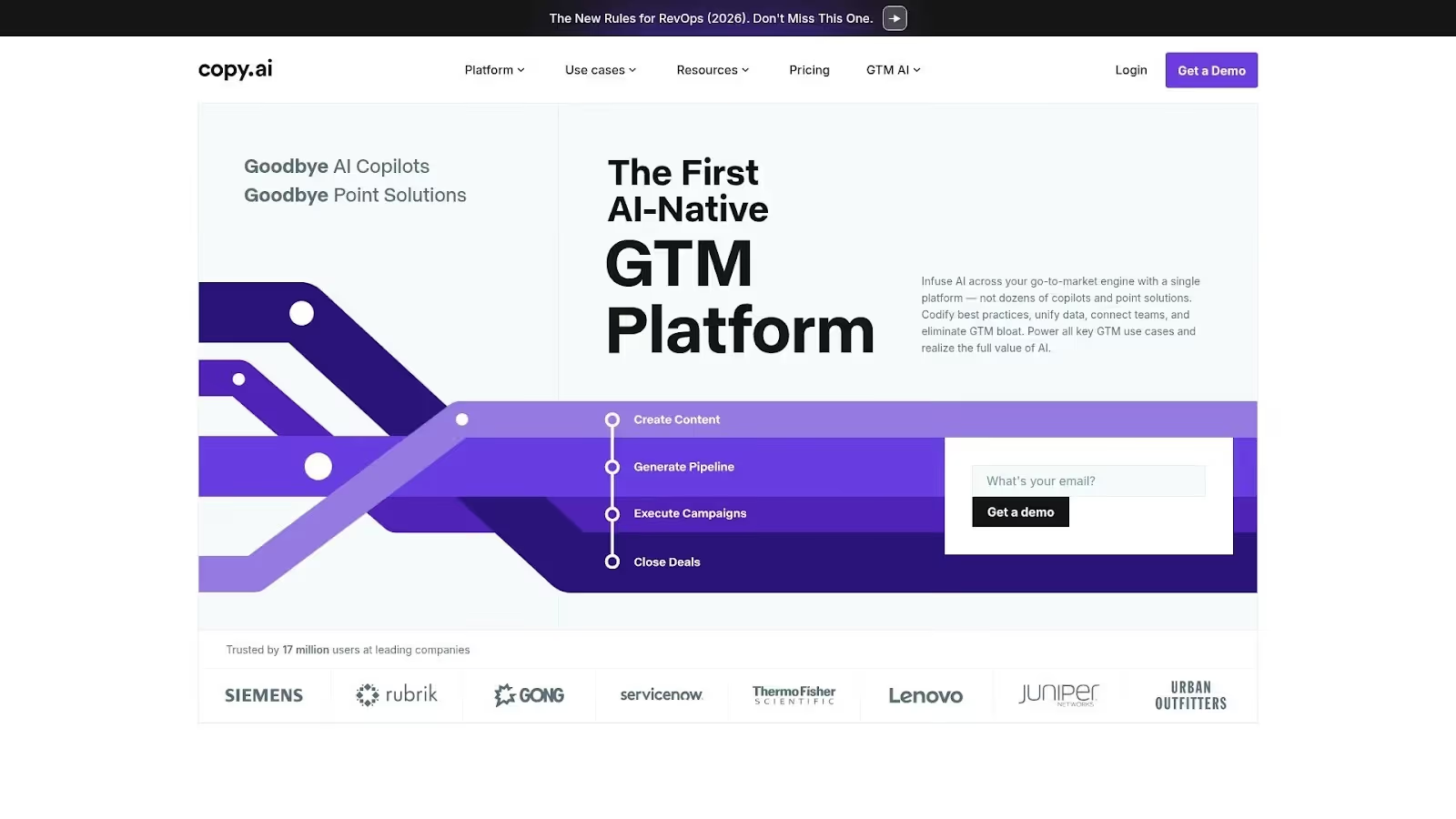
Copy.ai interface: generate multiple post and ad variations for faster testing.
Generate social media post variations quickly. Write one core message and let AI create 5-10 variations optimized for different platforms and audiences.
Create email subject line variations for A/B testing. AI tools generate dozens of subject line options. Test the most promising versions to improve open rates.
Translate content for international markets efficiently. AI translation tools like DeepL provide better results than older automated translation. Have native speakers review for technical accuracy.
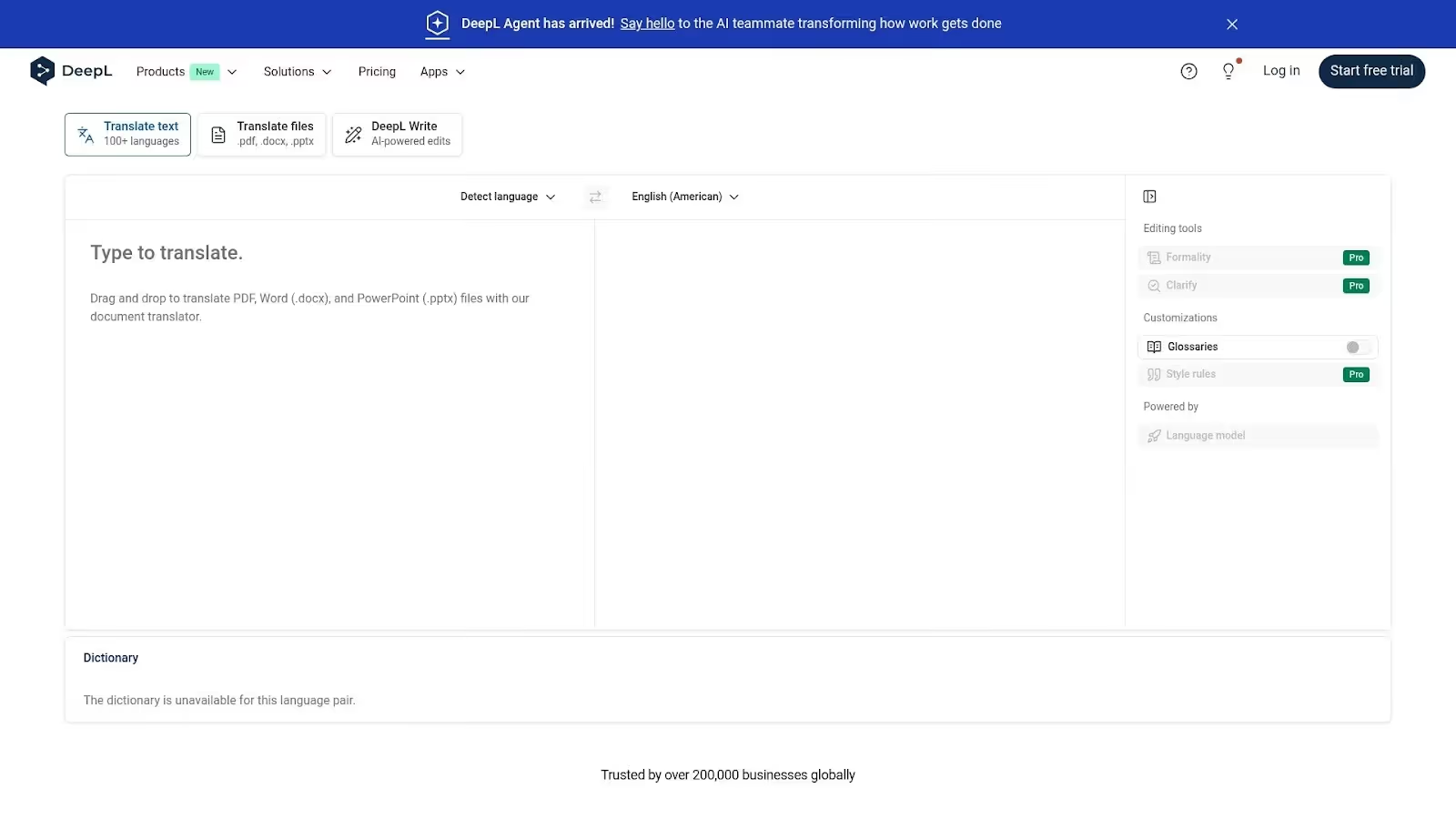
DeepL: high-quality machine translation to localize technical PPE content.
Implement platforms like HubSpot, Marketo, or Pardot to orchestrate multi-channel campaigns. These tools connect email, social media, landing pages, and lead scoring into unified workflows.
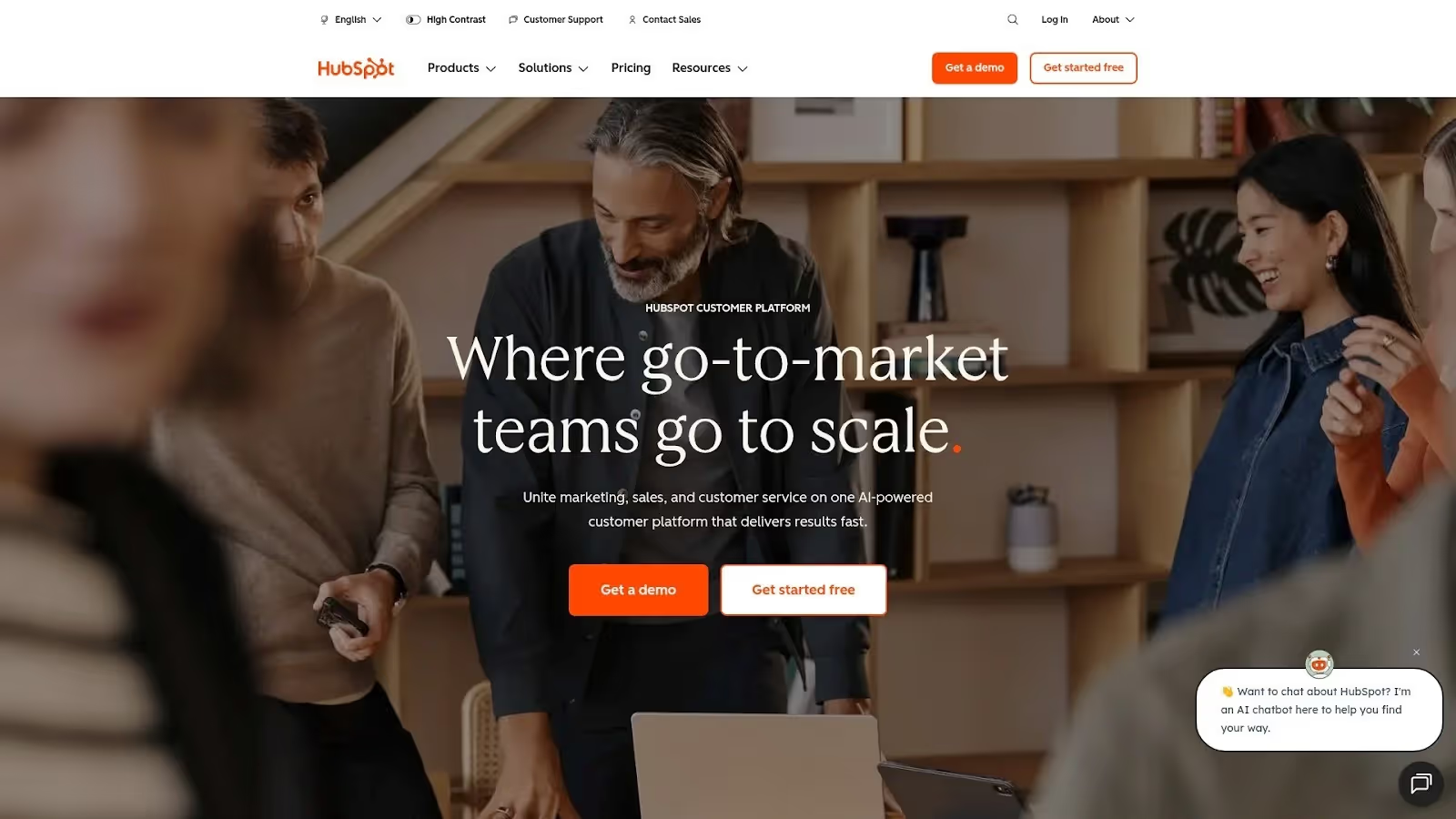
HubSpot: all-in-one CRM and marketing automation for B2B PPE workflows.
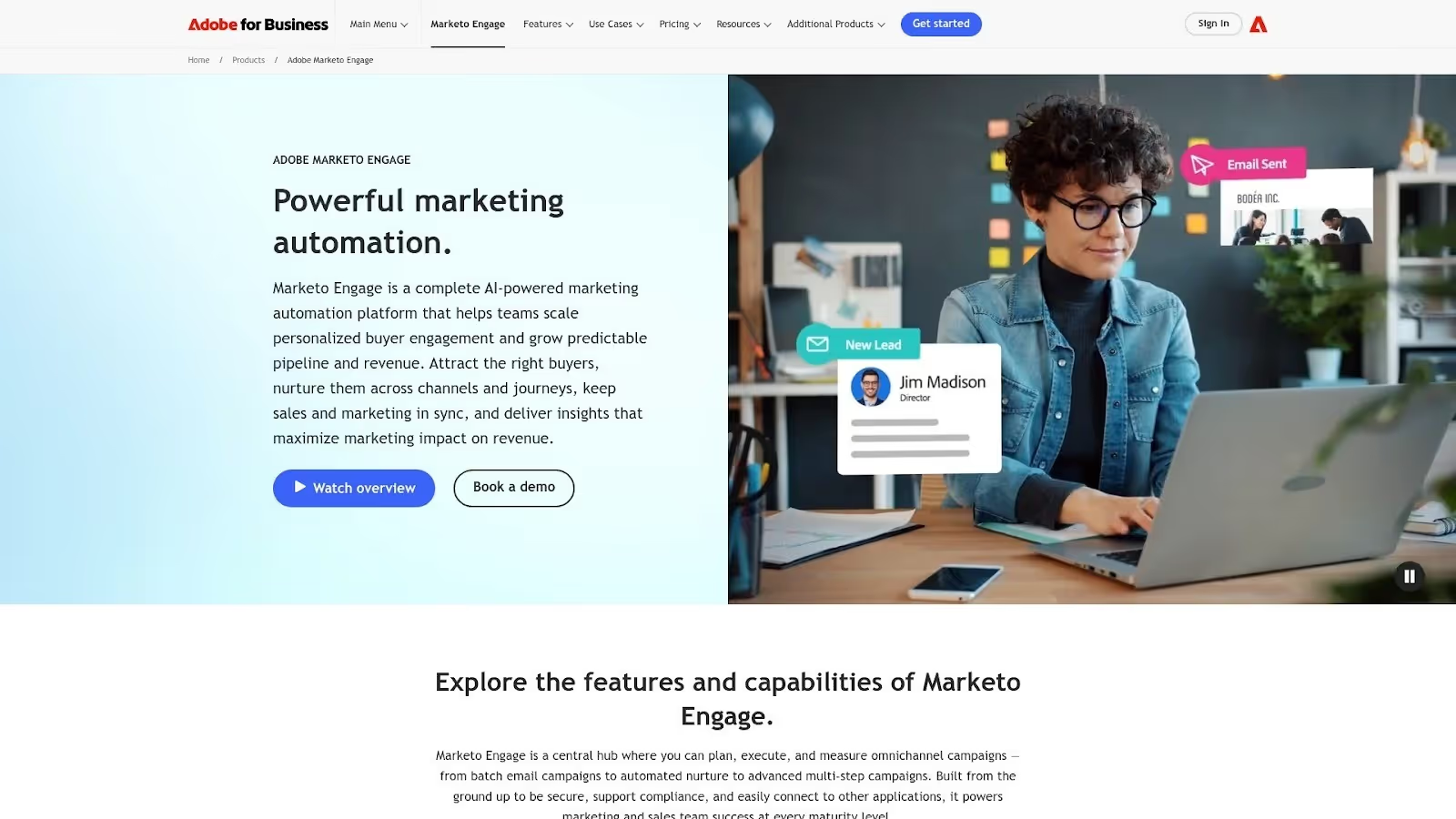
Marketo: enterprise-grade automation for segmentation, scoring, and nurture.
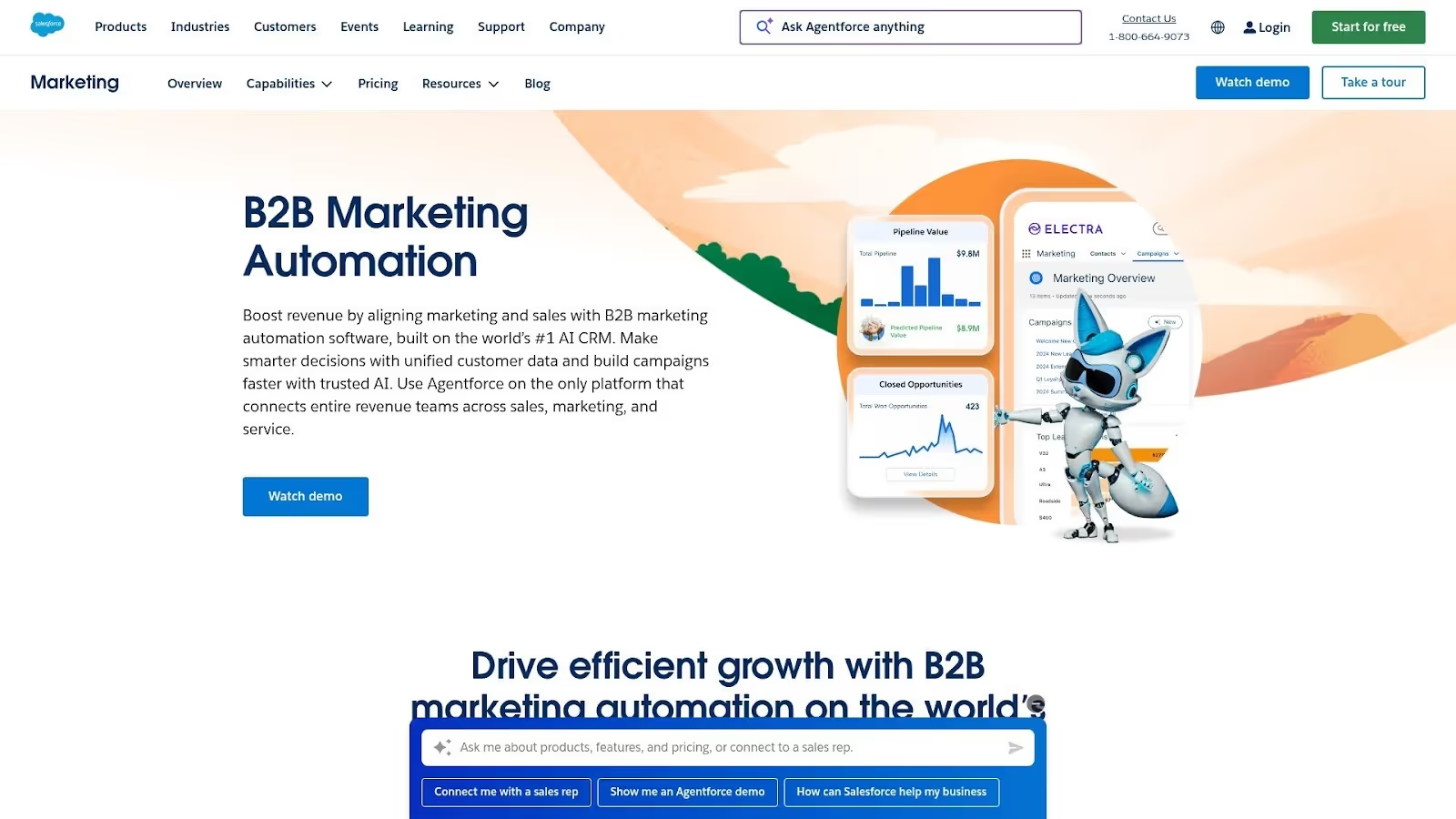
Pardot (Marketing Cloud Account Engagement): B2B lead nurturing and scoring.
Set up lead scoring based on buyer behavior. Assign points when prospects download content, visit product pages, or open emails. When leads reach threshold scores, notify sales teams automatically.
Create automated workflow sequences for different buyer journeys. Someone who downloads fall protection content enters a different nurture track than someone researching respiratory protection.
Track complete customer journeys from first website visit through quote request. Understanding which content and touchpoints influence conversions helps optimize marketing spend.
Integrate your CRM with marketing automation. When leads convert to opportunities in Salesforce, marketing automation adjusts messaging and reduces email frequency to avoid annoying prospects already in sales conversations.
Deploy chatbots for 24/7 website support. Visitors from different time zones get immediate assistance even outside your business hours.
Program chatbots to answer common technical questions. "What ANSI rating do I need for metal grinding?" triggers predefined responses with product recommendations.
Use chatbots to qualify leads before routing to sales teams. Ask screening questions about company size, industry, and specific PPE needs. Only qualified leads reach human sales reps.
Create conversational product finders using chatbot technology. Ask a series of questions about work environment, hazards, and requirements, then recommend specific PPE products.
Analyze chatbot conversation logs to identify content gaps. If many visitors ask the same question your chatbot can't answer, create blog content addressing that topic.
After implementing these digital marketing strategies, measurement proves which tactics deliver results and which need adjustment. You can't optimize what you don't measure.
PPE manufacturers must track metrics throughout the extended B2B buying cycle. Simple conversion tracking misses the full picture when sales cycles span months.
Track website traffic by source to understand which channels drive visitors. Compare organic search, paid search, social media, email, and direct traffic performance monthly.
Monitor lead generation quantity and quality. Count total leads from all sources, but also track lead-to-opportunity conversion rates. Generating 100 unqualified leads wastes resources compared to 25 qualified prospects.
Measure cost per lead by channel. Calculate your PPC cost per lead, SEO cost per lead (time and content investment), and social media cost per lead. Allocate budget to the most efficient channels.
Track email engagement metrics including open rates, click-through rates, and unsubscribe rates. Industry benchmarks help evaluate performance, but focus on your own trends over time.
Analyze conversion funnel drop-off points. Where do visitors abandon your quote request forms? Which email sequence steps lose the most subscribers? Fix the biggest leaks first.
Monitor organic search rankings for priority keywords. Track position changes weekly for your top 20-30 target keywords. Celebrate improvements and investigate drops.
Implement multi-touch attribution to credit all touchpoints in the customer journey. First-touch attribution only credits the initial interaction. Last-touch attribution only credits the final touchpoint before conversion.
Use position-based attribution models giving equal weight to first and last touches with remaining credit distributed to middle touchpoints. This acknowledges that awareness and decision moments matter most.
Create custom attribution models matching your specific sales cycle. If webinars typically occur mid-journey and heavily influence decisions, weight webinar attendance more heavily in your model.
Track assisted conversions in Google Analytics. This shows how many conversions included specific channels in the path even if they didn't get last-touch credit.
Build executive dashboards displaying key metrics at a glance. Show total leads, conversion rates, cost per acquisition, and revenue by channel in one view.
Create monthly reports comparing performance to goals. Set clear targets for website traffic growth, lead generation, and cost per lead. Track progress toward those targets consistently.
Use tools like Google Data Studio to automate reporting. Connect data sources once, then reports update automatically. Stop spending hours compiling data manually.

Looker Studio (formerly Data Studio): automated dashboards for marketing KPIs.
Schedule regular strategy review meetings. Monthly reviews of performance data should drive optimization decisions. What's working gets more budget. What's failing gets fixed or cut.
Share relevant metrics with your entire team. Sales teams need lead quality feedback. Content creators need engagement data. Everyone improves when they see how their work impacts results.
Your marketing technology stack consists of all the software tools that power your digital marketing operations. The right stack streamlines workflows and improves results.
PPE companies need tools that handle B2B complexity, longer sales cycles, and technical content requirements. Your stack should integrate seamlessly to avoid data silos.
Start with a solid CRM system as your foundation. Salesforce, HubSpot CRM, or Microsoft Dynamics track customer relationships, opportunities, and sales pipeline.
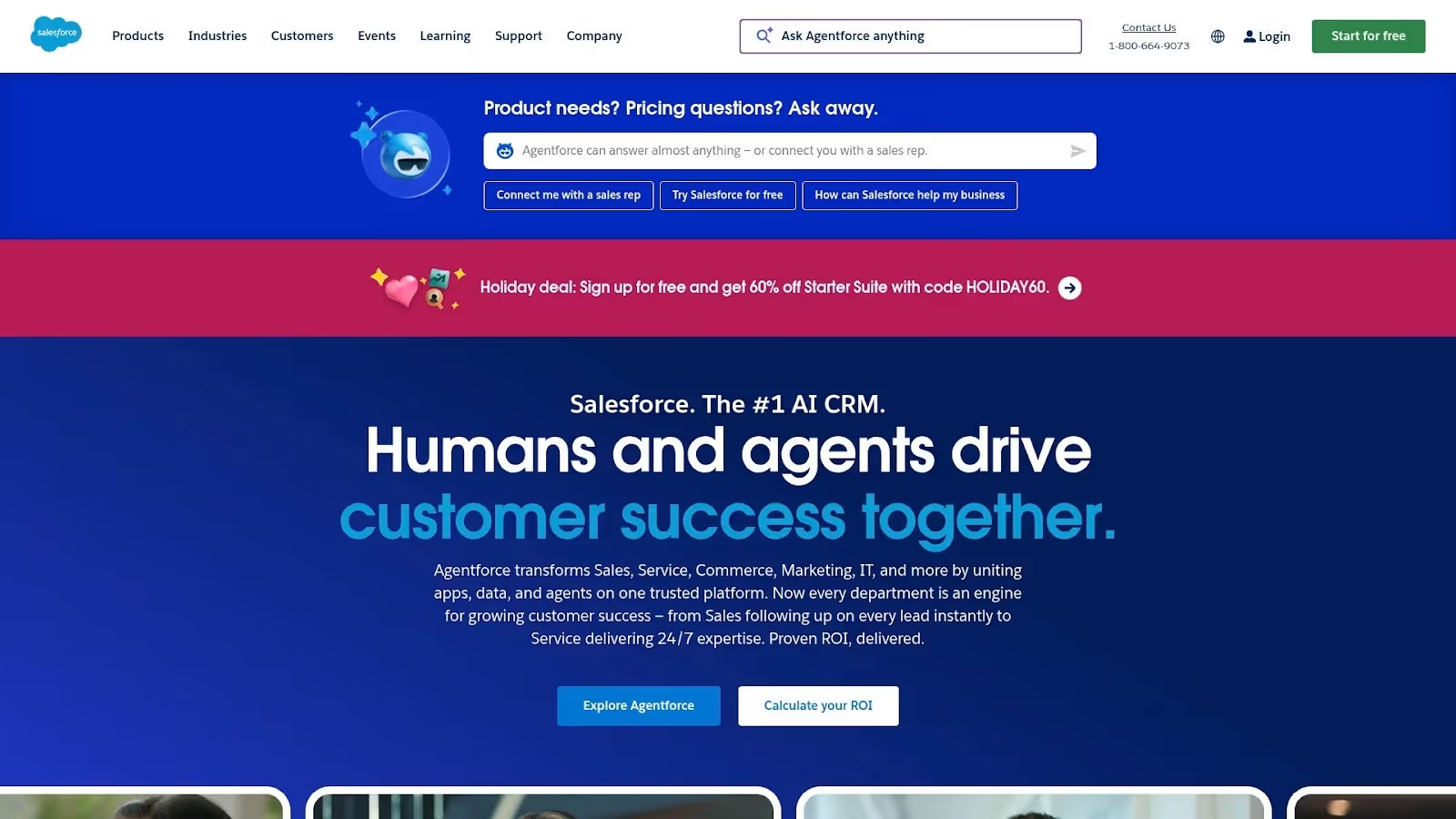
Salesforce CRM: unify sales and marketing data for PPE account management.
Add marketing automation integrated with your CRM. Platforms like HubSpot provide both CRM and marketing automation in one system, simplifying integration.
Implement analytics tools for data insights. Google Analytics tracks website behavior. Hotjar shows heatmaps revealing where visitors click and scroll.
Use email service providers with advanced segmentation. Mailchimp, ActiveCampaign, or your marketing automation platform handle email campaigns.
Deploy social media management tools. Buffer, Hootsuite, or Sprout Social schedule posts across multiple platforms and track engagement.
Choose a content management system supporting your SEO needs. WordPress powers most B2B websites with excellent plugin ecosystems for SEO and functionality.
Use design tools for creating visual content. Canva enables non-designers to create professional graphics. Adobe Photoshop and Illustrator provide advanced capabilities.
Implement video editing software for product demonstrations. Adobe Premiere offers professional features. Camtasia simplifies screen recording and editing.
Add SEO tools for keyword research and ranking tracking. Ahrefs, SEMrush, or Moz provide competitive intelligence and optimization recommendations.
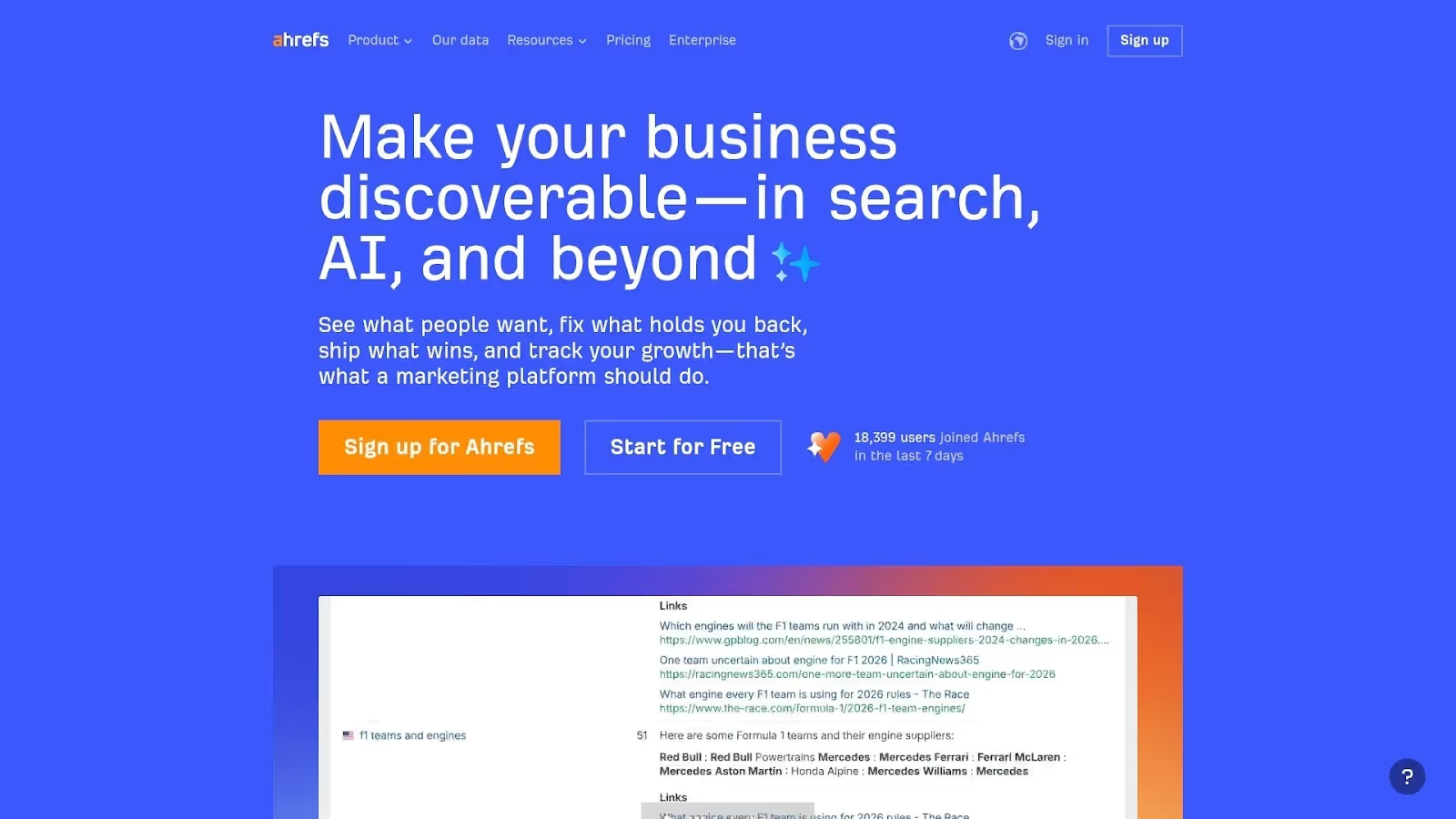
Ahrefs: keyword, backlink, and content gap analysis for PPE SEO.
Prioritize tools with native integrations or API access. Your CRM should sync with your marketing automation. Your analytics should connect to your advertising platforms.
Use integration platforms like Zapier or Make (formerly Integromat) to connect tools without APIs. Automate data flow between systems to eliminate manual data entry.
Implement single sign-on when possible to simplify access management. Tools supporting SSO through Google Workspace or Microsoft 365 streamline login processes.
Test integrations thoroughly before relying on them for critical workflows. Data sync failures cause missed leads and inaccurate reporting. Verify that information flows correctly between systems.
Generic marketing messages don't resonate with sophisticated B2B buyers. Personalization shows prospects you understand their specific needs and challenges.
Account-based marketing (ABM) takes personalization further by creating custom campaigns for high-value target accounts. This approach works perfectly for PPE manufacturers pursuing large enterprise contracts.
Display dynamic content based on visitor characteristics. Show construction-specific PPE products to visitors from construction companies. Show healthcare PPE to hospital visitors.
Use IP address lookup to identify company visitors. Tools like Clearbit reveal which companies visit your website even if visitors don't fill out forms.
Personalize calls-to-action based on previous behavior. Show "Continue your quote request" to returning visitors who abandoned forms. Show "Download our new fall protection guide" to visitors who previously downloaded hand protection content.
Create industry-specific landing pages for paid search campaigns. Construction companies clicking PPC ads see construction-focused messaging. Manufacturing facilities see manufacturing applications.
Learn more about personalized advertising strategies that drive results in 2026.
Segment email lists by dozens of criteria. Industry, company size, job title, previous purchases, content downloads, and website behavior all inform segmentation.
Send triggered emails based on specific actions. Abandoned quote requests trigger follow-up emails. Product page visits without conversion trigger educational content about that product category.
Personalize subject lines with relevant details. "John, here's the fall protection info you requested" outperforms "New PPE products available."
Reference previous interactions in email copy. "Since you downloaded our chemical glove guide last month, we thought you'd appreciate this new compliance update."
Adjust email frequency based on engagement levels. Active subscribers can handle weekly emails. Less engaged contacts receive monthly digests to avoid unsubscribes.
Identify target accounts matching your ideal customer profile. List the 50-100 companies you most want as customers. Research their safety challenges, recent news, and decision-makers.
Create customized content for specific accounts. If targeting a major automotive manufacturer, create a case study showing how your PPE solved similar challenges for another automotive company.
Run targeted advertising campaigns reaching key stakeholders at target accounts. LinkedIn allows targeting specific companies and job titles with custom messaging.
Send personalized direct mail integrated with digital campaigns. Ship product samples to safety directors at target accounts with personalized letters referencing their specific applications.
Coordinate sales and marketing efforts closely for ABM success. Marketing generates awareness and engagement. Sales follows up with personalized outreach when accounts show buying signals.
Digital marketing for PPE companies involves promoting safety products with specific regulatory requirements. Your marketing claims must comply with industry standards and advertising regulations.
Compliance mistakes damage credibility with safety-conscious buyers. Procurement teams scrutinize technical accuracy before trusting PPE suppliers.
Verify all technical specifications before publishing. ANSI ratings, OSHA compliance, and performance test results must be 100% accurate. One error undermines all your marketing credibility.
Update product information when standards change. ANSI releases revised standards periodically. Your product pages must reflect current certification requirements.
Avoid exaggerated marketing claims unsupported by testing. Saying gloves are "virtually indestructible" when they have an A2 cut rating overstates performance and creates liability risk.
Include appropriate disclaimers on product pages. Note that PPE effectiveness depends on proper selection, use, and maintenance. Direct buyers to training resources.
Document your testing methodology and results. Buyers increasingly want proof backing your performance claims. Make test reports available as downloadable resources.
Comply with GDPR if marketing to European buyers. Obtain explicit consent before sending marketing emails. Provide easy unsubscribe options. Allow data access and deletion requests.
Follow CCPA requirements for California contacts. Disclose what personal information you collect. Allow California residents to opt out of data sales.
Implement clear privacy policies explaining data collection and usage. Link privacy policies from all forms capturing personal information.
Secure customer data properly. Use encryption for data transmission and storage. Limit employee access to customer information on a need-to-know basis.
Obtain proper consent before using customer logos or case studies. Get written permission specifying where and how you can reference their company.
Review Google Ads policies for healthcare and safety products. Certain PPE categories have restricted advertising rules requiring certification.
Follow LinkedIn advertising guidelines for professional content. Avoid sensational claims or fear-based messaging that violates platform standards.
Comply with email marketing regulations. Include physical mailing addresses in emails. Honor unsubscribe requests within 10 business days. Don't purchase email lists.
Understanding your competitors' digital marketing strategies reveals opportunities and threats. Competitive intelligence guides your positioning and tactical decisions.
PPE manufacturers face competition from established brands, low-cost overseas manufacturers, and large distributors. Your digital marketing must differentiate effectively.
Audit competitor websites systematically. Evaluate their product range, technical content quality, user experience design, and conversion optimization. Identify what they do well and where they fall short.
Track competitor search rankings for priority keywords. Tools like Ahrefs show which keywords competitors rank for and their position changes over time.
Monitor competitor content marketing efforts. Subscribe to their email lists. Follow their social media accounts. Note their publishing frequency, content types, and engagement levels.
Analyze competitor PPC strategies using tools like SEMrush or SpyFu. See which keywords they bid on, estimated budgets, and ad copy approaches.
Review competitor social media presence. Compare follower counts, engagement rates, and content strategies. Identify successful post types you can adapt.
Identify gaps in competitor offerings and messaging. If competitors focus solely on price, emphasize quality and safety performance. If they lack technical content, become the educational resource.
Develop unique value propositions addressing unmet buyer needs. Maybe you offer faster delivery, better customization options, or superior customer service.
Create content competitors can't easily replicate. Original research, proprietary testing methodology, or exclusive partnerships provide competitive advantages.
Build stronger relationships through superior digital experiences. If competitor websites are outdated and difficult to navigate, your modern, user-friendly site becomes a differentiator.
Specialize in specific verticals competitors serve poorly. Becoming the PPE expert for food processing plants or pharmaceutical laboratories creates defensible market positions.
Define your brand position clearly. Are you the quality leader, the innovation pioneer, the cost-effective alternative, or the specialized expert?
Communicate your positioning consistently across all digital channels. Your website, social media, email, and advertising should reinforce the same brand promise.
Support your positioning with proof points. Claims about superior quality require test results, certifications, and customer testimonials backing them up.
Align your digital marketing tactics with your positioning. Premium positioning requires sophisticated website design and high-quality content. Value positioning emphasizes efficiency and straightforward purchasing.
Digital marketing for PPE companies continues evolving rapidly. Staying ahead of emerging trends provides competitive advantages as others play catch-up.
Several technological and behavioral shifts will reshape how PPE manufacturers market online over the next few years.
Voice search grows as smart speakers and voice assistants become workplace tools. Safety managers might ask "What cut-resistant gloves do I need for metal grinding?" instead of typing queries.
Optimize content for natural language questions. Include FAQ sections answering common questions in conversational language.
Target long-tail keywords matching spoken queries. "Best safety glasses for construction workers" mirrors voice search patterns better than just "safety glasses."
Implement structured data markup helping voice assistants extract information. Schema markup for products, FAQs, and how-to content increases voice search visibility.
Visual search allows buyers to photograph existing PPE and find similar products online. This technology simplifies reordering and finding equivalent products.
Optimize product images with descriptive file names and alt text. "heavy-duty-leather-welding-gloves-A4-rating.jpg" provides more context than "img_12345.jpg."
Use high-quality images from multiple angles. Visual search algorithms perform better with clear, well-lit product photography.
Consider adding image search functionality to your website. Let visitors upload photos to find matching products in your catalog.
AR technology helps buyers visualize PPE products in their work environments. Imagine pointing a tablet at a workstation and seeing how different fall protection systems would install.
Develop AR tools showing proper PPE fitting and adjustment. Users could see exactly how a respirator should seal or how to adjust harness straps correctly.
Create virtual product demonstrations accessible through smartphones. Show PPE performance under various conditions without requiring physical samples.
Partner with AR platform providers if developing proprietary technology exceeds budget. Several platforms offer white-label AR solutions for product visualization.
Environmental concerns increasingly influence B2B purchasing decisions. Companies want PPE suppliers aligned with their sustainability commitments.
Communicate your environmental initiatives transparently. Share information about sustainable materials, recycling programs, and manufacturing efficiency improvements.
Create content about sustainable PPE options. Explain recycled materials, biodegradable alternatives, and product lifecycle considerations.
Calculate and display carbon footprint information. Some large buyers prioritize suppliers providing product environmental impact data.
For more insights on digital marketing's future, explore our guide on understanding customer behavior online in 2025.
Many PPE manufacturers ask similar questions when planning digital marketing strategies. Here are brief answers to the most common concerns.
The future centers on AI for automating repetitive tasks, generating content, and improving analytics. Social media and video remain the highest-ROI channels. Consumer behavior shifts toward platforms like YouTube, Instagram, and TikTok, while growing privacy expectations push brands toward first-party data and hyper-personalized experiences.
Building an always-on social media presence with video content, layered with AI for content repurposing and audience insights, delivers strong ROI. Consumers spend substantial time on platforms like YouTube and LinkedIn. Brands consistently publishing relevant video and personalized social content, informed by first-party data, are best positioned to grow.
This framework focuses 70% of budget on what's already working, 20% on scaling newer tactics, and 10% on testing breakthrough ideas. For PPE companies, that might mean 70% on established channels like search and core social media, 20% on newer formats or platforms, and 10% on experimental technologies like AR or AI experiences.
You now have a complete roadmap for winning online as a PPE manufacturer in 2026. The market opportunity is massive, but so is the competition.
Start with SEO and content marketing as your foundation. These investments compound over time, delivering increasing returns as your content library grows and search rankings improve.
Add PPC advertising for immediate visibility while organic strategies build momentum. PPC provides quick feedback on messaging effectiveness and generates leads today, not months from now.
Layer in social media and email marketing for relationship building. B2B buyers need multiple touchpoints before making purchase decisions. Consistent presence across channels keeps your company top-of-mind throughout extended sales cycles.
Implement marketing automation and AI tools to scale efficiently. Small teams can punch above their weight when technology handles repetitive tasks.
Measure everything relentlessly. Digital marketing's beauty lies in its measurability. Use data to optimize campaigns continuously, allocating budget to what works and cutting what doesn't.
The PPE companies that invest in digital marketing now will dominate their markets for years. Those that delay will struggle to catch up as competitors build insurmountable advantages.
Browse more digital marketing strategies specifically for personal protective equipment companies on our blog.
Your buyers are online right now researching PPE solutions. Make sure they find you first.