

The numbers immediately highlight the scale of opportunity. The automotive aftermarket market is projected to grow from $430.51 billion in 2024 to $568.19 billion by 2032 (Source: GlobeNewswire). This steady market growth reflects deeper changes across the global automotive aftermarket industry, including evolving consumer behavior, technological shifts, and increasing vehicle ownership worldwide.

After analyzing multiple automotive aftermarket industry reports and global market trends, it becomes clear that this growth is not random. It is driven by structural changes in the automobile industry, from aging vehicles to the rise of online retailers and independent repair shops. Businesses that understand these patterns can gain a strong competitive edge in the automotive aftermarket.
Whether operating as part of aftermarket businesses, working with automotive manufacturers, or supplying aftermarket components, understanding these insights is essential. The automotive aftermarket is not only expanding but also becoming more data-driven, digital, and customer-focused.
When reviewing automotive aftermarket research, one of the first challenges is understanding the variation in market value estimates. The global automotive aftermarket size was valued at $430.51 billion in 2024 (Source: Straits Research). This figure represents the full scope of the global automotive aftermarket industry, including replacement parts, maintenance services, and aftermarket accessories.
However, the real insight lies in how this market is distributed across regions and segments.
The Asia Pacific region is witnessing significant growth due to rising vehicle ownership, expanding middle-class populations, and increasing demand for aftermarket products, making it a key focus in market growth analysis. In contrast, North America remains a mature market with strong demand for maintenance services and replacement parts.
The mechanical automotive components segment continues to dominate, with forecasted growth driven by demand for brake pads, filters, and other essential aftermarket parts. Despite the rise of advanced technologies, traditional automotive parts remain central to the automotive aftermarket industry.
Understanding regional market behavior is critical for identifying growth opportunities. The global automotive aftermarket is influenced by local regulations, vehicle fleet size, and consumer preferences.
Key trends include:
The global automotive aftermarket industry is also shaped by leading companies such as ZF Aftermarket and Advance Auto Parts, along with thousands of independent aftermarket businesses. These players contribute to a highly competitive yet opportunity-rich ecosystem.
One of the most powerful drivers of automotive aftermarket growth is the aging vehicle fleet. The average age of vehicles continues to rise globally, creating sustained demand for aftermarket parts and services.
This trend directly impacts the demand for aftermarket, particularly in:
Older vehicles require more frequent servicing, which increases demand for automotive aftermarket products and supports opportunities for equipment suppliers. At the same time, rising costs of new vehicles and economic pressures are encouraging car owners to maintain their existing vehicles instead of replacing them.
This creates long-term opportunities for aftermarket suppliers, repair shops, and online retailers. The combination of aging vehicles and modern vehicle complexity also increases demand for specialized knowledge and advanced tools.
Modern vehicles are becoming more complex due to advanced technologies such as advanced driver assistance systems and electric vehicle models. While this creates challenges, it also opens new areas of growth within the automotive aftermarket.
Key developments include:
Electric vehicles and hybrid systems are changing how repair services are delivered, requiring updated skills and new types of automotive components. This shift is expected to drive innovation across the aftermarket industry during the forecast period.
Looking for a clear, connected view of how auto parts marketing actually works across SEO, PPC, feeds, and marketplaces? Explore our complete guide to auto parts marketing and ecommerce →
The digital transformation of the automotive aftermarket is one of the most significant industry shifts. Online sales are expanding rapidly as customers prefer convenience, price comparison, and immediate access to product information.
With the retail segment holding over 56% market share, online retailers are becoming a key part of the automotive aftermarket ecosystem.
The rise of ecommerce has made it easier for smaller aftermarket businesses to compete with large automotive manufacturers and distributors. By offering detailed product information, strong customer support, and accurate fitment data, businesses can capture more market share.
A strong supply chain is the backbone of the automotive aftermarket industry. As demand for aftermarket parts continues to grow, businesses must ensure consistent product availability while managing costs and delivery timelines. Efficient supply chain management directly impacts customer satisfaction, profitability, and long-term growth.
The global automotive aftermarket depends on a complex network of aftermarket suppliers, distributors, and logistics partners. From sourcing automotive components to delivering replacement parts, every stage must be optimized for speed and accuracy. Businesses that build strong supplier relationships can reduce delays, secure better pricing, and maintain steady inventory levels.
Automotive inventory management plays an equally critical role. With thousands of automotive aftermarket products ranging from brake pads to advanced electronic systems, maintaining the right balance between stock availability and cash flow is essential. Overstocking ties up capital, while stockouts lead to lost sales opportunities and dissatisfied customers.
Successful aftermarket businesses focus on:
As the automotive aftermarket market expands globally, supply chain efficiency becomes a key competitive edge. Businesses that invest in logistics, supplier networks, and inventory systems are better positioned to scale and meet increasing demand for aftermarket components.
Pricing in the automotive aftermarket is more than setting numbers. It is about understanding market value, customer expectations, and competitive positioning within the global automotive aftermarket industry.
Customers today have access to multiple online retailers and marketplaces, allowing them to compare prices instantly. This transparency increases competition and forces businesses to adopt smarter pricing strategies. Companies must balance profitability with competitive pricing to capture market share without compromising margins.
Several factors influence pricing decisions:
Dynamic pricing strategies are becoming increasingly important. By analyzing customer behavior, competitor pricing, and demand trends, businesses can adjust prices in real time to maximize revenue. Data-driven pricing helps improve conversion rates and supports sustainable market growth.
Positioning also matters. Some businesses compete on price, while others focus on quality, specialization, or service. Companies offering high-quality automotive aftermarket parts, expert support, and fast delivery can justify premium pricing and build stronger customer loyalty.
In a highly competitive aftermarket sector, pricing is not just a financial decision. It is a strategic tool that shapes brand perception, customer trust, and long-term success.
The shift toward online sales in the automotive aftermarket is driven by several factors:
Customers now expect a seamless digital experience when purchasing auto parts. This includes access to detailed product specifications, installation guides, and real-time inventory availability.
Customer expectations in the automotive aftermarket industry are evolving rapidly. Both DIY consumers and professional repair shops rely heavily on digital resources before making purchasing decisions.
Key behavioral shifts include:
This shift highlights the importance of creating a strong digital presence and providing valuable information at every stage of the customer journey.
The automotive aftermarket is not just experiencing growth, it is undergoing transformation. Businesses that align with these changes can unlock significant opportunities.
The most promising areas include:
As the global automotive aftermarket continues to evolve, success will depend on understanding both traditional demand and emerging trends. Companies that combine data-driven insights with strong execution will be best positioned to grow in this competitive and expanding market.
The rapid evolution of modern vehicles has created both challenges and opportunities across the automotive aftermarket. As electric vehicle models, connected systems, and advanced technologies become more common, businesses must adapt quickly to remain competitive in the global automotive aftermarket industry.
The rise of electric and hybrid vehicles is reshaping the demand for aftermarket components and services. Traditional automotive parts are still essential, but newer systems require specialized tools, updated skills, and advanced diagnostic capabilities. This shift is redefining how aftermarket businesses operate within the broader automotive industry.
Modern vehicles are far more complex than earlier models. They combine mechanical systems with software-driven automotive components, making repairs more technical and resource-intensive.
Key challenges include:
This level of complexity creates barriers for independent repair shops and smaller aftermarket suppliers. However, it also increases the demand for skilled technicians and specialized aftermarket services.
While complexity presents challenges, it also creates opportunities for businesses that invest in expertise. The automotive aftermarket is shifting toward specialization, where knowledge and technical capability become key differentiators.
Businesses can gain a competitive edge by:
As vehicles continue to evolve, businesses that adapt to these changes will be better positioned to capture market share and benefit from long-term automotive aftermarket growth.
Relationships with original equipment manufacturers have become increasingly important. Access to technical data, software updates, and repair protocols often depends on collaboration with OEMs.
This creates a balance within the independent aftermarket sector. Businesses must maintain independence while leveraging OEM resources to stay competitive. Strong partnerships can improve service quality, expand capabilities, and support compliance with industry standards.
Data analytics has become a critical tool for success in the automotive aftermarket industry. Businesses that use data effectively can improve decision-making, optimize inventory, and respond to market demand more efficiently.
Data-driven strategies allow businesses to move beyond guesswork. By analyzing sales trends, vehicle fleet data, and customer preferences, companies can anticipate demand and align their inventory with real market needs through a strong analytics strategy.
Independent repair shops play a vital role in the automotive aftermarket ecosystem. They act as the primary interface between aftermarket products and end consumers, handling vehicle repairs, maintenance services, and parts installation.
As vehicles age and become more complex, the demand for skilled repair services continues to grow. Independent repair shops are often preferred by car owners due to lower costs, flexibility, and personalized service compared to authorized service centers.
The growth of the independent aftermarket sector is driven by:
These repair shops rely heavily on aftermarket suppliers for consistent access to automotive parts. Strong partnerships between suppliers and service providers ensure faster repairs, better service quality, and improved customer satisfaction.
Technology is also transforming how repair shops operate. Modern diagnostic tools, connected systems, and digital platforms allow technicians to handle complex repairs more efficiently. Shops that adopt these technologies can improve service accuracy and reduce turnaround time.
In the broader automotive aftermarket industry, independent repair shops represent a critical growth driver. Businesses that support these networks with reliable products, training, and digital tools can unlock new opportunities and expand their market presence.
Successful aftermarket businesses use data analytics to improve multiple areas of operation:
This approach allows businesses to operate more efficiently while improving customer satisfaction and increasing online sales.
Understanding market segmentation is essential for targeting the right customers and maximizing growth. The automotive aftermarket is divided into key segments based on customer behavior and service needs.
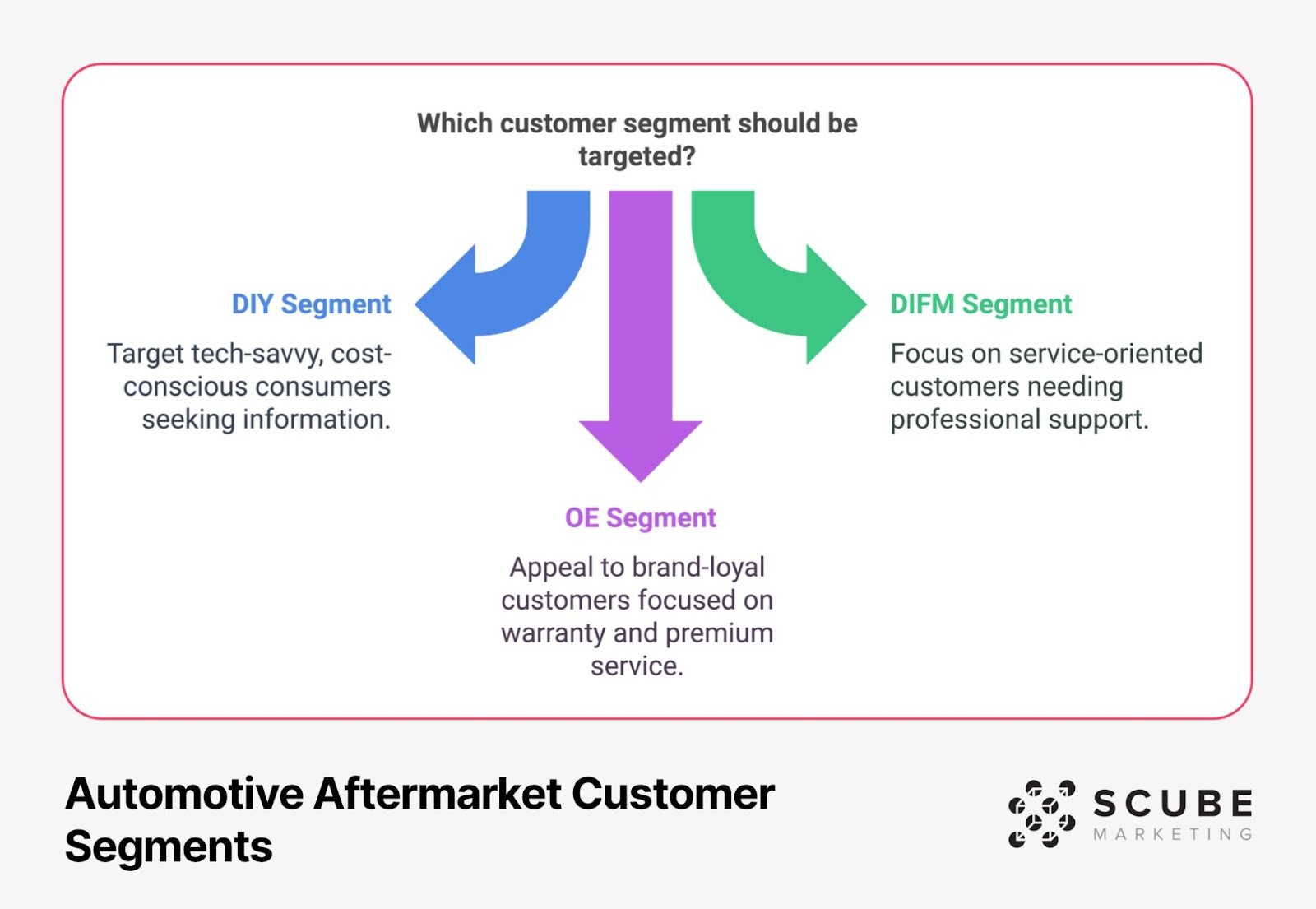
Understanding market segmentation in the automotive aftermarket isn’t just about knowing who customers are, it’s about recognizing how different segments drive growth opportunities across key automotive aftermarket companies. Using advanced market analysis tools, it becomes clear that the DIY segment is experiencing rapid revenue expansion (Source: Straits Research). This shift represents a fundamental change in how consumers approach vehicle maintenance and repair.
Customer expectations in the automotive aftermarket industry are evolving rapidly. Buyers are more informed and rely heavily on digital platforms before making decisions.
Key trends include:
These changes are shaping the future of the aftermarket sector and influencing how businesses approach sales, marketing, and service delivery.
Successful aftermarket businesses understand that customer needs are not fixed. A single customer may shift between segments depending on the type of service required.
For example:
Businesses that build flexible strategies can serve multiple segments effectively and capture more market opportunities.
The automotive aftermarket is evolving through a combination of technology, data, and changing customer behavior. Businesses that adapt to these trends can achieve long-term growth and remain competitive in the global automotive aftermarket industry.
Key takeaways include:
As the automotive aftermarket continues to expand, the ability to adapt and innovate will determine success. Companies that align with these trends will be better positioned to capture new opportunities and sustain growth in a highly competitive market.
The automotive aftermarket is undergoing one of the most significant transformations in its history. This shift is not limited to building an ecommerce website or listing automotive parts online. It is about redefining how businesses operate, interact with customers, and deliver value across the global automotive aftermarket industry.
Digital transformation has become essential as the automotive aftermarket market continues to expand and customer expectations evolve. Businesses are now required to integrate online sales, data-driven insights, and connected systems to stay competitive. This transformation affects every part of the aftermarket sector, from aftermarket suppliers and repair shops to online retailers and service providers.
The key difference today is that customers expect a seamless experience across all touchpoints. Whether they are purchasing replacement parts, scheduling maintenance services, or researching automotive components, the process must be fast, accurate, and reliable. This is where a structured digital transformation roadmap becomes critical.
A strong digital foundation is the starting point for success in the automotive aftermarket industry. This involves integrating systems that support online sales, inventory visibility, and customer engagement.
Ecommerce is now a central driver of market expansion in the global automotive aftermarket. Businesses must build platforms that are not only functional but also optimized for performance and scalability.
Key elements include:
Online retailers that invest in these capabilities are better positioned to capture demand for aftermarket products and improve conversion rates. A well-integrated platform also supports better inventory control, which is essential for managing automotive aftermarket parts across multiple channels.
Customer experience has become a major differentiator in the automotive aftermarket. Modern buyers expect more than just product availability. They want guidance, clarity, and confidence before making a purchase.
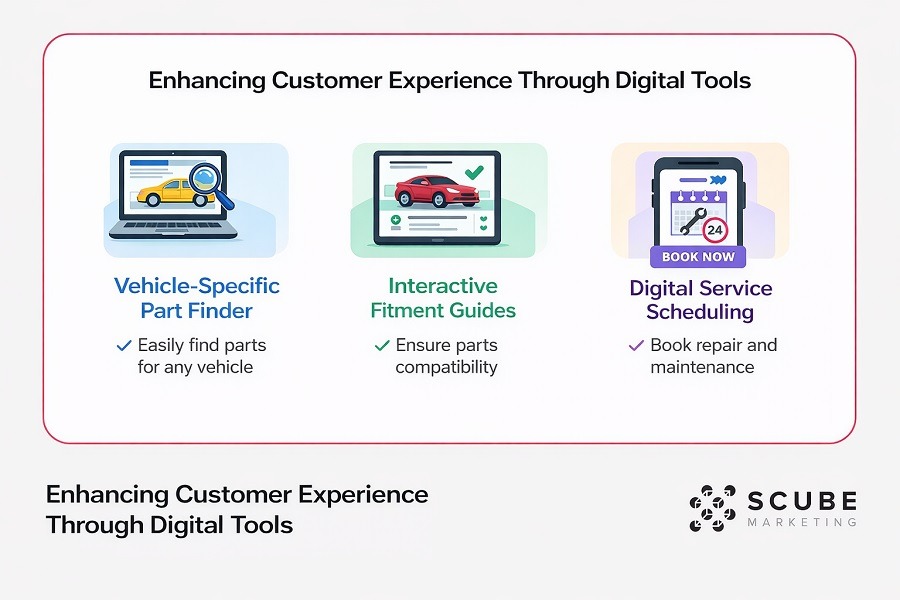
Digital tools are helping businesses meet these expectations by improving accessibility and usability.
Important features include:
These tools not only improve customer satisfaction but also reduce errors and returns. When customers can easily find the correct parts for their passenger cars or commercial vehicles, it creates a smoother buying journey.
Data has become one of the most valuable assets in the automotive aftermarket industry. Businesses that use data effectively can optimize operations, improve decision-making, and respond to market changes quickly.
Successful aftermarket businesses rely on:
These systems help businesses understand customer behavior, monitor market value trends, and improve operational efficiency. Data-driven decisions allow companies to align their strategies with real market demand.
One of the most important shifts in the automotive aftermarket is the rise of connected ecosystems. Businesses are no longer operating in isolation. Instead, they are forming partnerships that enhance service delivery and customer experience.
Key partnerships include:
These partnerships create a network that improves efficiency and expands service offerings. For example, a repair shop connected to a supplier network can access parts faster, reducing downtime for vehicle repairs.
Connected commerce is shaping the future of the automotive aftermarket industry. It involves integrating digital systems, data, and customer interactions into a unified experience.
These technologies are transforming how aftermarket services are delivered. Predictive maintenance, for example, allows businesses to anticipate when parts will fail and offer solutions before problems occur. This creates new revenue streams and improves customer relationships.
The automotive aftermarket continues to experience significant growth driven by several key factors. These include the aging vehicle fleet, increasing vehicle ownership, and the expansion of electric vehicle models.
Important trends include:
Organizations such as the Environmental Protection Agency and the European Automobile Manufacturers Association are influencing how businesses operate. Compliance with these regulations is becoming essential for long-term success.
Modern vehicles are becoming more advanced, incorporating systems such as advanced driver assistance systems and connected technologies. This increases the complexity of repair services and maintenance.
For aftermarket businesses, this means:
While complexity increases costs, it also creates opportunities for differentiation. Businesses that specialize in advanced systems can command higher market share and build a strong competitive edge.
The automotive aftermarket size was valued at USD 922 billion in 2023 (Source: MEMA). This reflects the scale of the global automotive aftermarket and its continued expansion driven by increasing vehicle fleet and demand for aftermarket products.
E-commerce is transforming how automotive parts are sold and distributed. Online sales provide customers with immediate access to product information, competitive pricing, and a wide range of aftermarket accessories. This shift benefits both DIY customers and professional repair shops.
Data analytics supports decision-making across inventory management, pricing strategies, and customer engagement. It helps businesses forecast demand, optimize stock levels, and improve marketing effectiveness.
Businesses must invest in training, tools, and partnerships. Developing expertise in specific systems such as electric vehicles or advanced driver assistance systems allows companies to stay competitive.
Major trends include:
The future of the automotive aftermarket is shaped by rapid innovation, changing customer expectations, and evolving industry dynamics. The global automotive aftermarket industry is expected to witness strong growth during the forecast period, driven by technological advancements and increasing demand for aftermarket services. Key automotive aftermarket companies, along with evolving automotive aftermarket industry trends, are reshaping how auto parts stores operate, serve customers, and manage supply chains across regions.
One of the most important trends is the rise of electric vehicles. As adoption increases across passenger vehicles, the demand for traditional aftermarket components may shift. However, new opportunities are emerging in areas such as battery systems, software updates, and specialized repair services. At the same time, segments like car audio systems and performance upgrades continue to grow, supported by demand for personalization and enhanced driving experiences.
Advanced technologies such as connected vehicles and predictive maintenance are redefining the industry. Businesses must integrate digital solutions for real-time monitoring, data analysis, and proactive service delivery. Standards from organizations like the Certified Automotive Parts Association are also improving quality and trust. Together, these shifts are creating a more connected, data-driven, and customer-focused automotive aftermarket.
Key future trends include:
Regional growth will also continue to shape the global market. Asia Pacific is expected to lead in market expansion, while North America and Europe will maintain strong demand due to aging vehicle fleets and established aftermarket infrastructure.
The automotive aftermarket is entering a phase of transformation where traditional practices meet modern innovation. Businesses that adapt to these changes, invest in new technologies, and align with customer needs will be best positioned to succeed in the evolving aftermarket industry.
The automotive aftermarket stands at a critical point where traditional operations meet digital innovation. The combination of market growth, technological advancement, and changing customer expectations is reshaping the industry.
Success in the automotive aftermarket depends on balancing these elements effectively. Businesses must embrace digital transformation, leverage data analytics, and build strong partnerships to remain competitive. At the same time, they must maintain focus on quality, reliability, and customer satisfaction.
The path forward requires continuous improvement. Companies that adapt quickly, invest in the right technologies, and align with market trends will be better positioned to capture opportunities in the global automotive aftermarket.
For businesses ready to grow, the next step is to evaluate current operations, identify gaps, and implement a structured digital transformation strategy. The future of the automotive aftermarket belongs to those who combine expertise with innovation and execute with precision.