
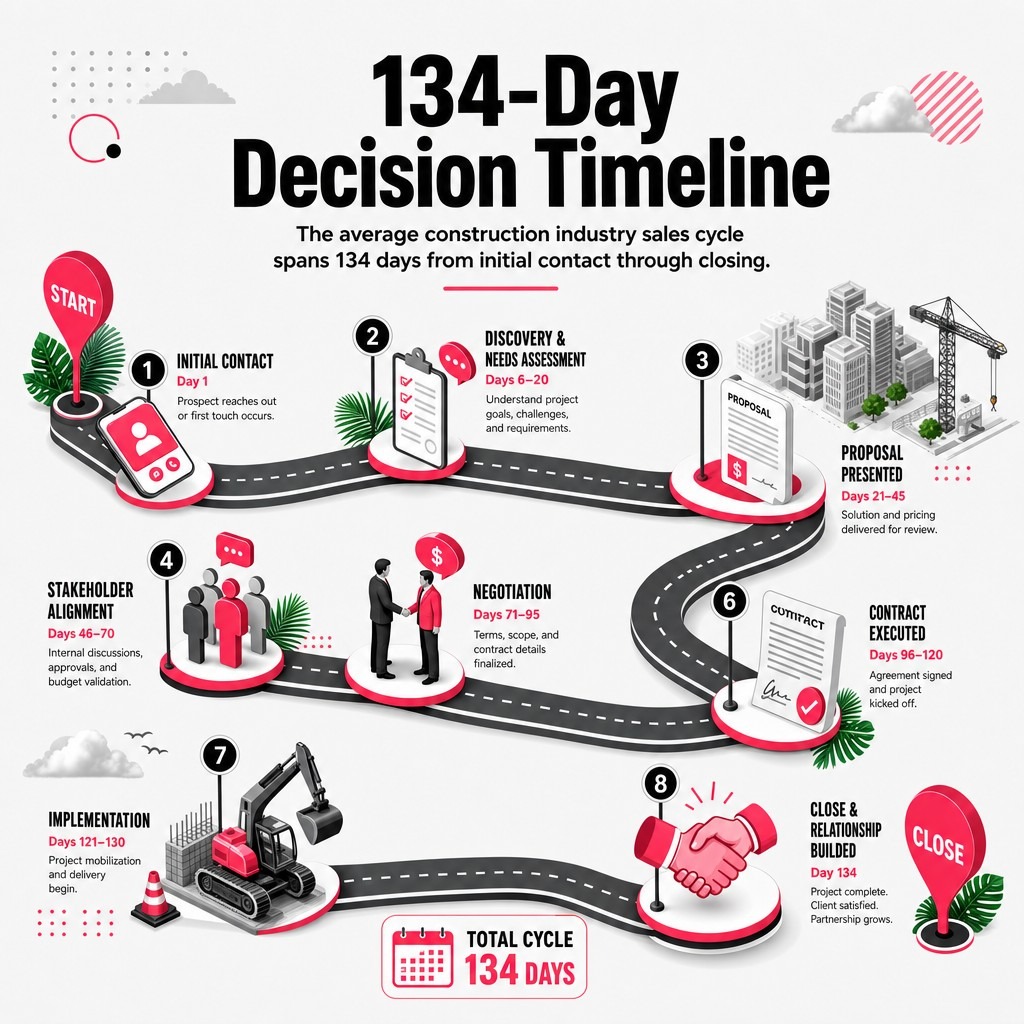
The biggest waste I see in heavy equipment marketing? Companies treating a $500,000 excavator sale like someone buying sneakers online. Your buyers need 134 days to make a decision. They involve multiple stakeholders. They research obsessively before ever talking to sales.
If your lead generation strategy amounts to "run some Google Ads and hope," you're leaving millions on the table.
A proper lead generation funnel for heavy equipment companies acknowledges reality. The average construction industry sales cycle spans 134 days from initial contact through closing. Your marketing needs to work that entire timeline, not just capture a form submission and dump it to sales.
I've watched heavy equipment dealers transform their businesses by building funnels that actually match how buyers behave. The shift from trade-show-dependency to digital systems that generate qualified leads every single week.
You need three things: search visibility when buyers start researching (because 90% of heavy equipment buyers use search engines during the purchasing journey), nurture sequences that educate multiple decision-makers over months, and conversion systems that identify serious buyers from tire-kickers.

This guide walks you through each stage. From attracting cold prospects researching "best excavator for rocky terrain" to converting warm leads ready to discuss financing on a $400,000 machine.
The problem isn't lack of effort. It's complete misalignment with how business buyers actually work.
Most heavy equipment companies copy tactics from consumer marketing. Quick conversions. Immediate purchases. Single decision-makers clicking "buy now."
That's not your world.
Your buyers operate in stages. A fleet manager spots performance issues with aging equipment. She researches solutions for three months before mentioning anything to her operations director. He evaluates five potential suppliers over two months. The CFO gets involved to review financing options. Procurement negotiates terms for another month.
If your "funnel" is just a contact form on your website, you're only capturing people already at the end of their journey. You've missed months of influence opportunities.
The companies winning right now build systems that engage buyers at every stage. SEO content that answers early research questions. Paid search campaigns targeting comparison shoppers. Email sequences that educate procurement teams about total cost of ownership.
High-ticket machinery requires a completely different approach than typical B2B services. The stakes are higher. The timelines are longer. The stakeholder groups are larger.
Your funnel needs to accommodate all of it.
Before you build anything, map exactly how your customers actually buy.
Not how you wish they bought. Not how your sales team wants them to buy. How they actually move from problem awareness to signed contract.
The B2B buying process involves five distinct stages: recognizing a problem, evaluating solutions, selecting a supplier, making a purchasing decision, and relationship-building during post-purchase evaluation.
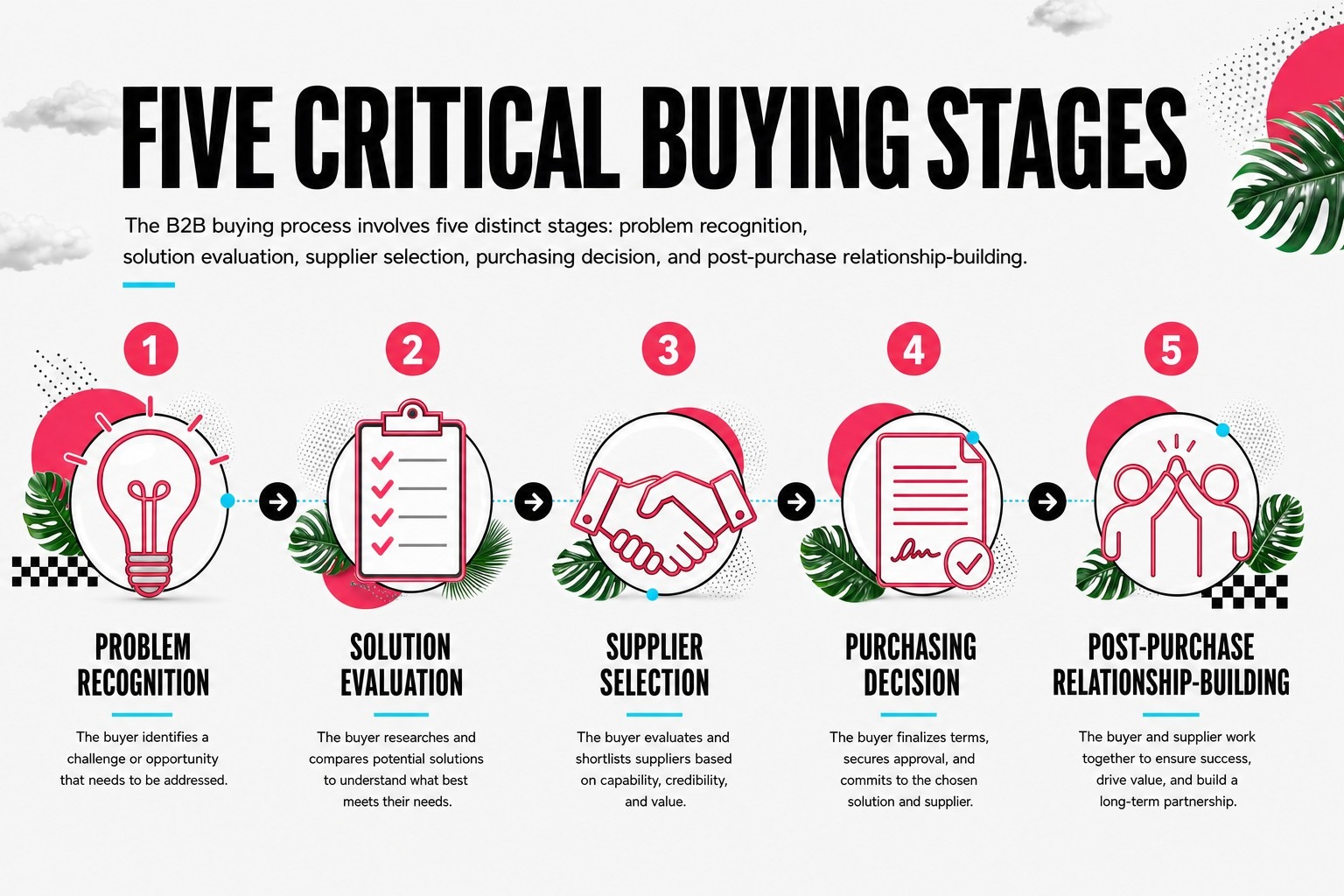
In heavy equipment sales, these stages stretch across months.
Stage one starts when someone notices equipment performance declining. Or when a new project requires capabilities their current fleet doesn't have. They're not searching for your brand yet. They're researching symptoms and solutions.
Stage two involves comparing equipment types. Tracked excavators versus wheeled. Diesel versus electric. Rental versus purchase. Multiple people in the organization start having conversations.
Stage three narrows to specific manufacturers. Your competitors get serious consideration. Buyers download spec sheets, watch demo videos, and read case studies about similar operations.
Stage four brings direct engagement. RFQ submissions. Sales calls. On-site demonstrations. Financing discussions. This is where most companies think the buyer journey starts. It doesn't.
Stage five happens after purchase. Service quality. Parts availability. Performance validation. This feeds referrals and repeat purchases.
A single person rarely approves a $300,000 equipment purchase.
Your content needs to speak to operators worried about ease of use. To maintenance managers concerned about serviceability. To finance teams focused on total cost of ownership. To executives evaluating strategic fit.
Each stakeholder enters the journey at different times with different questions.
Operators might start researching comfort features and control responsiveness months before anyone talks to procurement. CFOs get involved late but carry veto power over the entire deal.
Your funnel must address all of them.
When someone types "excavator for tight urban jobsites" into Google, you need to appear. Not on page three. In the top five results.
That's where buyers start. Search engines power the early research phase.
Forget ranking for "excavators" or "construction equipment." Those terms are too broad and attract the wrong traffic.
Focus on specific problems your equipment solves. "Excavator with low ground pressure for soft soil." "Compact wheel loader for indoor demolition." "Articulated dump truck for steep grades."
These long-tail searches have less competition and attract buyers with clear intent. Someone searching "best skid steer for snow removal" is closer to purchase than someone searching "skid steer."
Build content around these problem-specific queries. Technical comparison guides. Application-specific recommendations. Performance data for different use cases.
Industrial companies generate qualified leads by optimizing product data for search. Detailed specifications help. Model comparisons help more. Application guides showing which equipment works for which scenarios help most.
Buyers always compare options. You can either let them do it on competitor sites or control the narrative yourself.
Publish honest equipment comparisons. Your tracked excavator versus wheeled models. When to choose a compact loader versus a full-size unit. Electric equipment versus diesel for specific applications.
Don't pretend your equipment is perfect for every situation. Buyers smell BS immediately. If diesel makes more sense for certain remote jobsites, say so. If your compact line sacrifices some power for maneuverability, explain the tradeoff clearly.
This approach builds trust. When you eventually recommend your solution, readers believe you because you've been honest about limitations.
Heavy equipment isn't sold purely online. Location matters tremendously.
Service availability. Parts inventory. Technician response times. Equipment demonstrations. These all depend on geography.
Create location-specific content. "Heavy Equipment Dealers Serving the Rocky Mountain Region." "Construction Equipment Rental in Texas Gulf Coast." "Excavator Service Coverage in the Pacific Northwest."
Optimize your Google Business Profile. Include service areas. Post updates about equipment availability. Respond to reviews promptly.
When someone searches "wheel loader dealer near me," you want to appear in those map results.
SEO builds long-term visibility. PPC delivers immediate qualified traffic.
You need both. Organic search captures early-stage researchers. Paid campaigns target buyers ready to talk to suppliers.
Not all searches signal the same readiness to buy.
"What is a track excavator" shows early research. "CAT 320 vs Komatsu PC200" indicates active comparison. "Excavator dealers in Denver" signals near-term purchase intent.
Build separate campaigns for each intent level. Use different messaging and landing pages. Budget more aggressively for high-intent terms.
Early research queries need educational content. Send those clicks to comparison guides and application articles. High-intent searches deserve direct response landing pages with RFQ forms and sales contact options.
PPC for heavy equipment companies requires strategic segmentation. Generic product campaigns waste money. Intent-based campaigns with proper qualification generate profitable leads.
You probably can't service equipment in all 50 states. Stop advertising everywhere.
Define your actual service territory. Where can you deliver equipment? Where do you have service technicians? Where can customers get parts within 24 hours?
Target only those areas in paid campaigns.
Leads from outside your service area aren't just useless. They're actively harmful. They consume sales team time. They lower your conversion rates. They make campaign performance look worse than it actually is.
A construction equipment dealer achieved a cost per lead of $41 through structured campaigns segmented by intent and location. That's dramatically below typical industrial lead costs. The key was ruthless targeting.
Someone searching "compact excavator rental rates Ohio" shouldn't land on your homepage. They should hit a page specifically about compact excavator rentals in Ohio with clear pricing information.
Every ad campaign needs a dedicated landing page. Match the headline to the search query. Address the specific question the searcher asked.
Generic landing pages destroy conversion rates. Specific, focused pages that directly answer the search query convert dramatically better.
Include clear calls to action. Request a quote. Schedule a demonstration. Download a spec comparison. Give visitors an obvious next step.
Most heavy equipment buyers spend months researching before contacting anyone. That's your opportunity.
Become their trusted education source. Answer their questions better than anyone else. When they're ready to talk to suppliers, you're top of mind.
Write detailed guides showing how to select equipment for specific applications.
"Choosing the Right Excavator for Pipeline Installation." "Wheel Loader Selection for Aggregate Operations." "Compact Equipment for Residential Construction Sites."
Include technical details. Bucket capacity requirements. Engine power considerations. Attachment compatibility. Transport logistics. Operating cost comparisons.
This level of detail separates you from competitors running generic marketing. You're demonstrating real expertise that helps buyers make better decisions.
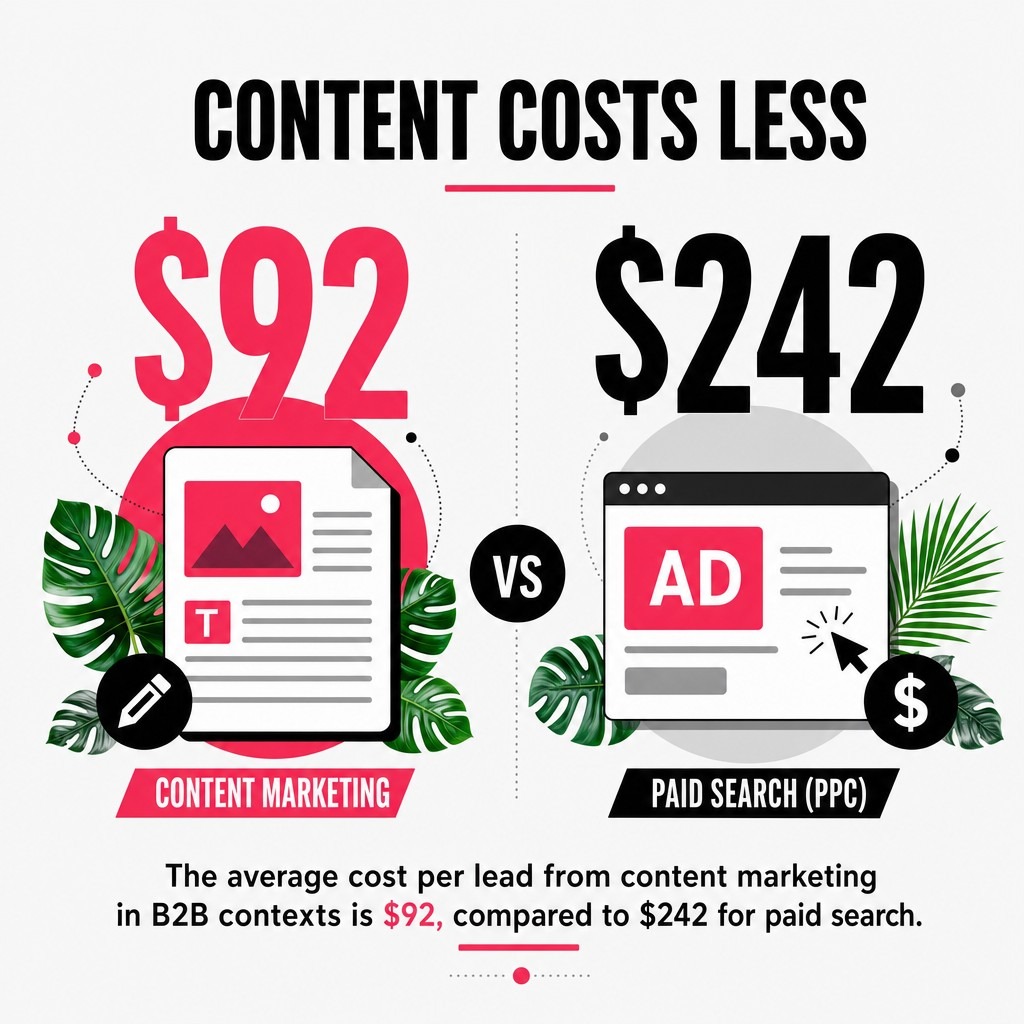
The average cost per lead from content marketing in B2B contexts is $92, compared to $242 for paid search. Content delivers better economics because it continues generating leads long after publication.
Buyers want proof your equipment performs in conditions similar to theirs.
Document customer success stories. A quarry operation that increased productivity 30% after upgrading their loader fleet. A utility contractor who reduced fuel costs with newer excavators. A municipality that improved snow removal efficiency with specialized equipment.
Include specific results. Equipment models used. Conditions faced. Problems solved. Measurable outcomes achieved.
These stories matter more than spec sheets to buyers evaluating suppliers. Technical specifications show what equipment can do theoretically. Case studies prove what it actually does in real operations.
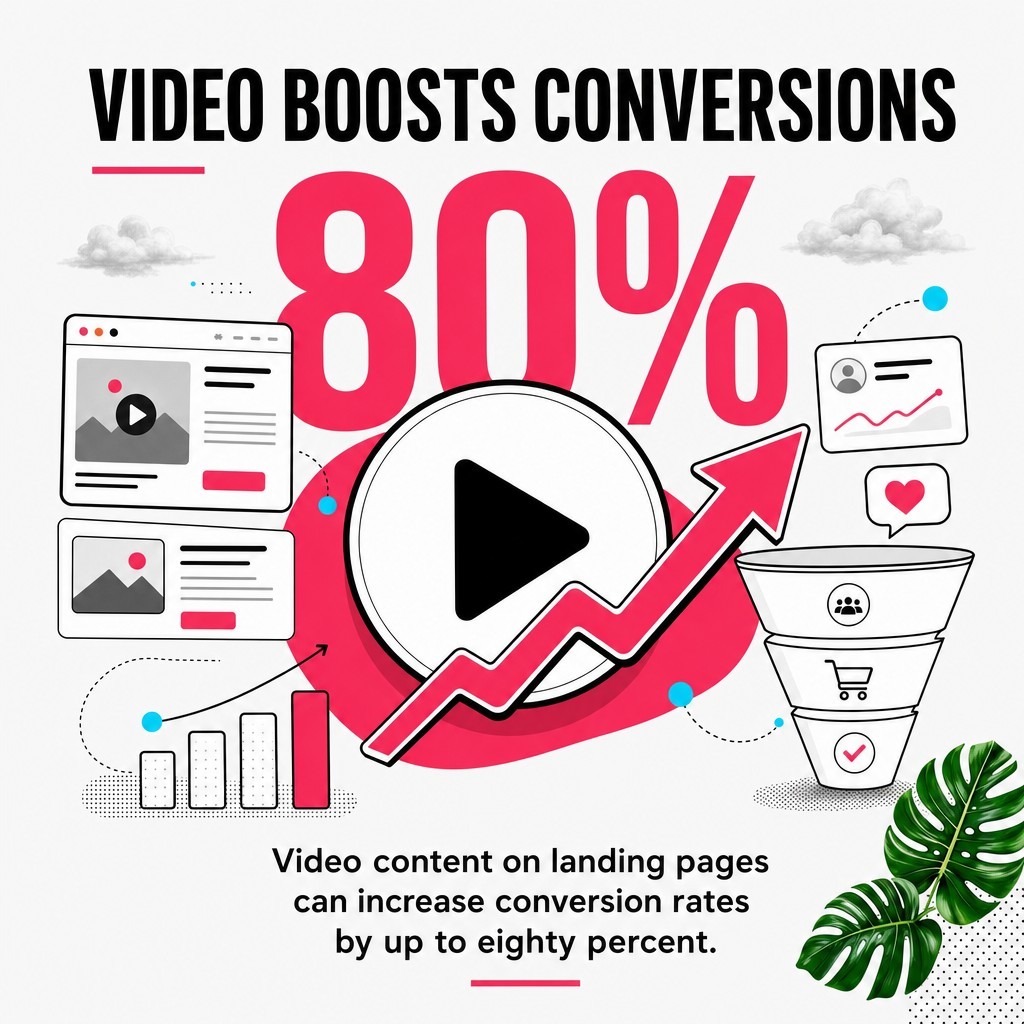
Video content on landing pages can increase conversion rates by up to 80%. For heavy equipment, video is especially powerful.
Create operation demonstrations. Show equipment handling challenging conditions. Compare performance between models. Explain maintenance procedures.
Video communicates things text and photos can't. The sound of a clean-running engine. The smooth operation of hydraulics. The actual size and scale of equipment.
Production quality matters less than content relevance. Buyers forgive smartphone footage if it shows what they need to see. Polished marketing videos that don't answer specific questions get ignored.
You captured a lead. Someone downloaded your excavator comparison guide or requested equipment specs. Now what?
Most companies dump that lead to sales immediately. That's premature for buyers still months from purchase.
Build automated email series that deliver value throughout the research phase.
Spread these emails across weeks or months depending on typical buying timelines. Keep providing value. Stay top of mind without being pushy.
B2B lead generation requires systematic pipeline building. Random follow-ups don't work. Structured nurture sequences that educate buyers at each stage do.
Not all leads progress at the same pace. Some buyers research actively and engage with every email. Others go quiet for months.
Track engagement. Who opens emails? Who clicks links? Who downloads additional resources? Who visits high-intent pages like financing or service information?
Create different tracks for different engagement levels. Highly engaged leads get more frequent, sales-focused communication. Less engaged leads stay in educational nurture sequences.
Send your most engaged leads directly to sales. They're showing buying signals. Let your sales team have those conversations while they're hot.
Someone visited your excavator product pages but didn't convert. They're researching actively.
Use retargeting ads to stay visible as they continue evaluating options. Show them relevant content based on pages they viewed.
Visited compact equipment pages? Retarget with compact equipment case studies and applications.
Viewed financing information? Retarget with financing calculator tools and lease-versus-buy comparisons.
Checked service coverage maps? Retarget with local dealer information and service response time data.
Make ads helpful, not just repetitive. Don't show the same generic "Buy Our Equipment" ad forty times. Show progressive content that matches their research stage.
Every stage needs clear next steps. From anonymous visitor to engaged lead to sales-ready prospect.
Most funnels leak leads because the path forward isn't obvious or valuable enough.
Early-stage researchers won't request quotes. They don't know enough yet.
Offer educational resources instead. Equipment comparison guides. Application selection worksheets. Total cost of ownership calculators. Industry trend reports.
These low-commitment offers capture contact information from buyers not ready to talk to sales. You enter their nurture sequence and stay relevant as they progress.
Mid-stage buyers want more specific information. Detailed spec sheets. Equipment demonstration videos. Customer reference contacts. Financing options overview.
Late-stage buyers are ready for direct engagement. Quote requests. Demonstration scheduling. Trial rental arrangements. These offers connect them directly with sales.
Personalized calls-to-action convert almost 202% better than basic ones. Generic "Contact Us" buttons underperform targeted offers matched to visitor behavior.
Your quote request form has 27 fields. Your demonstration scheduling requires phone calls during business hours. Your financing information is buried in PDF documents.
You're killing conversions.
Make high-intent actions frictionless. Quote requests need basic contact info, equipment interest, and project timeline. That's it. Save detailed qualification for follow-up conversations.
Let buyers schedule demonstrations online. Integrate calendar software. Show available times. Confirm instantly.
Put financing information on dedicated landing pages. Clear terms. Simple calculators. Application processes explained step-by-step.
Every unnecessary field, every extra click, every moment of confusion costs you qualified leads.
Don't ask for everything upfront. Gather information progressively as buyers engage.
First download: Name, email, company.
Second download: Phone, equipment interest, timeline.
Third interaction: Project details, budget range, decision authority.
You're building a complete profile over time without overwhelming buyers with lengthy forms. Each interaction adds data that helps sales have better conversations.
You need metrics that connect marketing activities to closed deals. Vanity metrics don't matter.
Website traffic is useless if it doesn't generate qualified leads. Form submissions are meaningless if they don't convert to customers. Your boss doesn't care about impressions. Revenue is what counts.
Start with traffic sources. Which channels drive visitors who actually convert? Organic search? Paid campaigns? Email? Referrals?
Measure conversion rates at each stage. Visitor to lead. Lead to sales-qualified. Sales-qualified to opportunity. Opportunity to closed deal.
Calculate time in each stage. How long from first visit to lead capture? Lead to sales conversation? Opportunity to close?
These metrics show where your funnel works and where it breaks. A 3% visitor-to-lead conversion rate might sound low until you discover your competitor converts at 1.5%. A 60-day lead-to-opportunity timeline might be excellent in your industry.
Conversion rate optimization for equipment dealers focuses on generating quality RFQ leads, not just form submissions. The right metrics emphasize lead quality over quantity.
How much pipeline did your content marketing generate last quarter? What about PPC? Which campaigns produced opportunities worth pursuing?
Track this religiously. Every lead source connects to pipeline value and eventual revenue.
You might discover that organic search generates three times more pipeline than paid social. Or that your email nurture sequence converts leads to opportunities at twice the rate of cold outreach. Or that your case study library influences 40% of closed deals.
This data drives budget allocation. Stop guessing which marketing tactics work. Measure actual pipeline contribution and revenue influence.
A lead that costs $50 sounds cheap. Unless it never converts.
Calculate full customer acquisition cost by channel. Include all marketing spend, sales time, and operational costs. Divide by actual customers acquired.
Maybe your $50 PPC leads convert at 10% while your $100 content marketing leads convert at 25%. The "expensive" leads cost less per customer.
According to Harvard Business Review, research by Frederick Reichheld suggests that increasing customer retention by 5% can increase profits by 25% to 95%. Smart companies balance new customer acquisition costs with retention investments.
The heavy equipment market is shifting faster than most dealers realize.
The construction equipment market is projected to grow from $224.92 billion in 2025 to $338.89 billion by 2032. That's massive expansion. But it's happening alongside major technology shifts.
Electric equipment adoption is accelerating. Telematics and data analytics are becoming standard. Predictive maintenance is moving from nice-to-have to expected. Rental models are gaining ground against ownership.
Your funnel needs to address these changes.
Buyers researching electric heavy equipment have specific concerns. Range. Charging infrastructure. Performance compared to diesel. Total cost of ownership including electricity versus fuel.
Create content addressing these questions directly. Electric equipment comparison guides. Charging solution explainers. Real-world performance data from early adopters.
Companies positioning themselves as electric equipment experts now will dominate those searches as adoption accelerates.
The telematics market for heavy equipment is projected to reach $3.21 billion by 2032, growing at a compound annual growth rate of 13.4%. Buyers increasingly expect connected equipment with performance monitoring and predictive maintenance capabilities.
Your marketing should highlight these features. Show how telematics reduces downtime. Demonstrate fuel efficiency improvements from data-driven operation. Explain how predictive maintenance prevents expensive failures.
This isn't just product marketing. It's addressing legitimate buyer concerns about equipment reliability and operating costs.
The rental equipment sector is projected to expand at 21.41% annually through 2035. More buyers are considering rental over purchase, especially for specialized equipment needed temporarily.
Your funnel needs rental-specific content and conversion paths. Rental versus purchase calculators. Availability tracking for rental fleet. Rental-to-purchase programs.
Address financing transparently. Manufacturers financed over 151,000 new construction machines in 2025. Buyers want financing information early in research. Don't make them call for basic details.
Create dedicated landing pages for rental options. Build separate email nurture tracks for rental leads versus purchase leads. Track and optimize both paths independently.
You don't need a perfect funnel next week. You need steady progress toward a system that consistently generates qualified leads.
Start with search visibility. If buyers can't find you during research, nothing else matters. Audit your current SEO performance. Identify gaps. Create content targeting high-intent keywords in your market.
Launch one strategic PPC campaign. Pick your highest-value equipment category. Build a focused campaign targeting buyers actively comparing options. Create a dedicated landing page. Drive qualified traffic and test conversion.
Set up basic email automation. Capture leads with valuable content offers. Deliver a simple welcome series. Provide ongoing value over weeks and months. Stay relevant throughout extended buying cycles.
Measure everything. Traffic sources. Conversion rates. Pipeline contribution. Customer acquisition costs by channel. Reaching high-value construction equipment buyers requires data-driven optimization, not guesswork.
Your competitors are still depending on trade shows and cold calling. They're wondering why leads dried up. You're building a system that generates qualified opportunities every single week.
That's the difference between hoping for leads and engineering them systematically.