
Selling heavy equipment online requires a different approach than consumer PPC. PPC for heavy equipment targets project managers, fleet operators, and construction business owners who research carefully before committing to six- or seven-figure purchases. In the heavy equipment industry, long-tail targeting and disciplined keyword research help reduce wasted ad spend, especially for heavy equipment companies competing against large dealers and marketplaces.
Many heavy equipment companies overspend on broad terms like “excavator for sale.” Those clicks often include casual researchers, competitors, students, or buyers outside budget. The goal in heavy equipment PPC is not traffic volume. It is consistent lead flow from heavy equipment buyers with clear purchase intent.
A stronger approach combines precise targeting with landing pages built for serious prospects. PPC campaigns should reach decision-makers when search intent is commercial and time-sensitive, not when someone is browsing. Because many transactions are regional, geo targeting is a crucial component of profitable PPC advertising in this category.
This guide outlines a practical PPC framework for equipment sales and rentals, including PPC for heavy equipment companies that need predictable demand capture without wasting budget. It covers commercial-intent keyword strategies, landing page elements that increase form submissions and calls, and campaign optimization tactics aligned with long sales cycles and high-value deals. The result is a paid strategy that generates leads a sales team can qualify and follow up effectively.
Traditional heavy equipment sales have long depended on relationships, trade shows, and outbound outreach. Those channels still matter, but paid search places inventory and offers in front of buyers actively searching for specific machines right now, often through Google and other search engines.
Speed is a major advantage. When a contractor wins a job, equipment may be needed immediately. That buyer is not waiting for the next trade event. Typical queries look like “excavator rental Houston” or “used bulldozer Dallas area,” and the results page is where comparisons start. PPC advertising positions a dealer or rental provider directly inside that evaluation moment.
PPC works because it matches intent. Instead of interrupting a buyer, ads appear at the point of need, in the same search engine results where buyers shortlist options. For many heavy equipment companies, strong PPC plus a clear landing page experience improves lead quality more than broad, awareness-heavy online advertising.
Clicks in this category can be expensive. Competitive ppc ads may range from $15 to $50 per click depending on location, machine type, and competition. That cost only makes sense when campaigns are built around lead quality and close rates.
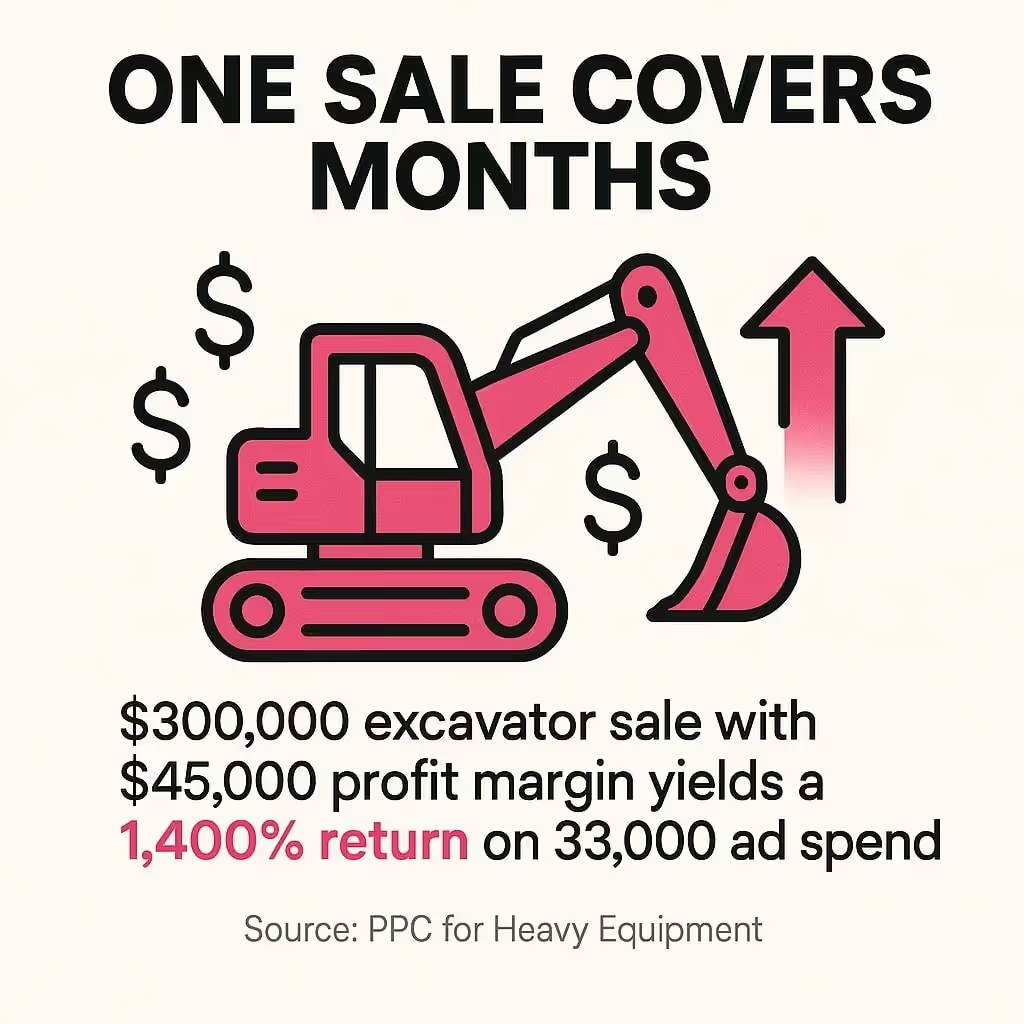
A simple margin model helps frame budgeting. If a $300,000 excavator sale yields a $45,000 gross margin, a few thousand dollars in qualified traffic and lead handling can be justified, provided the campaign produces real conversations and the follow-up process is tight. This is why the marketing budget conversation for heavy equipment PPC should center on cost per qualified lead and cost per booked appointment, not cost per click alone.
The key point: large ticket sizes can support higher acquisition costs, but only when targeting is specific and waste is controlled. This discipline applies across heavy equipment advertising, and it becomes even more important when campaigns are supported by social media marketing that builds familiarity before buyers are ready to convert.
Trade shows happen on fixed schedules. Print and direct mail have long lead times. PPC campaigns can be launched quickly, and messaging can be adjusted as inventory changes.
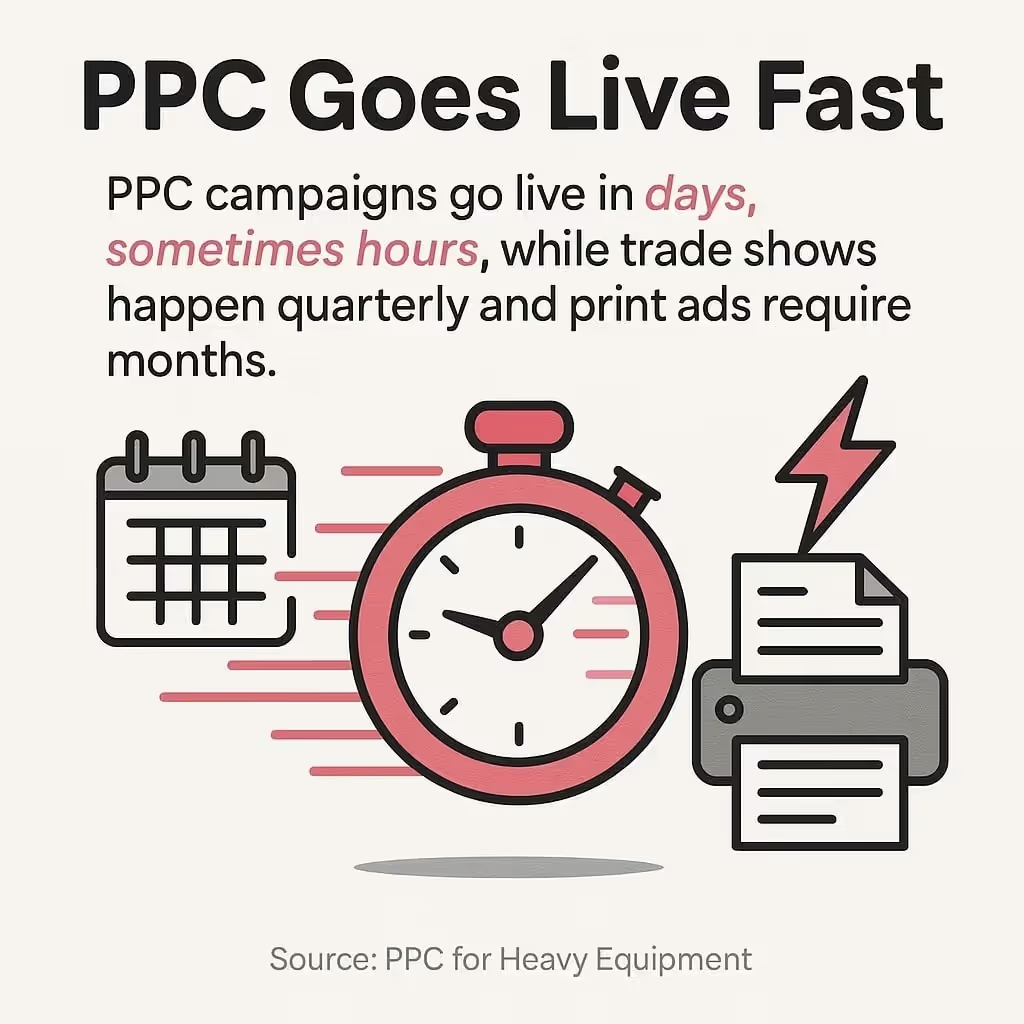
When new equipment arrives, a dealer can promote it immediately with an equipment-specific ad group, a dedicated landing page, and tight geographic coverage. That flexibility matters in competitive markets where similar listings appear fast and pricing shifts with availability and seasonality.
Testing is also faster than most traditional channels. Ad copy, bids, and budgets can be adjusted based on performance signals, helping PPC remain responsive to inventory movement and local demand.
Heavy equipment purchases rarely follow a single-step path. The buyer journey can span weeks or months and often includes multiple stakeholders, operations, procurement, finance, and site leadership. These long sales cycles shape how a campaign should be built and how leads should be handled.
A practical way to structure messaging is to align ads and landing pages to search intent across the sales funnel. Early searches are informational. Mid-funnel searches compare models and dealers. Bottom-funnel searches signal readiness to request pricing or financing.
Early-stage buyers gather information and narrow requirements. Searches look like “what size excavator for residential excavation” or “compact vs standard backhoe comparison.” These users are not ready to buy, but they are forming preferences and building a shortlist.
Visibility here supports brand recognition and future recall, but landing pages must fit the context. Educational pages, comparison resources, and category guides can be effective when paired with clear pathways to inventory. For many construction equipment companies, this stage is where content marketing supports paid efforts by improving relevance and building trust without forcing a hard sell.
Mid-stage buyers know the equipment type and are comparing brands, configurations, and seller credibility. Queries become more specific: “Caterpillar 320 vs Komatsu PC200” or “John Deere excavator dealers Texas.” Buyers are checking pricing ranges, warranty terms, financing availability, and service coverage.
At this point, PPC should prioritize pages that provide specs, condition notes, hours, attachments, location, and a clear next step. Competitive differentiation matters, inspection standards, certified programs, service guarantees, delivery options, or financing support. Landing pages should remove friction and make it easy for a buyer to request a quote or schedule a call.
Bottom-funnel queries are transactional: “buy Caterpillar 320 excavator,” “excavator financing approval,” or “used heavy equipment quotes.” The equipment category decision is largely made; the remaining decision is which dealer or rental provider to contact.
This stage requires operational readiness. Landing pages should surface phone contact, short forms, and response expectations. Lead routing should be immediate so the sales team can respond quickly, often the first qualified response wins. Measuring outcomes also matters: implement conversion tracking for calls, chats, and form submissions so true lead sources are visible in reporting tools such as Google Analytics.
Generic PPC tactics often fail in this space because the audience is narrow and the economics are unforgiving. The goal is to protect budget, target commercial intent, and drive leads into a dependable follow-up process.
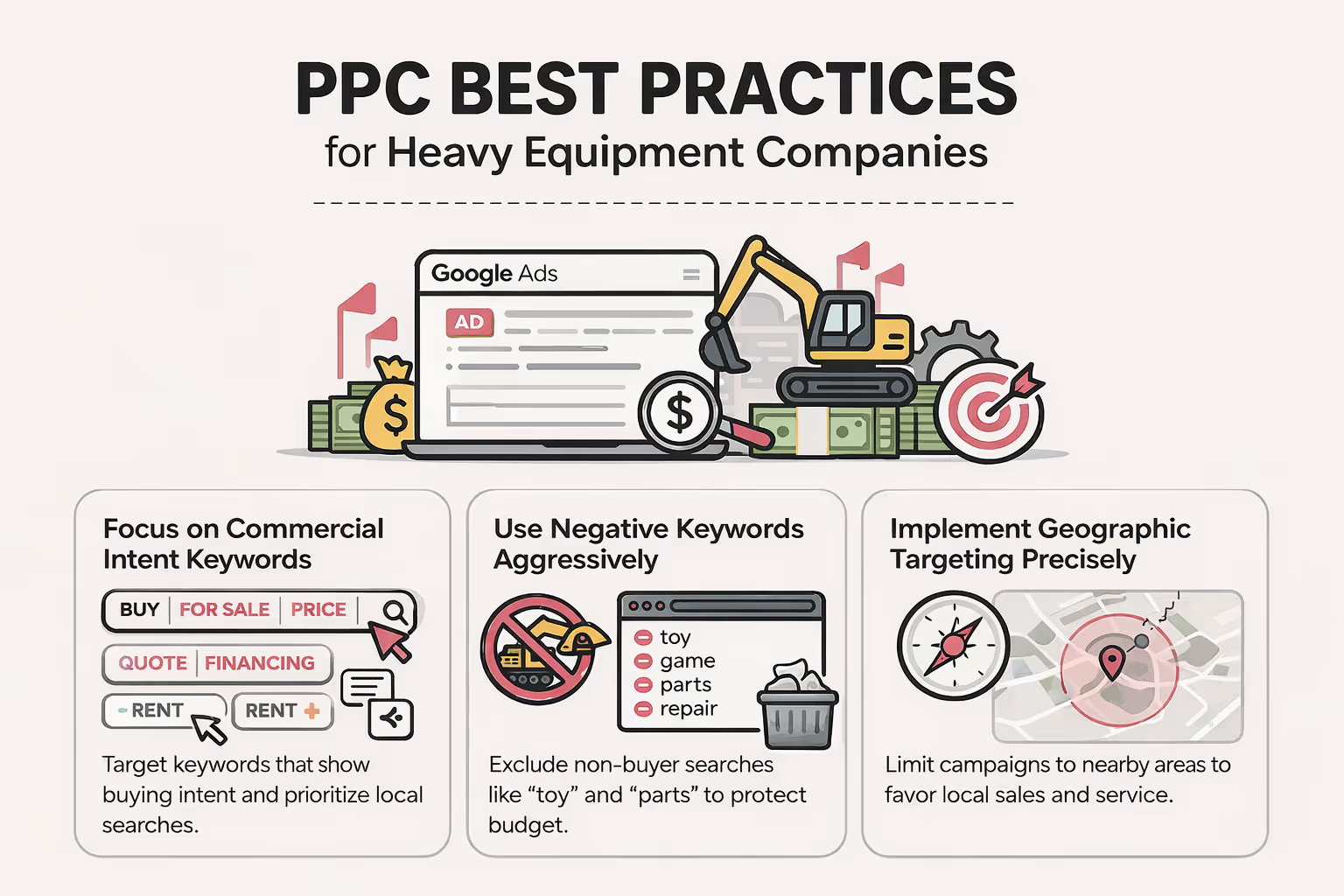
Informational searches can generate traffic but rarely drive equipment sales. Keywords that include “buy,” “for sale,” “price,” “quote,” “financing,” “dealer,” and “rent” are more likely to indicate purchase intent. Location modifiers often strengthen intent further, especially when a local dealer relationship, transport costs, and service proximity are important.
For heavy equipment marketing, this is where precision matters. Strong keyword research should prioritize relevance over scale, even when search volume appears lower.
With high CPCs, budget protection is non-negotiable. Excluding irrelevant searches prevents paying for toy-related terms, games, parts-only searches, or other non-buyer traffic. A negative keyword list should be built at launch and expanded based on search term reports.
Early on, review search terms weekly. Over time, bi-weekly reviews can be sufficient. The objective is to continuously reduce waste and keep spend aligned to buyer intent.
Most buyers prefer local or regional options. Shipping heavy construction equipment long distances can be expensive, and ongoing service requirements often favor proximity. Start with radius targeting around dealership locations and expand strategically for specialized equipment categories where buyers travel farther.
Bundling all inventory into one campaign usually weakens relevance. Excavator and bulldozer searches behave differently, and price expectations vary by equipment type. Separate campaigns by equipment category and build ad groups around brands and models. This allows tighter message matching, clearer budget allocation, and more accurate performance assessment.
On platforms like Google Ads, this structure often improves quality signals and helps control costs. It also supports cleaner reporting on which categories drive qualified leads, not just clicks.
Keyword research for the heavy equipment industry is closer to account-based targeting than mass-market ecommerce. The audience is smaller, but the intent can be high and the sales process is rarely immediate. Effective PPC for heavy equipment starts by identifying target keywords that match real purchase behavior, then organizing them into specific equipment category groups so budgets and messaging stay aligned to margin and inventory.
A useful rule: prioritize commercial queries that indicate equipment evaluation or dealer selection, not general curiosity. This reduces wasted ad spend and improves ppc performance over time.
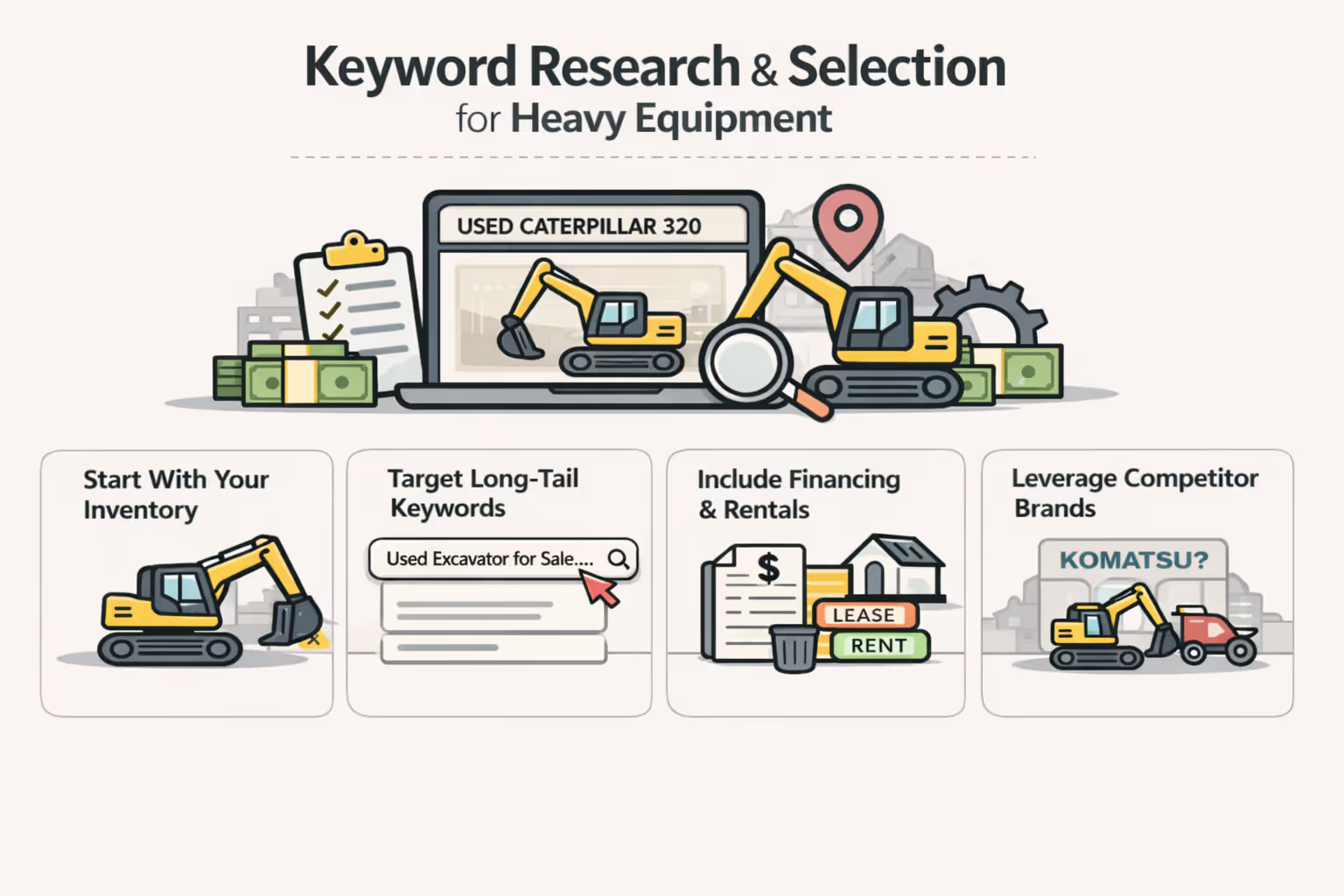
The most profitable relevant keywords typically mirror what is available now. If three Caterpillar 320 excavators are in stock, the model terms become priority target keywords for ppc campaigns and for on-site filtering.
Build keyword lists around make, model, year, and configuration. “2022 John Deere 310L backhoe” often performs better than “backhoe for sale” because it matches how heavy equipment buyers research. Where appropriate, include attachments and spec qualifiers (bucket size, aux hydraulics, hours, emissions tier, lifting capacity) because those details reflect real buying criteria.
Condition qualifiers also matter for equipment sales. If inventory is primarily used, include “used,” “pre-owned,” and “certified pre-owned” variations. If inventory is new-only, use exclusions and negative keywords to filter used searches. This approach helps heavy equipment companies avoid paying for misaligned clicks.
Broad terms like “excavator” or “construction equipment” can be expensive and often signal early-stage research. Long-tail terms combine multiple qualifiers, equipment type, brand, model, condition, location, and intent, such as “used Caterpillar 320 excavator for sale Houston.” These queries typically have lower search volume, but they also tend to deliver stronger lead quality because they align with immediate commercial intent and clearer search intent.
For construction equipment companies and dealers handling high-ticket purchases, the objective is not maximum traffic. It is consistent exposure in the right search engine results for terms that lead to quotes, calls, and serious inquiries.
Not every buyer purchases outright. Financing and leasing are common in heavy construction equipment transactions, and many buyers evaluate rentals before purchase. Keywords that include “financing,” “lease,” “rent,” and “rental” capture distinct segments of demand and often convert differently than purchase-only searches.
If rentals are offered, create separate campaign and landing page paths for rental companies or rental inventory. Rental-focused pages need different calls to action, availability language, and lead handling. This separation prevents mixed intent, improves conversion rates, and keeps reporting clear.
Competitor brand terms can be useful but require discipline. Buyers searching “Komatsu excavator” may consider equivalent models if the alternative is presented clearly. If bidding on competitor brand names, keep messaging factual and avoid aggressive claims. The ad should acknowledge the category and direct the searcher to an appropriate comparison or inventory page.
Expect weaker quality signals and higher cost per click on competitor terms because the ad is not an exact match to the query. Track downstream results carefully to confirm these terms generate qualified leads, not just clicks.
Sending expensive ppc traffic to a homepage or generic inventory page usually wastes budget. Dedicated landing pages aligned to the query improve relevance, increase conversion rates, and strengthen quality signals in Google Ads and other ppc platforms.
When someone searches “buy used excavator Dallas,” the landing page should show used excavators available in Dallas, or at minimum, a filtered list for that location and category. Not a homepage, and not a broad “inventory” page without context.
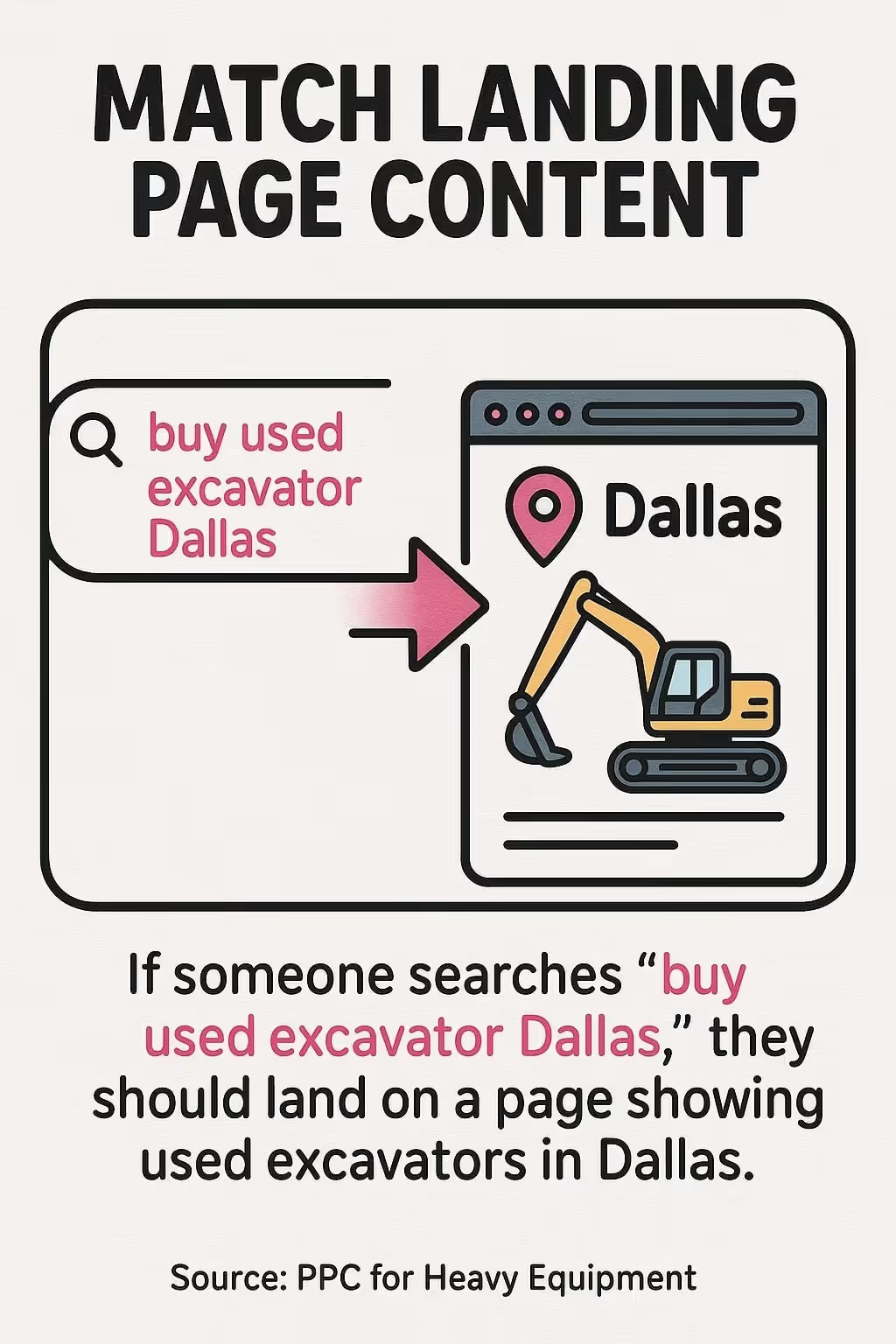
This message match improves user experience and can support stronger placement in search engine rankings because the page aligns tightly to the query. It also reduces bounce rates from high-intent visitors who expect direct answers.
Where scale allows, build landing pages by specific equipment category and geography. The purpose is not to create thin pages; it is to create precise entry points that reduce friction for buyers.
Heavy equipment buyers typically scan for practical details immediately: year, hours, condition, attachments, location, and price or price range. Place critical information above the fold. Provide complete technical specs, engine details, lifting capacity, reach, operating weight, dimensions, because buyers compare options side-by-side.
Use high-quality photos from multiple angles. Video walkarounds can be helpful for used units because they reduce uncertainty and support credibility. When available, include video testimonials from similar buyers or industries to reinforce trust.
Different industry professionals prefer different contact methods. Some call immediately; others prefer short forms, email, or text. Provide multiple contact options clearly, without clutter.
This is also where conversion tracking must be implemented. Track calls, forms, chats, and direction requests consistently so campaign decisions are based on lead outcomes, not assumptions. Tie these actions into Google Analytics (GA4) so reporting reflects actual performance, not just click metrics.
A high-value purchase from an unfamiliar dealer carries perceived risk. Trust signals help mitigate that risk and support higher conversion rates.
Include manufacturer partnerships, inspection processes, warranties, service coverage, years in business, and clear location proof (real photos of the lot and service bays). Use testimonials that reference the same equipment type or buyer profile when possible. Practical transparency is more effective than sales language in this category.
Google Ads is often the primary driver of high-intent demand because Google Search captures buyers actively comparing dealers, rentals, and inventory. Other PPC platforms support complementary roles such as remarketing, awareness, and job-title targeting.
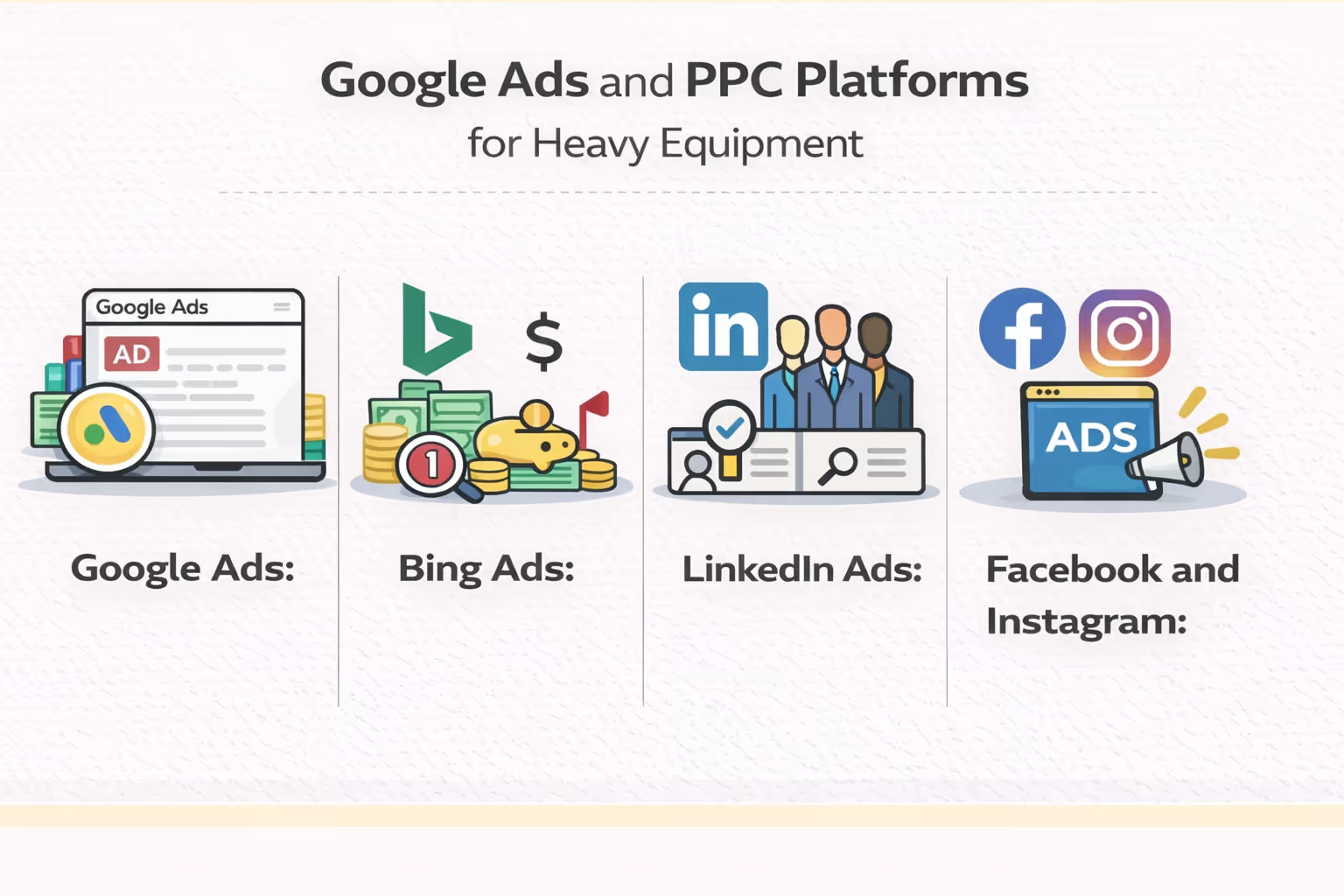
Google Search is typically the strongest channel for bottom-funnel intent. It supports granular keyword targeting, robust negative keyword controls, and bid adjustments by location, device, and time of day. For many heavy equipment companies, Google Ads becomes the core paid engine because it can match inventory-level queries and location constraints more precisely than most channels.
A practical starting point is allocating the majority of budget to Google Search until conversion tracking is stable and lead quality is verified.
Bing often delivers lower CPCs with reduced volume. Importing existing Google campaign structures can accelerate setup and allow quick testing. The key evaluation metric should still be qualified leads and close rate, not just cheaper clicks.
LinkedIn can be useful for targeting specific job titles (construction managers, operations directors, fleet managers, procurement roles) and relevant industries. It typically performs best for specialized categories, complex deals, and awareness-to-lead strategies rather than direct conversion at scale. Budget should reflect its higher CPC environment and be tied to measurable lead outcomes where possible.
Social platforms generally perform best for remarketing and supporting build brand awareness rather than capturing immediate purchase intent. Contractors may not browse social channels intending to buy equipment, but remarketing can keep a dealer visible during long evaluation cycles.
Use paid social to support new inventory visibility, promote financing offers, and re-engage visitors who viewed key category pages or equipment listings. Keep creative practical, avoid promotional exaggeration, and route clicks to the most relevant landing pages.
Launching PPC for heavy equipment is the starting point, not the finish line. In the heavy equipment industry, ongoing optimization is a crucial component of profitability because CPCs are high, audiences are narrow, and the outcome depends on lead quality over time. The goal is steady improvement in ppc performance through disciplined changes, not frequent resets.
Click-through rate and cost per click provide context, but they do not measure business outcomes. For most heavy equipment companies, the priority is cost per qualified lead and downstream impact on the sales process.
Track conversion actions that map to revenue:
Where possible, connect PPC data to closed equipment sales. A campaign that produces fewer but better leads can outperform a lower-cost campaign if close rates and deal size are stronger. This is also where quality leads becomes a measurable standard rather than a label.
To reduce reporting gaps, ensure conversion tracking is configured consistently and reviewed in Google Analytics (GA4). Lead sources should be traceable back to the keyword, ad group, and landing page that drove the inquiry.
Not all target keywords deserve the same bids. Increase bids on searches that reliably produce qualified inquiries and reduce bids, or pause, terms that generate cost without meaningful lead outcomes. This is especially important for ppc ads targeting broad category terms that may attract early-stage traffic.
Review search term reports weekly during the first month, then bi-weekly once performance stabilizes. Look for patterns in which specific queries convert and which variants consistently miss intent. Use that data to refine match types and negatives.
Device behavior can vary. Some buyers research on desktop during planning and procurement while others search from a jobsite. If data shows weaker mobile conversion quality for certain categories, adjust mobile modifiers carefully rather than applying broad reductions across all campaigns.
Small changes in ad copy or landing page structure can shift conversion rates, especially when the audience is limited and intent is precise. Run controlled tests that isolate one variable at a time, headline, call-to-action language, spec layout, or trust elements.
Keep tests practical:
Because buyer priorities differ, what works for excavators may not translate to cranes or compact equipment. Matching message and proof points to the equipment category typically performs better than universal copy.
In the heavy equipment industry, long sales cycles are normal. A visitor may evaluate options for weeks before contacting a dealer. Remarketing keeps a brand visible during that window and supports recall when the buyer is ready.
Build remarketing audiences by behavior:
Vary messaging based on recency. Recent visitors may see reminders tied to inventory availability, while older visitors may respond better to financing, service coverage, or new arrivals. When remarketing is used on social media channels, it should be treated as follow-up visibility, not a replacement for high-intent search.
PPC performs best when it supports a broader, coordinated approach. Combining paid search with search engine optimization, content marketing, and follow-up systems reduces dependence on paid clicks and improves lead quality across channels.
PPC campaigns generate fast feedback on what buyers actually search, which queries convert, and which categories justify spend. Use that data to prioritize organic work. If “used excavator Houston” produces qualified leads through PPC, improving search engine optimization for that query can reduce reliance on paid clicks over time and increase total presence in the search results.
This combined approach can also improve visibility for core categories by capturing more of the results page. When paid and organic listings appear together, the total click share often increases even if CPCs remain stable.
Top-of-funnel articles, buying guides, comparisons, and application-based content, support research-stage demand and establish credibility. This type of content marketing can reduce friction later in the funnel, especially when the content links directly into category pages and inventory landing pages.
To keep content aligned with PPC:
This is also where industrial construction equipment marketing can fit naturally. Content can address use cases, jobsite constraints, and category selection without turning into generic digital marketing commentary.
Not every visitor converts on the first session. Capturing email addresses supports follow-up without repeated paid clicks and helps nurture leads through longer decision cycles.
Use practical resources to encourage sign-ups:
Once captured, use email marketing campaigns to share inventory updates, financing availability, and relevant guides. Consistency matters more than volume, short, useful updates tend to perform better than frequent promotional messages.
A buyer may touch multiple channels before contacting sales: Google Ads, a landing page, a guide, an email, and a remarketing ad. Consistent positioning across digital channels supports brand recognition and reduces confusion.
Align core messages across PPC and supporting channels:
Where possible, use attribution tools to understand the customer journey rather than crediting PPC in isolation. The goal is to see how paid search supports SEO, email, and remarketing outcomes.
Heavy equipment PPC works when it is managed as a system: precise targeting, strong landing pages, reliable tracking, and measured iteration. Start with one category where the economics make sense, then expand based on verified outcomes.
A practical starting point:
The objective is not maximum clicks. It is consistent, measurable lead flow that supports equipment sales and long-term customer value.
Fair market value is commonly estimated by certified appraisers using age, condition, hours, brand, performance history, and market trends. Typical approaches include replacement cost minus depreciation and comparable sales data. An inspection usually informs the final estimate, especially for wear, service records, and attachments.
Heavy equipment can be a strong investment when utilization is reliable and resale value is stable. It also carries meaningful risks: maintenance costs, demand shifts, and downtime. Investment outcomes depend on utilization rates, operating costs, and residual value, particularly for higher-ticket categories in heavy construction equipment.