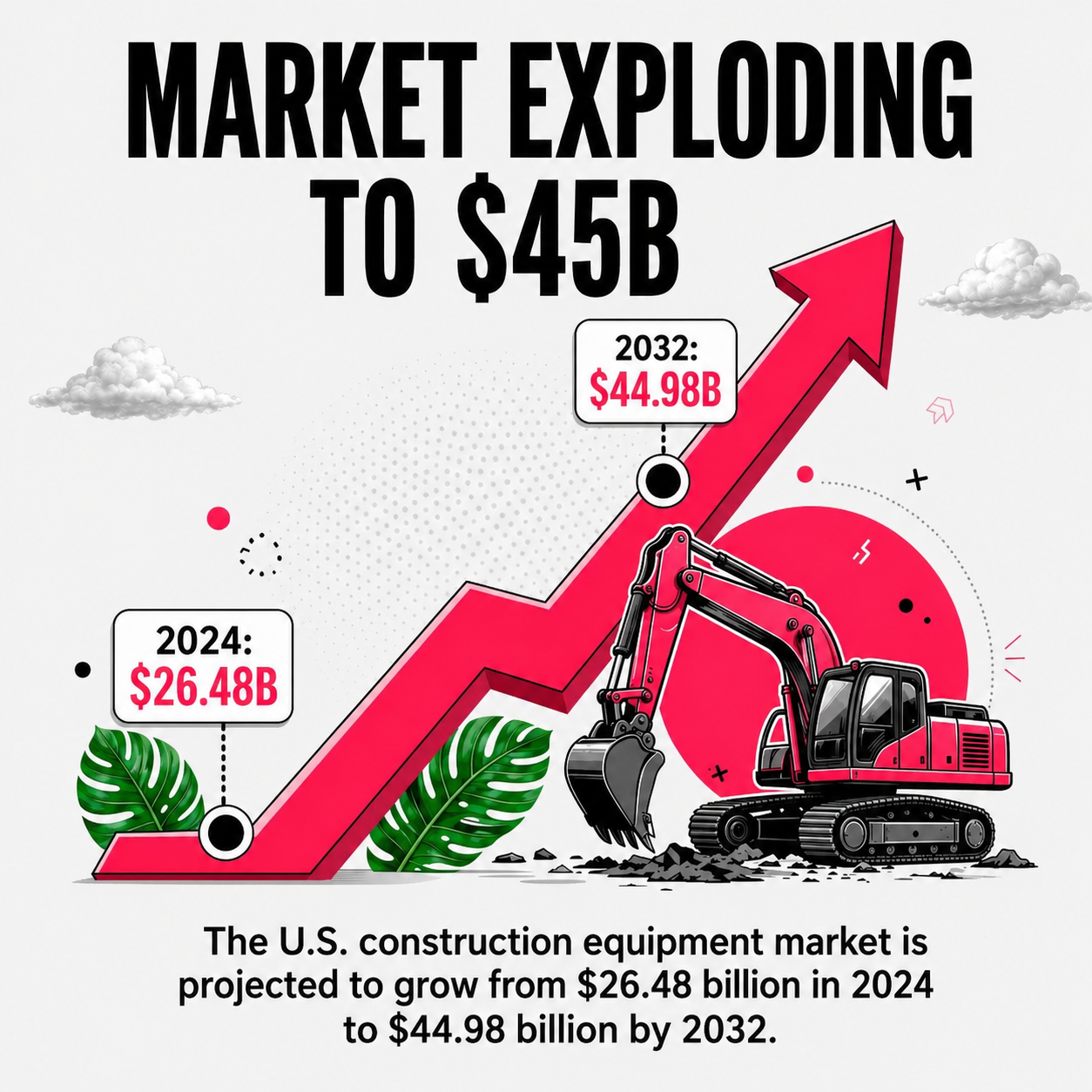
The construction equipment market is exploding. The U.S. construction equipment market is projected to grow from $26.48 billion in 2024 to $44.98 billion by 2032. That's a massive opportunity, but most equipment dealers are missing it.
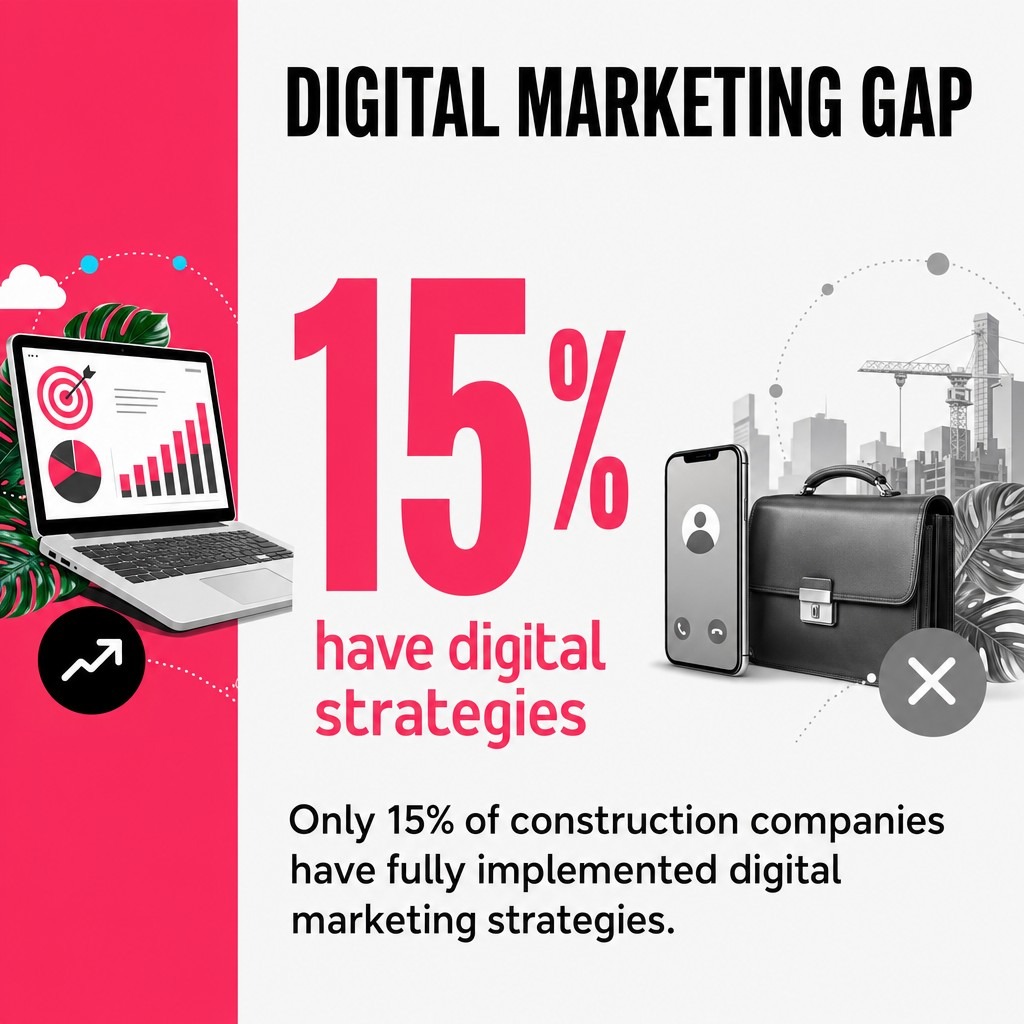
Here's what kills me: only 15% of construction companies have fully implemented digital marketing strategies. The other 85% are still relying on trade shows, cold calls, and hoping contractors remember their name when it's time to buy a new excavator.
I've spent years running paid search campaigns for high-ticket B2B products. Construction equipment isn't that different from selling industrial parts or specialized machinery. You're dealing with long sales cycles, multiple decision-makers, and buyers who do serious research before dropping six figures on a machine.
The beauty of paid search is simple: you show up exactly when someone needs you. No waiting for your SEO to kick in. No praying your Facebook ad catches the right project manager on the right day. When a contractor searches "buy excavator Minnesota" or "used bulldozer rental Chicago," your ad can be there, right then, capturing that intent.
This guide covers the complete paid search playbook for construction equipment dealers. We'll walk through campaign structure, bidding strategies that actually work for high-value sales, and how to compete without burning through your budget in three days.
You'll learn exactly how to target contractors actively shopping for equipment, how to measure success when your sales cycle runs 90 days or longer, and which platforms deliver the best cost-per-lead for heavy machinery.
Most construction equipment purchases start with a Google search. Not a Facebook scroll. Not a LinkedIn browse. A direct, high-intent search for the exact equipment they need.
Think about how contractors buy equipment. They need a specific machine for a specific job. They search for it. They compare options. They reach out to dealers. Your job is to be visible at step one.
Paid search captures demand that already exists. You're not trying to convince someone they need an excavator. You're showing up when they've already decided they need one and are comparing their options.
The buying cycle is long, but the research phase happens fast. Once a contractor realizes they need equipment, they're moving quickly to line up options, get quotes, and make decisions before their project starts.
This creates a narrow window where visibility matters intensely. Miss that window, and they're talking to three other dealers while you're still waiting for your website to rank organically.
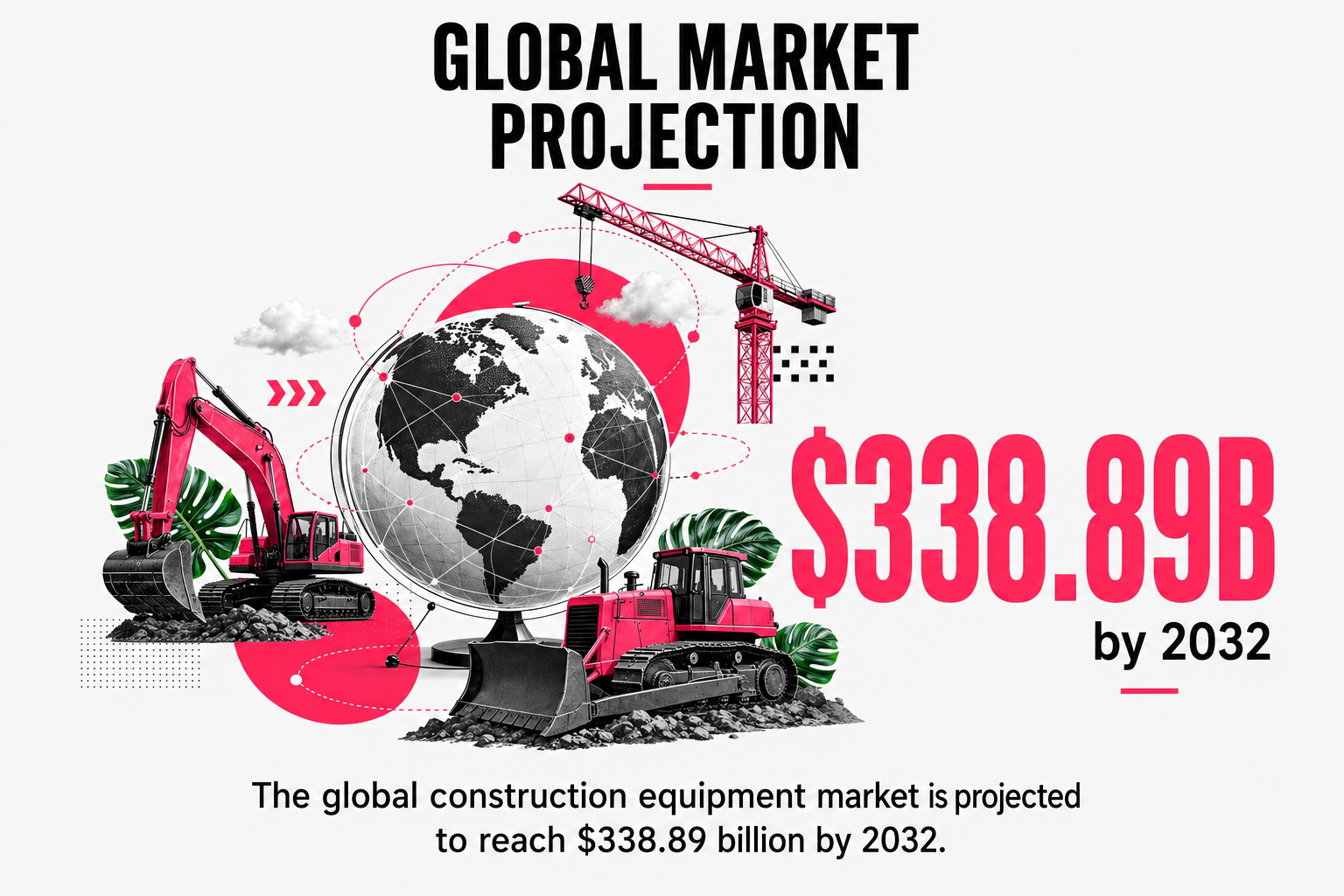
The global construction equipment market is projected to reach $338.89 billion by 2032. That growth is driven by infrastructure projects, commercial construction, and residential development all competing for the same pool of equipment.
When budgets are tight, contractors rent instead of buying. When projects are booming, they're adding to their fleet. Your paid search strategy needs to account for both scenarios.
Equipment dealers who only advertise "new excavators for sale" miss half the market. Rentals, used equipment, financing options, and service contracts all represent search opportunities with commercial intent.
The typical construction equipment buyer visits your website multiple times before contacting you. They compare specs. They check availability. They look at financing terms. They research your dealership's reputation.
Paid search starts that relationship. Your first click might not generate a lead immediately, but it puts you in the consideration set. When they're ready to request quotes from three dealers, you want to be one of them.
B2B buyers don't impulse-purchase a $200,000 bulldozer. They need approval from partners, they need to verify financing, they need to coordinate delivery timing with project schedules. Your paid search campaigns need to support a 60-90 day decision process, not a same-day sale.
Most dealers make the same mistake: they dump everything into one campaign and wonder why results are inconsistent. You need separation between different buying stages and equipment types.
Your campaign structure should mirror how buyers think and search. Someone searching "excavator rental Chicago" has different intent than someone searching "used CAT 320 excavator." Treat them differently.
Brand campaigns target people searching for your dealership name or specific location. These are cheap clicks from people who already know you. Protect these with dedicated campaigns that ensure you own your brand terms.
Non-brand campaigns target equipment types, manufacturers, and purchase intent keywords. These cost more but capture new customers actively shopping. This is where your growth comes from.
Never mix brand and non-brand in the same campaign. Your brand clicks might cost $0.50 while your non-brand clicks cost $5.00. Combining them obscures your true acquisition cost and makes optimization impossible.
Create separate campaigns for each major equipment category: excavators, bulldozers, loaders, cranes, compactors, and so on. This allows you to allocate budget based on your inventory and profit margins.
If you make better margins on excavators than bulldozers, you can bid more aggressively on excavator keywords. If your loader inventory is overstocked, you can push budget there to move units faster.
Within each equipment campaign, separate ad groups by manufacturer (CAT, Deere, Komatsu, Volvo) and by purchase type (new, used, rental). This granularity improves ad relevance and Quality Score.
If you operate multiple locations, create location-specific campaigns. A search for "excavator rental" in Dallas should show your Dallas location, not your Denver branch.
Use radius targeting around each dealership. Most contractors won't drive 300 miles to rent a machine when a local dealer can deliver it tomorrow. Your targeting should reflect realistic service areas.
For specialized equipment or high-value purchases, expand your radius. Someone buying a $500,000 crane will travel further than someone renting a skid steer for the weekend.
Keywords in construction equipment fall into clear intent buckets. Understanding these buckets determines which keywords get budget and which get paused.
The best keywords signal immediate purchase intent. "Buy excavator," "excavator rental near me," "used bulldozer for sale," and "CAT 320 price" all indicate someone ready to engage with a dealer.
Research keywords like "excavator specifications" or "best excavator brands" indicate earlier-stage research. These can work, but they cost money without generating leads if your landing pages aren't designed for education first.
Navigational keywords include your dealership name, competitor names, and specific product model numbers. These are high-value because searchers know what they want.
Commercial keywords describe the equipment type plus a transaction modifier: buy, rent, lease, finance, for sale, near me. These convert better than generic equipment names alone.
Skip informational keywords entirely unless you have content that genuinely answers the question better than Wikipedia. "What is an excavator" won't bring you qualified leads worth the click cost.
Start with phrase match and exact match keywords. This keeps your ads showing for relevant searches without bleeding budget on tangentially related queries.
Broad match works only when you have conversion data to feed Smart Bidding algorithms. Without conversion tracking, broad match just burns money on irrelevant searches.
Use exact match for your highest-intent keywords: [buy excavator chicago], [CAT 320 for sale], [excavator rental Dallas]. These protect your budget for searches that matter most.
Add "toy," "model," "miniature," and "rc" as negative keywords immediately. You'd be surprised how much budget gets wasted on people searching for toy construction equipment.
Exclude "jobs," "operator," "training," and "certification." You're selling equipment, not hiring operators or running training programs.
Negate "repair," "parts," and "service" unless you actually want to advertise those services. These searches have different intent than equipment purchases and deserve separate campaigns with different landing pages.
Construction equipment doesn't convert like e-commerce. You can't track someone from click to purchase in Google Analytics because the sale happens offline, weeks later, after multiple touchpoints.
This breaks traditional conversion tracking. You need to define meaningful conversion actions that happen online and correlate with eventual sales.
Phone calls are your primary conversion action. When someone clicks your ad and calls your dealership, that's a qualified lead. Track phone calls from ads using Google's call tracking.
Form submissions for quote requests, financing applications, and equipment inquiries all count as conversions. These indicate serious buying intent even though the sale happens later.
Don't track newsletter signups or brochure downloads as primary conversions. These are micro-conversions that inflate your numbers without correlating to revenue.
Start with manual CPC bidding for the first 30 days. This gives you control while you gather data on which keywords actually generate leads.
Once you have 30+ conversions per month, test Target CPA bidding. Set your target cost-per-lead based on your actual lead value and close rate. If you close 10% of leads and average $5,000 profit per sale, you can afford $500 per lead.
Maximize Conversions works when you have budget flexibility and want Google to find all available conversions within your spend limit. This can work well for dealers with strong inventory trying to move units quickly.
Mobile searches for construction equipment are increasing, but conversion rates are often lower. Contractors browsing on mobile during a job site visit might research on their phone but call later from the office.
Start with desktop and mobile at the same bid, then adjust based on actual conversion data. If mobile converts at half the rate of desktop, reduce mobile bids by 40-50%.
Increase bids for zip codes where you have strong brand recognition or existing customer concentrations. Decrease bids for edge-of-territory locations where delivery costs eat into margins.
Generic ad copy like "Quality Equipment for Sale" gets ignored. Contractors want specifics: availability, pricing transparency, and reasons to choose your dealership over the competition.
Your ad headline should include the equipment type and a clear value proposition. "CAT Excavators In Stock - Same Day Delivery Available" beats "Construction Equipment Dealer."
If you have equipment in stock, say so. "In Stock Now" or "Available This Week" addresses the contractor's biggest concern: can I get this machine when I need it?
Delivery speed matters. If you offer same-day or next-day delivery in your market, feature this prominently. Contractors facing tight project timelines will pay more for fast delivery.
Rental ads should emphasize booking ease and pickup options. "Reserve Online - Pick Up Today" removes friction from the rental process.
You don't need to list exact prices in ads, but acknowledging pricing helps qualify clicks. "Starting at $X" or "Financing from $X/month" attracts buyers in your price range and deters window shoppers.
Financing options matter enormously for equipment purchases. Mentioning "0% Financing Available" or "Flexible Lease Terms" can dramatically improve click-through rates from qualified buyers.
Used equipment ads should highlight value clearly: "Used CAT 320 - 2,000 Hours - $95K" gives searchers enough information to know if it's worth clicking.
When bidding on branded keywords like "CAT excavator" or "John Deere loader," include the brand in your headline. This improves relevance and Quality Score.
Model numbers work even better for high-intent searches. If someone searches "CAT 320 excavator," your ad headline should say "CAT 320 Excavators" not just "Excavators."
Mention certifications, dealer authorizations, or partnerships with manufacturers. "Authorized CAT Dealer" or "John Deere Certified" builds trust.
Sending all your traffic to your homepage is a mistake. Contractors who clicked an ad for "used excavators for sale" expect to land on a page showing used excavators, not your company history.
Create dedicated landing pages for each major equipment category and purchase type. Your excavator landing page should show excavator inventory, not a general equipment catalog.
Lead with a clear headline that matches the ad. If your ad says "CAT Excavators In Stock," your landing page headline should say the same thing.
Show available inventory immediately. Photos, model numbers, hours (for used equipment), and pricing or "request quote" buttons should appear above the fold.
Include multiple conversion paths: phone number, quote request form, and chat if you have it. Some contractors prefer calling, others want to submit details and have you call them back.
If you have multiple units available, add filters for new vs. used, manufacturer, size class, and price range. This helps visitors find exactly what they need without scrolling through irrelevant equipment.
Each equipment listing should include specs, condition details, and availability. "In Stock" or "Available in 2 weeks" manages expectations and reduces wasted phone calls.
High-quality photos matter more than you think. Contractors want to see the actual machine, not stock photos. Multiple angles, cabin interior shots, and close-ups of wear points build confidence in used equipment.
Include customer testimonials from other contractors. "We rented three excavators for our downtown project - equipment was clean and delivered on time" resonates more than generic praise.
Display certifications, manufacturer partnerships, and years in business. These establish credibility when you're competing against unknown dealers.
If you have financing partnerships, mention them. "Financing through CAT Financial and Wells Fargo Equipment Finance" signals that you're a legitimate dealer with established relationships.
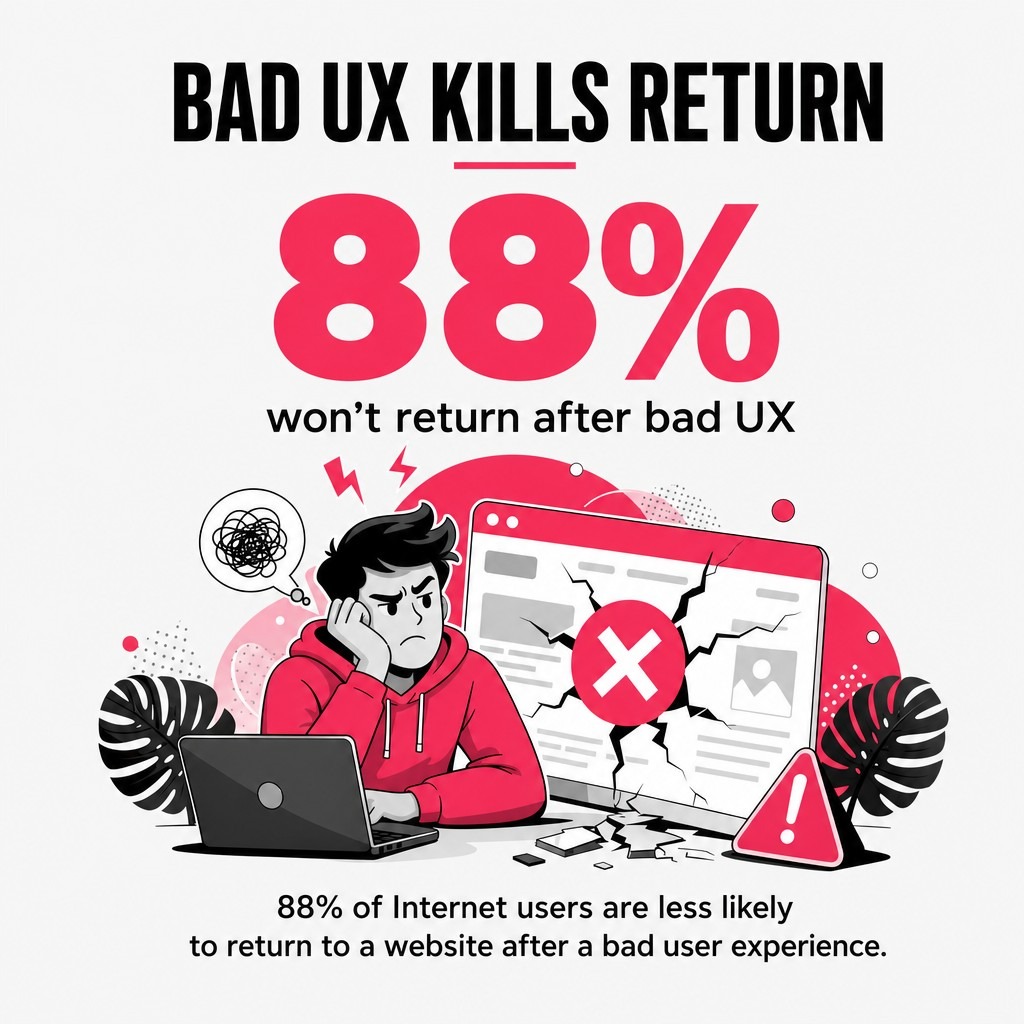
88% of Internet users are less likely to return to a website after a bad user experience. This hits especially hard on mobile, where contractors are often browsing from job sites with spotty connections.
Your landing page must load in under three seconds on mobile. Compress images, minimize scripts, and eliminate anything that doesn't directly support the conversion goal.
Make phone numbers click-to-call on mobile. Don't make someone copy and paste a number into their phone app. One tap should initiate the call.
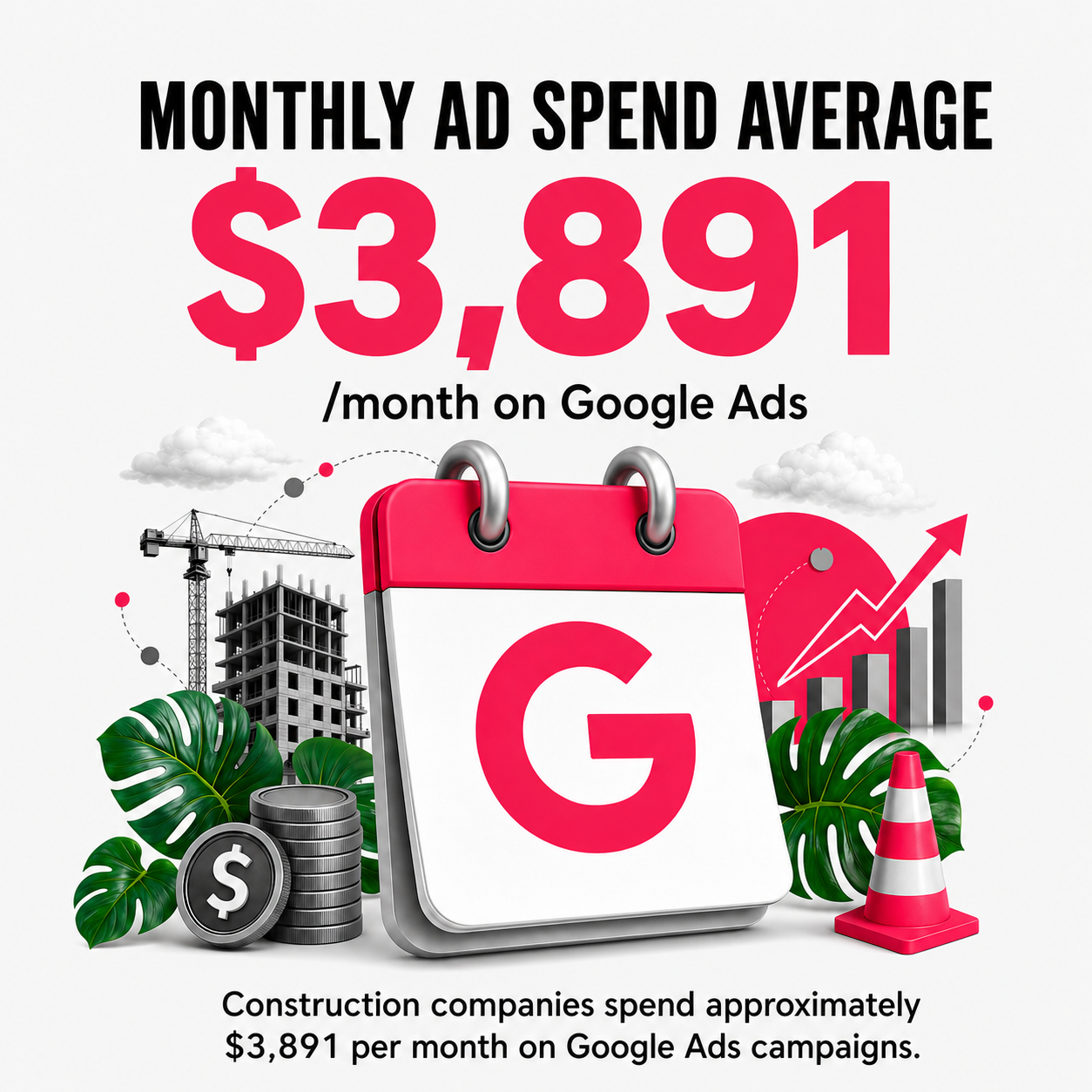
Construction companies spend approximately $3,891 per month on Google Ads campaigns. That's the average, but your budget should reflect your market size and sales goals.
Start by calculating your target cost-per-acquisition. If your average equipment sale generates $8,000 profit and you close 15% of leads, you can afford roughly $1,200 per lead. Work backward from there to set daily budgets.
Allocate 15-20% of total budget to brand campaigns. These protect your dealership name from competitor conquesting and capture high-intent searches from people who already know you.
Brand campaigns typically deliver the lowest cost-per-lead and highest conversion rates. Don't neglect them just because the traffic would find you anyway. Competitors bid on your name, so you need to defend it.
Put 50-60% of budget toward commercial intent keywords: buy, rent, for sale, lease, financing. These drive the majority of qualified leads.
Focus on equipment categories where you have strong inventory and good margins. If you're overstocked on loaders, push budget there. If excavator margins are high, invest accordingly.
Reserve 20-25% of budget for bidding on competitor names and nearby competitor locations. When someone searches "Smith Equipment CAT dealer," your ad can appear offering alternative options.
This works best when you offer something competitors don't: better financing, faster delivery, or lower prices. Your ad copy needs to clearly differentiate why they should consider you instead.
The average cost per click for construction industry terms in Google Ads is approximately $2.56. That's manageable for high-value equipment sales, but costs can spiral quickly without controls.
The key is maintaining profitable cost-per-lead ratios, not chasing the cheapest clicks. A $10 click that converts to a $250,000 excavator sale is a bargain. A $1 click that never converts is wasted money.
Quality Score determines how much you actually pay per click. Higher Quality Scores mean lower costs and better ad positions. Google rewards relevance.
Improve Quality Score by tightening keyword-to-ad-to-landing-page alignment. If your ad group targets "used excavators," your ad should say "used excavators," and your landing page should show used excavators.
Click-through rate impacts Quality Score significantly. If your ad gets clicked more often than competitors, Google assumes it's more relevant and charges you less per click.
If your dealership closes at 6pm and nobody answers phones on weekends, stop running ads during those hours. Clicks from people who can't reach you waste money and frustrate potential customers.
Alternatively, use call tracking with after-hours voicemail and commit to returning calls first thing in the morning. This captures leads without requiring 24/7 staffing.
Analyze conversion data by hour of day. You might find that lunchtime searches convert better than early morning, or that Friday afternoon clicks rarely convert. Adjust bids accordingly.
Bing CPCs are approximately 33% lower than Google while delivering comparable conversion rates. For construction equipment, this is significant savings.
Set up Microsoft Advertising (formerly Bing Ads) campaigns mirroring your Google structure. You can often import Google campaigns directly into Microsoft Advertising to save setup time.
Bing's audience skews slightly older and more affluent, which aligns well with construction business owners making equipment purchase decisions. Don't dismiss it as secondary just because it has lower volume than Google.
The biggest challenge in construction equipment paid search is connecting clicks to eventual sales. Someone might click your ad Monday, call Tuesday, visit your lot Wednesday, and close the deal three weeks later.
You need tracking systems that follow this journey without requiring perfect data hygiene. In the real world, salespeople don't always ask how customers found you.
Use dynamic number insertion on landing pages so each visitor sees a unique phone number. This tracks which keywords and ads drove phone calls, even when the caller doesn't mention your ad.
CallRail and similar platforms integrate with Google Ads to pass call conversion data back to your campaigns. This feeds Smart Bidding algorithms with offline conversion data.
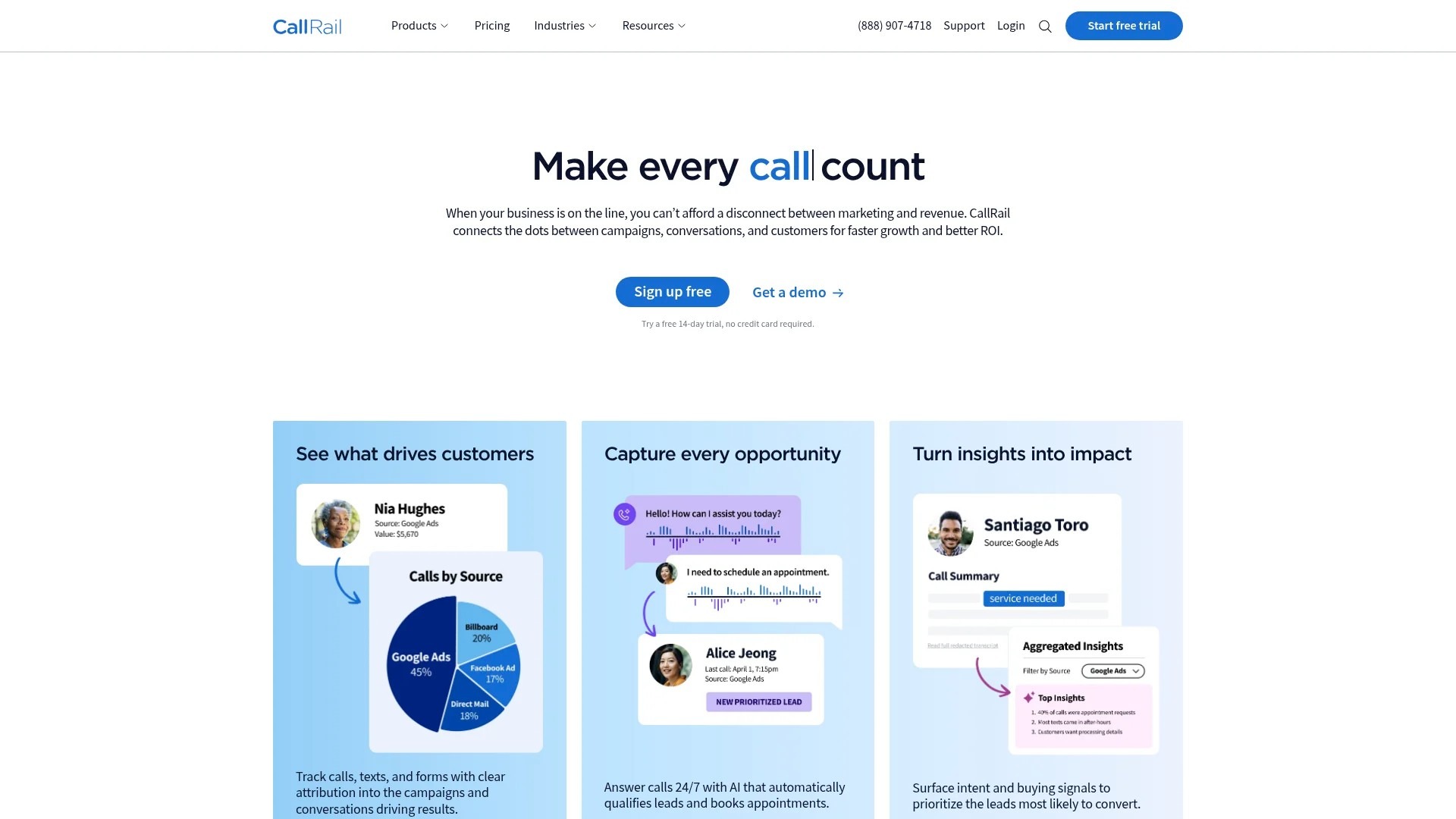
Record and review calls to assess lead quality. A 30-second "do you have used skid steers?" call is less valuable than a 5-minute conversation about excavator specs and financing options. Adjust your cost-per-lead targets based on actual lead quality.
Connect your CRM to track which leads came from paid search versus other sources. Tag each lead with the original source, keyword, and campaign when they enter your system.
When deals close, update the CRM record. This creates a feedback loop showing which campaigns generate not just leads, but actual revenue. Over time, this reveals your true cost-per-sale, not just cost-per-lead.
Sales cycle length matters for budget planning. If your average sale takes 60 days from first click to closed deal, you won't see campaign ROI for two months. Plan accordingly and don't panic if week-one results look weak.
Google Ads allows offline conversion imports where you upload closed deals back into the platform. This requires matching the Google Click ID (GCLID) from the original click to the eventual sale.
Set up GCLID tracking in your form submissions and call tracking. When someone becomes a customer, you can import that conversion back to Google Ads with the associated revenue value.
This data improves Smart Bidding performance dramatically. Google can optimize for actual sales, not just form fills, leading to better targeting over time.
In markets with multiple established dealers, basic campaigns won't cut it. You need strategies that give you an edge when every competitor is also running paid search.
Most equipment shoppers visit your site multiple times before converting. Remarketing ads keep you visible throughout their research phase.
Create remarketing audiences for visitors who viewed specific equipment categories but didn't convert. Show them ads highlighting availability, financing options, or limited-time offers.
Segment by behavior: someone who spent five minutes on your excavator inventory page is more valuable than someone who bounced in 10 seconds. Bid higher to re-engage serious shoppers.
Upload email lists of existing customers and past quote requests to create Customer Match audiences. When these people search for equipment, your ads appear with customized messaging.
Existing customers searching for additional equipment represent your highest-value opportunity. They already trust you, know your service quality, and have established financing relationships.
Target these audiences with loyalty messaging: "Preferred Customer Pricing" or "Priority Delivery for Existing Customers" rewards repeat business.
A multi-market construction equipment dealer achieved a cost-per-lead of $41, 73% lower than the industry average. They accomplished this through hyper-targeted local campaigns, aggressive landing page optimization, and rigorous lead quality scoring.
The key was focusing budget on high-intent keywords within realistic service areas. Instead of trying to rank for generic "excavator" searches nationwide, they dominated specific equipment categories in specific cities where they had inventory advantages.
They also implemented strict negative keyword management, eliminating thousands of dollars in wasted spend on informational searches that never converted.
Paid search performance improves through continuous testing. Small improvements compound over months into significantly better results.
Test different value propositions in headlines. Run "0% Financing Available" against "Same Day Delivery" against "Largest Inventory in Texas" to see which resonates best with your audience.
Test urgency elements like "In Stock Now" or "Limited Availability" against straightforward inventory statements. Some markets respond to urgency, others find it off-putting.
Let Google's responsive search ads rotate combinations, but review performance data monthly. Disable low-performing headline and description combinations that drag down overall results.
Small changes to landing pages can dramatically impact conversion rates. Test different form lengths, button colors, and calls-to-action.
Try removing unnecessary form fields. Instead of asking for company name, job title, and equipment needs upfront, just capture name, phone, and email. Get them into conversation first, gather details later.
Test video on equipment landing pages. A 60-second walkaround video of the actual machine often converts better than static photos alone.
Test different bid adjustments for mobile vs. desktop. If you find mobile converts at 60% the rate of desktop, reduce mobile bids by 30-40% and monitor whether conversion volume stays steady at lower cost.
Test dayparting adjustments. Increase bids during hours when your best salespeople are available to answer calls. Decrease during times when calls go to voicemail.
Test location bid adjustments. Increase bids by 30% in zip codes where you've historically closed the most deals. Decrease bids at the edges of your service area where delivery costs reduce margins.
While Google dominates search, other platforms offer opportunities to reach construction equipment buyers at different stages of their journey.
LinkedIn's cost-per-qualified-lead is $47 compared to $65 for Google Ads. For B2B equipment sales, LinkedIn allows precise targeting of construction company owners, project managers, and equipment managers.
Use LinkedIn sponsored content and InMail to reach decision-makers with content about new equipment launches, financing options, or fleet management solutions. This builds awareness before they actively search.
Target by job title (Owner, Project Manager, Equipment Manager), company size (companies with 50+ employees likely need fleet equipment), and industry (commercial construction, residential construction, heavy civil).
YouTube reaches contractors during research phases when they're watching equipment reviews, operator tutorials, and project videos. In-stream ads can showcase your inventory to a highly targeted audience.
Create 30-second video ads showing equipment in action, emphasizing availability and dealer support. Target keywords related to equipment types, construction techniques, and competitor brand names.
Remarketing on YouTube works particularly well. If someone visited your excavator inventory page but didn't convert, show them video ads for those specific models over the next 30 days.
While Facebook and Instagram don't capture high purchase intent like search, they're useful for building local brand awareness and staying top-of-mind during long consideration periods.
Use location-based targeting to reach construction professionals within your service area. Show inventory updates, equipment deliveries, and customer success stories.
Retarget website visitors with carousel ads showcasing multiple equipment options. Someone who browsed excavators might also be interested in loaders or attachments.
I've reviewed dozens of construction equipment dealer accounts. The same mistakes appear repeatedly, burning thousands in wasted spend.
Dumping all keywords into one campaign makes optimization impossible. You can't tell which equipment categories perform best, and you can't allocate budget strategically.
Separate campaigns by equipment type so you can see excavator performance vs. bulldozer performance vs. loader performance. This reveals where to focus budget for maximum return.
Search query reports show exactly what people searched before clicking your ads. Review these weekly to find irrelevant queries wasting money.
You'll find searches like "construction equipment operator jobs" or "toy excavator" or "excavator repair manual" that have nothing to do with selling equipment. Add these as negative keywords immediately.
You'll also find high-converting searches you didn't know existed. Add these as new keywords to capture more of that valuable traffic.
Sending all traffic to your homepage forces visitors to navigate to find what they want. Most won't bother. They'll hit back and click a competitor's ad instead.
Match landing pages to ad intent. Excavator ads → excavator inventory page. Rental ads → rental inventory and pricing page. Financing ads → financing application page.
The average conversion rate for construction companies running Google Ads is 0.13%. If you're not tracking conversions, you can't know if you're beating or missing this benchmark.
Set up conversion tracking for phone calls, form submissions, and chat interactions from day one. Without this data, you're flying blind and making budget decisions based on guesswork.
Paid search success for construction equipment isn't just about lead volume. You need metrics that connect to actual business outcomes.
Cost-per-lead is easy to measure but doesn't tell the full story. A campaign generating $30 leads that never close is worse than a campaign generating $100 leads that close at 20%.
Track cost-per-sale by matching closed deals back to their original ad source. This requires CRM integration and diligent sales team data entry, but it's the only way to know true ROI.
Calculate customer lifetime value. Equipment buyers often return for additional purchases, rentals, parts, and service. A customer acquired for $500 who generates $50,000 in revenue over five years is a spectacular investment.
Track impression share to understand how often your ads appear for target keywords. If you're only showing ads 40% of the time, you're missing 60% of potential opportunities.
Lost impression share due to budget means you're missing opportunities because your daily budget ran out. Increase budget or improve Quality Score to capture more traffic.
Lost impression share due to rank means competitors are outbidding you or have better Quality Scores. Increase bids or improve ad relevance to compete more effectively.
Successful paid search campaigns increase brand awareness, leading to more direct searches for your dealership name. Track branded search volume over time as an indirect measure of marketing effectiveness.
If brand searches increase 50% over six months while you're running aggressive paid search campaigns, that's evidence your ads are building market awareness beyond immediate conversions.
Paid search keeps evolving. Staying ahead means adopting new features early and adapting to changing buyer behavior.
Voice search is growing as contractors use mobile devices and voice assistants on job sites. Optimize for conversational queries like "where can I rent an excavator near me" instead of just "excavator rental."
Visual search is emerging, though still limited. Google Lens allows searching by photo, which could eventually let contractors photograph equipment on a job site and search for similar models for sale.
AI-powered bidding continues improving. As Google's algorithms get better at predicting which clicks will convert, Smart Bidding strategies will outperform manual bidding for most advertisers. Start testing now to build conversion history that feeds these systems.
First-party data becomes increasingly valuable as third-party cookies disappear. Build email lists, implement call tracking, and maintain clean CRM data. Dealers with strong first-party data will dominate targeting in the next five years.
The construction equipment market is growing fast, but most dealers still haven't figured out digital marketing. That's your opportunity. Build campaigns that capture high-intent searches, track results properly, and optimize continuously.
You don't need a massive budget to compete. You need targeted campaigns, relevant landing pages, and the discipline to cut what doesn't work while scaling what does. Start with one equipment category, prove the model works, then expand.
The contractors searching for equipment right now are comparing dealers. Your paid search campaign determines whether you're part of that conversation or invisible. Make sure they find you.