
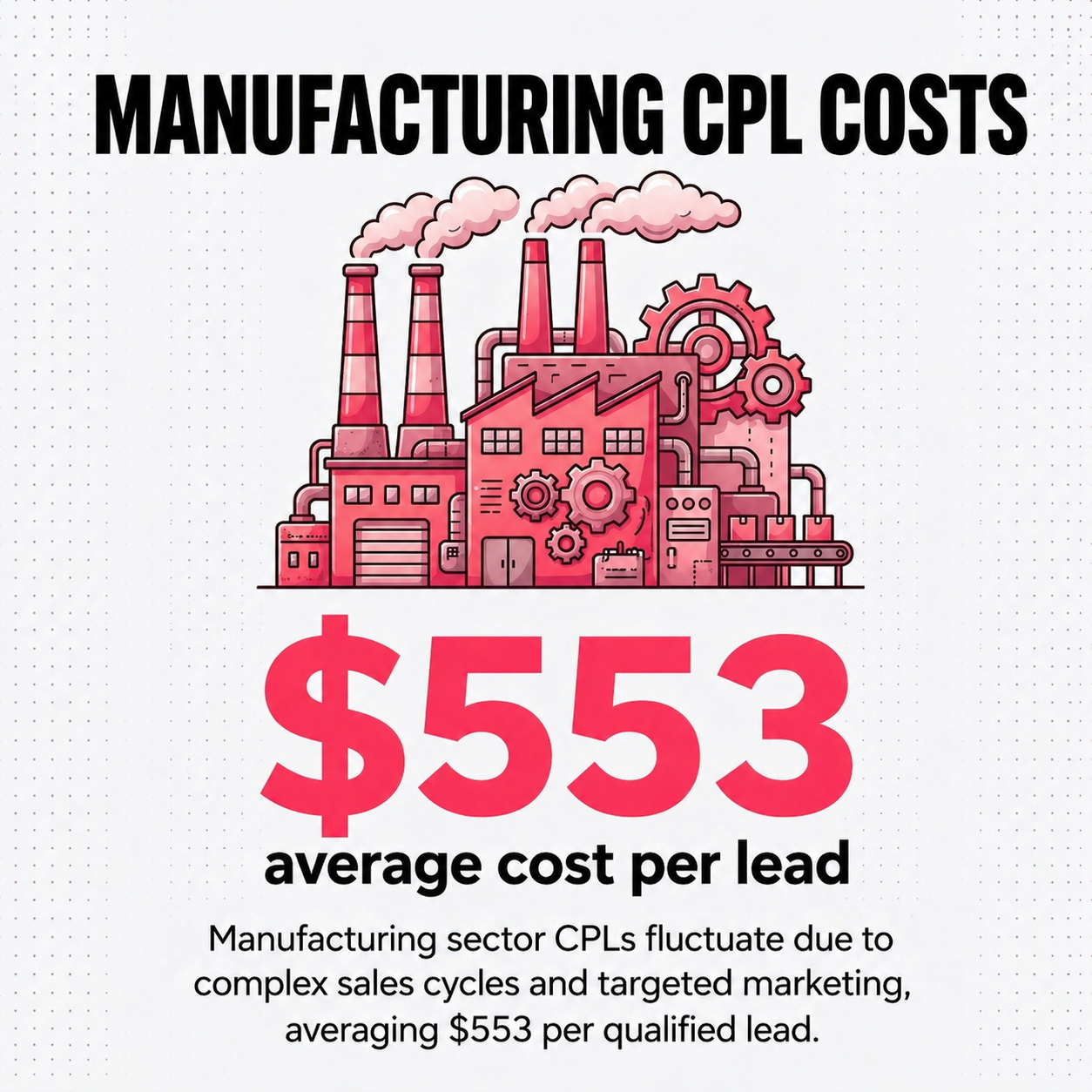
Most manufacturers burn through Google Ads budgets faster than a plasma cutter through sheet metal. Manufacturing CPL averages $553, putting it among the most expensive industries for digital advertising.
The real problem? That number could be half as much with the right strategy.
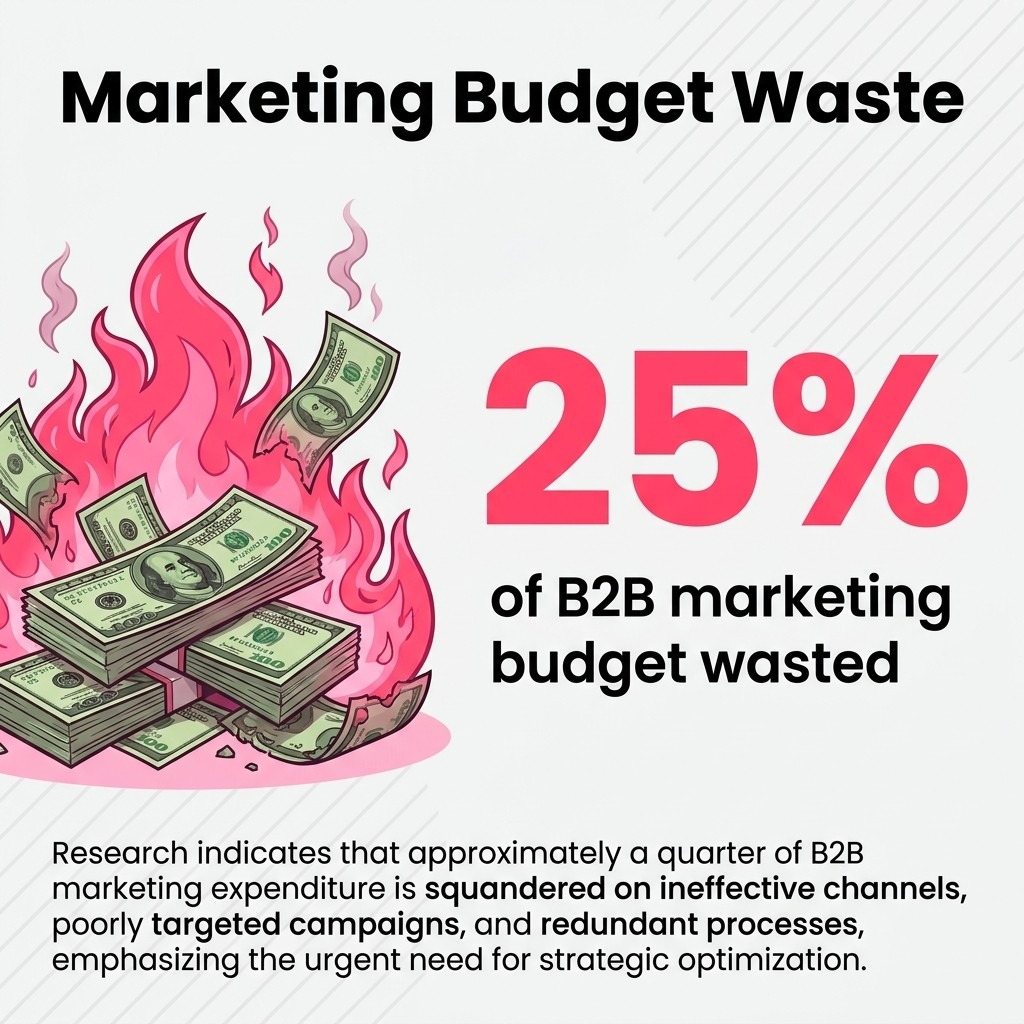
I run a PPC agency focused on ecommerce and manufacturing clients. The waste I see is staggering. Companies pour money into broad match keywords, ignore conversion tracking, and wonder why their phone isn't ringing. Meanwhile, B2B marketers waste approximately 25% of their total marketing budget due to poor attribution and misaligned targeting.
This guide shows you how to fix that.
You'll learn how B2B Google Ads differ from consumer campaigns, why longer sales cycles demand different measurement, and how to structure campaigns that actually generate qualified leads. We'll cover keyword research that targets decision makers, conversion tracking that maps to your sales process, and bidding strategies that protect your budget.
By the end, you'll know exactly where your ad spend is leaking and how to plug those holes.
B2B Google Ads aren't just B2C campaigns with bigger price tags.
The entire approach changes when you're selling CNC machines instead of sneakers. Your buyer isn't impulse-clicking at 11 PM. They're researching for weeks, comparing specs, and looping in engineers, procurement, and finance teams before anyone reaches out.
This fundamental difference reshapes everything about how you run Google Ads campaigns.
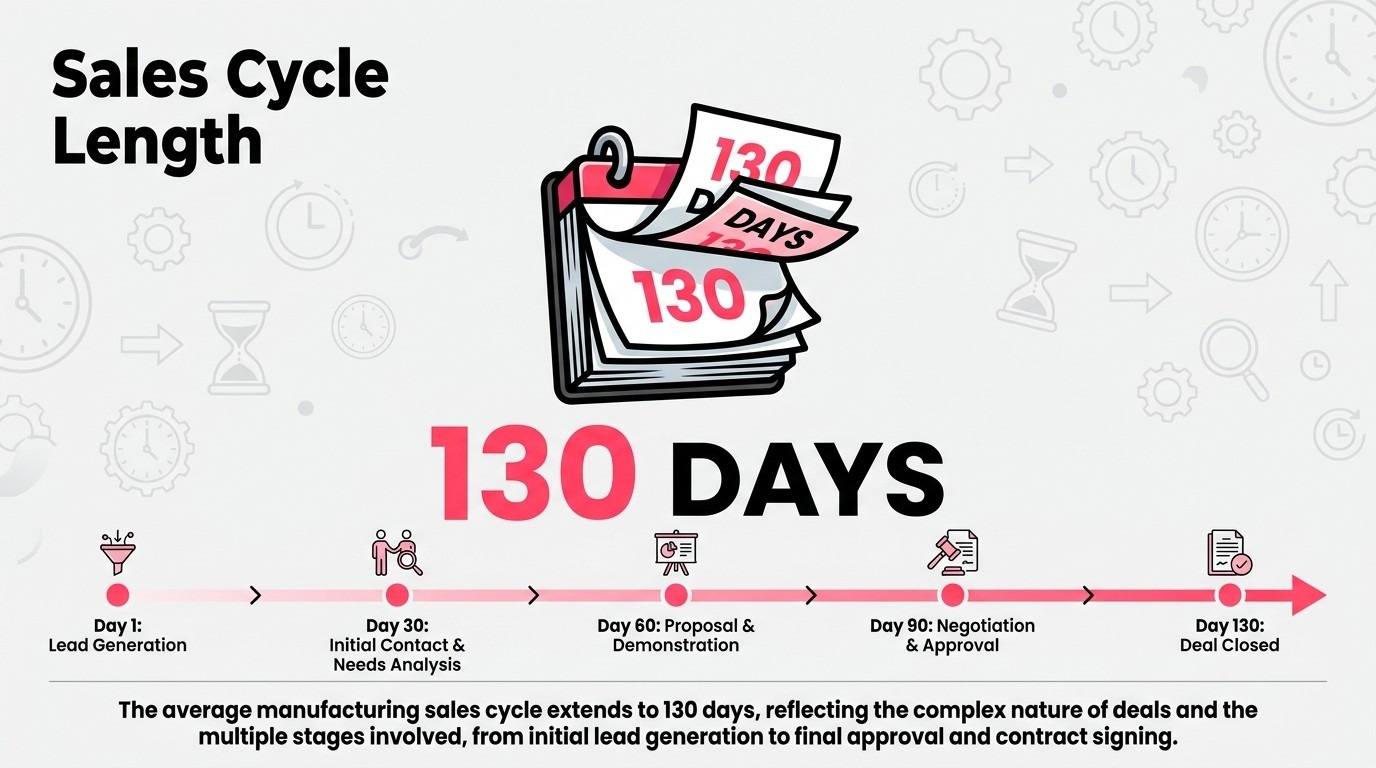
Manufacturing companies report an average sales cycle of 130 days. That's over four months from first click to closed deal.
Consumer PPC? Someone sees your ad, clicks through, and buys within hours or days.
B2B manufacturing? That first click starts a marathon, not a sprint. The prospect downloads a spec sheet today. Shares it with their team next week. Requests a quote two weeks later. Gets three competing quotes. Waits for budget approval. Then finally contacts you.
Your Google Ads campaigns need to account for this extended timeline. Track leads, not just immediate conversions. Nurture prospects through multiple touchpoints. Measure success over months, not days.
In B2C, one person sees your ad and makes the purchase decision.
In B2B manufacturing, that one click might trigger conversations with five different stakeholders. The plant manager who found you. The engineer who evaluates specs. The procurement officer who compares pricing. The CFO who approves the budget. The operations director who signs off on implementation.
Each person cares about different things. Your ad copy needs to speak to their varied concerns. Your landing page must address multiple pain points simultaneously.
B2C Google Ads optimize for transactions. Add to cart. Complete checkout. Revenue recorded.
B2B Google Ads optimize for lead generation. Form fills. Phone calls. Quote requests. Demo bookings. The actual sale happens weeks or months later through your sales team.
This shift demands different conversion tracking, different attribution models, and different ways to calculate ROI. You can't judge a B2B campaign by same-day revenue like you would an ecommerce store.
The marketing funnel in B2B manufacturing looks nothing like consumer journeys.
You need different campaigns for different funnel stages. Someone searching "industrial hydraulic press specifications" is further along than someone searching "how to increase production capacity." Both are valuable prospects, but they need different messages.
Top-of-funnel prospects don't know your company exists yet. They're researching solutions to problems.
Target broad industry terms and educational keywords. "How to reduce manufacturing costs." "Best practices for warehouse automation." "Industrial equipment maintenance tips."
Your ad copy should offer valuable information, not aggressive sales pitches. Lead them to educational content, calculators, or industry guides. Build awareness and credibility first.
Track engagement metrics here, not lead volume. You're planting seeds for later harvest.
Mid-funnel prospects know what type of solution they need. Now they're comparing options.
Target comparison keywords and specific solution searches. "CNC machine vs manual machining." "Types of industrial conveyor systems." "Hydraulic press manufacturers."
Your ad copy should highlight your differentiators. Why choose your equipment over competitors? What makes your approach unique? What results do customers achieve?
Lead them to detailed product pages, case studies, or comparison guides. Give them the information they need to shortlist vendors.
Bottom-funnel prospects are ready to talk to vendors. They're searching for specific suppliers and requesting quotes.
Target branded keywords, competitor comparisons, and high-intent commercial terms. "Your company name." "Competitor name alternative." "Request industrial equipment quote."
Your ad copy should make contact easy. Clear calls to action. Prominent phone numbers. Simple quote request forms.
This is where you capture qualified leads. These campaigns should drive the majority of your actual sales conversations.
Most manufacturing prospects don't convert on their first visit. They research, compare, and come back multiple times before reaching out.
Set up remarketing campaigns to stay visible throughout their research process. Show different messages based on which pages they visited. Someone who viewed your product specs gets a different ad than someone who only read a blog post.
Remarketing keeps you top-of-mind during those long consideration periods. When they're finally ready to request quotes, your brand is already familiar.
Account structure makes or breaks B2B Google Ads performance.
Poor structure spreads your budget thin, mixes search intent, and makes optimization impossible. Proper structure gives you surgical control over targeting, budgets, and messaging.
Create separate campaigns for each marketing funnel stage. Never mix awareness keywords with decision keywords in the same campaign.
Your structure should look like this:
Each campaign gets its own budget allocation based on expected ROI. Decision stage campaigns typically warrant higher budgets since they generate qualified leads. Awareness campaigns need smaller budgets focused on building your audience for remarketing.
Within each campaign, create tightly themed ad groups. One core concept per ad group.
Tight segmentation lets you write highly relevant ad copy. Someone searching "automated assembly line equipment" sees ads specifically about assembly automation, not generic manufacturing equipment ads.
Keep 5-20 closely related keywords per ad group. Any more and you're probably mixing intent. Any fewer and you're over-segmenting.
B2B manufacturers often serve specific regions or have different offerings by location.
Separate campaigns by geography if you have regional differences in products, pricing, or sales teams. A manufacturer serving both North America and Europe might need distinct campaigns to account for different product lines, languages, and contact information.
For more advanced geographic strategies, check out geo-targeting PPC campaigns to reduce wasted spend on out-of-territory clicks.
B2B keyword research requires a completely different mindset than B2C.
You're not chasing high search volumes. You're hunting for the specific terms that purchasing managers, plant engineers, and operations directors type when they're ready to buy.
Consumer keywords might get 10,000 monthly searches. Your best B2B manufacturing keywords might only get 50. That's fine.
Those 50 searches come from qualified decision makers with real budgets. One conversion from a low-volume, high-intent keyword is worth more than 100 clicks from a high-volume awareness term.
Prioritize keywords that include modifiers showing purchase intent. Terms like "supplier," "manufacturer," "quote," "pricing," "buy," or "distributor" signal commercial interest.
B2B buyers search using technical language. They know the specifications they need.
"Heavy-duty equipment" is too vague. "30-ton hydraulic press with 36-inch bed" targets someone who knows exactly what they're looking for. These ultra-specific technical searches have tiny volumes but massive conversion potential.
Mine your product specifications for keyword ideas. Every technical detail is a potential search term from a qualified buyer.
Map keywords to specific problems your equipment solves.
What pain points do your products address? Create keyword lists around those problems. "Reducing production bottlenecks," "improving quality control," "meeting tight tolerances," "increasing throughput."
Problem-focused keywords capture prospects in the consideration stage. They know they have a problem but haven't settled on a solution yet. Position your products as the answer.
Negative keywords matter even more in B2B than B2C.
When clicks cost $50-$200, you can't afford to waste budget on irrelevant traffic. Build extensive negative keyword lists from day one.
Common B2B manufacturing negative keywords:
Review search terms weekly and add negatives continuously. This ongoing refinement dramatically reduces wasted spend.
B2B ad copy sells differently than consumer ads.
You're not triggering impulse emotions. You're addressing rational business concerns. ROI. Efficiency. Reliability. Compliance. These are the buttons that move B2B buyers.
Don't lead with features. Lead with results.
"5-axis CNC machining center" describes what you sell. "Reduce setup time by 40% and improve tolerances" describes why someone should care.
Business outcomes speak to the metrics your prospects get measured on. Production capacity. Quality rates. Downtime reduction. Labor efficiency. These are the results that justify their purchase to their bosses.
Your ad needs to resonate with different decision makers simultaneously.
The engineer cares about technical specifications. The CFO cares about ROI. The operations manager cares about reliability. Pack your ad copy with varied appeals that speak to this diverse buying committee.
Use ad extensions strategically. Callouts for ROI metrics. Sitelinks to technical specs, case studies, and quote forms. Structured snippets highlighting certifications or service areas.
B2B buyers need proof before they'll engage.
Include trust signals in your ad copy. Years in business. Customer counts. Industry certifications. Geographic coverage. Awards or recognitions.
"Trusted by 500+ manufacturers nationwide" works better than "Quality equipment supplier." Specificity builds credibility.
B2B buyers won't "buy now" from an ad. Make your actual ask clear and friction-free.
"Request a quote." "Schedule a consultation." "Download specifications." "Talk to an engineer."
Match your call-to-action to the funnel stage. Awareness ads might offer educational downloads. Decision stage ads should push direct sales contact.
Your ad gets the click. Your landing page gets the lead.
B2B landing pages need to accomplish something harder than consumer pages. They must convince multiple stakeholders, address complex concerns, and capture information without the immediate gratification of a purchase.
The landing page must continue the conversation started in the ad.
If your ad promises "30% faster production," your headline better mention production speed. If your ad highlights "certified to ISO 9001 standards," your page needs prominent certification badges.
Message mismatch kills conversions. Visitors feel tricked and bounce. Maintain consistent terminology, offers, and visual themes from ad click through form submission.
Different stakeholders consume information differently.
Engineers want detailed specifications and technical drawings. Financial decision makers want ROI calculators and pricing information. Operations managers want case studies and implementation timelines.
Provide content in multiple formats on the same page. PDFs for detailed specs. Videos demonstrating equipment in action. Comparison charts showing your advantages. Testimonials from similar companies.
Let each visitor find the information that matters most to their role in the buying process.
Form length is a balancing act in B2B.
Too short and you don't qualify leads effectively. Too long and conversion rates plummet. Find the sweet spot for your industry and sales process.
Essential fields: Name, email, company, phone number. Consider adding: Industry, current equipment, timeline, specific needs.
Test progressive profiling. Capture basics first, then request additional information in follow-up emails. This reduces initial friction while still gathering qualification data.
For more strategies on maximizing lead quality, explore our complete guide to B2B lead generation.
This is where most B2B manufacturers completely fail with Google Ads.
They track form submissions and call it done. Meanwhile, 60% of those leads never qualify. 30% go nowhere. Only 10% become actual opportunities. Without proper conversion tracking, you're flying blind.
Track every meaningful action, not just the first contact.
Primary conversions: Form submissions, phone calls, live chat initiations, quote requests.
Secondary conversions: PDF downloads, video views, calculator uses, return visits.
Offline conversions: Sales qualified leads, opportunities created, closed deals, revenue.
Import CRM data back into Google Ads. When a lead becomes an opportunity or closes, that information should flow back to your campaigns. This lets Google's algorithms optimize for actual business outcomes, not just form fills.
Not all conversions have equal value.
A quote request is worth more than a brochure download. A phone call from a qualified prospect beats a generic contact form. A closed deal obviously trumps everything.
Assign monetary values to each conversion type based on your historical close rates and average deal sizes. This lets you optimize for revenue, not just lead volume.
Default 30-day attribution windows don't work for 130-day sales cycles.
Extend your conversion windows to match your actual sales process. If deals typically close in 90-120 days, set attribution windows to 90 days or longer.
This ensures the campaigns that start the relationship get credit, not just the ones that capture the final conversion. Awareness campaigns look terrible with 30-day windows but show value with extended attribution.
Now we get tactical. These strategies plug the specific leaks that drain B2B manufacturing ad budgets.
Broad match keywords without proper offline conversion data are budget killers.
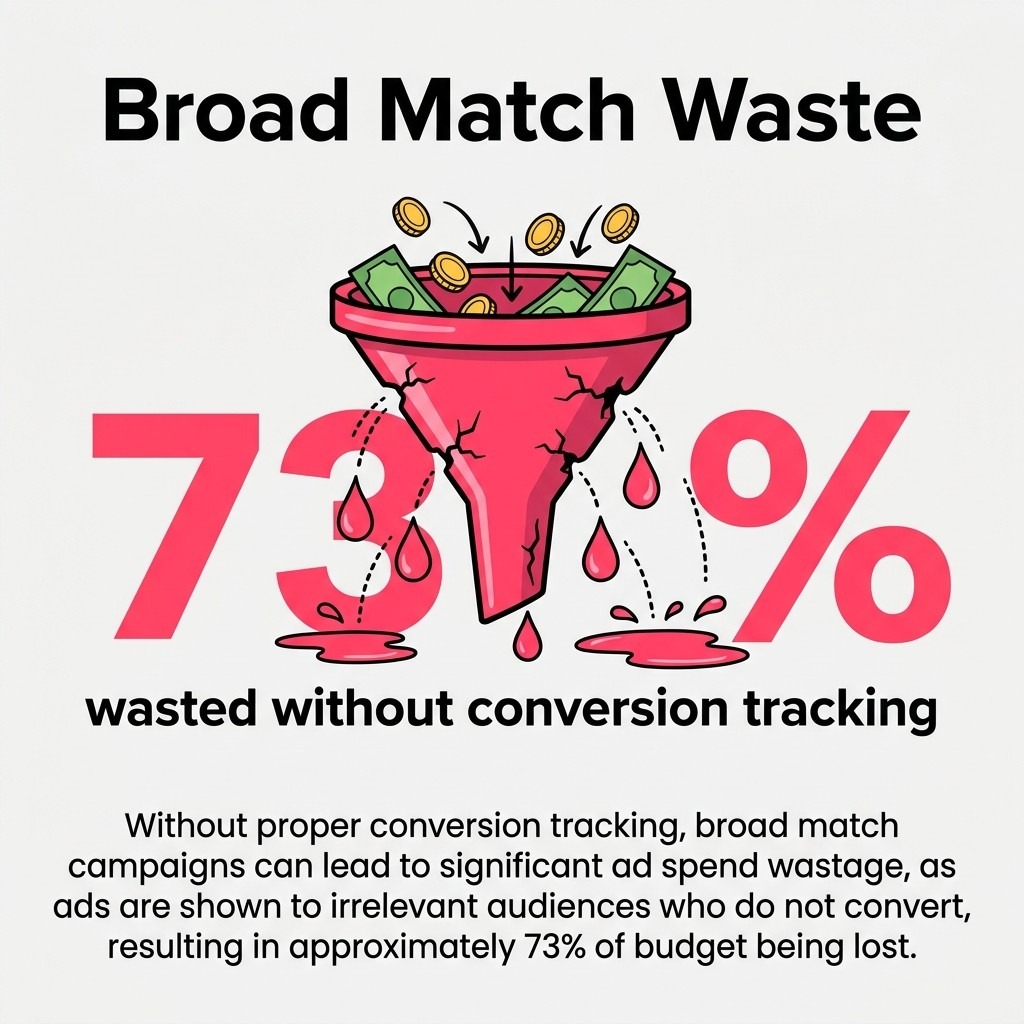
Ads using broad match without proper offline conversion tracking show a median waste rate of 73% in manufacturing contexts. You're showing ads for loosely related searches that never convert.
Stick to phrase match and exact match until you have robust conversion tracking feeding back to Google Ads. Once you're importing CRM data and tracking actual sales, you can cautiously test broad match.
Never mix branded keywords with generic terms in the same campaign.
Branded searches (your company name) convert at completely different rates than generic searches. They need different budgets, different bid strategies, and different ad copy.
Create dedicated branded campaigns to protect against competitor conquesting. Bid aggressively on your own name to maintain top position and control messaging.
Your highest-value keywords deserve dedicated ad groups.
Single Keyword Ad Groups let you write ultra-specific ad copy perfectly matched to one search term. A prospect searching "industrial laser cutting services Ohio" sees an ad specifically about laser cutting in Ohio, not generic metal fabrication.
Identify your top 10-20 converting keywords. Give each one its own ad group with custom ads. The relevance boost improves Quality Score, lowers costs, and increases conversions.
Leads that come in when your sales team is available convert at higher rates.
If your sales team works 8 AM to 5 PM Eastern, why are you spending budget on clicks at 2 AM? Those overnight leads sit cold until morning, giving competitors time to respond first.
Adjust bid modifiers by time of day. Bid aggressively during business hours when you can respond immediately. Reduce or pause ads outside those windows.
Generic "request a quote" pages underperform compared to product-specific pages.
Each major product line needs its own landing page. Someone searching for hydraulic presses should land on a hydraulic press page with specific features, applications, and relevant case studies.
Product-specific pages boost relevance, improve Quality Score, and increase conversion rates by addressing precise needs.
Performance Max can work for B2B manufacturing, but only with proper setup.
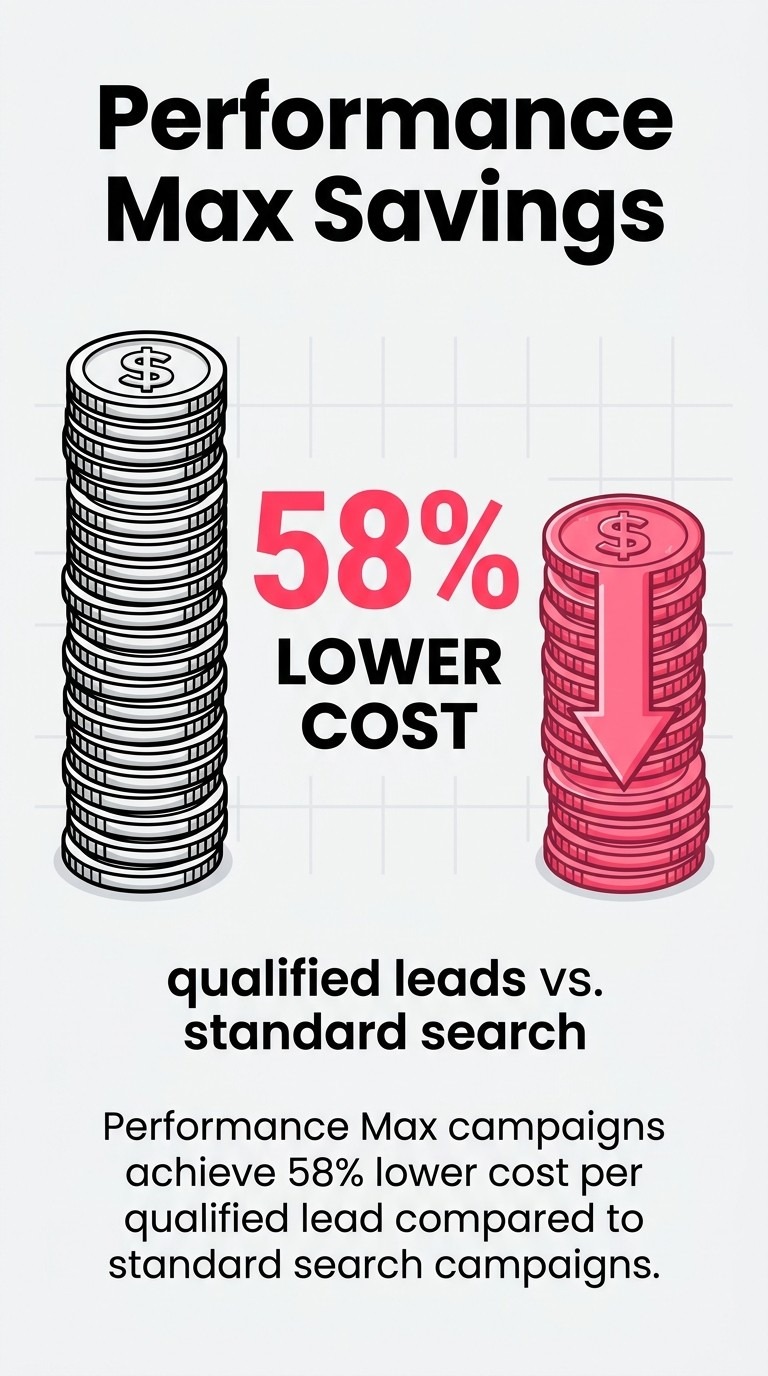
Performance Max campaigns can drive qualified leads at 58% lower cost than standard non-branded search campaigns. But there should be a minimum of 30 conversions in 30 days to function effectively.
Don't launch Performance Max if you're only generating a handful of monthly leads. Wait until you have conversion volume. Then test with a small budget alongside your search campaigns, not as a replacement.
Bidding on competitor names can work, but only with honest messaging.
Don't claim to be the competitor. Don't trash talk. Instead, position yourself as a superior alternative with specific differentiators.
"Considering [Competitor]? Compare specs and pricing. 20% faster delivery, same quality standards."
Target competitors with longer lead times, limited service areas, or higher prices where you have clear advantages.
Layer audience targeting onto your keyword campaigns.
Create remarketing lists for different engagement levels. Someone who viewed pricing pages is warmer than someone who only read a blog post. Adjust bids accordingly.
Use customer match to target existing customers with upsell campaigns. Upload lists of past buyers and show them ads for complementary products or maintenance services.
Set a weekly calendar reminder to review search terms reports.
This single habit prevents more waste than any other tactic. You'll catch irrelevant queries burning budget, discover new negative keywords, and find unexpected high-performers to expand into new ad groups.
Add negatives ruthlessly. If a search term hasn't converted in 20-30 clicks, it probably won't. Cut it.
Learn the systematic approach to Google Ads testing to identify what's actually working versus what's draining budget.
Continuously reallocate budget from awareness campaigns to decision stage campaigns as you optimize.
Many manufacturers start with 40% awareness, 30% consideration, 30% decision. As conversion tracking improves, that should shift to 20% awareness, 20% consideration, 60% decision.
Feed the campaigns that generate qualified leads. Starve the campaigns that just generate expensive traffic.
Budget and bidding strategy determine whether you control costs or let Google empty your wallet.
The wrong approach burns through monthly budgets in days with nothing to show. The right approach maximizes qualified leads while protecting margins.
Start with your cost per lead target and monthly lead goals.
If you need 20 qualified leads per month and can afford $800 per lead, you have a $16,000 monthly budget. Divide by 30.4 (average days per month) for your daily budget: roughly $526.
Distribute that daily budget across campaigns based on historical performance. Decision stage campaigns get the lion's share since they generate qualified leads.
Manual CPC gives you complete control but requires constant management.
Start with manual bidding for the first 30-60 days. Learn what individual keywords are worth. Understand your conversion landscape before handing control to algorithms.
Once you have 30+ conversions per month and stable conversion tracking, test automated strategies. Target CPA works well if you know your acceptable cost per lead. Maximize conversions can work with careful budget limits.
Never use Target ROAS until you're tracking actual revenue in Google Ads. The algorithm needs financial data to optimize effectively.
B2B searches happen on different devices at different conversion rates.
Analyze performance by device. If mobile converts at half the rate of desktop, reduce mobile bids by 30-50%. If tablet traffic never converts, exclude it entirely.
Geographic bid adjustments matter too. If leads from major manufacturing hubs convert better, bid more aggressively in those markets. Reduce bids in low-performing regions.
Most manufacturers track the wrong metrics and make bad decisions as a result.
Click-through rate doesn't pay bills. Impressions don't close deals. Revenue does. Focus on metrics that connect to actual business outcomes.
This is your North Star metric for B2B Google Ads.
Not cost per form fill. Not cost per click. Cost per lead that your sales team actually wants to call.
Define what makes a lead qualified for your business. Right industry? Minimum company size? Specific equipment needs? Budget authority? Track only leads meeting those criteria.
If your cost per qualified lead is $600 and your average deal is worth $50,000, you're in excellent shape. If it's $2,000 and your average deal is $15,000, you have problems.
What percentage of Google Ads leads become real sales opportunities?
This metric reveals lead quality. If only 10% of your Google Ads leads become opportunities while 40% of trade show leads do, your targeting needs work.
Track this in your CRM by lead source. Compare Google Ads performance to other channels. Adjust targeting to improve quality, not just volume.
The ultimate success measure for any B2B Google Ads campaign.
Total ad spend divided by customers acquired gives you CAC. Compare that to your average customer lifetime value. You want LTV at least 3X higher than CAC for sustainable growth.
If you spend $10,000 on ads and acquire two customers worth $50,000 each in lifetime value, your CAC is $5,000 and LTV:CAC ratio is 10:1. Outstanding performance.
Track these numbers monthly and adjust campaigns to maximize the ratio.
For deeper analytics guidance, see our post on what to measure for lead generation success.
Google Ads often assists sales without getting last-click credit.
Check assisted conversions in Google Ads reports. See how often your campaigns started the journey even if they didn't close it. Awareness campaigns look weak on direct conversions but strong on assists.
Use data-driven attribution if you have enough conversion volume. This distributes credit across all touchpoints instead of giving everything to the last click. More accurate picture of campaign value.
I see the same errors repeatedly in manufacturer accounts. Avoid these and you're ahead of 80% of competitors.
Tactics that crush it for ecommerce bomb for B2B manufacturing.
Shopping campaigns don't work when you don't list prices publicly. Dynamic search ads waste budget when search volumes are tiny. Display network bleeds money when targeting is imprecise.
Stick to search campaigns focused on commercial intent keywords. Add remarketing once you have sufficient traffic. Test other formats only after search is dialed in.
Quality Score directly impacts what you pay per click.
Accounts with Quality Scores of 8-10 pay half what accounts with scores of 3-5 pay for the same positions. That difference adds up fast at $50-$200 per click.
Improve Quality Score through tighter ad group themes, higher ad relevance, and better landing page experiences. This single factor can cut your costs by 30-50%.
Marketing generates leads. Sales works them. Without communication, both fail.
Sales needs to tell marketing which lead sources produce qualified opportunities. Marketing needs to understand what information helps sales close deals.
Weekly sync meetings between sales and marketing prevent wasted ad spend on leads that never close. Feed sales insights back into targeting, messaging, and qualification criteria.
B2B Google Ads demand active management.
Market conditions shift. Competitors adjust bids. Search behavior changes. Campaigns that worked last quarter might waste money this quarter.
Schedule weekly optimization sessions. Review search terms, adjust bids, test new ad copy, refine landing pages. Continuous improvement separates winners from losers.
You now know more about B2B Google Ads than most manufacturers ever learn.
The difference between wasting budget and generating qualified leads comes down to execution. Implement proper account structure. Track conversions through your entire sales cycle. Focus on commercial intent keywords. Write ad copy that speaks to business outcomes. Build landing pages that address multiple stakeholder concerns.
Start with search campaigns targeting decision stage keywords. Get those converting profitably first. Then expand into consideration stage campaigns. Layer on remarketing. Test Performance Max once you have conversion data.
The manufacturers winning with Google Ads aren't doing anything magical. They're doing the fundamentals consistently and tracking what matters.
Your first step: Audit your current campaigns against this guide. Where are you leaking budget? Fix the biggest holes first. Then systematically optimize each element.
For manufacturers ready to dive deeper into digital strategy, our complete guide to manufacturing marketing covers the full scope of channels and tactics that complement your Google Ads efforts.
The choice is simple. Keep burning budget on unqualified clicks, or implement a system that generates real sales opportunities.