
Marketing for manufacturing is different from most other forms of digital marketing because the buying process is longer, more technical, and usually involves multiple decision-makers. Manufacturing buyers are not browsing casually for inspiration. They are researching specifications late at night, comparing suppliers over long timelines, and building internal agreement before moving forward.
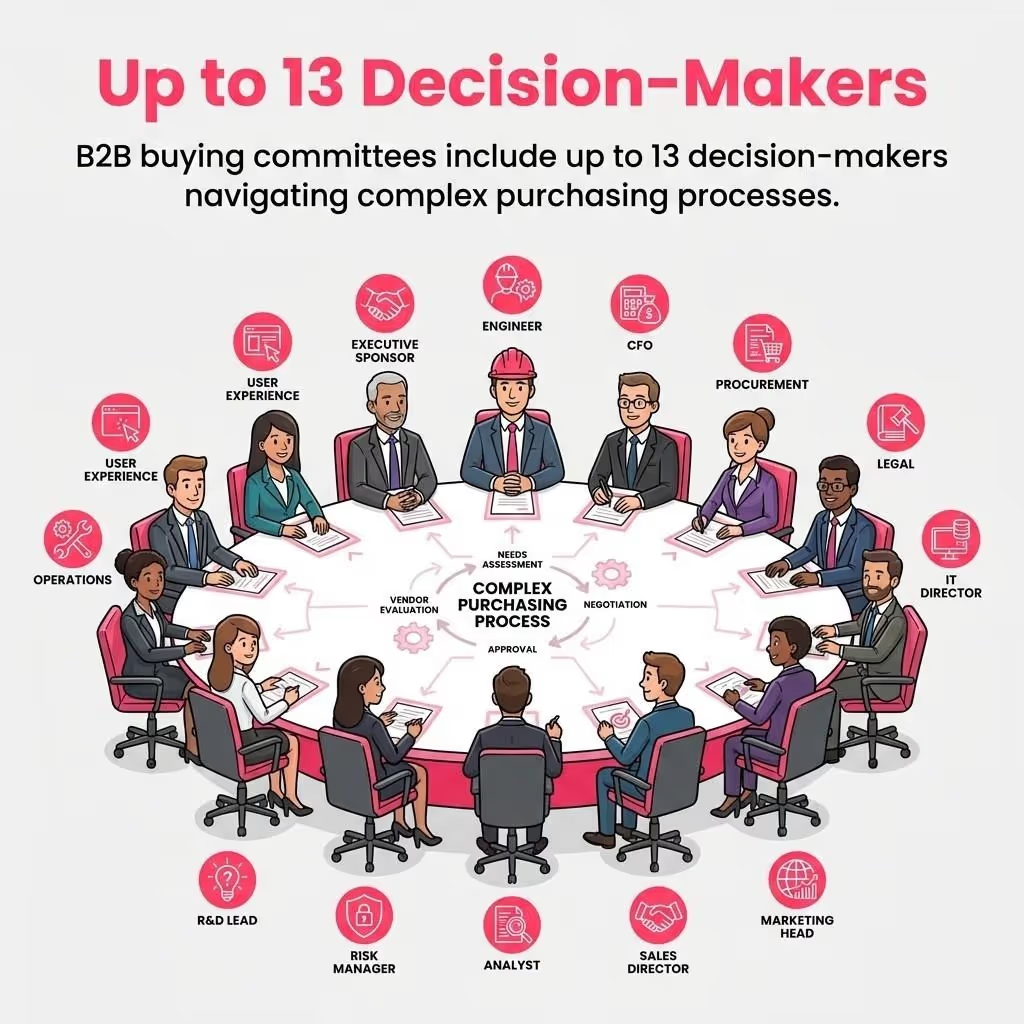
For many manufacturing companies, this is a real challenge because B2B buying committees can include up to 13 decision-makers. Your marketing must reach the right people with relevant information and support qualified leads.
This guide explains the marketing strategies that work best for the manufacturing industry. It covers content marketing, search engine optimization, marketing automation, LinkedIn, trade shows, buyer personas, and the full manufacturing buying cycle marketing process. The goal is simple: help manufacturing businesses improve brand visibility, support the sales team, and generate more reliable growth.
Manufacturing marketing is the process of promoting products and services to other businesses rather than consumers. In most cases, the audience includes procurement managers, engineers, plant leaders, and senior decision-makers. These buyers want technical clarity, supplier reliability, and proof that your solution can perform in real production conditions.
That is why marketing for manufacturing companies focuses less on emotion and more on function, performance, compliance, and total cost of ownership. Buyers care about uptime, tolerances, lead times, consistency, and long-term supplier value. A strong marketing plan in this space must help them understand not only what you offer, but also why your solution fits their application.
For example, a company selling CNC machining centers or custom industrial components needs a marketing strategy built around technical content. That may include specification sheets, case studies, process guides, certifications, product pages, and comparison content. This is the foundation of B2B manufacturing marketing.
At its core, marketing for manufacturers is B2B marketing. It is built around longer timelines, multiple stakeholders, and high-value decisions. A buying group may include engineers reviewing technical fit, procurement teams negotiating terms, finance leaders reviewing budgets, and executives making final approvals.
This means your target audience is not one person. It is often a group of decision-makers with different priorities. Engineers want specifications and technical proof. Procurement wants pricing, terms, and supplier dependability. Executives want ROI, lower risk, and strategic value. Manufacturing often falls into “boring industries” territory, but that only makes clear, useful communication more important. A good manufacturing marketing plan should support each of these needs with relevant educational content and helpful proof points.
That is why successful manufacturing marketing is not about saying more. It is about being more useful. Better messaging, better customer relationship management, and stronger alignment between sales and marketing all improve marketing success.
Consumer marketing often builds desire. Industrial marketing proves capability. Consumer brands usually depend on emotion, convenience, and visual appeal. In the manufacturing sector, buyers need evidence, technical detail, and confidence that your business can deliver consistent results.
The sales cycle shows this difference clearly. Consumer purchases may happen in minutes or days. Manufacturing purchases often take months and involve multiple reviews. Because of this, manufacturing marketing requires more structure. Marketing automation, email nurturing, and value-driven content all help move buyers through the decision process.
Many manufacturers still spend marketing dollars on tactics that do not match how industrial buyers actually buy. Broad social campaigns can help with awareness, but they rarely do enough on their own when the buyer needs time to compare solutions, review technical data, and involve internal stakeholders.
A stronger industrial marketing strategy respects that complexity. It aligns marketing efforts with real buying behavior, supports each stage of the journey, and helps the sales team engage leads with better context. The goal is not just website traffic. The goal is high quality leads that are more likely to convert.
A major challenge in B2B marketing manufacturing companies is the buying committee. Manufacturing purchases rarely depend on one person alone. Engineering checks technical fit. Operations reviews implementation impact. Finance looks at total cost. Procurement compares vendors and terms.
This creates complexity for lead generation because you cannot create one message for everyone. A better approach is to build content clusters that support different roles. Technical white papers can help engineers. ROI tools and cost-based content can support finance. Implementation guides can help operations and plant leadership. Together, these materials move the full buying group forward.
This is why manufacturing buyer personas matter. They help marketing teams understand who is involved, what they need, and how content should be tailored by role and stage.
Manufacturing buyers need detail. Broad claims and generic marketing language are not enough. Your digital marketing efforts must include searchable specifications, process details, certifications, tolerances, materials, and application-specific information.
This also changes search engine optimization. In manufacturing, buyers search using technical, long-tail terms with clear commercial intent. That makes manufacturing SEO strategy a critical part of marketing for manufacturing industry. Product and service pages should include complete technical information, while educational content should support early research and supplier comparison.
A strong website should also include downloadable CAD files, data sheets, certifications, and process details where relevant. These assets improve website traffic quality because they attract more serious visitors.
Many manufacturing companies face the same core challenges. Technical products can be hard to explain. Marketing teams are often small. Budgets must compete with equipment, staffing, and operational priorities. At the same time, buyers expect a more modern digital experience.
This is where manufacturing digital transformation marketing becomes important. Smarter websites, stronger digital tools, better automation, and clearer reporting help streamline processes and improve outcomes. As buyer expectations shift, manufacturers need stronger digital marketing strategies to stay competitive.
Long buying timelines are normal in manufacturing. That makes manufacturing marketing automation essential. Instead of depending only on manual follow-up, businesses can use automation to nurture leads with content based on buying stage, role, and interest.
Early-stage contacts may need industry insights, educational blog posts, and awareness content. Mid-stage buyers may need solution comparisons, technical guides, and process explanations. Late-stage contacts may need ROI content, implementation timelines, and detailed proof. This kind of nurturing improves manufacturing lead generation because it keeps prospects engaged without forcing a hard sell too early.
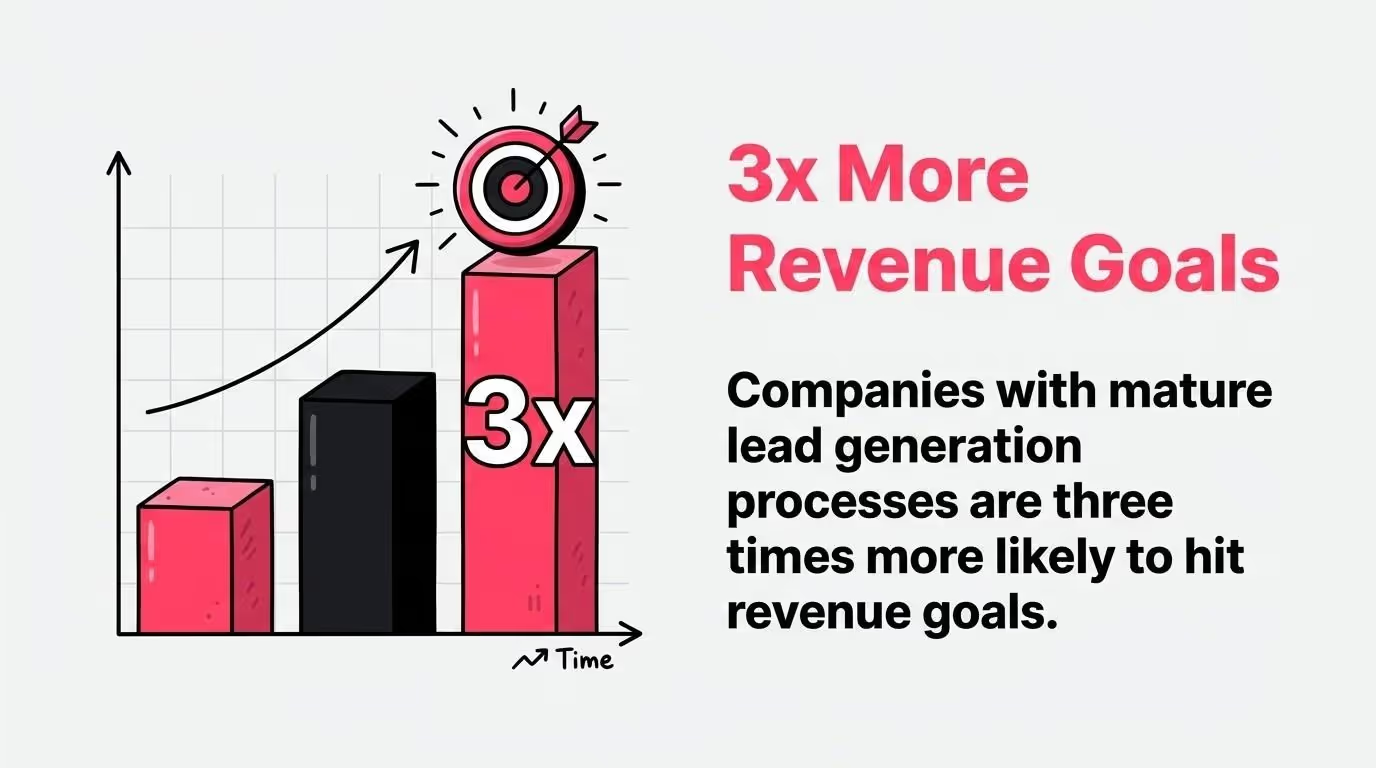
Strong automation also supports customer relationship management by helping sales teams see how contacts engage over time. It becomes even more valuable because mature lead generation programs are 3x more likely to achieve revenue targets.
Because each stakeholder consumes different content, manufacturers need variety. Engineers may prefer technical documents. Procurement may review case studies and vendor comparisons. Executives may prefer summaries, commercial logic, and strategic outcomes.
A good manufacturing content marketing strategy should map content by stakeholder and buying stage. This gives structure to your content marketing and helps create content more intentionally. It also improves lead quality because the content better matches real user intent.
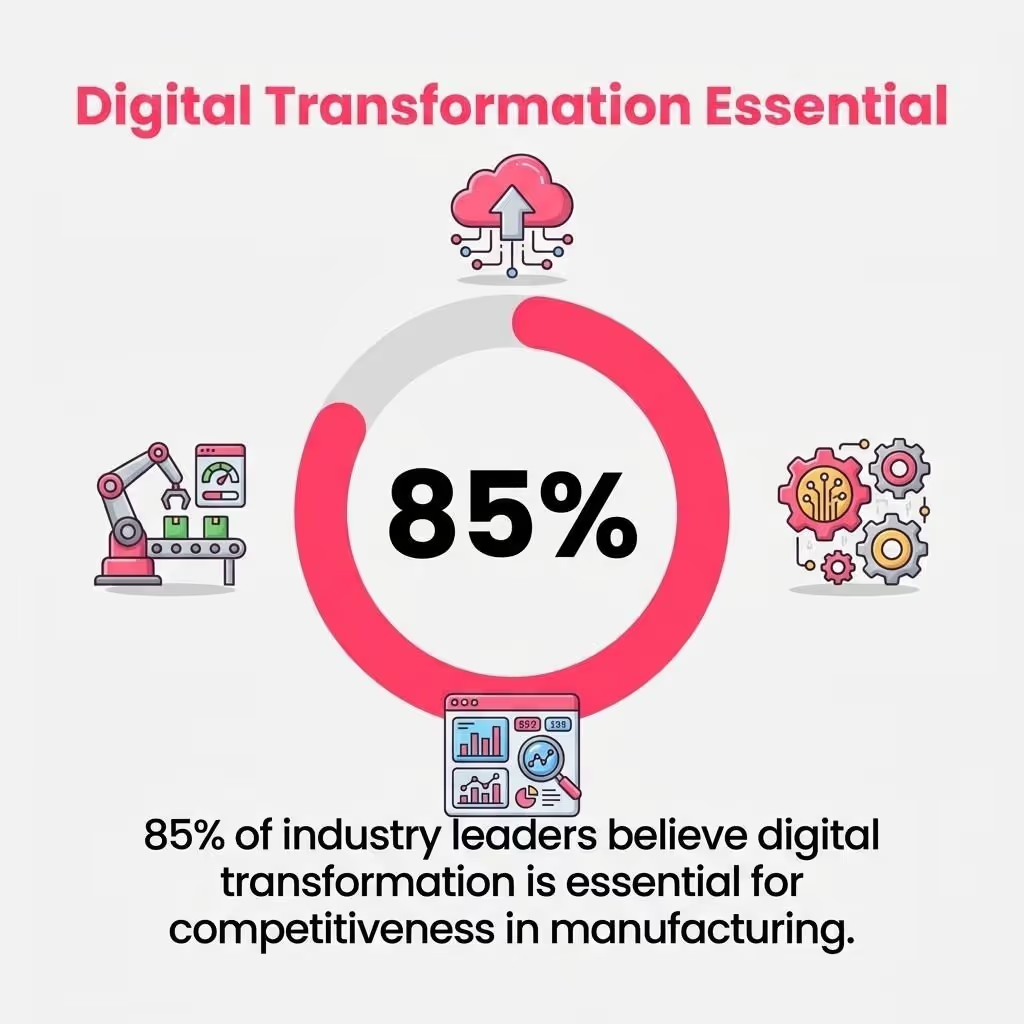
Many manufacturers still rely heavily on trade shows, print materials, and referrals. In fact, 85% of industry leaders believe digital transformation is essential for competitiveness, yet many manufacturers still rely on outdated marketing approaches.
These channels can still support growth, but they work best when connected to a stronger digital marketing system. Better online marketing, better automation, and better visibility in search are now part of a modern strong marketing strategy.
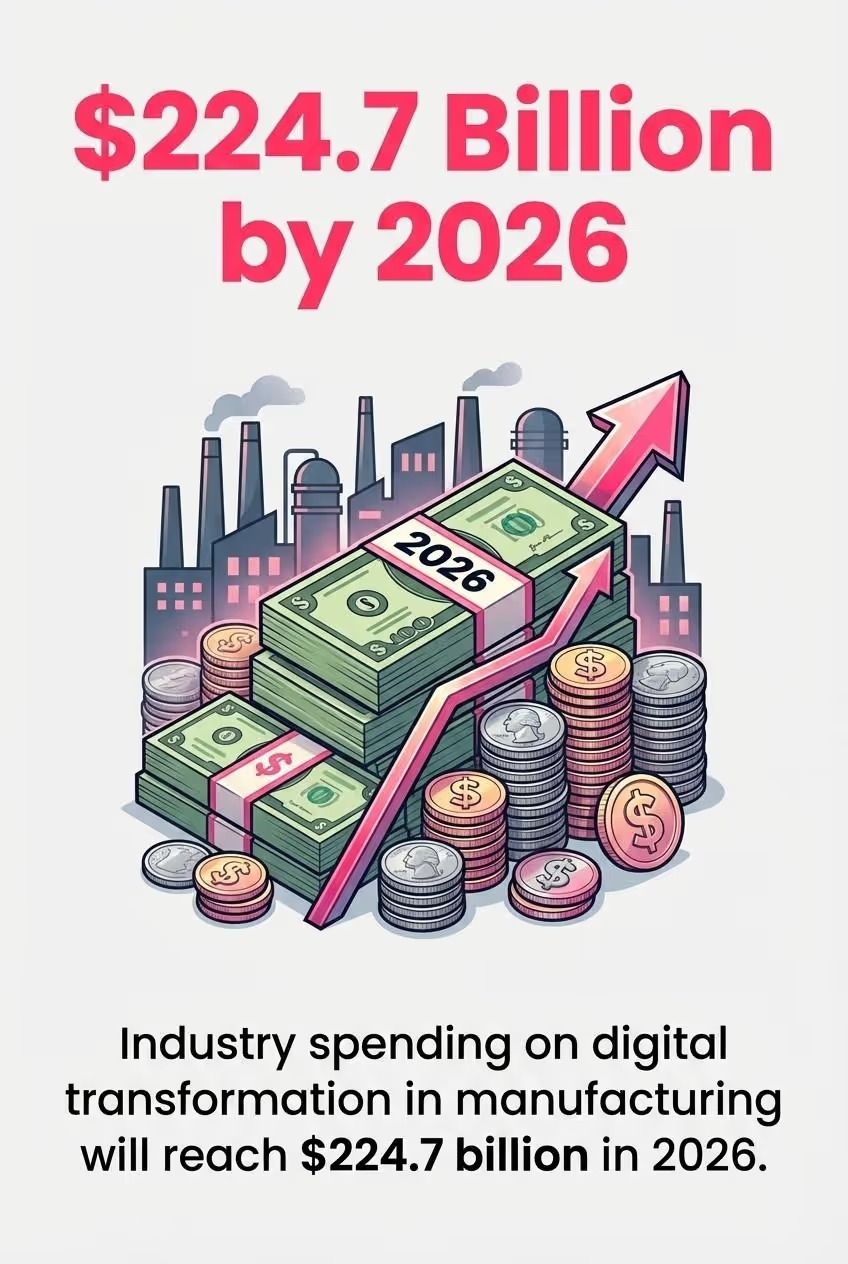
This does not mean replacing everything overnight. It means improving the areas that influence buyer research most, including your website, SEO, content, CRM workflows, and key metrics tied to revenue and lead generation. With digital transformation spending in manufacturing expected to reach $224.7 billion in 2026, keeping up with manufacturing trends matters more than ever.
A strong manufacturing buying cycle marketing approach follows the actual path buyers take from problem awareness to solution evaluation and then vendor selection. Different content works at different stages.
At the awareness stage, buyers are identifying problems and researching challenges. Here, blog content, benchmark reports, and educational webinars work well. During the consideration stage, buyers compare options, technologies, and suppliers. This is where solution guides, case studies, and technical comparison content become more important. At the decision stage, buyers need detailed specifications, proof points, pricing clarity, and implementation information.
When your marketing channels align with each stage, your strategy becomes more effective and more measurable.
Good personas guide messaging, content, and campaign structure. Generic personas do not work well in manufacturing because the difference between a quality engineer and a procurement director is significant.
Effective manufacturing buyer personas should reflect actual job roles, decision-making influence, content preferences, and pain points. A quality engineer may care about defect reduction and process control. A procurement manager may focus on supplier reliability and pricing stability. A plant leader may care about uptime and implementation risk.
The best way to build these personas is by talking to existing customers, reviewing sales objections, studying contact form questions, and looking at search behavior across the site. These insights help improve marketing tactics, content topics, and overall messaging.
With your buyer personas and buying cycle mapped out, the next step is choosing strategies that fit the way manufacturing companies actually sell. The best marketing for manufacturing approaches support long sales cycles, technical evaluation, and multiple decision-makers. These seven strategies are practical, focused, and built for B2B manufacturing marketing.
Account-based marketing manufacturing works well when deal values are high and target markets are clearly defined. Instead of broad outreach, ABM focuses your marketing efforts on a selected list of ideal accounts.
Each campaign should reflect the target company’s challenges, production goals, and buying priorities. Personalized case studies, ROI-focused content, and tailored messaging help improve engagement and support stronger qualified leads.
A strong manufacturing content marketing strategy helps position your business as a trusted source of expertise. Technical buyers respond better to useful insight than to heavy promotion. Blog posts, white papers, webinars, and technical guides can all support brand visibility and build trust.
The best topics usually come from customer questions, sales conversations, and industry challenges. Helpful content also strengthens manufacturing inbound marketing over time, and companies that blog actively generate 13x more leads than those that do not.
See Also : From Launch to 3X Revenue for Industrial Supply Brand

A solid manufacturing SEO strategy helps your business appear when buyers search for solutions, specifications, and suppliers. SEO produces more leads than any other channel for 57% of B2B companies. Focus on technical keyword research, complete product pages, clear service descriptions, and educational content for early-stage searches.
Strong search engine optimization also depends on technical performance, including fast load speed, clear site structure, and schema markup. Better SEO improves organic search traffic and supports steady manufacturing lead generation.
See Also : SEO for Industrial E-Commerce Stores: Data-Driven Tactics
LinkedIn marketing manufacturing is one of the most practical ways to reach engineers, procurement teams, and executives. Share industry insights, technical updates, and useful resources rather than constant sales messages.
Sponsored posts, employee advocacy, and targeted campaigns can help increase visibility with the right target audience. For many manufacturers, LinkedIn is one of the most useful social media platforms for professional reach.
Manufacturing marketing automation helps nurture leads and improve lead generation across long buying journeys. In fact, 80% of marketers claim automation generates more leads and conversions. Use automated email sequences, lead scoring, and CRM integration to guide prospects based on behavior, interest, and buying stage.
Engineers may need technical content, while executives may need commercial value and ROI messaging. Strong automation improves consistency and helps the sales team focus on better-fit opportunities. Platforms like HubSpot, Salesforce, and Marketo offer robust manufacturing-focused capabilities.

Trade shows still matter in the manufacturing industry because they create direct interaction and hands-on evaluation. They work best when integrated with digital follow-up. Promote your presence before the event, capture leads clearly, and continue follow-up through email and automation after the event. This makes trade shows more measurable and more effective.
Video helps explain technical products more clearly than text alone. Product demos, process walk-throughs, and recorded webinars can show capabilities in a practical way. This supports digital marketing for manufacturers, improves engagement, and helps potential buyers understand complex solutions faster.
Content marketing deserves special focus in marketing for manufacturing because it helps build authority, improve brand visibility, and support buyers across long sales cycles. Technical audiences value substance over style. They quickly lose interest in vague claims, weak explanations, or content that feels promotional without offering real insight. For manufacturing companies, the strongest content strategy is one that solves problems, answers technical questions, and helps potential customers move closer to a confident buying decision.
A practical manufacturing content marketing strategy should be built around real expertise. Your engineering team, technical specialists, and customer-facing staff already hold the knowledge your target audience needs. Their experience can be turned into useful educational content about technical specifications, application challenges, process improvements, compliance requirements, and implementation considerations. This kind of content supports digital marketing for manufacturers because it improves trust while also helping search engines understand the depth of your expertise.
The most effective content starts with real-world knowledge. That means interviewing subject matter experts, reviewing customer questions, and identifying recurring issues raised by prospects, existing customers, and the sales team. Content should explain complex ideas clearly without making them too simple. Technical buyers want clarity, not oversimplification.
Strong content usually focuses on specific use cases and practical outcomes. A topic like reducing vibration in high-speed machining is more valuable than a general service pitch because it aligns with real search engine optimization opportunities and buyer concerns. Where relevant, include actual performance data, test results, specifications, and comparison points. These details increase credibility and improve the overall quality of your marketing efforts.
Different content types support different stages of the buying process. Blog posts help attract early-stage traffic and improve organic search traffic. White papers and technical guides support deeper research during the consideration stage. Case studies show proven outcomes and help strengthen customer relationships by giving buyers more confidence in your capabilities. Specification sheets and technical documents support detailed evaluation, while webinars and video demonstrations allow more interactive education.
A strong content library should cover all major stages of the sales cycle and reflect the needs of different buyer roles. Engineers may need technical explanations and detailed documentation. Procurement teams may prefer proof of consistency, cost logic, and supplier reliability. Executives may respond better to efficiency, risk reduction, and long-term value. This structured approach makes marketing for manufacturers more useful and more measurable.
Even the best content needs the right distribution. Your website should remain the foundation of your online marketing because it supports SEO, lead capture, and authority building. Content should be optimized for relevant keywords and linked clearly across the site to strengthen website traffic quality and improve user flow.
LinkedIn is one of the most useful social media platforms for B2B manufacturing marketing because it allows businesses to share valuable insights, technical updates, and industry commentary with a professional audience. Email marketing is also important because it delivers content directly to interested contacts and helps nurture leads over time. Segmentation by persona, role, or buying stage makes that communication more relevant. Industry publications and contributed articles can further expand reach and support stronger brand awareness.
A strong manufacturing SEO strategy supports the broader goals of marketing for manufacturing industry by helping your company appear when buyers research products, services, and solutions. In manufacturing, SEO is usually built around technical keyword research, detailed product pages, and supporting educational content that answers early-stage questions.
Product and service pages should include complete technical information in crawlable text rather than hiding important details inside images or documents. That includes specifications, certifications, materials, application details, and supporting descriptions. Use tools like Ahrefs, SEMrush, or Google Keyword Planner for keyword research and topic planning.
Blog content can then build topical authority by answering “how to,” “what is,” and “best practices” style searches. Together, these pages improve search engine visibility and support long-term lead generation.
Technical SEO supports every other digital effort. If your site is slow, difficult to crawl, or hard to use on mobile devices, your visibility will suffer. Manufacturers should focus on page speed, clear internal structure, secure browsing, and a mobile-friendly layout that still handles technical detail well.
Your technical foundation should also include clean internal linking, strong product page structure, and regular use of Google Search Console to monitor indexing, crawl issues, and performance trends. These improvements help support successful manufacturing marketing because they make your website easier to discover and easier to use.
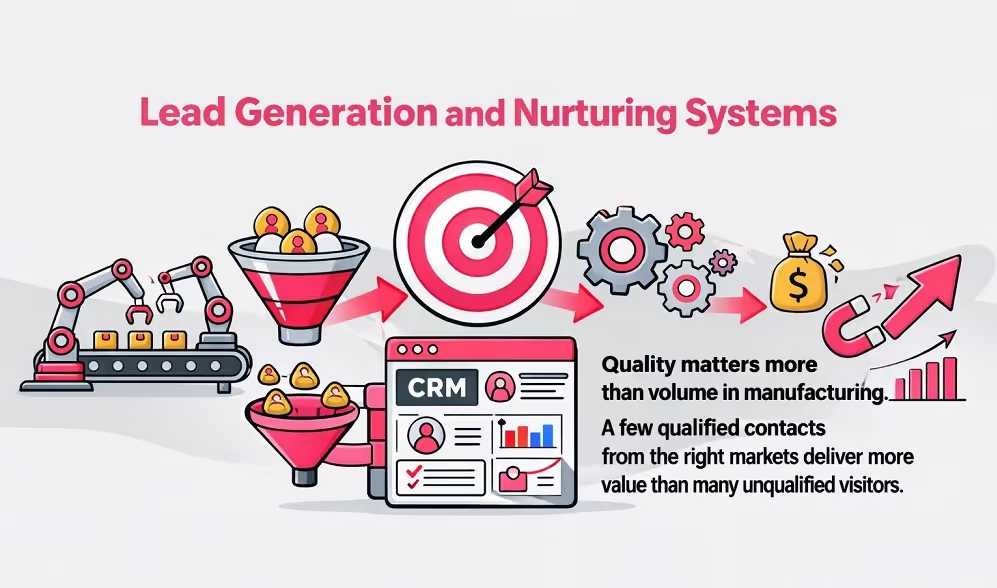
All of these efforts should lead back to one business goal: stronger manufacturing lead generation. In manufacturing, quality matters more than volume. A small number of qualified contacts from the right target markets is often far more valuable than a large list of unqualified visitors.
Gated content such as white papers, technical reports, and detailed guides can help capture leads when paired with simple forms and clear value. Once contacts enter the system, marketing automation can deliver relevant follow-up content based on role, behavior, and buying stage. Engineers may receive technical resources, while executives receive commercial or operational value-focused content. This makes manufacturing marketing automation more effective and helps sales focus on the most promising leads.
Manufacturing inbound marketing fits well with industrial buying behavior because it attracts prospects through helpful content rather than depending only on interruption-based outreach. The process begins by attracting the right visitors through content and SEO, then converting them through useful offers, closing through better sales enablement, and finally strengthening retention through customer success content and repeat engagement.
This approach supports sustainable growth because it builds trust gradually and gives buyers the information they need before they are ready to speak with sales. It also helps manufacturers reduce overdependence on outbound-only tactics and improve long-term marketing ROI.
The right manufacturing marketing metrics should connect directly to business outcomes. Traffic alone is not enough. It is more useful to track whether the right audience is finding the site, whether they are engaging with technical content, and whether those visits lead to qualified inquiries.
A strong marketing for manufacturing plan works best when it begins with focused action. Instead of doing everything at once, choose two or three priorities that improve visibility, strengthen content, and support more consistent lead generation. A clear 90-day plan helps marketing teams build momentum without wasting time or marketing dollars.
Review your current digital marketing setup, including website performance, SEO status, content quality, conversion points, and analytics tracking.
Then define your target audience, build buyer personas, choose priority keywords, and publish a few helpful blog posts to support social media marketing, build brand awareness, and early organic traffic. Focus your content on real buyer concerns, current industry trends, and practical questions that support stronger engagement.
Focus on lead generation, stronger follow-up, and industrial SEO. Set up marketing automation, define lead stages, and build a simple nurture sequence. Improve key product and service pages with better specifications, stronger copy, and clearer calls to action.
Support this with regular LinkedIn activity, useful content sharing, and consistent marketing campaigns that keep your brand visible around relevant industry events.
Review performance, improve what is already working, and create one gated asset such as a technical guide or white paper. Build a repeatable workflow for content, SEO, and lead management so your short-term progress turns into a sustainable manufacturing marketing plan. Over time, this structured approach also helps strengthen customer loyalty and long-term marketing performance.
Successful marketing for manufacturing depends on structure, relevance, and consistency. Manufacturers need a strategy that matches long sales cycles, technical decision-making, and multiple stakeholders. Clear messaging, useful content, strong SEO, and better follow-up help attract qualified buyers at the right stage. Instead of relying only on trade shows or referrals, manufacturing companies should combine digital visibility, lead nurturing, and educational content to support real buying behavior.
A practical approach starts with understanding the audience, improving key pages, and building systems that support long-term growth. When content, automation, and search visibility work together, manufacturers can generate better leads, improve trust, and create a stronger pipeline. That is what makes a smart manufacturing marketing strategy sustainable and effective.