
Equipment dealers lose potential sales every day because their RFQ process creates friction instead of momentum. I've watched dealerships invest thousands driving traffic to their sites, only to see those visitors bounce at the quote request form.
The primary goal of conversion rate optimization (CRO) on a business website is to increase the percentage of visitors who complete a desired action, such as making a purchase or signing up for a newsletter, thereby maximizing the value generated from existing website traffic and improving return on investment (ROI). For equipment dealers, that desired action is simple: converting RFQ submissions into qualified leads who actually buy.
CRO isn't about redesigning your entire website or chasing the latest marketing trends. It's about identifying where your buyers get stuck, testing solutions, and measuring what works. When you optimize strategically, you turn more website visitors into RFQ submissions and more RFQs into closed deals.
Unbounce analyzed 41,000 B2B landing pages, 464 million pageviews, and 57 million conversions. Their study found a median conversion rate of 6.6% across all B2B industries.
This guide walks you through proven CRO tactics specifically for equipment dealers. You'll learn how to optimize landing pages, reduce form friction, craft compelling CTAs, and use data to drive decisions. By the end, you'll know exactly where to focus your efforts to generate more qualified leads from your existing traffic.
Conversion Rate Optimization for Equipment Dealers
Conversion rate optimization (CRO) is the systematic process of improving the percentage of website visitors who take a desired action. For equipment dealers, that action is typically submitting an RFQ form, requesting a quote, or contacting your sales team.
The math is straightforward. If 1,000 people visit your equipment landing page and 20 submit RFQs, your conversion rate is 2%. Double that to 4%, and you've doubled your leads without spending another dollar on traffic.
Equipment dealers face unique CRO challenges. Your buyers are making high-value B2B purchases with long sales cycles. They need detailed specifications, pricing information, and confidence in your expertise. A consumer ecommerce site might optimize for immediate purchases, but you're optimizing for lead quality and sales process efficiency.
The equipment buying journey involves multiple decision-makers, extensive research, and significant financial investment. Your CRO strategy must account for these complexities while reducing friction at every touchpoint.
Most equipment dealers obsess over driving more traffic. They invest in SEO, PPC campaigns, and content marketing to attract visitors. But traffic without conversion is just an expense line item.
Consider the economics. If you spend $5,000 monthly on PPC to drive 2,000 visitors at a 2% conversion rate, you get 40 leads at $125 each. Improve your conversion rate to 4% through CRO, and you get 80 leads at $62.50 each. Same traffic spend, double the results.
CRO also improves lead quality. When you optimize forms and landing pages, you naturally attract more qualified prospects who understand their needs and are ready to engage your sales team.
Equipment buyers don't impulse purchase. They research extensively, compare specifications, and involve multiple stakeholders before requesting quotes.
Your typical buyer visits your site 3-5 times before submitting an RFQ. They compare your equipment against competitors, download spec sheets, and evaluate your credibility through testimonials and certifications.
This extended journey creates multiple conversion opportunities. Some buyers will submit RFQs on their first visit if you remove friction effectively. Others need nurturing through retargeting, email sequences, and progressive profiling.
Understanding this journey helps you optimize each touchpoint. Your landing page needs to answer technical questions. Your forms need to respect their time. Your CTAs need to match their decision stage.
Your landing pages determine whether visitors become leads or bounce to competitors. Equipment buyers arrive with specific needs and limited patience for generic marketing fluff.
Every landing page needs a singular focus. If you're promoting a specific equipment category, that page should speak directly to buyers researching that equipment type. No navigation distractions, no generic brand messaging, just targeted information that moves them toward an RFQ.
Pages that load in over three seconds risk losing potential leads, with pages loading in one second converting three times better than those taking five seconds. Speed matters because impatient B2B buyers have alternatives one click away.
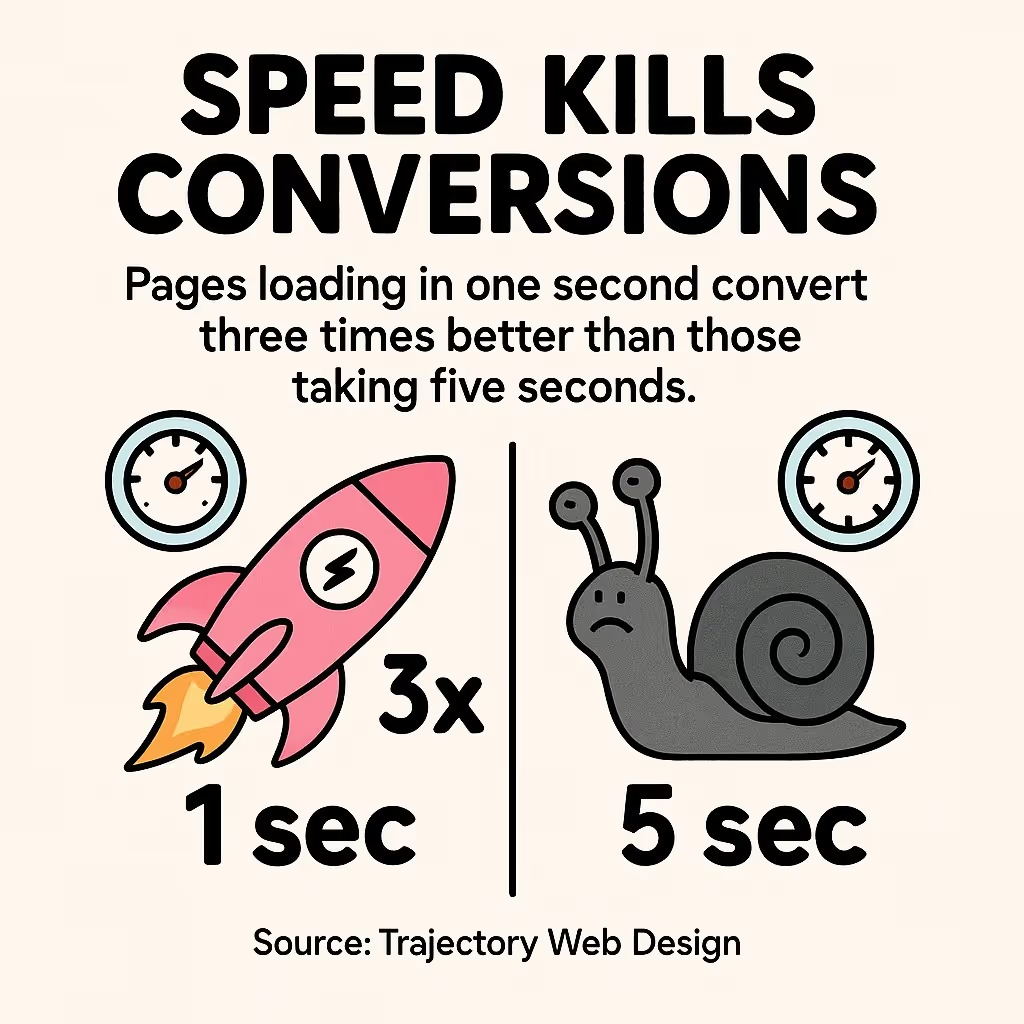
Faster pages win: 1-second loads convert 3x better than 5-second pages—critical for high-intent equipment buyers.
Your landing page needs six critical elements. Clear headline that matches the ad or link that brought them there. Compelling imagery showing the equipment in real-world applications. Detailed specifications in scannable format. Trust signals like certifications and industry awards. Social proof through testimonials from similar buyers. Prominent CTA that stands out visually.
Landing pages should focus on clear, industry-specific CTAs and trust-building elements like certifications and industry awards to establish credibility with B2B buyers.
Equipment buyers scan before they read. Use bullet points for specifications, bold text for key features, and white space to prevent cognitive overload. Every element should guide their eyes toward the RFQ form or CTA button.
Include comparison tables when relevant. If buyers are deciding between models, make that comparison easy on your site instead of forcing them to research elsewhere. The more questions you answer on the landing page, the more qualified your RFQ submissions become.
Around 60% of B2B buyers use mobile devices for research, yet many equipment dealer sites remain desktop-focused.

Roughly 60% of B2B researchers are on mobile—optimize tap targets, load speed, and CTA placement for thumbs.
Mobile optimization means more than responsive design. Your forms need larger tap targets. Your CTAs need thumb-friendly placement. Your images need to load quickly on cellular connections.
Test your landing pages on actual mobile devices, not just browser emulators. Can you easily tap form fields without zooming? Does the page load in under two seconds on 4G? Can you submit an RFQ without frustration?
Mobile users often research during downtime, making quick decisions about which dealers to contact. If your mobile experience frustrates them, they'll simply request quotes from competitors with better mobile optimization.
Your RFQ form is the final barrier between website visitor and qualified lead. Every unnecessary field reduces conversion rates. Every confusing label creates hesitation. Every poorly designed element costs you potential revenue.
Form optimization delivers immediate results because small changes create measurable conversion rate improvements. Reducing a form from ten fields to five can double submissions while maintaining lead quality.
Only request information you absolutely need for initial qualification. Name, email, phone number, and equipment interest are typically sufficient. You can gather additional details during follow-up conversations.

Simplify RFQ forms to essential fields first—then collect details later. Less friction, more qualified submissions.
Many equipment dealers request company name, job title, purchase timeline, budget range, quantity needed, current equipment, and detailed specifications. That's overwhelming for someone just starting their research process.
Create a two-stage approach. Initial RFQ form captures basic contact information and equipment type. Follow-up email or phone call gathers detailed specifications and qualification criteria. This progressive profiling reduces initial friction while ensuring your sales team gets necessary information.
Make optional fields clearly optional. Use placeholder text to explain what information you need and why. Avoid jargon or internal terminology that buyers won't understand.
Single-column forms convert better than multi-column layouts. They create clear visual flow and work better on mobile devices where horizontal space is limited.
Place field labels above input boxes, not beside them. This improves scannability and reduces confusion about which label corresponds to which field.
Use appropriate input types. Phone fields should trigger numeric keyboards on mobile. Email fields should enable email-specific keyboards. Date pickers should use calendar widgets instead of forcing manual entry.
Show field validation in real-time. If someone enters an invalid email format, show the error immediately rather than waiting until form submission. This reduces frustration and abandonment.
Equipment buyers hesitate to share contact information without trust signals. Add a brief privacy statement near your form explaining how you'll use their information.
Include security badges if you collect sensitive business information. Show industry certifications prominently. Display customer logos or testimonials near the form to reinforce credibility.
Explain what happens after form submission. Will they receive an immediate email? How quickly will your sales team follow up? Setting clear expectations reduces anxiety and increases completion rates.
Your call-to-action buttons determine whether visitors take the next step. Generic CTAs like "Submit" or "Learn More" lack urgency and specificity. Equipment buyers respond better to CTAs that clearly communicate value.
Effective CTAs for equipment dealers emphasize what buyers receive. "Get Custom Quote" outperforms "Submit Form" because it focuses on their desired outcome. "Request Equipment Pricing" converts better than "Contact Us" because it's specific and action-oriented.
Your primary CTA should appear above the fold, in the middle of your content, and at the end of your landing page. Visitors arrive at different scroll depths depending on their information needs and decision stage.
Make CTAs visually distinct through contrasting colors, adequate white space, and button size. They should stand out immediately when someone scans your page.
Test button copy variations. "Get Your Quote Now" might outperform "Request Quote" depending on your audience's urgency level. "See Pricing Options" could work better than "Contact Sales" for early-stage researchers.
Avoid multiple competing CTAs on the same page. If you offer both "Download Spec Sheet" and "Request Quote," you create decision paralysis. Guide visitors toward your primary conversion goal.
Not every visitor is ready to request a quote. Some need more information before committing to sales conversations. Secondary CTAs accommodate these early-stage researchers.
Offer downloadable resources like spec sheets, comparison guides, or case studies. These lower-commitment CTAs capture contact information from researchers who aren't ready for RFQs yet.
Create a hierarchy. Primary CTA ("Request Quote") should be most prominent. Secondary CTA ("Download Buyer's Guide") should be visible but less dominant. This guides serious buyers toward RFQs while nurturing early-stage prospects.
Effective CRO relies on data, not assumptions. What you think matters to equipment buyers often differs from what actually drives their decisions. Analytics tools reveal where visitors struggle and which changes improve conversion rates.
Google Analytics tracks basic metrics like traffic sources, bounce rates, and conversion events. Set up goals for RFQ submissions, phone calls, and other valuable actions to measure what's working.
Conversion rate measures the percentage of visitors who submit RFQs or take desired actions. Track this overall and by traffic source to identify which channels deliver qualified prospects.
Bounce rate indicates visitors who leave without engaging. High bounce rates on landing pages suggest messaging mismatch or poor user experience.
Time on page reveals engagement levels. Equipment pages should hold attention longer as buyers review specifications and features. Short time combined with high bounce rates signals problems.
Form abandonment rate shows how many visitors start RFQ forms but don't complete them. High abandonment suggests friction in your form design or too many required fields.
Lead quality metrics track which traffic sources and landing pages generate leads that convert to sales. Not all RFQs are equal, so measure which optimization efforts produce revenue, not just form submissions.
Tools like Hotjar show where visitors click, how far they scroll, and where they get stuck. These visual insights reveal opportunities that basic analytics miss.
Heatmaps show which page elements attract attention and which get ignored. If visitors aren't clicking your CTA button, maybe it's poorly placed or lacks visual prominence.
Scroll maps reveal how many visitors reach different page sections. If 60% of visitors never scroll past your first screen, important information placed lower won't influence their decisions.
Session recordings let you watch individual user journeys. You'll see where they hesitate, which form fields confuse them, and why they abandon RFQ submissions.
A/B testing compares two versions of a page element to determine which performs better. Test one variable at a time, like headline copy, CTA button color, or form length.
Start with elements that likely have the biggest impact. Testing button color might improve conversions by 5%, but testing form length could improve them by 50%.
Run tests long enough to reach statistical significance. Equipment dealer traffic volumes are typically lower than consumer sites, so you might need several weeks to gather meaningful data.
Successful tests become your new baseline. Then test another element. CRO is continuous improvement, not a one-time project. Small gains compound over time into significant conversion rate improvements.
Mobile traffic dominates B2B research, yet many equipment dealers still prioritize desktop experiences. This disconnect costs leads daily as frustrated mobile users abandon poorly optimized sites.
Mobile optimization extends beyond responsive design templates. Your site might technically work on phones while creating terrible user experiences that drive prospects to competitors.
Touch targets need adequate size and spacing. Buttons and form fields should be at least 48 pixels square to prevent misclicks on touchscreens.
Simplify navigation for small screens. Hamburger menus work fine if organized logically. Avoid nested dropdown menus that require precise tapping.
Optimize images for mobile loading speeds. Large desktop images slow mobile page loads significantly. Use responsive images that serve appropriately sized files based on device.
Make phone numbers clickable. Mobile users should tap your number to dial immediately rather than memorizing it or switching apps to make calls.
Mobile forms need even more aggressive simplification than desktop versions. Typing on phones is slower and more error-prone, so minimize required text entry.
Use autofill attributes so browsers can populate fields from saved information. This reduces typing and speeds form completion significantly.
Implement smart field types. Email fields should show email keyboards. Phone fields should show numeric keypads. These small details reduce friction and improve completion rates.
Test forms on multiple devices and screen sizes. What works on iPhone might break on Android tablets. Real device testing catches problems browser tools miss.
Equipment buyers make significant financial commitments. They need confidence that you'll deliver quality products, reliable service, and ongoing support. Social proof and trust signals reduce perceived risk.
Testimonials from similar buyers carry weight. If you sell construction equipment, testimonials from construction companies matter more than generic praise. Specificity builds credibility.
Customer logos show who trusts your equipment. Display recognizable companies or numerous clients to demonstrate track record and expertise.
Industry certifications prove legitimacy. Safety certifications, quality standards, and professional memberships signal that you meet industry requirements.
Case studies provide detailed success stories. They show how your equipment solved specific problems for real customers. Include metrics when possible to demonstrate tangible results.
Awards and recognition validate your market position. Industry awards, dealer distinctions, or manufacturer partnerships differentiate you from competitors.
Warranty information reduces purchase anxiety. Clear warranty terms show confidence in your equipment and commitment to customer satisfaction.
Place trust signals near conversion points. Show customer testimonials above or beside RFQ forms to reinforce credibility at decision moments.
Use real photos and names whenever possible. Stock photos and anonymous quotes feel fake and undermine credibility. Authentic testimonials with faces and company names carry more weight.
Quantify results in case studies. "Increased productivity" is vague. "Reduced downtime by 35% over six months" is specific and compelling.
Complex navigation frustrates equipment buyers and increases bounce rates. They arrive with specific needs and limited patience for confusing site structures.
Clear navigation helps visitors find relevant equipment quickly. Organized by equipment type, application, or industry makes browsing intuitive. Avoid forcing visitors to understand your internal organizational structure.
Robust search helps buyers find specific equipment models quickly. Include filters for specifications like capacity, power type, or size range.
Search should understand common industry terminology and abbreviations. Buyers might search using different terms than you use for product names.
Display search results with key specifications visible. Buyers shouldn't click through multiple pages to find basic equipment details.
Every page should guide visitors toward RFQ submission or contact. Don't create dead ends where visitors must use browser back buttons to continue browsing.
Breadcrumb navigation shows where users are in your site structure and provides easy navigation to parent categories.
Related equipment suggestions keep visitors engaged. If they're viewing a specific excavator model, show similar models or relevant attachments.
Manual RFQ processing creates delays that cost sales opportunities. AI-powered RFQ automation can significantly reduce RFQ processing times, sometimes from days to hours.
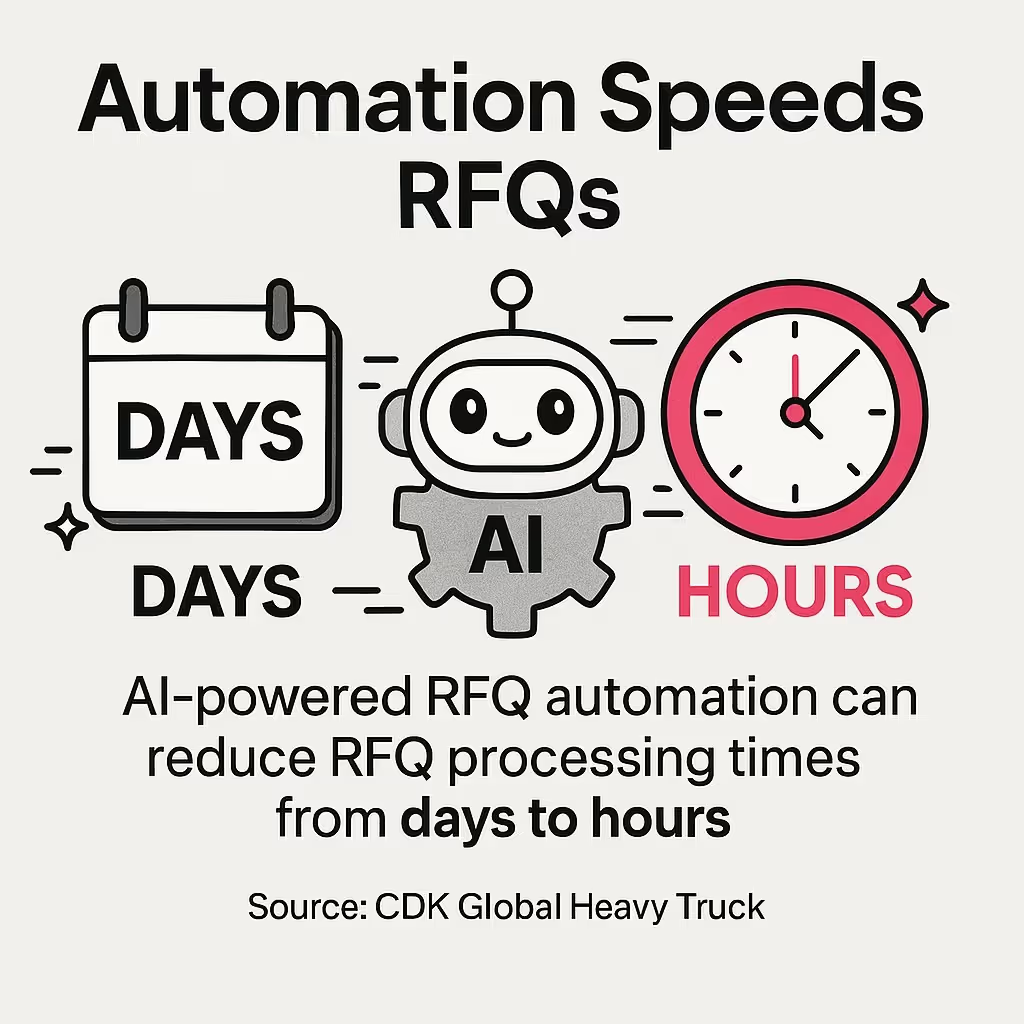
Automation wins: AI-powered RFQ workflows can shrink response times from days to hours—often the difference between winning and losing the deal.
Salesforce and similar CRM platforms automate lead routing, follow-up sequences, and sales tracking. RFQ submissions flow directly into your sales pipeline without manual data entry.
Executive-ready RFQ readiness scorecards and standardized deal stages help track stage conversion, velocity, and win rates to identify process improvements.
Automation reduces operational costs and provides deeper insights into buyer behavior that inform future CRO efforts.
Automated email responses acknowledge RFQ submissions immediately. They set expectations about follow-up timing and provide relevant resources while buyers wait for personalized responses.
Chatbots handle common questions outside business hours. They can collect basic qualification information and schedule sales calls, preventing lead leakage from delayed responses.
Text message notifications alert sales teams about new RFQs instantly. This enables rapid response times that improve conversion rates significantly.
Sustainable CRO requires systematic testing, not random changes based on hunches. Successful equipment dealers build testing frameworks that generate consistent conversion rate improvements over time.
Focus on high-impact, low-effort changes first. Simplifying your RFQ form from ten fields to five takes minimal development time but potentially doubles conversion rates.
Address obvious friction points before subtle optimizations. If your mobile site takes eight seconds to load, fix that before testing button colors.
Test elements that affect the most visitors. Homepage and main landing page optimizations impact more people than obscure product page tweaks.
Every test needs a clear hypothesis. "If we reduce form fields from ten to five, we'll increase RFQ submissions by 30% because buyers will perceive less effort required."
Document your reasoning. Why do you think this change will improve conversions? What evidence supports your hypothesis? This discipline prevents random testing that wastes resources.
Set success metrics before launching tests. Define what improvement justifies implementing the change permanently. This prevents cherry-picking data to support preferred outcomes.
Wait for statistical significance before declaring winners. Equipment dealer traffic volumes require patience to gather enough data for confident decisions.
Look beyond conversion rate improvements. Did the change affect lead quality? Are RFQs from the test variation converting to sales at similar rates?
Implement winning variations site-wide, then start the next test. Compound small improvements into significant conversion rate gains over time.
CRO investments must generate positive returns. Tracking the right metrics proves value and justifies continued optimization efforts.
Calculate cost per lead before and after CRO initiatives. If you spent $10,000 on traffic generating 100 leads at $100 each, then CRO improvements double conversion to 200 leads, your new cost per lead is $50. Same traffic investment, 50% cost reduction.
Track which landing pages and traffic sources generate leads that become customers. Not all RFQs are equal, so measure revenue impact, not just form submissions.
Assign value to different conversion actions. RFQ submissions might be worth $500 in potential revenue based on historical close rates. Phone calls might be worth $300. Downloads might be worth $50.
Monitor changes in lead quality alongside quantity. Doubling RFQs while halving close rates doesn't improve business performance.
CRO creates compounding returns. Each improvement builds on previous optimizations, creating better overall user experiences that benefit all future visitors.
Better conversion rates reduce pressure on traffic generation. You can maintain lead volume while decreasing advertising spend, or increase lead volume with the same traffic investment.
Improved user experience builds brand reputation. Buyers who have positive interactions with your site are more likely to return, refer others, and become long-term customers.
CRO improvements happen through consistent effort, not overnight transformations. Start with high-impact changes, measure results, and build momentum through successive optimizations.
Audit your current conversion funnel first. Identify obvious friction points like slow page loads, complicated forms, or weak CTAs. These quick wins build confidence and demonstrate CRO value.
Implement analytics tracking across your entire site. You can't optimize what you don't measure. Set up conversion goals, form tracking, and traffic source monitoring.
Test one element at a time with clear hypotheses. Random changes without measurement waste resources and provide no learning value.
Your first priority should be form optimization. Reducing required fields and improving mobile form experience typically delivers the fastest conversion rate improvements.
The equipment dealers who win aren't necessarily those with the biggest traffic budgets. They're the ones who convert their existing traffic most effectively through systematic CRO.