Heavy equipment marketing requires sophisticated digital strategies that align with how construction professionals actually buy machinery.
90% of buyers use search engines during the purchasing journey, researching specs, dealer locations, and financing options long before contacting sales teams.
Your digital marketing needs to meet them there with search engine optimization, pay-per-click advertising, content that answers technical questions, and email campaigns that nurture leads through 6-12 month decision cycles.
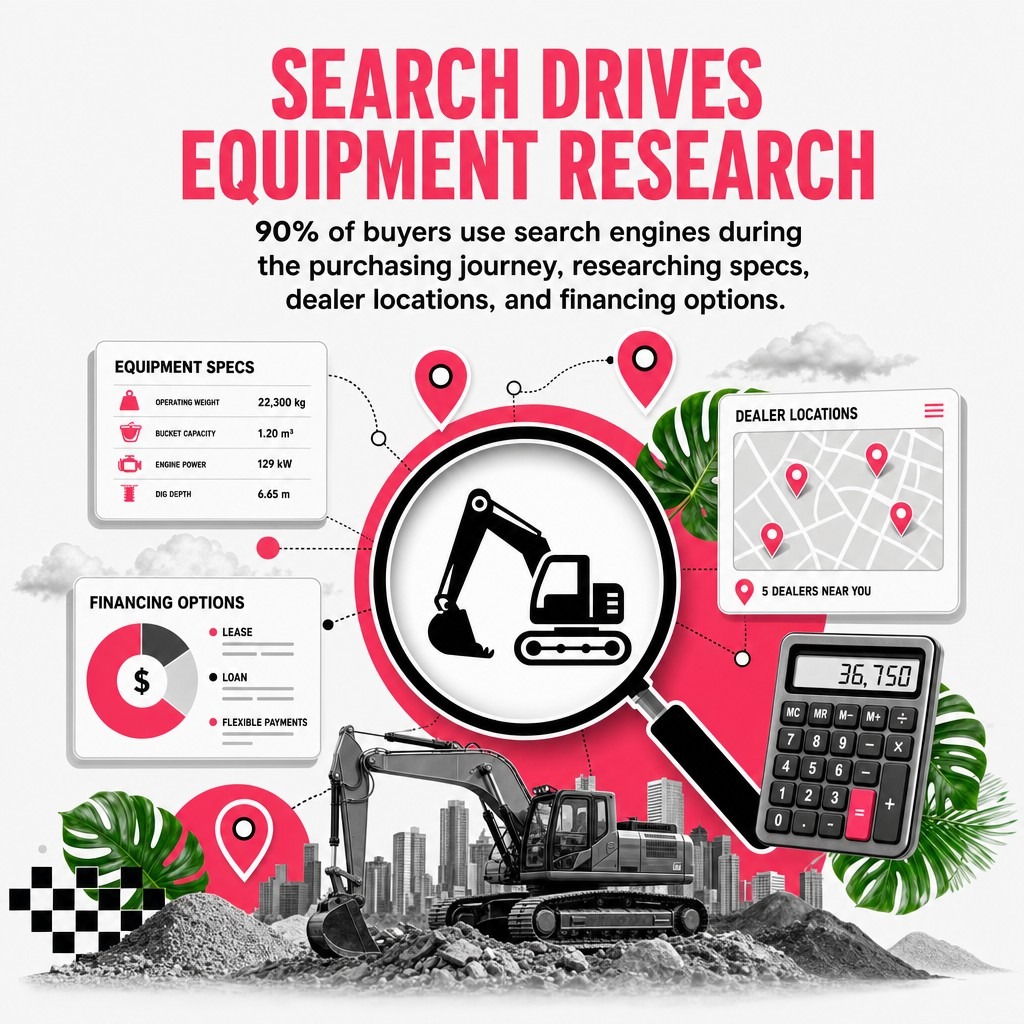
Search is the starting line for equipment buyers—be discoverable when they research specs, dealers, and financing.
The most effective heavy equipment marketing strategies combine local SEO for dealer visibility, technical content marketing that builds authority, paid search campaigns targeting high-intent keywords, and account-based approaches for enterprise accounts. I've spent years optimizing digital campaigns for B2B industrial clients, and the equipment sector has unique challenges: long sales cycles, multiple decision-makers, high-value transactions, and buyers who demand detailed specifications before ever filling out a form.
What separates successful equipment brands from struggling dealers? Data-driven digital systems that generate qualified leads consistently. You need visibility when contractors search for "excavator rental near me," authority when fleet managers evaluate brands, and nurturing sequences that keep your dealership top-of-mind during months-long purchasing processes.
The construction equipment industry is experiencing significant shifts. Electric heavy truck sales in China surged 175% year-over-year in the first half of 2025, now accounting for 25% of new sales. Your marketing needs to adapt to buyers researching electrified equipment, sustainability features, and telematics capabilities alongside traditional performance specs.

Electrification is accelerating—equip your messaging for buyers researching zero-emission and hybrid machinery.
The construction equipment sales process has fundamentally changed. Buyers research online for weeks before contacting dealers.
Your potential customers compare specs across manufacturers, read reviews on equipment forums, check dealer inventory online, and evaluate financing options through web searches. They're making preliminary decisions about brands and models before your sales team knows they exist.
Digital marketing for heavy equipment isn't about flashy campaigns. It's about being visible and credible when buyers conduct research.
Traditional marketing approaches like trade shows and direct mail still matter, but they can't replace the need for strong online presence. When a contractor needs a replacement excavator next week, they're searching Google right now, not waiting for your next mailing.
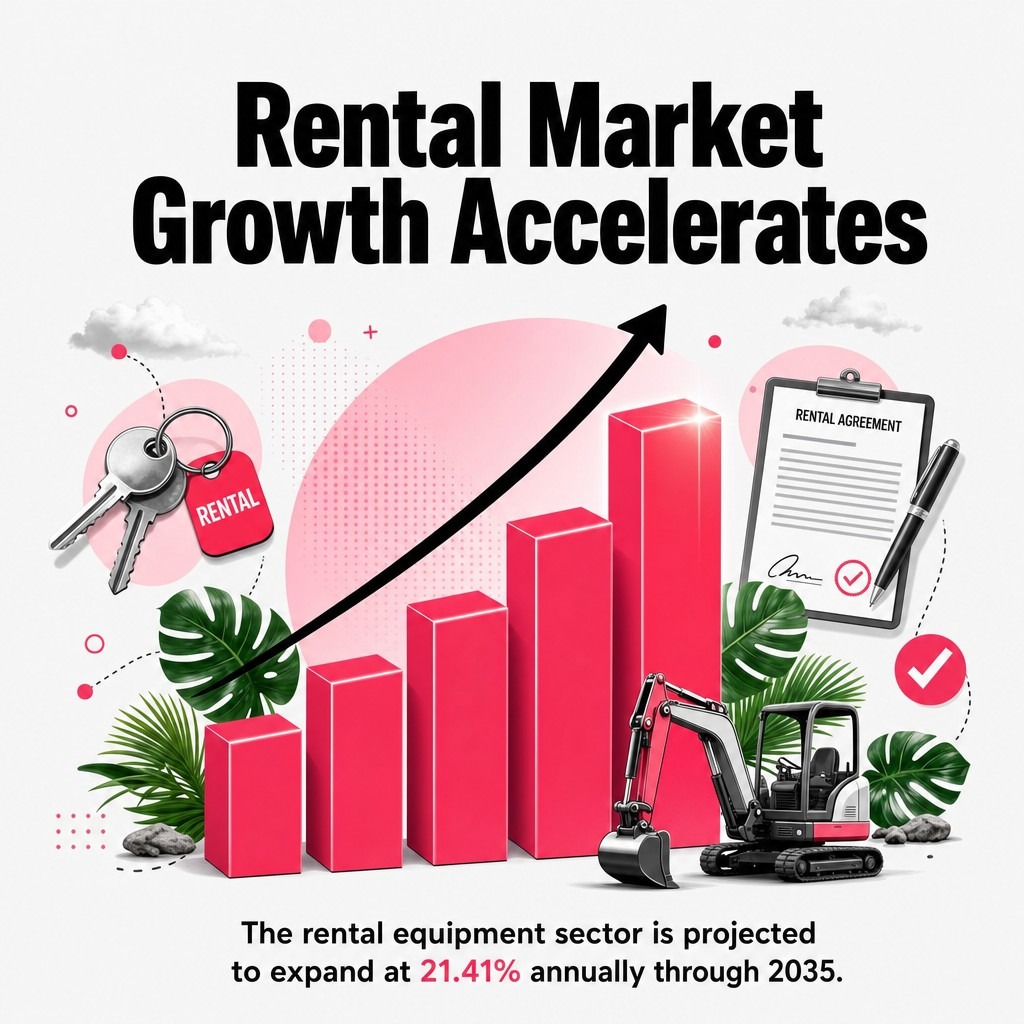
The numbers tell the story. The rental equipment sector is projected to expand at 21.41% annually through 2035, creating intense competition for rental visibility. Meanwhile, manufacturers financed over 151,000 new construction machines in 2025, showing the scale of the market opportunity.
Eight in ten small business owners credit AI and technology with helping navigate business challenges. Your construction equipment buyers expect sophisticated digital experiences, from online inventory searches to virtual equipment demonstrations.
Equipment buyers follow a predictable research pattern. They start with broad searches about equipment types and capabilities.
Next, they narrow to specific models and manufacturers, comparing specifications and features. Then they search for local dealers, check inventory availability, and research financing terms. Finally, they engage sales teams after completing most of their research independently.
Your digital marketing needs to support every stage. Early-stage buyers need educational content about equipment capabilities. Mid-stage researchers want detailed spec comparisons and case studies. Late-stage buyers need dealer location information, inventory visibility, and clear calls-to-action.
Not all digital marketing channels deliver equal results for heavy equipment companies. Some drive qualified leads while others waste budget.
Search engine optimization generates the highest quality leads because it captures active buyer intent. Pay-per-click advertising works for competitive keywords where organic rankings take time. Email marketing excels at nurturing existing relationships and staying visible during long purchase cycles.
Social media marketing works differently for equipment brands than consumer products. LinkedIn reaches contractors and fleet managers effectively. Facebook serves local dealer awareness. YouTube hosts equipment demonstration videos that buyers actually watch.
SEO for construction equipment requires understanding how buyers search at different stages of their journey. Your optimization strategy needs to capture both broad research queries and specific buying intent.
Generic keywords like "excavator" attract tire-kickers and students. Specific phrases like "CAT 320 for sale in Dallas" signal active buyers. Your SEO strategy should target both, but prioritize based on conversion potential and competition level.
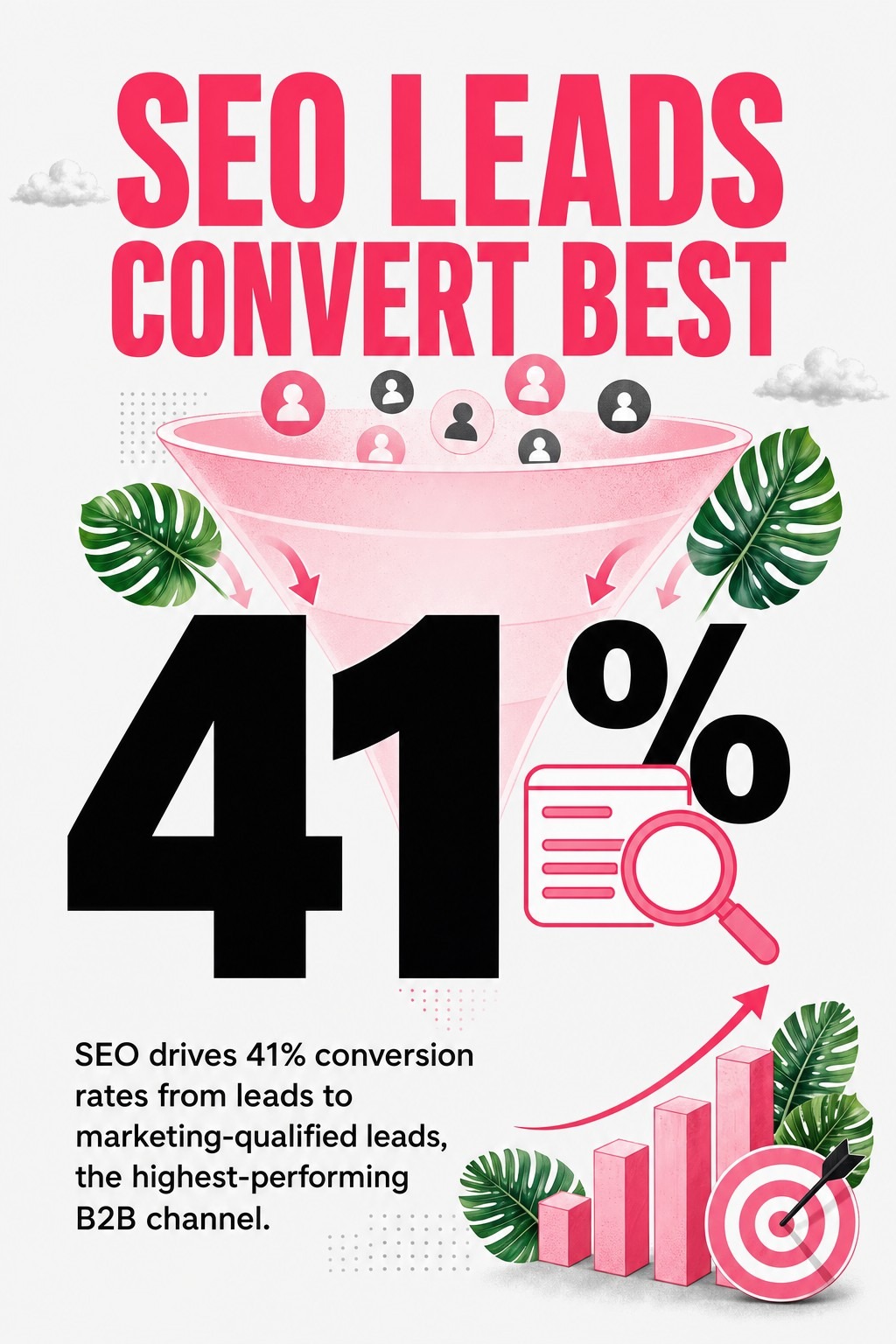
SEO drives 41% conversion rates from leads to marketing-qualified leads, making it the highest-performing channel for B2B lead quality. The challenge is building visibility in a competitive market where established dealers dominate local search results.
Start by mapping keywords to buyer intent stages. Create separate lists for awareness, consideration, and decision-stage searches.
Awareness keywords include "types of excavators," "excavator vs backhoe," and "construction equipment for site preparation." These attract early-stage researchers who need education before they're ready to buy.
Consideration keywords like "best compact excavator 2026," "excavator comparison," and "excavator rental vs purchase" indicate active evaluation. Decision keywords include "CAT excavator dealer near me," "excavator financing," and specific model searches with buying intent modifiers.
Use keyword research tools to find actual search volumes in your market. Google Keyword Planner shows commercial intent. SEMrush reveals what competitors rank for. Answer the Public surfaces question-based queries buyers actually ask.
Equipment category pages need optimization for both search engines and buyer experience. Structure your pages with clear hierarchies that match how buyers think.
Include manufacturer, model, and specifications in title tags. Write meta descriptions that highlight competitive advantages and local availability. Use header tags to organize specs, features, applications, and financing options logically.
Add detailed specifications in structured formats that search engines can parse. Include model numbers, engine specs, operating weights, and performance data. This technical content ranks for long-tail searches and builds authority.
Optimize images with descriptive file names and alt text. "CAT-320-excavator-for-sale-dallas.jpg" works better than "IMG_1234.jpg" for both accessibility and search visibility.
Heavy equipment websites often suffer from technical issues that kill rankings. Slow page speeds, mobile problems, and indexing errors waste your content investment.
63% of web traffic originates from mobile devices. Your equipment spec sheets and inventory pages must load quickly on phones. Contractors search from job sites, not just offices.
Check your site's mobile performance with Google's Mobile-Friendly Test. Fix viewport issues, improve touch target sizes, and ensure critical content displays without horizontal scrolling.
Implement schema markup for products, locations, and reviews. Structured data helps Google display rich snippets showing equipment specs, pricing, and availability directly in search results.
Local search drives the majority of dealer inquiries. When contractors need equipment, they search for nearby dealers with available inventory.
Your Google Business Profile is often the first impression potential customers get. An optimized profile with accurate information, current photos, and regular updates outperforms competitors with neglected listings.
Local SEO for heavy equipment dealers differs from other local businesses. Equipment buyers search across wider geographic areas and evaluate multiple dealers before deciding. Your local strategy needs broader reach than a restaurant or retail store.
Complete every section of your Google Business Profile. Add accurate business categories starting with your primary equipment focus.
Use categories like "Construction Equipment Supplier," "Heavy Machinery Dealer," "Equipment Rental Agency," and specific manufacturer designations if applicable. Google allows multiple categories, so include everything relevant to your business.
Upload high-quality photos of your inventory, facility, and team. Include photos of different equipment types, sizes, and applications. Update photos monthly to show current inventory and seasonal relevance.
Write a complete business description highlighting your equipment specialties, service area, and competitive advantages. Include keywords naturally but prioritize clarity for human readers.
Post regular updates about new inventory arrivals, promotions, and equipment availability. Google rewards active profiles with better visibility in local pack results.
Citations are online mentions of your business name, address, and phone number across directories and websites. Consistent citations strengthen local search rankings.
Start with major directories: Yelp, Yellow Pages, Bing Places, and Apple Maps. Then add industry-specific directories like ConstructConnect, Dodge Data & Analytics, and equipment marketplace sites.
Ensure NAP information matches exactly across all listings. "123 Main St" and "123 Main Street" appear different to search algorithms. Inconsistent information dilutes your local SEO strength.
Claim and optimize manufacturer dealer locator listings. If you're an authorized dealer, make sure your listing on the manufacturer's website is accurate and complete.
Reviews influence both search rankings and buyer decisions. Contractors trust peer feedback when selecting equipment dealers.
Request reviews from satisfied customers after successful equipment deliveries or service experiences. Make the process easy with direct links to your Google Business Profile review page.
Respond to all reviews, positive and negative. Professional responses to criticism demonstrate customer service commitment. Thank reviewers and address specific concerns they mention.
Never buy fake reviews or incentivize positive reviews with discounts. Google detects these patterns and penalizes businesses caught manipulating reviews.
PPC advertising complements SEO by capturing immediate visibility for competitive keywords. While you build organic rankings, paid ads put you in front of active buyers today.
Heavy equipment PPC requires different strategies than consumer products. High equipment values justify higher cost-per-click rates. Long sales cycles demand sophisticated remarketing. Geographic targeting focuses budget on serviceable areas.
I've managed PPC campaigns across industrial sectors, and equipment marketing presents unique opportunities. Intent signals are strong when buyers search specific models and locations. Conversion tracking extends months, but lead quality justifies the patient approach.
Structure campaigns by equipment type, not dealer location. Create separate campaigns for excavators, loaders, dozers, and other major categories.
Within each campaign, build ad groups around specific models or subcategories. Tight keyword grouping improves Quality Score and ad relevance. An excavator campaign might include ad groups for compact excavators, midi excavators, and large excavators.
Use exact match keywords for high-intent searches with buying signals. Phrase match expands reach to related queries while maintaining relevance. Broad match modified captures variations you haven't anticipated.
Add negative keywords aggressively. Exclude searches for toy equipment, parts only, repair information, and job searches. These clicks waste budget without generating equipment sales leads.
Equipment PPC ads need specific information that buyers actually want. Generic "quality equipment" claims don't differentiate your dealership.
Include model numbers, availability timeframes, and location in ad headlines. "CAT 320 Available Now - Dallas Dealer" outperforms "Quality Excavators for Sale." Buyers searching specific models want to know you have inventory.
Highlight competitive advantages in descriptions: financing options, delivery timelines, service capabilities, or rental programs. Mention certifications, warranties, or exclusive dealer benefits.
Use call extensions to enable direct phone contact. Equipment buyers often prefer talking to sales reps for complex purchases. Make calling effortless from mobile search results.
Equipment purchase cycles span months. Remarketing keeps your dealership visible throughout the decision process.
Create audience segments based on website behavior. Separate visitors who viewed specific equipment types from general browsers. Someone who spent time on excavator spec pages needs excavator-focused remarketing ads.
Adjust messaging based on time since site visit. Recent visitors need reinforcement of key benefits. Visitors from weeks ago might need new inventory alerts or promotional offers.
Use remarketing lists for search ads to adjust bids when previous visitors search again. These users show stronger intent, justifying higher CPCs to recapture their attention.
Content marketing builds authority, captures early-stage traffic, and nurtures leads through educational resources. Equipment buyers consume content during research phases before contacting dealers.
The best equipment content answers technical questions buyers actually ask. Spec comparisons, application guides, maintenance advice, and operational tips attract contractors seeking expertise.
Content marketing works differently than direct advertising. You're earning attention through valuable information rather than interrupting with sales messages. This approach builds trust with buyers conducting independent research.
Create content mapping to different buyer journey stages. Early-stage content addresses broad equipment selection questions.
Examples include "How to Choose the Right Excavator Size for Your Project," "Excavator vs. Backhoe: Which Do You Need?", and "Understanding Excavator Specifications and Performance Metrics."
Mid-stage content compares specific options: "Compact Excavator Comparison: Top Models for 2026," "Excavator Rental vs. Purchase: Total Cost Analysis," and "Best Excavators for Residential Construction Work."
Late-stage content removes purchase barriers: "Heavy Equipment Financing Options Explained," "What to Expect During Equipment Delivery and Setup," and "Excavator Warranty Coverage: What's Included?"
Video content showcases equipment capabilities better than text descriptions. Buyers want to see machines in operation before purchasing.
Create equipment walkaround videos highlighting features and controls. Demonstrate operation in real working conditions. Show size comparisons and transport considerations.
Include technical commentary explaining capabilities and applications. Point out features that differentiate models or justify premium pricing. Address common buyer questions within videos.
Host videos on YouTube with optimized titles and descriptions. YouTube functions as a search engine for equipment research. Videos rank for relevant searches and drive traffic to your website.
Case studies demonstrate how equipment solves real project challenges. Contractors want proof that machines perform in conditions similar to their work.
Document specific projects where equipment delivered results. Include project type, challenges faced, equipment selected, and outcomes achieved. Use actual performance data when available.
Feature different applications and industries. A demolition contractor evaluating excavators wants demolition-specific case studies. A utility contractor needs examples of trenching and underground work.
Include photos and specifications. Show equipment in working conditions rather than glamour shots. Provide enough technical detail that readers can apply lessons to their situations.
Email marketing excels at staying visible during long equipment purchase cycles. A contractor researching excavators today might not buy for six months. Your email sequences maintain relationships until they're ready.
The key is providing value without aggressive selling. Equipment buyers ignore promotional blasts but engage with helpful information. Your emails should educate, inform, and build credibility.
I've seen email marketing transform lead generation for industrial clients when done right. The challenge is patience and consistency. Results compound over months as you nurture relationships that eventually convert.
Grow your email list through valuable content offers. Create downloadable resources that attract your target buyers.
Offer equipment selection guides, maintenance checklists, and project planning templates. Contractors exchange email addresses for genuinely useful resources, not generic "newsletters."
Add email capture forms on high-traffic pages. Equipment category pages should offer model comparison guides. Blog posts about equipment selection should promote detailed buyer's guides.
Use exit-intent popups that trigger when visitors leave. Offer equipment news, inventory updates, or exclusive dealer promotions to capture emails before they go.
Segment subscribers based on equipment interests and engagement behavior. Generic broadcasts underperform targeted campaigns by significant margins.
Create segments for different equipment types. Subscribers who downloaded excavator guides receive excavator-focused content. Loader interests get loader information. This relevance improves open rates and engagement.
Segment by buyer stage. Early-stage researchers need educational content. Active shoppers benefit from inventory updates and promotional offers. Previous customers receive service reminders and upgrade opportunities.
Track email engagement to identify hot leads. Subscribers who open multiple emails and click through to inventory pages show strong buying intent. Alert your sales team about highly engaged prospects.
Run multiple campaign types serving different purposes throughout the buyer journey. Mix educational content with promotional messages strategically.
Welcome series introduce new subscribers to your dealership, equipment selection, and available resources. Establish credibility and set expectations for future communications.
Educational drip campaigns deliver valuable content over weeks. Share equipment selection advice, maintenance tips, operational best practices, and industry insights that demonstrate expertise.
Inventory alerts notify interested buyers when specific equipment becomes available. If someone inquired about a model you didn't have in stock, email them when it arrives.
Promotional campaigns announce special financing, seasonal offers, or clearance opportunities. Use these sparingly to maintain list engagement and avoid unsubscribes.
Social media marketing for heavy equipment differs significantly from consumer product strategies. Your audience includes contractors, fleet managers, and procurement professionals, not general consumers.
LinkedIn and Facebook deliver the best results for equipment brands. LinkedIn reaches business decision-makers. Facebook serves local awareness and community building. Instagram works for equipment action shots. Twitter supports industry news and customer service.
The goal isn't viral content or massive follower counts. You're building credibility with a specific professional audience and staying visible during long purchase consideration periods.
LinkedIn reaches construction professionals who influence and make equipment purchase decisions. Your company page should showcase expertise and industry leadership.
Share content about equipment innovations, operational best practices, and industry trends. Post case studies highlighting successful projects. Feature customer testimonials and project outcomes.
Encourage employees to engage with company content. When your sales team and service technicians interact with posts, their networks see your content. This organic reach expands your visibility.
Use LinkedIn's targeting options for paid promotion. Reach construction company decision-makers by job title, company size, and industry. Promote high-value content like equipment guides and webinars.
Facebook builds local awareness and community connections for equipment dealers. Your page should reflect your local presence and customer relationships.
Post photos of equipment deliveries, customer pickups, and machinery in action. Tag customers when appropriate. Local contractors who see peers using your equipment become warm prospects.
Share useful content for your local construction community: project news, industry updates, weather impacts on construction, and seasonal considerations for equipment operation.
Use Facebook's location targeting for paid posts. Promote inventory availability, financing offers, and special events to users within your service area. Geographic precision focuses budget on actual potential customers.
Video outperforms static content across all social platforms. Equipment videos showcase capabilities in ways photos can't match.
Record quick equipment demonstrations highlighting specific features. Show machines performing actual work rather than sitting idle. Include narration explaining capabilities and applications.
Post customer testimonial videos. Brief interviews with satisfied customers build credibility more effectively than written reviews. Keep videos under two minutes for social media attention spans.
Share job site footage showing equipment in challenging conditions. Contractors want to see performance in real-world applications similar to their work.
Your website functions as your digital showroom, inventory catalog, and primary lead generation tool. Poor website performance kills digital marketing ROI regardless of how much traffic you drive.
Equipment dealer websites need specific functionality that generic business sites don't require. Detailed inventory management, specification databases, financing calculators, and dealer locator tools provide essential buyer experience.
The technical requirements matter more than aesthetic design preferences. Fast load times, mobile optimization, and clear navigation paths impact conversions more than fancy graphics.
Present equipment inventory in searchable, filterable formats. Buyers want to find specific equipment types, sizes, and availability quickly.
Include comprehensive specifications for every inventory item. Model numbers, serial numbers, hours, year, condition, and pricing build buyer confidence. Missing information raises suspicion.
Use high-quality photos showing equipment from multiple angles. Include cab interiors, undercarriage condition, and any damage or wear. Transparency prevents surprises and builds trust.
Update inventory status in real-time when possible. Nothing frustrates buyers like contacting dealers about equipment that's already sold. Accurate availability information improves lead quality.
Contractors research equipment from job sites using mobile devices. Your website must function perfectly on phones.
Simplify navigation for small screens. Reduce menu complexity and prioritize critical paths to inventory, contact, and location information. Touch targets need adequate spacing for accurate tapping.
Optimize page speed ruthlessly. Compress images, minimize code, and leverage browser caching. Slow load times increase bounce rates, especially on cellular connections.
Make phone numbers clickable for immediate calling. Equipment buyers often prefer phone conversations for complex purchases. Enable one-tap calling from mobile devices.
Strategic lead capture forms balance information collection with conversion rates. Long forms with excessive fields kill completion rates.
Request only essential information initially: name, email, phone, and equipment interest. You can gather details during sales conversations. Reduce form friction to maximize conversions.
Use multiple conversion paths for different buyer types. Some prefer forms, others want to call. Provide both options prominently throughout your site.
Implement live chat for immediate engagement. Buyers with quick questions often prefer chat over forms or phone calls. Staff chat during business hours or use automated responses after hours.
Account-based marketing targets specific high-value companies with personalized campaigns. For equipment dealers pursuing enterprise accounts or fleet sales, ABM delivers superior ROI compared to broad campaigns.
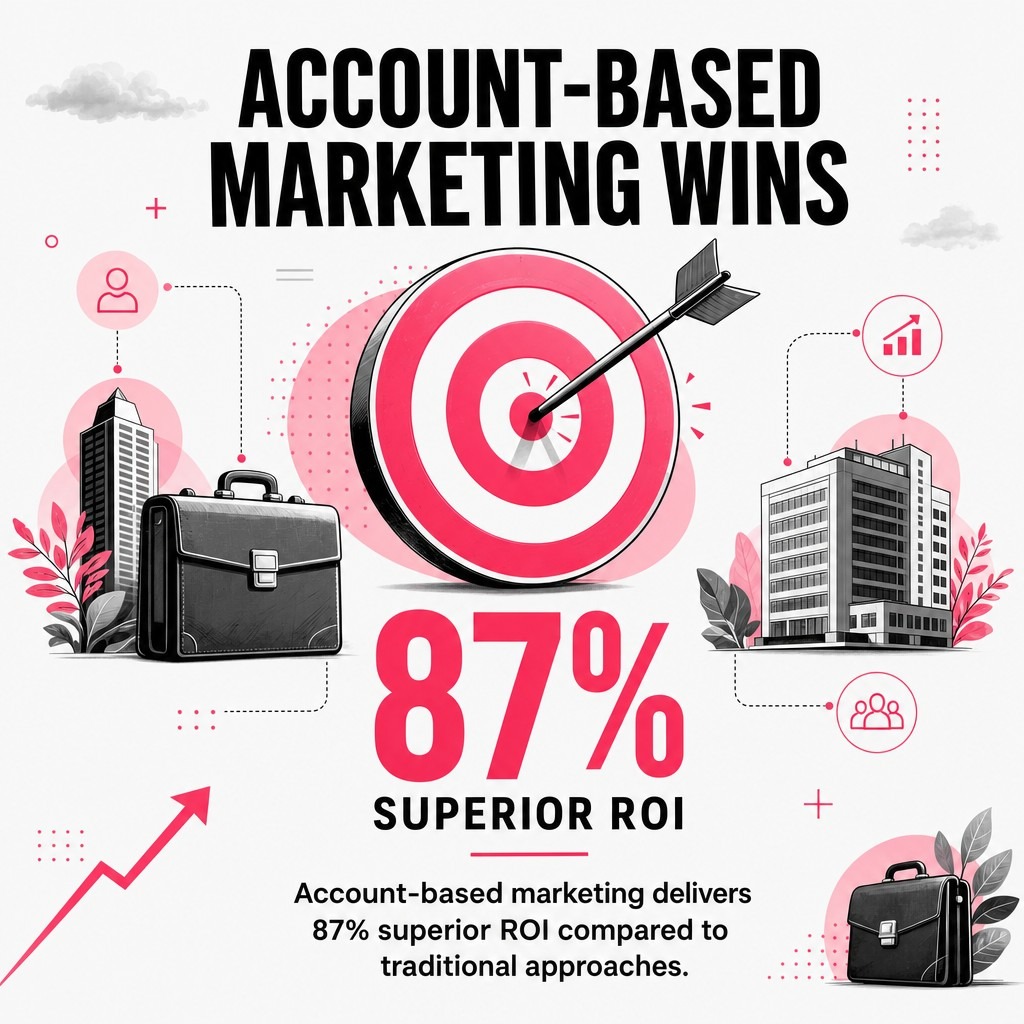
Account-based marketing delivers 87% superior ROI compared to traditional approaches. The concentrated focus on qualified accounts eliminates waste from unqualified leads.
Select accounts based on fit and opportunity. Target companies that match your ideal customer profile and show signals of equipment needs.
Research companies winning large construction contracts. New projects often require equipment purchases or rentals. Public bid databases reveal upcoming opportunities.
Identify growing construction firms expanding operations. Growth signals equipment demand. Companies adding crews, entering new markets, or diversifying services need additional machinery.
Monitor companies with aging equipment fleets approaching replacement cycles. Industry publications, trade show conversations, and dealer intelligence reveal fleet status.
Create account-specific content addressing unique challenges and opportunities. Generic marketing materials don't influence enterprise decisions.
Research target accounts thoroughly before outreach. Understand their project types, geographic markets, existing equipment, and business objectives. This intelligence informs personalized messaging.
Develop custom proposals showing exactly how specific equipment solves their challenges. Reference their projects, demonstrate ROI calculations using their numbers, and address their particular operational requirements.
Coordinate outreach across multiple touchpoints. Combine direct mail, email, LinkedIn, and phone contact. Multi-channel consistency increases message penetration with busy decision-makers.
Track account engagement across channels rather than individual lead metrics. ABM success measures account progression, not click-through rates.
Monitor which target accounts engage with your content, website, and sales team. Engagement scoring reveals which accounts are actively considering purchases.
Measure pipeline velocity for target accounts. ABM should accelerate deals through shorter sales cycles and higher win rates compared to general lead generation.
Calculate ROI by comparing closed deals from target accounts against ABM program costs. The concentrated approach often delivers higher margins despite increased per-account investment.
The construction equipment industry is experiencing significant electrification trends. Marketing strategies must adapt to buyers researching electric and zero-emission machinery.
Electric equipment marketing requires different messaging than traditional diesel machinery. Buyers need education about capabilities, charging infrastructure, total cost of ownership, and operational differences.
Environmental considerations increasingly influence equipment purchase decisions. Government regulations, corporate sustainability commitments, and operational cost savings drive electric equipment adoption.
Electric equipment buyers have specific concerns about performance, runtime, and charging. Your marketing must address these barriers directly.
Provide detailed information about battery capacity, runtime under load, and charging time requirements. Buyers need realistic expectations about operational capabilities.
Explain charging infrastructure requirements and installation costs. Total cost of ownership calculations should include electrical service upgrades if needed.
Compare performance directly to diesel equivalents. Highlight applications where electric equipment excels: indoor work, noise-sensitive areas, emission-restricted zones, and overnight operations with charging downtime.
Environmental benefits appeal to sustainability-focused buyers and companies with carbon reduction goals. Quantify emission reductions and environmental impact.
Calculate total cost of ownership including fuel savings, reduced maintenance, and potential incentives. Electric equipment often delivers lower lifetime costs despite higher purchase prices.
Promote available tax credits, rebates, and incentive programs. Government programs reduce effective purchase prices significantly in some markets.
Feature case studies from early adopters demonstrating real-world performance and cost savings. Peer validation overcomes skepticism about emerging technology.
Electric equipment represents unfamiliar technology for many buyers. Educational content reduces adoption barriers.
Develop comparison guides explaining differences between electric and diesel operation. Address common misconceptions and provide realistic capability assessments.
Create charging infrastructure planning guides. Buyers need practical advice about electrical requirements, charger types, and installation considerations.
Produce demonstration videos showing electric equipment in actual working conditions. Visual proof overcomes concerns about capability and performance.
Telematics systems generate valuable data about equipment performance, utilization, and maintenance needs. This data creates marketing opportunities for dealers and manufacturers.
The predictive maintenance sector is projected to grow from $13.89 billion in 2026 to $23.79 billion by 2031 at an 11.4% CAGR. Buyers increasingly value data-driven insights into equipment performance.
Marketing telematics capabilities requires demonstrating tangible business benefits. Fleet managers want proof that data improves operations and reduces costs.
Position telematics as operational advantages rather than technical features. Focus benefits on productivity, cost reduction, and asset management.
Highlight real-time location tracking for fleet management efficiency. Companies with multiple job sites need visibility into equipment locations and utilization.
Explain maintenance alerts that prevent breakdowns. Predictive maintenance based on actual operating hours and conditions reduces downtime and repair costs.
Demonstrate fuel consumption monitoring and idle time reduction. Operational data helps contractors identify inefficiencies and reduce operating costs.
Telematics data identifies service opportunities and equipment upgrade timing. Use this intelligence for proactive retention marketing.
Monitor equipment usage patterns to identify customers approaching capacity limits. Growing utilization signals potential needs for additional equipment.
Track maintenance schedules and service intervals. Proactive service reminders demonstrate dealer support and capture service revenue.
Identify equipment approaching end of useful life based on hours and age. Timing upgrade conversations based on actual data improves conversion rates over generic outreach.
Marketing measurement for heavy equipment requires tracking metrics across long sales cycles. Standard conversion rate optimization focused on immediate transactions doesn't apply.
The challenge is connecting marketing activities to equipment sales that close months later. Attribution modeling, CRM integration, and patient tracking reveal which channels drive results.
Focus on leading indicators that predict eventual sales rather than only measuring closed deals. Lead quality, engagement metrics, and pipeline progression provide actionable insights.
Track these metrics to understand marketing performance and optimize budget allocation effectively.
Website traffic by source shows which channels drive visibility. Separate organic search, paid search, social media, email, and direct traffic. Analyze trends over time.
Lead generation by channel reveals which tactics produce inquiries. Count form submissions, phone calls, chat conversations, and email contacts separately.
Lead quality scores indicate which channels produce buyers versus tire-kickers. Work with sales teams to rate lead quality and track close rates by source.
Cost per lead calculations help optimize budget allocation. Divide channel costs by leads generated to identify most efficient sources.
Pipeline value by marketing source shows potential revenue from marketing activities. Track opportunities created, not just closed deals, to see marketing impact earlier.
Connect marketing platforms to your CRM system for complete lead-to-sale tracking. This integration reveals which marketing touches influence purchases.
Capture original lead source in your CRM. Whether leads originate from organic search, paid ads, or email campaigns, this information should follow them through sales.
Track all marketing touchpoints before conversion. Many buyers interact with multiple channels before purchasing. Multi-touch attribution reveals the full customer journey.
Analyze time-to-close by marketing source. Some channels generate quick conversions while others require longer nurturing. Understanding these patterns improves forecasting.
Use performance data to continuously optimize your marketing mix and budget allocation across channels.
Increase investment in channels delivering qualified leads at acceptable costs. Double down on what works rather than spreading budget evenly across tactics.
Test different messages, offers, and content types within each channel. Continuous optimization improves performance over time.
Eliminate underperforming tactics that don't improve after optimization attempts. Reallocate budget from weak channels to proven performers.
Monitor competitor activity and market changes. Adjust strategies when competition increases in specific channels or new opportunities emerge.
Successful equipment marketing requires integrating multiple strategies into a cohesive system. Individual tactics work better when they support each other.
Start with search visibility through SEO and local optimization. Add paid advertising to accelerate traffic while organic rankings build. Layer in content marketing to nurture leads and demonstrate expertise. Connect everything through email marketing that maintains relationships during long sales cycles.
Industrial digital marketing shares many principles with equipment marketing, but the construction equipment sector requires specialized approaches addressing unique buyer behaviors.
Your marketing system should generate awareness, capture leads, nurture relationships, and enable sales team success. Each component serves specific purposes within the complete buyer journey.
B2B lead generation strategies apply across industrial sectors but need customization for equipment sales cycles and buyer personas.
Focus on building systems rather than running disconnected campaigns. Systems generate consistent results and improve over time. Campaigns deliver temporary spikes that fade when you stop spending.
Test, measure, and optimize continuously. Marketing effectiveness improves through iteration based on real performance data. What works today might need adjustment next quarter as markets and competition evolve.
Start with the fundamentals: search visibility, quality content, and lead nurturing. Add complexity only after you've mastered basics and have data showing where additional investment delivers returns.
The equipment dealers who win long-term build marketing systems that generate qualified leads consistently, quarter after quarter. That's the advantage that compounds over time.