
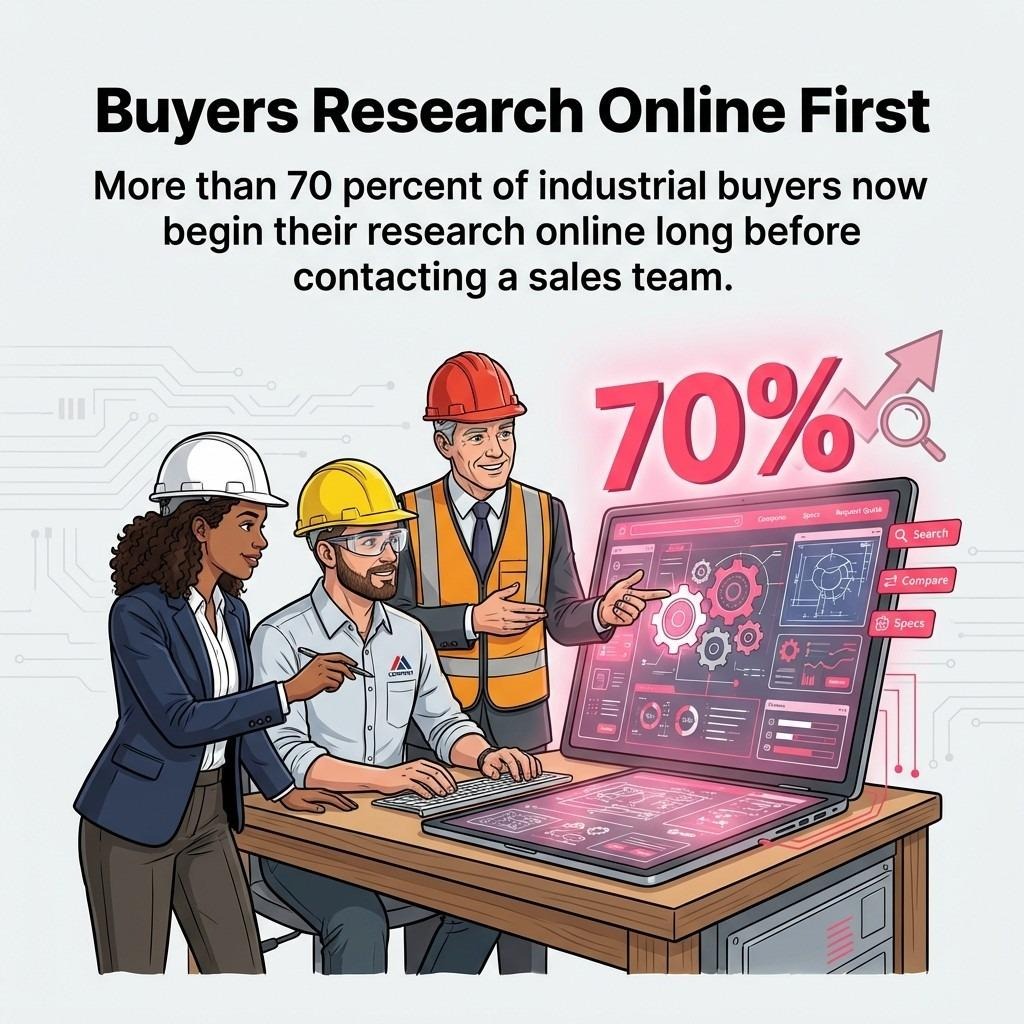
Industrial digital marketing is the strategic use of online channels to reach B2B buyers, generate qualified leads, and drive measurable revenue for manufacturers, distributors, and industrial companies. More than 70 percent of industrial buyers now begin their online research long before speaking to a sales team, which makes digital presence a core part of sales success.
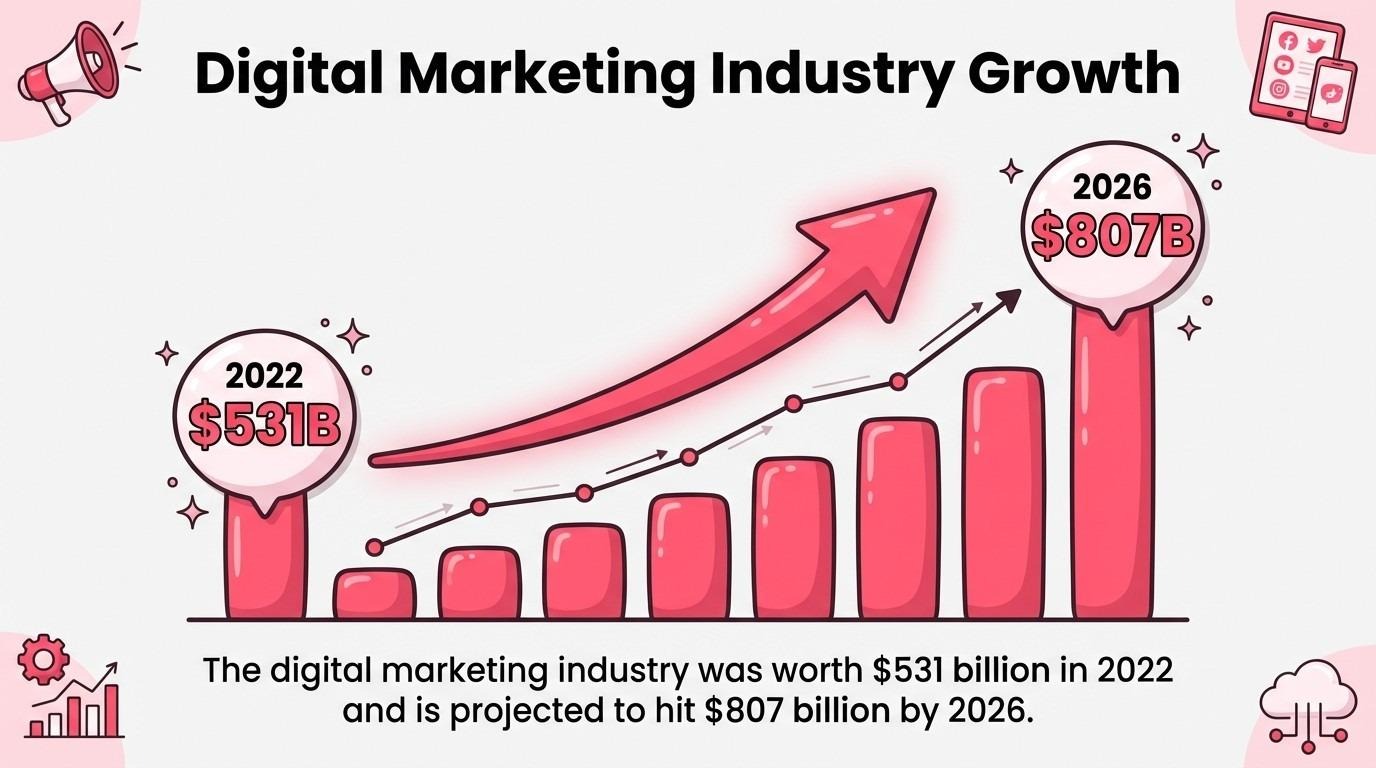
That shift has become hard to ignore. Digital marketing industry statistics show that the digital marketing industry was worth $531 billion in 2022 and is projected to reach $807 billion by 2026. For industrial businesses, that means buyers are comparing suppliers, reading technical content, and evaluating options through digital platforms before any direct sales pitch happens.
This guide explains the main parts of the industrial landscape in 2026, from SEO for industrial companies to PPC advertising industrial campaigns, industrial content marketing, and marketing automation manufacturing. The goal is simple: help industrial and manufacturing companies compete where technical buyers already search, compare, and decide.
Industrial digital marketing uses online tactics to promote products and services for B2B manufacturers, distributors, and industrial suppliers. It targets procurement teams, engineers, and decision-makers who research solutions online before speaking with sales representatives.
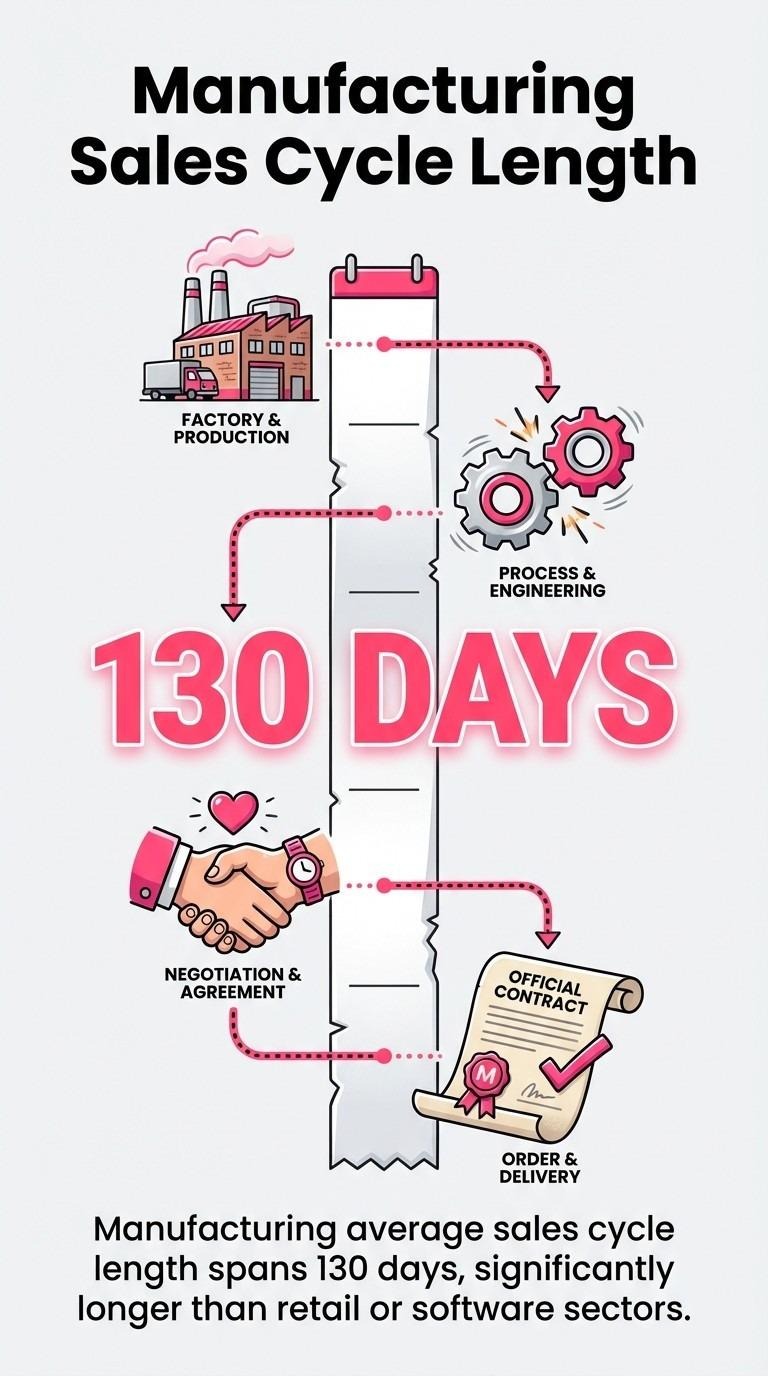
This differs from consumer marketing in important ways. B2B buyers compare technical specifications, evaluate vendors, and build business cases before making contact. Manufacturing average sales cycle length spans 130 days, so digital marketing tactics must support longer research and evaluation periods.
It includes search engine optimization, content marketing, paid search advertising, email nurturing campaigns, marketing automation, website optimization, social media outreach, and inbound marketing tactics. Whether handled in-house or through an industrial digital marketing agency, the goal is to educate buyers and convert them into sales-qualified leads.
Consumer marketing often depends on emotion and quick decisions, but industrial marketing is built around logic, research, and internal approval. Buyers compare suppliers, review technical details, and assess ROI before moving ahead.
One purchase may involve procurement, engineering, finance, and operations, so messaging must address multiple priorities. A strong B2B industrial marketing strategy focuses on useful information, clear specifications, and sales alignment rather than flashy promotion.
Industrial buyers move through clear research stages. They first identify a problem, such as equipment failure, lower efficiency, or compliance requirements, then begin searching for possible solutions online.
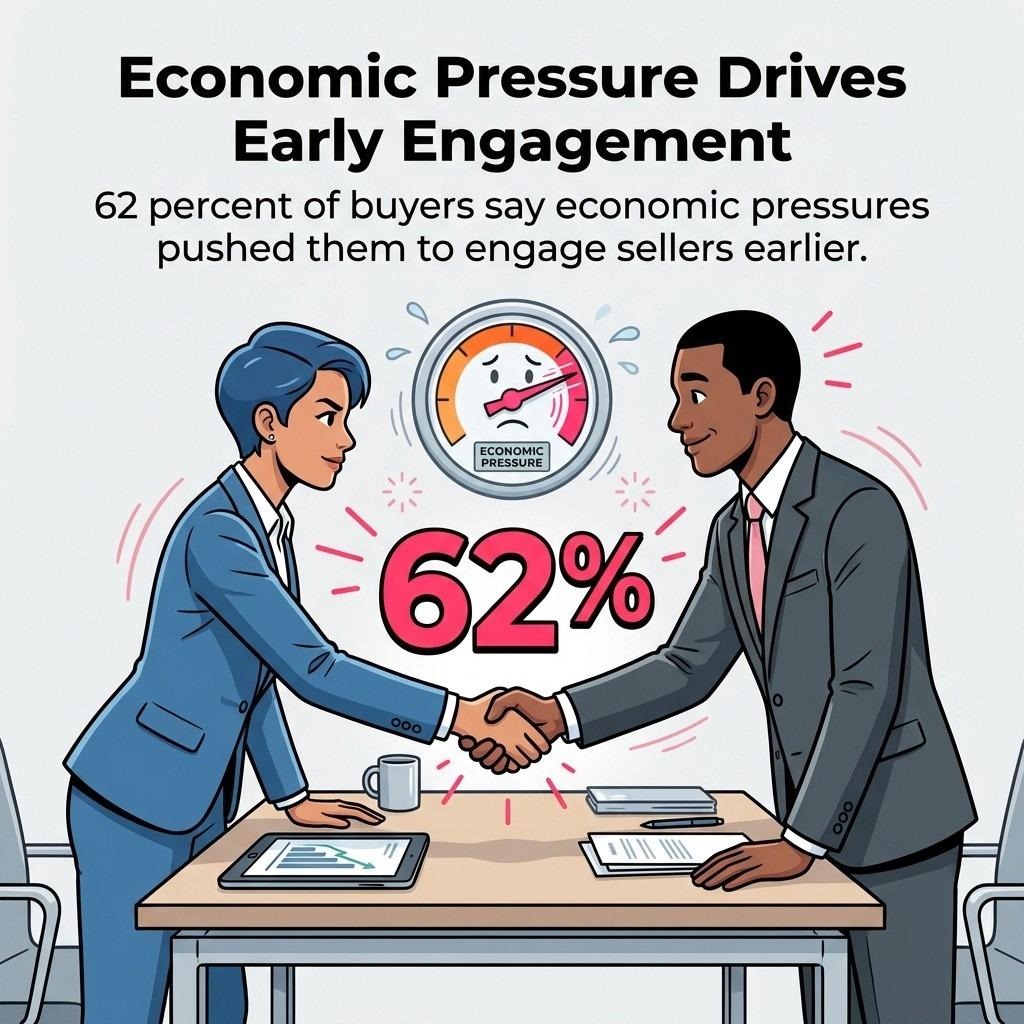
Next, they compare vendors using case studies, specification sheets, and product demonstrations. This stage reveals real buying behavior as buyers assess technical fit, credibility, and long-term value before moving closer to a decision. Finally, they build internal consensus. Multiple stakeholders review options, and 62 percent of buyers engage sellers earlier because of economic pressure.
Traditional tactics like trade shows, print catalogs, and field sales still have value, but they no longer cover the full buyer journey. Today’s industrial buyers expect instant access to specifications, product information, comparison content, and digital communication before they ever speak to a representative.
For many firms, industrial digital marketing is now the system that supports modern buyer expectations. It improves online visibility, helps generate sales leads, supports industrial lead generation digital campaigns, and gives sales teams better context before they follow up. That is especially important in the manufacturing industry, where purchase cycles are longer and decisions carry more risk.
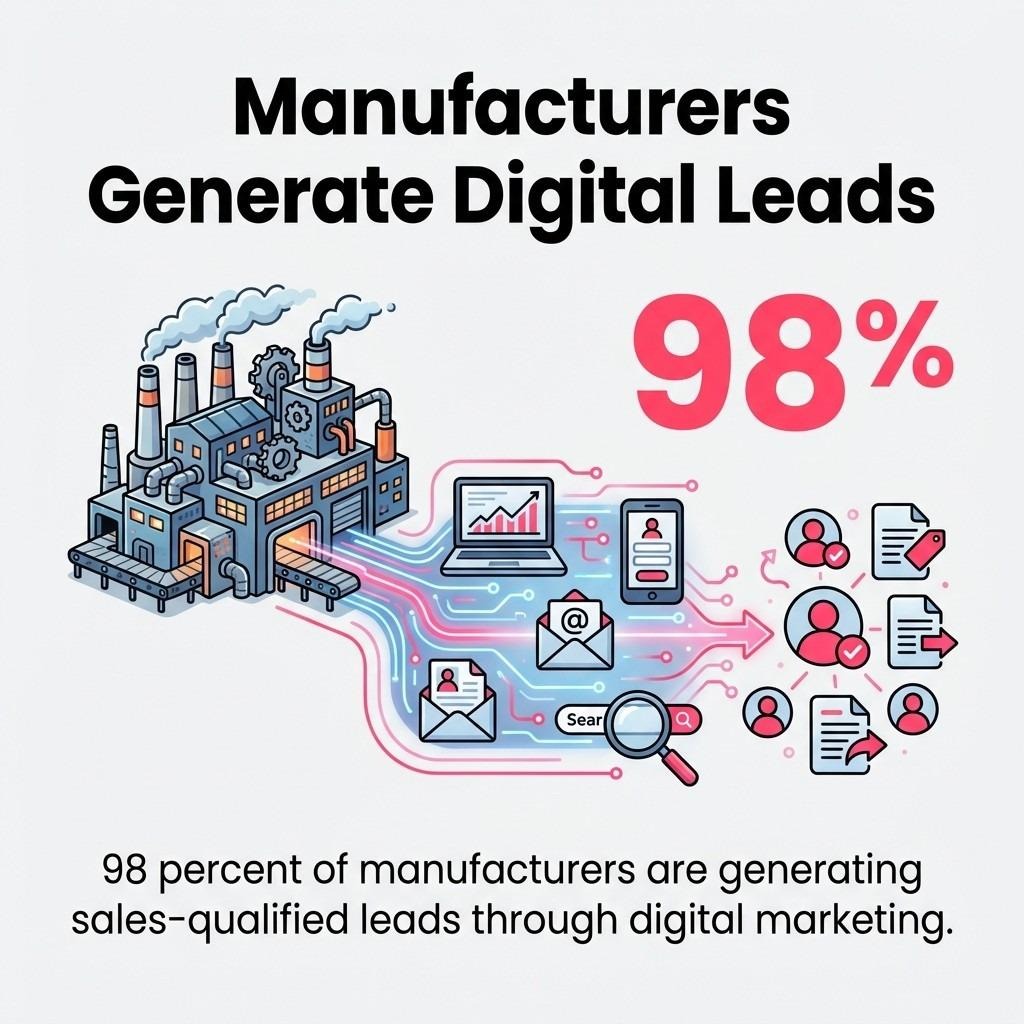
The performance data is clear. About 98 percent of manufacturers are generating sales-qualified leads through digital marketing. Compared with trade shows and print ads, digital channels offer better tracking, stronger industrial marketing ROI, and clearer key performance indicators for campaign performance, quality leads, and customer retention.
The most effective results come from connected services, not isolated tactics. SEO attracts website visitors through search results. Content marketing builds trust and answers technical questions. PPC ads create immediate visibility. Email marketing keeps leads engaged. Marketing automation helps qualify and route opportunities properly.
This connected system matters because industrial buyers do not convert in one session. They return to compare options, involve colleagues, and review technical information. A complete digital marketing program keeps your brand presence active across multiple stages of the sales funnel and supports both early awareness and late-stage decision-making.
A strong industrial digital marketing strategy also keeps business goals in view. The right mix of digital marketing efforts helps manufacturing companies improve online visibility, create more sales opportunities, and support measurable growth. That is why industrial digital marketing services should be planned as one coordinated marketing program.
SEO for industrial companies improves visibility when buyers search for technical products, services, and application-specific solutions. These searches are usually detailed, which is why long-tail keywords often bring better-quality traffic and more qualified leads.
Strong SEO also depends on technical structure, including titles, headings, internal links, schema, and industrial website design. Over time, this helps increase organic traffic and makes SEO a reliable source of inbound marketing.
Industrial content marketing should help buyers understand complex products and make informed decisions. Blog posts, webinars, guides, case studies, and videos all support this process by explaining specifications, applications, performance, and ROI.
The best content matches each stage of the buying process, from early research to final approval. About 73 percent of B2B marketers say webinars are highly effective for generating quality leads, which shows how valuable educational content can be.
PPC advertising helps industrial companies gain immediate visibility across search engines and other digital platforms. It works especially well for high-intent keywords, product launches, and competitive terms where SEO takes longer to build results.
The best campaigns use targeted keywords, strong landing pages, and technical ad copy that speaks clearly to buyer needs. Success depends on tracking real outcomes such as cost per lead, lead quality, and conversion rates, not just clicks.
Industrial email marketing keeps prospects engaged during long sales cycles after guide downloads, webinar signups, or product page visits. Segmentation matters because engineers, procurement teams, and executives need different messages. Mailchimp helps automate these targeted campaigns and maintain consistent communication.
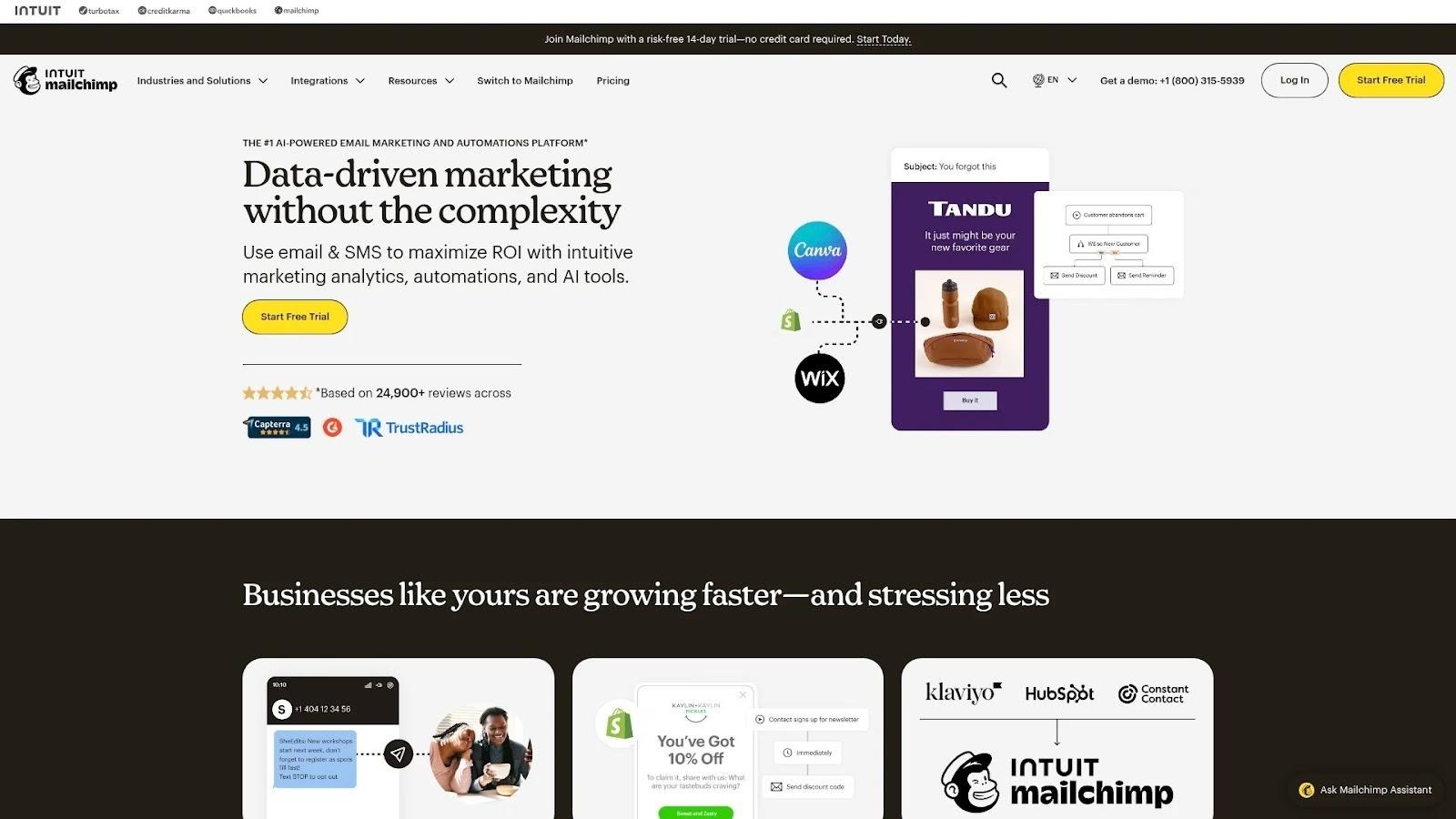
A strong nurture flow improves lead quality by keeping follow-up relevant as buyers research solutions. HubSpot tracks engagement, supports automation, and helps sales teams connect when prospects show stronger intent.
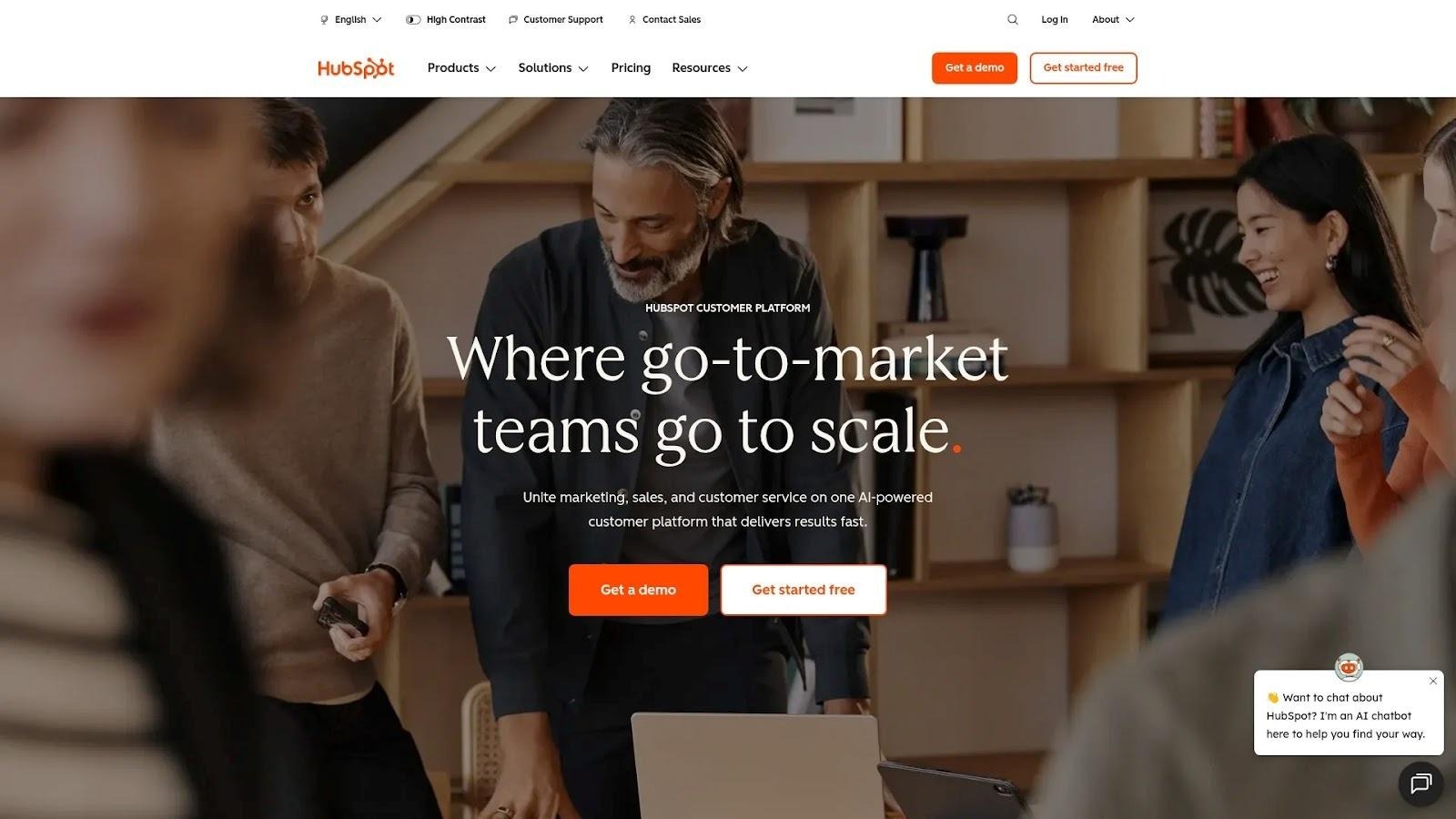
Marketing automation helps connect digital activity to the sales process by tracking page visits, downloads, email engagement, and repeat visits. Lead scoring helps identify which prospects show real buying intent, making it easier to pass stronger opportunities to sales teams.
CRM integration is equally important because systems like Salesforce give sales full visibility into the buyer journey, which improves follow-up, alignment, and overall lead management.
A strong industrial digital marketing program needs an SEO foundation that goes beyond keywords alone. Technical SEO, keyword research, content depth, and link authority all work together. Research keywords using tools like Google Keyword Planner, Semrush, or Ahrefs, and focus on terms that combine product types, specifications, applications, and industries.

Technical performance comes first. Fast load times, mobile responsiveness, clean site structure, XML sitemaps, HTTPS, and well-organised industrial web design help search engines crawl and index pages properly. These basics also improve user experience for buyers researching on desktop and mobile devices.
From there, authority grows through useful content and credible links. Industrial companies should publish resources that earn citations from industry leaders, associations, partner sites, and trade publications. That strengthens search rankings, supports industrial website optimisation, and helps digital marketing for distributors compete in crowded technical markets.
Social media is not the main driver for every industrial company, but it still plays an important supporting role. It can strengthen brand presence, distribute relevant content, and create additional touchpoints with technical buyers and decision-makers during the research phase.
LinkedIn marketing manufacturing strategies are especially valuable because the audience is already professional and industry-focused. LinkedIn has 830 million users, and one in four is a senior decision-maker or marketing leader. It is also reported to be 277 percent more effective for lead generation than Facebook and other social media platforms.
YouTube, Facebook, and Instagram can also work when used properly. Product demos, installation videos, application visuals, and team expertise all help build trust. Social media management should stay aligned with broader marketing strategies, especially for industrial marketing trends 2026 that reward consistent authority, educational value, and practical buyer support.
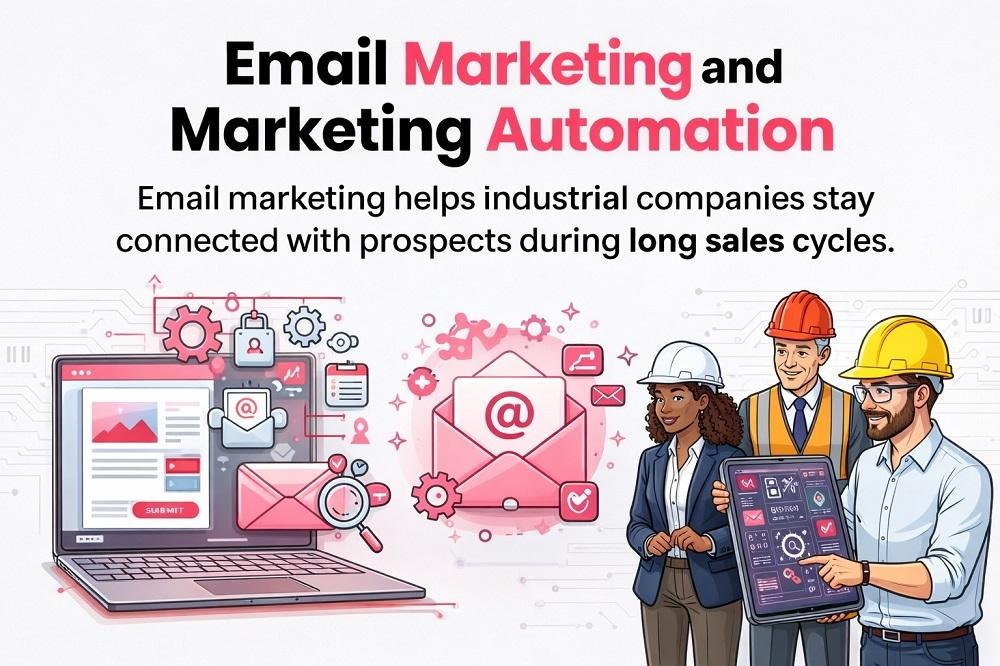
Email marketing helps industrial companies stay connected with prospects during long sales cycles. Many buyers are interested early, but they are not ready to speak with sales or request pricing right away. A steady email flow keeps the conversation active.
Marketing automation manufacturing systems make that process easier to manage at scale. They send messages based on buyer actions, interests, and stage in the buying process, instead of relying on manual follow-up for every contact.
Together, these tools support industrial lead generation digital efforts by turning early interest into qualified opportunities. They also help sales teams focus on leads showing real buying intent, not just casual website visitors.
Strong lists start with permission-based signups, not purchased databases. Industrial buyers are more likely to engage when they opt in through webinar registrations, contact forms, newsletter signups, or downloads tied to useful technical content.
The best offers are practical and relevant. Specification sheets, buying guides, application notes, and webinar access usually attract more serious subscribers than generic promotional messages. This keeps the list aligned with actual business goals and lead quality.
List building should also support segmentation. Collect basic data first, then add more detail over time through progressive profiling. That approach improves industrial email marketing performance without making the first interaction feel too heavy or intrusive.
Nurture campaigns should match the buyer journey. Early-stage contacts need educational content that explains challenges, options, and solution categories. Mid-stage buyers need comparisons, use cases, and technical context that helps narrow supplier options.
The sequence should follow buyer behaviour. If someone downloads a guide, attends a webinar, or visits a product page, the next emails should build on that action. This creates relevance and improves engagement across longer evaluation periods.
Timing matters just as much as content. Some industrial companies benefit from weekly emails, while others need a slower pace. A good B2B industrial marketing strategy keeps the cadence useful without overwhelming prospects during extended decision-making.
Lead scoring helps identify which contacts are moving closer to a purchase. It combines profile data such as job title, company type, or industry with behaviour like repeat visits, downloads, and pricing-page engagement.
This matters because not every lead has the same value. A decision-maker at a manufacturing company showing repeated interest is far more important than a casual researcher with no buying role or business need.
Sales handoff should happen through a defined process, not guesswork. Once a lead reaches the right threshold, sales should see the full engagement history. That improves outreach quality and helps align sales with industrial digital marketing services more effectively.
Your website is the center of industrial digital marketing. SEO brings traffic in, paid campaigns direct visitors there, and content marketing builds trust. If the site is weak, the rest of the marketing efforts become harder to convert.
Industrial websites need to balance technical depth with clarity. Buyers want product details, drawings, specifications, and proof, but they also need a structure that makes navigation easy. Strong industrial website design supports both search visibility and lead generation.
Conversion optimisation improves how many site visitors actually take action. Better layouts, clearer calls-to-action, and less friction in forms can make a major difference. Even small improvements can increase sales leads without increasing ad spend.
Industrial websites should prioritise function over decoration. Buyers visit to solve problems, compare options, and check fit, not to browse abstract branding. That means product organisation, search tools, and technical information must be easy to access.
Each page should support the next step. Clear calls-to-action, visible contact details, fast load times, and complete specifications all help buyers move forward with confidence. These details also improve trust with technical buyers and procurement teams.
Industrial website optimisation also supports search engines. Better page structure, internal links, and accessible product information improve search results and online visibility. For many firms, this becomes a core part of digital marketing for manufacturers and distributors.
Conversion rate optimization is about making more of your existing traffic count. Instead of only chasing more clicks, it improves the percentage of visitors who become enquiries, downloads, or quote requests.
Simple changes often improve conversion rates faster than major redesigns. Clearer CTA wording, shorter forms, trust signals, customer logos, better page layouts, and insights from google analytics can show what is stopping visitors from taking action. These improvements reduce friction, highlight drop-off points, and make it easier for buyers to move to the next step.
Landing pages matter too. Paid traffic, email campaigns, and LinkedIn marketing manufacturing efforts should link to focused pages with one goal, not broad website pages. That keeps attention on the offer and improves industrial marketing ROI over time.
Industrial marketing analytics should connect activity to outcomes, not just report surface-level numbers. Traffic matters, but it matters more to know which channels produce quality leads, better opportunities, and actual pipeline value.
Tracking should cover the full funnel. Organic traffic, ppc ads, resource downloads, form submissions, and quote requests all have value, but their real importance depends on what happens after the lead reaches sales.
This is where measurable results become useful. Strong reporting helps companies understand whether digital marketing efforts are attracting the right target audience, supporting the sales process, and contributing to long-term industrial marketing ROI rather than short-term vanity metrics.
The best key performance indicators depend on the stage of the funnel. At the top, companies should track organic traffic, search engine rankings, content engagement, and website visitors coming from search engines or online advertising.
Mid-funnel metrics should focus on lead generation. Form fills, guide downloads, webinar registrations, and contact requests reveal how well content marketing and website performance turn attention into active interest.
Lower-funnel metrics should show business value. Qualified leads, opportunity creation, conversion rates, cost per lead, and sales cycle movement are stronger indicators than raw traffic. These numbers help digital marketing agency teams and internal marketers prove practical business impact.
Account-based marketing industrial strategies work well when the target market is limited and deals are high in value. Instead of aiming broadly, this method focuses on selected companies with stronger fit and higher revenue potential.
The approach requires deeper planning. Marketing and sales need to agree on target accounts, buyer roles, messaging priorities, and outreach timing. Without that alignment, ABM becomes fragmented and hard to scale.
For industrial companies, ABM supports larger opportunities more effectively than general outreach. It allows personalised campaigns, account-specific landing pages, and tailored content that speaks directly to prospective buyers, decision-makers, and technical stakeholders inside one organisation.
Industrial marketing trends in 2026 are moving toward more connected digital experiences. Buyers expect faster access to technical information, better online research tools, and a smoother path from early research to enquiry and purchase.
AI and predictive analytics are also shaping campaign performance. Better lead scoring, smarter segmentation, and more relevant content recommendations help industrial companies communicate more effectively across longer and more complex buying cycles.
Other changes include digital supply chain visibility, virtual demonstrations, and stronger privacy expectations. The digital twins market will reach $287.2 billion by 2032, growing at a 37.7 percent CAGR, showing how virtual equipment models are becoming more important for simulation, analysis, and buyer evaluation. These shifts are part of broader industrial digital transformation marketing and are changing how industrial companies support technical buyers.
Many industrial companies do not have all the skills needed in-house. That is why choosing the right industrial marketing agency or specialist partner matters. The best partners understand technical products, long sales cycles, and B2B buyer behaviour.
Experience should be specific, not generic. A partner may be good at general digital marketing but still struggle with industrial content marketing, SEO for industrial companies, or PPC advertising industrial campaigns if they lack sector understanding.
It is also important to review service scope clearly. Some firms need full industrial digital marketing services, while others only need help with content, automation, or analytics. The right fit depends on your internal resources, goals, and growth stage.
The best way to start is with a practical audit. Review the website, current search visibility, existing content, lead capture process, and reporting setup. This shows where the biggest gaps are and which improvements will create the fastest wins.
From there, prioritise foundations first. Technical SEO, industrial website optimisation, better forms, content aligned with buyer intent, and simple automation usually produce stronger results than trying to launch every channel at once.
Progress should be realistic and structured. A good industrial digital marketing plan grows over time through testing, reporting, and improvement. Companies that stay consistent usually build stronger online visibility, better lead flow, and more dependable support for sales.
The complete guide you just read gives you the roadmap. Execution determines results. Start implementing advertising optimization strategies that put these principles into practice.