

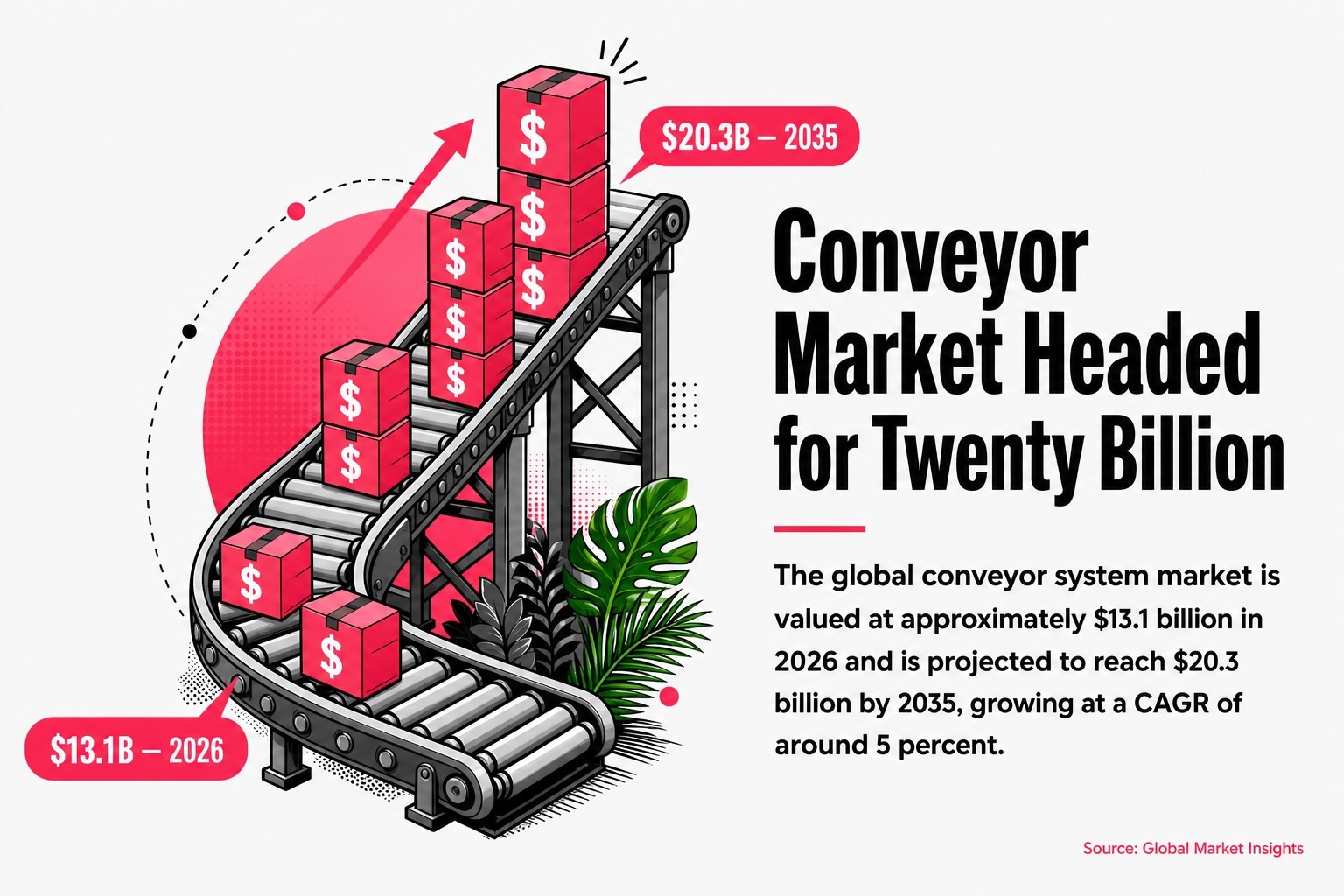
The global conveyor system market is valued at approximately $13.1 billion in 2026 and is projected to reach $20.3 billion by 2035, growing at a CAGR of around 5%, according to Global Market Insights' conveyor system market analysis. The broader material handling equipment market sits at $202.3 billion in 2026 and is on track for $372.6 billion by 2035 at a 7% CAGR, per Global Market Insights' material handling equipment report. That is not a quiet niche. That is a market most digital marketers have never heard of, which is exactly why manufacturers who get their conveyor system marketing right right now will own it.
I spend most of my time thinking about how manufacturers find buyers online. And the conveyor system space has a specific problem that I keep seeing repeated: enormous demand, serious technical products, and marketing efforts that look like they were built in 2009. Trade show booths, PDF brochures, and a website that loads slowly on mobile. The buyers have changed. The marketing hasn't caught up. That gap is an opportunity.
Conveyor system marketing is the set of strategies manufacturers use to reach procurement managers, operations directors, and engineers who specify and buy material handling equipment across industries including automotive, food and beverage, logistics, mining, and pharmaceuticals.
Most manufacturers in this space think of marketing as a cost center. A brochure budget. That framing costs them deals. The companies that treat conveyor system marketing as a demand generation function, with measurable pipelines and trackable buyer journeys, consistently outperform the ones handing out catalogs at trade shows.
The buying cycle for a conveyor system is long. We're talking weeks to months of evaluation, multiple stakeholders, and significant capital expenditure. That buying cycle is exactly why digital marketing matters more here, not less. Buyers spend that research time somewhere. If your content isn't where they're looking, a competitor's content is.
For a full grounding in how industrial manufacturers can approach this systematically, our industrial digital marketing guide for 2026 covers the foundational framework worth reading before going deeper here.
Conveyor system manufacturers sell to two different people simultaneously. The engineer who specifies the system cares about load capacity, belt conveyor speed ratings, and integration with existing automation. The operations director cares about uptime, total cost of ownership, and what happens when something breaks at 2 a.m.
Your marketing has to speak to both. That means content depth matters as much as channel selection. A white paper on roller conveyor maintenance intervals serves the engineer. A case study quantifying downtime reduction serves the director. Both need to exist, and both need to be findable.
The conveyor system market is technically dense. Belt conveyors, roller conveyors, overhead conveyors, pallet conveyors, and bucket conveyors each serve distinct applications. Each has a separate buyer profile. And each buyer uses completely different search language when they start researching online.
That specificity is actually good news for marketers willing to do the work. Generic competitors can't rank for "incline belt conveyor for frozen food processing" the way a manufacturer with real technical content can. Specificity wins in this market, and specificity is something you can build deliberately.
The conveyor system market is growing at a CAGR of 6% through 2030, expanding from roughly $10.27 billion in 2026 to $14.64 billion by 2030, according to MarketsandMarkets' conveyor systems market report. That growth rate is not evenly distributed. The manufacturers capturing disproportionate share are the ones investing in automation-ready product lines and the marketing to match.
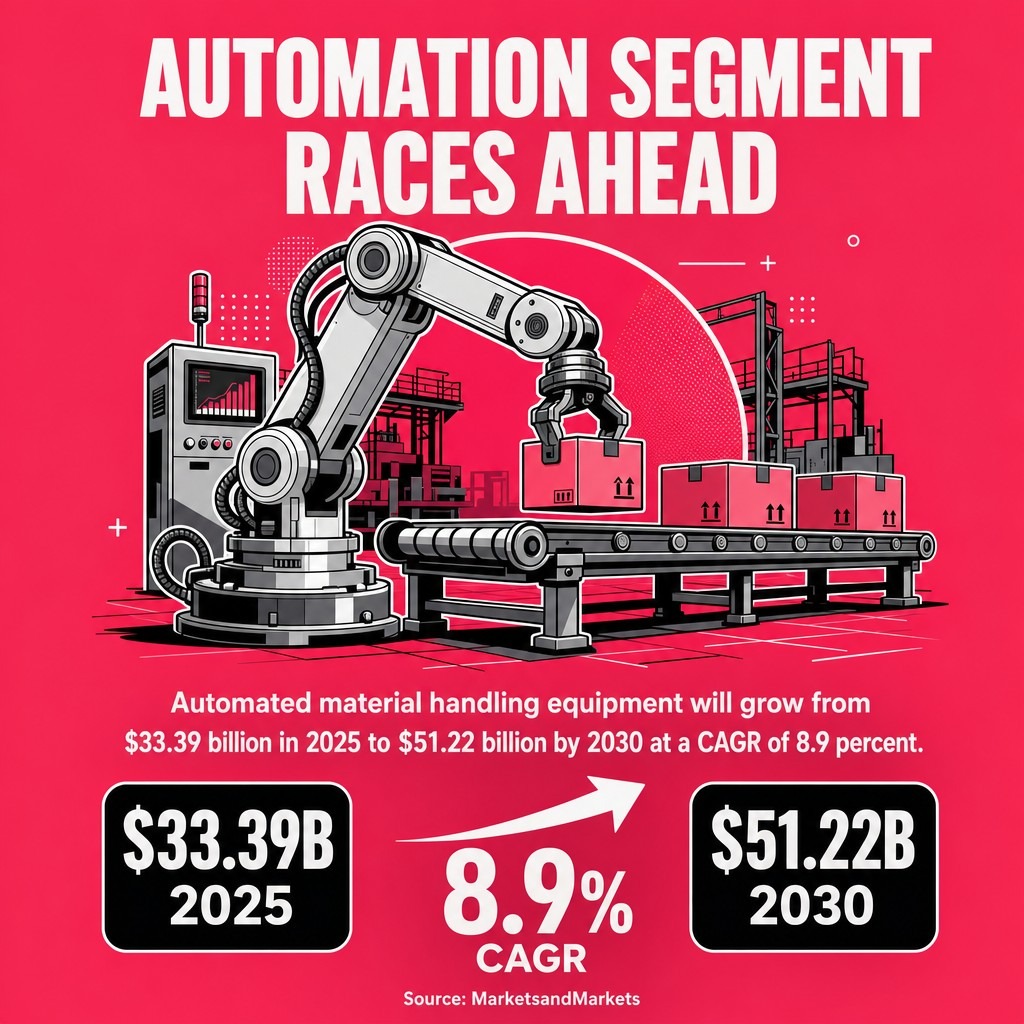
The automated material handling equipment segment is moving faster. MarketsandMarkets projects automated material handling equipment will grow from $33.39 billion in 2025 to $51.22 billion by 2030 at a CAGR of 8.9%. That 8.9% CAGR in the automated segment versus 6% for the broader market tells you something clear: buyers are not just replacing old conveyors, they are upgrading to smarter systems. If your marketing still leads with basic mechanical specs, you're selling to yesterday's buyer.
Smart conveyor systems in packaging automation are growing fastest. Mordor Intelligence puts that segment at $6.73 billion in 2025, growing at a CAGR of 7.96% toward approximately $9.87 billion. The packaging automation buyer is looking for IoT integration, real-time monitoring, and predictive maintenance capability, not just throughput numbers.
The conveyor belt segment itself is more mature. Intel Market Research puts the global conveyor belts market at $8.11 billion in 2024, growing to $9.73 billion by 2032 at a CAGR of 2.7%. Slow and steady, which means competition on price and relationships is fierce. Marketing differentiation here matters even more, because the product differences are harder to see.
The table below summarizes key conveyor system market segments and their growth trajectories based on available research data.
Three forces are moving this market right now: e-commerce growth driving warehouse automation investment, labor cost pressures accelerating the shift to automated material handling, and nearshoring trends rebuilding domestic manufacturing capacity. Bain & Company's analysis on nearshoring as a strategic imperative points to proximity to end markets as a key driver pushing companies to relocate manufacturing, which directly generates demand for new conveyor system installations.
Each of these forces creates a distinct buyer moment. A fulfillment center expanding its warehouse automation footprint is a very different prospect from a manufacturer building a new domestic facility because of nearshoring. Your marketing should be set up to reach both, with messaging that matches where each buyer is in their decision process.
Conveyor system buyers fall into five distinct industry verticals, each with its own procurement structure, compliance requirements, and ROI priorities: food and beverage, automotive parts manufacturing, mining and bulk material handling, logistics and e-commerce fulfillment, and airports and cargo handling.
The mistake most conveyor system manufacturers make is writing one set of marketing materials and hoping all five audiences find what they need in it. They don't. The food and beverage buyer prioritizes sanitation certifications and wash-down ratings. The automotive parts buyer cares about integration with just-in-time assembly lines. Mining operators want belt conveyor durability under abrasive load conditions. These are not the same conversation.
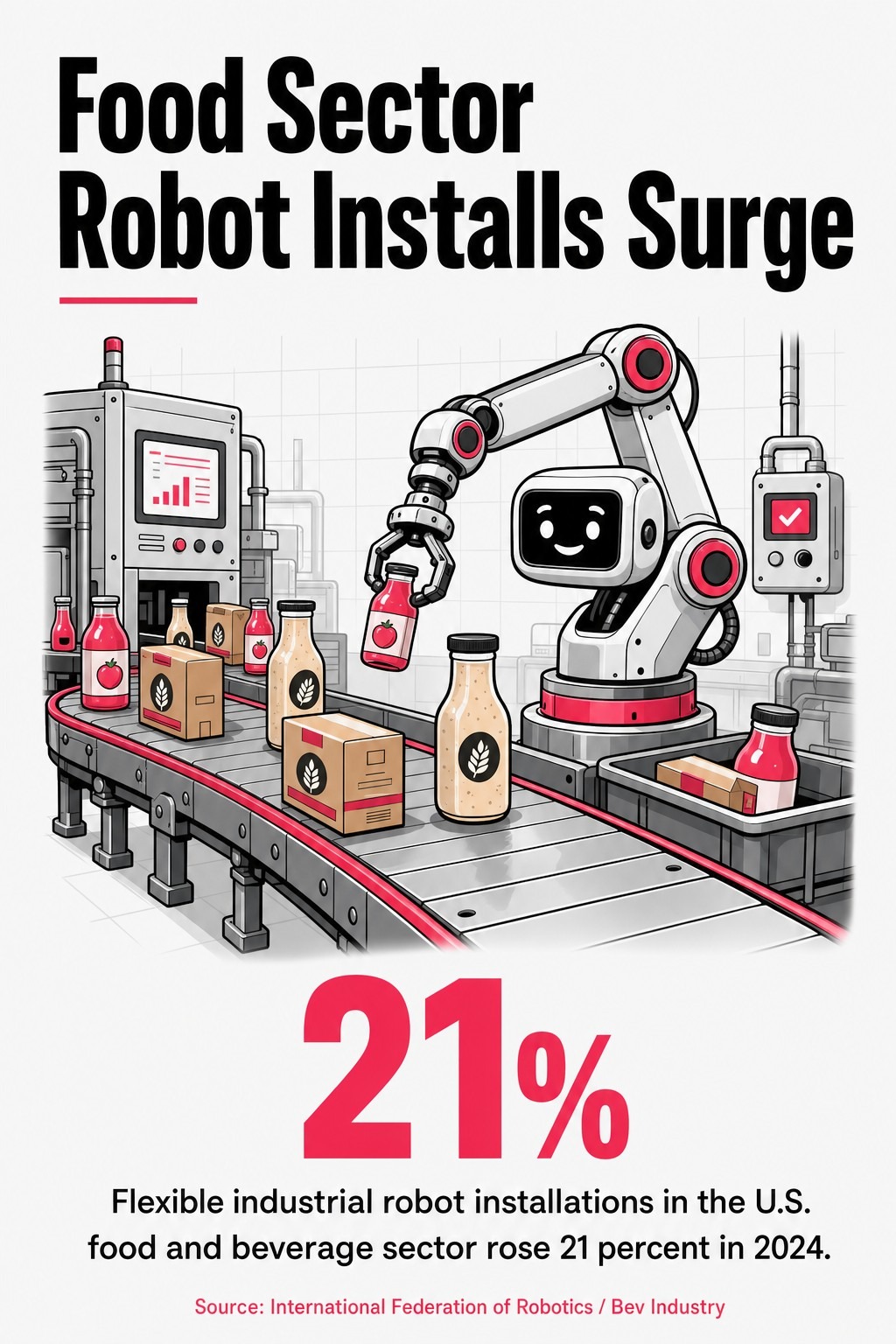
Food and beverage is the vertical worth watching most closely. The International Federation of Robotics' World Robotics data, cited by Bev Industry's automation adoption report, shows that flexible industrial robot installations in the U.S. food and beverage sector rose 21% in 2024. That acceleration reflects the sector's response to labor availability challenges and food safety regulations that make automated conveyor systems more attractive than manual handling.
For conveyor system manufacturers targeting food and beverage, the marketing message needs to lead with compliance and hygiene, not just throughput. Buyers in this vertical are often navigating FDA regulations and HACCP requirements. A white paper on stainless steel roller conveyor specifications for food-grade applications will outperform a generic product brochure every single time.
Warehouse automation for e-commerce fulfillment is the single largest growth driver for conveyor systems right now. The explosion of fulfillment center construction has created persistent demand for belt conveyor systems, overhead conveyor systems, and sortation technology. Distribution center operators are running constrained labor markets and high throughput requirements simultaneously, which makes automation investment straightforward to justify.
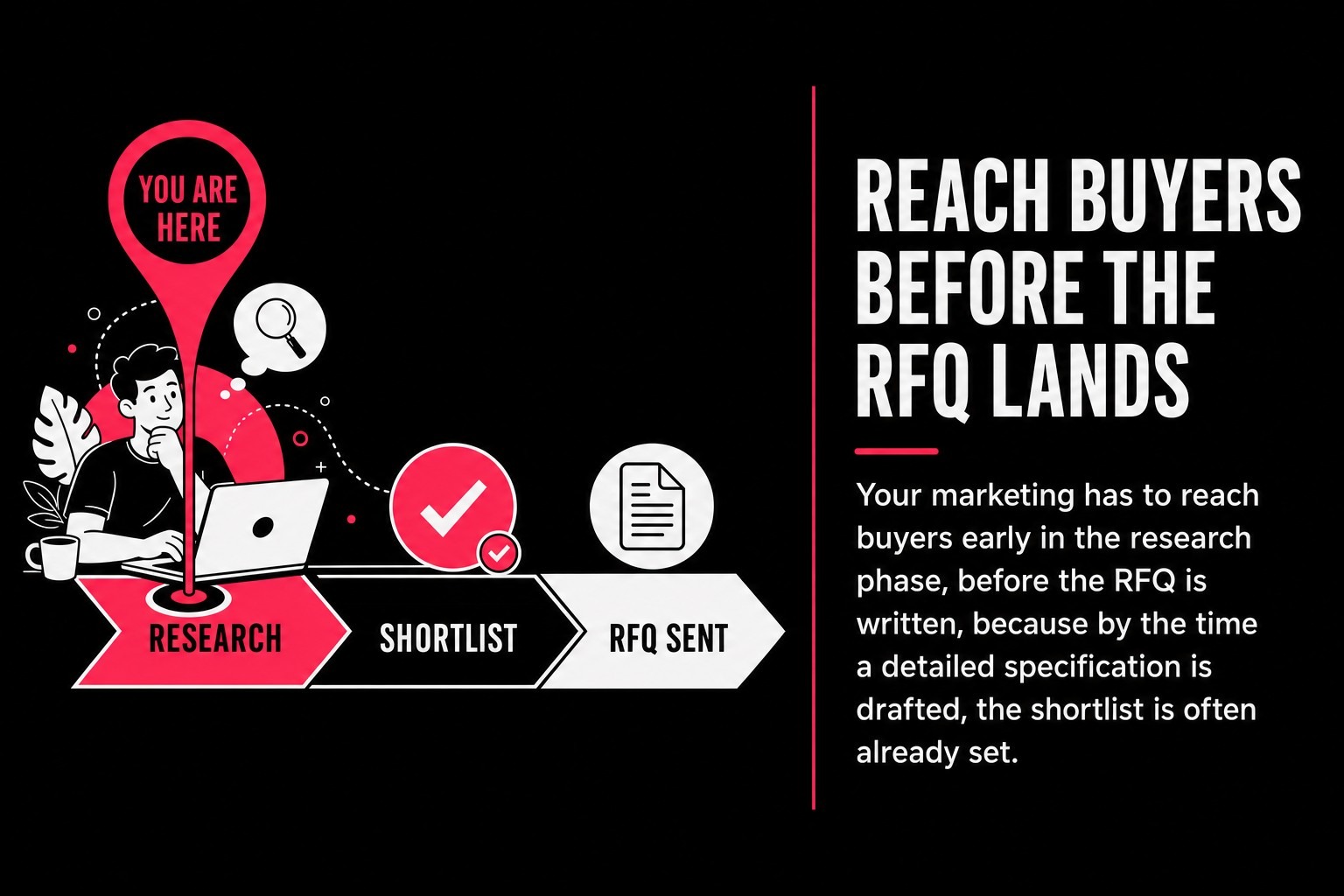
This audience is often a sophisticated buyer. Many large 3PL operators and e-commerce brands have in-house engineering teams who evaluate conveyor systems with detailed RFQs. Your marketing has to reach them early in the research phase, before the RFQ is written, because by the time a detailed specification is drafted, the shortlist is often already set.
Pharmaceutical manufacturing is the high-margin vertical that many conveyor system marketers overlook. MarketsandMarkets projects the pharmaceutical manufacturing equipment market will grow from $20.117 billion in 2025 to $30.393 billion by 2032 at a CAGR of 6.2%. Conveyor systems are embedded throughout pharmaceutical production, from tablet handling to packaging lines, and the validation requirements in this sector mean buyers are stickier once they commit to a supplier.
The pharmaceutical buyer needs documentation-heavy content: validation protocols, cleanroom compatibility specifications, and regulatory compliance support. If you can produce that content and make it findable, you access a buyer who values reliability over price.
The most effective marketing channels for conveyor system manufacturers in 2026 are organic search, LinkedIn, technical content syndication, and targeted paid search, used in combination rather than independently.
Industrial B2B buying has moved substantially online. Buyers research specifications, compare vendors, and shortlist suppliers through search and peer networks before making first contact with a sales team. That shift means the old model of waiting for trade show contacts to convert is too slow and too expensive on its own.
Organic search is where the longest-term conveyor system marketing ROI lives. Engineers and procurement managers searching for specific conveyor system solutions use highly specific search terms: "modular belt conveyor food processing," "overhead conveyor automotive assembly," "bucket elevator bulk material." These are low-volume, high-intent queries where a single well-optimized page can generate a steady flow of qualified leads for years.
The investment required is real. Technical content written by people who understand material handling, properly structured for search, built on a fast-loading site. But the payoff compounds. Paid search stops working the moment you stop paying. Organic search keeps delivering.
Our complete digital marketing guide for manufacturing covers how to build an organic search foundation that generates consistent industrial leads, which applies directly to conveyor system marketing.
LinkedIn is where conveyor system decision-makers spend their professional attention. Operations directors, supply chain managers, plant engineers, and procurement leads are all reachable through LinkedIn's targeting, either through organic thought leadership content or through paid LinkedIn Ads campaigns targeting by job title, industry, and company size.
The organic approach on LinkedIn requires consistency. Companies that post technical insights, application case studies, and industry commentary weekly build the kind of credibility that shortens sales cycles. The rule is simple: be useful before you sell.
Google Ads and Microsoft Ads campaigns targeting conveyor system-related queries reach buyers who are actively evaluating options right now. These campaigns work best for high-intent terms with clear commercial signals, like "[conveyor type] manufacturer quote" or "conveyor system integrator [industry]."
The cost-per-click in industrial equipment categories can be significant, which makes landing page quality critical. A generic product page doesn't convert paid traffic efficiently. Dedicated landing pages matching the specific query, with technical specifications and a clear inquiry path, are the difference between a campaign that wastes budget and one that generates qualified leads.
For manufacturers selling complex B2B equipment, the strategies covered in our B2B digital marketing guide for manufacturers are directly applicable to building paid campaigns that reach high-value industrial buyers.
Content marketing for material handling manufacturers works when it answers the technical questions buyers are actually asking, not when it describes product features in corporate language.
The difference sounds obvious. It isn't. Most industrial manufacturers write content about themselves: their history, their capabilities, their certifications. Buyers don't search for that. They search for solutions to specific problems. "How to reduce conveyor belt slippage in cold storage environments." "Roller conveyor vs belt conveyor for carton handling." "Predictive maintenance implementation for conveyor systems." Write the content that answers those questions and you earn the trust that eventually becomes a purchase.
The best-performing technical content for conveyor system manufacturers tends to take one of four forms: application guides, comparison content, troubleshooting resources, and specification tools. Each serves a different stage of the buyer journey.
Application guides, covering topics like belt conveyor selection criteria for food and beverage lines or overhead conveyor configurations for automotive assembly, attract buyers early in their research. Comparison content comparing roller conveyor systems to belt conveyor systems for specific use cases reaches buyers who are narrowing their options. Troubleshooting content builds the aftermarket relationship and often brings existing customers back when they're ready to expand.
Specification tools, like interactive load calculators or conveyor speed configurators embedded on your website, are the highest-value content assets a manufacturer can build. They generate qualified leads by providing immediate utility while capturing contact information. They're also genuinely hard for competitors to replicate quickly.
Industry 4.0 integration is now the primary driver of upgrade decisions for buyers who already have conveyor systems in place. The addition of IoT sensors for real-time monitoring, AI-powered predictive maintenance, and integration with warehouse management systems is what separates a 2026 conveyor system purchase decision from a 2016 one.
Content that addresses this shift, covering how smart conveyor systems reduce unplanned downtime through predictive maintenance, how IoT sensor data integrates with ERP systems, and how Industry 4.0-ready conveyor systems qualify for capital equipment tax incentives, attracts the buyers who are ready to invest in premium systems rather than commodity replacements.
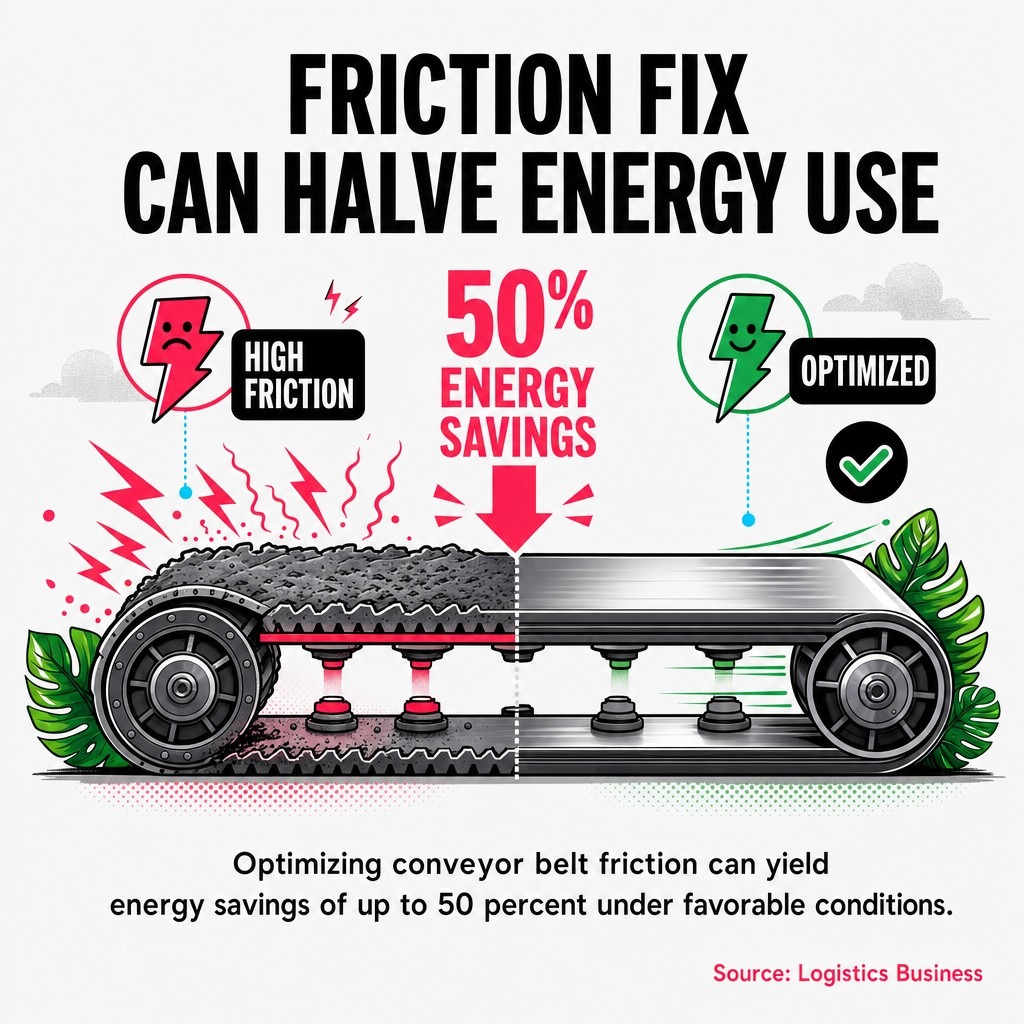
Energy efficiency is a related theme with growing traction. An analysis in Logistics Business notes that optimizing conveyor belt friction can yield energy savings of up to 50% under favorable conditions. That number matters to operations directors running facilities with significant energy costs, and to procurement teams with ESG reporting requirements. It's a data point worth building content around.
For manufacturers working on a complete B2B content strategy, our B2B content marketing guide for manufacturers covers how to build a content program that generates consistent industrial leads across long sales cycles.
Reaching warehouse automation buyers and industrial procurement teams requires a combination of search engine optimization, account-based marketing, email nurture, and technical content distribution through industry publications.
The industrial buyer's research journey typically starts with a search engine query, moves through technical content evaluation, and then shifts to peer validation through LinkedIn or industry associations before a vendor shortlist is formed. Marketing tactics that appear only at one stage of that journey leave money on the table.
For conveyor system manufacturers targeting large enterprise accounts, account-based marketing is the most efficient approach. Instead of casting wide, ABM focuses marketing spend on a defined list of target accounts, delivering personalized content and advertising to specific decision-makers at those companies.
The approach works particularly well for manufacturers targeting large distribution centers, automotive parts production facilities, or major food and beverage producers. These accounts represent enough revenue potential to justify highly customized outreach. LinkedIn's advertising platform allows targeting by company name, which makes ABM campaigns in the conveyor system market very executable.
Most conveyor system manufacturers treat email marketing as a newsletter function. That is a significant underuse of the channel. A well-structured email nurture sequence, built around the buyer's evaluation stages, keeps your brand present during the months-long research period that characterizes major conveyor system purchases.
A practical sequence for a warehouse automation prospect looks like this: an initial content delivery email with a relevant application guide, followed by a case study of a comparable installation two weeks later, then a technical comparison email, then an invitation to a product demonstration or engineering consultation. Each email serves the buyer's next logical question rather than pushing toward a sale prematurely.
Material handling industry publications remain important for reaching engineers and operations managers who read sector-specific content as part of their professional development. Publications covering logistics, automation, and manufacturing regularly accept contributed technical articles from manufacturers. A well-placed technical article on predictive maintenance for conveyor systems reaches an audience that is already in the market, at no paid media cost.
The SEO benefit compounds this. Industry publication backlinks to your website signal authority to search engines in exactly the technical domain where your target buyers are searching. Contributed articles are one of the most efficient ways to build both brand credibility and organic search authority simultaneously.
An effective go-to-market strategy for conveyor system manufacturers requires segmenting both by industry vertical and by conveyor type, then building distinct value propositions for each combination that matters to your target market.
Most manufacturers try to cover every vertical with the same positioning. The result is messaging that is accurate but undifferentiated. The companies winning new business in 2026 are the ones who say clearly: "We build belt conveyor systems specifically for food and beverage processing environments, and here is exactly how we solve your sanitation, throughput, and compliance challenges."
Each industry vertical requires a distinct marketing angle built around what that buyer actually loses sleep over.
For automotive parts manufacturers, the conveyor system value proposition centers on precision, line speed, and zero-defect handling. Automotive assembly operations run on tight tolerances and just-in-time schedules where a conveyor system failure creates immediate line-stop costs. Marketing that quantifies uptime guarantees and integration speed with existing automation resonates here.
For mining and bulk material handling, belt conveyor durability under abrasive, high-tonnage conditions is the central concern. ROI calculations based on tons-per-hour capacity and maintenance interval reduction work well in this vertical. Buyers are sophisticated about total cost of ownership and respond to engineering-led content.
For airport and cargo handling, overhead conveyor systems and baggage handling automation require strict safety certifications and redundancy engineering. The marketing message in this vertical needs to lead with compliance and system reliability, with references to comparable airport installations as proof points.
Each conveyor type, whether belt conveyor, roller conveyor, overhead conveyor, pallet conveyor, or bucket conveyor, has a distinct search audience using specific terminology. Building separate landing pages and content clusters for each type is not optional for manufacturers serious about organic and paid search performance.
A belt conveyor page targeting food and beverage buyers should include different specifications, certifications, and application examples than a belt conveyor page targeting mining. The same product, two entirely different buyer conversations. Search engines reward this specificity with better rankings. Buyers reward it with longer time on site and more qualified inquiries.
Our manufacturing marketing strategies guide covers vertical segmentation and value proposition development in detail, with frameworks applicable across heavy industrial equipment categories.
The Asia Pacific region is the largest and fastest-growing market for conveyor systems and material handling equipment, driven by manufacturing expansion in China, India, and Southeast Asia, combined with massive e-commerce fulfillment infrastructure investment.
Asia Pacific's dominance in manufacturing output directly drives conveyor system demand. China's continuing investment in automated manufacturing, combined with India's expanding industrial base, creates a large and growing market for all conveyor types. E-commerce growth in the region is also pushing significant warehouse automation investment, with major logistics operators deploying belt conveyor and roller conveyor systems at scale.
North America remains the premium market for conveyor system manufacturers, with buyers investing in automated material handling systems capable of IoT integration, predictive maintenance, and Industry 4.0 connectivity. The nearshoring trend is adding a new demand driver, as manufacturers relocating production to North America require new facility fit-outs including complete conveyor system installations.
The U.S. market is particularly active in warehouse automation for e-commerce fulfillment, with large distribution center operators investing heavily in belt conveyor and overhead conveyor systems capable of handling high SKU diversity at scale. Labor market conditions in the U.S. continue to make the ROI case for automation straightforward for procurement teams.
The European conveyor system market is shaped substantially by sustainability requirements and energy efficiency mandates. The Logistics Business analysis on energy efficiency in conveying is particularly relevant for European buyers, where energy costs and carbon reporting obligations make the 50% friction optimization potential a genuine procurement criterion rather than a marketing footnote.
European automotive manufacturers, a major buyer segment for roller conveyor and overhead conveyor systems, are also navigating the transition to electric vehicle production, which is restructuring assembly line requirements and creating replacement demand for existing conveyor configurations.
Conveyor system manufacturers who use specific market data and measurable outcomes in their marketing outperform those who rely on general capability claims by a significant margin, because industrial buyers make decisions based on quantifiable ROI rather than brand preference.
The research is consistent on what drives purchase decisions in the material handling equipment market: uptime guarantees, total cost of ownership calculations, integration capability with existing systems, and speed to productivity after installation. These are not soft preferences. They are the criteria procurement teams use to evaluate competing bids. Your marketing should address all four directly.
ROI-first marketing means leading every customer-facing asset, from website landing pages to LinkedIn content to trade show materials, with a quantified outcome rather than a product description. Not "our belt conveyor systems are built for durability" but "our belt conveyor systems reduce unplanned downtime by an average of X hours per year in food and beverage applications, which translates to Y in recovered production value."
This approach requires you to gather and publish performance data from your installations. That means building customer success processes that capture and report operational metrics, then translating those metrics into marketing content. It is more work. It is also more persuasive than anything else in your marketing toolkit.
The conveyor system market includes major global players including Daifuku, Continental, KION Group, Interroll, and Vanderlande. These companies have substantial marketing budgets and established brand recognition. Competing head-to-head on general brand awareness is expensive and slow.
The more effective approach for manufacturers without those budgets is to compete on specificity. The large players serve many verticals and many geographies. A manufacturer who becomes demonstrably the best-known expert in, say, stainless steel belt conveyor systems for pharmaceutical cleanroom environments has a defensible position that broad competitors cannot easily match. Niche authority beats general awareness in B2B industrial markets consistently.
ESG-driven purchasing criteria are now standard practice across automotive, food and beverage, and logistics buyers. Conveyor system manufacturers who can document energy consumption data, carbon footprint per unit of throughput, and recyclability of components at end-of-life have a genuine differentiator for procurement teams with sustainability reporting obligations.
The energy efficiency angle is particularly concrete. A conveyor system manufacturer who can demonstrate measurable energy consumption advantages over incumbent equipment, backed by installation data, speaks directly to operational cost reduction and ESG reporting simultaneously. That combination shortens the approval process for capital expenditure in ways that product specification comparisons alone cannot.
The conveyor system market is growing, the buyers are increasingly sophisticated, and the window for manufacturers to establish digital authority in this space is wide open. Most competitors are still operating with outdated marketing approaches. That will not last indefinitely.
Start with your highest-value vertical and build a complete content and search presence for it before expanding. Map the buyer journey from first search to purchase decision and audit what exists at each stage. If a buyer researching belt conveyor systems for food and beverage processing can't find your company in that research phase, you are not in the consideration set when the RFQ goes out.
Fix the organic search foundation. Build the vertical-specific landing pages. Create the technical content that engineers and procurement managers are actually searching for. Set up a LinkedIn presence that publishes useful content consistently. Build an email nurture sequence that serves the buyer's decision process over the months it takes to close an industrial equipment deal.
None of this is fast. But the manufacturers who invest in conveyor system marketing now, while most competitors are still handing out product catalogs, will own the search rankings, the brand recognition, and the pipeline that their competitors are trying to build three years from now.
For a structured approach to building digital marketing systems that generate industrial leads at scale, our data-driven digital marketing guide for manufacturers is the most direct next step. The market is there. The buyers are searching. Go get found.