Manufacturing B2B digital marketing works differently than almost any other vertical. Your buyers aren't impulse shoppers scrolling Instagram at lunch. They're engineering managers researching CNC machines for six months, procurement directors comparing industrial suppliers across seventeen touchpoints, and plant operators who need to justify every purchase to three levels of management.
The numbers tell a clear story. Approximately 81% of the B2B buying journey happens before a buyer ever enters the sales pipeline. That's not a typo. Four-fifths of your deal is already decided before your sales team even knows the prospect exists.
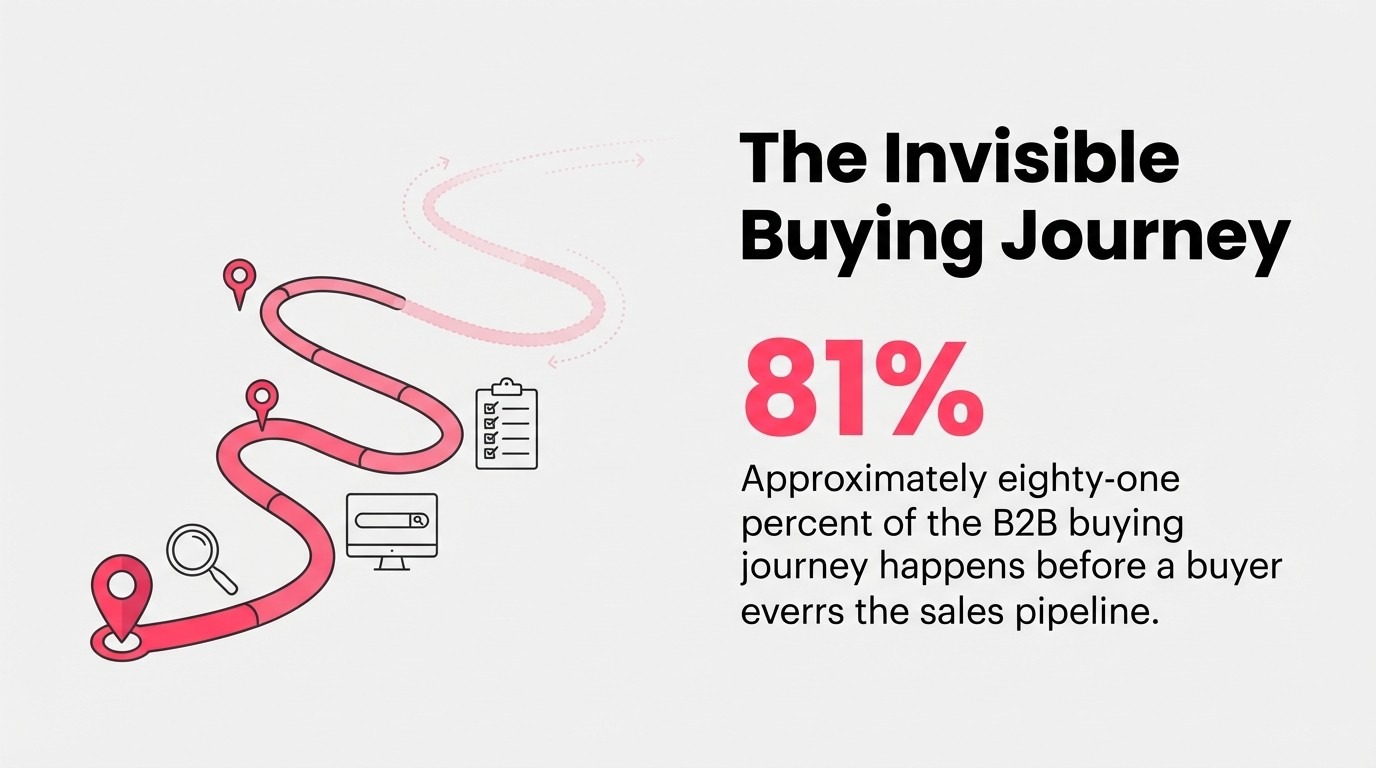
81% of the B2B buying journey happens before sales engagement—be present during this invisible phase.
Here's what makes this both challenging and opportune: 90% of B2B buyers ultimately select a vendor from their initial preferred list. If you're not on that shortlist when they start researching, you've already lost. Your entire B2B digital marketing strategy needs to focus on one goal: being present, helpful, and authoritative during that invisible eighty-one percent of the journey.

90% of buyers choose from their initial shortlist—make sure you're on it.
This playbook walks you through building a manufacturing-specific B2B digital marketing strategy that actually works. Not generic B2C tactics dressed up with industrial stock photos. Real frameworks for reaching engineers, procurement teams, and decision-makers who think in terms of specifications, certifications, and total cost of ownership.
We'll cover how to identify your actual target audience, which digital marketing channels deliver results for manufacturers, and how to measure ROI in an industry where sales cycles stretch across quarters. You'll learn content marketing approaches that work for technical buyers, SEO strategies that capture high-intent industrial searches, and email marketing tactics that nurture leads through complex buying journeys.
By the end, you'll have an actionable B2B marketing strategy tailored to manufacturing realities, not software-as-a-service fantasies.
B2B digital marketing for manufacturers means using online channels to reach business buyers who purchase industrial products, components, or services. It's marketing that happens on websites, search engines, email, social media platforms, and digital advertising networks.
The "business-to-business" part matters because you're not selling to consumers. You're selling to companies. That changes everything about how digital marketing strategies work.
Your marketing targets multiple decision-makers within each account. An engineer might start the search, a procurement manager evaluates vendors, and a plant director approves the final purchase. Each person needs different information at different stages.
B2B digital marketing channels include search engine optimization for technical queries, content marketing that demonstrates expertise, email campaigns that nurture long sales cycles, and social media marketing on professional networks. It's the complete digital ecosystem that supports complex buying journeys.
For manufacturers specifically, B2B digital marketing often emphasizes technical specifications, certifications, case studies, and problem-solving content. Your buyers want data sheets, not lifestyle imagery. They need proof of capabilities, not brand storytelling.
The differences between B2B and B2C digital marketing run deeper than just who's buying. They fundamentally change how you approach every marketing channel and tactic.
B2C purchases usually involve one person making a quick decision. Someone sees an ad for running shoes, clicks, and buys within minutes. The entire buying journey might span a single lunch break.
B2B purchases involve buying committees. Multiple stakeholders with different priorities evaluate your offering over weeks or months. The engineer cares about specifications, the procurement manager focuses on price, and the executive wants strategic alignment.
This means your B2B digital marketing strategy needs content for each persona. You can't create one landing page and expect it to convince everyone. Your SEO targets different search queries for different roles. Your email marketing segments by job function and buying stage.
B2C sales cycles are short. Someone discovers your product and converts within days, sometimes minutes. Digital marketing strategies optimize for immediate action.
B2B sales cycles stretch across months or even years for complex industrial purchases. Today's buyers consume between three and seven pieces of content before reaching out to vendors. That's just to initiate contact, not to close the deal.
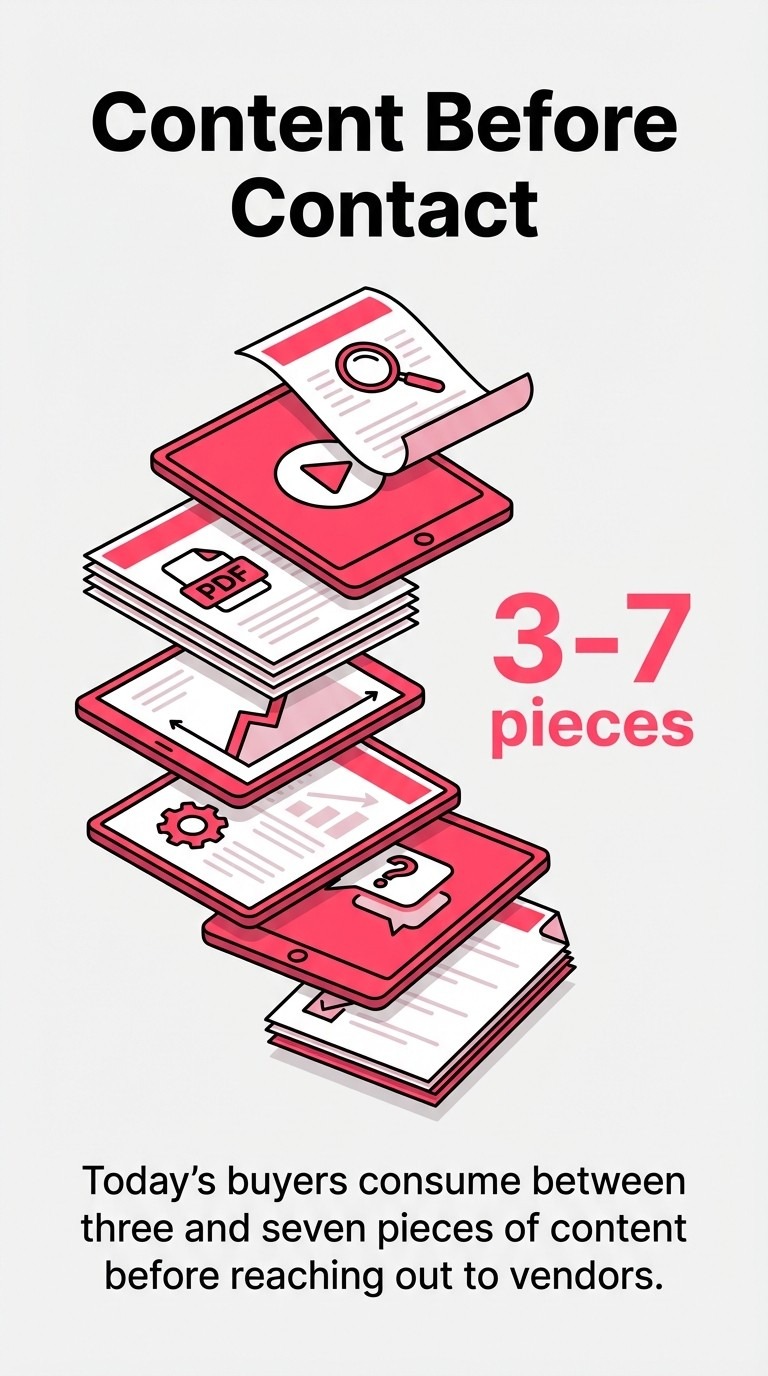
Buyers consume 3–7 content pieces before contacting vendors—front-load value with helpful resources.
Your B2B marketing strategy needs to support this extended journey. Lead nurturing becomes essential. Marketing automation tracks engagement across multiple touchpoints. Content marketing provides value at every stage from awareness through consideration to decision.
B2C marketing often appeals to emotions. Ads create desire, urgency, and aspiration. Buyers make impulse purchases based on how products make them feel.
B2B buyers make rational, data-driven decisions. They need ROI justification, technical specifications, and proof of performance. Emotional appeals don't close deals; evidence does.
This changes your content marketing approach entirely. Case studies matter more than brand videos. White papers demonstrating expertise outperform inspirational messaging. Your SEO targets informational queries about solving specific problems, not transactional product searches.
B2C brands often optimize for transactions. Get the click, make the sale, move to the next customer. Customer lifetime value matters, but individual purchases happen independently.
B2B relationships drive revenue. A single manufacturing client might generate six or seven figures annually over multiple years. Losing one account has significant impact.
Your B2B digital marketing strategy prioritizes relationship building. Email marketing focuses on education and support, not constant selling. Social media marketing demonstrates ongoing expertise. Content marketing establishes your team as trusted advisors, not just vendors.
Manufacturers who invest in B2B digital marketing gain measurable advantages over competitors still relying on trade shows and cold calls. The benefits go beyond just "having a website" to fundamentally changing how you generate and nurture leads.
Manufacturing companies with average organic customer acquisition costs of $662 substantially outperform many other B2B verticals. Digital marketing channels, particularly SEO and content marketing, deliver leads at a fraction of traditional outbound costs.
Compare that to trade show expenses. Booth fees, travel, materials, and staff time easily exceed $50,000 per event. Digital marketing strategies generate leads year-round, not just during event seasons.
Paid advertising provides immediate visibility while organic efforts build. PPC campaigns for industrial keywords reach high-intent buyers actively searching for solutions. Email marketing nurtures existing contacts without incremental costs per send.
Traditional manufacturing marketing made measurement nearly impossible. You never knew which trade show actually generated that six-figure deal. Attribution was guesswork dressed up as analysis.
B2B digital marketing provides clear tracking. Analytics platforms show which content pieces drive conversions. Marketing automation connects email campaigns to the pipeline. SEO tools demonstrate exactly which keywords generate leads.
You can calculate precise metrics: cost per lead, lead-to-customer conversion rate, customer acquisition cost, and return on ad spend. When you know a particular blog post generated twelve qualified leads worth $180,000 in the pipeline, you can double down on what works.
Modern B2B buyers complete most of their research independently before contacting sales. Your sales team can't influence the eighty-one percent of the buying journey that happens before pipeline entry unless your digital marketing reaches buyers during that research phase.
SEO ensures your content appears when engineers search for solutions. Content marketing answers technical questions before prospects contact competitors. Social media marketing keeps your brand visible as buyers evaluate options over months.
Digital channels let you be present throughout the entire buyer journey, not just when someone requests a quote.
Field sales teams can only cover so much territory. Trade shows happen in specific cities on specific dates. Traditional manufacturing marketing inherently limits reach.
B2B digital marketing scales globally without proportional cost increases. Your website serves buyers in Detroit and Dubai equally well. SEO attracts prospects from markets you've never physically visited. Email marketing campaigns reach thousands of contacts simultaneously.
For manufacturers looking to expand into new regions or industries, digital marketing channels provide market entry without establishing local sales presence first.
Generic B2B marketing messages fail in manufacturing because they try to speak to everyone. You can't optimize for "businesses that need parts." You need precision about exactly who you're targeting and what they care about.
Your Ideal Customer Profile describes the companies most likely to buy from you and generate profitable long-term relationships. It's firmographic data: industry, company size, revenue, location, and business model.
Start by analyzing your best current customers. Which industries do they serve? What's their typical annual revenue? How many employees? What problems were they trying to solve when they first contacted you?
Look for patterns. Maybe you excel at serving mid-market automotive tier-two suppliers in the Midwest. Or perhaps your strength is custom machining for medical device manufacturers with FDA compliance needs.
Your ICP guides every B2B digital marketing strategy decision. It determines which keywords to target for SEO, which LinkedIn audiences to build for social media marketing, and which companies to prioritize for account-based marketing.
While your ICP describes companies, buyer personas describe the individual people within those companies who influence or make purchase decisions. Each persona represents a distinct role in the buying journey.
For manufacturers, common buyer personas include:
Each persona needs different content marketing. Emma wants technical white papers and CAD files. Paul needs pricing transparency and case studies demonstrating cost savings. Oliver values testimonials about service quality. Elena requires thought leadership about industry trends.
Your buyer personas inform content creation, email marketing segmentation, and website optimization. When you know exactly who you're talking to, your messaging becomes sharper.
The B2B buyer journey in manufacturing rarely follows a straight line. Understanding the actual path buyers take helps you place the right content at the right moments.
The awareness stage starts when someone recognizes a problem or opportunity. An engineer might search "how to reduce machining cycle times" or "alternatives to current welding process." Your SEO and content marketing need to appear in these early research queries.
During consideration, buyers evaluate different approaches and potential vendors. They consume case studies, compare specifications, and assess capabilities. This is where your thought leadership content, detailed product information, and customer success stories matter most.
The decision stage involves final vendor selection. Buyers need pricing, implementation details, references, and risk mitigation information. Sales enablement content, ROI calculators, and customer testimonials support this stage.
Post-purchase, the journey continues. Onboarding content, technical support resources, and continued education build the relationship for future purchases. Email marketing keeps you connected during this retention phase.
Manufacturing purchases involve multiple decision-makers with different priorities. Missing any stakeholder in your B2B marketing strategy creates gaps competitors can exploit.
Technical evaluators need detailed specifications, certifications, and capability demonstrations. They're often engineers or technical managers who can veto vendors that don't meet requirements.
Financial approvers focus on total cost of ownership, payment terms, and ROI justification. These are typically procurement professionals or financial decision-makers who control budget approval.
Operational users care about implementation ease, training requirements, and ongoing support. They're the people who will actually work with your product or service daily.
Executive sponsors provide final authorization, especially for large purchases. They evaluate strategic fit, vendor stability, and risk factors.
Your B2B digital marketing strategy needs content that addresses each stakeholder's concerns. Marketing automation can track which topics each contact engages with, helping sales understand each person's role and priorities.
A complete B2B marketing strategy for manufacturers requires multiple interconnected components working together. No single tactic wins deals. The combination creates competitive advantage.
Your value proposition answers the fundamental question: why should buyers choose you? It's not your mission statement or tagline. It's the specific, measurable value you deliver that competitors don't.
Weak value propositions use generic language: "quality products and excellent service." Every competitor claims the same thing. Strong value propositions quantify differentiation: "reducing setup times by forty percent through proprietary quick-change tooling systems."
Your value proposition drives all content marketing. It informs which SEO keywords to target. It shapes email marketing messages. It determines what to emphasize in social media marketing.
Test your value proposition with actual customers. Ask why they chose you over alternatives. Their answers reveal what actually matters, which often differs from what you think differentiates you.
Manufacturers often struggle with the handoff between marketing-generated leads and sales follow-up. Misalignment wastes the leads your B2B digital marketing strategy worked hard to generate.
The alignment between sales and marketing teams leads to 103 percent more likelihood of exceeding revenue goals. That's not incremental improvement. That's transformational performance.
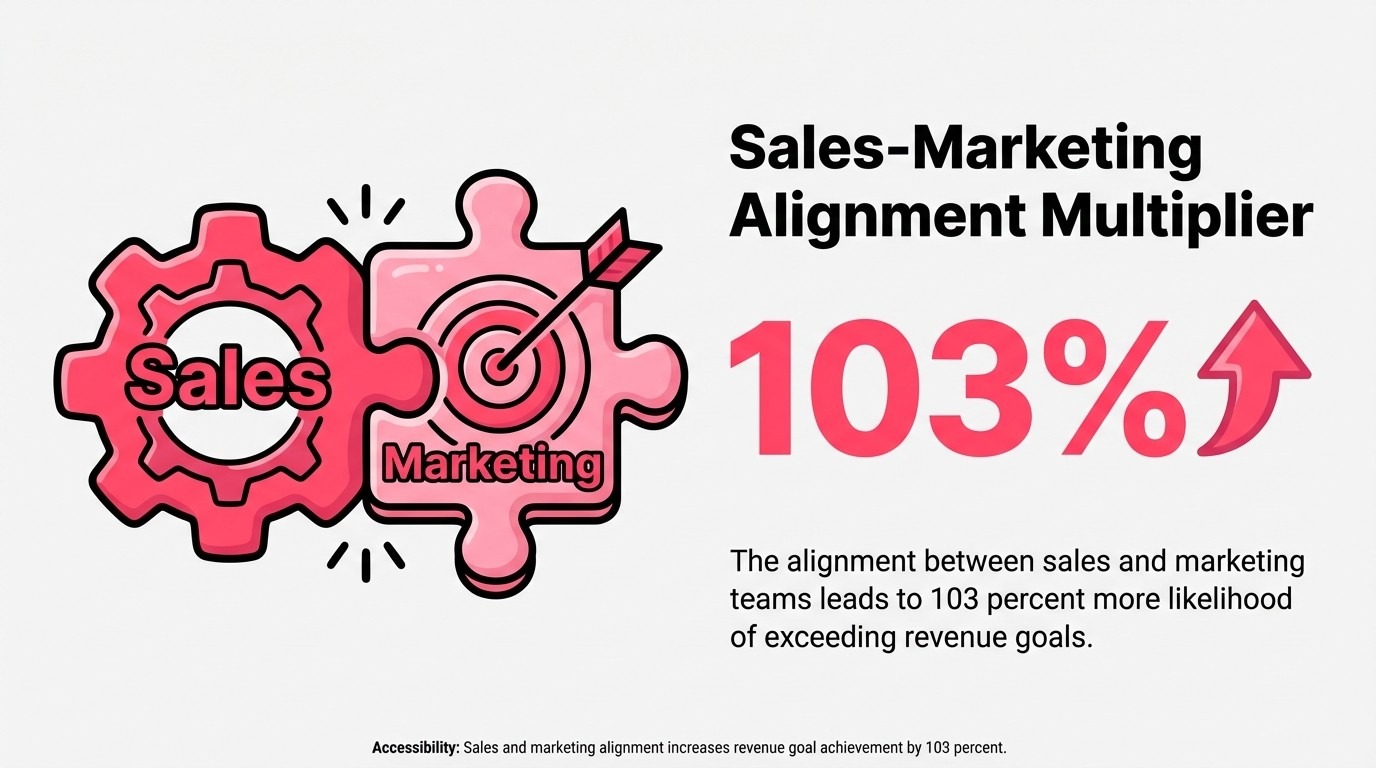
Sales–marketing alignment increases the likelihood of exceeding revenue goals by 103%.
Start with shared definitions. What qualifies as a marketing qualified lead? What criteria trigger sales outreach? Without agreement, marketing sends leads sales ignores, and sales complains about lead quality.
Create feedback loops. Sales should report what happens to leads: which convert, which weren't ready, which were poor fits. Marketing uses this intelligence to refine targeting and lead scoring.
Use shared technology. When marketing automation integrates with CRM systems, both teams see the complete picture of prospect engagement and sales progress.
Manual B2B digital marketing doesn't scale. You need technology to track buyer behavior, nurture leads across long sales cycles, and measure what's working.
At minimum, manufacturers need:
Start with Google Analytics for website tracking. It's free and provides essential insights about which content drives engagement and conversions.
For marketing automation, platforms like HubSpot, Marketo, or Pardot offer manufacturing-appropriate capabilities. Choose based on your team's technical sophistication and integration requirements.
Connect everything to your CRM. Salesforce dominates enterprise manufacturing, while Zoho CRM or Pipedrive serve smaller manufacturers well.
Content marketing for manufacturers requires systematic planning, not random blog posts whenever someone has time. Your framework should map content to buyer personas, journey stages, and business objectives.
Create a content matrix that crosses buyer personas with journey stages. For each combination, identify what questions that persona asks at that stage. This reveals content gaps and priorities.
Plan content clusters around core topics. Instead of isolated articles, build comprehensive resource hubs that establish topical authority for SEO. Link related content together to demonstrate depth of expertise.
Balance content types: educational articles for awareness, comparison guides for consideration, case studies and ROI calculators for decision stages. Include technical specifications, white papers, and video demonstrations that technical buyers expect.
Manufacturers can't pursue every digital marketing channel simultaneously. Focus your B2B marketing strategy on channels that reach your specific target audience during their actual research and buying process.
SEO matters more for B2B manufacturers than almost any other channel. When an engineer searches "precision machining aerospace components" or "industrial valve suppliers ISO 9001," you need to appear.
Long-tail industrial keywords convert better than generic terms. "CNC machining" attracts everyone including students doing homework. "Five-axis CNC machining titanium aerospace" attracts qualified buyers with specific needs.
Target informational queries that appear early in the buyer journey. Create content that answers "how to select industrial suppliers" or "requirements for automotive parts certification." You build authority and appear before buyers have shortlisted vendors.
Technical SEO matters for manufacturing websites. Ensure fast load times, mobile responsiveness, and proper site structure. Many manufacturer sites neglect these basics, creating easy opportunities for competitive advantage.
For detailed guidance on finding these high-intent industrial search terms, see our long-tail industrial keywords guide.
LinkedIn generates eighty percent of all B2B leads from social media sources. For manufacturers targeting business buyers, LinkedIn outperforms Facebook, Instagram, and Twitter combined.
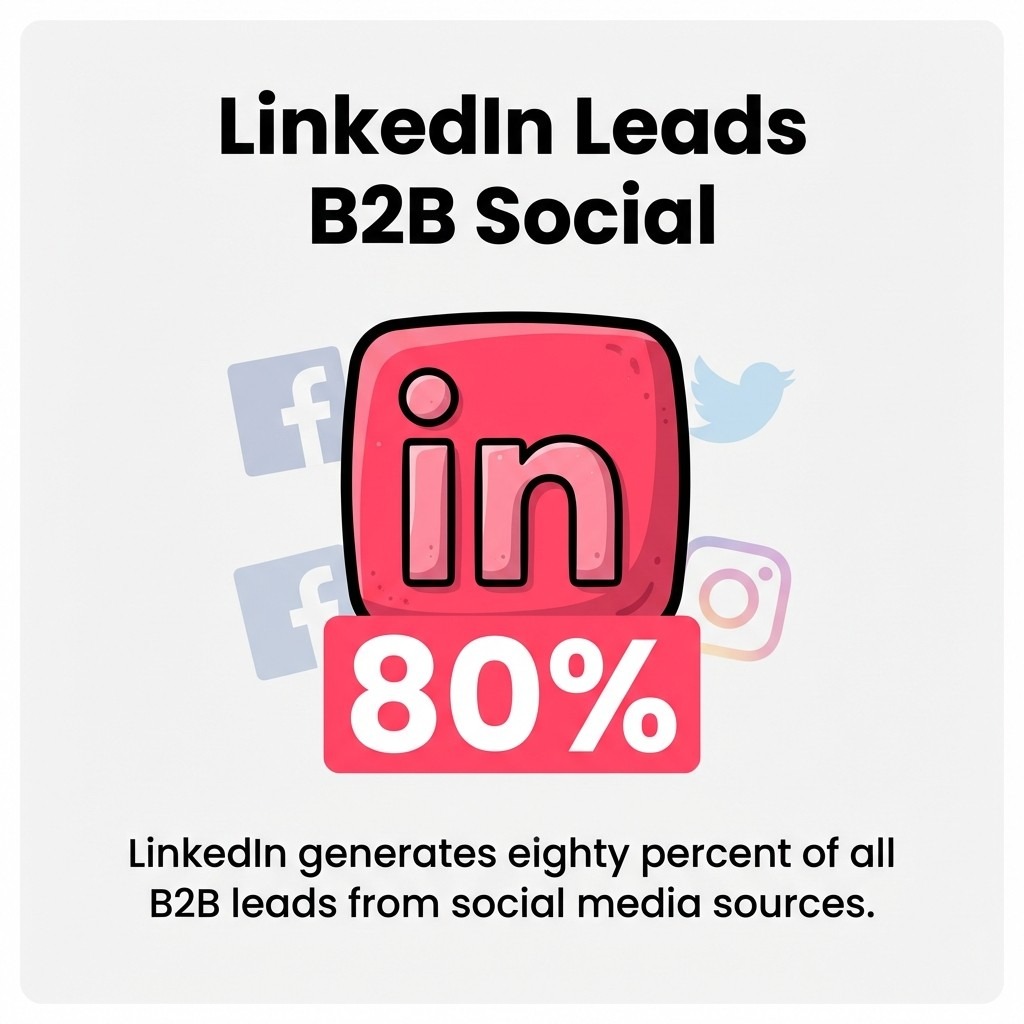
LinkedIn drives 80% of B2B social leads—prioritize it for professional reach.
Social media marketing on LinkedIn works differently than consumer platforms. It's not about going viral or daily posting. It's about demonstrating expertise to the right professional audience.
Share thought leadership content that addresses industry challenges. Comment meaningfully on relevant discussions. Connect with target buyer personas and engage with their content. Build relationships before you need them.
LinkedIn's targeting capabilities let you reach specific job titles at specific company types in specific industries. You can advertise directly to engineering managers at mid-market automotive suppliers in the Midwest, for example.
Company pages matter less than employee advocacy. When your team shares content from personal profiles, it reaches broader networks and feels more authentic than corporate broadcasting.
Email marketing remains one of the highest-ROI digital marketing channels for B2B manufacturers. It lets you stay connected throughout long sales cycles without expensive ongoing costs.
Segment your email lists by buyer persona, industry, company size, and engagement level. Generic "newsletter" blasts to everyone waste the potential of targeted communication.
Create automated nurture sequences triggered by specific behaviors. When someone downloads a white paper about precision machining, enroll them in a series that progressively educates about your capabilities in that area.
Balance educational content with promotional messages. Most emails should provide value: industry insights, how-to guides, case studies. Occasional promotional messages about new capabilities or special programs work when you've earned attention through helpful content.
Test subject lines, send times, and content approaches. What works for consumer email marketing often fails in B2B. Manufacturing buyers check email during business hours and respond to specificity more than urgency.
PPC advertising provides immediate visibility for high-intent industrial search queries while your SEO efforts build momentum. It's particularly valuable for manufacturers entering new markets or launching new products.
Target bottom-of-funnel keywords where buyers are actively looking for vendors: "custom injection molding quote" or "industrial fastener supplier." These searches indicate purchase intent, not just research.
Use negative keywords aggressively. Manufacturing PPC campaigns waste budget on irrelevant clicks without proper filtering. Add negatives for DIY, consumer, educational, and job-seeking searches.
Create specific landing pages for each major product category or service. Sending PPC traffic to your homepage reduces conversion rates. Match ad message to landing page content for coherent user experience.
If you're in the aviation sector, our guide to PPC for aviation companies targeting MRO leads demonstrates industry-specific approaches.
Manufacturing companies that align account-based marketing with account-based advertising strategies report sixty percent higher win rates. When you're targeting a few high-value accounts rather than broad lead generation, ABM becomes essential.
Account-based marketing flips traditional B2B digital marketing strategy. Instead of generating leads and qualifying them, you identify target accounts first, then create personalized marketing to engage multiple stakeholders within those companies.
Start with account selection. Work with sales to identify the twenty to fifty companies you most want to win. Research their challenges, initiatives, and organizational structure.
Create personalized content addressing each account's specific situation. Reference their industry challenges, competitive pressures, or recent company announcements. Generic content doesn't work in ABM.
Coordinate multi-channel engagement: targeted LinkedIn advertising, personalized email sequences, direct mail, and customized website experiences. The goal is surrounding target accounts with relevant touchpoints.
Content marketing drives B2B digital marketing strategy for manufacturers. It's how you demonstrate expertise, answer buyer questions, and stay visible throughout long sales cycles.
Manufacturing buyers need to trust your technical capabilities before they'll consider purchasing. Content marketing that showcases expertise builds that confidence.
White papers exploring complex technical challenges signal depth of knowledge. A detailed analysis of "reducing thermal distortion in aluminum welding" demonstrates mastery that sales conversations alone can't convey.
Application guides help buyers understand how your solutions solve specific problems. Step-by-step breakdowns of implementing your product or service make the buying decision less risky.
Technical specifications and comparison charts serve bottom-of-funnel buyers making final decisions. Make it easy to evaluate your capabilities against requirements without waiting for sales calls.
Case studies prove you've solved problems similar to what prospects face. They're among the most effective content marketing formats for B2B buyers in the decision stage.
Structure case studies around the buyer's perspective: what challenge they faced, why they selected you, what results they achieved. Include specific metrics whenever possible. "Reduced setup time by thirty-five percent" beats "improved efficiency."
Feature diverse industries and applications. Buyers want to see you've served companies like theirs. A medical device manufacturer cares more about your medical case studies than impressive automotive work.
Include customer quotes that address common objections. If buyers worry about implementation complexity, highlight a quote about your seamless onboarding process.
Video marketing was reported as the most effective content format for generating engagement and qualified leads by eighty-five percent of B2B marketers in 2024. For manufacturers, video brings products and processes to life in ways text can't match.
Product demonstration videos show capabilities clearly. A two-minute video of your five-axis machining center in action communicates more than paragraphs of specifications.
Process explanation videos help buyers understand complex manufacturing methods. Animated breakdowns of how injection molding works or why certain materials perform differently build educational value.
Customer testimonial videos add credibility through authentic voices. Seeing a real plant manager explain how you solved their problem carries more weight than written quotes.
Facility tour videos build confidence in your capabilities and capacity. Remote buyers can virtually assess your operation before scheduling site visits.
Thought leadership content positions your company as industry experts worth paying attention to. It attracts buyers early in their research phase, before they've identified specific vendors.
Industry trend analysis demonstrates you understand market dynamics. Articles about emerging regulations, technology shifts, or competitive pressures show you're plugged into what matters to buyers.
Original research provides unique value no competitor can replicate. Survey your customers about challenges they face or analyze industry data to produce insights others don't have.
Expert commentary on industry news keeps you relevant and visible. When major events affect your buyers, timely perspective establishes authority.
SEO drives long-term organic visibility for manufacturers. While PPC provides immediate results, search engine optimization builds sustainable traffic from buyers actively researching solutions.
Manufacturing keyword research differs from consumer SEO. You're not optimizing for high-volume generic terms. You're targeting specific industrial queries that indicate purchase intent.
Start with product and service categories: "precision sheet metal fabrication," "custom injection molding," "industrial automation systems." These core terms establish topical relevance.
Expand into specification-based keywords: "machining tolerances +/- 0.0005," "FDA-approved medical device manufacturing," "AS9100 certified aerospace suppliers." These attract highly qualified searchers.
Target problem-solution queries: "how to reduce manufacturing lead times," "eliminating weld defects stainless steel," "improving injection molding cycle times." These capture early-stage research.
Use keyword research tools to identify what buyers actually search. Google Keyword Planner, SEMrush, or Ahrefs reveal search volumes and competition levels.
Many manufacturer websites neglect technical SEO fundamentals, creating easy opportunities for those who get it right. Search engines prioritize sites that deliver good user experiences.
Site speed matters. Manufacturing sites often load slowly due to large product images and PDFs. Compress images, implement caching, and optimize server response times. Test your site with Google PageSpeed Insights.
Mobile responsiveness is non-negotiable. Engineers research on tablets, procurement professionals compare vendors on phones. If your site doesn't work on mobile devices, you lose those buyers.
Implement proper site structure with clear navigation hierarchies. Use descriptive URLs, optimize meta titles and descriptions, and create XML sitemaps. These technical foundations help search engines understand and index your content.
Fix crawl errors, broken links, and duplicate content issues. Regular technical audits identify problems that hurt rankings.
Many manufacturers serve specific geographic regions. Local SEO helps you appear when buyers search for suppliers in your area.
Claim and optimize your Google Business Profile. Complete all information fields, add photos of your facility, and encourage customer reviews.
Include location-based keywords naturally in content: "Ohio precision machining," "California sheet metal fabrication," "Midwest industrial fastener supplier." Don't force it, but recognize geographic qualifiers in search queries.
Build local citations in industrial directories and chambers of commerce. Consistent NAP information across the web reinforces local relevance.
Content marketing and SEO work together. Well-optimized technical content ranks for valuable keywords while serving buyer information needs.
Structure content around target keywords, but write for humans first. Include keywords in headings, opening paragraphs, and naturally throughout. Don't sacrifice readability for keyword density.
Create content depth that exceeds competitor pages. If competing articles about "selecting industrial valves" run 800 words, create a 2,000-word authoritative guide that covers everything buyers need to know.
Use descriptive heading tags that include keyword variations. This improves readability and helps search engines understand content structure.
Link related content together. When you publish a new article about CNC machining, link to related content about materials, tolerances, or applications. This builds topical authority.
Manufacturing sales cycles often span months. Email marketing keeps you connected with prospects throughout their buying journey without requiring constant sales attention.
Generic email blasts to your entire database waste the power of targeted communication. Segmentation ensures relevant messages reach the right people.
Segment by buyer persona. Engineers need different content than procurement managers. Operations directors care about different factors than executives.
Segment by industry or application. A medical device manufacturer doesn't want emails about automotive case studies. Target content to specific verticals.
Segment by engagement level. Highly engaged contacts who've downloaded multiple resources deserve different nurturing than cold prospects who subscribed months ago.
Segment by sales cycle stage. Awareness-stage prospects need educational content. Decision-stage buyers need proof points and implementation details.
Marketing automation lets you nurture leads systematically without manual effort. Automated sequences deliver the right content at the right time based on prospect behavior.
Welcome sequences onboard new subscribers. When someone downloads a white paper or subscribes to your newsletter, trigger a series introducing your company, capabilities, and best resources.
Educational nurture campaigns provide progressive value over weeks or months. A five-email series might cover: industry challenge overview, solution approaches, your methodology, customer results, and next steps.
Abandoned form sequences re-engage people who started but didn't complete actions. If someone begins a quote request but doesn't submit, automated follow-up can recover that lead.
Re-engagement campaigns revive dormant contacts. When someone hasn't opened emails in ninety days, send a targeted series offering your best content or asking if they want to stay subscribed.
Modern email marketing goes beyond "Hi [First Name]." Dynamic content changes based on what you know about each recipient.
Show different content blocks based on industry, company size, or previous engagement. An email to aerospace contacts might highlight relevant case studies, while automotive contacts see different examples.
Reference specific pages visited or resources downloaded. "Since you downloaded our guide to precision machining, you might also like this case study about aerospace component manufacturing."
Adjust messaging based on deal stage or lead score. Hot leads near decision deserve different content than cold prospects just becoming aware of your capabilities.
Track email marketing performance to identify what resonates with your B2B audience and what needs improvement.
Open rates indicate subject line effectiveness and sender reputation. Industry benchmarks for B2B manufacturing typically range from fifteen to twenty-five percent. Test different subject line approaches to improve performance.
Click-through rates show content relevance. Which links get clicked reveals what topics interest your audience. Use this intelligence to guide content marketing priorities.
Conversion rates matter most. Downloads, form submissions, and quote requests represent real pipeline impact. Optimize email content and calls-to-action to drive these valuable actions.
Unsubscribe rates signal content-audience mismatch. If unsubscribes spike after certain email types, that content isn't serving your list. Adjust accordingly.
You can't optimize what you don't measure. Manufacturing B2B marketing strategy requires tracking metrics that actually indicate business impact, not just marketing activity.
Different metrics matter at different stages of your B2B digital marketing funnel. Track indicators across the complete buyer journey.
Website traffic shows visibility, but distinguish between total visitors and qualified traffic from your target audience. A thousand visits from students researching manufacturing processes matter less than fifty visits from engineering managers at target companies.
Lead generation counts how many prospects enter your funnel. Track both volume and quality. A hundred low-quality leads that sales ignores won't help you hit revenue targets.
Lead-to-MQL conversion rate shows how effectively you qualify prospects. Lead-to-MQL conversion rates for executive events are fifty-four percent, demonstrating the power of high-quality lead sources.
Sales-qualified lead volume indicates how many prospects are ready for sales conversations. This is where marketing directly impacts pipeline.
Pipeline value tracks the total dollar amount of opportunities generated through digital marketing channels. Connect this metric to your CRM to measure marketing's revenue impact.
Customer acquisition cost divides total marketing spend by new customers acquired. This reveals whether your B2B marketing strategy generates profitable growth or just expensive leads.
Manufacturing deals rarely result from single touchpoints. Buyers interact with multiple marketing channels before purchasing. Attribution modeling helps you understand which channels contribute to conversions.
First-touch attribution credits the initial touchpoint, like the blog post that first brought someone to your website. This shows which channels create awareness.
Last-touch attribution credits the final touchpoint before conversion, like the case study someone read before requesting a quote. This shows which content closes deals.
Multi-touch attribution distributes credit across all touchpoints in the buyer journey. This provides a more complete picture of how channels work together.
Use your marketing automation and CRM systems to track the complete path from first website visit through closed deal. This intelligence guides budget allocation across channels.
For comprehensive guidance on measuring what matters, check out our article on Google Analytics for lead generation.
Marketing ROI answers whether your B2B digital marketing investment generates positive returns. Calculate it by comparing revenue generated against costs invested.
Track all marketing costs: technology subscriptions, agency fees, advertising spend, content creation, and internal staff time. Many manufacturers underestimate true costs by ignoring staff allocation.
Connect marketing to revenue through CRM tracking. Tag opportunities with their source, whether organic search, PPC, email campaign, or other channels. Track these through to closed revenue.
Calculate ROI as a ratio: revenue generated divided by marketing investment. An ROI of 5:1 means every dollar spent generates five dollars in revenue.
Report results in business terms executives understand. "Generated 147 marketing qualified leads" matters less than "created $2.3 million in pipeline with $180,000 in marketing spend."
The B2B digital marketing space continues to change. Manufacturers who adapt to emerging trends gain competitive advantages.
AI tools now enhance multiple aspects of B2B digital marketing strategy. They're not replacing marketers, but augmenting capabilities.
Predictive analytics identify which leads are most likely to convert. Machine learning models analyze historical data to score leads based on behavior patterns that previously resulted in sales.
Content generation tools help create first drafts of technical content, product descriptions, and email copy. Human expertise remains essential for accuracy and voice, but AI speeds initial creation.
Chatbots qualify website visitors and answer basic questions outside business hours. They capture lead information and route qualified prospects to sales.
Personalization engines dynamically adjust website content based on visitor behavior, industry, or company size. Each visitor sees the most relevant case studies and content.
Static content serves important functions, but interactive elements engage buyers more deeply and generate higher-quality leads.
ROI calculators let prospects estimate the value your solution might deliver. They require users to input their specific parameters, which both educates them and qualifies their interest level.
Product configurators help buyers explore options and combinations. This is particularly valuable for manufacturers with customizable offerings.
Assessment tools diagnose buyer challenges and recommend solutions. A "manufacturing efficiency assessment" engages prospects while positioning your expertise.
Interactive demos let buyers explore product capabilities at their own pace. This serves buyers who prefer self-service research over sales calls.
ABM platforms now offer sophisticated capabilities for targeting and personalizing marketing to specific accounts.
Intent data identifies when target accounts show buying signals. Third-party data providers track when companies research topics related to your solutions, alerting you to engagement opportunities.
Account-based advertising platforms like 6sense or Demandbase deliver personalized ads to specific companies across multiple channels.
Website personalization shows different content to visitors from target accounts. When someone from a priority company visits your site, they see customized messaging addressing their specific industry or challenges.
Understanding B2B digital marketing strategy differs from actually implementing it. Here's how to turn knowledge into action.
Start by honestly evaluating where you are now. What's working? What's missing? Where are the biggest gaps?
Audit your current digital presence. Review your website analytics, search rankings, social media engagement, and email metrics. Identify which channels drive results and which underperform.
Evaluate your technology stack. Do your systems integrate? Can you track the buyer journey from first touch to closed deal? Are there capability gaps?
Assess your team's skills and capacity. Do you have expertise in SEO, content marketing, marketing automation, and analytics? Can you execute in-house or do you need external support?
Review your content inventory. What content exists? What's missing for each buyer persona and journey stage? Where are the quality gaps?
You can't do everything simultaneously. Prioritize initiatives that will drive the most business impact with available resources.
Quick wins build momentum. If your website loads slowly, improving performance delivers immediate SEO and user experience benefits. If you're not tracking conversions, implementing basic analytics provides instant visibility.
Foundation-first approach ensures later efforts build on solid ground. Fix technical SEO issues before investing heavily in content marketing. Implement marketing automation before launching complex nurture campaigns.
Focus on buyer journey gaps. If you generate awareness but struggle to nurture leads, prioritize email marketing and content for consideration stages. If you reach technical evaluators but miss procurement decision-makers, create content addressing their concerns.
Successful B2B digital marketing requires both strategic thinking and tactical execution. Determine whether to build internal capabilities, hire agencies, or blend both approaches.
Core strategic functions typically stay internal: overall strategy, buyer persona development, messaging, and sales alignment. You understand your business better than external partners.
Specialized tactical execution often works well with agency support: SEO technical implementation, PPC management, marketing automation setup, content production at scale.
Budget allocation should reflect your priorities. If SEO is critical, invest in quality content creation and technical optimization. If you're pursuing ABM, allocate resources to intent data and personalization technology.
For manufacturers looking to develop complete strategic approaches, our automotive digital marketing strategy playbook demonstrates comprehensive planning for industrial sectors.
Break your implementation into concrete ninety-day sprints with specific deliverables and success metrics.
Month one: Foundation and planning. Complete buyer persona research, audit current performance, select and implement essential technology, and create content strategy framework.
Month two: Initial execution. Launch first content pieces, begin SEO optimization, set up marketing automation workflows, and start lead nurturing campaigns.
Month three: Optimization and expansion. Analyze initial results, refine approaches based on data, expand successful initiatives, and plan next quarter's priorities.
Set specific, measurable goals for each initiative. "Improve SEO" is too vague. "Rank in top five results for ten target keywords" provides clear success criteria.
Understanding common pitfalls helps you avoid them. Here are challenges manufacturers frequently face with B2B digital marketing strategy.
Many manufacturers have small marketing teams focused primarily on trade shows and sales support. Digital marketing requires different skills and sustained effort.
Start focused rather than trying everything poorly. Pick two or three channels that best reach your target audience and execute them well. Depth beats superficial breadth.
Invest in training or outside expertise for capability gaps. If no one on your team understands SEO, either develop that skill internally or partner with specialists.
Leverage technology to multiply limited resources. Marketing automation handles repetitive tasks, freeing your team for strategic work.
When deals take six to eighteen months, connecting marketing activities to revenue becomes complex. Leadership may question marketing value when results aren't immediate.
Track leading indicators, not just closed revenue. Monitor website traffic from target accounts, content downloads, email engagement, and MQLs. These predict future pipeline.
Implement proper attribution modeling. Show how marketing touchpoints contribute throughout the buyer journey, not just at conversion.
Set realistic expectations about timing. Digital marketing builds momentum over quarters, not weeks. Early wins come from low-hanging fruit, but sustainable growth requires patience.
Explaining sophisticated industrial products through digital content challenges many manufacturers. How do you convey technical capabilities online?
Use multiple content formats. Written specifications serve some buyers, video demonstrations engage others, interactive configurators help people explore options.
Create content at multiple technical levels. High-level overviews serve executives and non-technical buyers. Deep technical details satisfy engineers who need specifications.
Show, don't just tell. Videos of products in action, facility tours, and process explanations make complex capabilities tangible.
Many manufacturer websites were built years ago and neglected. Poor user experience, slow performance, and missing mobile optimization undermine all other digital marketing efforts.
Prioritize website modernization. It's the foundation everything else builds on. A strong, fast, mobile-friendly website amplifies every other B2B digital marketing channel.
Implement conversion rate optimization. Small improvements to forms, calls-to-action, and user flows can dramatically increase lead generation from existing traffic.
For systematic approaches to website performance improvement, see our guide to conversion rate optimization from analytics to action.
B2B digital marketing for manufacturers isn't mysterious. It's systematic. You identify your target audience with precision. You create content that addresses their specific challenges. You optimize for the searches they actually conduct. You nurture relationships throughout extended buying journeys. You measure what matters and refine based on data.
The manufacturers winning with digital marketing aren't necessarily the biggest or most sophisticated. They're the ones who commit to consistent execution, measure results honestly, and adapt based on what they learn.
Start with foundations: clear buyer personas, solid website infrastructure, and basic analytics. Build from there based on your specific priorities and resources. SEO and content marketing create sustainable organic visibility. Email marketing nurtures leads cost-effectively. LinkedIn reaches professional buyers. PPC delivers immediate visibility while organic efforts build.
The eighty-one percent of the buying journey that happens before sales involvement won't change. Buyers will continue researching independently, consuming content, and forming shortlists before contacting vendors. Your choice is whether to influence that invisible majority or remain absent until it's too late.
Pick your first initiative. Maybe it's conducting buyer persona research. Perhaps it's launching a technical blog. It could be implementing marketing automation. Whatever you choose, start this week. B2B digital marketing rewards action over endless planning.
Your competitors are either already executing or planning to. The question isn't whether to invest in B2B digital marketing strategy. It's whether you'll lead or follow in your market.