

Most aviation companies waste thousands on PPC campaigns that bring in tire-kickers instead of serious MRO buyers. The difference between a profitable campaign and a money pit comes down to targeting decision-makers who actually control six-figure maintenance budgets.
Aviation digital marketing demands surgical precision. You're not selling widgets to consumers browsing Amazon at midnight.
You're reaching procurement teams at major airlines, fleet managers at charter companies, and engineering directors who need certified parts yesterday. These high-value aviation leads require a different approach than standard B2B marketing.
I've spent years helping specialized companies navigate complex digital landscapes. The aviation sector presents unique challenges that generic PPC strategies simply can't address.
MRO lead generation sits at the intersection of technical expertise and strategic targeting. Your ideal customers search differently, evaluate differently, and buy differently than typical B2B prospects.
This guide breaks down exactly how to build PPC campaigns that connect with high-intent aviation decision-makers. You'll discover targeting frameworks, keyword strategies, and optimization techniques designed specifically for aerospace companies competing in a niche market.
Aviation companies operate in a specialized world that generic marketing agencies don't understand. The sales cycles are longer, the buyers are more technical, and the stakes are exponentially higher.
When an airline needs emergency avionics repairs, procurement teams aren't clicking on the first Google ad they see. They're evaluating certifications, checking supplier credentials, and verifying compliance standards before they even fill out a contact form.
The MRO market demands expertise-driven messaging. Your PPC campaigns must demonstrate technical knowledge from the first ad impression.
B2B aviation marketing differs fundamentally from consumer advertising. You're not optimizing for impulse purchases or emotional triggers.
You're building trust with engineers who need FAA-certified components and maintenance directors responsible for fleet safety. These decision-makers spend weeks researching suppliers before initiating contact.
Traditional PPC metrics like cost per click become less relevant when a single MRO lead can generate $50,000 in lifetime value. The cost per lead that seems astronomical in other industries becomes reasonable when you factor in contract sizes.
Aviation SEO and organic search provide long-term visibility, but PPC for aviation offers immediate access to active buyers. When a fleet manager searches "emergency aircraft hydraulic repair," you need to appear instantly with the right message.
The economics of MRO leads fundamentally differ from typical B2B marketing. A single qualified lead might cost $200-$500 in ad spend, but the resulting contract could exceed $100,000.
Average B2B cost per lead for manufacturing reaches $819 according to industry benchmarks, and aviation typically runs higher due to increased competition and specialized targeting.
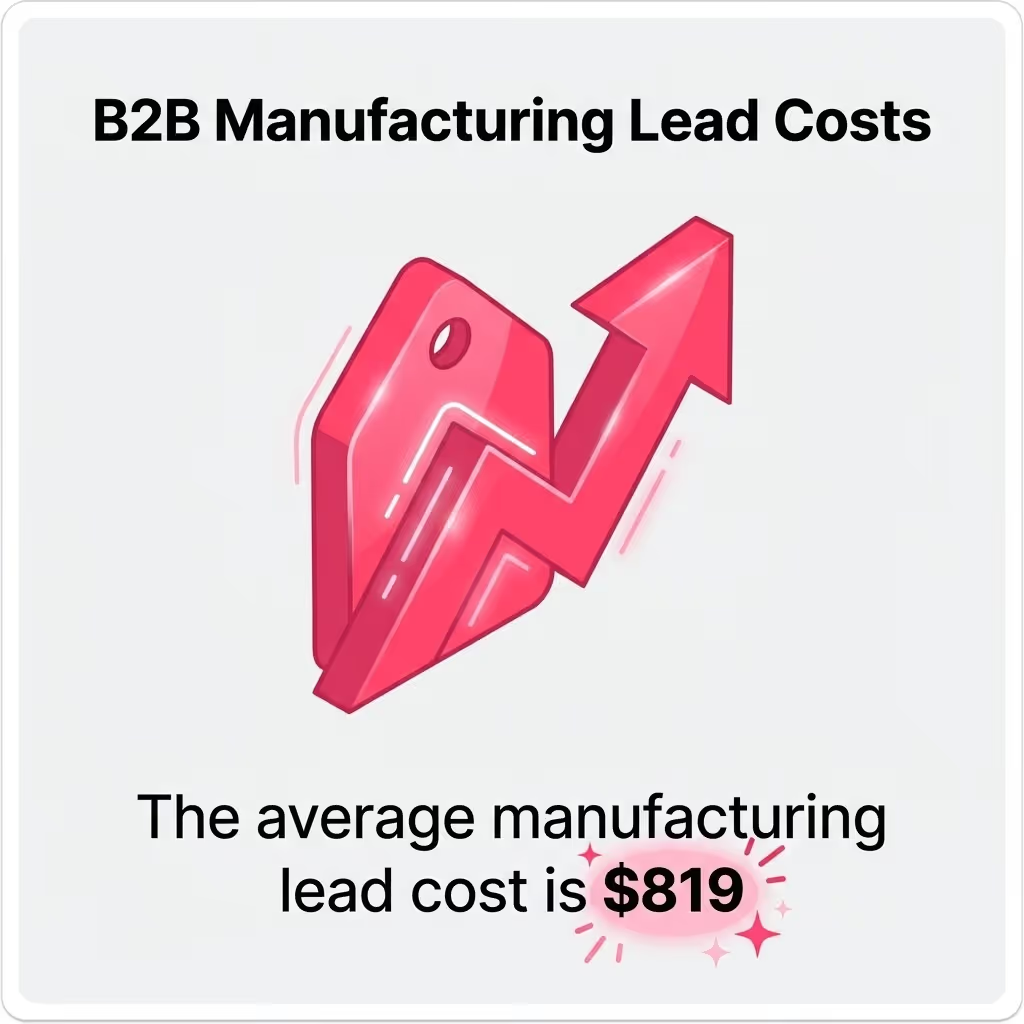
Benchmark: Average B2B manufacturing CPL is $819—aviation often runs higher due to specialization.
Smart aerospace companies view PPC costs through the lens of customer lifetime value rather than immediate returns. An MRO relationship often spans years, with recurring maintenance needs and parts replacements generating consistent revenue.
This long-term perspective changes how you evaluate campaign performance. A campaign producing five qualified MRO leads monthly at $400 per lead costs $2,000 in acquisition.
If two of those leads convert to customers averaging $75,000 in annual contracts, the return justifies the investment many times over.
Aviation digital marketing ROI requires factoring in contract duration, repeat business potential, and referral value. Most aviation companies underestimate total customer value by focusing only on initial purchase amounts.
Track metrics that matter for your business model. Beyond immediate cost per lead, measure qualification rates, contract close percentages, and average deal sizes.
A campaign generating expensive leads that convert at 40% outperforms cheaper leads converting at 5%. Quality trumps quantity in aerospace marketing.
Global advertising revenue continues growing, with commerce advertising expected to reach $178.2 billion in 2025. This expansion includes increased B2B competition for aviation keywords.

Commerce advertising is projected to hit $178.2B in 2025—rising competition impacts aviation keyword costs.
Allocate budgets based on keyword intent rather than volume. A low-volume search like "Boeing 737 hydraulic system overhaul contractor" signals infinitely higher purchase intent than "aircraft maintenance services."
Budget tip: Prioritize high-intent, low-volume queries over broad terms to capture ready-to-buy aviation prospects.
Your budget management strategy should prioritize these high-intent, low-volume terms even when cost per click reaches $50-$100.
Effective aerospace PPC starts with understanding exactly who makes purchasing decisions. In aviation companies, buying committees typically include procurement specialists, engineering managers, and finance directors.
Each stakeholder evaluates suppliers through a different lens. Procurement teams focus on pricing and terms. Engineers prioritize certifications and technical specifications. Finance directors want vendor stability and payment flexibility.
Your campaigns must address all these concerns while remaining laser-focused on specific aviation segments. An ad targeting commercial airlines needs different messaging than one aimed at fixed-base operators.
Segment your aviation PPC campaigns by customer type, service need, and urgency level. Create separate campaign groups for:
Each segment searches differently and responds to distinct value propositions. Charter companies emphasize turnaround speed, while commercial carriers prioritize cost efficiency across large fleets.
Apply advanced audience targeting techniques to reach procurement teams and engineering directors specifically. LinkedIn integration with Google Ads enables job title targeting that isolates decision-makers.
Aviation businesses cluster around major airports, maintenance facilities, and aerospace manufacturing centers. Your targeting should reflect this geographic concentration.
Use geo-targeting strategies to focus spending on regions with high aviation activity. Cities like Seattle, Wichita, and Toulouse house dense concentrations of aerospace companies.
Layer radius targeting around major airports and known MRO facilities. A 50-mile radius around international hub airports captures most relevant decision-makers.
Aviation keyword research requires technical knowledge that standard PPC agencies lack. Generic aviation terms attract researchers and enthusiasts rather than qualified buyers.
Focus on keywords that include technical specifications, part numbers, and certification requirements. Searches containing "AOG" (Aircraft on Ground) signal emergency situations and extreme buying intent.
Your keyword strategy should balance broad service terms with hyper-specific technical queries. Both serve important roles in the customer journey.
Prioritize keywords that demonstrate immediate need and technical knowledge. Someone searching "aircraft hydraulic pump repair near me" likely has an urgent requirement and budget approval.
Target keywords that include:
Long-tail keywords in aviation often signal higher qualification levels. "Airbus A320 APU overhaul certified facility" comes from someone who knows exactly what they need.
Negative keywords prove crucial for aerospace PPC efficiency. Exclude terms that attract job seekers, aviation enthusiasts, and unqualified researchers.
Add negatives for career-related terms (jobs, careers, hiring, salary), educational queries (school, training, course), and consumer aviation (private pilot, flight lessons, aviation museum).
Monitor search term reports weekly to identify new negative keywords. Aviation terminology overlaps with consumer interests in ways that waste budget if left unchecked.
Proper campaign structure determines whether your aviation PPC investment generates qualified MRO leads or burns cash on irrelevant clicks. Organization matters more than individual keyword selection.
Structure campaigns by service type, customer segment, and geographic region. This framework enables precise budget allocation and performance tracking across different aviation markets.
Create dedicated campaigns for emergency services versus scheduled maintenance. AOG situations command premium pricing and different messaging than routine overhaul contracts.
Google Ads for aviation companies should include multiple campaign types working together. Search campaigns capture active demand, while display and remarketing build awareness with longer-cycle buyers.
Search campaigns targeting high-intent MRO keywords form your foundation. These deliver immediate results from procurement teams actively researching suppliers.
Display campaigns on industry publications and aviation websites build brand recognition. Decision-makers often research for months before initiating contact.
Remarketing campaigns nurture previous website visitors through the extended B2B aviation sales cycle. Someone who viewed your avionics repair capabilities but didn't convert needs repeated exposure.
Aviation ad copy must balance technical credibility with clear value propositions. Lead with specific capabilities and certifications that matter to procurement teams.
Effective aerospace PPC ads include certification badges (FAA, EASA, AS9100), turnaround time commitments, and emergency service availability. Technical buyers scan for proof points before clicking.
Skip generic marketing language in favor of specific technical details. "24-Hour AOG Response | FAA Certified | 1,200+ Aircraft Types Serviced" communicates more value than "Quality Aviation Services You Can Trust."
Landing page quality determines whether expensive PPC clicks convert into qualified MRO leads. Aviation decision-makers expect professional, detailed pages that demonstrate technical expertise.
Generic landing pages destroy conversion rates for aerospace companies. A procurement manager clicking an ad for Airbus A350 hydraulic repairs expects detailed service information, not a homepage with stock photos.
Build dedicated landing pages for each major service category and aircraft type. Specificity builds trust with technical buyers who evaluate supplier competence before sharing contact information.
Aviation landing pages require specific trust-building elements that consumer-focused pages can skip. Display certifications prominently, list specific aircraft types serviced, and showcase relevant experience.
Include detailed service descriptions that demonstrate technical knowledge. Generic summaries fail to convince engineering managers that you understand their requirements.
Key elements for high-converting aviation landing pages:
Optimize your conversion funnel specifically for longer B2B sales cycles. Offer multiple conversion paths beyond basic contact forms.
Aviation lead forms need more qualification fields than standard B2B forms. Collecting aircraft type, service urgency, and timeline information helps your sales team prioritize follow-up.
Balance information collection with conversion friction. Asking for too many details reduces form completions, but insufficient qualification wastes sales time on unqualified inquiries.
Test two-step forms that ask basic information first, then collect detailed requirements on a second page. This approach improves initial conversion rates while still gathering necessary qualification data.
Aviation companies need different tracking frameworks than typical B2B businesses. Standard metrics like immediate ROAS fail to capture the long sales cycles and high customer lifetime values.
Implement conversion tracking that follows leads through your entire sales process. Connect PPC campaigns to closed deals, not just form submissions.
Set up proper analytics tracking that attributes revenue to specific campaigns and keywords. This visibility enables data-driven optimization decisions.
Monitor metrics that align with aviation business economics. Cost per lead matters less than cost per qualified opportunity and cost per closed deal.
Review campaign performance monthly rather than weekly. Aviation sales cycles extend over months, making short-term optimizations premature.
Standard last-click attribution undervalues top-of-funnel campaigns in aviation marketing. A decision-maker might interact with your brand dozens of times before converting.
Implement multi-touch attribution that credits all touchpoints in the conversion path. This reveals which campaigns drive awareness versus which close deals.
Track assisted conversions to understand how different campaign types work together. Display campaigns might not generate direct conversions but significantly influence procurement teams who eventually convert through search.
Aviation remarketing campaigns address the extended decision-making timelines common in aerospace purchasing. A single website visit rarely results in immediate contact.
Build remarketing audiences based on page engagement and content consumption. Someone who spent 10 minutes reviewing your capabilities deserves different messaging than a casual browser.
Layer remarketing by content interest, time since visit, and engagement level. This segmentation enables personalized messaging that advances prospects through the consideration process.
Create remarketing lists for different stages of the buyer journey. Early-stage audiences need educational content about your capabilities, while late-stage prospects respond to specific offers.
Segment audiences by service interest, allowing targeted messaging. Someone who viewed avionics repair pages should see avionics-specific remarketing ads, not generic company promotions.
Apply the principles from advanced remarketing strategies to nurture aviation prospects over months-long sales cycles.
Remarketing ads for aviation companies should progress prospects toward conversion without becoming repetitive. Vary creative and messaging based on how long since initial visit.
Early remarketing (days 1-14) reinforces core capabilities and certifications. Mid-cycle remarketing (days 15-45) showcases specific case studies and experience. Late-stage remarketing (days 46+) emphasizes competitive advantages and special offers.
Include new information with each exposure. Procurement teams evaluating multiple suppliers appreciate ads that highlight different aspects of your service rather than repeating the same message.
The aerospace PPC market includes both established MRO providers and newer digital-native competitors. Understanding your competitive environment shapes bidding strategies and messaging differentiation.
Monitor competitor ad presence for your target keywords. Tools like SEMrush and SpyFu reveal which competitors bid on aviation terms and what messaging they emphasize.
Analyze competitor landing pages to identify gaps in their approach. If competitors focus purely on price, differentiate through expertise and certifications.
Google's Auction Insights reports show exactly which competitors appear alongside your ads. This visibility helps identify direct PPC competitors even if they're not traditional business competitors.
Track impression share metrics to understand where you're losing visibility. If competitors consistently outrank you for high-value keywords, adjust bids or improve quality scores.
Monitor overlap rates to see which competitors target identical keywords. High overlap suggests you're fighting for the same prospects and may need messaging differentiation.
Aviation companies often sound identical in their advertising. Generic claims about "quality service" and "experienced technicians" fail to differentiate.
Lead with specific proof points that competitors can't easily copy. Unique certifications, proprietary processes, or exclusive partnerships provide defendable differentiation.
Highlight response times, capacity, and specialty capabilities in ad copy. A competitor claiming "fast service" seems weak compared to your "4-hour AOG response guarantee."
Aviation digital marketing performs best when PPC and SEO work together rather than as isolated tactics. Each channel strengthens the other when properly coordinated.
Use PPC data to inform aviation SEO strategy. Keywords that convert well in paid search deserve organic optimization priority. Search terms that generate qualified MRO leads reveal what procurement teams actually search.
Conversely, strong organic rankings reduce PPC costs by improving quality scores. Google rewards advertisers whose landing pages already rank well organically.
PPC campaigns generate immediate keyword performance data that would take months to gather through organic efforts. Conversion rates, engagement metrics, and lead quality insights transfer directly to aviation SEO priorities.
Test new service pages or content angles through PPC before investing in full SEO campaigns. If a specific service offering converts poorly in paid search, it probably won't perform better organically.
Identify negative keywords from PPC that should inform SEO content strategy. Terms you exclude from paid campaigns often indicate topics to avoid in organic content.
Maintain consistent messaging across PPC ads and organic search results. Procurement teams often see both your paid ads and organic listings simultaneously.
Contradictory claims or dramatically different positioning between channels create confusion and reduce trust. Your PPC emphasis on emergency service should match organic content focus.
Use PPC to support organic visibility for competitive keywords where you rank on page two. Dual presence increases total visibility and click-through rates.
Aviation companies need realistic budget expectations for PPC campaigns targeting high-value MRO leads. Underfunding campaigns guarantee failure in competitive aerospace markets.
Minimum viable budgets depend on target geography and service scope. Local MRO providers serving single airports might succeed with $3,000-$5,000 monthly. National campaigns targeting multiple aviation segments require $15,000-$30,000+ monthly.
Calculate required budget by working backward from lead targets. If you need 10 qualified MRO leads monthly and expect $500 cost per lead, budget $5,000 plus 20% for testing and optimization.
Distribute aviation PPC budgets based on keyword intent and conversion probability. Emergency service campaigns with high intent deserve larger budget allocations than awareness campaigns.
Reserve 20-30% of budget for testing new keywords, ad variations, and landing pages. Optimization requires experimental budget that won't impact core campaign performance.
Sample budget allocation for a $10,000 monthly aviation PPC campaign:
Adjust allocations monthly based on performance data. Campaigns generating qualified leads at acceptable costs deserve increased investment.
Aviation companies new to PPC make predictable mistakes that waste budgets and generate poor results. Awareness prevents these costly errors.
The biggest mistake is treating aviation PPC like consumer advertising. Tactics that work for retail or services fail spectacularly with technical B2B buyers.
Another common error is insufficient landing page specificity. Sending all clicks to your homepage destroys conversion rates with buyers expecting detailed service information.
New aviation advertisers often target generic keywords hoping to maximize reach. Terms like "aviation services" or "aircraft repair" attract unqualified clicks from researchers, students, and aviation enthusiasts.
Resist the temptation to broaden targeting to reduce cost per click. Lower CPC means nothing if clicks come from unqualified visitors.
Focus on narrow, specific terms even when search volume seems low. Ten clicks from qualified procurement teams beat 100 clicks from aviation hobbyists.
Aviation decision-makers increasingly search on mobile devices, especially during emergency situations. An aerospace maintenance director dealing with an AOG situation will search from their phone.
Ensure landing pages load quickly and display properly on mobile. Contact forms must be easy to complete on small screens.
Test your entire conversion funnel on mobile devices. Many aviation companies optimize only for desktop, losing mobile conversions entirely.
Aviation companies often abandon campaigns after weeks without conversions. B2B aviation sales cycles extend over months, making quick judgments premature.
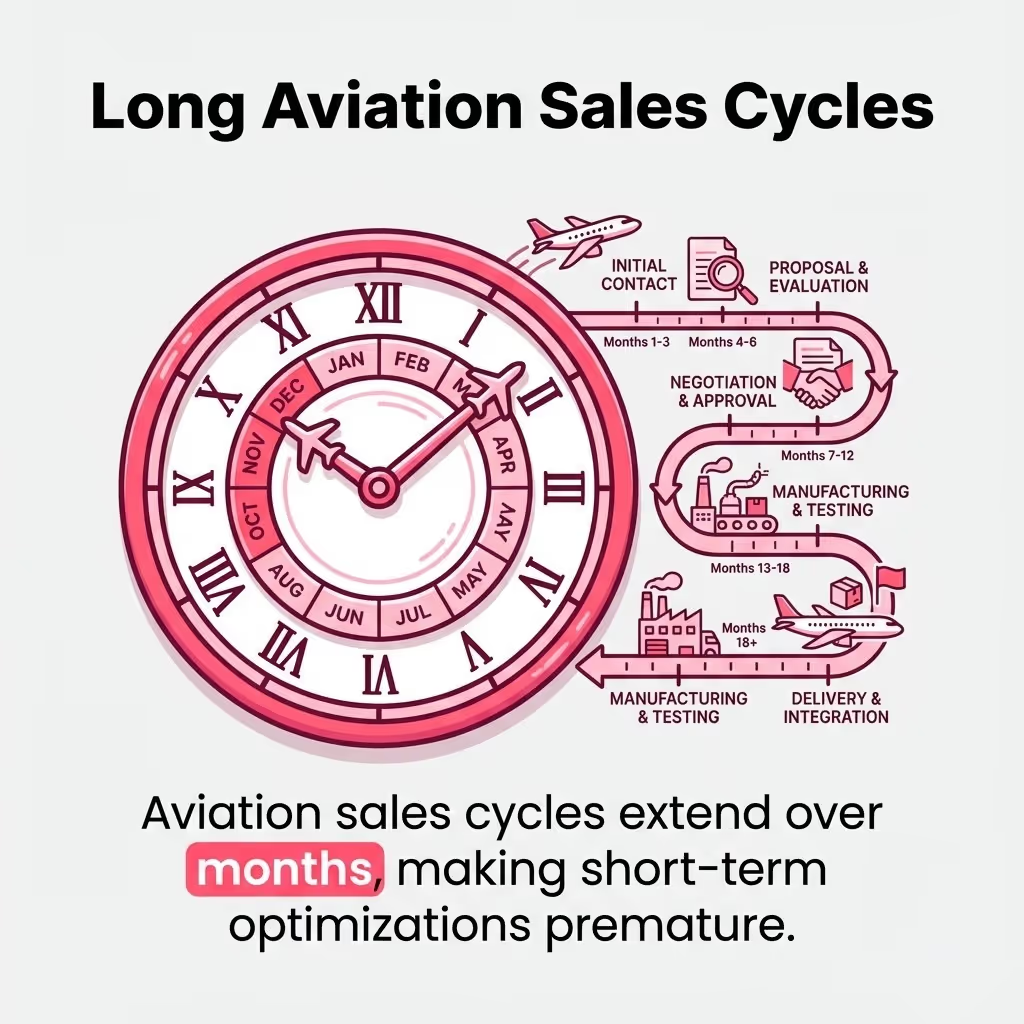
Reality check: Aviation sales cycles span months—optimize for long-term signals rather than weekly noise.
Maintain campaigns for at least 90 days before making significant strategy changes. Earlier optimizations should focus on engagement metrics and lead quality rather than final conversions.
Understand that remarketing and nurturing campaigns might not show direct conversions for months but significantly influence eventual deals.
Launch your aviation digital marketing with a focused, strategic approach rather than trying to do everything simultaneously. Start with core services and proven keywords.
Begin with search campaigns targeting your highest-value services. If avionics repair generates the most profitable contracts, prioritize those keywords first.
Create 3-5 service-specific landing pages before launching campaigns. Each major service category needs its own dedicated conversion path.
Set up proper conversion tracking from day one. Retroactively implementing analytics after campaigns run loses valuable attribution data.
Your initial quarter should focus on establishing baseline performance and gathering optimization data. Quick wins matter less than building a sustainable foundation.
Month 1: Launch core search campaigns with tightly focused keywords. Implement conversion tracking and analytics. Monitor search term reports daily to add negative keywords.
Month 2: Begin remarketing to website visitors. Test different ad copy variations. Expand keyword targeting based on search term report insights.
Month 3: Analyze lead quality and conversion patterns. Adjust bids based on performance data. Scale winning campaigns and pause underperformers.
Track leading indicators like click-through rates, landing page engagement, and form completions before final sales conversions appear. These metrics signal campaign health earlier than revenue data.
Aviation companies investing in PPC campaigns gain immediate access to high-value MRO leads actively searching for services. The key lies in precise targeting, technical messaging, and patient optimization.
Your aerospace PPC strategy should reflect the unique economics of aviation businesses. High cost per lead becomes acceptable when contract values justify the investment.
Success requires understanding that procurement teams evaluate suppliers differently than consumer buyers. Technical credibility, certifications, and specific capabilities matter more than emotional appeals or clever marketing.
Start with tightly focused campaigns targeting your most profitable services. Expand systematically as you gather performance data and identify winning strategies.
The aviation companies that win with PPC combine technical industry knowledge with digital marketing expertise. They understand both what decision-makers search for and how to reach them efficiently.
Your first step is auditing current visibility for high-value keywords in your service area. Where do you appear now, and where do your best prospects actually search?
The second step involves building service-specific landing pages that demonstrate expertise and capture qualified leads. Generic pages can't compete for technical buyers.
Finally, commit to continuous optimization based on real performance data. Aviation PPC rewards patient, systematic improvement over quick fixes and constant pivoting.
The aerospace companies generating consistent MRO leads through PPC didn't achieve results overnight. They built targeted campaigns, tested methodically, and optimized based on actual conversion data.
You can achieve similar results by applying the frameworks and strategies outlined here. The investment pays off when those high-value leads turn into long-term maintenance contracts.