

Lead generation for packaging companies requires a fundamentally different approach than most B2B industries because the sales cycle is longer, the buyer committee is larger, and the decision to switch vendors involves sampling, tooling costs, and supply chain risk. Packaging manufacturers selling corrugated packaging, folding carton, flexible packaging, or label manufacturing solutions face procurement timelines that can run six to eighteen months, multiple stakeholders from procurement managers to packaging engineers to brand managers, and a qualification process that filters most prospects before a single sales conversation begins. A multi-channel lead generation system combining outbound outreach, LinkedIn outreach, cold email sequences, and inbound SEO is the only reliable way to fill a pipeline deep enough to sustain consistent revenue growth.
I spend a lot of time thinking about why smart companies with great products sit on empty pipelines. In packaging, the answer is almost always the same: they're running a general B2B playbook on a very specialized industry. The buyer who approves a corrugated packaging contract at a food and beverage company is not the same buyer who clicks a Facebook ad. Getting in front of the right decision-makers, at the right stage of their procurement cycle, takes a system. This guide builds that system from the ground up.
Packaging company lead generation fails when teams treat it like a volume game, because the packaging industry's complex sales cycle and multi-stakeholder buying process demand precision over quantity.
Most B2B lead generation advice is built for short-cycle, single-decision-maker sales. Packaging manufacturers don't have that luxury. A brand manager at a consumer goods company might love your folding carton samples, but the procurement manager controls the vendor list, the packaging engineer signs off on spec compliance, and the supply chain director won't approve a new supplier without a six-week qualification audit. That's four people, four conversations, and four separate objections to handle before you're even at the RFQ stage.
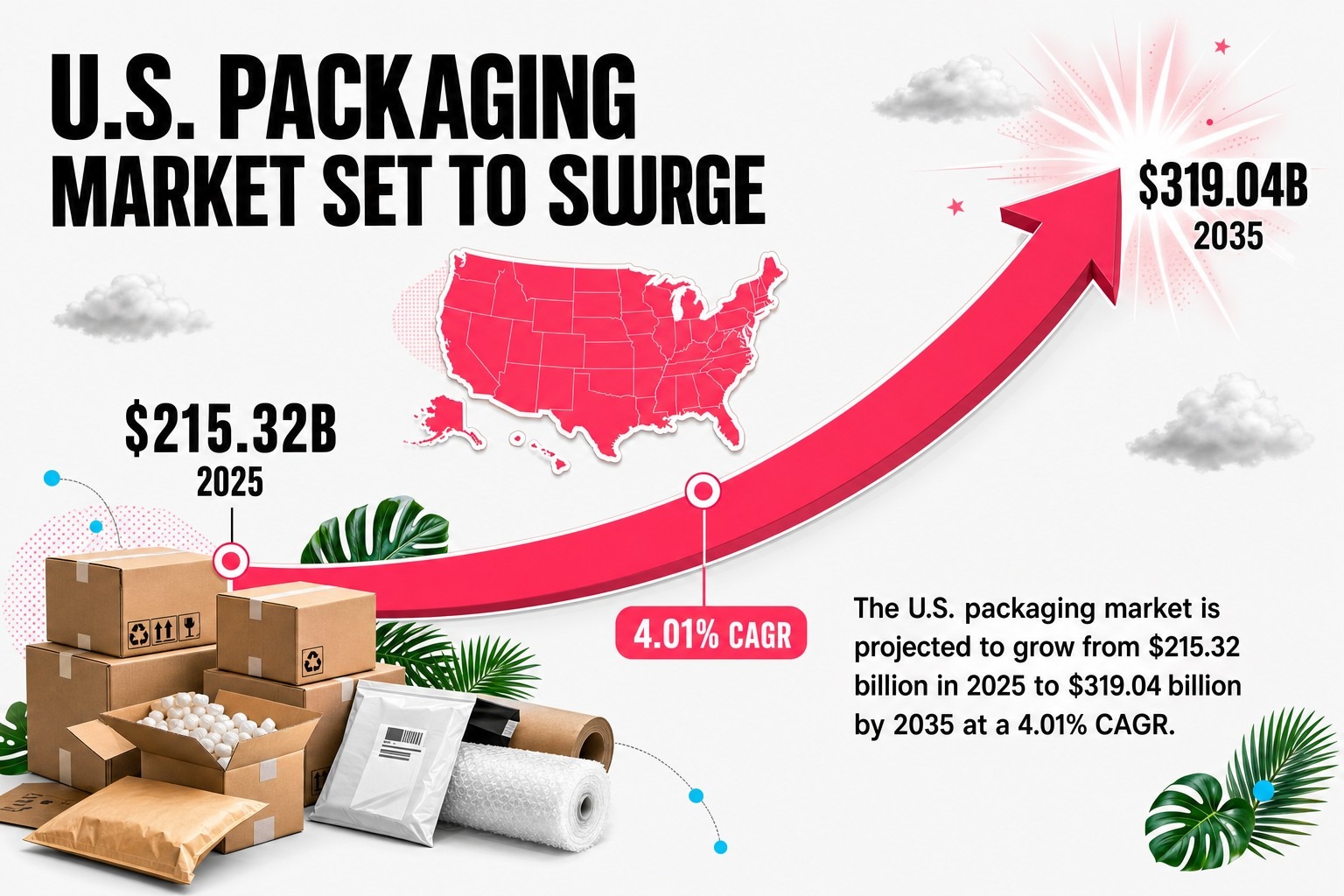
The market size makes this complexity worth navigating carefully. According to Mordor Intelligence's global packaging market report, the global packaging market was valued at approximately $1.22 trillion in 2026, with the U.S. market alone projected to grow from $215.32 billion in 2025 to $319.04 billion by 2035 at a 4.01% CAGR, per Towards Packaging's U.S. market analysis. That kind of growth creates real opportunity. But it also means more packaging manufacturers competing for the same qualified leads.
The qualified leads worth chasing in this industry are not random companies that downloaded a white paper. They are companies with an active packaging need, a budget cycle that aligns with your capacity, and a decision-maker who can actually move the process forward. Building lead generation for packaging companies around that specific profile is what separates teams that book sales meetings from teams that collect business cards at trade shows.
For a broader look at how industrial B2B lead generation differs from general marketing, our industrial lead generation guide covers the structural differences in detail.
Effective packaging company lead generation starts with three distinct buyer personas: procurement managers who control vendor approval, packaging engineers who evaluate technical specifications, and brand managers who drive aesthetic and sustainability requirements.
Most packaging manufacturers I talk to think they're selling to "the buyer." There is no single buyer. There's a committee, and each member has a completely different agenda.
Procurement managers care about price, reliability, and supply chain risk. They're not reading your case studies about beautiful folding carton design. They want to know your on-time delivery rate, your minimum order quantities, and whether you've worked with companies their size before. When targeting procurement managers with cold email or LinkedIn outreach, lead with operational credibility, not creative capability.
Packaging engineers are your technical validators. They're the ones who will run drop tests on your corrugated packaging, check your flexible packaging barrier properties against spec, and verify that your label manufacturing tolerances meet their production line requirements. Cold outreach to packaging engineers should speak their language: compression strength, moisture resistance, die-cut precision. If your sales team can't have that conversation, a technical sales development rep is worth the investment.
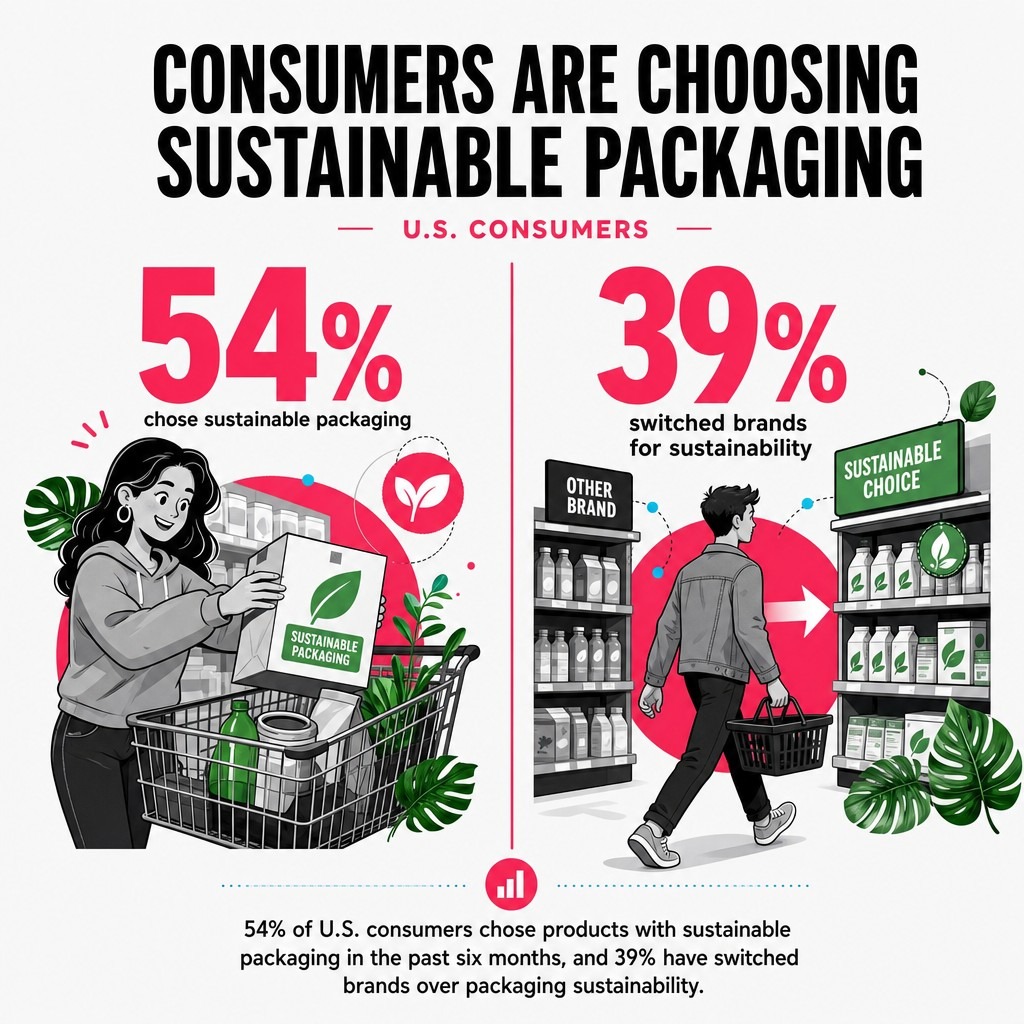
Brand managers are increasingly powerful in the packaging vendor selection process, and sustainability is now a primary driver. EcoPackables' sustainable packaging research found that 54% of U.S. consumers chose products with sustainable packaging in the past six months, and 39% have switched brands over packaging sustainability. That statistic lands differently when a brand manager sees it. It means their job depends on getting sustainable packaging right, which makes eco-friendly packaging credentials a genuine lead generation angle, not just a marketing add-on.
The Mordor Intelligence sustainable packaging market report puts the global sustainable packaging market at $303.80 billion in 2025, growing at 7.29% CAGR. That growth rate is nearly double the overall packaging market. Any packaging manufacturer not actively positioning around sustainability is leaving a significant lead generation angle untouched.
Packaging manufacturers that consistently generate qualified leads run a coordinated multi-channel system, not isolated tactics, because no single channel reaches all three buyer personas across a six-to-eighteen-month sales cycle.
Single-channel strategies fall apart in packaging. A procurement manager might respond to a cold email. A packaging engineer might find you through an organic search for a specific technical problem. A brand manager might engage with a LinkedIn post about sustainable packaging. You need all three channels working at once.
Outbound lead generation remains the fastest way to generate qualified leads for packaging companies with a clear ICP, because it puts your message in front of decision-makers before they start their vendor search.
Cold email for packaging manufacturers works when the message is specific. A generic "we offer custom packaging solutions" email goes straight to the trash. An email that references the prospect's industry, mentions a specific packaging challenge common to food and beverage brands, and offers a concrete reason to respond gets meetings. Keep the sequence to four to six touchpoints over three weeks. More than that and you're annoying; fewer and you're forgettable.
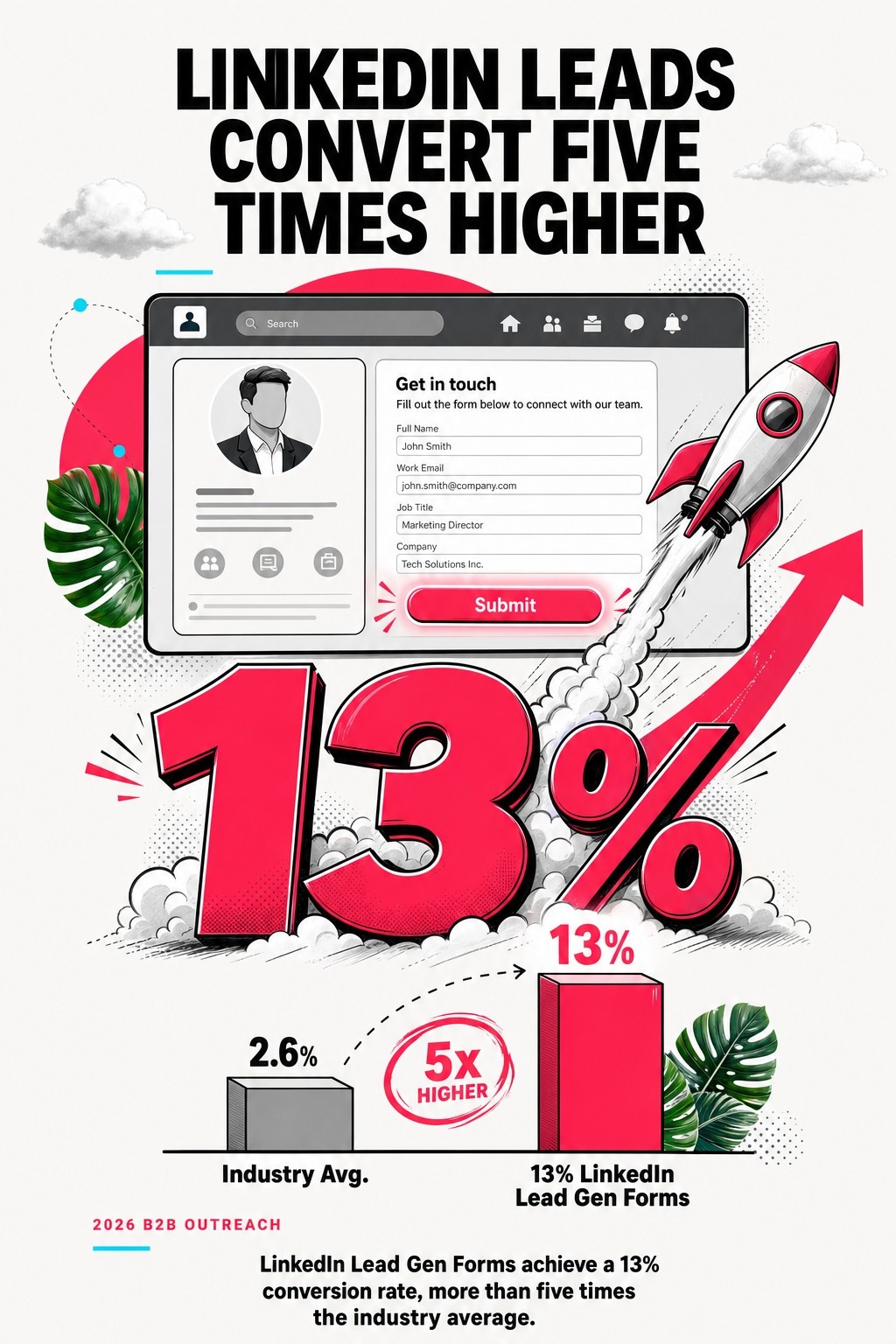
LinkedIn outreach for packaging decision-makers is arguably more valuable than cold email in 2026, because it pairs the message with a visible professional profile. According to Sopro's LinkedIn lead generation statistics report, LinkedIn Lead Gen Forms achieve a 13% conversion rate, more than five times the industry average. That number reflects what happens when you get targeting right. For packaging manufacturers, LinkedIn's job title filters let you reach procurement managers, packaging engineers, and brand managers at specific company sizes and industries with precision that cold calling simply can't match.
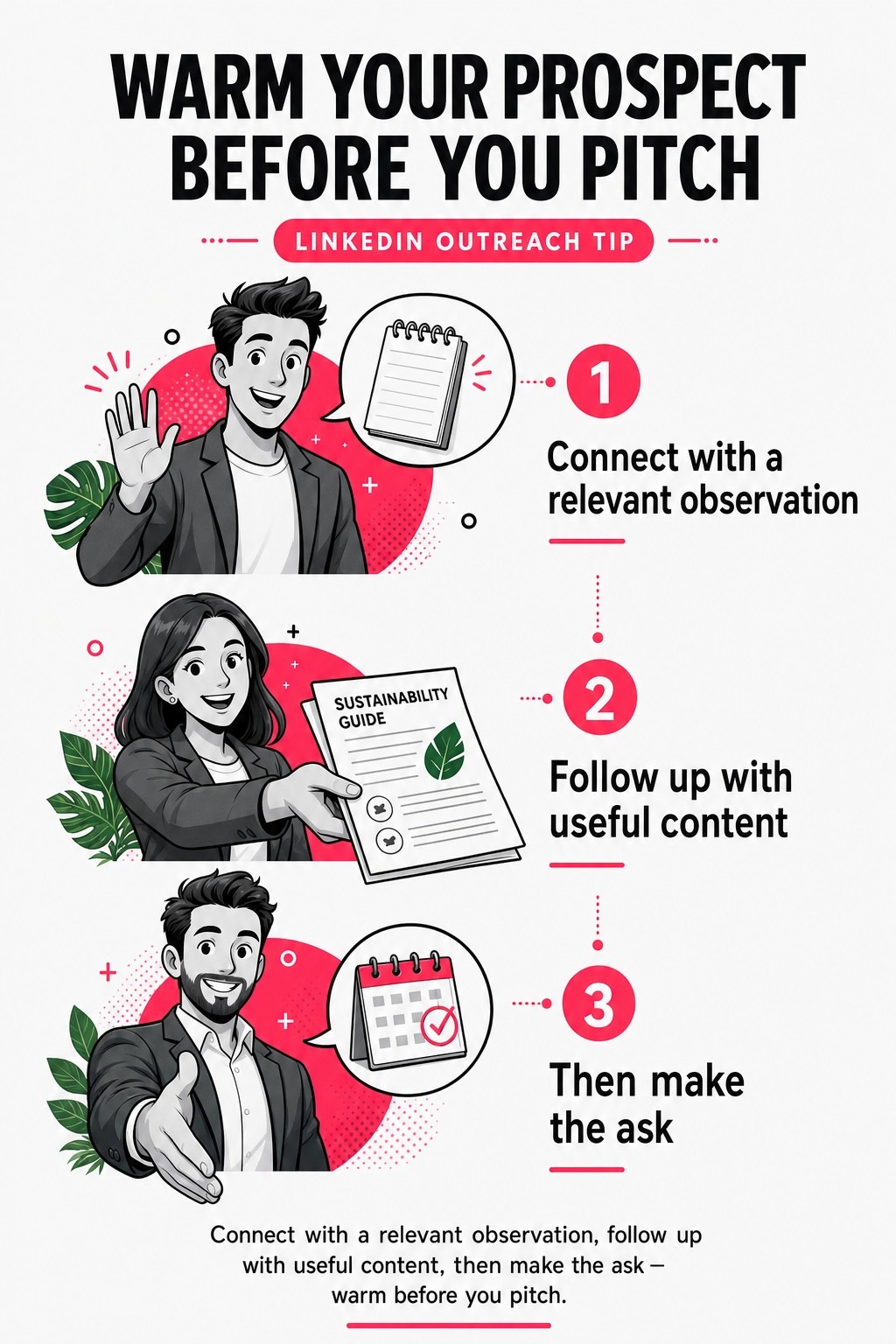
The key mistake I see packaging manufacturers make with LinkedIn outreach is treating it like a mass broadcast. Connection request, immediate pitch, silence. That's not outreach. That's spam with extra steps. The approach that works is a three-part sequence: connect with a relevant observation, follow up with a useful piece of content (a spec sheet, a sustainability guide, a case study), then make the ask. Warm before you pitch.
The complex sales cycle in packaging means most qualified leads won't respond to the first contact. A structured follow-up sequence across cold email and LinkedIn outreach keeps your packaging company in front of decision-makers during the weeks or months before they're ready to issue an RFQ.
Cirrus Insight's lead generation statistics show that companies excelling at lead nurturing generate 50% more sales-ready leads at 33% lower cost. In packaging, where the sales cycle can stretch past a year, systematic follow-up isn't optional. It's the entire strategy.
For a complete framework on building B2B pipeline through structured outreach, our B2B lead generation pipeline strategies guide walks through the mechanics in detail.
A high-converting outbound strategy for packaging manufacturers requires a precise ideal customer profile (ICP), segment-specific messaging, and a lead qualification process that filters prospects before they reach a sales conversation.
Start with list building. The ICP for a corrugated packaging manufacturer is different from the ICP for a flexible packaging supplier or a label manufacturing business. Corrugated targets heavy ecommerce brands, moving companies, and industrial product manufacturers. Flexible packaging targets food and beverage, personal care, and pet food brands. Label manufacturing prospects include wine, spirits, pharmaceutical, and consumer goods companies. Blending these segments into one outreach list produces mediocre messaging for everyone.
Build separate outreach lists for each packaging segment you serve. Define company size by revenue range or employee count, not just industry. A 50-employee private label food brand has completely different procurement dynamics than a 5,000-employee consumer goods company, even if both buy flexible packaging.
Qualification criteria should apply before the first outreach touch. Use BANT as a starting filter: Budget (do they have a packaging budget that matches your minimum order size?), Authority (is this contact a decision-maker or an influencer?), Need (is there a signal they're actively sourcing, expanding, or dissatisfied with a current supplier?), and Timeline (is their procurement cycle active?). Leads that fail two or more of these filters before contact aren't qualified leads. They're a waste of a sales development rep's time.
Personalization in outbound lead generation for packaging companies isn't about using the prospect's first name. It's about demonstrating that you understand their specific packaging category and its challenges.
HubSpot's marketing statistics show that 93% of marketers report personalization improves leads or purchases. For packaging manufacturers, that means messaging to a cosmetics brand manager should reference shelf appeal and unboxing experience, while messaging to a pharmaceutical procurement manager should reference compliance documentation and serialization capability. Same packaging manufacturer. Completely different message.
Inbound lead generation through SEO and content marketing gives packaging manufacturers a channel that generates qualified leads around the clock, without relying on outbound activity or trade show attendance.
Most packaging manufacturers have websites that look like digital brochures. They list capabilities, show equipment photos, and end with a contact form that asks for eleven fields. That's not a lead generation asset. It's a credential check that most buyers will leave without completing.
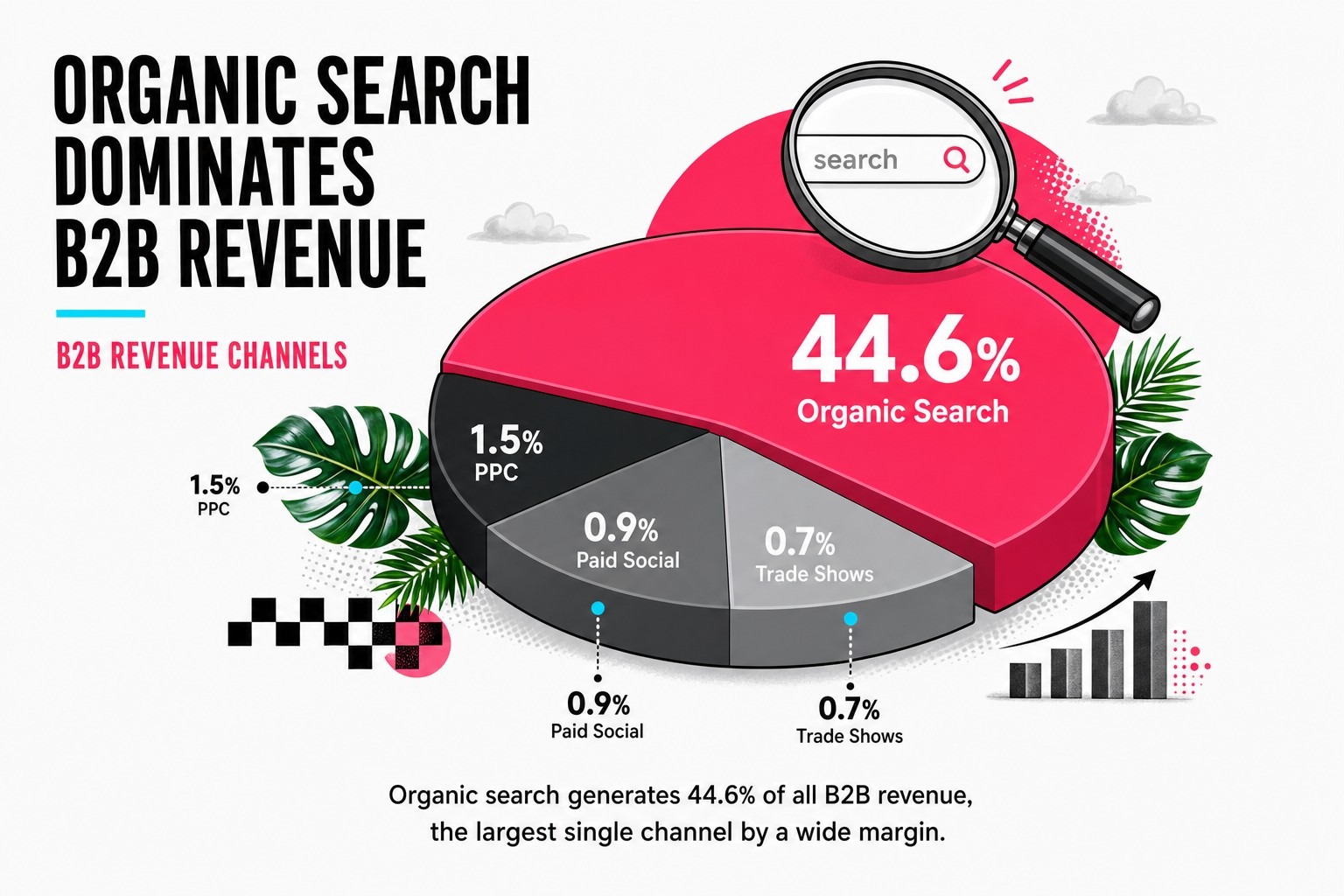
The data on organic search in B2B is hard to argue with. SEOProfy's B2B SEO statistics research shows that organic search generates 44.6% of all B2B revenue, the largest single channel by a wide margin. And manufacturing lead generation benchmarks show that SEO converts at 2.6% for B2B companies, outperforming PPC at 1.5%, paid social at 0.9%, and trade shows at 0.7%.
Effective content marketing for packaging companies targets the specific questions buyers ask during vendor research. Procurement managers search for things like "corrugated packaging supplier minimum order" and "how to qualify a new packaging vendor." Packaging engineers search for "flexible packaging moisture barrier options" or "folding carton coating types." Brand managers search for "sustainable packaging materials for food brands" or "recyclable label manufacturing options."
Each of those searches is a lead waiting to happen. A packaging manufacturer with content that answers them precisely and authoritatively will appear in those results. One without it won't. The content investment required to capture those searches is manageable. A detailed technical guide on corrugated packaging compression testing is not a two-hour writing project. But it will generate qualified leads from packaging engineers for years.
Snov.io's lead generation statistics research found that 74% of B2B marketers consider content marketing effective for generating prospective customers. The packaging companies already investing in B2B content are getting compounding returns while competitors are still paying for trade show booths. Our guide on B2B content marketing for manufacturers covers the full production and distribution framework.
Sustainability content is now a primary inbound lead generation tool for packaging manufacturers, because brand managers and sustainability directors are actively searching for eco-friendly packaging solutions and compliance guidance.
A packaging manufacturer that publishes detailed guides on recyclable materials, compostable packaging options, extended producer responsibility (EPR) compliance, or carbon footprint reduction in packaging supply chains is positioning itself as a resource for decision-makers who are under pressure to deliver sustainable packaging solutions. That positioning generates inbound leads from buyers who arrive pre-educated and pre-qualified. For a step-by-step approach to ranking content in B2B industrial markets, our B2B SEO guide for industrial companies covers the technical and content framework together.
The lead qualification process for packaging companies should eliminate poor-fit prospects before the sales cycle begins, because an unqualified lead at the RFQ stage wastes more resources than a missed outreach touch ever would.
This is where packaging manufacturers consistently lose time. A brand manager sends a vague inquiry about "custom packaging options." The sales team spends three hours preparing a capability deck, sends samples, and follows up four times. Then finds out the prospect wanted 500 units at a price point that doesn't cover tooling costs. That's not a failure of outreach. That's a failure of qualification.
Buying signals in packaging B2B lead generation include: companies that have recently launched a new product line (packaging need incoming), brands that have publicly announced sustainability commitments (procurement mandate incoming), ecommerce brands that have crossed a revenue threshold where custom packaging makes economic sense, and companies whose current supplier has had public quality or supply chain issues.
These signals are available through LinkedIn activity, press releases, industry publications, and supplier review forums. A sales development rep who monitors these signals for target accounts can time outreach to match an active buying window rather than cold-pitching into silence.
Build a simple scoring model for inbound and outbound qualified leads. Assign points for ICP fit (industry, company size, packaging segment), buying authority (decision-maker vs. influencer), engagement level (requested samples, downloaded technical content, replied to outreach), and timeline signals (active RFQ, known contract renewal date). Any lead below a threshold score goes to a nurture sequence. Leads above it go to a sales development rep for direct follow-up.
The payoff for a rigorous lead qualification process is significant. 6sense's 2025 B2B buyer experience report found that 94% of B2B buyers were using large language models in their buying process in 2025. That means buyers arrive at a sales conversation already partially informed. Qualified leads who have done their research are faster to close. Unqualified leads who are just "exploring options" consume the same sales resources and close at a fraction of the rate.
Packaging company lead generation performance should be measured against metrics that reflect the industry's long sales cycle: RFQ rate, qualified lead-to-meeting conversion, sales cycle length by segment, and pipeline value by channel.
Vanity metrics kill packaging sales pipelines. Impressions, follower counts, and email open rates feel good in a weekly report and mean nothing when the quarter ends. The numbers that matter are the ones that connect outreach activity to revenue outcomes.
For manufacturing and industrial B2B companies, the average website conversion rate is approximately 2.2%, according to SERPsculpt's B2B conversion rate benchmarks. That's your baseline. If your packaging company's website converts below that on qualified traffic, the problem is on-site, not in your outreach. If it converts above it, your inbound channel is working and deserves more investment.
Sales and marketing alignment in packaging lead generation means both teams agree on the definition of a qualified lead before any outreach begins, not after a quarter of finger-pointing about lead quality.
Set a shared service level agreement: marketing delivers leads that meet the ICP score threshold, sales follows up within 24 hours and provides disposition notes within two weeks. Without that agreement, sales blames marketing for bad leads and marketing blames sales for slow follow-up. The pipeline stagnates and nobody learns anything useful.
Outsourced front-end sales support is worth serious consideration for packaging manufacturers that don't have the internal headcount to run a dedicated outbound function. A specialized SDR team with packaging industry experience can run cold email sequences, LinkedIn outreach, and appointment setting while the internal sales team focuses on closing and account management. The economics work when the cost-per-qualified-lead from outsourced support is lower than the cost of a full-time SDR. Given that GoConsensus's 2025 B2B buyer behavior research shows B2B customer acquisition costs have increased 15 to 21% across industries in recent years, controlling front-end sales costs through outsourced support has become a real strategic option rather than a compromise.
The sales cycle for packaging manufacturers typically runs six to eighteen months from first contact to signed contract, depending on the packaging segment, order size, and whether the prospect needs to qualify a new supplier from scratch. Corrugated packaging and label manufacturing deals at smaller volumes can close faster. Large-volume flexible packaging or folding carton contracts with major consumer goods brands routinely take a year or more.
Cold email works for packaging buyer outreach when the message addresses a specific problem relevant to the prospect's packaging segment, avoids generic capability statements, and makes a clear, low-friction ask (a 15-minute call, a sample request, a spec conversation). Sequences of four to six touches over three weeks outperform single-email blasts by a wide margin.
Target the procurement manager and packaging engineer simultaneously where possible, because procurement managers control vendor approval and packaging engineers control technical qualification. Brand managers and sustainability leads are valuable secondary contacts, especially when eco-friendly packaging credentials are a differentiator.
Outsourced front-end sales support makes sense for packaging manufacturers that have a clear ICP and strong product-market fit but lack the internal headcount to run consistent outbound activity. The key is finding an outsourced SDR team with demonstrated experience in manufacturing or industrial B2B sales, not a generic lead generation agency that will apply the same script to packaging that they use for SaaS.
Sustainability is now a genuine lead generation angle, not just a brand positioning point. Brand managers and sustainability directors at consumer goods, food and beverage, and cosmetics companies are under direct pressure from retailers and consumers to source eco-friendly packaging. A packaging manufacturer that can credibly address recyclability, compostability, and reduced material use will get invited into RFQ processes that non-sustainability-focused competitors never see.
Organic SEO and technical content marketing are the highest-ROI inbound channels for packaging manufacturers. Search intent from packaging engineers and procurement managers is highly specific and solution-focused, which means a well-ranked technical guide or capability page can generate qualified leads consistently without ongoing paid spend.
Packaging company lead generation works when it's built around the specific dynamics of the industry: long sales cycles, multi-stakeholder buying committees, segment-specific messaging, and a qualification process that protects sales capacity. The companies booking consistent sales meetings aren't relying on any single channel. They're running coordinated outbound through cold email and LinkedIn outreach, building inbound through SEO and sustainability content, and qualifying aggressively so their sales teams spend time on opportunities that can actually close. Start by picking one outbound segment and one inbound content topic. Run both for 90 days. Measure RFQ rate and meeting conversion, not impressions. That's the first concrete step, and it's the one that separates packaging manufacturers with full pipelines from the ones still waiting for trade show follow-ups to come through. For the manufacturing-specific version of this system, our manufacturing lead generation guide covers the full framework.