

Most manufacturers wait for buyers to find them. That's like hoping a drill press fixes itself.
The best manufacturing operations don't work that way. They build systematic lead generation machines that bring qualified prospects directly to their sales teams.
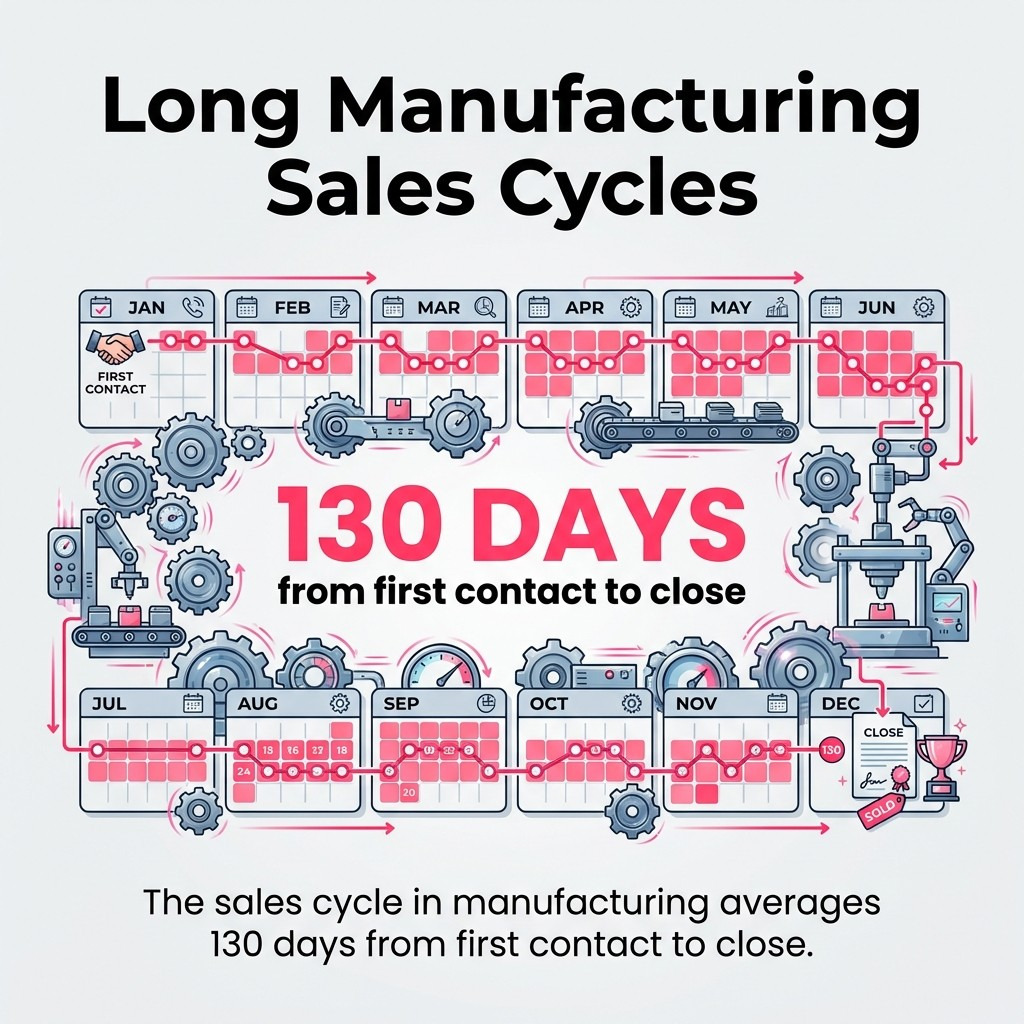
Here's what makes this challenging: the sales cycle in manufacturing averages 130 days from first contact to close. That's four months of nurturing, educating, and relationship-building before you see revenue.
But there's good news. When you implement the right lead generation strategies, you're not just filling your pipeline with random inquiries. You're attracting decision-makers who actually need what you manufacture.
I've spent years helping B2B companies optimize their digital marketing. The manufacturers who succeed don't chase every lead. They build systems that attract qualified buyers and guide them through complex purchasing decisions.
This guide shows you how to build that system. You'll learn which channels work best for manufacturing lead generation, how to create content that speaks to engineers and procurement professionals, and how to measure what's actually working.
Manufacturing lead generation is different from consumer marketing in three critical ways.
First, your buyers are professionals making decisions worth thousands or millions of dollars. They're not impulse shopping. They're researching specifications, comparing suppliers, and building business cases.
Second, multiple people influence every purchase. You're not selling to one person. You're convincing engineering teams, procurement managers, operations directors, and finance approvers.
Third, the technical complexity matters. Your prospects need detailed information about tolerances, materials, certifications, and capabilities. Generic marketing messages fail.
Successful manufacturing lead generation targets these sophisticated B2B buyers with educational content and technical proof. You're building trust before you ever talk price.
The goal isn't volume. It's quality. One qualified lead from a major OEM beats a hundred tire-kickers.
Selling manufacturing services isn't like selling software subscriptions or consumer products. The entire buying process operates differently.
Manufacturing sales cycles are significantly longer than most industries. While SaaS companies close deals in weeks, manufacturers work through months of technical discussions, sample approvals, and procurement reviews.
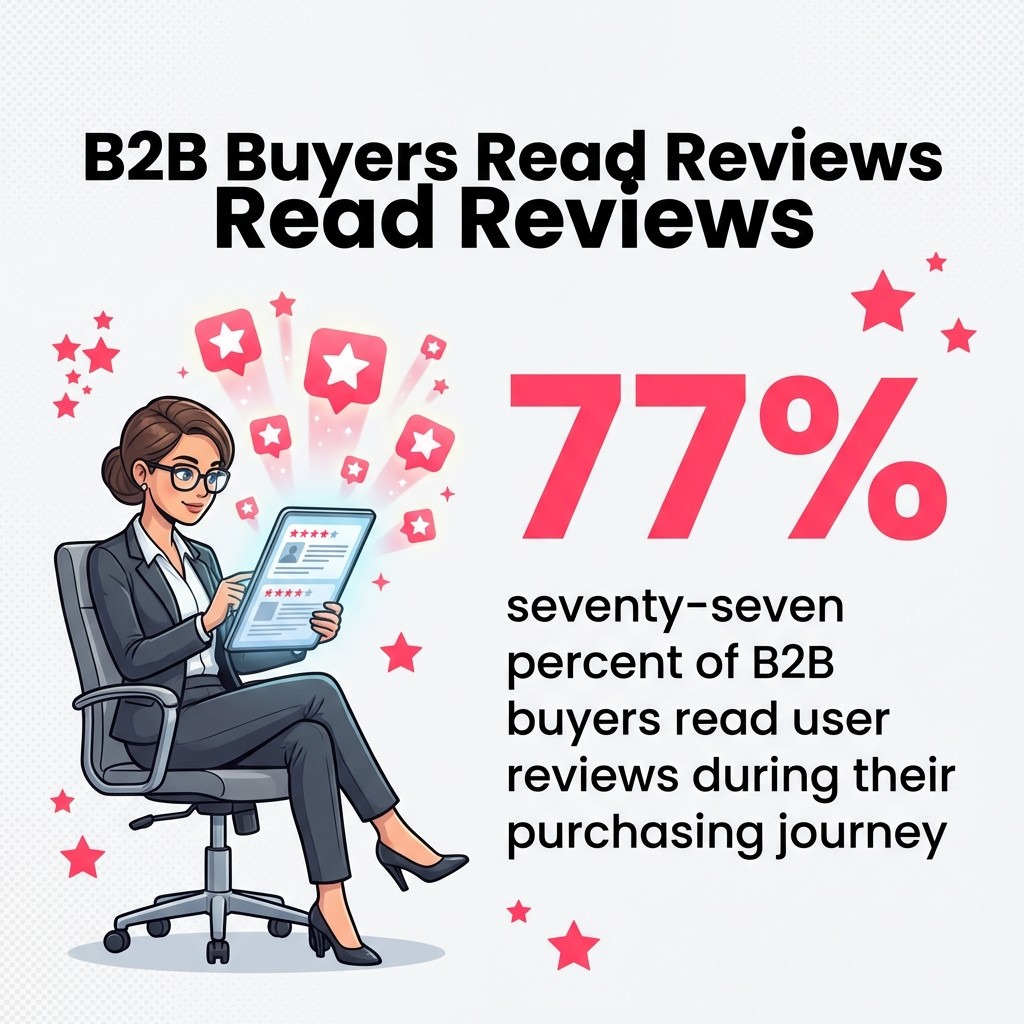
Your buyers also do extensive research before contacting you. 77% of B2B buyers read user reviews during their purchasing journey. They're reading case studies, checking certifications, and evaluating your technical capabilities long before they submit an RFQ.
The decision-making structure creates another layer of complexity. You're not convincing one buyer. You're addressing concerns from multiple stakeholders with different priorities.
Engineers care about specifications and quality. Procurement teams focus on pricing and terms. Operations directors want reliability and delivery speed. Each person needs different information to say yes.
Price also plays a different role. In consumer marketing, you might hide pricing to capture leads. In manufacturing, serious buyers expect transparency about capabilities and approximate costs.
Finally, relationships matter more. Manufacturers choose suppliers they trust for years, not months. Your lead generation strategy must build that long-term credibility from the first interaction.
This is why generic B2B tactics often fail for manufacturers. You need strategies designed for complex, technical, relationship-driven sales.
Now that you understand what makes manufacturing lead generation unique, let's examine the strategies that actually fill pipelines with qualified prospects.
Account-based marketing treats individual companies as markets of one. Instead of casting a wide net, you target specific manufacturers who fit your ideal customer profile.
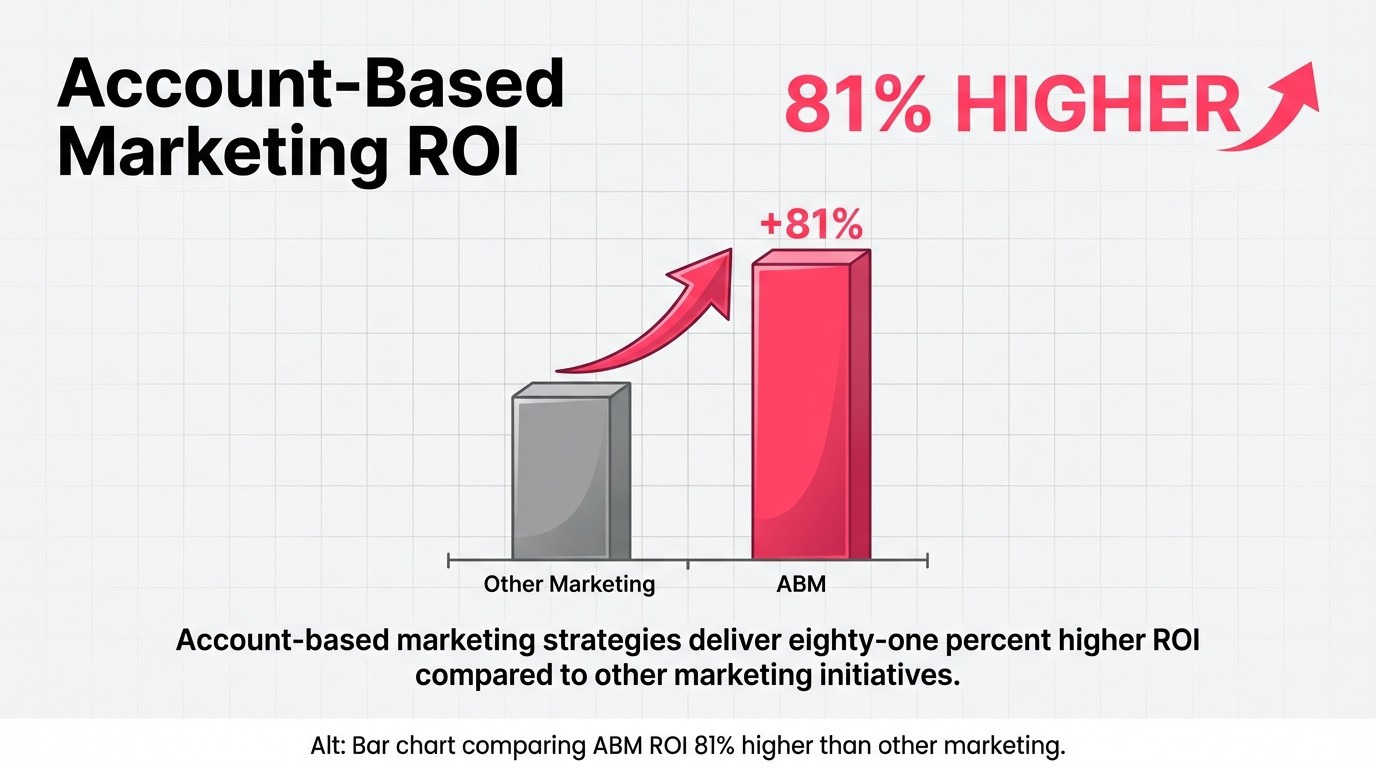
This approach works exceptionally well for manufacturers. Account-based marketing strategies deliver 81% higher ROI compared to other marketing initiatives.
Here's how to implement it: First, identify 20-50 dream accounts. These are companies that match your capabilities perfectly and represent significant long-term value.
Next, research each account thoroughly. Who are the engineers? Who runs procurement? What projects are they working on?
Then create customized content for each account. This might include case studies from similar manufacturers, technical documents addressing their specific challenges, or capability overviews tailored to their industry.
Use multiple channels to reach decision-makers at these accounts. LinkedIn ads targeted to specific job titles, direct mail with technical samples, personalized email sequences, and targeted content syndication.
Trade shows remain powerful for manufacturing lead generation because they enable face-to-face technical demonstrations.
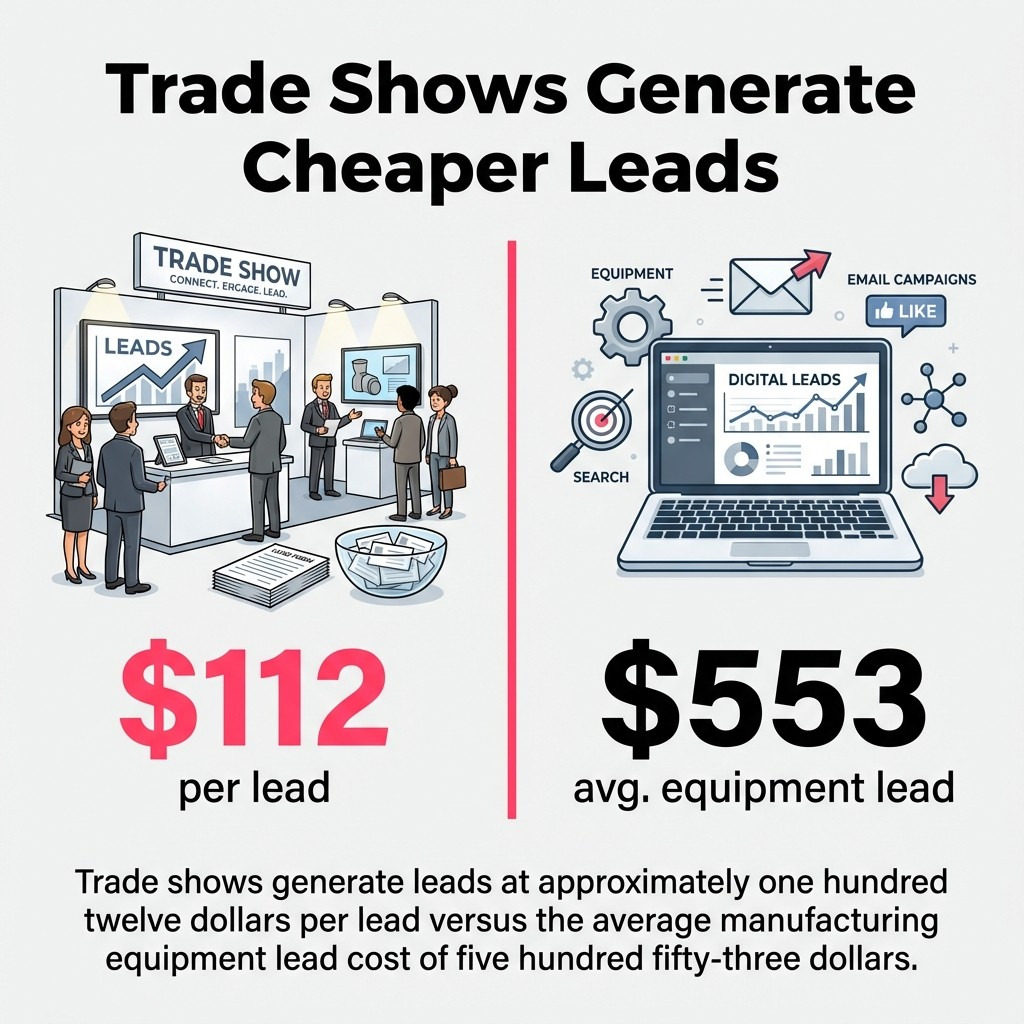
The economics work in your favor. Trade shows generate leads at approximately $112 per lead, which is dramatically lower than the average manufacturing equipment lead cost of $553.
But success requires strategy beyond booth presence. Promote your attendance three months before the show through email campaigns and social media.
Schedule meetings with key prospects in advance. Don't rely on booth traffic alone.
Bring technical experts who can answer detailed questions. Engineers trust engineers more than salespeople.
Capture detailed information from every meaningful conversation. Use a mobile CRM app to record specific interests, project timelines, and technical requirements.
Follow up within 48 hours while the conversation is fresh. Reference specific details from your discussion to demonstrate attention.
Your existing partners already have relationships with potential customers. Activating these networks creates warm introductions instead of cold outreach.
Start by identifying which partners serve markets adjacent to yours. A fastener manufacturer might partner with machinery builders who need their products.
Create co-marketing programs that benefit both parties. Joint webinars, shared case studies, or bundled solutions give partners reasons to recommend you.
Provide partners with lead generation tools. This includes technical sales sheets, sample kits, and referral incentives that make recommendations easy.
Track which partnerships generate qualified leads. Double down on relationships that produce results.
Satisfied customers are your most credible salespeople. Their endorsements carry more weight than any marketing message.
70% of B2B purchasers report being influenced by case studies in their buying decisions. Direct referrals from peers are even more powerful.
Build a formal referral program by identifying your most satisfied customers. Ask them which companies face similar challenges to what you solved for them.
Make referrals easy by providing simple introduction templates. Don't force customers to write elaborate endorsements.
Reward referrals appropriately. This might include service credits, priority scheduling, or reciprocal referrals.
Close the loop by updating referring customers on outcomes. When they see their referrals become successful projects, they'll make more introductions.
These foundational strategies create multiple pathways for qualified prospects to discover your capabilities. Now let's examine how content marketing amplifies each approach.
Content marketing transforms how manufacturers attract and educate prospects. Instead of interrupting buyers with ads, you create resources that answer their questions.
The strategy works because modern B2B buyers research independently before contacting suppliers. Your content needs to be there when they're looking.
Engineers and technical buyers trust detailed documentation over marketing claims. White papers that explore manufacturing processes, material properties, or design considerations demonstrate expertise.
Create white papers addressing specific technical challenges your prospects face. A precision machining company might publish research on achieving tighter tolerances with difficult materials.
Include actual data, test results, and methodology. Technical buyers spot marketing fluff immediately.
Gate these resources behind simple forms that capture company information, role, and project timeline. This converts readers into identifiable leads.
Case studies prove you've solved problems similar to what prospects face. They provide social proof and demonstrate capabilities in context.
Structure case studies around the prospect's perspective. Start with the challenge a customer faced, explain why it mattered, describe your solution approach, and quantify results.
Include specific details that establish credibility. Mention the equipment used, materials selected, tolerances achieved, and timelines met.
Feature diverse industries and applications. This helps prospects see how your capabilities transfer to their specific needs.
For more depth on building effective manufacturing content strategies, see our complete guide to B2B content marketing for manufacturers.
Video shows capabilities that words can't adequately describe. Seeing your equipment in operation, quality control processes, or production flow builds confidence.
Create short videos demonstrating specific capabilities. A 90-second clip showing a complex setup or difficult operation proves expertise.
Film facility tours that highlight certifications, quality systems, and technology investments. This addresses due diligence questions before prospects visit.
Host videos on your website and YouTube. Optimize titles and descriptions with technical terms prospects search for.
Application notes help prospects solve specific problems using your products or services. They're educational first, promotional second.
Write guides addressing common technical questions. A metal finishing company might create application notes for different coating selection scenarios.
Make guides immediately useful without requiring purchase. Prospects remember who helped them even if they're not ready to buy.
Update guides regularly as processes improve or new capabilities develop. Fresh content signals active expertise.
This content positions your company as a knowledge resource, not just a supplier. When prospects need what you manufacture, they'll contact the company that educated them.
Your website is your most important lead generation asset. It works 24/7, answers questions, and converts visitors into qualified prospects.
But only if it's optimized correctly.
Manufacturing websites often fail because they prioritize appearance over function. Pretty designs don't generate leads. Strategic optimization does.
Technical buyers search differently than consumers. They use specific process terms, material specifications, and industry jargon.
Optimize for long-tail keywords that indicate buying intent. "CNC machining services" is competitive and vague. "Titanium CNC machining aerospace components" attracts qualified prospects.
Create dedicated pages for each capability, process, material, and industry you serve. This builds topical authority and captures specific searches.
Include technical specifications, certifications, and equipment lists. Search engines reward detailed, relevant content.
For detailed implementation strategies, review our ultimate guide to manufacturing SEO.
Traffic without conversions wastes marketing budget. Your website must convert visitors into identifiable leads.
Currently, the manufacturing industry operates with an average website conversion rate of 2.2%. That means 98 out of 100 visitors leave without taking action.
Improve this by making contact pathways obvious. Place clear calls-to-action on every page. "Request a Quote," "Download Capability Statement," or "Schedule Technical Discussion" buttons should stand out.
Reduce form friction by asking only essential questions initially. You can gather detailed requirements after establishing contact.
Provide multiple contact options. Some prospects prefer phone calls, others want email, and many like online forms. Accommodate all preferences.
Test different approaches systematically. Change one element at a time and measure impact on conversion rates.
Generic homepage visits rarely convert. Dedicated landing pages aligned with specific campaigns perform better.
Create landing pages for each major capability or target market. A landing page for automotive stamping should differ from one targeting medical device manufacturing.
Match landing page content to the source that drove traffic. If someone clicks a LinkedIn ad about rapid prototyping, send them to a rapid prototyping landing page, not your homepage.
Remove navigation distractions on landing pages. Every element should support one conversion goal.
Include relevant case studies and technical specifications on each landing page. Give prospects the information they need to take the next step.
Engineers and buyers research on phones and tablets, not just desktop computers. Your website must function flawlessly on all devices.
Test your website on multiple devices and screen sizes. Forms should be easy to complete on smartphones.
Ensure PDF downloads work properly on mobile. Technical documents shouldn't require desktop access.
Optimize page speed for mobile networks. Slow-loading sites lose prospects before they see your capabilities.
These optimizations transform your website from a digital brochure into an active lead generation system.
Organic strategies build long-term lead flow, but paid advertising delivers immediate visibility to qualified prospects.
The key is targeting precisely and measuring ruthlessly.
Google Ads captures prospects actively searching for manufacturing capabilities. These are high-intent leads already looking for solutions.
Focus on specific capability keywords rather than generic terms. Bid on "medical device injection molding" instead of just "injection molding."
Use exact match and phrase match keywords to control costs. Broad match wastes budget on irrelevant searches.
Create separate campaigns for different capabilities or industries. This allows precise budget allocation and message customization.
Write ad copy that qualifies prospects. Mention specific industries, certifications, or capabilities to attract the right clicks.
Send clicks to dedicated landing pages, not your homepage. Match the landing page content exactly to the ad promise.
LinkedIn targets decision-makers by job title, company size, and industry. This precision makes it ideal for manufacturing lead generation.
Create sponsored content campaigns targeting specific roles. Reach procurement managers at companies with 500+ employees in automotive manufacturing.
Use LinkedIn's account-based marketing features to target specific companies. This amplifies your ABM strategy.
Test different content formats. Carousel ads showcasing capabilities, video ads demonstrating processes, and document ads promoting white papers all perform differently.
Set conservative budgets initially and scale what works. LinkedIn costs per click are higher than Google, but leads are often more qualified.
Most website visitors aren't ready to contact you on their first visit. Retargeting keeps your company visible throughout their research process.
Install tracking pixels on your website to build retargeting audiences. Create different audiences based on pages visited.
Show different ads based on behavior. Someone who viewed your capabilities page needs different messaging than someone who started a quote request.
Run retargeting campaigns on both Google Display Network and LinkedIn. Different platforms reach prospects in different contexts.
Limit frequency to avoid annoying prospects. Showing the same ad 50 times creates negative impressions.
These paid strategies complement organic efforts by ensuring visibility during critical research phases. Next, let's examine how to activate leads through direct outreach.
Email remains one of the most effective channels for manufacturing lead generation, especially when you're reaching out to identified prospects.
The difference between spam and effective outreach is relevance and value.
Drip campaigns automatically deliver relevant content based on prospect behavior and timeline. They're essential for managing long sales cycles.
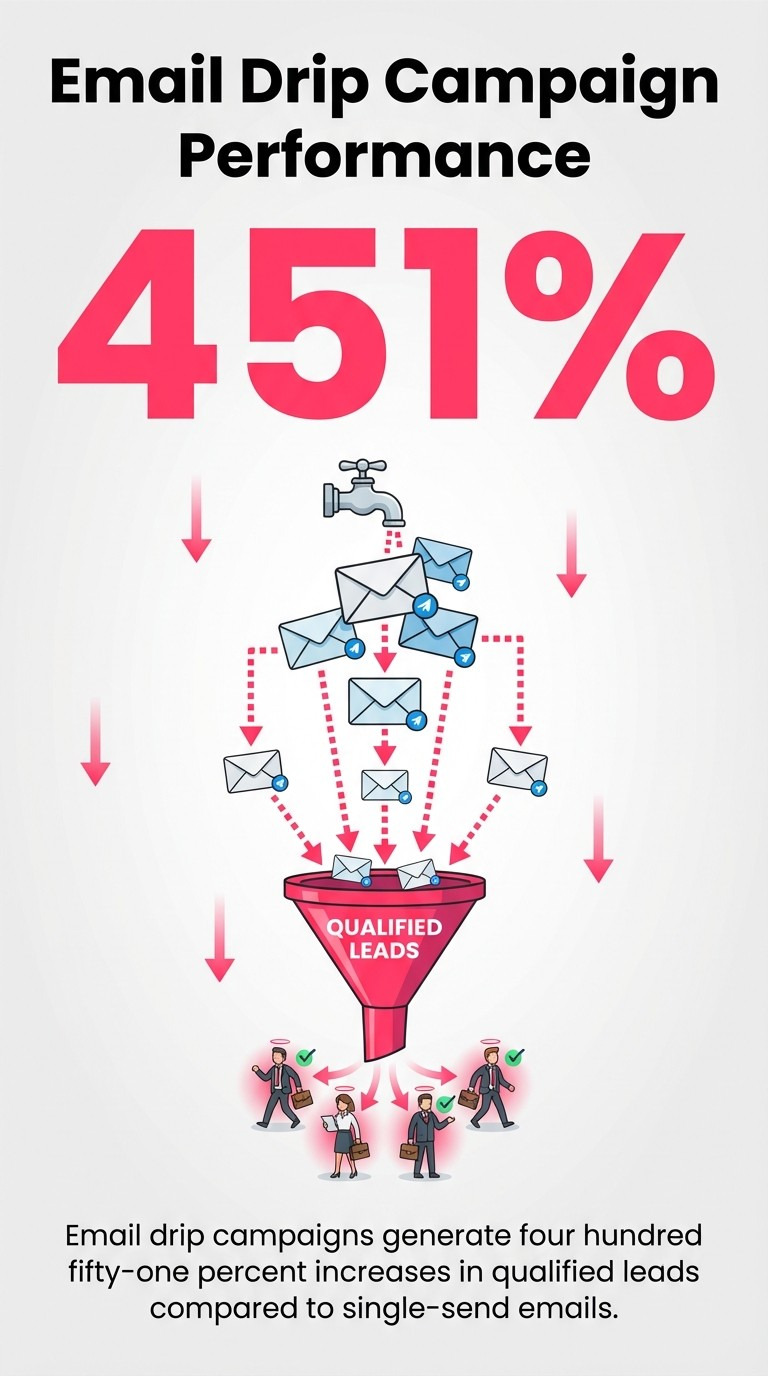
Email drip campaigns generate 451% increases in qualified leads compared to single-send emails.
Build drip sequences around the buyer's journey. Early emails provide education about processes and capabilities. Later emails include case studies and technical specifications.
Trigger emails based on specific actions. When someone downloads a white paper about precision machining, follow up with case studies from that industry.
Personalize beyond first name. Reference the specific content they engaged with or challenges relevant to their industry.
Space emails appropriately for manufacturing sales cycles. Daily emails annoy prospects. Weekly or bi-weekly emails maintain presence without overwhelming.
Strategic cold outreach works when you target the right people with relevant value propositions.
Research prospects thoroughly before emailing. Understand their company, industry challenges, and likely needs.
Write subject lines that indicate relevance without being salesy. "Reducing setup time for short-run stampings" works better than "Manufacturing services you need."
Keep initial emails short. Make one specific point about how you solve a problem they likely face.
Include social proof relevant to their industry. Mention similar companies you've helped without disclosing confidential details.
End with a clear, low-friction next step. Don't ask for meetings in the first email. Offer a brief call or relevant resource.
Generic email blasts to your entire database waste opportunities. Segmentation delivers relevant messages to specific groups.
Segment by industry served. Automotive manufacturers need different content than medical device companies.
Segment by job role. Engineers care about technical capabilities. Procurement professionals want pricing and terms.
Segment by engagement level. Highly engaged prospects deserve more frequent, detailed communication than cold contacts.
Segment by sales cycle stage. Prospects evaluating suppliers need different information than those just beginning research.
Test messaging across segments. What resonates with one group often falls flat with another.
For additional lead generation strategies that complement email outreach, explore our guide on B2B lead generation strategies to build pipeline.
Email done well educates prospects and advances relationships. Email done poorly damages your reputation. Focus on relevance and value in every message.
Social media for manufacturers isn't about viral posts or follower counts. It's about demonstrating expertise where your buyers spend time.
That place is primarily LinkedIn, with some strategic use of YouTube and industry forums.
LinkedIn is where manufacturing decision-makers consume professional content and evaluate potential suppliers.
Publish articles addressing technical challenges in your industry. An injection molding company might write about design considerations for thin-wall parts.
Share insights from projects without revealing confidential details. "We just solved a challenging tolerance issue on a medical component" demonstrates capability.
Comment meaningfully on industry discussions. Add technical perspective to conversations rather than just promoting services.
Connect with decision-makers at target accounts. Build relationships before you need them.
Post consistently without overwhelming followers. Two to three valuable posts per week outperform daily promotional content.
YouTube is the second-largest search engine. Engineers search for process demonstrations and technical explanations.
Create videos showing specific capabilities. Film actual production runs with explanations of what makes the process challenging.
Optimize video titles and descriptions with technical terms. "5-axis machining complex aerospace brackets" captures searches better than "Our capabilities."
Include clear next steps in video descriptions. Link to relevant capability pages or contact forms.
Build playlists organized by capability, industry, or material. This helps viewers find related content.
Technical forums and industry communities gather engaged professionals discussing specific challenges.
Participate in forums relevant to your capabilities. Answer questions without immediate sales pitches.
Provide genuinely helpful technical advice. The goal is building reputation, not capturing leads today.
Link to detailed resources when appropriate. If you've written a white paper addressing the question, share it.
Track which forums generate meaningful connections. Focus time on communities where your expertise adds value.
Modern technology amplifies social media efforts without requiring constant manual work.
One-third of businesses already employ generative AI regularly for marketing applications. Manufacturing companies are adopting these tools for content creation and lead qualification.
Use AI tools to identify trending topics in your industry. Create content addressing what prospects are currently discussing.
Automate content distribution across platforms while maintaining authentic voice. Tools can schedule posts, but content should still sound human.
Deploy chatbots for initial qualification on your website. AI can answer basic questions and route qualified prospects to sales.
Implement lead scoring systems that prioritize prospects based on engagement patterns. Focus sales effort on the most promising opportunities.
Social media won't replace your sales team, but it positions your company as a credible expert when prospects research suppliers.
You can't improve what you don't measure. Manufacturing lead generation requires systematic tracking and continuous optimization.
Start by establishing clear metrics for each stage of your pipeline.
Track these essential metrics to understand lead generation performance:
Review these metrics monthly to identify trends and problem areas.
Understanding which channels generate the best leads helps allocate budget effectively.
Implement tracking systems that capture the original source of every lead. Use UTM parameters on all campaigns and ask how prospects found you.
Analyze not just lead volume by channel, but conversion rates and deal values. A channel producing fewer leads but higher-value customers deserves more investment.
Consider multi-touch attribution. Manufacturing buyers interact with multiple touchpoints before converting. Give partial credit to each influential interaction.
For detailed measurement frameworks, see our guide on what you should measure in Google Analytics for lead generation.
Small improvements compound over time. Regular testing identifies what actually moves metrics.
Test one variable at a time. Change a landing page headline, measure results, then test the next element.
Run tests long enough to gather meaningful data. Manufacturing lead volume is lower than B2C, so tests need longer duration.
Test across the entire funnel. Improvements in ad copy, landing pages, email sequences, and sales follow-up all impact results.
Document what works and what doesn't. Build institutional knowledge about your specific market's preferences.
Lead generation fails when sales and marketing don't agree on what constitutes a qualified lead.
Define lead qualification criteria together. What company size, industry, project type, and timeline indicate a good fit?
Establish service level agreements. How quickly will sales follow up on marketing-generated leads?
Create feedback loops. Sales should tell marketing which lead sources produce the best customers.
Review pipeline performance together monthly. Celebrate wins and problem-solve losses collaboratively.
Manufacturing lead generation is a system, not a tactic. When you measure systematically and optimize continuously, your pipeline fills with increasingly qualified prospects.
You now have the complete framework for filling your sales pipeline with qualified manufacturing prospects.
The strategies work, but only when implemented systematically. Scattered tactics produce scattered results.
Start by selecting three strategies that align best with your capabilities and target market. A precision machining shop targeting aerospace might prioritize SEO for technical terms, LinkedIn thought leadership, and account-based marketing to specific OEMs.
Implement those three strategies thoroughly before adding more. Depth beats breadth in manufacturing lead generation.
Measure everything from day one. Track lead sources, conversion rates, and sales cycle length. Use this data to double down on what works and eliminate what doesn't.
Most importantly, recognize that manufacturing lead generation is a long-term investment. That 130-day sales cycle means you won't see results overnight.
But manufacturers who build systematic lead generation processes create predictable growth. You're no longer waiting for the phone to ring. You're actively filling your pipeline with prospects who need exactly what you manufacture.
The companies dominating manufacturing markets aren't necessarily the largest or oldest. They're the ones who figured out how to consistently attract and convert qualified buyers.
Start building your lead generation system today. Your sales team six months from now will thank you.