
Most manufacturers treat their websites like digital brochures. They list products, drop in some specs, maybe add a contact form.
Then they wonder why their cost per lead averages $819 while their website sits idle.
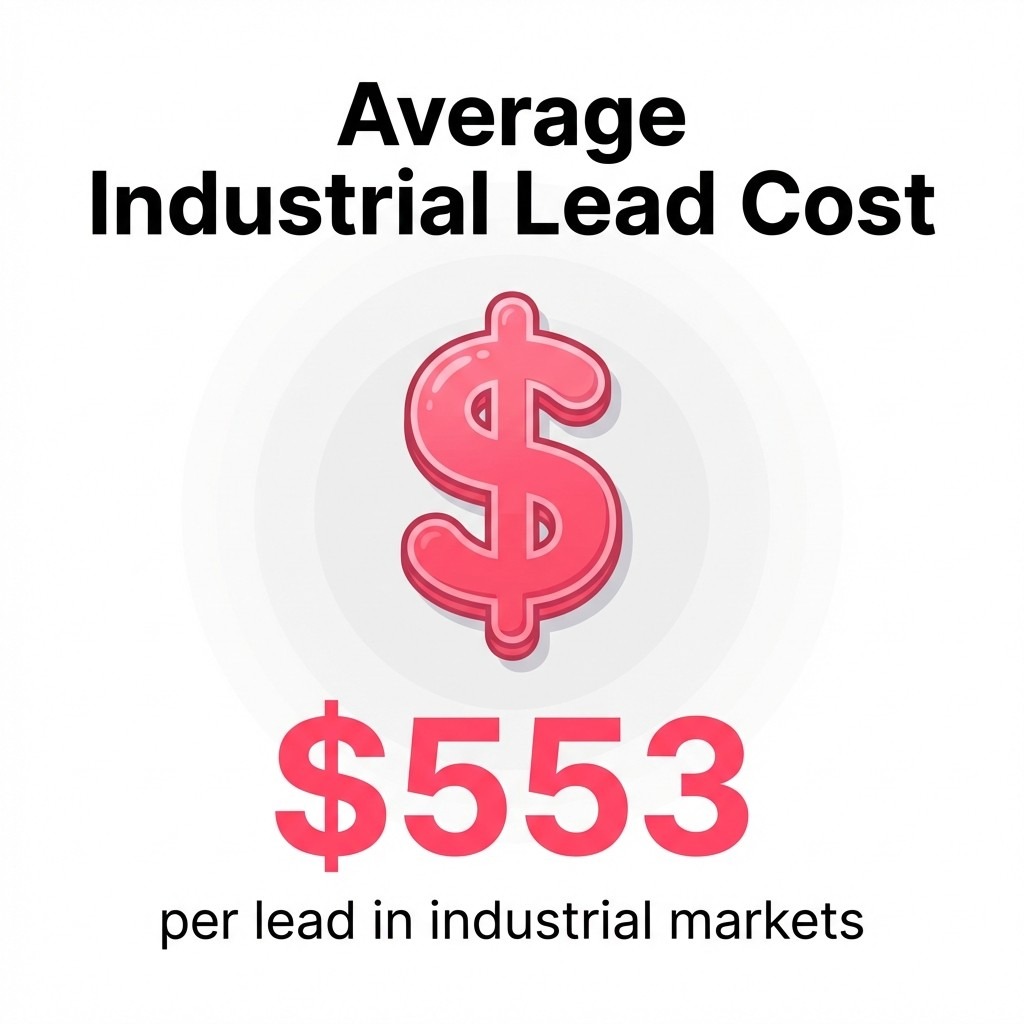
Industrial CPL benchmark: average cost per lead is $819.
Your website should work harder than that. Industrial lead generation isn't about flashy design or clever copy. It's about understanding 70% of B2B buyers complete their research before ever talking to sales.

70% of B2B buyers complete their research before ever talking to sales.
That research happens on your website. Or it doesn't.
The manufacturers winning right now have turned their websites into lead generation systems. They capture prospects early, nurture them through an average 130-day sales cycle, and convert at rates that make sense.
I'm going to show you how to do the same. We'll cover what makes industrial lead generation different, the strategies that actually work for manufacturers, and how to optimize every part of your digital presence for qualified leads.
No fluff. Just the systems that turn website visitors into sales conversations.
Industrial lead generation is the process of attracting and capturing potential buyers for manufacturing products and services. But that definition misses the point entirely.
What it really means is building systems that identify decision-makers before they're ready to buy. Then staying visible through months of internal discussions, budget approvals, and vendor comparisons.
The difference between B2B lead generation and industrial lead generation shows up in three ways.
First, your buyers aren't individuals making quick decisions. They're committees. According to 6sense’s 2024 Buyer Experience Report, 85% of buyers had already established purchase requirements before reaching out to a vendor.
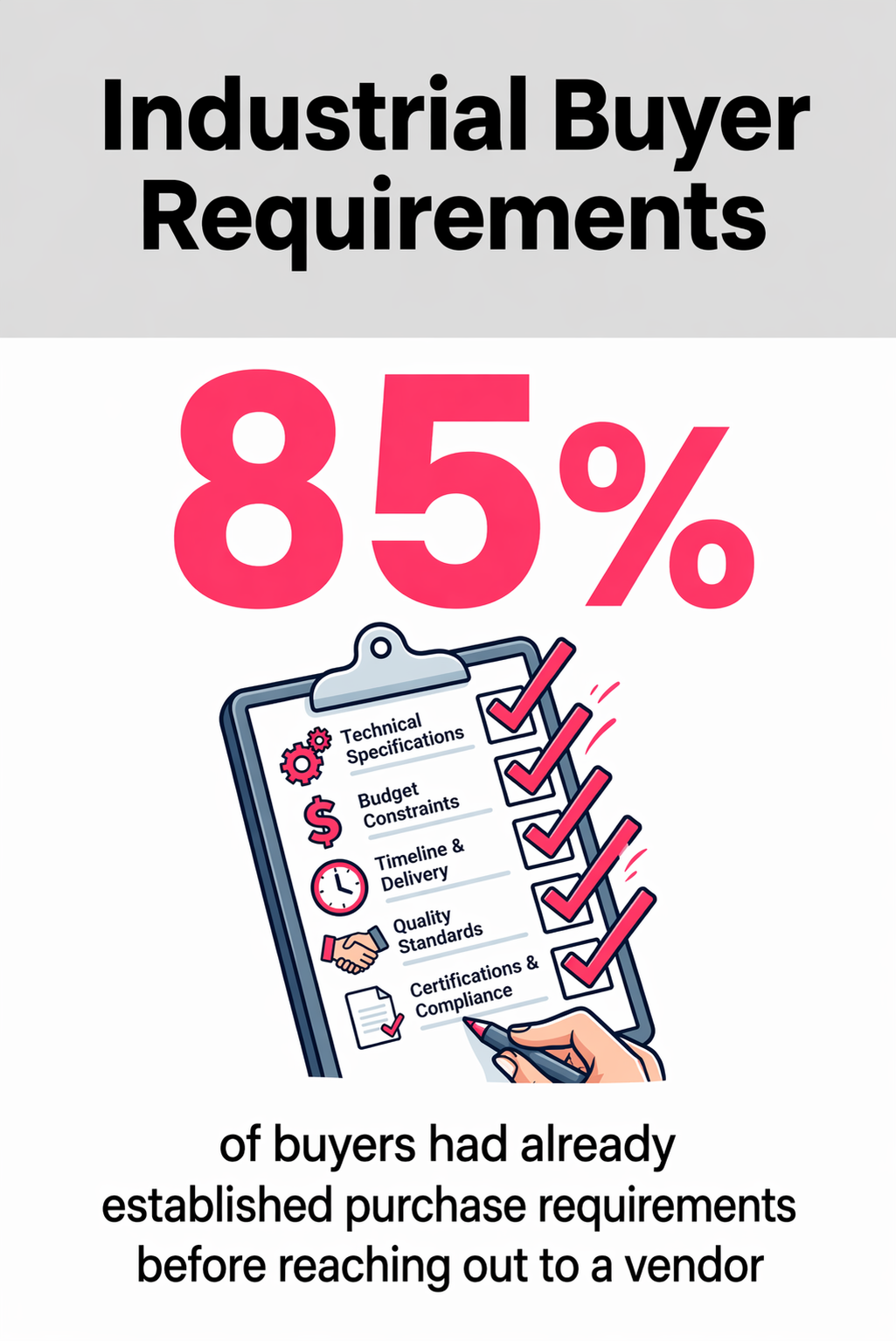
85% of industrial buyers set requirements pre-vendor.
Second, they're researching complex technical specifications. Not features and benefits. They need detailed product data, compliance documentation, and integration requirements.
Third, they're looking at total cost of ownership over years, not a one-time purchase price. Your lead generation needs to address procurement processes, not impulse buying.
Manufacturing lead generation targets these specific buyer behaviors. You're not just collecting email addresses. You're identifying companies with active projects that match your capabilities.
That's why generic B2B tactics fall flat. Content marketing for manufacturers requires different depth. SEO for industrial buyers means ranking for technical specifications, not just product categories.
Your website becomes your qualification tool. It separates tire-kickers from serious prospects before they ever fill out a form.
Everything about industrial lead generation stems from one reality: time.
Consumer purchases happen in minutes. B2B software sales close in weeks or months. Industrial sales take an average of 130 days from first contact to closed deal.
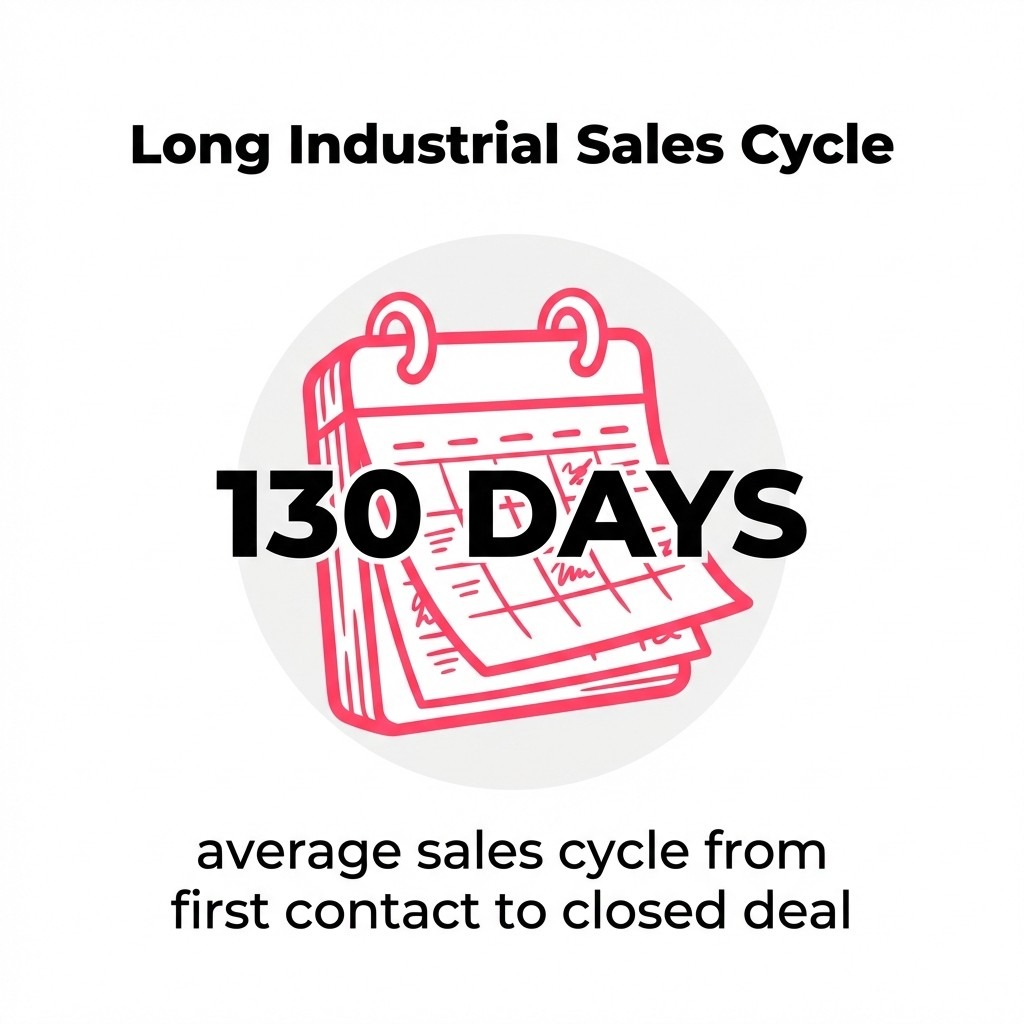
Plan for a 130‑day sales cycle—shape nurture and content accordingly.
That timeline completely changes how you generate and nurture manufacturing sales leads.
Your prospects need information at different stages. Early research focuses on feasibility and specifications. Mid-cycle evaluation compares vendors and validates capabilities. Late-stage decisions require pricing, terms, and implementation details.
Most manufacturer websites only address one stage. Usually the last one.
They assume every visitor is ready to request a quote. So they push contact forms and sales calls. Then they lose the 70% of buyers who are still in research mode.
Better industrial lead generation strategies recognize the buyer journey. You create content for each stage. Technical specifications and application guides for early research. Case studies and capability statements for evaluation. ROI calculators and implementation frameworks for decision-making.
This approach captures leads earlier in their process. Before your competitors even know the opportunity exists.
The long sales cycle also means lead nurturing becomes critical. You can't just collect a contact and hope for the best. 79% of marketing leads never convert to sales without effective nurturing.
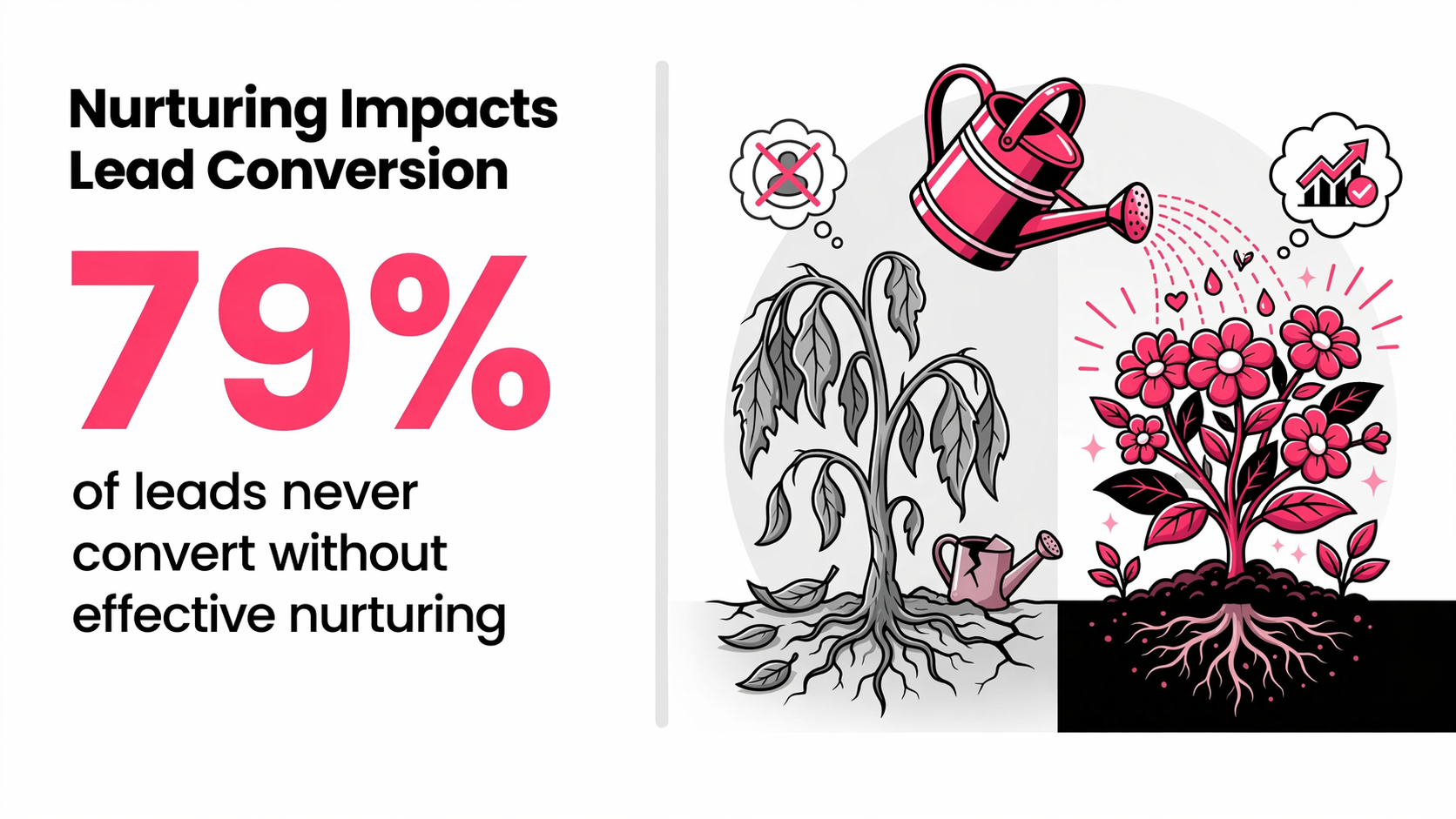
Without effective nurturing, 79% of leads never convert—build sequences.
Your email sequences, content distribution, and follow-up systems need to stay active for months. Providing value without being pushy. Staying visible while buyers work through internal processes you'll never see.
That persistence separates manufacturers who complain about long sales cycles from those who use them as competitive advantages.
Now that you understand the fundamentals, you need specific tactics. These eight strategies work for manufacturers because they address how industrial buyers actually research and purchase.
Your prospects are searching for specific technical information. Dimensions, tolerances, material specifications, compliance certifications, integration requirements.
Most manufacturers hide this information behind contact forms. They think forcing a phone call creates sales opportunities.
It doesn't. It sends buyers to competitors who publish their specs.
Create detailed technical content that ranks for the exact searches your prospects perform. Application guides showing how your products solve specific problems. Comparison charts between materials or configurations. Installation requirements and integration documentation.
This content does two things. It attracts qualified traffic from buyers actively researching solutions. And it demonstrates expertise that builds trust before you ever speak.
Use tools like Google Analytics to identify which technical pages drive the most engagement. Then create more content around those topics.
Your website probably converts 2-5% of visitors to leads. That's typical for manufacturing websites.
The problem isn't traffic. It's that you're asking for too much, too soon.
Replace generic "Contact Us" forms with specific conversion offers. Download a technical datasheet. Access a CAD file. Use a sizing calculator. Watch an application video.
Each offer captures contact information while providing immediate value. No salesperson required.
Match your offer to the buyer's stage. Early-stage visitors download guides and white papers. Mid-stage prospects want case studies and comparison tools. Late-stage buyers request quotes and custom configurations.
For implementation guidance on optimizing your conversion points, check out our conversion optimization tactics for manufacturers.
Industrial buyers don't search like consumers. They use technical terminology. Part numbers. Application-specific phrases. Industry acronyms.
Your B2B SEO strategy needs to match. SEO-driven leads close at 14.6% compared to 1.7% for outbound leads.
That difference comes from intent. Someone searching "stainless steel check valve 2 inch NPT" has a specific need. They're not browsing.
Optimize product pages for technical specifications. Create content targeting application-based searches. Rank for comparison terms buyers use during evaluation.
Our guide to industrial SEO and product data optimization shows exactly how to structure this content for maximum visibility.
Most manufacturers ignore long-tail technical keywords because search volumes look small. But one qualified prospect is worth a thousand casual browsers.
You captured a lead. Now what?
Most manufacturers either bombard them with sales calls or add them to a generic newsletter. Both approaches waste the opportunity.
Build email nurture sequences matched to how they entered your system. Someone who downloaded a technical guide gets a series focused on applications and specifications. Someone who used your sizing calculator receives implementation-focused content.
Space these emails appropriately. Industrial buyers need time to digest information and move through internal processes. Weekly emails work early in the relationship. Monthly check-ins make sense for longer nurture cycles.
Use platforms like HubSpot or Mailchimp to automate these sequences while keeping them personalized.
Mailchimp: simple workflows for early-stage education and monthly check-ins.
Track engagement to identify hot prospects. Someone who opens every email and clicks multiple links shows active interest. Route those leads to sales for personal follow-up.
Not all prospects are equal. Some companies represent significantly larger opportunities.
Account-based marketing focuses your resources on these high-value targets. You identify specific companies you want to work with, then create personalized campaigns to engage their decision-makers.
Start with a list of 10-20 ideal accounts. Research their operations, recent announcements, expansion plans, and technology investments.
Create content specifically addressing their challenges. Target LinkedIn ads to employees at those companies. Send personalized direct mail highlighting relevant case studies.
This approach works because industrial sales often depend on relationships and trust. Generic outreach gets ignored. Personalized attention based on specific knowledge of their business opens doors.
Tools like Salesforce help manage account-based campaigns and track engagement across multiple stakeholders.
Salesforce: coordinate ABM activity and track multi-stakeholder engagement.
Publishing blog posts and white papers isn't enough. Your industrial content needs to demonstrate expertise that competitors can't match.
Create resources buyers actually use in their decision process. ROI calculators that show total cost of ownership. Selection guides that help them choose the right configuration. Installation checklists that reduce implementation risk.
These tools provide value while collecting qualification information. The data buyers enter reveals their project scope, timeline, and requirements.
Technical videos showing your manufacturing processes build credibility. Buyers want to know who they're working with and how you operate.
Case studies need specifics. Not vague success stories. Actual challenges, solutions implemented, measurable results, and technical details that prove capabilities.
Digital channels dominate modern B2B lead generation strategies. But trade shows still matter for manufacturers.
Industrial buyers use events to evaluate suppliers, see equipment in person, and build relationships. Your presence signals credibility and commitment to the industry.
The key is treating trade shows as lead generation tools, not branding exercises. Set specific lead goals. Create show-specific offers that capture contact information. Use lead scanning technology to collect every conversation.
More important: have a follow-up system ready. Most trade show leads go cold because nobody follows up within 48 hours.
Send personalized emails referencing your specific conversation. Ship promised materials immediately. Schedule next steps before they leave your booth.
The best industrial lead generation strategy is finding buyers already in the market.
Sales intelligence platforms track company signals that indicate buying intent. Website technology changes. Job postings for specific roles. Funding announcements. Expansion permits.
These signals help you identify prospects before they contact vendors. You can reach out when they're defining requirements, not after they've built a shortlist.
Tools like ZoomInfo or LinkedIn Sales Navigator provide this intelligence along with accurate contact information for decision-makers.
ZoomInfo: surface intent signals and verified contacts at in-market accounts.
Your website is either generating qualified leads or wasting traffic. Most manufacturer websites do the latter.
The problem isn't design. It's structure.
Industrial buyers need different information at different stages. Your website should address all of them while guiding prospects toward conversion.
Stop organizing by your internal departments. Buyers don't care about your org chart.
Organize around their questions. What problems do your products solve? Which industries do you serve? What specifications matter for their application?
Create clear paths for different buyer types. Someone researching feasibility needs different content than someone comparing vendors or requesting quotes.
Use your main navigation to address major decision criteria. Industries served, applications, product categories, technical resources, case studies.
Each section should drill down into specifics. Don't make buyers hunt through generic pages to find relevant information.
Bury your specs and you lose prospects to competitors who don't.
Product pages need comprehensive technical information. Dimensions, materials, performance specifications, certifications, options, accessories.
Provide downloadable datasheets, CAD files, and installation guides. Let buyers access what they need without filling out forms.
Yes, this means giving information away. It also means ranking for technical searches and building trust with qualified prospects.
The buyers who need detailed specs are the ones ready to evaluate vendors. They're not tire-kickers.
One contact form doesn't work for all visitors.
Create specific calls-to-action matched to content and buyer stage. Technical resources lead to downloads. Application pages suggest sizing tools. Case studies offer similar examples.
Use exit-intent popups for visitors leaving without converting. Offer something valuable in exchange for contact information.
Chat tools let buyers ask quick questions without phone calls. Many industrial buyers prefer text communication over talking to sales.
Track which conversion paths generate the most qualified leads. Double down on what works.
Buyers want proof you can deliver. Not marketing claims about being the best.
Show your facility and equipment through photos or virtual tours. Display certifications and quality systems. List major clients or industries served.
Video content showing manufacturing processes builds confidence. Buyers see your capabilities rather than reading about them.
Customer testimonials need specifics. What problem did you solve? What made your solution different? What results did they achieve?
Generic praise means nothing. Specific outcomes from named companies carry weight.
Content marketing works differently for manufacturers than for B2C companies. Your buyers need depth, not entertainment.
The goal isn't viral content or massive traffic. It's attracting qualified prospects and demonstrating expertise that builds trust through a long sales cycle.
For a deeper look at B2B-specific tactics, see our B2B lead generation strategies guide.
Your prospects move through distinct research phases. Your content needs to match.
Early-stage content addresses awareness and education. Industry trend reports. Technology comparisons. Problem identification guides.
Mid-stage content supports evaluation. Detailed product information. Application guides. Case studies. Vendor comparison frameworks.
Late-stage content facilitates decisions. ROI calculators. Implementation guides. Total cost of ownership analysis. Technical specifications.
Most manufacturers only create late-stage content. They miss opportunities to engage buyers months before purchase decisions.
Industrial buyers have technical backgrounds. They understand industry terminology and appreciate precision.
Don't dumb down your content. Use accurate technical language. Provide detailed specifications. Include relevant calculations and performance data.
This specificity attracts qualified traffic while filtering out casual browsers. Someone searching for precise technical terms is further along in their process.
Address both technical and business concerns. Engineers care about specifications and performance. Procurement teams focus on cost, reliability, and vendor stability.
Your content should speak to both audiences without oversimplifying for either.
Create cornerstone content that becomes industry references. Comprehensive guides. Selection tools. Technical handbooks.
These resources require significant investment. But they generate leads for years and establish your authority.
Think about what buyers repeatedly ask. What calculations do they need to perform? What selection criteria do they struggle with? What standards and regulations affect their decisions?
Build tools and resources that answer these questions definitively. Then promote them through your website, email campaigns, and social channels.
When buyers bookmark your content or share it with colleagues, you've created lasting value that keeps you visible throughout their process.
Technical concepts often need visual explanation. Complex manufacturing processes, installation procedures, and product demonstrations work better as video.
Create short, focused videos addressing specific topics. How to specify the right product for an application. Common installation mistakes and how to avoid them. Maintenance procedures that extend service life.
Host videos on your website and YouTube. Embed them in relevant product pages and blog posts.
Keep production simple. Clear audio and good lighting matter more than expensive production. Buyers care about information, not polish.
Industrial SEO focuses on different metrics than consumer SEO. You're not chasing massive traffic volumes. You need qualified visitors searching with buying intent.
That means optimizing for technical keywords, long-tail phrases, and industry-specific terminology that indicates serious research.
High-volume generic terms bring unqualified traffic. "Industrial valves" attracts everyone from students doing research to competitors analyzing your site.
"Stainless steel check valve 2 inch NPT 200 PSI" brings someone with a specific need.
Build product pages optimized for these detailed specifications. Include all relevant technical parameters in your content and metadata.
Create comparison pages targeting evaluation phrases. "Ball valve vs gate valve for steam applications" captures buyers comparing options.
Application-based keywords show strong intent. "Valve for pharmaceutical clean-in-place system" indicates an active project.
Product pages serve two purposes: ranking for searches and converting visitors to leads.
Include complete technical specifications in both human-readable format and structured data markup. Search engines can parse this data and display it in results.
Write detailed descriptions addressing common questions and applications. This content helps you rank for related searches while educating buyers.
Add clear conversion opportunities. Download full specifications. Request a quote for this specific product. Access CAD files or installation guides.
Use high-quality images showing the product from multiple angles. Include dimensional drawings when relevant.
Google ranks sites that demonstrate expertise, authority, and trustworthiness. For manufacturers, that means publishing substantial technical content.
Create in-depth guides addressing industry challenges. Write about standards, regulations, and compliance requirements. Explain complex technical concepts.
This content may not directly generate leads. But it builds domain authority that helps your product pages rank better.
It also attracts links from industry publications, educational institutions, and professional organizations. These backlinks signal credibility to search engines.
Many industrial searches trigger featured snippets at the top of results. These answer boxes drive significant traffic.
Structure content to answer specific questions clearly and concisely. Use proper heading hierarchy. Format answers as lists or tables when appropriate.
Common snippet opportunities: "How to select..." "What is the difference between..." "When to use..." "How to calculate..."
Winning a featured snippet for a relevant technical question puts you above all other results, including paid ads.
Outbound prospecting still works for industrial lead generation. But only when you do it right.
The key is relevance. Generic mass emails and scripted cold calls get ignored. Personalized outreach based on specific knowledge of the prospect's situation opens conversations.
Don't contact prospects blindly. Spend time understanding their business before you email or call.
Check their website for recent news. Look for expansion announcements, new product launches, or facility openings. These indicate potential needs.
Review LinkedIn for personnel changes. New plant managers or engineering directors often reassess vendor relationships.
Identify specific ways your products or services address their likely challenges. Generic capability statements don't work. Relevant solutions to real problems do.
Your first contact shouldn't be asking for a meeting or pushing your products.
Share something useful. Industry research relevant to their business. Technical information addressing a common challenge in their sector. Introduction to a valuable resource.
This approach starts a conversation instead of triggering sales resistance. You're providing value before asking for anything.
Follow-up messages continue this pattern. Share case studies from similar companies. Offer to answer technical questions. Invite them to relevant webinars or events.
You're building a relationship through useful interactions, not pestering them until they respond.
Industrial buyers work during business hours. Email them accordingly.
Tuesday through Thursday, mid-morning or early afternoon typically sees best response rates. Avoid Mondays when inboxes overflow and Fridays when people are wrapping up.
For follow-up sequences, space messages appropriately. Three emails over two weeks for initial outreach. Then monthly check-ins for longer-term nurture.
Too frequent feels pushy. Too infrequent and they forget you exist.
Track response patterns in your CRM. Adjust timing based on what works for your specific audience.
Cold calling works when you have good reason to call. Not when you're dialing through a purchased list.
Call prospects who engaged with your emails or website. Someone who downloaded three technical guides and opened every email wants to hear from you.
Call companies showing buying signals. Recent expansion announcement? New job posting for a role related to your products? Good reason to reach out.
Keep calls brief and focused. You're not closing deals on the phone. You're starting conversations and gathering information about their needs and timeline.
For tracking which lead sources convert best, our guide on lead generation tracking tools shows how to measure both digital and phone conversions.
Generating leads means nothing if they don't convert to sales. The gap between marketing leads and qualified opportunities kills most industrial lead generation programs.
Manufacturing leads convert at 26% from lead to marketing-qualified lead. That's the industry benchmark.
The other 74% either weren't qualified to begin with or fell through the cracks in your follow-up process.
Not every contact is worth sales time. You need clear qualification criteria.
Start with firmographic data. Company size, industry, location. Do they match your ideal customer profile?
Then evaluate project indicators. Do they have a specific application in mind? What's their timeline? Do they have budget authority?
Behavioral signals matter too. What content did they consume? How many times did they visit your site? Did they engage with technical resources or just browse?
Score leads based on these factors. Set thresholds for when marketing passes leads to sales.
This prevents sales from wasting time on unqualified contacts while ensuring good prospects get immediate attention.
Assign point values to different attributes and behaviors. Company size, industry match, job title all contribute base scores.
Activity adds points. Email opens, content downloads, website visits, form submissions. Each action signals growing interest.
When scores cross your threshold, route leads to sales. Typically this happens around 70-100 points depending on your scale.
Review and adjust scoring regularly. If leads scoring high don't convert, your criteria need refinement.
Tools like HubSpot or Pardot automate lead scoring and routing.
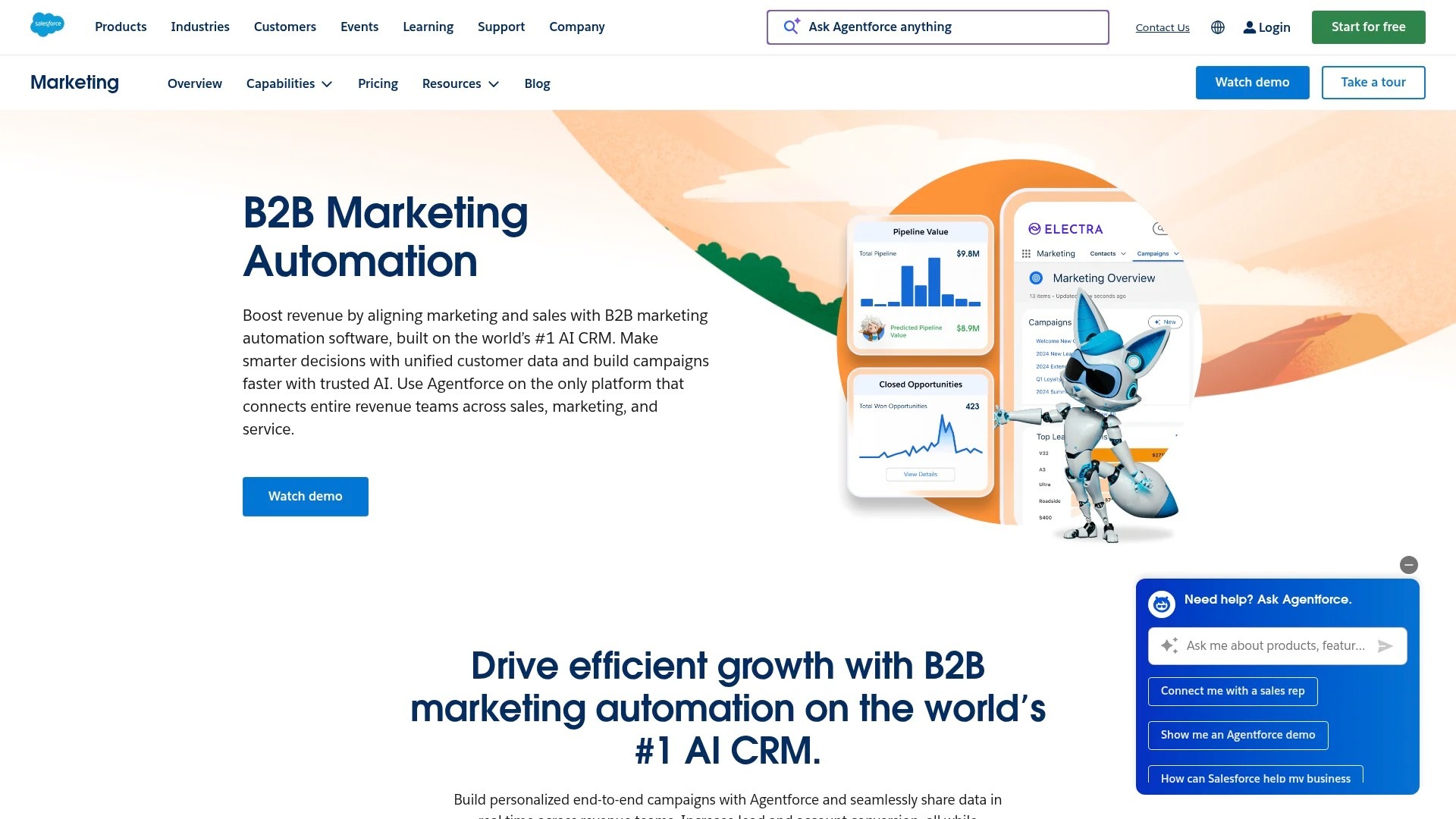
Pardot (Marketing Cloud Account Engagement): automate lead scoring and routing.
Speed matters. Leads contacted within an hour convert at much higher rates than those contacted a day later.
Set up automatic alerts when high-scoring leads take key actions. Form submission, pricing page visit, technical document download.
Define your follow-up sequence. Who contacts the lead? How quickly? What information do they provide? What next steps do they propose?
For leads not quite ready, move them into nurture sequences. Continue providing value while monitoring for increased engagement.
The manufacturers who close the most deals have systematized this process. Nothing falls through cracks because humans forget.
Most manufacturers track vanity metrics. Website traffic, social followers, content downloads.
Those numbers feel good but don't predict revenue.
Track conversion rates at each stage. Visitor to lead. Lead to marketing-qualified lead. MQL to sales-qualified lead. SQL to opportunity. Opportunity to closed sale.
Identify where leads stall or drop out. That's where you focus improvement efforts.
Track cost per lead by source. Which channels generate qualified leads most efficiently?
Measure time from first touch to closed sale. Look for patterns among your fastest-closing deals. What content did they consume? Which touchpoints mattered most?
Use Google Analytics combined with your CRM to connect website behavior to sales outcomes.
Our analytics guide for lead generation shows exactly which metrics to track and how to set up proper measurement.
Some opportunities are worth more than others. Much more.
Account-based marketing focuses your resources on landing those high-value accounts. Instead of casting a wide net, you identify specific target companies and create personalized campaigns to engage them.
This approach works particularly well for manufacturers selling complex solutions, capital equipment, or long-term supply agreements where individual deals represent significant revenue.
Start with your ideal customer profile. What industries, company sizes, and operational characteristics match your best current customers?
Build a list of 10-50 specific companies that fit this profile. Not hundreds. You'll create personalized strategies for each.
Research these companies thoroughly. Who are the key decision-makers? What challenges do they face? What initiatives have they announced? Where are they expanding?
This research informs every aspect of your campaign. You're not guessing about pain points or value propositions. You know their specific situation.
Generic marketing materials don't work for account-based marketing. You need content addressing each target account's specific situation.
Develop case studies featuring companies in their industry or with similar challenges. Create ROI models using their business parameters. Build presentations showing applications relevant to their operations.
Use targeted digital advertising to reach employees at these companies. LinkedIn allows precise targeting by company and job title.
Send personalized direct mail. Not generic brochures. Custom packages referencing their specific business and explaining relevant capabilities.
Account-based marketing requires tight coordination between teams. Marketing creates awareness and engagement. Sales develops relationships and moves opportunities forward.
Both teams need visibility into all touchpoints. What content has the prospect consumed? Which emails have they opened? Who has sales spoken with at the company?
Use your CRM to track all interactions with target accounts. Everyone sees the complete picture.
Schedule regular sync meetings to discuss account progress, adjust strategies, and coordinate next steps.
Traditional lead generation metrics don't apply to account-based marketing. You're not measuring volume of leads.
Track engagement at the account level. How many employees have interacted with your content? Which job functions are engaging? Are you reaching decision-makers?
Monitor pipeline development. How many target accounts have active opportunities? What's the average deal size? How long is the sales cycle?
Calculate return on investment by comparing resources invested in account-based programs against revenue from those accounts.
The average B2B buyer journey is 11.3 months, so expect long timelines before seeing results.
Most manufacturers make lead generation decisions based on gut feel. What they think should work. What they've always done.
Data tells you what actually works.
The manufacturers generating the most qualified leads track everything, test constantly, and optimize based on evidence.
85% of B2B marketers struggle to connect marketing to business outcomes. That's because they're not measuring the right things or using data to drive decisions.
You can't improve what you don't measure. Before you launch any campaign, implement tracking.
Use UTM parameters on all links in emails, ads, and social posts. This tells you exactly which campaigns drive traffic and conversions.
Set up goal tracking in Google Analytics for all conversion actions. Form submissions, content downloads, phone calls, chat conversations.
Connect your website analytics to your CRM. Track which website visitors become leads, which leads become opportunities, which opportunities close.
This connection reveals which traffic sources generate revenue, not just activity.
You're probably spreading resources across too many channels. Some work much better than others for your specific business.
Calculate cost per qualified lead by source. Include all costs: ad spend, content creation, tool subscriptions, staff time.
Compare lead quality across channels. Do organic search leads close at higher rates than paid ads? Do email campaigns generate better prospects than trade shows?
Find the 2-3 channels delivering the best results. Double down on those while reducing investment in underperformers.
Small improvements compound over time. A 10% better conversion rate doesn't sound dramatic. But it means 10% more leads from the same traffic.
Test different offers on your website. Do visitors prefer downloading a guide or accessing a calculator? Does "Request Quote" outperform "Contact Sales"?
Test email subject lines and send times. Measure open rates and click-through rates. Use winners as your new control.
Test landing page layouts, headlines, and calls-to-action. Run A/B tests changing one element at a time.
Make testing systematic, not random. Focus on high-traffic pages where small improvements have big impact.
Our 3x3x3 analytical framework provides a structured approach to identifying and fixing lead generation bottlenecks.
Advanced manufacturers use data science to identify which leads are most likely to convert.
Predictive lead scoring analyzes historical data to find patterns. What attributes and behaviors predict closed deals?
Machine learning models identify these patterns automatically, then score new leads based on similarity to past successes.
This helps sales prioritize their time. Focus on the 20% of leads most likely to close rather than spreading effort equally.
Tools like Salesforce Einstein build predictive models using your data.
Salesforce Einstein: predictive lead scoring to prioritize best-fit opportunities.
Most manufacturers treat their websites as necessary evils. Something to check off the list.
The smart ones realize their website is their hardest-working salesperson. It never sleeps. It handles hundreds of conversations simultaneously. It qualifies prospects before they ever talk to humans.
Your website should capture leads at every stage of the buyer journey. Educate early-stage researchers. Support mid-stage evaluators. Convert late-stage decision-makers.
Start with technical content that answers real questions. Optimize for the searches your prospects actually perform. Build conversion paths matched to different buyer stages.
Use email sequences to nurture leads through your 130-day sales cycle. Focus account-based marketing on your highest-value targets. Track everything and optimize based on data, not assumptions.
The manufacturers winning at industrial lead generation aren't doing anything revolutionary. They're executing fundamentals consistently while competitors chase shiny objects.
Your website can generate qualified leads every day. But only if you build it to do that job.
Start with one improvement. Better product page optimization. More technical content. Clearer conversion offers. Get that working, then add the next piece.
The complete system takes time to build. But every improvement compounds.
For a complete view of how all these tactics fit together, check out our comprehensive industrial digital marketing guide.
Your competitors are still treating their websites like brochures. You're about to turn yours into a lead generation machine.