

B2B SEO for industrial companies operates differently than most ecommerce or consumer marketing. When your buyers are procurement managers comparing machining tolerances or maintenance teams sourcing replacement components, their search behavior follows distinct patterns. They research longer, require deeper technical specifications, and make decisions through committees.
Here's the critical insight most industrial companies miss: SEO contributes 44.6% of B2B revenue, more than twice as much as any other single channel. Yet industrial manufacturers often treat SEO as an afterthought, focusing marketing budgets on trade shows and direct sales while competitors capture search visibility.
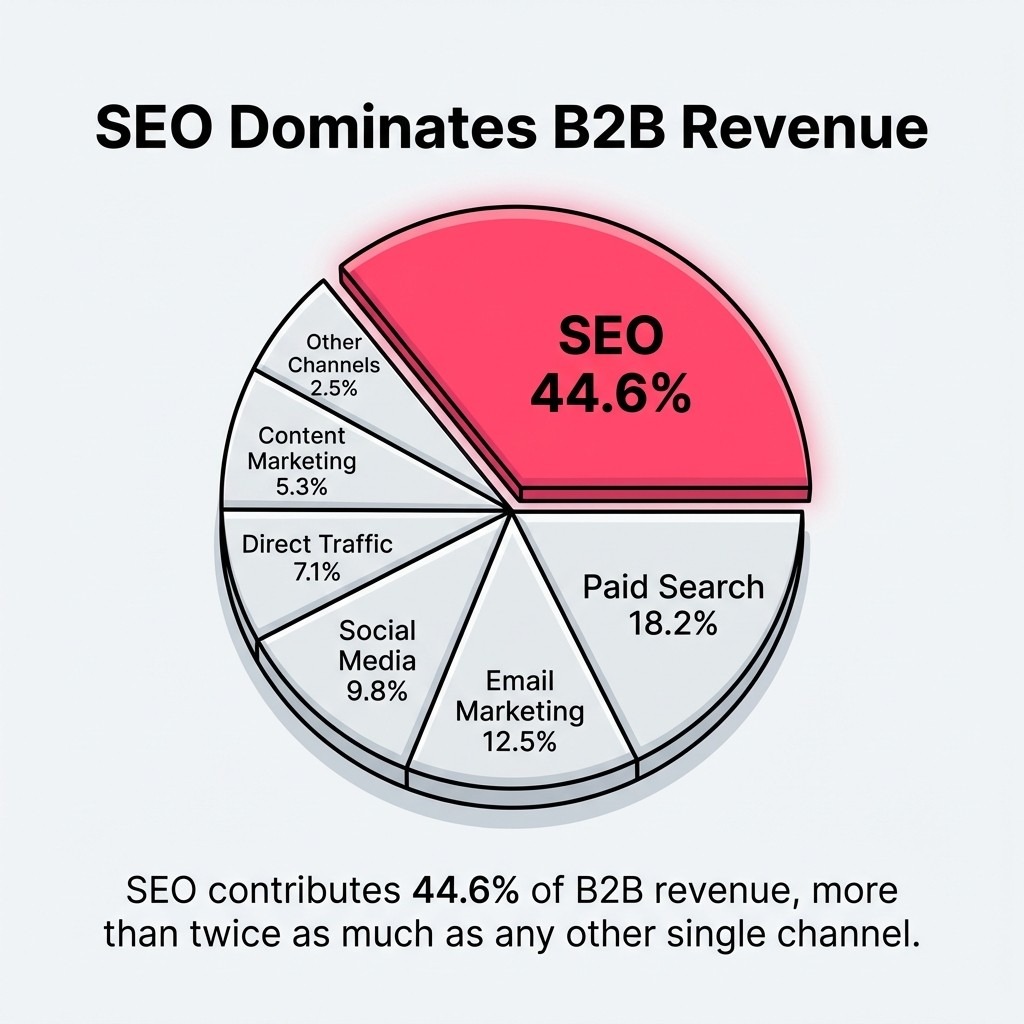
SEO contributes 44.6% of B2B revenue—prioritize organic search as a core industrial growth channel.
This guide walks through the exact B2B SEO strategy framework I've refined working with industrial suppliers and distributors. You'll learn keyword research that matches how engineers and buyers actually search, content creation that addresses technical buying committees, and conversion tactics that generate qualified leads instead of casual browsers.
The difference between generic SEO advice and industrial B2B strategy matters significantly. Where consumer brands chase high search volume, industrial companies need bottom-of-funnel keywords with clear purchase intent. Where B2C focuses on quick conversions, your organic search needs to support sales cycles averaging 130 days from initial contact through closing.
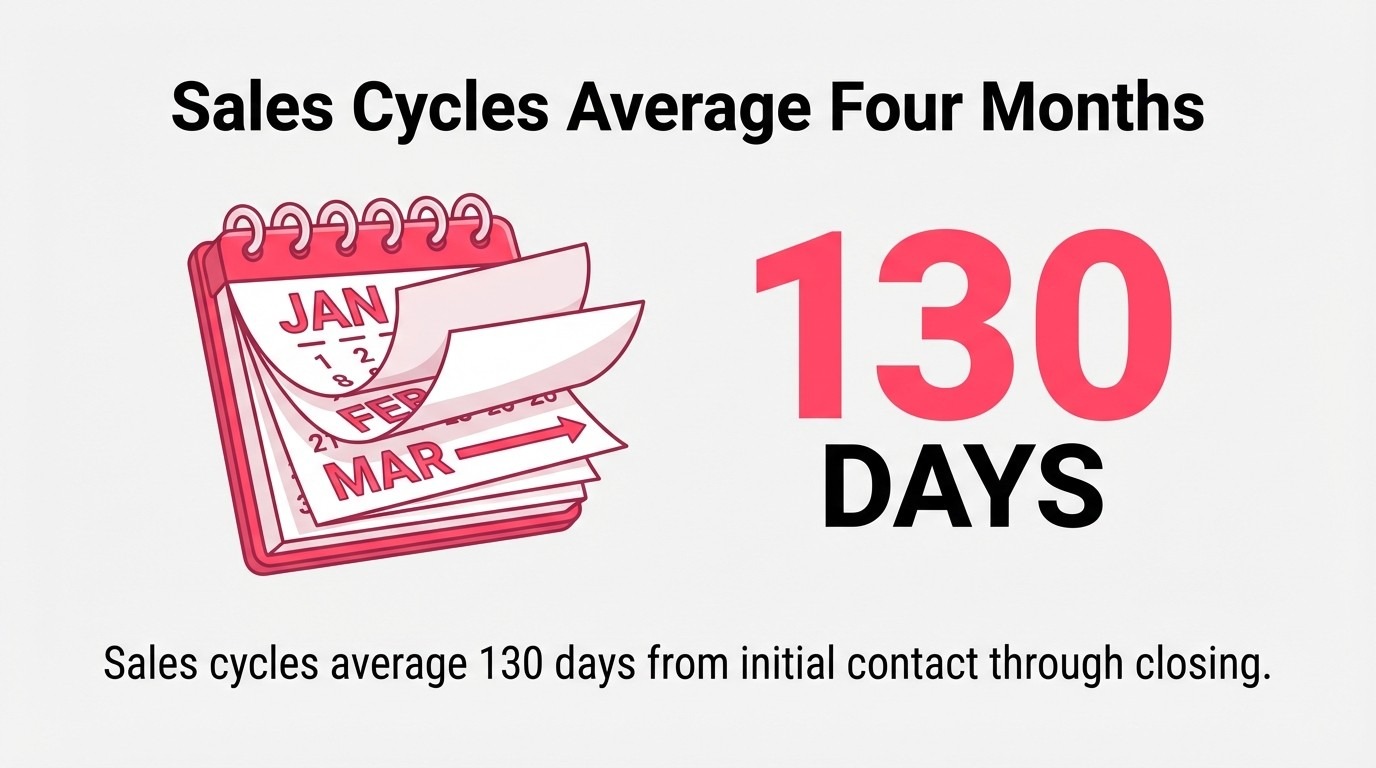
Industrial buying journeys often span ~130 days—align content, nurturing, and KPIs with this timeline.
By the end, you'll have a practical roadmap for improving organic traffic and generating leads that convert to revenue. No fluff about abstract content marketing concepts. Just the specific tactics that work when selling industrial products and technical services.
B2B SEO fundamentally differs from B2C approaches in ways that directly impact your strategy. The stakes are higher, timelines longer, and audiences more specialized.
Industrial buyers conduct extensive research before engaging vendors. They download technical specifications, compare product certifications, and evaluate case studies. This behavior creates distinct search intent patterns.
Your SEO strategy must address buying committees, not individual consumers. A single purchase decision involves maintenance managers, procurement specialists, engineering teams, and financial approvers. Each stakeholder searches differently.
Consumer keywords generate massive search volume. Industrial keywords show lower volume but dramatically higher conversion potential. A keyword with 50 monthly searches for "hydraulic servo valve replacement Parker PV270" indicates more buying intent than 5,000 searches for "best hydraulic pumps."
The economics justify this focus. SEO-driven leads convert at 14.6% compared to just 1.7% for outbound leads. Quality beats quantity when average order values reach five or six figures.
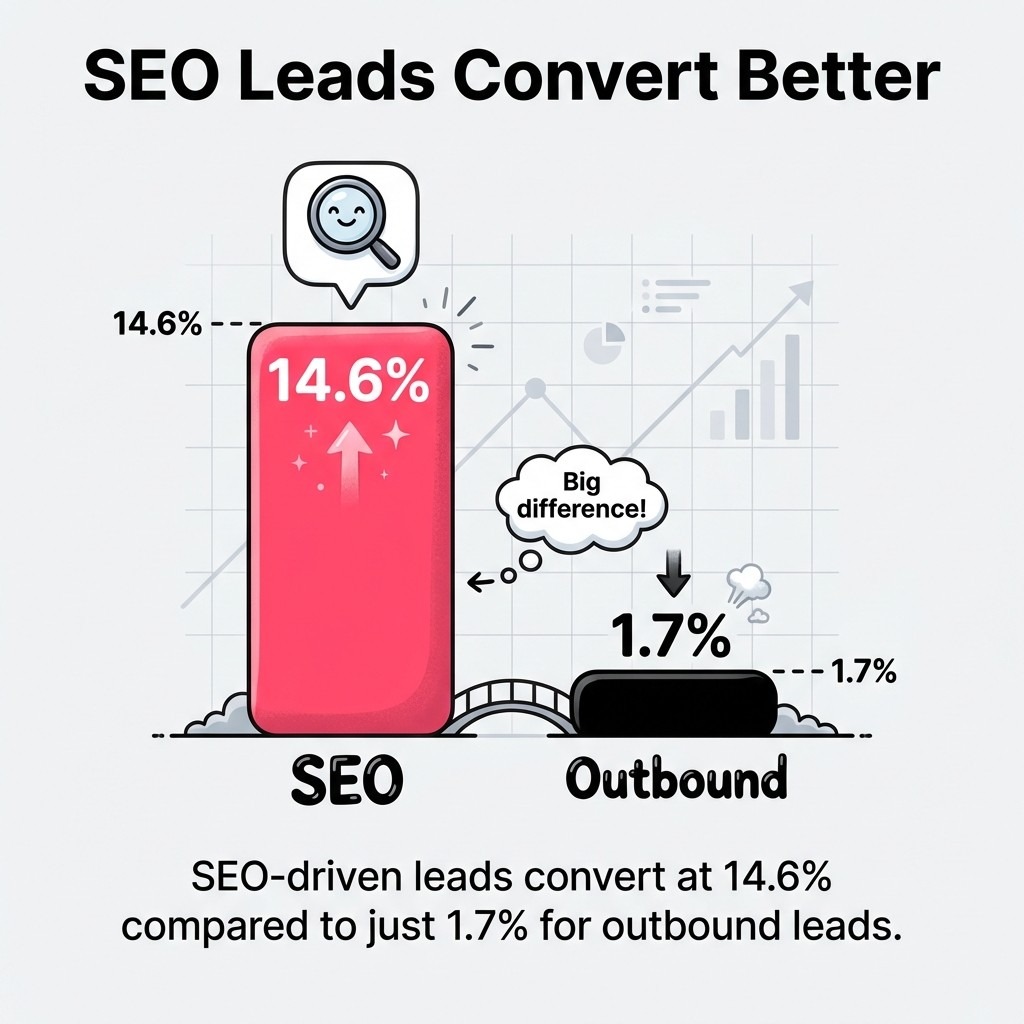
Intent-rich SEO traffic converts at 14.6% versus 1.7% for outbound—optimize for specificity over volume.
Long tail keywords dominate industrial B2B SEO. Buyers search specific part numbers, technical specifications, and application requirements. Generic terms attract casual researchers. Detailed queries signal active projects with budget allocated.
B2C purchases happen quickly. Industrial buying cycles stretch months. This timeline changes how you measure SEO success and structure content strategies.
Content must support prospects at every stage. Top-of-funnel content builds awareness through technical education. Middle-funnel content addresses specific application challenges. Bottom-of-funnel content provides detailed specifications and purchasing information.
Track leads through your sales funnel rather than obsessing over immediate conversions. Companies selling solutions exceeding $500,000 in annual contract value experience average sales cycles of 270 days. Your organic search strategy needs patience and consistent execution.
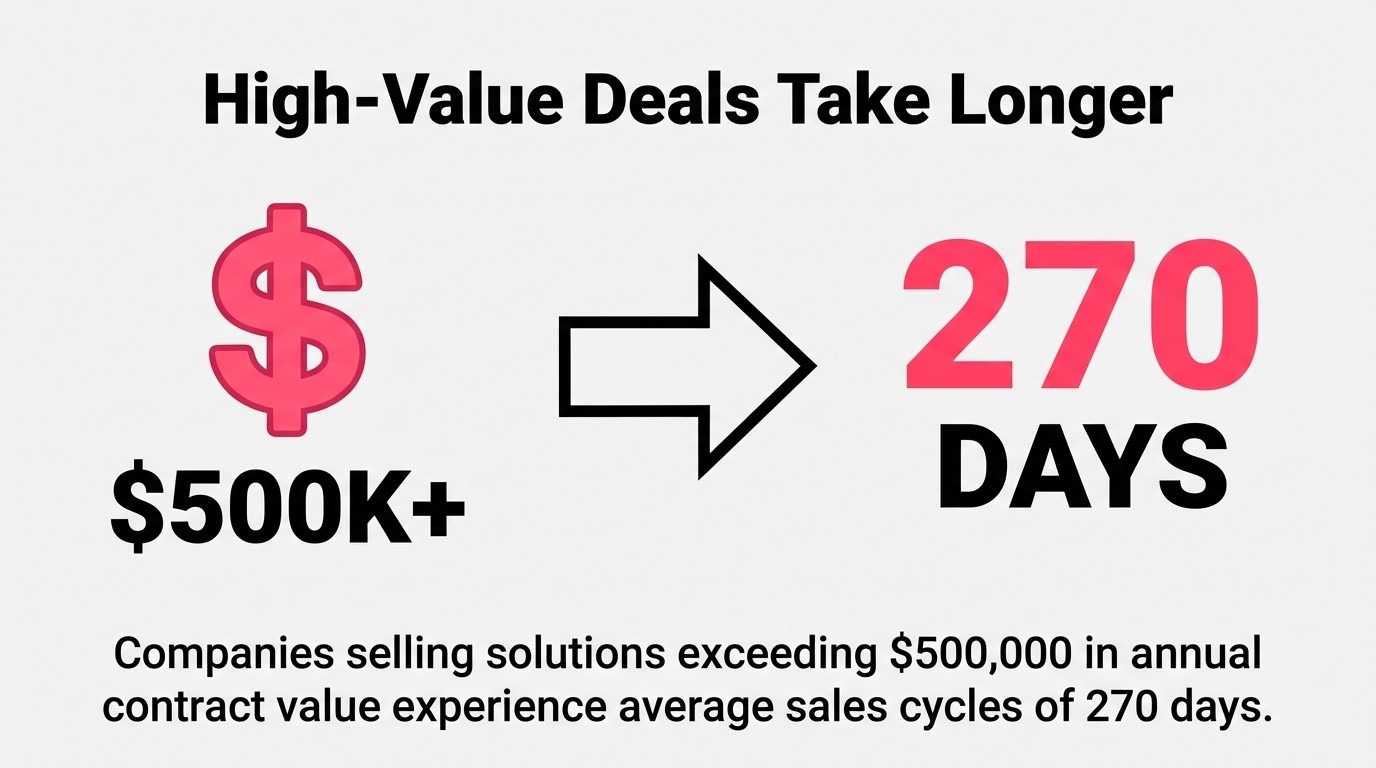
Enterprise-level solutions (> $500k ACV) often require ~270 days to close—set expectations for attribution.
Consumer purchases involve one person with a credit card. Industrial purchases require multiple approvals across departments. Your keyword research and content creation must account for these varied stakeholder perspectives.
Maintenance managers search operational concerns: downtime prevention, reliability specifications, maintenance intervals. Procurement specialists focus on vendor qualifications, delivery terms, and compliance certifications. Engineers need technical specifications, compatibility information, and performance data.
Create separate content addressing each decision maker role. This approach improves organic traffic relevance and increases qualified lead generation throughout your sales cycle.
Generic buyer personas waste time. Industrial B2B SEO requires detailed stakeholder profiles based on actual search behavior and decision-making authority.
Start by interviewing your sales team and existing customers. What questions do buyers ask during initial research? Which concerns delay purchasing decisions? What information convinces them your solution solves their specific problem?
Document these insights into actionable buyer personas that directly inform keyword research and content creation.
Map your buying committee structure. Most industrial purchases involve three to five key roles with different information needs.
The technical evaluator assesses product specifications and compatibility. They search detailed engineering terms, CAD models, and performance specifications. Target bottom-of-funnel keywords with precise technical language.
The operational buyer focuses on implementation and ongoing use. They search installation requirements, training resources, and maintenance procedures. Create content addressing practical application concerns.
The financial approver evaluates total cost of ownership and ROI justification. They search pricing models, warranty terms, and lifecycle cost comparisons. Develop content supporting business case development.
Different stakeholders search different terms at different buying stages. This insight shapes your entire keyword research approach.
Early research focuses on problems and solutions. Searches use general industry terminology: "reducing hydraulic system downtime" or "improving pump efficiency." These top-of-funnel keywords require educational content establishing your expertise.
Active evaluation involves specific comparisons and technical requirements. Searches become more detailed: "Parker vs Rexroth servo valve specifications" or "ISO 4406 cleanliness requirements hydraulic systems." These keywords need detailed technical content and product information.
Purchase preparation includes vendor qualification and procurement details. Searches address implementation specifics: "authorized Parker distributor certifications" or "hydraulic valve lead times bulk orders." Support these searches with clear purchasing information and vendor credentials.
Once you understand stakeholder search behavior, map content to each persona across the buying journey. This framework ensures your keyword strategy addresses all decision makers at relevant stages.
Build a simple matrix: buyer persona roles on one axis, buying stages on the other. Fill each cell with relevant keyword themes and content types that address that specific combination.
This content map becomes your SEO roadmap. It reveals keyword gaps, prevents content duplication, and ensures your organic search presence supports the entire buying committee.
Industrial keyword research differs dramatically from consumer approaches. You're not chasing high search volumes or trending topics. You're identifying the specific technical terms and product queries that signal active buying intent.
The goal is finding keywords your actual buyers use when they're ready to make purchasing decisions. This requires understanding technical terminology, industry-specific jargon, and the difference between casual research and serious evaluation.
Follow this systematic approach to building a keyword list that drives qualified lead generation rather than empty traffic metrics.
Begin with keywords closest to purchase decisions. These bottom-of-funnel terms indicate active projects with approved budgets. They convert significantly better than general awareness content.
Use Semrush or Ahrefs to research your product category terms. Look specifically for keywords including buying signals: specifications, part numbers, supplier terms, compatibility requirements, or purchasing language.

Using Ahrefs to uncover bottom-of-funnel keywords, part numbers, and supplier modifiers for industrial intent.
Transactional keywords for industrial companies often include modifiers like "buy," "supplier," "distributor," "price," "specifications," "datasheet," "cross reference," or "replacement." These terms show clear purchase intent.
Check competitor websites ranking for these terms. What products or services do they highlight? How do they structure technical information? This competitive analysis reveals keyword opportunities and content gaps.
Once you've identified bottom-of-funnel keywords, work backward through the buying journey. What information needs precede purchasing decisions?
Middle-funnel keywords address specific problems and solution comparisons. Buyers are evaluating options but haven't selected a vendor. Keywords include terms like "vs," "comparison," "alternatives," "how to choose," or "selection guide."
Top-of-funnel keywords cover broader industry challenges and educational topics. These build awareness and establish thought leadership. Look for "what is," "why," "how to," and general industry terminology.
Balance your keyword strategy across all funnel stages. Bottom-of-funnel keywords convert better but have lower search volume. Top-of-funnel content attracts more organic traffic but requires longer nurturing to conversion.
Industrial keywords typically show low search volume compared to consumer terms. Don't let this discourage you. A keyword with 20 monthly searches might represent 20 active projects worth millions in potential revenue.
Evaluate keyword difficulty relative to your domain authority and resources. Newer websites should target long-tail keywords with lower competition. Established domains can pursue more competitive head terms.
Consider cost-per-click data from paid search campaigns. High CPC values indicate strong commercial intent and competition. These keywords are worth targeting organically even with modest search volumes.
Your existing technical documentation contains valuable keyword insights. Product manuals, specification sheets, and engineering documentation use the exact terminology buyers search.
Extract technical terms from your product literature. These become seed keywords for expansion research. Look for model numbers, specification terminology, industry standards, application descriptions, and technical features.
Cross-reference these terms against keyword research tools to find related searches and variations buyers actually use. Sometimes engineering teams use different terminology than customers searching for solutions.
Topic clusters organize your content around core themes that support keyword rankings and guide buyers through research processes. This structure improves site architecture and signals topical authority to search engines.
The pillar-cluster model works particularly well for industrial B2B SEO. Create detailed pillar pages covering broad product categories or industry topics. Then develop cluster content addressing specific subtopics, applications, or technical details.
This approach satisfies Google's 84.9% search engine market share by demonstrating comprehensive expertise on topics relevant to your industrial buyers.
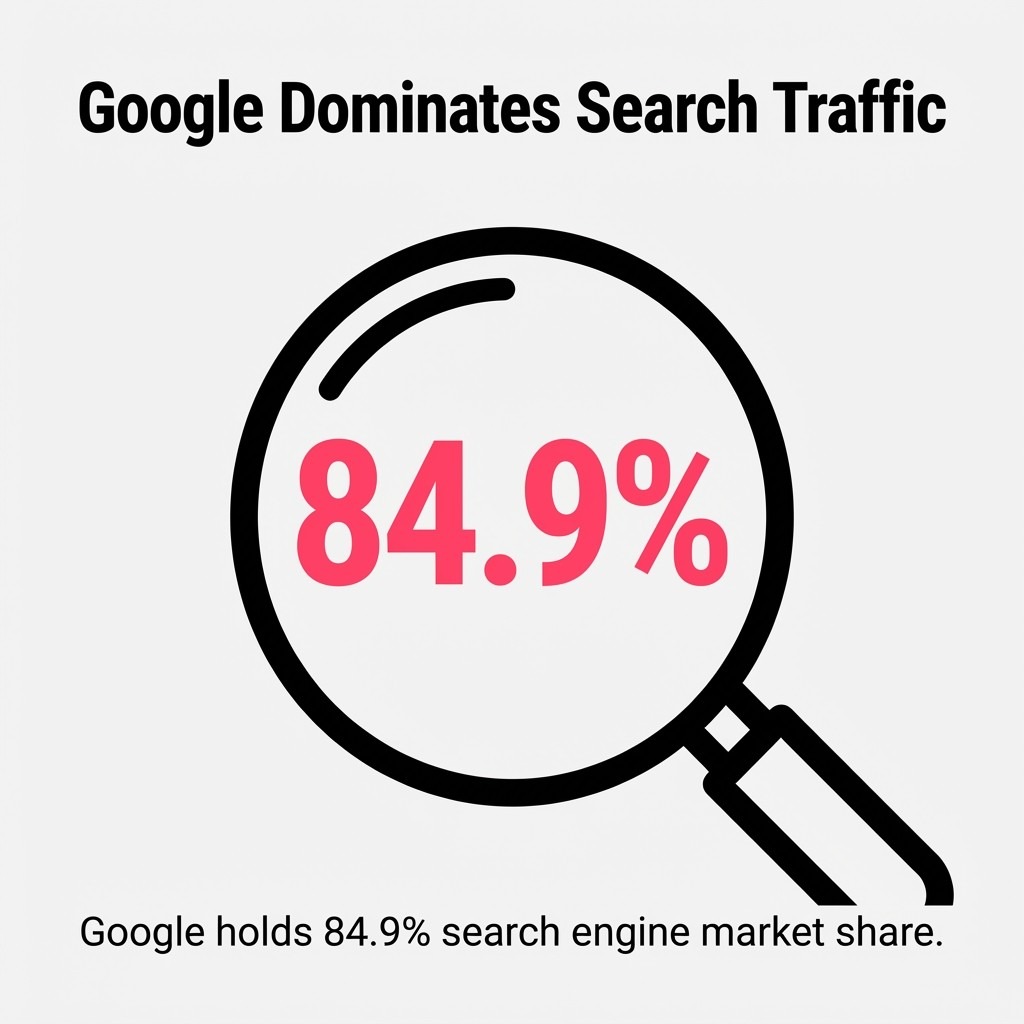
Google commands 84.9% of search—build pillar/cluster depth to signal topical authority in Google.
Start with your main product categories or service offerings. Each major category becomes a potential pillar page covering the topic thoroughly.
Pillar content should be detailed but not overwhelmingly specific. Think 2,500 to 4,000 words covering fundamental concepts, key considerations, available options, and decision factors. This content targets broader keywords while linking to more specific cluster content.
For an industrial pump distributor, pillar topics might include hydraulic pumps, pneumatic systems, or fluid power components. For a manufacturing services company, topics could cover CNC machining, metal fabrication, or quality control processes.
Cluster content dives deeper into specific aspects of the pillar topic. Each cluster page targets more specific long-tail keywords while linking back to the pillar page and related cluster content.
Cluster pages address specific applications, technical specifications, comparison topics, troubleshooting guides, or selection criteria. These pages typically range from 1,000 to 2,000 words with focused keyword targeting.
Link structure matters significantly. Every cluster page should link to its pillar page. The pillar page links to all relevant cluster content. Related cluster pages can link to each other when contextually relevant.
Internal linking distributes authority throughout your topic clusters and helps search engines understand content relationships. Strategic linking improves rankings for both pillar and cluster pages.
Use descriptive anchor text that indicates the linked page's topic. Avoid generic "click here" links. Instead use specific phrases like "hydraulic pump selection criteria" or "ISO 4406 cleanliness standards."
Balance linking depth and breadth. Important pages should be accessible within three clicks from your homepage. But don't create excessive links that dilute authority or confuse site structure.
Industrial B2B content walks a fine line between technical accuracy and accessibility. Too simple, and you lose credibility with engineering audiences. Too complex, and you exclude non-technical decision makers.
Your content strategy needs to serve multiple stakeholder types while maintaining search engine optimization best practices. This means creating different content formats addressing varied information needs throughout the buying process.
Focus on content that directly supports purchasing decisions rather than generic thought leadership that generates low-quality traffic.
Detailed product information serves bottom-of-funnel searches and supports technical evaluation. Create content addressing specifications, compatibility, installation requirements, and performance characteristics.
Structure product pages with clear specification tables, technical drawings when available, application notes, and compatibility information. This content targets specific product keywords and part number searches.
Include downloadable resources: PDF spec sheets, CAD models, installation guides, and certification documents. These materials support buyer evaluation while creating additional opportunities for lead capture.
Industrial buyers search for solutions to specific operational challenges. Create content addressing common problems in your customers' workflows, then demonstrate how your products or services solve those issues.
This content targets middle-funnel keywords around problems, challenges, and solution searches. It builds authority while capturing buyers earlier in their research process.
Structure these articles around real customer scenarios without fabricating specific details. Focus on general industry challenges backed by technical explanations and solution frameworks.
Buyers comparing options search specific comparison keywords and selection criteria. Create content that objectively addresses these evaluation factors while highlighting your differentiators.
Selection guides work particularly well for complex industrial products. Walk through decision factors, explain technical trade-offs, and provide frameworks for evaluation. This positions your company as a helpful resource rather than just another vendor.
Be honest about limitations and appropriate applications. Credibility with technical audiences requires acknowledging when alternative solutions might be more suitable for specific situations.
Match content format and depth to search intent behind your target keywords. Informational searches need detailed explanations. Transactional searches need clear purchasing pathways and product information.
Structure content for scannability. Use descriptive headings, bulleted lists for specifications, tables for comparisons, and clear visual hierarchy. Technical audiences want efficient information access.
Include clear conversion paths appropriate to buying stage. Top-of-funnel content might offer educational resources. Bottom-of-funnel content should provide quote request forms, contact information, or direct purchasing options.
Technical SEO ensures search engines can properly crawl, index, and rank your content. Industrial websites often have technical SEO challenges that prevent otherwise strong content from ranking.
Address these foundational elements before investing heavily in content creation. Technical problems can completely undermine your B2B SEO strategy regardless of content quality.
Organize your site structure around how buyers research and purchase. Clear hierarchy helps both users and search engines understand content relationships and priorities.
Start with logical category organization. Main navigation should reflect major product categories or service offerings. Subcategories dive into specific product types or applications.
Keep important pages within three clicks of your homepage. Deeper pages receive less authority and may not be crawled as frequently. Flatten your site architecture when possible while maintaining logical organization.
Page speed impacts both rankings and user experience. Industrial websites often struggle with large technical images, complex specification tables, and detailed product databases that slow loading times.
Optimize images without sacrificing technical detail. Use modern formats like WebP. Implement lazy loading for images below the fold. Compress large files while maintaining clarity for engineering specifications.
Monitor Core Web Vitals through Google Search Console. Focus particularly on Largest Contentful Paint and Interaction to Next Paint, which replaced First Input Delay as a Core Web Vitals metric.
Industrial buyers increasingly research on mobile devices, even for technical products. Mobile optimization matters for rankings and user experience.
Ensure specification tables remain readable on smaller screens. Consider alternative formats like expandable sections or simplified mobile views for complex technical data.
Test forms and conversion paths on mobile devices. Quote request forms and contact forms must function smoothly on tablets and phones used by buyers researching on the shop floor or in the field.
Structured data helps search engines understand your content and can enhance search results with rich snippets. Industrial websites benefit from specific schema types.
Implement Product schema for product pages with specifications, pricing information, and availability. Use Organization schema to establish your company information. Consider FAQ schema for common technical questions.
Article schema helps search engines understand blog content and educational resources. Review schema can display ratings and testimonials in search results when you have customer feedback.
Link building for industrial B2B SEO focuses on relevance and authority rather than quantity. A single link from an industry association or technical publication carries more value than dozens of generic directory listings.
Your approach should emphasize earning links through genuinely valuable content and industry participation rather than manipulative tactics that risk penalties.
Develop content that other industry sites naturally want to reference. Technical resources, original research, and detailed guides attract authoritative backlinks.
Consider creating detailed selection guides, engineering calculators, specification comparison tools, or industry reference materials. These resources attract links from industry publications, educational sites, and relevant blogs.
Long-tail industrial keyword strategies often uncover content opportunities that simultaneously target niche searches and attract relevant backlinks.
Leverage existing business relationships for link opportunities. Suppliers, distributors, industry associations, and certification bodies often provide member directories or partner listings.
Participate actively in industry associations. Membership profiles, contributed articles, and event sponsorships frequently include backlinks to your website.
Consider strategic partnerships with complementary companies. Co-marketing initiatives, joint case studies, and technical collaboration projects create natural linking opportunities.
Contributing expert content to industry publications builds both links and brand authority. Thought leadership articles and blog posts addressing industry challenges convert at 2.0% while building your reputation.
Identify relevant industry publications, trade journals, and technical blogs that accept contributed content. Pitch article ideas addressing real industry challenges with your unique expertise.
Focus on providing genuine value rather than promotional content. Publications want educational material that serves their audience, not thinly disguised sales pitches.
Industrial B2B SEO requires different success metrics than consumer marketing. Traffic volume matters less than lead quality and ultimate revenue attribution.
Track metrics that align with actual business outcomes. Vanity metrics like total visits or page views don't indicate SEO success when your goal is generating qualified leads worth substantial contract values.
Analyze organic traffic beyond simple visitor counts. Which keywords drive traffic? What pages attract visitors? How do organic visitors behave compared to other channels?
Segment organic traffic by funnel stage. Bottom-of-funnel keywords should drive lower volumes but higher engagement and conversion rates. Top-of-funnel content attracts more visitors but with longer paths to conversion.
Monitor bounce rates and time on page by keyword category. High bounce rates on transactional keywords indicate targeting problems or user experience issues. Low engagement on educational content suggests relevance gaps.
Connect organic search performance to actual lead generation. Track which keywords and pages drive quote requests, contact form submissions, and other conversion actions.
Use Google Analytics goals and events to monitor specific conversion actions. Set up tracking for PDF downloads, video views, and other engagement indicators that signal buying interest.
Industrial sales cycles make direct attribution challenging. Most buyers research extensively before contacting sales teams. They may visit your site multiple times across several months.
Use multi-touch attribution models that credit organic search throughout the buyer journey. First-touch attribution shows which channel initiated relationships. Last-touch shows what closed deals. Multi-touch reveals the full contribution.
Work with your sales team to track lead sources through your CRM. Connect closed deals back to their original traffic sources. This reveals true ROI from organic search investment.
Review performance metrics monthly to identify optimization opportunities. Which content performs well? What keywords drive qualified traffic? Where do visitors drop off?
Double down on successful content themes. If certain topic clusters attract engagement and leads, expand those topics with additional cluster content addressing related queries.
Improve underperforming pages before abandoning them. Sometimes small changes to titles, calls to action, or content structure significantly improve results.
Consistency matters more than perfection in B2B SEO. Regular content publication signals active expertise while building topical authority over time.
Industrial companies often struggle with content production. Technical expertise resides in engineering teams with limited time for writing. Marketing teams lack deep technical knowledge.
Solve this challenge with systematic content processes that leverage existing expertise efficiently.
Your technical team holds valuable knowledge buyers want. Extract that expertise through structured interviews rather than expecting engineers to write articles.
Schedule regular interviews with engineers, product managers, or technical sales specialists. Ask specific questions about customer challenges, product applications, and technical considerations.
Record interviews and transcribe them. Professional writers can transform transcripts into polished articles while preserving technical accuracy and expert insights.
Your company already produces technical content: product manuals, specification sheets, training materials, and sales presentations. Repurpose these materials into SEO-optimized web content.
Extract key information from technical documents and reformat for web consumption. Add context, explanatory content, and clear navigation to make specialized information accessible.
Update and expand legacy content. Older specification sheets or product guides can become detailed product pages optimized for relevant keywords while serving buyer information needs.
Plan content production quarterly based on keyword priorities and business objectives. Structured calendars ensure consistent publication while distributing workload manageable.
Balance content across funnel stages and topic clusters. Don't focus exclusively on either top-of-funnel awareness or bottom-of-funnel product content. Your strategy needs both.
Schedule content around industry events, seasonal buying patterns, or product launches when relevant. This relevance increases both search visibility and business impact.
Industrial B2B SEO requires patience and consistent execution. You won't see dramatic results in 30 days. But systematic implementation produces compounding returns as your content library grows and authority builds.
Start with your highest-priority bottom-of-funnel keywords and core product content. These pages drive the most qualified traffic and support sales efforts immediately.
Build your pillar content framework next. Detailed guides on major topics establish topical authority while creating structure for ongoing cluster content development.
Implement technical SEO foundations before publishing extensive content. Site speed, mobile optimization, and proper structure ensure your content can actually rank.
Develop your content production system based on available resources. A sustainable approach producing one quality article weekly beats ambitious plans that collapse after two months.
Track meaningful metrics from day one. Connect organic search efforts to actual lead generation and revenue rather than focusing on traffic vanity metrics.
Industrial SEO driven by solid product data creates compounding advantages. Each piece of optimized content attracts relevant traffic indefinitely. Authority builds with every quality backlink earned through genuine expertise.
Your competitors may not prioritize SEO, giving you opportunity to capture market share in organic search. Industrial buyers start research online regardless of eventual purchasing channels. Your visibility during that research phase directly impacts your sales pipeline.
The framework outlined here provides everything needed to build an effective B2B SEO strategy for industrial companies. Focus on implementation over endless planning. Start creating the technical content your buyers actually search for, and measure results against business outcomes that matter.