
The fastener industry isn't just about bolts and screws anymore. It's about data, automation, and reaching buyers who'd rather not talk to you.
Bay Fastening Systems now connects more than 44,000 registered buyers through automated quoting systems. That's not a trend. That's the new baseline.
The industrial fasteners market is shifting fast. B2B buyers expect Amazon-level convenience, manufacturers are using AI to handle quotes, and sustainability targets are changing what products actually get specified.
This guide breaks down what's actually working in fastener marketing right now. You'll see real numbers from companies automating 75% of their quote process, regional market data showing where growth is happening, and practical digital strategies you can implement this quarter.
No theory. No outdated advice about trade shows being your only channel. Just the marketing strategy that fastener manufacturers and distributors are using to capture market share in 2026.
Marketing fasteners used to mean catalog printing and booth space. Now it means understanding buyer behavior data and automation platforms.
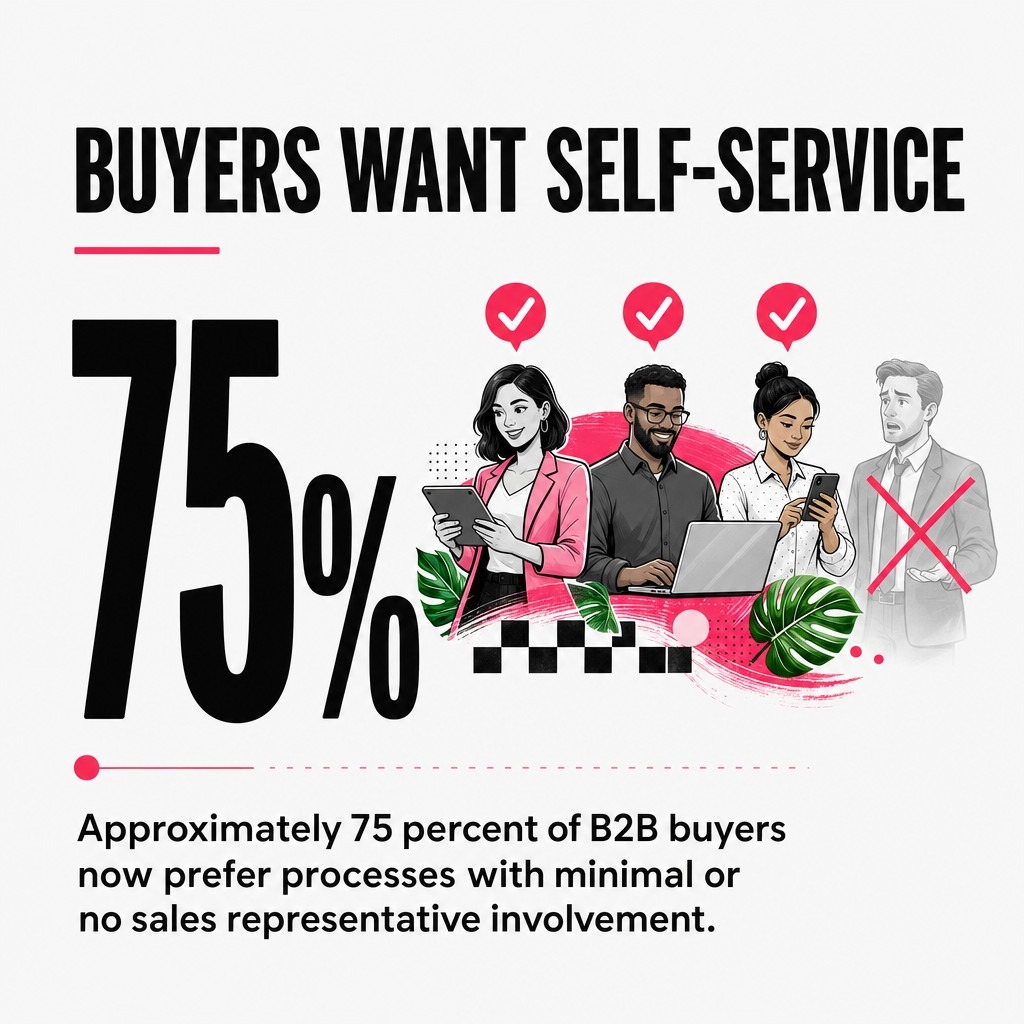
The shift happened faster than most distributors expected. Approximately 75% of B2B buyers now prefer processes with minimal or no sales representative involvement. That's three out of four potential customers who want to research, compare, and order without ever talking to your sales team.
What does this mean for fastener marketing? Your digital presence is now your primary sales channel.
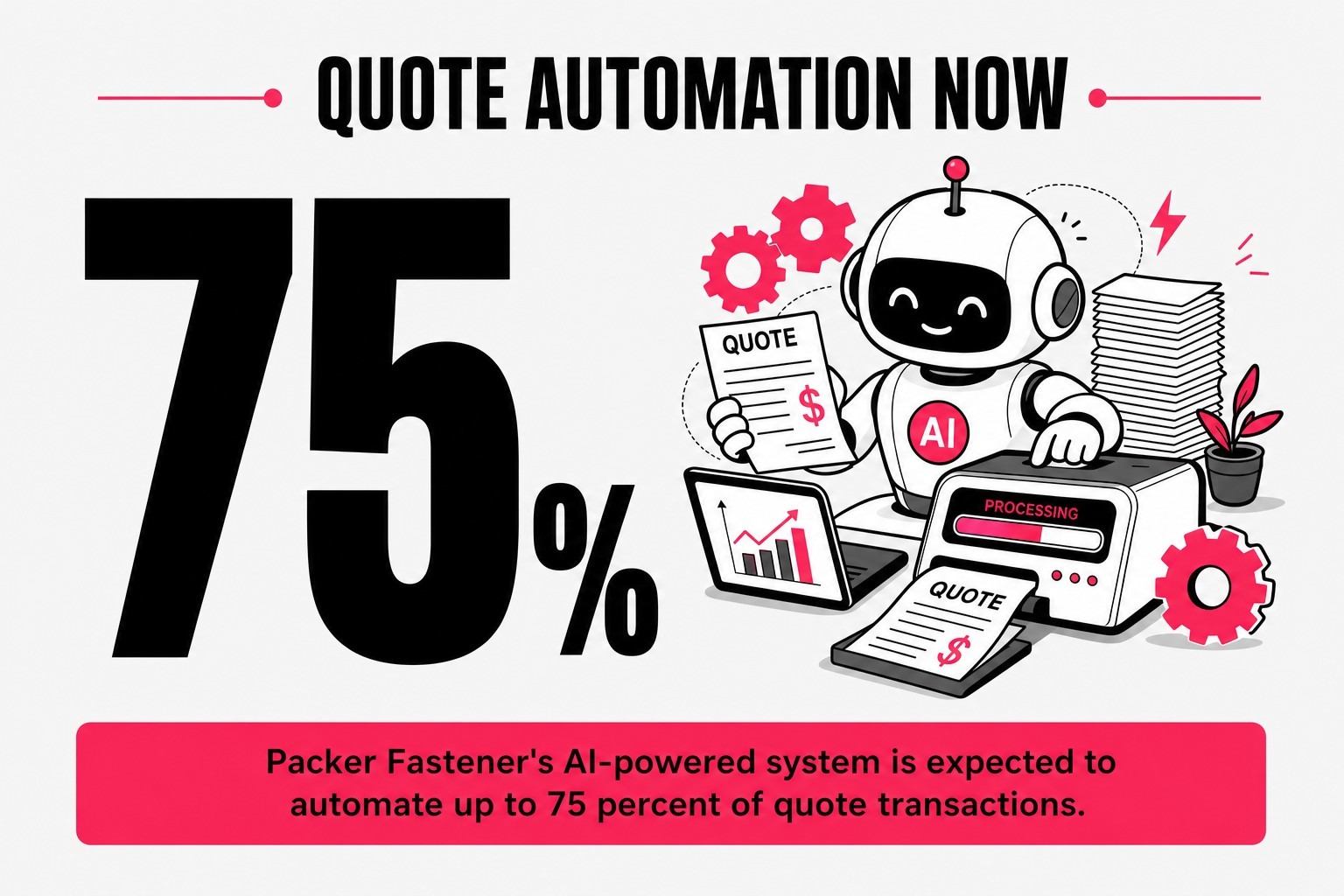
Packer Fastener's AI-powered system is expected to automate up to 75% of quote transactions. That's not incremental improvement. That's a complete operational change.
The companies winning in 2026 are the ones who figured out how to serve this new buyer preference. They built systems that let customers get instant quotes, compare specifications, and place orders at 2 AM on a Sunday.
Your marketing needs to support this self-service model. That means detailed product specifications online, clear technical documentation, and transparent pricing where possible.
Traditional distribution models relied on relationship selling. New models rely on data and convenience.
The fastener companies growing market share right now have invested in e-commerce platforms that handle complex configurations. They've built mobile-friendly catalogs that engineers can browse on the factory floor. They've created content that answers technical questions at 11 PM when a design team is finalizing specifications.
This isn't about replacing relationships. It's about earning the relationship before the first call happens.
Let's talk numbers. The Europe fasteners market was valued at $12.4 billion in 2024 and is projected to grow to $16.8 billion by 2030, exhibiting a CAGR of 5.2%.

That's steady growth, but not uniform across regions or applications.
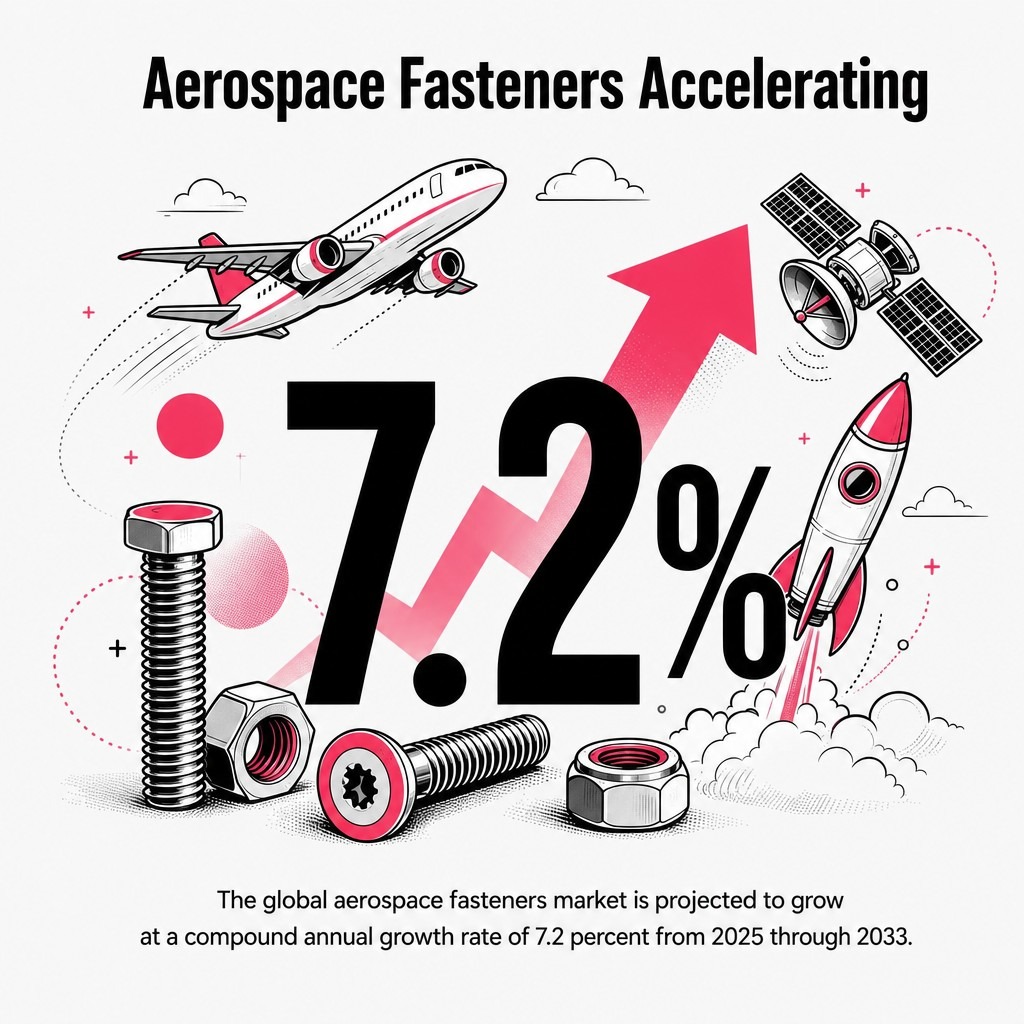
The global aerospace fasteners market is projected to grow at a compound annual growth rate of 7.2% from 2025 through 2033. That's faster than general industrial fasteners and driven by specific factors: aircraft production rates, commercial aviation recovery, and defense spending.
If you serve aerospace applications, your marketing needs to speak that language. Quality certifications matter more than price. Traceability documentation isn't optional. Lead times can make or break a deal.
Your content strategy should address these specific concerns. Case studies showing on-time delivery performance. Technical articles explaining your quality processes. Clear documentation of your industrial certifications and compliance standards.
Asia Pacific dominates manufacturing volume, but that doesn't mean it's the only opportunity. European markets show strong demand for specialty fasteners and high-performance materials. North American markets are driven by automotive production, construction activity, and infrastructure investment.
Your marketing approach should reflect these regional differences. European buyers often prioritize sustainability credentials. North American buyers want rapid fulfillment and technical support. Asian markets are highly price-competitive but growing in quality requirements.
Not all fasteners are created equal, and they shouldn't be marketed the same way.
A stainless steel rivet going into a marine application has different buying criteria than a titanium bolt for aerospace. Your marketing needs to reflect these distinctions.
Metal fasteners dominate industrial applications: bolts, screws, nuts, rivets, and washers made from stainless steel, carbon steel, titanium, and aluminum alloys. Each material serves specific performance requirements.
Stainless steel fasteners appeal to buyers concerned with corrosion resistance. Your marketing should emphasize longevity, reduced maintenance costs, and performance in harsh environments.
Plastic fasteners serve weight-sensitive applications, electrical insulation needs, and cost-conscious projects. Market these by emphasizing weight reduction, non-conductivity, and chemical resistance rather than competing on strength metrics where metal fasteners win.
Automotive fastener buyers care about weight reduction for fuel efficiency, vibration resistance, and assembly line compatibility. Create content addressing these specific concerns.
Construction fasteners sell on load ratings, weather resistance, and installation speed. Your technical documentation should make these specifications easy to find and compare.
Aerospace fasteners require exhaustive documentation. Every batch needs traceability. Every specification needs verification. Your marketing materials should demonstrate your quality management systems before a buyer ever requests a quote.
This means creating separate content tracks for each major application. An engineer specifying fasteners for electric vehicle battery assemblies has completely different questions than someone selecting fasteners for bridge construction.
Trade shows still matter, but they're not enough. Not even close.
The buyers researching fasteners right now are doing it online. They're comparing specifications in multiple tabs. They're reading technical documentation at their desk. They're watching installation videos on YouTube.
When someone searches "M12 stainless steel hex bolts DIN 933," they're not browsing. They're buying. That search has purchase intent.
Your website needs to capture these high-intent technical searches. That means creating product pages for specific SKUs, not just product categories. It means including specification tables that search engines can index. It means writing technical content that answers the questions engineers actually ask.
Most fastener distributors have terrible SEO because they never invested in product-level content. They have a "bolts" page and wonder why they don't rank. The companies winning search traffic have individual pages for metric bolts, SAE bolts, hex head bolts, socket head cap screws, and every other variant someone might search.
This isn't glamorous marketing work. It's cataloging and content creation at scale. But it's what captures organic traffic from buyers ready to purchase.
Create content that solves real technical problems. Write guides comparing material grades for specific applications. Explain torque specifications and why they matter. Show installation best practices.
This content serves two purposes. It helps buyers make informed decisions, which builds trust. And it captures search traffic from engineers researching solutions.
Think about the questions your sales team answers repeatedly. Those are content opportunities. "What's the difference between Grade 5 and Grade 8 bolts?" deserves a detailed article with comparison tables and application guidance.
"How do I calculate the correct torque for this bolt size?" deserves a calculator tool and explanation of the engineering principles involved.
Every technical question is a content opportunity that can rank in search results and generate qualified traffic.
Generating leads in the fastener industry means being present where engineers and procurement professionals look for solutions.
That's partly traditional channels, but increasingly it's digital platforms where technical buyers spend their time.
Instagram won't sell industrial fasteners. LinkedIn will.
Your target buyers are on LinkedIn researching suppliers, following industry news, and looking for technical content. That's where you need consistent presence.
Share technical content. Post case studies showing real applications. Discuss industry standards and certifications. Highlight your engineering capabilities.
The fastener companies getting traction on LinkedIn aren't posting generic motivational quotes. They're sharing engineering drawings, explaining material selection criteria, and demonstrating technical expertise.
This is where manufacturing marketing strategies align with social selling tactics. You're not just broadcasting. You're engaging with engineers who comment, answering technical questions, and building relationships before anyone requests a quote.
Engineers don't want sales pitches. They want information that helps them do their job better.
Your email strategy should focus on educational content: new product announcements with detailed specifications, technical bulletins explaining material properties, case studies showing successful applications.
Segment your list by application. Automotive engineers get different content than construction contractors. Aerospace buyers need different information than industrial machinery manufacturers.
The goal isn't frequency. It's relevance. Send less often but make every message valuable to the recipient's specific needs.
Create downloadable resources that solve real problems. A torque specification guide becomes a lead magnet for mechanical engineers. A material selection matrix helps procurement professionals make better decisions. A cost comparison tool for different fastener materials provides value while capturing contact information.
These aren't traditional marketing gimmicks. They're genuinely useful tools that demonstrate your expertise while building your contact database.
The key is making the value exchange obvious. The engineer downloading your material selection guide should immediately benefit from that information, regardless of whether they ever buy from you.
Quality certifications aren't just compliance requirements. They're marketing differentiators.
Vegas Fastener Manufacturing emphasizes its ISO 9001:2015 / API 20F & Q1 certification as a marketing differentiator. They understand that for many buyers, certifications are table stakes for even being considered.
Don't bury your certifications in a footer. Feature them prominently on product pages, quote request forms, and technical documentation.
More important, explain what they mean. Most buyers know "ISO 9001" matters but couldn't explain why. Your marketing should educate them on what these certifications guarantee: consistent quality, documented processes, regular audits, traceability.
For aerospace applications, AS9100 certification isn't optional. For automotive suppliers, IATF 16949 matters. For fasteners used in pressure vessels, ASME certification is required. Your marketing should make it immediately clear which certifications you hold and what applications they enable.
Your quality documentation can become marketing content. Publish your testing procedures. Explain your inspection processes. Share certification documentation.
This level of transparency builds trust. It shows you're not just claiming quality, you're documenting it at every step.
Create content explaining your quality management system. Show photos of your testing equipment. Interview your quality manager about your processes. This content differentiates you from competitors who just list certification acronyms without context.
Sustainability isn't just corporate responsibility anymore. It's a procurement requirement.
Optimas aims to achieve a reduction target of 51.6% in Scope 3 emissions by 2030 from the 2022 baseline. That's a specific, measurable commitment that resonates with buyers under pressure to reduce their own supply chain emissions.
Many industrial buyers now face sustainability reporting requirements. They need to document the environmental impact of their supply chain, including the fasteners they use.
If you can provide detailed environmental data, carbon footprint calculations, or sustainability certifications, you're solving a real problem for these buyers.
Your marketing should highlight these capabilities. Create content explaining your sustainability initiatives. Publish environmental data. Show how you're reducing emissions, waste, and resource consumption.
This isn't greenwashing. It's addressing a legitimate buyer concern that's only going to increase in importance.
Some fastener applications support reuse and recycling. If your products or processes enable circular economy principles, that's marketing content.
Talk about material recyclability. Explain design choices that extend product life. Show how your fasteners support disassembly and remanufacturing.
The buyers caring about this today are early adopters. But regulatory pressure and corporate sustainability commitments mean this audience is growing rapidly.
Technology isn't just changing how you market fasteners. It's changing how you manufacture and fulfill them.
Robotic screwdriving systems can achieve 40–60% reduction in fastening cycle time per assembly. That operational efficiency can become a marketing message about faster fulfillment and consistent quality.
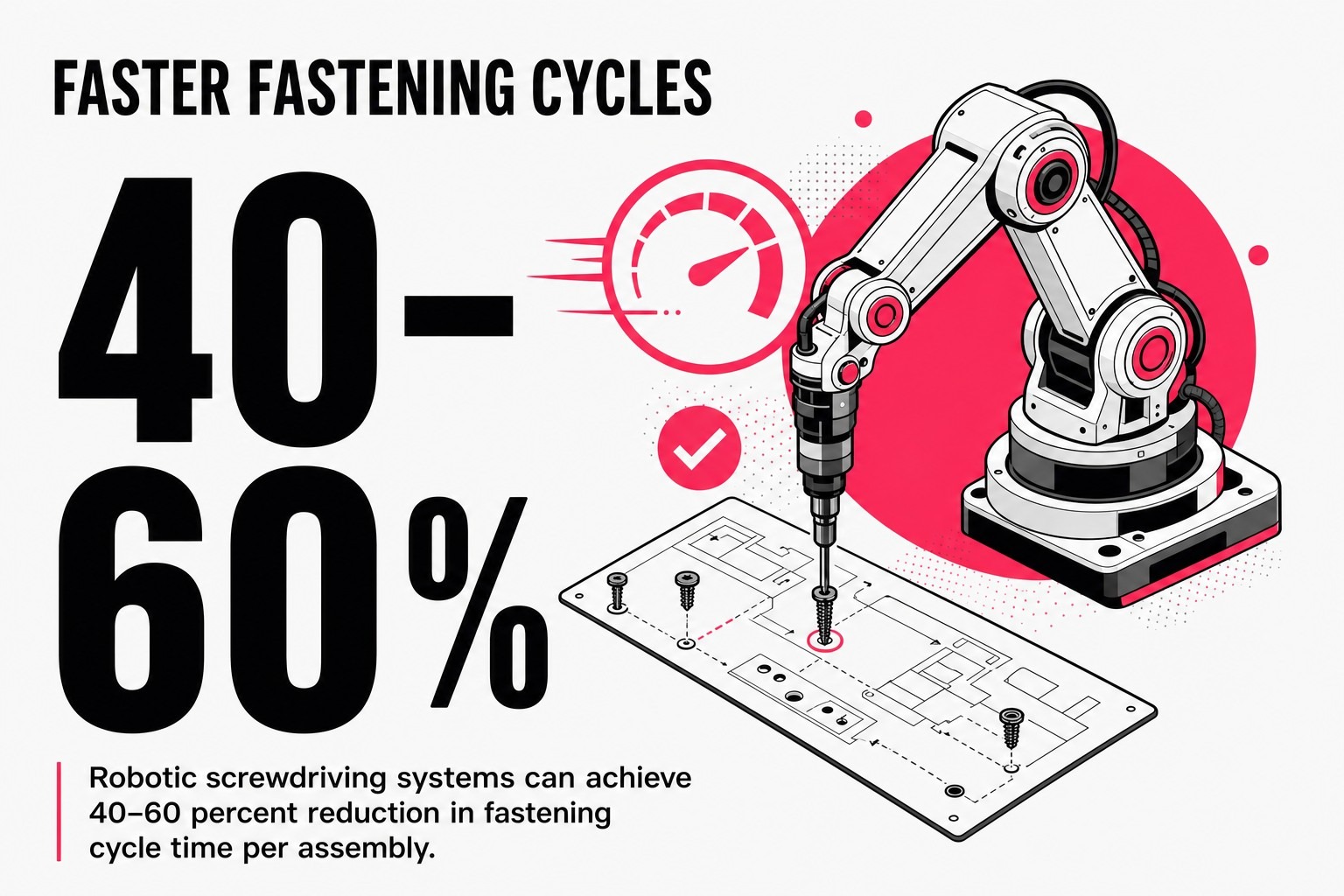
Automation advantage: robotic screwdriving cuts fastening cycle time by 40–60%. Translate ops gains into customer-facing promises.
If you've invested in advanced manufacturing technology, automated quality inspection, or robotic assembly systems, that's differentiating content.
Create facility tour videos showing your automation capabilities. Explain how technology improves consistency and reduces lead times. Show the quality control systems that catch defects before shipping.
Buyers want to know their suppliers are investing in modern capabilities. Your technology investments signal that you're a reliable long-term partner, not a company stuck with outdated processes.
Selling fasteners online is harder than selling t-shirts. The configurator needs to handle thread pitch, material grades, coatings, lengths, and head styles. The search needs to support both part numbers and technical specifications.
The e-commerce platforms winning in industrial markets solve these complexity problems. They make it easy for engineers to find exactly the right fastener, even when they're choosing from thousands of SKUs.
If your e-commerce platform handles this complexity well, that's a marketing advantage. Promote your search capabilities, your technical filters, and your specification tools.
Make it obvious that buying from you online is easier than requesting quotes from competitors.
Digital marketing matters, but face-to-face connections still drive major relationships.
The International Fastener & Assembly Summit is designed as a one-day, high-impact program for leaders. That's the format working in 2026: focused, executive-level gatherings rather than massive trade shows.
You can't attend every trade show. Choose events strategically based on your target markets and applications.
Aerospace fastener manufacturers should prioritize aerospace manufacturing conferences. Automotive suppliers need presence at automotive engineering events. Construction-focused distributors benefit from builder and contractor gatherings.
The goal isn't booth traffic. It's meaningful connections with qualified buyers and strategic partners.
Prepare for events by identifying specific companies and individuals you want to meet. Use LinkedIn to research attendees and schedule meetings in advance. Create event-specific content offers that capture contact information from booth visitors.
Most trade show leads go nowhere because follow-up is terrible. Don't collect business cards just to add them to a generic email list.
Create event-specific nurture sequences. Reference the conversation you had. Provide the specific information they requested. Follow up with relevant case studies or technical content based on their application needs.
The companies getting ROI from trade shows are the ones who built systematic follow-up processes, not just booth displays.
The fastener industry continues consolidating. Threaded Fasteners, Inc. announced its January 2026 acquisition of TSA Manufacturing Inc.
These moves reshape competitive dynamics and create marketing opportunities.
If you're competing against larger consolidated players, your marketing needs to emphasize your differentiation. That might be specialization in specific applications, faster response times, custom capabilities, or technical expertise in niche markets.
Don't try to compete on breadth of catalog if you can't win that battle. Instead, own a specific segment where you can demonstrate clear superiority.
Your content strategy should reflect this focus. Become the definitive resource for your specialty rather than a mediocre source for everything.
If you're the company doing the acquiring, use it as a marketing opportunity. Explain how the acquisition expands capabilities, improves service, or enhances product range.
Address customer concerns proactively. Will their contacts change? Will pricing change? Will service levels improve?
The companies that handle acquisition communications well turn potentially disruptive changes into positive marketing messages about increased capabilities and investment in growth.
Strategy matters, but execution wins. Here's what to actually do.
Review every product page on your website. Does it include detailed specifications? Can someone compare material grades easily? Are installation instructions clear?
Make a list of missing content. Prioritize based on search volume and product importance. Start creating product-level content that actually helps buyers make decisions.
If your company isn't actively posting on LinkedIn, start this week. Share one piece of technical content per week: an application case study, a material comparison, a technical tip.
Encourage your engineers and technical team to build personal profiles and share their expertise. B2B lead generation increasingly happens through individual thought leaders, not just company pages.
Build dedicated landing pages for your key applications: automotive fasteners, aerospace fasteners, construction fasteners, marine applications, whatever aligns with your strength.
Each page should address the specific concerns of that buyer: relevant certifications, application examples, material recommendations, technical resources.
Drive traffic to these pages through targeted content and paid campaigns. This is where data-driven marketing strategies prove their value.
Not all website visitors are equally qualified. Implement lead scoring based on behavior: what pages they viewed, what content they downloaded, what specifications they searched.
Someone who downloaded your aerospace fastener specification guide and viewed your AS9100 certification page is more qualified than someone who just visited your homepage.
Use this scoring to prioritize sales follow-up and personalize email nurture sequences.
If you haven't implemented automated quoting for standard products, that's your highest priority. Start with your highest-volume SKUs and standard configurations.
The goal isn't to eliminate your sales team. It's to let them focus on complex applications and strategic accounts while routine quotes happen automatically.
This operational improvement becomes marketing content: "Get instant quotes 24/7" is a competitive advantage when your competitors still require phone calls and email back-and-forth.
Marketing without measurement is just expense, not investment.
Website traffic is nice. But qualified lead volume matters more. Track how many leads meet your ideal customer profile: right industry, right application, right purchase authority.
Monitor your search rankings for high-intent technical terms. Track quote request volume from your website. Measure how many LinkedIn connections turn into actual conversations.
The companies with effective manufacturing marketing know exactly which channels drive qualified opportunities and which just generate noise.
Fastener sales often have long evaluation periods. Someone might download your technical guide in January and request a quote in June.
Implement multi-touch attribution to understand the full buyer journey. Track first touch, last touch, and all the content interactions in between.
This shows which marketing activities start relationships and which ones close them. Both matter, but they play different roles.
Which technical articles drive the most qualified traffic? Which product pages have the highest conversion rates? Which email campaigns generate the most quote requests?
Double down on what works. Cut what doesn't. Test variations to improve performance continuously.
Marketing optimization isn't a project. It's an ongoing process of testing, measuring, and improving based on actual results.
The fastener industry will keep evolving. The companies that thrive will be the ones who adapt their marketing as buyer behavior changes.
Electric vehicle production creates new fastener requirements: lighter materials, electrical insulation, thermal management. If you serve automotive markets, your marketing needs to address these emerging applications now, not in three years when competitors have already captured the relationships.
Sustainability requirements will tighten. More buyers will demand environmental documentation. Get ahead by building these capabilities and communication strategies before they become mandatory.
Automation will continue replacing manual processes. Position your company as a technology-forward supplier with modern capabilities, not a legacy manufacturer clinging to old methods.
The digital transformation of B2B buying isn't slowing down. It's accelerating. Your marketing needs to match the sophistication and convenience that buyers now expect from consumer experiences.
This means continuous investment in your digital platforms, content creation, and marketing automation. It means treating marketing as a strategic function that drives revenue, not a cost center that produces brochures.
The fastener manufacturers winning market share in 2026 are the ones who made this shift years ago. If you're behind, the time to catch up is now. Start with the tactics outlined in this guide. Measure results rigorously. Scale what works.
Your competitors are already doing this. The question is whether you'll lead the change or scramble to catch up.