
Digital marketing for farm equipment dealers in 2026 requires seven core strategies: search engine optimization for local and organic visibility, PPC advertising for high-intent lead generation, content marketing to build authority with farmers, email marketing to manage long sales cycles, social media marketing for community and brand reach, video marketing to influence purchase decisions, and CRM-driven analytics to track and improve ROI.
The U.S. agricultural machinery market was valued at $30.2 billion in 2025 and is estimated to grow from $32.14 billion in 2026 to $43.84 billion by 2031, giving every farm equipment dealership a real window to build lasting online presence now.
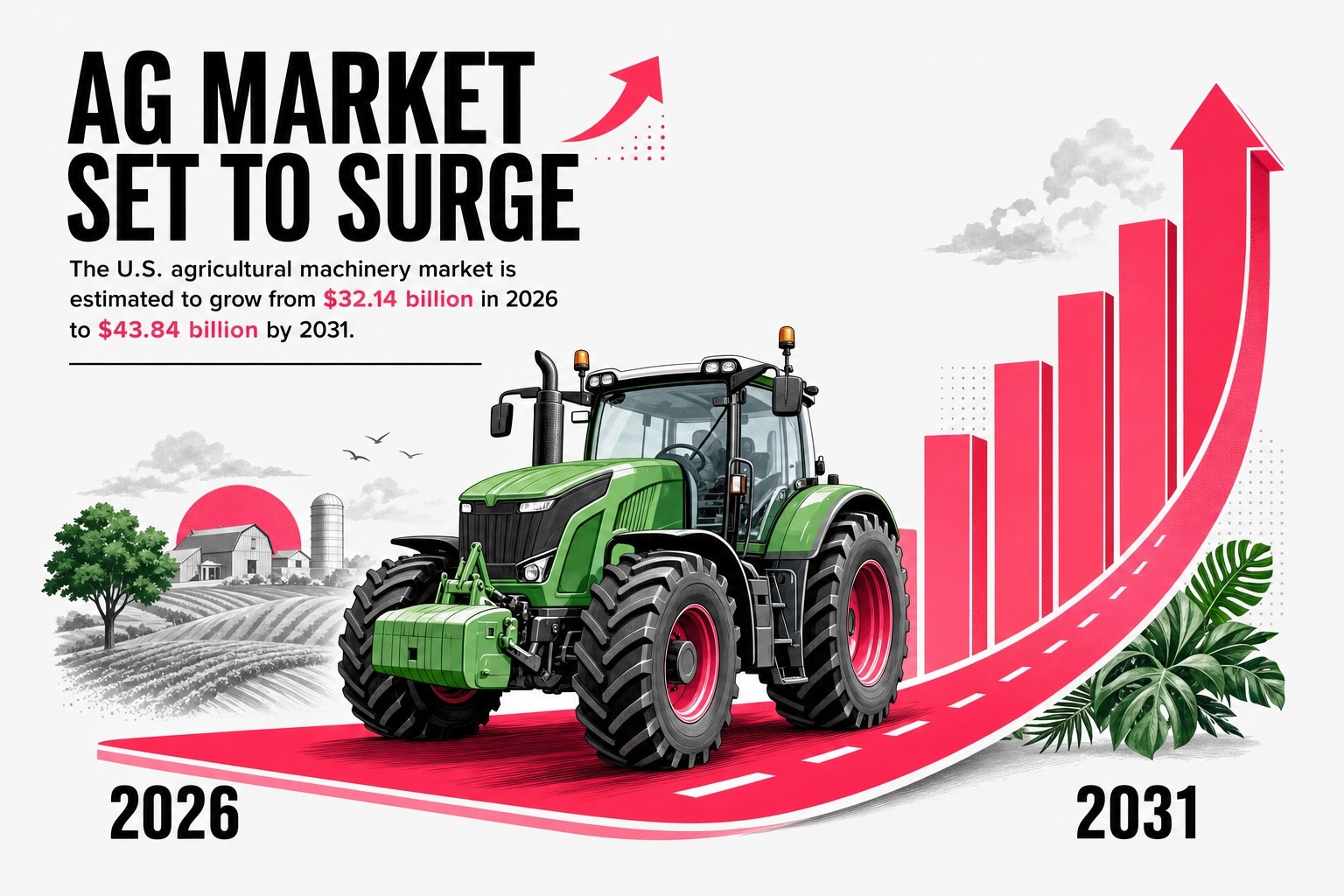
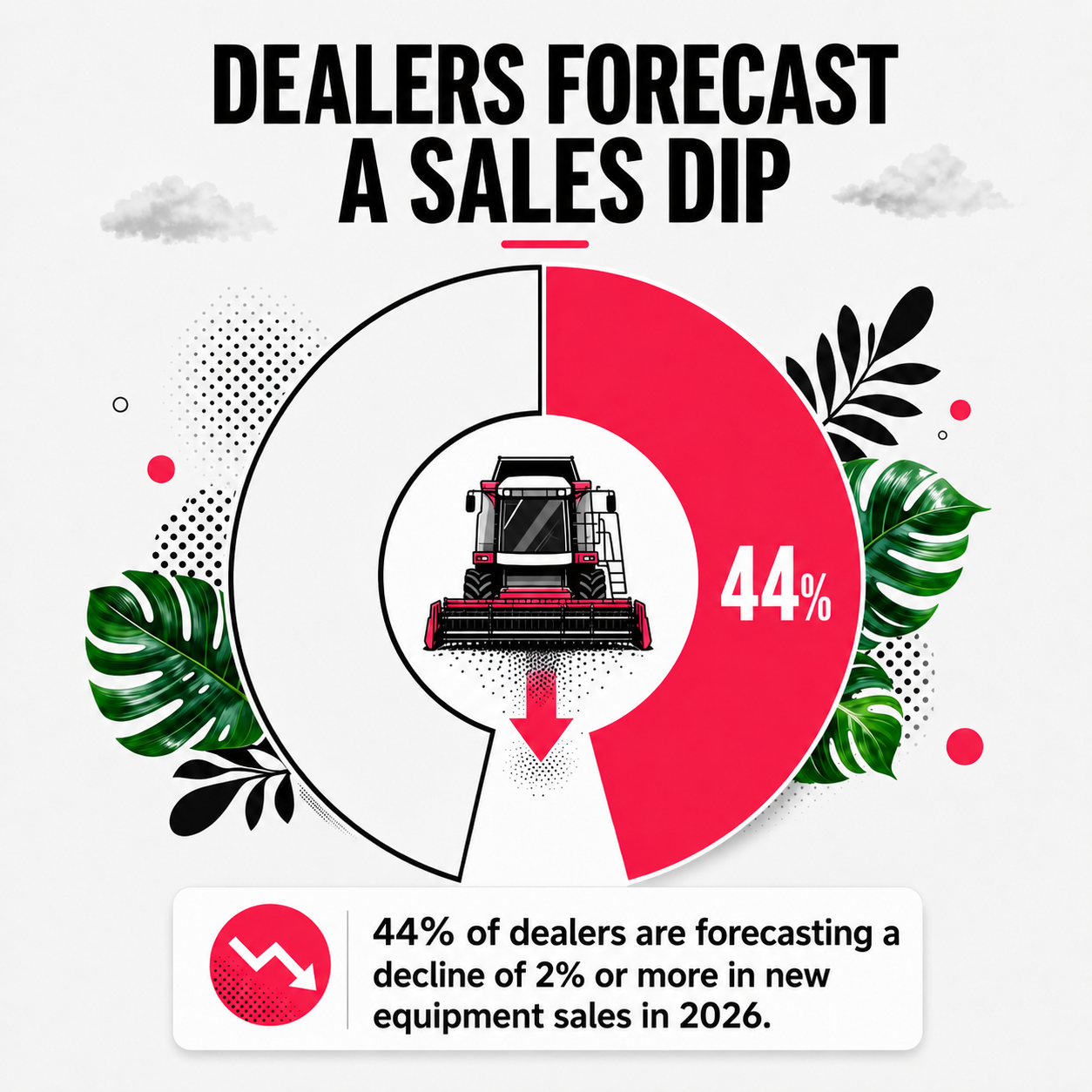
But the market isn't moving in a straight line. Combine sales dropped 35.58% in 2025, and 44% of dealers are forecasting a decline of 2% or more in new equipment sales in 2026. The dealers who grow through a down cycle aren't lucky. They're the ones showing up online when farmers go searching. And farmers are searching.
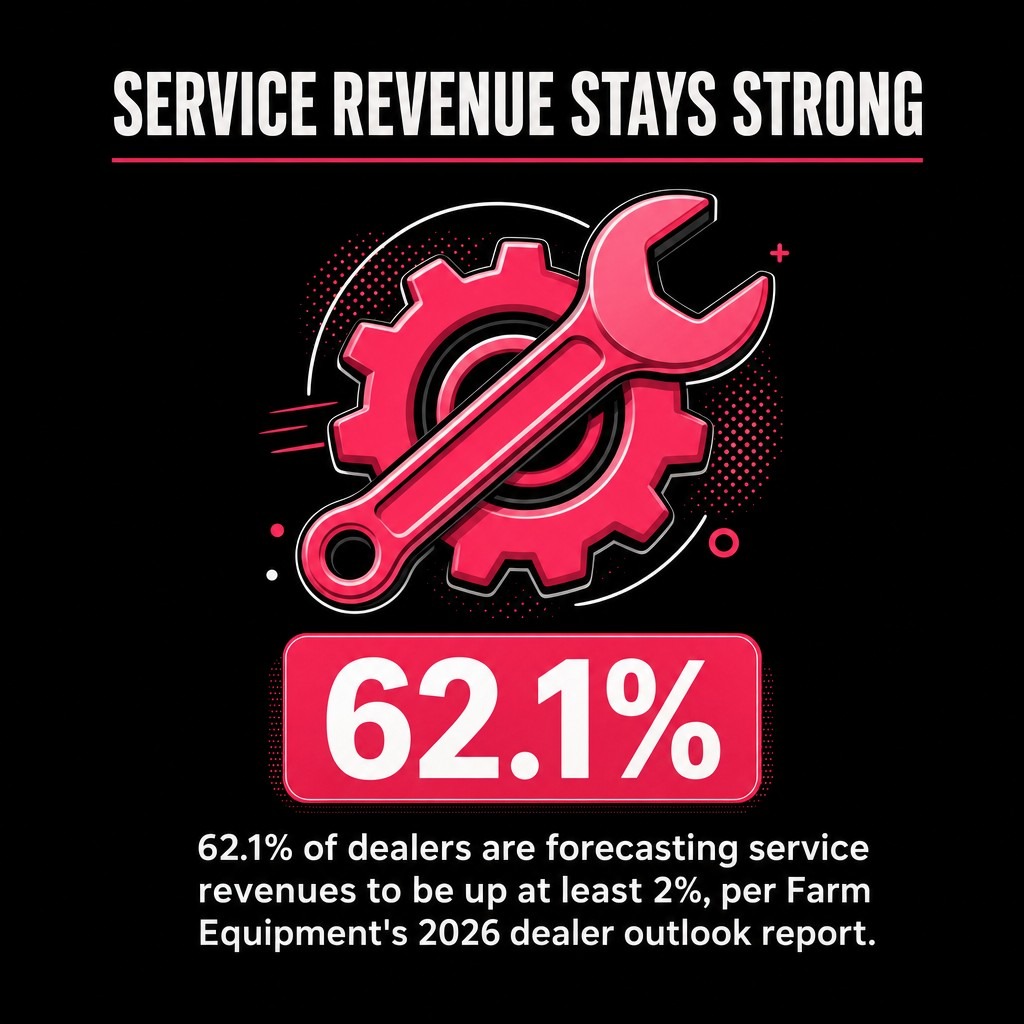
Farm equipment dealers operating without a digital marketing strategy in 2026 are leaving revenue on the table, specifically service revenue. According to Farm Equipment's 2026 dealer outlook report, 62.1% of dealers are forecasting service revenues to be up at least 2%. That number matters because the dealers capturing that service business are the ones farmers can find, trust, and contact online.
The sales slowdown makes digital marketing more important, not less. When equipment budgets tighten, farmers spend more time researching online before they buy anything. Your dealership needs to be there for that research phase, or a competitor will be.
There's also the search behavior angle. May 2025 recorded the lowest farm equipment search interest since 2006, with a Google Trends score of 29.40. Low search volume during a down cycle sounds discouraging, but it signals something useful: the dealers who invest in SEO and content now build authority during a quiet period and dominate rankings when demand rebounds. That's the strategic window.
Search engine optimization for farm equipment dealers means optimizing your website so that farmers searching for tractors, combines, tillage equipment, and service appointments find your dealership before they find anyone else. It's not a one-time task. It's an ongoing process that compounds over time.
Location-based "near me" searches for farm equipment dealers grew significantly in Q1 2026, according to FarmPages' Q1 2026 insights report. That single fact should reshape where your SEO investment goes first.
Start with your Google Business Profile. BrightLocal's local SEO research shows customers are 2.7 times more likely to consider a business reputable when it has a complete Business Profile on Google Search and Maps. That's not a small edge. That's the difference between a farmer calling you or calling the next dealer on the list.
A complete profile means hours, phone number, address, photos of your lot and equipment, and regular posts about promotions or new inventory. Most dealerships set it up once and forget it. Don't be that dealership.
For deeper guidance on exactly what to optimize, the SEO checklist for farm equipment dealers covers every on-page and local signal worth tracking.
Keyword research for farm equipment needs to reflect real purchase behavior. Farmers don't search "agricultural machinery procurement." They search "used John Deere 8R near me" or "combine header repair [state]." Long-tail, specific, geo-modified keywords convert better and cost less to rank for.
The local landing pages guide for farm equipment dealers walks through exactly how to build pages that rank for geo-targeted searches. It's worth your time.
58% of agricultural website traffic in 2026 comes from mobile devices, according to CUFinder's agriculture benchmarks. More than half your visitors are on a phone. If your inventory pages load slowly or your contact form is broken on mobile, you're losing leads before they have a chance to call you.
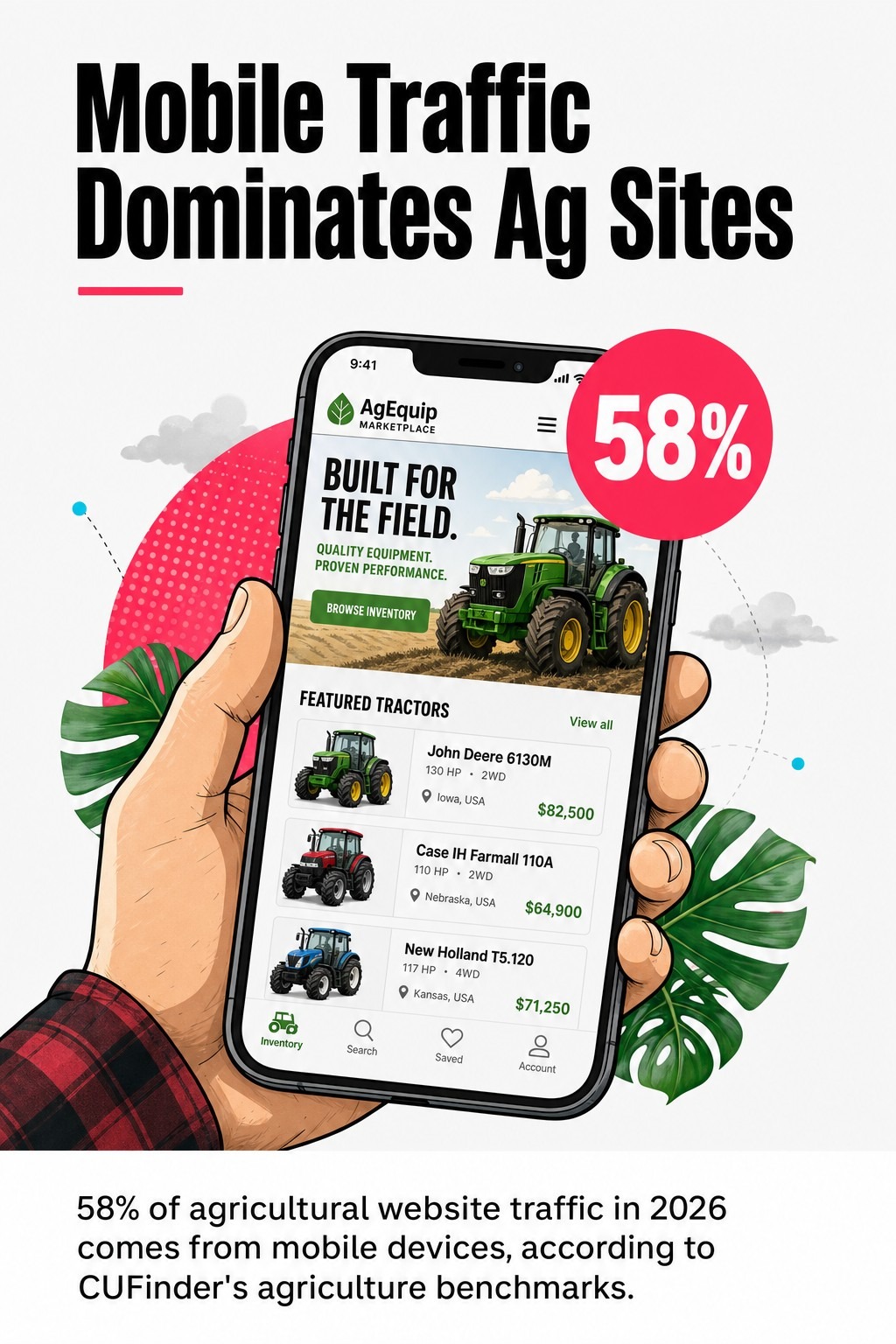
Test your site on a mobile device right now. Check your contact form, your inventory search, and your page speed. Fix anything that makes you cringe.
Pay-per-click advertising for farm equipment dealers puts your dealership at the top of Google search results for high-intent queries, reaching farmers who are actively ready to buy or inquire. Unlike SEO, PPC delivers visibility immediately. And for ag equipment, where a single sale can be worth tens or hundreds of thousands of dollars, the math on paid advertising works strongly in your favor.
The average cost per click across all industries in Google Ads was $5.26 in 2025 according to WordStream's Google Ads benchmarks. Farm equipment is a specialized niche, so CPCs will vary, but the point stands: if one lead converts to a $150,000 equipment sale, your PPC budget needs to be seen as investment, not expense.
Structure your Google Ads campaigns around buyer intent levels. A farmer searching "buy 2024 Case IH Magnum tractor" is further down the funnel than one searching "tractor horsepower comparison." They need different ads and different landing pages.
For a deeper look at PPC mechanics in the equipment space, the PPC guide for heavy equipment dealers covers bid strategy, ad copy, and conversion optimization in detail.
Geo-targeted advertising for farm equipment dealers means your ads show to farmers within a realistic driving distance of your lot. A farmer in a neighboring county buying a $200,000 combine isn't going to drive four hours. Tighten your radius, increase your bids within it, and stop wasting budget on clicks that will never convert.
Layer in local PPC with your organic local SEO efforts. A farmer who sees your paid ad and then finds your Google Business Profile with 50 reviews is far more likely to call than one who only sees the ad alone.
Content marketing for agriculture equipment dealers works because farmers do extensive research before any major purchase, and the dealership that answers their questions first earns their trust long before the sales conversation starts.
The equipment buying cycle in agriculture can stretch for months. A farmer starts thinking about a new combine in January and doesn't buy until August. If your blog and YouTube channel are answering their questions throughout that window, you're not just a dealership. You're a resource. That's a powerful position to be in.
Farmers are practical people. They want specifics. "How to maintain your planter between seasons" outperforms "Our dealership's commitment to quality" every single time.
Content that earns clicks and builds trust includes equipment comparison guides (Model A vs. Model B at the same price point), seasonal maintenance checklists, used equipment buying guides, and honest explanations of financing options. These aren't just good for ecommerce SEO. They're the content that gets forwarded in farm group chats.
For dealers looking at the broader picture of digital marketing strategy for equipment businesses, the digital marketing guide for construction equipment dealers covers content strategy principles that translate well to the agriculture equipment space.
Email marketing for farm equipment companies is the most cost-effective tool for staying in front of prospects across a sales cycle that can last months or even years. A farmer who inquired about a sprayer in March but didn't buy is still a lead in October. Email keeps that relationship alive without requiring your sales team to make cold calls every week.
The key is segmentation. A farmer running 500 acres of corn has different needs than a large-scale operation managing 5,000 acres across multiple crops. Sending the same email to both is a fast way to earn an unsubscribe.
Start with a welcome sequence for new leads that introduces your dealership, your service team, and your inventory process. From there, segment by equipment interest, farm size, and purchase stage.
The dealers seeing the strongest email ROI are the ones treating their list as an asset, not a broadcast channel. Every email should give the farmer something useful: a tip, a reminder, a deal, or a relevant piece of content. When you earn that inbox, protect it.
Social media marketing for ag equipment dealers builds brand recognition and community among farmers who are spending more time on Facebook, YouTube, and Instagram than most dealerships realize. The stereotype of the farmer who doesn't use social media is a decade out of date.
Facebook remains the strongest platform for reaching agricultural buyers, especially for local dealers. Farm groups, county agricultural pages, and equipment swap communities on Facebook are full of your exact target audience. Organic posts and paid social ads on Facebook can reach farmers within your trade area at a fraction of what Google Ads costs per impression.
Facebook and Instagram ads give ag equipment dealers geo-targeting and interest-based targeting that can be surprisingly precise. You can target users who follow major equipment brands, who are listed as farmers in their profiles, or who live within a set radius of your dealership.
Use paid social for promotions, trade-in campaigns, and service specials. These are lower-stakes decisions than a new equipment purchase, which means faster conversions and measurable ROI you can take back to justify the budget.
Farmers say video is the most helpful type of content for their purchase decisions, according to Fastline Marketing Group's agricultural video engagement research. That's not a minor preference. It means a well-produced walkaround video of a combine on your lot does more selling work than five paragraphs of spec text on an inventory page.
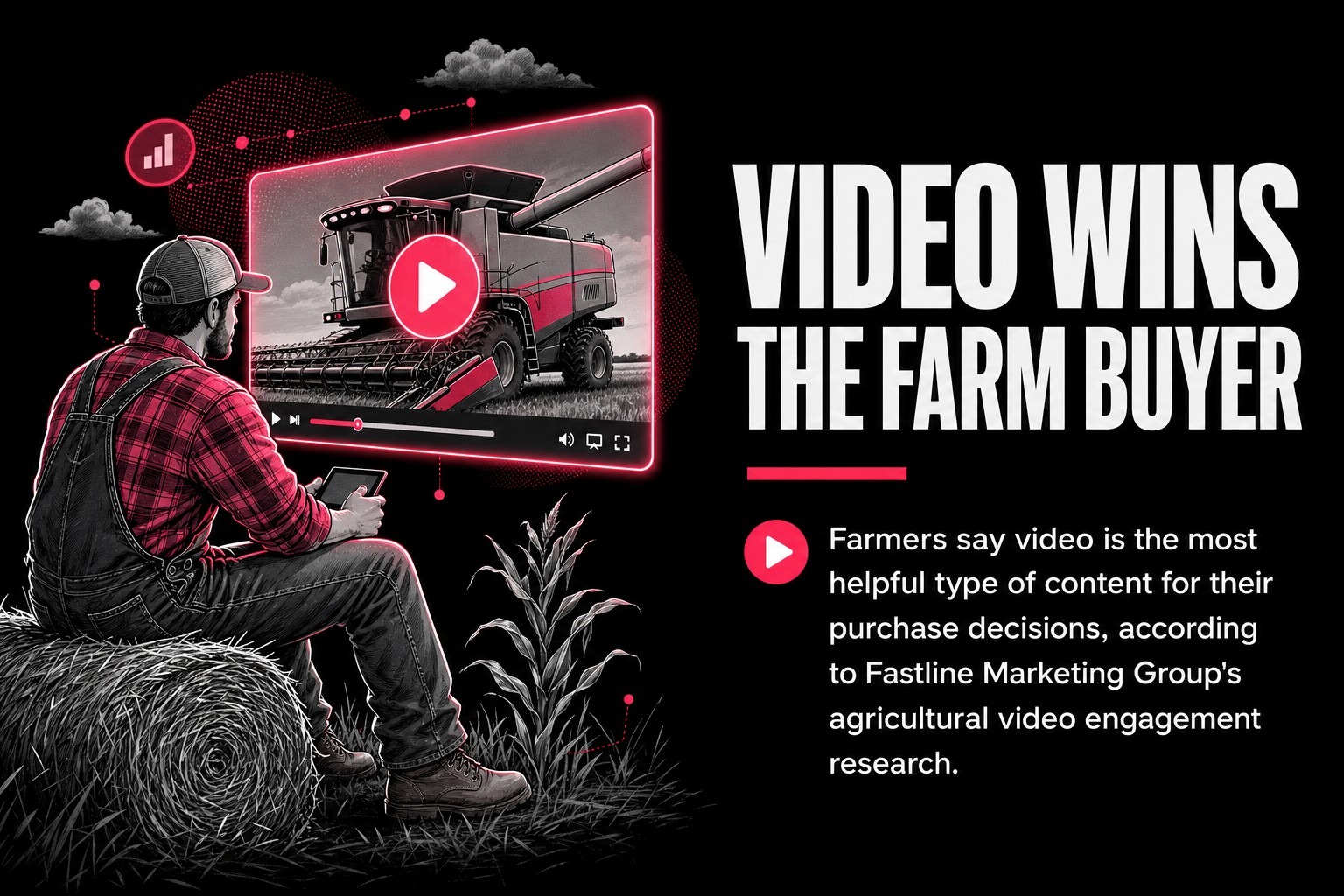
Video marketing for agriculture companies doesn't require a production studio. A decent smartphone, good lighting, and a salesperson who knows the equipment cold is enough to produce content that moves the needle.
The most effective video formats for farm equipment dealers are equipment walkarounds, field demonstrations, operator testimonials, and service process explainers. Post these on YouTube first (where they live permanently and can rank in search), then repurpose them to Facebook, Instagram, and your email campaigns.
YouTube is also where ag influencer partnerships pay off. Farmers with large agricultural YouTube channels have audiences that trust their equipment opinions deeply. A partnership where a respected ag creator does an honest walkaround of a machine on your lot reaches a qualified audience you couldn't build through ads alone.
Analytics and CRM tools give farm equipment dealerships the data needed to know which digital marketing strategies are generating real leads, which channels produce the highest-value customers, and where budget should shift to improve overall ROI.
Most dealerships track vanity metrics: website visits, social follows, email open rates. Those numbers feel good but don't tell you whether your marketing is actually selling equipment. The metrics that matter are cost per lead by channel, lead-to-appointment rate, and revenue attributed to each digital campaign.
A CRM system like Salesforce or an agriculture-specific platform connects your marketing data to your sales pipeline. When a farmer fills out a form from a Google Ad, your CRM captures that source. When they buy six months later, you know which campaign drove the original contact. That attribution is how you make confident budget decisions.
Audience segmentation within your CRM lets you separate prospects by equipment type, purchase timeline, farm size, and past service history. Segment well and every outreach, email, ad retargeting, or sales call becomes more relevant. Relevant outreach converts better. It really is that direct.
Set up conversion tracking in Google Analytics and your Google Ads account for every lead form, phone click, and inventory inquiry on your site. Without conversion tracking, you're guessing which ads work. With it, you're optimizing. Those two situations produce very different results over a 12-month period.
Review your campaign performance monthly, not quarterly. The agricultural calendar moves fast. A campaign that isn't converting by week three of planting season isn't going to turn around by week eight. Cut it, shift the budget, and test something else.
For a full picture of paid search tactics that produce high-value equipment leads, the paid search guide for reaching high-value equipment buyers goes deep on the conversion optimization side of the equation.
The dealers who invest in digital marketing for farm equipment during a down cycle come out the other side with stronger search rankings, bigger email lists, and better brand recognition than the competitors who went quiet. The market will recover. The question is whether farmers will find you or someone else when it does.
Start with the highest-leverage move: complete your Google Business Profile, run a basic local SEO audit, and set up conversion tracking on your website. Those three actions alone will show you more about your current digital performance than any agency pitch deck.
From there, build out your PPC campaigns, start producing video content, and get a simple email segmentation system in place. You don't have to do all seven strategies at once. Pick the two that address your biggest current gap and do them well before adding more.
For dealers ready to build a more complete digital foundation, the industrial digital marketing guide for 2026 covers the strategic framework that ties all of these channels together. The playbook exists. Now it's just about execution.
For all of our farm equipment content, check out our heavy equipment marketing guide.