
Construction equipment dealers are losing deals because buyers can't find them online. Your competitors rank on Google. Their paid ads appear when decision-makers search for excavators. Their email campaigns nurture prospects through six-month buying cycles.
You need a complete digital marketing strategy.
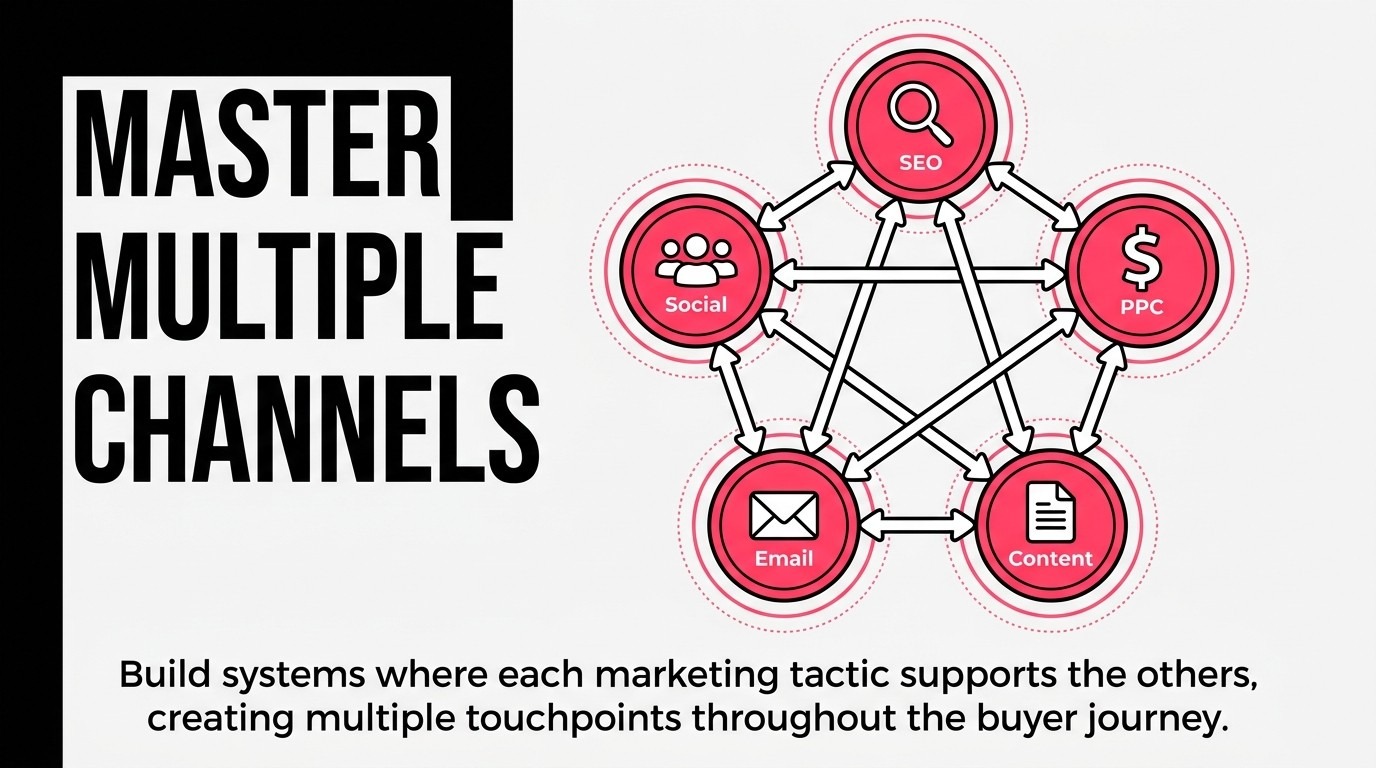
Digital marketing for construction equipment means mastering multiple channels simultaneously. Search engine optimization gets you found. Pay-per-click advertising captures high-intent buyers. Content marketing builds trust during long sales cycles. Email marketing nurtures relationships with contacts who won't purchase for months.
I've spent years helping equipment dealers build systems that generate qualified leads. The biggest mistake? Treating construction equipment like consumer products. Your buyers research for months. They compare specifications across dozens of machines. They need technical documentation, financing information, and dealer service capabilities before making contact.
This guide covers the exact digital marketing strategies that work for construction equipment dealers, rental companies, and manufacturers. You'll learn how to optimize for local search, build PPC campaigns that target the right keywords, and create content that speaks to fleet managers and contractors.
By the end, you'll have a roadmap for building an online presence that generates consistent equipment inquiries.
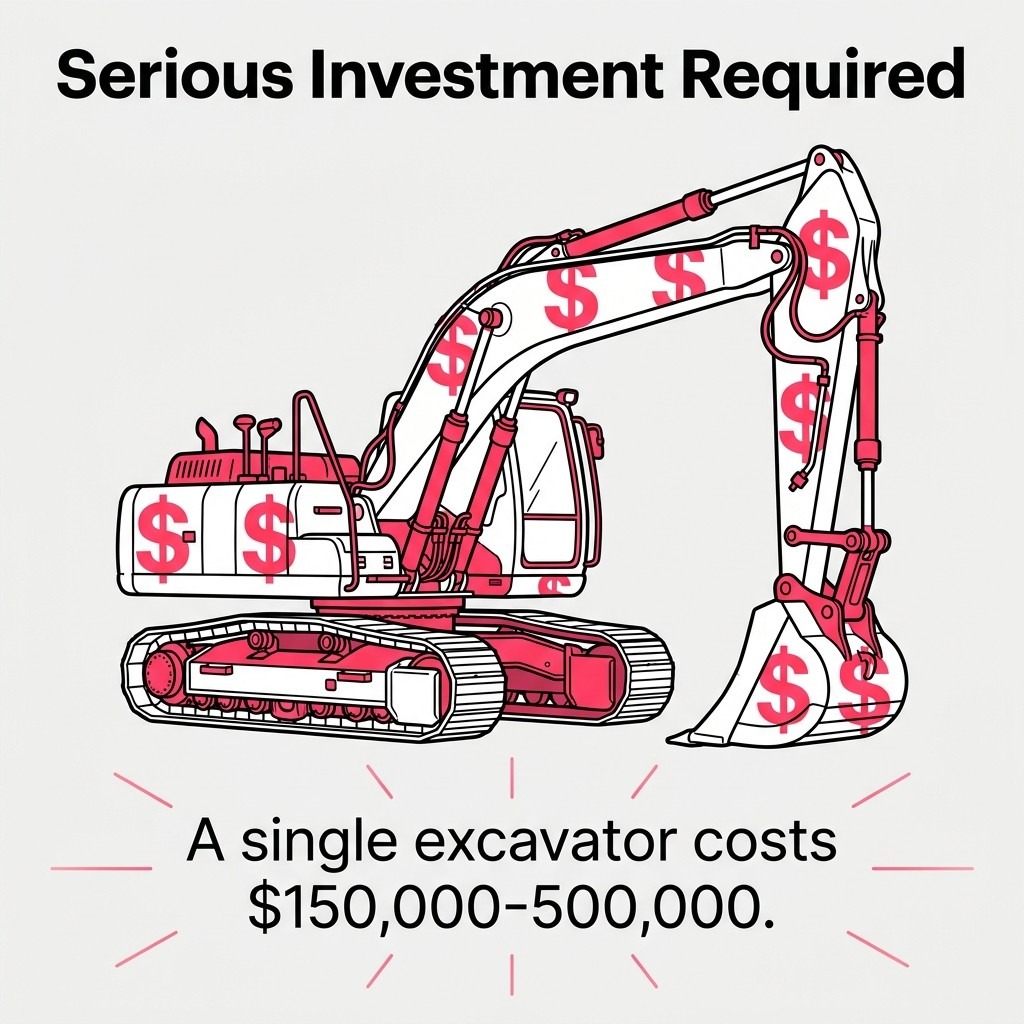
Construction equipment buyers behave differently than most B2B customers. The average purchase cycle runs 6-12 months. A single excavator costs $150,000-500,000. Fleet managers evaluate multiple dealers, compare financing options, and assess long-term service agreements.

Your digital marketing must accommodate this reality.
Equipment dealers face three specific challenges. First, search volume is relatively low compared to consumer products. Second, buyers use highly technical search terms. Third, the decision involves multiple stakeholders across different departments.
Traditional marketing approaches fail because they focus on quick conversions. Construction equipment marketing requires long-term relationship building. Your content needs to educate buyers over months, not days.
Digital channels solve specific problems for equipment marketing. SEO captures early-stage researchers. PPC targets buyers with specific equipment needs. Content marketing demonstrates technical expertise. Email marketing maintains contact during long decision processes.
The businesses winning equipment sales online use integrated strategies. They don't rely on a single channel. They build systems where each marketing tactic supports the others, creating multiple touchpoints throughout the buyer journey.
Equipment buyers fall into distinct categories with different needs. Fleet managers at large construction firms buy multiple machines annually. Small contractors purchase equipment every few years. Rental companies acquire inventory in bulk.
Each buyer type searches differently online.
Fleet managers research specifications and total cost of ownership. They compare productivity data across brands. They evaluate dealer service capabilities and parts availability. Their searches include technical terms like "hydraulic excavator fuel efficiency" and "compact track loader attachment compatibility."
Small contractors focus on financing and immediate availability. They search for "excavator financing bad credit" and "used skid steer near me." They need equipment fast and care about monthly payments more than technical specifications.
Rental companies evaluate wholesale pricing and service intervals. Their searches target "bulk equipment purchase discounts" and "dealer service agreements." They buy based on total fleet economics, not individual machine features.
The construction equipment buying process follows predictable stages. Recognition happens when current equipment breaks down or a new project requires different capabilities. Research involves comparing brands, reading specifications, and identifying potential dealers.
Consideration focuses on specific models and dealer comparisons. Buyers request quotes, visit dealerships, and evaluate financing options. Decision happens after weeks or months of analysis.
Your digital marketing needs touchpoints at every stage. Early-stage buyers need educational content about equipment types and applications. Mid-stage buyers need detailed specifications and comparison tools. Late-stage buyers need financing information and dealer differentiators.
Equipment buyers use search differently than consumer shoppers. They start with broad category searches like "best excavator for residential work." They progress to specific model searches like "Caterpillar 320 vs Komatsu PC210."
Late-stage searches become extremely specific. Buyers search "CAT 320 dealer financing options Chicago" or "used Bobcat T870 with warranty Illinois." These searches signal immediate purchase intent.
Local search dominates equipment purchases. Buyers want dealers within driving distance for service and parts. Industrial digital marketing strategies must prioritize geographic targeting and local visibility.
Understanding these patterns helps you build marketing that intercepts buyers at the right moment with the right message.
SEO for construction equipment differs from standard ecommerce optimization. You're not optimizing for thousands of products. You're optimizing for specific equipment categories, manufacturers, and local service areas.
Start with technical site foundations. Your website needs fast loading speeds, mobile responsiveness, and clean site architecture. Equipment buyers research on phones at job sites. A slow mobile site loses leads.
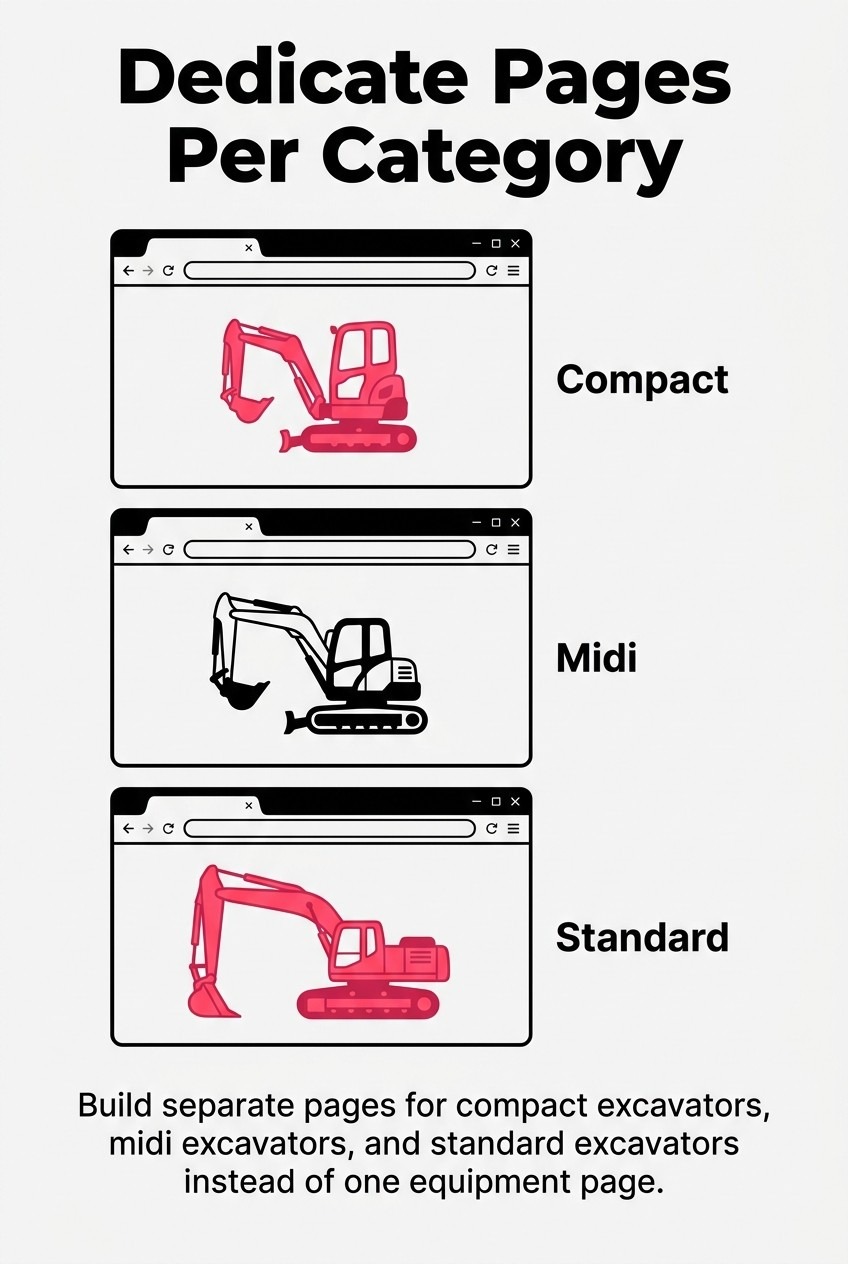
Create dedicated pages for each equipment category you sell. Don't lump excavators, loaders, and dozers onto one "equipment" page. Build separate pages for compact excavators, midi excavators, and standard excavators.
Keyword Strategy for Heavy Equipment
Equipment keywords follow specific patterns. Category keywords like "excavator" have high search volume but low purchase intent. Model-specific keywords like "CAT 320 excavator" show higher intent. Location-modified keywords like "excavator dealer Chicago" show immediate purchase consideration.
Target all three keyword types with different content. Category pages target broad terms and educate buyers about equipment types. Product pages target specific models and showcase inventory. Location pages target geographic searches and highlight dealer capabilities.
Long-tail keywords capture specific buyer needs. "Mini excavator for tight residential lots" targets a precise use case. "Excavator rental vs purchase calculator" targets buyers in the consideration phase.
Don't ignore parts and service keywords. "CAT excavator hydraulic pump repair" brings service customers who eventually buy equipment.
Equipment pages need comprehensive information. Include complete specifications, operating weights, engine details, and attachment compatibility. Buyers compare these details across multiple dealer sites.
Use structured data markup for equipment listings. Schema markup helps search engines understand your inventory and can trigger rich snippets in search results.
Write detailed equipment descriptions beyond manufacturer specs. Explain ideal applications, compare similar models, and highlight key differentiators. A 1,500-word excavator page outranks a 300-word spec sheet.
Add high-quality images from multiple angles. Include action shots showing equipment in operation. Buyers want to visualize how machines perform on job sites.
Educational content attracts early-stage buyers researching equipment options. Create guides like "How to Choose the Right Excavator Size for Your Projects" and "Compact Track Loader vs Skid Steer Comparison."
Application-focused content targets specific buyer needs. Write articles about "Best Equipment for Site Preparation" or "Excavator Attachments for Demolition Work."
Maintenance and operation content builds long-term relationships. Publish guides on "Excavator Preventive Maintenance Schedules" and "How to Maximize Fuel Efficiency on Heavy Equipment."
Each content piece should target specific keywords while providing genuine value. Google rewards comprehensive, helpful content that fully answers searcher questions.
Local SEO determines whether buyers find your dealership or your competitor's. Equipment purchases are inherently local. Buyers need dealers close enough for service, parts, and equipment pickup.
Your Google Business Profile is your most important local asset. Claim and verify your profile immediately if you haven't already.
Optimize your profile completely. Add accurate business hours, service areas, and contact information. Upload photos of your lot, showroom, and service department. Include images of actual inventory, not stock manufacturer photos.
Choose precise business categories. Select "Construction Equipment Supplier" as your primary category. Add secondary categories like "Equipment Rental Service" and "Tractor Dealer" if applicable.
Write a detailed business description using natural language. Mention the specific equipment brands you carry, your service capabilities, and your geographic coverage area. Include neighborhood names and nearby cities.
Encourage customer reviews actively. Send follow-up emails after equipment purchases asking for Google reviews. Respond to every review, positive or negative, within 48 hours.
Post regular updates about new inventory, special financing offers, and service promotions. Google treats active profiles as more relevant than abandoned ones.
Citations are online mentions of your business name, address, and phone number. Construction equipment dealers need citations in industry directories, local business listings, and equipment-specific platforms.
Submit your business to Equipment Trader, MachineryTrader, and IronPlanet. These industry platforms drive qualified traffic and build local SEO authority.
List in general business directories like Yelp, Yellow Pages, and Bing Places. Ensure your NAP information matches exactly across all platforms.
Join local chambers of commerce and construction associations. Their member directories provide valuable local citations.
Create dedicated location pages for each service area. Don't just list cities in your footer. Build full pages with unique content for each major market you serve.
Include location-specific information on each page. Mention local construction projects, area contractors, and regional equipment needs. Embed Google Maps showing your dealership location.
Add customer testimonials from buyers in each service area. Local reviews build trust with nearby prospects.
Link location pages to relevant equipment inventory. Show what's available at each branch or service area.
PPC advertising captures buyers actively searching for specific equipment. Unlike SEO, which takes months to build, PPC generates immediate visibility for your target keywords.
Google Ads dominates equipment advertising. Buyers search Google when they need excavators, loaders, or other machinery. Your ads need to appear at the top of these searches.
Start with search campaigns targeting high-intent keywords. Bid on equipment model numbers, manufacturer names with purchase modifiers, and location-specific equipment searches.
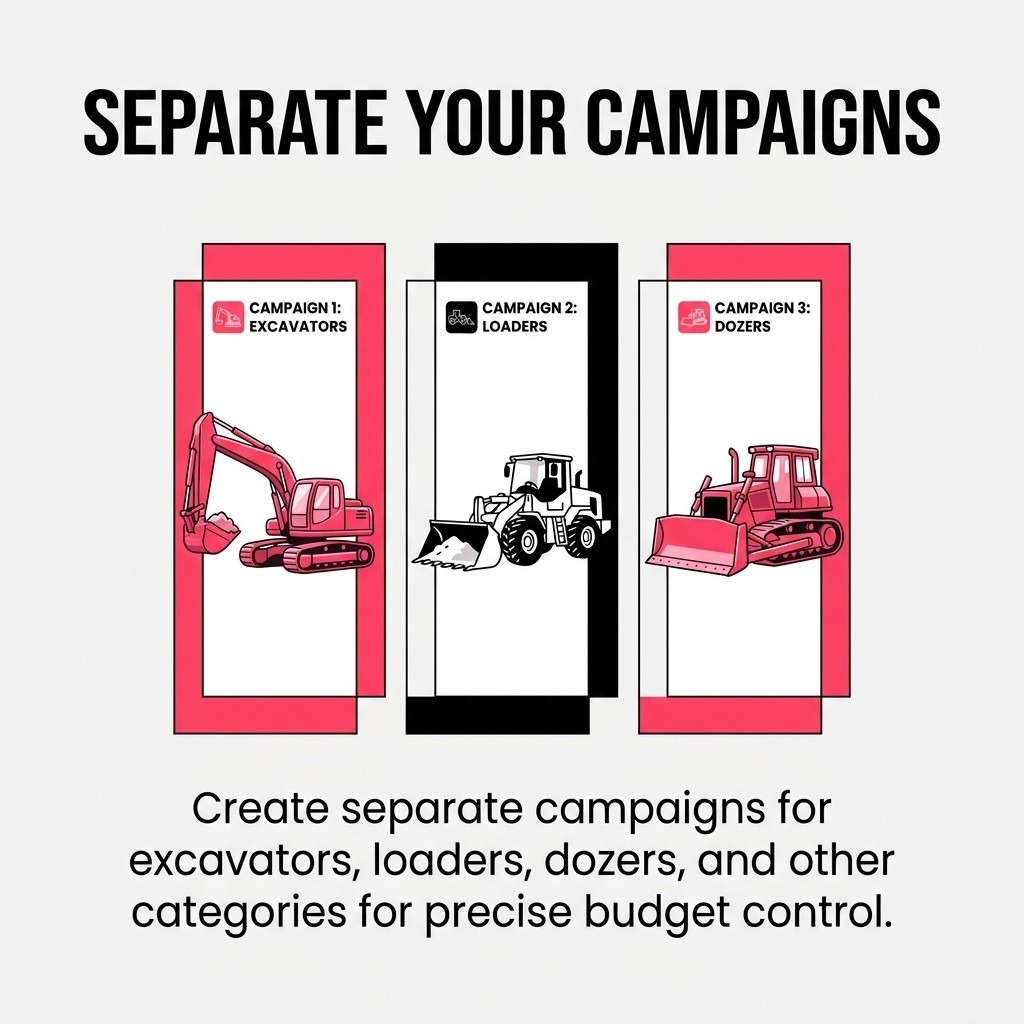
Organize campaigns by equipment category. Create separate campaigns for excavators, loaders, dozers, and other major categories. This structure gives you precise control over budgets and bids.
Build ad groups around specific equipment types. Within your excavator campaign, create ad groups for compact excavators, midi excavators, and standard excavators.
Use single keyword ad groups for your most valuable search terms. Put "CAT 320 for sale" in its own ad group with dedicated ads and landing pages.
Separate branded campaigns from generic equipment searches. Bid aggressively on your own dealership name and manufacturers you carry. Bid more conservatively on generic category terms.
Equipment keywords span different intent levels. Information keywords like "how much does an excavator cost" show early research. These convert poorly but cost less per click.
Transactional keywords like "buy CAT 320 excavator" show immediate purchase intent. These convert better but cost more. Allocate most of your budget here.
Location-modified keywords like "excavator dealer near me" combine high intent with local relevance. Bid aggressively on these terms.
Use negative keywords extensively. Add "toy," "game," and "simulator" to prevent clicks from people searching for construction equipment games. Add "parts" if you only sell whole machines.
Start with manual CPC bidding to understand keyword economics. After gathering conversion data, test automated bidding strategies like Target CPA or Maximize Conversions.
Equipment ad copy must provide specific information quickly. Include manufacturer names, model numbers, and key specifications in headlines.
Highlight competitive advantages in descriptions. Mention financing options, warranty programs, or service capabilities. If you offer same-day delivery or have the largest inventory in your region, say so.
Use ad extensions aggressively. Sitelink extensions direct users to specific equipment categories. Callout extensions highlight dealer benefits. Call extensions let mobile users contact you immediately.
Test different value propositions. Some buyers care about financing. Others prioritize warranty coverage. Others want immediate availability. Create ad variations testing each angle.
Send ad traffic to specific equipment pages, not your homepage. Someone clicking an ad for "used excavators" should land on your used excavator inventory page.
Match landing page content to ad messaging. If your ad promises financing options, your landing page should prominently display financing information.
Include clear calls-to-action above the fold. Phone numbers should be clickable on mobile. Contact forms should require minimal information. Quote request buttons should stand out visually.
Show trust signals immediately. Display manufacturer certifications, industry memberships, and customer reviews where visitors see them without scrolling.
For businesses managing complex equipment advertising campaigns alongside other digital channels, high-ticket machinery lead funnel strategies provide frameworks for nurturing expensive equipment leads through multi-month sales cycles.
Social media marketing for construction equipment focuses on building brand awareness and showcasing equipment capabilities. Your buyers use social media differently than they use search engines.
LinkedIn works best for reaching fleet managers and construction company decision-makers. Facebook reaches smaller contractors and owner-operators. YouTube builds credibility through equipment demonstrations.
Don't expect direct sales from social media. Construction equipment purchases rarely result from scrolling through Instagram. Social media builds familiarity so buyers remember your dealership when they're ready to purchase.
LinkedIn content should target business decision-makers. Share industry news, equipment productivity tips, and case studies showing how customers use your equipment. Post about new inventory arrivals and dealer service capabilities.
Join construction industry groups on LinkedIn. Participate in discussions about equipment selection and project challenges. Provide helpful insights without overtly selling.
Facebook works for community building and customer relationships. Share photos of equipment deliveries, customer success stories, and behind-the-scenes dealership content. Respond quickly to comments and messages.
Create Facebook events for equipment demonstrations or open house events. These generate local awareness and foot traffic to your dealership.
YouTube is the second-largest search engine. Contractors search for equipment operation videos, comparison reviews, and maintenance tutorials.
Create equipment demonstration videos showing machines in operation. Film from multiple angles. Highlight key features and attachment capabilities. Keep videos between 3-8 minutes.
Produce comparison videos between similar models. "CAT 320 vs Komatsu PC210 Comparison" targets buyers researching specific options.
Record maintenance and operation tutorials. "How to Perform Daily Excavator Inspections" provides value while positioning you as an equipment expert.
Optimize video titles and descriptions with relevant keywords. Include links to specific equipment pages on your website. Add your dealership contact information in every video description.
Share customer project photos with permission. Before-and-after images of site work completed with your equipment demonstrate real-world applications.
Post equipment arrival announcements. "Just landed: 2024 CAT 320 with low hours" creates urgency and showcases inventory.
Highlight team expertise. Introduce service technicians, sales specialists, and parts staff. Personal connections build trust.
Share industry news and regulations affecting equipment buyers. Position yourself as an informed industry resource.
Create seasonal content around construction cycles. Post about cold weather equipment maintenance in fall. Share spring project planning tips in winter.
Content marketing for construction equipment establishes your dealership as a trusted information source. Buyers researching equipment for months encounter your content repeatedly, building familiarity before they make contact.
Educational content works best for equipment marketing. Buyers need help choosing the right equipment, understanding financing options, and evaluating total cost of ownership.
Create buying guides for major equipment categories. "The Complete Excavator Buyer's Guide" attracts early-stage researchers and keeps them on your site for 10+ minutes.
Equipment selection content helps buyers choose appropriate machines. Write articles like "How to Size an Excavator for Your Project" and "Skid Steer vs Compact Track Loader: Which is Right for You?"
Application-focused content targets specific industries and use cases. "Best Equipment for Site Development Projects" or "Essential Machines for Utility Contractors" attract specialized buyer segments.
Cost and ROI content addresses major buyer concerns. "Total Cost of Ownership: New vs Used Excavators" and "How to Calculate Equipment ROI" help buyers justify purchases internally.
Maintenance content builds long-term relationships. "Seasonal Equipment Maintenance Checklist" keeps past customers engaged and positions you for future parts and service business.
Publish blog content consistently. Two detailed articles monthly outperform eight thin posts. Quality and consistency matter more than volume.
Specification sheets and comparison charts serve buyers in active research mode. Create downloadable PDFs comparing similar equipment models side-by-side.
Equipment sizing calculators provide interactive value. A "Excavator Size Calculator" that recommends appropriate machines based on project parameters generates leads while helping buyers.
ROI calculators help buyers build business cases. A tool calculating fuel savings from newer equipment versus aging fleets gives finance decision-makers justification for purchases.
Maintenance schedules and checklists demonstrate service expertise. Buyers appreciate practical resources they can use immediately.
Gate valuable downloads behind simple forms. Collect email addresses and equipment interests to fuel email marketing campaigns.
Equipment case studies show real-world applications. Document how customers used specific machines to complete challenging projects.
Include project details, equipment specifications, and measurable results. "How ABC Construction Completed a 30-Day Project in 18 Days with CAT 320 Excavators" provides concrete evidence.
Feature diverse customer types. Showcase large commercial contractors, small residential builders, and utility companies. Prospective buyers want to see themselves in your case studies.
Add customer quotes and testimonials. Direct statements from buyers carry more weight than your own claims.
Use case studies in sales presentations, email campaigns, and social media. Repurpose each case study across multiple channels.
Email marketing maintains contact with equipment buyers during six-month decision processes. Someone requesting a quote today might not purchase until next quarter. Email keeps your dealership top-of-mind.
Build email lists through multiple touchpoints. Capture addresses from quote requests, blog content downloads, and equipment calculator usage. Collect emails at trade shows and dealership events.
Segment lists by buyer interest and stage. Someone who downloaded an excavator guide needs different messaging than someone who requested a quote.
Welcome sequences introduce new contacts to your dealership. Send a series explaining your equipment selection, service capabilities, and financing options over 7-10 days.
Educational nurture sequences provide ongoing value. Send equipment tips, industry news, and helpful resources monthly to subscribers not actively shopping.
Equipment-specific sequences target known interests. Someone who downloaded a compact excavator guide receives a sequence featuring compact excavator content, inventory, and special offers.
Inventory announcement sequences alert interested buyers to new arrivals. "New 2024 CAT equipment just arrived" emails target subscribers who've shown interest in specific categories.
Re-engagement sequences win back inactive contacts. Send targeted offers or valuable content to subscribers who haven't opened emails in 90+ days.
New inventory announcements work well for equipment marketing. Send weekly or bi-weekly emails showcasing recent arrivals with photos and specifications.
Seasonal promotions drive urgency. Year-end clearance sales and spring financing specials give buyers reasons to act now.
Educational content emails share blog articles, videos, and resources. These build trust without overtly selling.
Customer success stories demonstrate equipment value through real examples. Share case studies and testimonials via email.
Service reminders maintain contact with existing customers. Seasonal maintenance reminders and inspection offers generate service revenue and equipment upgrade opportunities.
Subject lines determine open rates. Test different approaches: question-based subjects, benefit-focused subjects, and urgency-driven subjects.
Personalize beyond first names. Reference specific equipment interests based on previous downloads or quote requests.
Mobile optimization is mandatory. Most construction professionals read email on phones. Test every email on mobile devices before sending.
Clear calls-to-action improve response rates. Each email should have one primary action: view inventory, download a resource, or request a quote.
Track performance metrics rigorously. Monitor open rates, click rates, and conversions by email type. Double down on what works.
Equipment dealers converting website visitors into qualified leads benefit from conversion optimization tactics for equipment dealer RFQ leads that turn quote requests into actual sales.
Your website is your digital showroom. Poor design costs you leads daily. Equipment buyers judge your dealership based on your site before ever visiting in person.
Modern equipment websites need speed, mobile optimization, and intuitive navigation. A slow site loses impatient buyers. A confusing site sends visitors to competitors.
Organize navigation around how buyers think, not how you organize inventory internally. Use equipment categories like "Excavators," "Loaders," and "Dozers" instead of internal codes or manufacturer-first organization.
Equipment search and filtering tools help buyers find relevant machines quickly. Allow filtering by equipment type, manufacturer, size class, price range, and availability.
High-quality inventory photos are non-negotiable. Include minimum eight photos per machine from multiple angles. Show attachments, cab interiors, and undercarriages.
Detailed specification displays let buyers compare options. Present specs in scannable tables, not dense paragraphs.
Quote request forms should be simple and prominent. Ask for essential information only: name, email, phone, and equipment interest. Long forms reduce conversion rates.
Click-to-call functionality matters on mobile. Make your phone number a tappable button on every page.
Live chat provides immediate assistance. Equipment buyers have specific questions. Real-time answers keep them engaged versus leaving to call competitors.
Over half of equipment research happens on mobile devices. Buyers search from job sites, vehicles, and after-hours.
Mobile sites must load in under three seconds. Compress images, minimize code, and use fast hosting. Test load speed on actual mobile networks, not just WiFi.
Simplify mobile navigation with clean menus. Thumb-friendly buttons and adequate spacing prevent misclicks.
Make phone numbers and contact forms immediately accessible on mobile. Don't hide contact options in menus.
Optimize images for mobile viewing. Equipment photos should be clear and detailed even on small screens.
Display manufacturer certifications prominently. Authorized dealer badges build immediate credibility.
Showcase customer testimonials throughout your site. Video testimonials carry more weight than text quotes.
Display years in business and number of customers served. Longevity signals stability and experience.
Show real photos of your dealership, service department, and staff. Stock photos undermine authenticity.
Include third-party review integrations. Display Google reviews, industry ratings, and Better Business Bureau accreditation.
Highlight warranty programs and service guarantees. Risk-reduction matters for six-figure purchases.
Generating traffic means nothing without lead capture systems. Equipment dealer websites need multiple conversion paths for buyers at different stages.
Direct quote requests work for late-stage buyers ready to discuss specific equipment. Make quote forms prominent on every equipment page.
Content downloads capture early-stage researchers. Gate valuable resources like equipment guides and comparison charts behind simple forms.
Newsletter signups build long-term lists. Offer new inventory alerts or equipment tips in exchange for email addresses.
Form length directly impacts conversion rates. Long forms scare buyers away. Short forms generate more leads.
Ask for essential information only: name, email, phone, and equipment interest. You can gather details during follow-up conversations.
Use conditional logic to show relevant fields. If someone selects "new equipment," show manufacturer and model fields. If they select "used equipment," show different options.
Provide immediate confirmation after submission. Thank-you pages should confirm receipt and set expectations for response timing.
Send automated email confirmations immediately. Include next steps and expected contact timeframes.
Not every lead is ready to buy immediately. Build nurture systems that maintain contact over months.
Score leads based on engagement signals. Someone who visits pricing pages repeatedly scores higher than someone who viewed one blog post.
Route hot leads to sales immediately. Cold leads enter email nurture sequences.
Track lead sources to understand which marketing channels generate the best quality prospects. Google Ads leads might convert faster than social media leads.
Monitor lead-to-sale conversion rates by source. Optimize budget allocation toward channels producing actual equipment sales.
Test quote form placement and design. Try above-the-fold forms versus end-of-page forms. Test button colors and copy.
Experiment with different calls-to-action. "Request a Quote" might outperform "Contact Us" or "Get Pricing."
Test landing page layouts for PPC traffic. Compare long-form pages with detailed information against short pages focused on form completion.
Analyze user behavior with heat mapping tools. Identify where visitors click, how far they scroll, and where they abandon pages.
Make data-driven improvements continuously. Small conversion rate increases compound into significantly more leads monthly.
Manufacturers and dealers looking to integrate equipment sales with broader industrial marketing efforts should explore manufacturing digital marketing strategies that align equipment sales with production capabilities.
Digital marketing without analytics is guesswork. You need clear visibility into which channels generate qualified leads and actual equipment sales.
Google Analytics tracks website performance fundamentals. Monitor traffic sources, user behavior, and conversion events.
Set up conversion tracking for all lead generation actions. Track quote form submissions, phone calls, content downloads, and email signups as separate events.
Website traffic by source shows which channels drive visitors. Track organic search, paid search, social media, email, and direct traffic separately.
Lead generation rate measures how many visitors convert. Calculate conversion rate by dividing leads by total visitors.
Cost per lead reveals efficiency by channel. Divide total channel spend by leads generated.
Lead quality metrics separate valuable prospects from tire-kickers. Track which sources generate quotes that turn into actual sales.
Sales cycle length shows how long prospects take to convert. Equipment sales take months, but tracking helps you identify patterns.
Customer acquisition cost calculates total marketing spend per equipment sale. This metric determines overall marketing profitability.
Connect marketing data to your CRM system. Track leads from first website visit through final equipment purchase.
Use UTM parameters on all marketing campaigns. Tag PPC ads, email campaigns, and social posts to track exact traffic sources.
Implement call tracking to attribute phone leads to marketing sources. Different tracking numbers for different campaigns reveal which ads drive calls.
Build dashboards showing marketing performance at a glance. Monitor leads, costs, and sales by channel in real-time.
Share performance data with sales teams. Marketing and sales alignment improves when both teams see the same metrics.
Calculate marketing ROI by comparing total marketing costs to revenue generated from marketing-sourced leads.
Track revenue by marketing channel. Some channels might generate fewer leads but higher-value sales.
Measure lifetime value of customers acquired through different channels. Buyers from organic search might purchase more equipment over time than PPC-sourced customers.
Set clear KPIs for each marketing channel. SEO goals differ from PPC goals differ from email marketing goals.
Review performance monthly and adjust budgets quarterly. Double down on channels producing positive ROI. Reduce or eliminate underperforming tactics.
For comprehensive approaches to industrial lead generation across multiple channels, B2B lead generation strategies provide frameworks applicable to construction equipment marketing.
Effective equipment marketing requires coordinated execution across multiple channels. Don't try implementing everything simultaneously. Build systematically.
Start with foundations: website optimization and local SEO. These create the base for all other marketing activities.
Add PPC advertising next. Paid search generates immediate visibility while organic rankings build.
Layer in content marketing and email systems. These nurture long-term relationships throughout extended sales cycles.
Supplement with social media once core channels are performing. Social media builds brand awareness but rarely drives direct equipment sales.
Allocate 40-50% of digital marketing budget to PPC advertising. Paid search generates the most immediate qualified leads for most dealers.
Invest 20-30% in SEO and content creation. Organic search builds long-term sustainable lead generation.
Dedicate 10-15% to email marketing systems. Email nurtures prospects cost-effectively throughout long sales cycles.
Assign 5-10% to social media marketing. Social builds brand awareness but rarely drives direct conversions.
Reserve 10-15% for tools, analytics, and optimization. Marketing technology improves efficiency across all channels.
Adjust allocations based on performance data. Shift budget toward channels producing the best ROI for your specific market.
Month 1-2: Audit and optimize your website. Fix technical issues, improve mobile experience, and strengthen conversion paths.
Month 2-3: Claim and optimize local listings. Complete Google Business Profile, build citations, and gather initial reviews.
Month 3-4: Launch PPC campaigns. Start with branded searches and high-intent equipment keywords.
Month 4-6: Develop content marketing foundation. Publish core buying guides and equipment comparison content.
Month 6-9: Build email marketing infrastructure. Create welcome sequences, nurture campaigns, and inventory alerts.
Month 9-12: Expand social media presence. Develop consistent posting schedules and engagement processes.
Ongoing: Optimize based on performance data. Continuously test, measure, and improve across all channels.
Construction equipment marketing requires patience and consistent execution. Results build over months, not days.
Start with your website and local SEO. These foundations support everything else you'll build.
Add PPC to generate immediate qualified leads. Use paid advertising to drive revenue while organic channels mature.
Create content that educates buyers throughout long decision cycles. Equipment purchases take months. Stay present through valuable content.
Build email systems that nurture relationships over time. The prospect requesting information today might buy next quarter.
Track everything ruthlessly. Data reveals which tactics generate actual equipment sales versus empty vanity metrics.
The dealers winning equipment sales online aren't doing anything magical. They're executing consistently across multiple channels, measuring results, and improving based on data.
Pick one channel from this guide to implement this week. Build from there. Momentum compounds when you take action consistently.