

Material handling SEO is the practice of optimizing a company's website so that engineers, procurement managers, and operations buyers find it through organic search before they ever contact a sales rep.
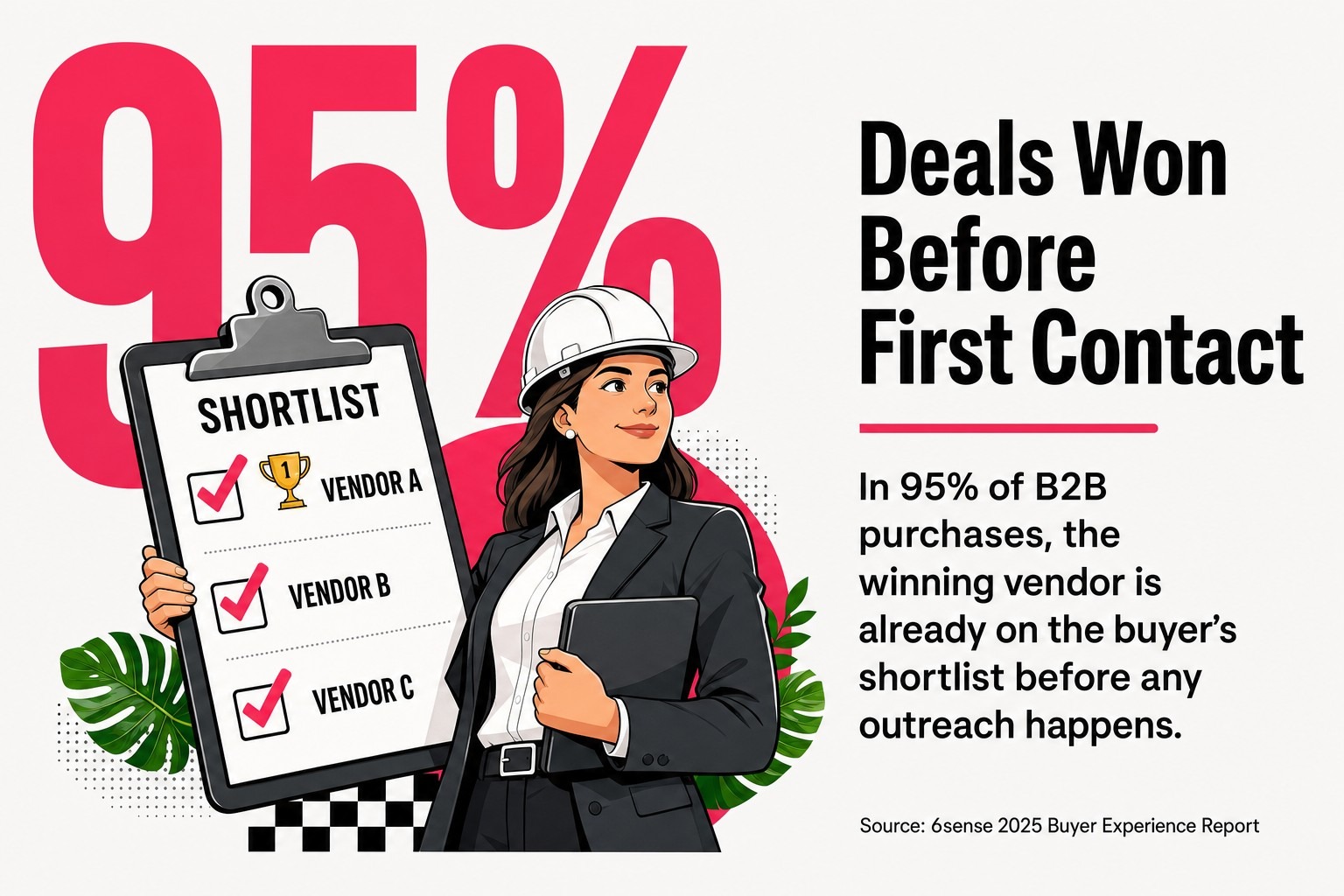
According to 6sense's 2025 Buyer Experience Report, in 95% of B2B purchases, the winning vendor is already on the buyer's shortlist before any outreach happens. That means the companies ranking on page one are not just getting clicks. They are getting deals. Material handling companies that treat search engine optimization as a sales channel, not a marketing checkbox, consistently pull more qualified leads out of organic search than those relying on cold outreach and trade shows.
I work with industrial and B2B companies on their digital strategy every day, and the same pattern keeps showing up. A company with excellent products and deep industry knowledge is invisible online. A competitor with an average product and a well-optimized site wins the quote. That gap is fixable, and it starts with a clear SEO strategy built for industrial buyers, not consumer shoppers.
Material handling SEO is search engine optimization applied specifically to companies that manufacture, distribute, or service material handling equipment, including conveyors, forklifts, pallet racking, ergonomic lifting systems, and warehouse automation products.
The market these companies operate in is not small. According to Polaris Market Research, the global material handling equipment market was valued at $262.48 billion in 2025. That is an enormous amount of buyer activity happening online right now, and a large share of those buyers start their research in a search engine.
According to data compiled by SEOProfy, 76% of all traffic to B2B websites comes from search engines, organic and paid combined. Organic search is the dominant share of that. For a material handling supplier, being absent from organic search results means missing most of your potential buyers at the exact moment they are actively looking.
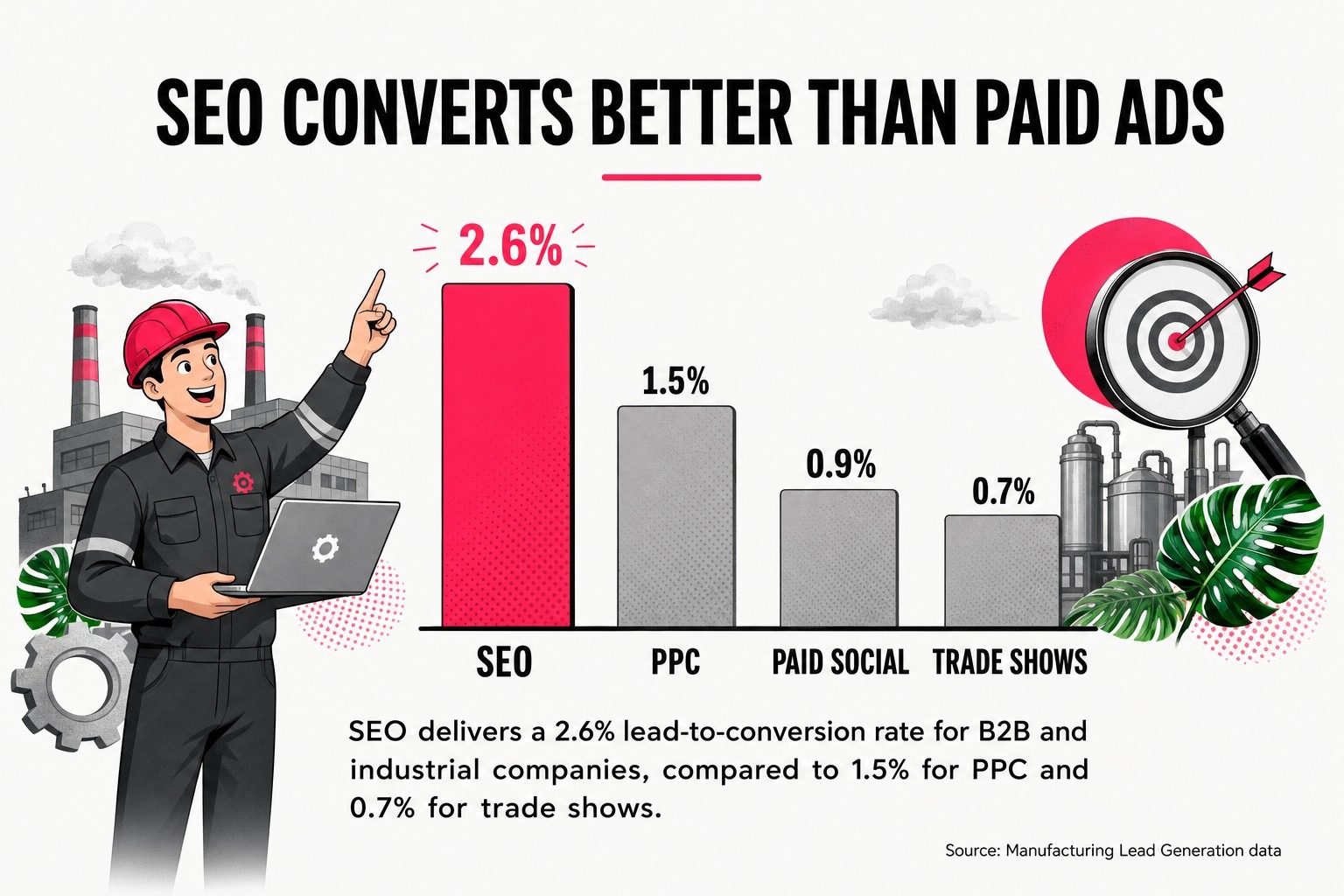
And the ROI case is strong. Manufacturing Lead Generation data shows SEO delivers a 2.6% lead-to-conversion rate for B2B and industrial companies, compared to 1.5% for PPC, 0.9% for paid social, and 0.7% for trade shows. SEO does not just generate more traffic. It generates traffic that converts at nearly twice the rate of paid advertising.
For companies selling conveyor systems or forklift attachments, that difference compounds fast. A consistent investment in industrial SEO builds compounding organic search traffic month over month, while ad spend resets to zero the moment the budget runs out.
Material handling SEO operates on a completely different set of rules than B2C search engine optimization, because industrial buyers behave nothing like consumer shoppers.
Consumer purchases often involve one person, one session, and an emotional trigger. Industrial equipment purchases involve committees, specifications, compliance requirements, and months of evaluation. According to Sopro's B2B buyer research, the average buying group for complex B2B solutions now involves 8.2 stakeholders, up more than 21% since 2015. That same research found that younger decision-makers under 40 involve nearly twice as many stakeholders (6.8) in buying decisions compared to older executives (3.5). So the buying group is not shrinking. It is growing, and it is getting younger.
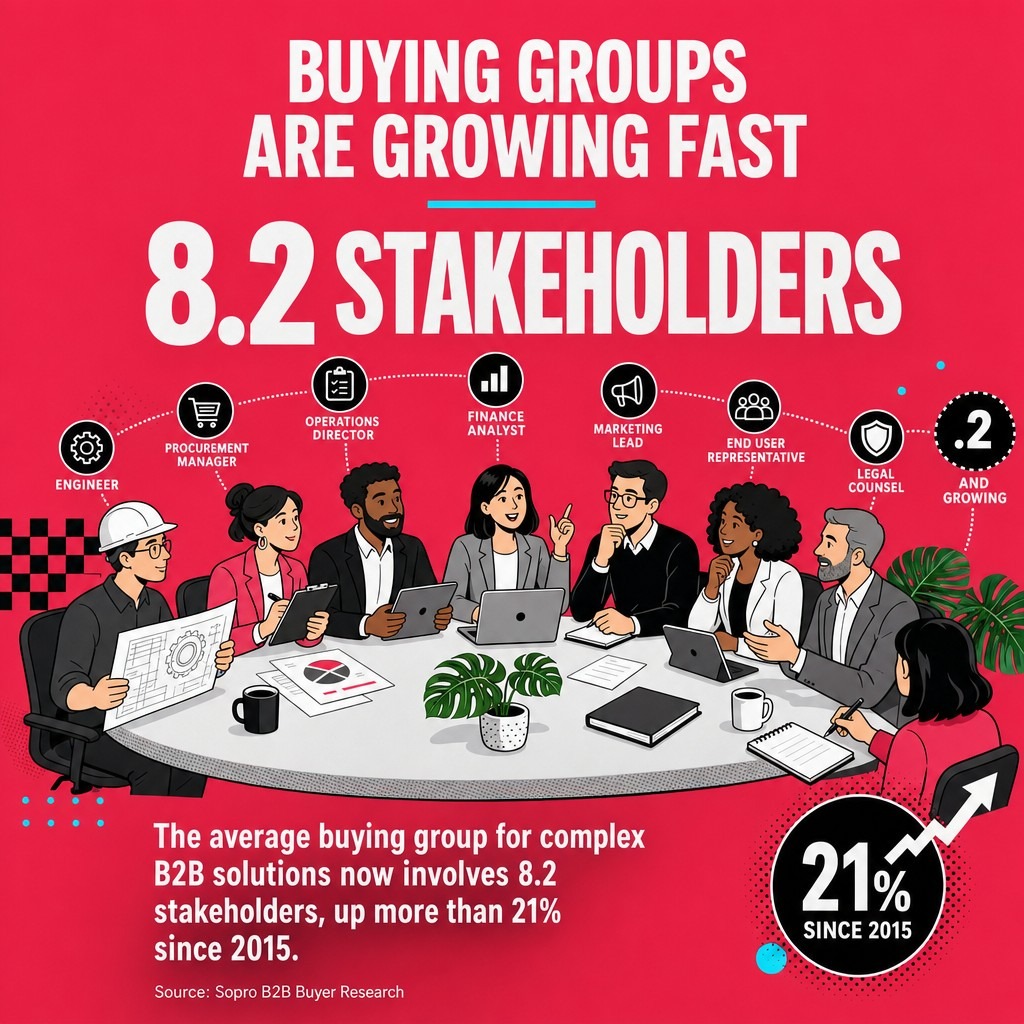
This matters for material handling SEO strategy in a direct way. You are not writing content for one person. You are writing for a procurement manager checking specifications, an engineer validating load capacity, and an operations director checking total cost of ownership, often in the same buying process.
The B2B buyer journey for material handling equipment is also far longer than most B2C purchases. A company evaluating automated conveyor systems may research for six to twelve months before issuing an RFQ. Your content needs to serve buyers at every stage of that research, not just the moment they are ready to buy.
B2C SEO often wins on volume and trend-chasing. Industrial SEO wins on precision and depth. The keywords are more technical, the content needs to be more specific, and the trust bar is higher. An engineer searching "counterbalanced forklift load capacity chart" is not browsing. They are qualifying vendors. Your site needs to answer that question better than anyone else.
For a deeper look at how this plays out across industrial sectors, the B2B SEO guide for industrial companies on this site walks through the mechanics in detail.











.avif)
