Paid search for forklift companies is nothing like selling consumer products. Your buyers take months to decide, multiple people need to sign off, and the average click costs you $6.15 before anyone even fills out a form.
I've spent years running PPC campaigns for industrial equipment businesses. The biggest mistake I see? Forklift dealers treating Google Ads like it's an impulse-buy channel.
Your prospect isn't clicking "add to cart" after seeing one ad. They're downloading spec sheets, comparing models, and running budget approvals through three departments.
The manufacturing industry sales cycle averages 130 days from initial contact through close. That's four months of touchpoints before anyone signs a purchase order.

Here's what actually works: Match your paid search strategy to how B2B buyers actually research material handling equipment. Build campaigns that speak to warehouse managers at 3am when they're Googling "fastest forklift for narrow aisles." Create ad copy that acknowledges their boss needs to approve the budget.
This guide covers the specific paid search tactics that generate qualified leads for forklift companies. You'll learn how to structure campaigns for long sales cycles, write ad copy that converts B2B decision-makers, and track ROI when deals close months after the first click.
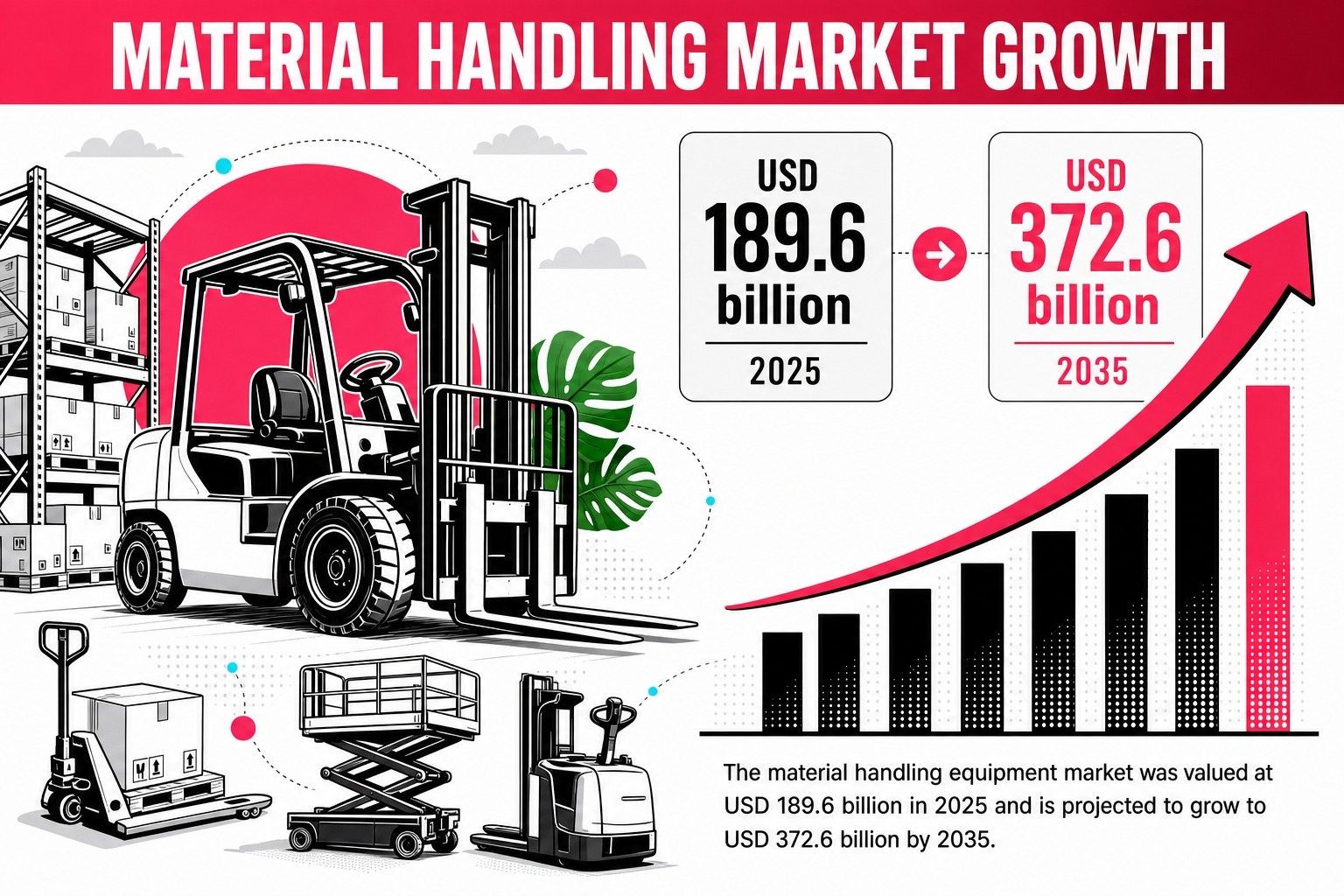
The material handling market is massive and growing fast. The broader material handling equipment market was valued at $89.6 billion in 2025 and is projected to grow to $372.6 billion by 2035.
That growth means more competition for your forklift sales. More dealers fighting for the same warehouse expansion projects.
But here's the opportunity: Most forklift companies still run paid search like it's 2015. They target broad keywords, send traffic to their homepage, and wonder why their cost per lead keeps climbing.
Your buyers are sophisticated. They know the difference between a reach truck and a counterbalance. They're comparing load capacities and turn radiuses before they ever talk to a sales rep.
Your paid search needs to match that sophistication. Generic "forklift sales" campaigns don't cut it anymore.
A warehouse manager identifies the need. An operations director evaluates options. A CFO approves the budget. A procurement team negotiates terms.
Your PPC campaigns need to speak to all of them. At different stages. With different messaging.
The warehouse manager wants operational specs. The CFO wants total cost of ownership. The procurement team wants delivery timelines and service agreements.
One ad template won't work for everyone. You need campaign structures that segment by buyer role and buying stage.
Forklift service generates leads faster than equipment sales. Someone's forklift breaks down, they need it fixed today, they're clicking ads right now.
Equipment sales take longer. Someone's planning a warehouse expansion six months out, they're researching options, your ad is one of fifteen tabs they have open.
Run separate campaigns with different bid strategies. Service campaigns can be more aggressive because conversion speed is faster. Sales campaigns need longer attribution windows and lower cost-per-click targets because the payoff comes later.
Stop running single-keyword ad groups hoping for immediate conversions. Material handling equipment buyers don't work that way.
Build campaign structures that match how businesses actually buy forklifts. That means separate campaigns for awareness, consideration, and decision stages.
Target broad informational queries: "how to choose a forklift," "warehouse equipment comparison," "forklift types explained."
Your prospects don't know exactly what they need yet. They're researching solutions to operational problems.
Send this traffic to educational content, not product pages. A comparison guide. A selection calculator. A capacity planning worksheet.
Bid conservatively here. You're building awareness, not closing deals. Track micro-conversions: guide downloads, calculator uses, newsletter signups.
Target specific equipment types: "electric reach truck," "LP cushion tire forklift," "narrow aisle order picker."
These searchers know what category they need. They're comparing specs and brands.
Send them to product pages with detailed specifications, comparison tables, and case studies showing similar applications.
Include pricing context if possible. "Starting at $X" or "Typical range $Y-$Z" filters out unqualified clicks and attracts serious buyers.
Target buying keywords: "buy forklift [city]," "forklift dealer near me," "forklift financing options," "[brand] forklift price."
These searchers are ready to talk numbers. They have budget approval. They're comparing dealers.
Send them to conversion-optimized landing pages with clear calls-to-action, testimonials from similar businesses, and easy quote request forms.
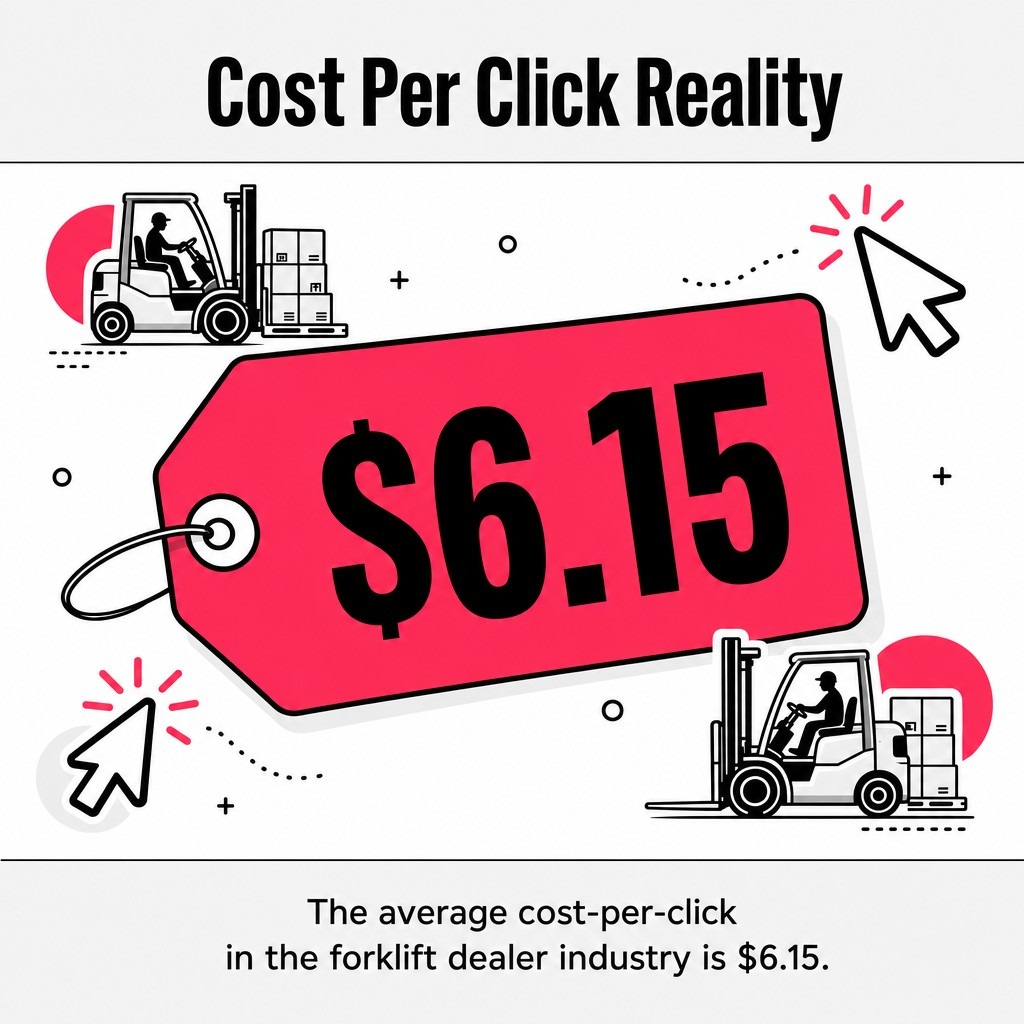
Bid aggressively on these keywords. Yes, the average cost-per-click in the forklift dealer industry is $6.15, but decision-stage clicks convert at much higher rates than awareness-stage clicks.
Most forklift buyers visit your site multiple times before converting. Your remarketing needs to reflect where they are in the buying process.
Create audience segments based on pages visited. Someone who viewed your financing page is further along than someone who read a blog post about forklift types.
Show different ads to different segments. Early-stage audiences see educational content and case studies. Late-stage audiences see promotional offers and urgency messaging.
Set frequency caps. Don't annoy prospects who are still researching by showing them the same ad forty times before they're ready to buy.
Most forklift company ads sound identical. "Quality equipment. Competitive prices. Great service."
Your buyers see those same claims from every dealer. Why should they click your ad instead of the one above it?
Warehouse managers don't wake up thinking "I need a forklift." They wake up thinking "My warehouse throughput is too slow" or "My forklift broke down again and I'm losing money."
Write headlines that acknowledge those operational problems. "Reduce Picking Time by 30%" beats "Quality Reach Trucks for Sale."
"Same-Day Forklift Service in [City]" beats "Experienced Forklift Mechanics."
Specificity wins. Generic benefit claims lose.
Your prospects know material handling equipment. Don't dumb down your messaging.
"4,000 lb capacity, 188" lift height, 36V electric" tells a warehouse manager exactly whether this forklift fits their application. "Powerful lifting performance" tells them nothing.
Use the description lines for specs that matter. Load capacity. Lift height. Power type. Turn radius. Tire configuration.
Qualified buyers scan for these details. Unqualified browsers skip over them. That's exactly what you want.
Your buyer needs to justify this purchase to their boss or their finance team. Help them build that business case in your ad copy.
"ROI calculator included" tells a warehouse manager you understand they need to show payback numbers.
"Financing from $X/month" helps them translate a large capital expense into operational budget terms.
"Compare ownership costs: electric vs LP" acknowledges the long-term cost analysis they're running internally.
Sitelink extensions should match buying stage. Awareness-stage ads link to guides and resources. Decision-stage ads link to inventory, financing, and contact pages.
Callout extensions highlight differentiators: "Factory-certified technicians," "24/7 emergency service," "200+ units in stock," "Free operator training."
Structured snippets list equipment brands, service areas, or application types: "Cat, Toyota, Yale, Crown, Raymond."
Location extensions with phone numbers get clicks from mobile users who need service right now.
Sending forklift traffic to your homepage is like inviting a qualified buyer to your warehouse and then making them wander around looking for someone to help them.
Every ad group needs a dedicated landing page. Match the message. Match the intent.
Someone searching "electric pallet jack price" shouldn't land on a page about all your forklift services. They should land on a page about electric pallet jacks with pricing information.
The headline on your landing page should echo the promise in your ad. If your ad says "Compare Forklift Ownership Costs," your landing page headline should be "Total Cost of Ownership Calculator" or something equally specific.
Remove navigation menus on conversion-focused landing pages. Every exit link reduces conversion rate. Give visitors one clear path: fill out the form or leave.
Your prospects have concerns. Address them directly on the page.
"Will this forklift fit our warehouse?" Include dimensions and turn radius specs.
"How long until we see ROI?" Show a payback calculation example.
"What if it breaks down?" Highlight your service response times and warranty coverage.
"How do we train operators?" Mention included operator training or certification support.
The fewer questions left unanswered, the higher your conversion rate.
Long forms filter out casual browsers. Short forms capture more leads but lower quality.
For forklift companies, I recommend medium-length forms. Name, company, email, phone (required). Then add optional fields: equipment type of interest, timeline, current equipment situation.
Include a comments box where buyers can explain their specific application. "Need to lift 5,000 lbs to 20 feet in 10-foot aisles" tells your sales team exactly what to prepare before the first call.
Set expectations for follow-up. "Our equipment specialist will call within 24 hours" or "Receive your custom quote by end of business tomorrow."
Forklift companies serve defined territories. Someone in Dallas won't buy from a dealer whose nearest service location is in Chicago.
Your geographic targeting needs to match your service reality, not your wishful thinking.
Target areas where you can actually service the equipment you sell. If your nearest technician is two hours away, you can't promise same-day emergency service.
Create separate campaigns for primary coverage areas versus extended coverage zones. Bid more aggressively in areas where you have competitive service advantages.
Use location bid adjustments to reduce spend in marginal territories. Maybe you'll still show ads 50 miles out, but at 50% lower bids than your core 25-mile radius.
National forklift dealers compete with local independent dealers. Local dealers can't match national inventory but they can win on immediate availability and personalized service.
If you're a local dealer, emphasize what you have in stock right now. "Visit our [city] showroom" and "In-stock units ready for immediate delivery" beat national competitors who ship from warehouses three states away.
If you're a national dealer, emphasize selection and standardization. "150+ locations nationwide" and "Consistent service no matter where your facilities are located" beat local dealers for multi-location buyers.
Create dedicated landing pages for your primary markets. Not thin content with just the city name swapped out, but pages with actual local relevance.
Include the local address and phone number. Mention nearby landmarks or industrial areas. Show photos of your local facility or technicians servicing local customers.
These pages rank better organically and convert better from PPC because they prove you're actually local, not just targeting local keywords from three states away.
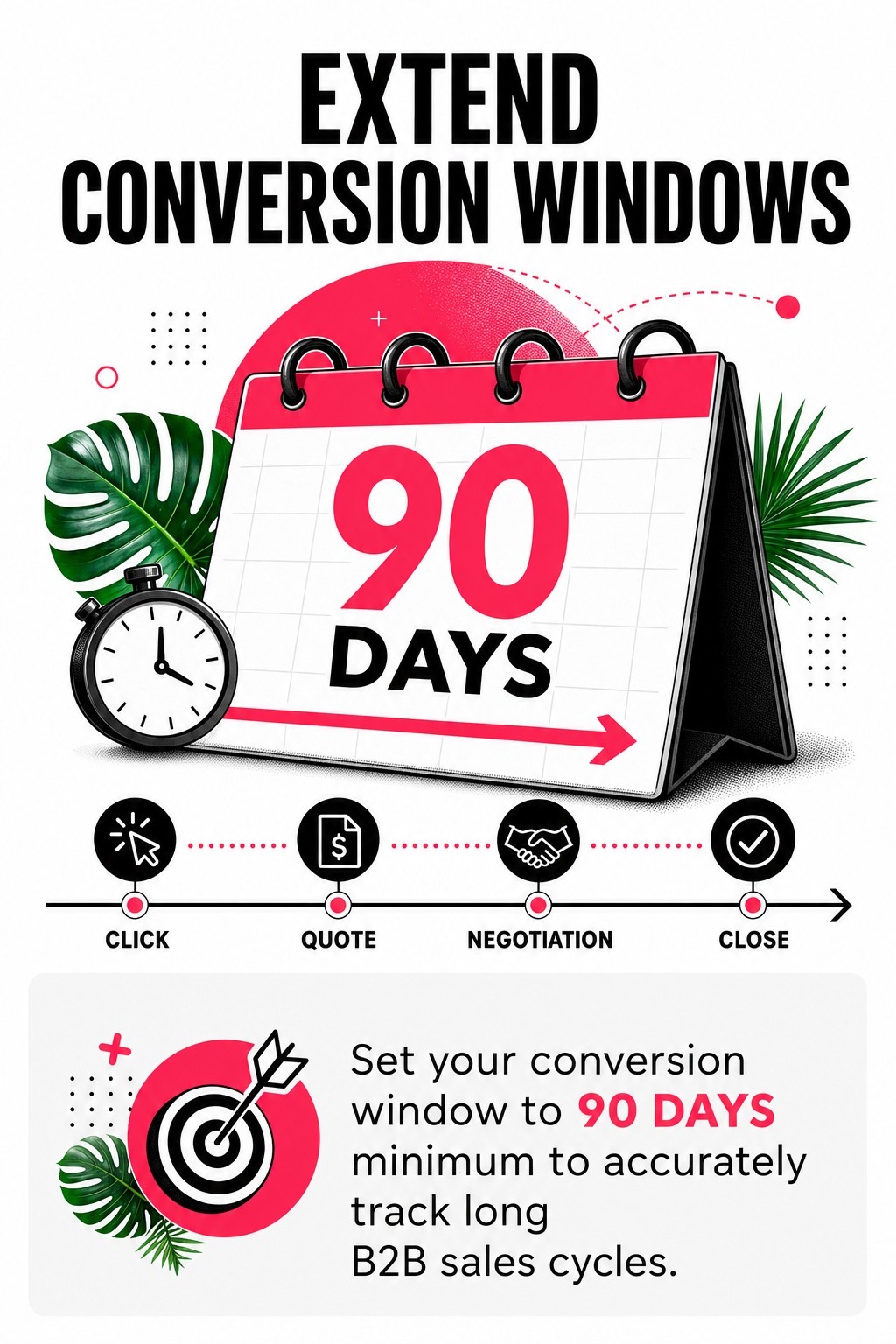
Someone clicks your ad in January. They request a quote in February. They negotiate terms in March. They place the order in April.
Standard 30-day conversion windows miss most of your revenue attribution. Your Google Ads reporting shows terrible ROI because it can't see the deals that close months after the first click.
Set your conversion window to 90 days minimum. Yes, this delays optimization data. But optimizing for what happens in 30 days when your actual sales cycle is 130 days means you're optimizing for the wrong outcome.
Better to wait longer for accurate data than make quick decisions based on incomplete information.
Don't only measure "quote request submitted." Track every meaningful interaction.
Catalog download. Financing calculator used. Service area map viewed. Product comparison page visited. Video watched 75% through.
These micro-conversions predict eventual sales. Someone who downloads your spec sheet, uses your ROI calculator, and watches your equipment demonstration video is more likely to buy than someone who just filled out a contact form once.
Weight your micro-conversions appropriately. A quote request is worth more than a page view. But a page view combined with a guide download and a 5+ minute site visit is worth more than a quick quote request from someone who bounced immediately after.
Import closed deals back into Google Ads as conversion events. This tells Google which clicks actually turned into revenue.
Most forklift companies use a CRM like Salesforce or something similar for material handling businesses. Set up the integration so when a deal closes in your CRM, Google Ads records it as a conversion attributed to the original campaign and keyword.
Now you can optimize for actual revenue, not just form fills. You'll discover which keywords generate leads that actually buy versus leads that waste your sales team's time.
Upload your customer email list to Google Ads. Create similar audiences of people who match your actual buyer profiles.
This works better than demographic targeting based on guesses. Google finds people who look like your real customers, not people who look like who you think your customers should be.
Use these audiences for bid adjustments in your existing campaigns. Someone who matches your customer profile is worth a higher cost-per-click than random traffic.
National dealers have bigger budgets. They can afford to bid higher and show ads more often.
You can't outspend them. You can out-target them.
National dealers run broad campaigns targeting general forklift keywords. They're trying to be everything to everyone.
You can dominate specific applications or industries. "Cold storage forklifts" or "food-grade material handling equipment" or "pharmaceutical warehouse solutions."
These niche searches have less competition and higher conversion rates because you're speaking directly to specialized needs that national dealers' generic campaigns ignore.
For service-related searches, emphasize speed. "Same-day forklift repair in [city]" beats "nationwide forklift service" for a warehouse manager whose equipment is down right now.
Local service is a competitive advantage that national dealers can't match. Someone in your city calling a national dealer's 800 number gets routed to a dispatch center that schedules a technician who might arrive tomorrow or the next day.
You can have someone there this afternoon. That's worth paying more per click.
Bid on competitor dealer names and national brand keywords. Someone searching "[competitor name] forklift" is an active buyer right now.
Your ad: "Considering [competitor]? Compare our service response times and local inventory."
This works especially well if you service equipment from multiple manufacturers while your competitors are brand-exclusive dealers. "We service all major forklift brands" is compelling to someone who owns mixed fleets.
Forklift demand fluctuates. Capital equipment budgets reset annually. Warehouse expansions follow construction seasons.
Your bidding strategy should account for these patterns.
Most businesses plan capital equipment purchases around fiscal year planning. Q4 tends to be slower for new equipment sales because companies have already allocated current year budgets. Q1 picks up as new fiscal year budgets kick in.
Reduce bids in slow periods. Increase bids when budget authority resets and buyers have approved funding.
Track your own historical conversion data by month. Identify your seasonal patterns and adjust budgets accordingly.
Some buyers need to spend remaining budget before fiscal year end or lose it. Create specific campaigns targeting "end of year capital equipment" or "Q4 equipment deals."
These buyers have approved budget and tight timelines. They're high-intent prospects worth premium cost-per-click.
Equipment breaks down regardless of budget cycles. Service and parts campaigns should maintain consistent spend throughout the year.
If anything, increase service campaign budgets during slow equipment sales periods. A service call today is your sales opportunity for equipment replacement next quarter.
Google Ads reaches people searching for solutions right now. LinkedIn reaches decision-makers before they're actively searching.
Both matter for long sales cycles. LinkedIn advertising delivers 121% return on ad spend for B2B marketers.

Target warehouse managers, operations directors, and supply chain VPs with content about operational efficiency and cost reduction.
Your LinkedIn campaigns shouldn't sell forklifts directly. They should position your company as a material handling efficiency resource.
Promoted content: industry reports, efficiency calculators, warehouse optimization guides, case studies showing operational improvements.
Build your remarketing audiences. Someone who engages with your LinkedIn content and then Googles "forklift dealer near me" is much more likely to click your ad over a competitor they've never heard of.
Export your LinkedIn website visitor audience to Google Ads. These are people who match your target B2B profiles and have already shown interest in material handling content.
Create separate campaigns targeting this audience with higher bids and more specific messaging. They're warmer leads than cold search traffic.
Test messaging that acknowledges the LinkedIn touchpoint: "After reading about warehouse optimization strategies, see how our equipment solutions deliver those results."
Most forklift dealers measure PPC success by cost per lead. That's useful but incomplete.
A lead costs you $150. Great. Did that lead buy a $50,000 forklift or waste 3 hours of your sales team's time?
Tag leads by source in your CRM. Google Ads lead. LinkedIn lead. Organic search lead.
Track which source produces leads that actually close. Maybe LinkedIn generates fewer leads but higher close rates. Maybe certain keyword themes produce more tire-kickers.
Adjust your bidding based on lead quality, not just lead volume. Better to pay $300 for a lead that has a 15% close rate than $100 for a lead that has a 2% close rate.
A forklift sale isn't a one-time transaction. It's the start of a service relationship. Parts. Maintenance. Future equipment purchases. Fleet expansions.
Track customer lifetime value by acquisition source. Maybe your expensive PPC campaigns attract larger customers with bigger fleets who generate more service revenue over time.
A $20,000 initial forklift sale that generates $50,000 in service revenue over five years is worth more than a $20,000 sale to a one-forklift buyer who does their own maintenance.
Someone finds you through organic search. Comes back through a PPC ad. Downloads a guide. Visits from a remarketing ad. Finally converts.
Last-click attribution gives all credit to that final remarketing ad. But the organic search and the guide download were part of the journey.
Use data-driven attribution in Google Ads. It assigns partial credit to each touchpoint based on how much that touchpoint actually influenced the conversion.
For material handling companies with long sales cycles, data-driven attribution gives you a more accurate picture of what's working than last-click models that ignore everything except the final interaction.
Paid search for material handling equipment isn't about quick wins. It's about building a system that feeds qualified leads into a long sales cycle.
Start with your decision-stage campaigns first. High-intent commercial keywords. People actively looking for forklift dealers right now. Get those converting before you expand into broader awareness campaigns.
Track everything back to closed deals, not just form submissions. Connect your CRM to Google Ads so you can see which campaigns generate actual revenue.
Test aggressively. Different ad copy for different buyer roles. Different landing pages for different equipment types. Different bidding strategies for different sales cycle stages.
The forklift market is growing. Competition is increasing. Generic marketing gets more expensive every quarter.
Specific, well-targeted paid search campaigns that match how B2B buyers actually research and purchase material handling equipment will win. Everything else is just burning budget hoping something sticks.
If you need help building PPC campaigns designed for industrial equipment sales cycles, check out our complete guide to PPC for heavy equipment companies or explore our paid search strategies for construction equipment buyers.
For manufacturers looking at broader paid search approaches, our paid search guide for manufacturers covers campaign structures that work across industrial B2B sales. And if you're dealing with equipment parts in addition to whole units, our guide to marketing heavy equipment parts online addresses the faster-moving transaction side of the business.