Fastener company SEO works differently from general B2B search engine optimization because the buyers are engineers and procurement specialists who search by specification, not by brand. A procurement engineer doesn't type "bolts supplier" into Google. They type "ASTM A193 B7 threaded rod 1-inch diameter 316 stainless" and expect exact answers. The companies that show up for those queries win the order. The ones optimizing for generic terms wonder why their organic traffic never converts.
I work with industrial B2B companies every day, and fastener distributors and manufacturers consistently sit on one of the most spec-rich product catalogs in manufacturing. That's an SEO asset most of them never use. This guide covers exactly how to change that.
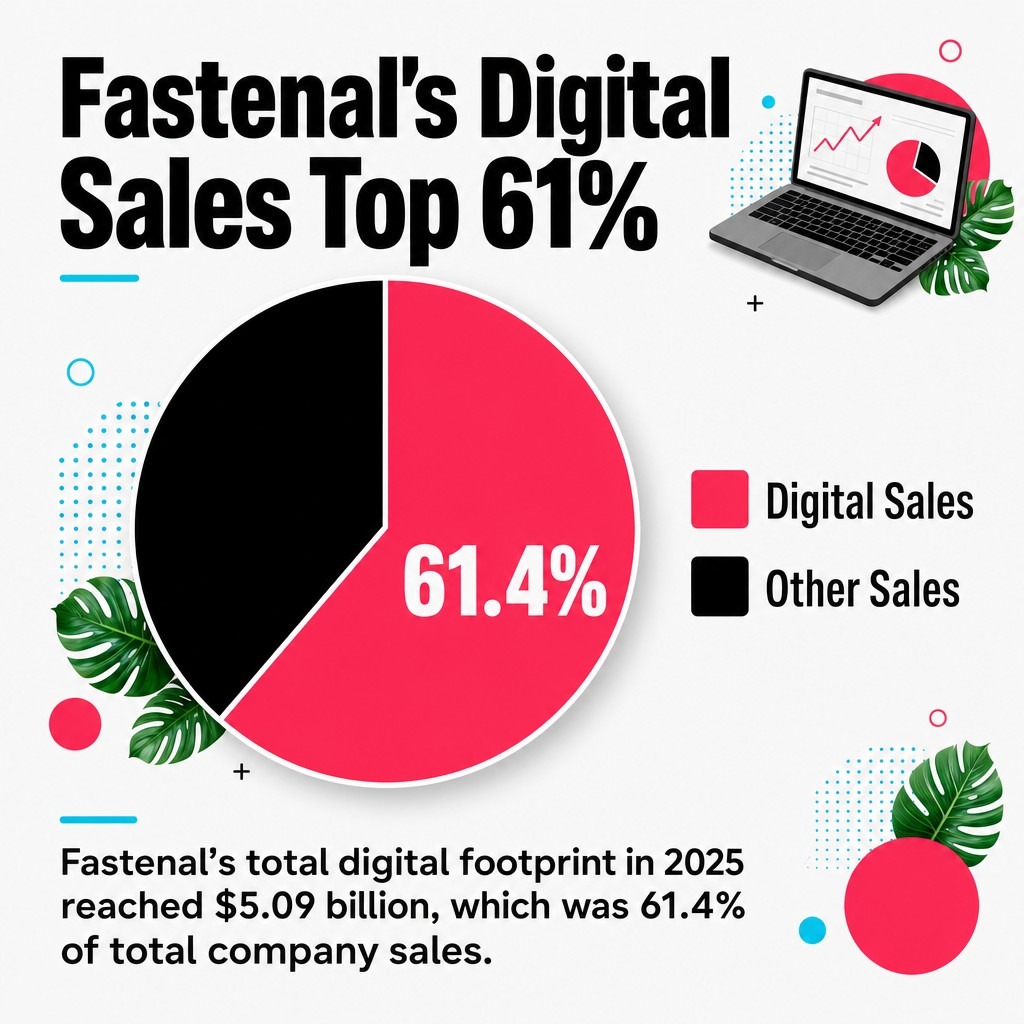
The U.S. industrial fasteners market is valued at $17.78 billion in 2025, according to SNS Insider's industrial fasteners market report, with projections pointing toward $28.10 billion by 2033. That's not a niche market. That's a market where buyers are spending real money, and a meaningful share of that spend begins with a search query.
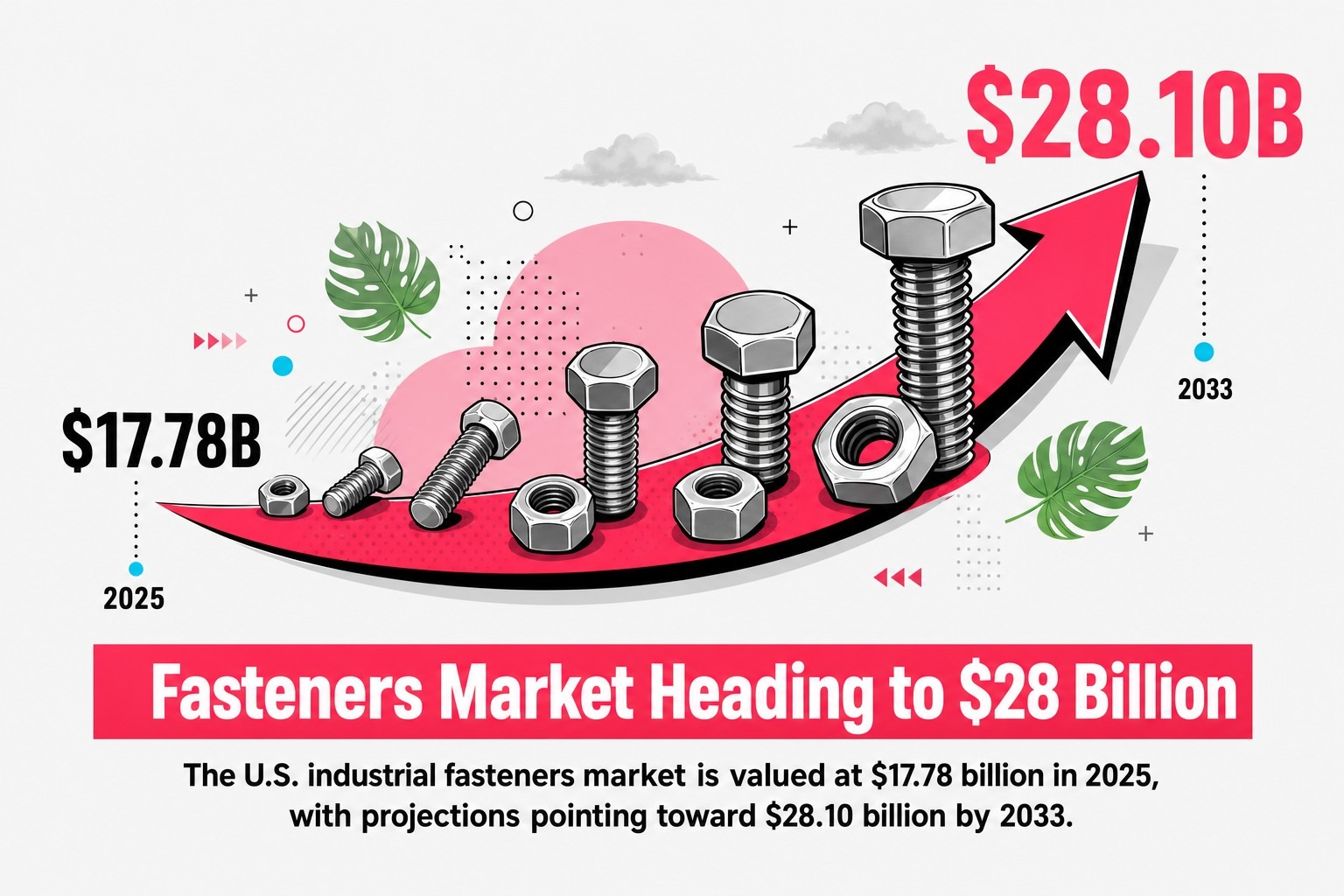
The bigger signal is what's happening at the distributor level. Fastenal's total digital footprint in 2025 reached $5.09 billion, which was 61.5% of total company sales, according to Digital Commerce 360's analysis of Fastenal's digital sales. More than half of one of the largest fastener distributors in the world now flows through digital channels. That number doesn't exist without serious investment in search visibility.
For smaller fastener companies, this cuts both ways. The big players are winning digital. But they can't win every spec-level search query across tens of thousands of SKUs. That's where fastener SEO creates an opening.
OEM buyers and MRO buyers search differently, and your fastener SEO strategy needs to account for both. The OEM segment commanded 69.23% of the global industrial fasteners market in 2025, per Mordor Intelligence's global industrial fasteners market data. These buyers are sourcing for production lines. They need volume, consistency, and spec compliance.
MRO buyers are replacing, repairing, or maintaining existing equipment. They're often working under time pressure. The global MRO market sits at $450.46 billion in 2026, per Mordor Intelligence's MRO industry report. MRO also represents 15 to 40% of total indirect procurement spend in manufacturing, according to ProcureKey's MRO procurement sourcing analysis. Both buyer types are searching online. The question is whether your product pages and category content answer their specific questions.

B2B buyers doing fastener procurement have already done most of their homework before they contact anyone. Gartner's research found that 67% of B2B buyers prefer a rep-free experience. And according to Corporate Visions' B2B buying behavior research, 83% of B2B buyers mostly or fully define their purchase requirements before speaking with sales.
Read those two numbers together. The procurement engineer who finds your product page has almost certainly already decided what they need. Your job via search engine optimization isn't to persuade them. It's to show up with exactly the right answer at the exact moment they're confirming their spec and looking for a supplier.

This changes everything about how fastener company SEO should be structured. Content needs to answer specification-level questions, not explain what a hex bolt is.
A procurement engineer sourcing for an aerospace OEM application might search "A286 stainless steel socket head cap screw Grade 5 torque specs." A maintenance tech at a food processing plant might search "316L stainless self-locking hex nut FDA compliant." These are not people browsing. These are people ready to buy if they find the right answer.
General SEO advice says target high-volume keywords. Industrial B2B SEO says target the right keywords, even when volume is low. A keyword that gets 50 searches per month and converts at 8% is worth far more than a keyword with 5,000 searches and a 0.1% conversion rate. That shift in thinking is core to fastener SEO done well.
For a deeper look at MRO SEO keyword strategy specific to industrial buyers, that's where to start on the keyword research side.
Fastener distributors and manufacturers face four SEO problems that general ecommerce companies never encounter at the same scale. Getting clear on them is the first step toward fixing them.
The product catalog size problem is real. A typical fastener distributor carries tens of thousands of SKUs. Many carry over 100,000. Creating unique, spec-rich product pages for every item isn't realistic at first. But leaving them as thin, duplicate pages is a crawl budget problem and a rankings problem at the same time. The fix is a tiered approach: fully optimize high-margin and high-velocity SKUs first, then build out category and specification-level pages that cover product families.
McMaster-Carr, Grainger, and Fastenal have domain authority built over decades and product catalogs that dwarf most independent distributors. Grainger's "Endless Assortment" digital segment grew 19.7% in Q2 2025, per Matrix BCG's Grainger marketing strategy analysis. Competing head-on for broad category terms against those players is not a productive use of your SEO budget.

The smarter play is niche depth. McMaster-Carr stocks everything. They can't go deep on any one product family. A fastener manufacturer that specializes in custom aerospace fasteners, or a distributor with deep inventory in metric DIN-standard hardware, can own specification-level search queries that the big platforms never target with dedicated content.

Faceted navigation is how most fastener ecommerce sites let buyers filter by thread pitch, material grade, drive type, and finish. It's also how sites accidentally create thousands of duplicate or near-duplicate URLs that eat crawl budget and dilute page authority.
The fix requires canonical tags applied correctly, careful decisions about which filter combinations deserve indexed pages (thread + material + size combinations that match real search queries do; arbitrary filter stacks don't), and a URL structure that search engines can parse cleanly. This is one area where fastener company SEO gets genuinely technical.
Fastener SEO lives and dies on long-tail keywords, and the spec structure of the product catalog makes this unusually tractable once you commit to it. A well-built keyword research process for a fastener distributor starts with product families and works down to the specification level.
Start with thread type. Then add material grade. Then add standard (ASTM, ISO, DIN, SAE). Then add size range. Then add application or industry. Each layer narrows the query and raises buyer intent. "Socket head cap screw" is competitive and broad. "Socket head cap screw 18-8 stainless M6 x 1.0 ISO 4762" is a buyer ready to order. Your product pages need both the technical precision of the second and the navigable structure that brings searchers from the first.
Keyword research for fastener companies should map queries to three intent levels. Informational queries ("what is the difference between grade 5 and grade 8 bolts") belong in blog content and technical guides. Comparison queries ("ASTM A307 vs A325 structural bolt applications") belong in technical content pages. Transactional queries ("buy A325 structural bolt 3/4-10 x 2 hot dip galvanized") belong on product and category pages.
Most fastener websites only build the transactional layer. That leaves the informational and comparison intent entirely to competitors, and those upper-funnel queries are exactly what procurement engineers use when they're specifying for a new project. Winning there means your brand is already familiar when they get to the "buy" stage.
The step-by-step B2B SEO guide for industrial companies covers keyword mapping in detail, with a framework that applies directly to fastener catalogs.
Fastener product pages need to carry more technical information than almost any other ecommerce product type, and that creates an unusual SEO advantage when done correctly. Every specification on a product page is potential keyword density without any stuffing.
A product page for a hex cap screw should include: thread pitch and series (UNC, UNF, metric), material grade and alloy designation, applicable standards (ASTM, SAE, ISO, DIN), head style and drive type, finish and coating, tensile strength and proof load, recommended torque values, and typical applications. None of that is padding. All of it is what a procurement engineer is looking for. And each line is a variation of the long-tail keywords buyers use to find exactly that product.
Category pages often outperform individual product pages for fastener company SEO because they can cover entire product families. A well-built category page for "stainless steel hex bolts" can rank for the category term while linking cleanly to spec-level product pages below it.
The structure that works: a category intro paragraph with buyer-relevant context (applications, relevant standards, material properties), a filterable product grid, a technical FAQ section answering the questions procurement engineers search, and internal links to related specifications and material grade pages. That FAQ section alone can capture dozens of specification-level queries that would otherwise go to competitor pages or to McMaster-Carr.
Product schema markup gives search engines structured data to work with when indexing fastener pages. At minimum, implement Product schema with name, description, brand, SKU, material, and availability. For fastener ecommerce with live pricing and inventory, add Offer schema with price, currency, and stock status.
The payoff isn't just richer search results. Structured data is how your content feeds into AI search tools like ChatGPT and Perplexity when procurement engineers use them for specification research. Generative engine optimization starts with clean, structured product data. If your pages don't have it, you're invisible in that layer entirely.
Site architecture for a fastener distributor with 50,000+ SKUs requires deliberate planning. Left unmanaged, large product catalogs become crawl traps where search engines waste their budget on low-value filter pages instead of your best product and category content.
The architecture principle that matters most: no important page should be more than three clicks from the homepage. For fastener catalogs, that means a hierarchy of product family categories, then subcategories by thread type or material, then individual product pages. If your catalog requires five levels of navigation to reach a specific hex bolt, both users and search engines will give up before they get there.
Fastener ecommerce has a specific technical requirement that general ecommerce platforms don't always handle well: ERP integration for real-time inventory and pricing. When a procurement engineer lands on a product page showing a price and availability that doesn't match what happens at checkout, you've lost the order and damaged trust.
Platforms like BigCommerce and Shopify Plus have ERP connectors that can sync inventory data across large SKU sets. The SEO implication is significant. Product pages with accurate inventory status can carry Offer schema showing in-stock availability in search results. That data point alone increases click-through rates from procurement engineers who need the item quickly.

For a full picture of digital marketing strategy for fastener distributors, including ecommerce platform considerations, that resource covers the setup in detail.
Fastener product pages loaded with specification tables, multiple product images, and real-time inventory widgets get heavy fast. Core Web Vitals matter here. Largest Contentful Paint (LCP) above 2.5 seconds signals a slow page to both users and Google. For catalog pages with hundreds of SKUs rendered dynamically, that threshold is easy to miss without deliberate optimization.
The practical fixes: lazy-load product images below the fold, cache specification data that doesn't change frequently, compress product images without sacrificing the zoom quality procurement engineers need to verify dimensions, and audit third-party scripts for anything that blocks rendering.
Technical content is where fastener manufacturer SEO and fastener distributor SEO diverge slightly, and where both have a real advantage over marketplace aggregators. McMaster-Carr sells everything. They can't publish a 2,000-word technical guide on corrosion resistance trade-offs between 316 and 317L stainless fasteners in marine applications. You can.
That kind of content does three things simultaneously. It captures informational searches from engineers doing specification research. It builds the topical authority that Google uses to evaluate whether your site deserves to rank for transactional fastener queries. And it feeds the AI Overview and generative search layers that are increasingly the first stop for technical questions.
The content types that drive organic traffic and qualified leads for fastener companies fall into four categories. Technical guides cover material selection, standard comparisons (ASTM vs ISO equivalents, for example), and application-specific specification guidance. Installation and torque specification content answers the how-to searches that engineers run after they've selected a fastener. Certification and compliance content covers FDA, ROHS, AS9100, and other standards that matter to specific industries. Industry-specific application pages target verticals like aerospace, food processing, automotive OEM, or marine, where fastener specifications are highly regulated.
None of that content requires fabricating data or making things up. It requires pulling the actual technical knowledge your engineering or product team already has and turning it into structured, searchable content. The fastener industry is full of expertise that never makes it onto company websites. That's the gap.
The complete guide to B2B content marketing for manufacturers covers the content production process for exactly this type of technical material.
Fastener company SEO success looks different from consumer ecommerce, and measuring it with the wrong metrics leads to bad decisions. Organic traffic volume matters, but a fastener distributor getting 5,000 monthly visitors from specification-level queries is doing better than one getting 50,000 visitors from broad informational terms that never convert to RFQs.
The metrics that actually tell you whether your industrial SEO is working:
The North America industrial fasteners market sits at $21.33 billion in 2025, per Mordor Intelligence's North America industrial fasteners market report. A fastener distributor capturing even a fractional increase in organic-driven RFQs in that market is talking about real revenue. The companies winning that organic traffic aren't doing anything mysterious. They're building spec-rich product pages, targeting long-tail keywords their buyers actually use, and publishing technical content that answers the questions procurement engineers ask before they ever talk to a sales rep.

That's the full picture of fastener SEO. If you want to see what those strategies produce in measurable outcomes, the 3x revenue growth case study for a B2B industrial supplies distributor shows exactly the kind of results that come from applying this approach to an industrial catalog. Start with keyword research on your five highest-margin product families this week. Map the specification-level queries. Then build one category page that answers every question a procurement engineer could have. That single page, done right, will outperform a year of generic content.