

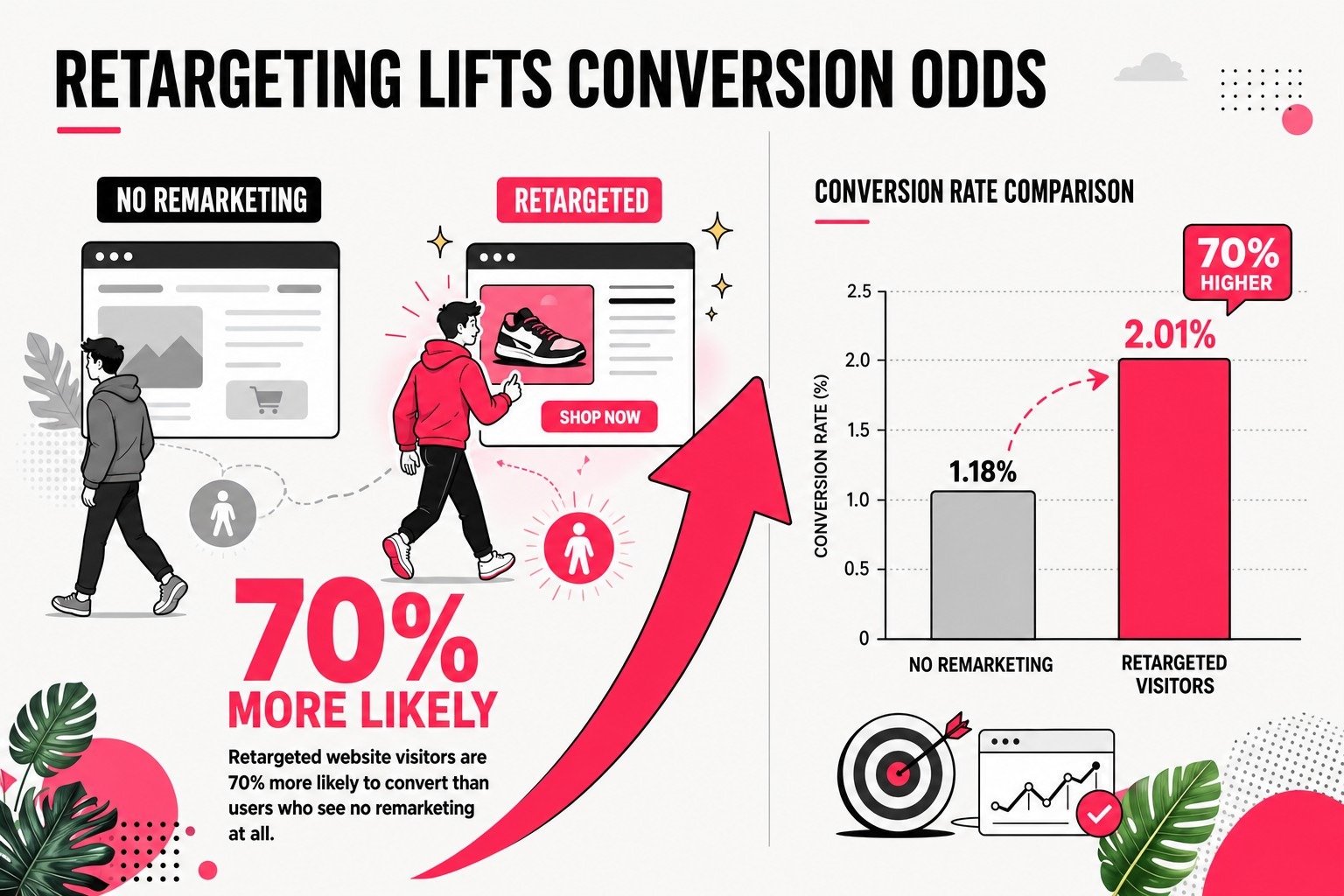
Remarketing in B2B manufacturing is a paid advertising strategy that serves targeted ads to website visitors who left without converting, keeping your brand in front of engineers, procurement officers, and C-suite decision-makers throughout a buying cycle that can stretch well past six months. According to research on retargeting conversion behavior, retargeted website visitors are 70% more likely to convert than users who see no remarketing at all. For B2B manufacturers, where a single deal can be worth hundreds of thousands of dollars, that lift is not a nice-to-have.
Most manufacturing marketing guides tell you to "be consistent" and "nurture your leads." Solid advice. But they skip the part where your prospect downloaded a whitepaper in March, got pulled into a budget review, and completely forgot you exist by June. Remarketing is the fix for that specific, very expensive problem.
B2B manufacturing buying cycles average 10.1 months, down from 11.3 months in 2024, according to 6sense's 2025 Buyer Experience Report. That is still nearly a year between first touch and closed deal.
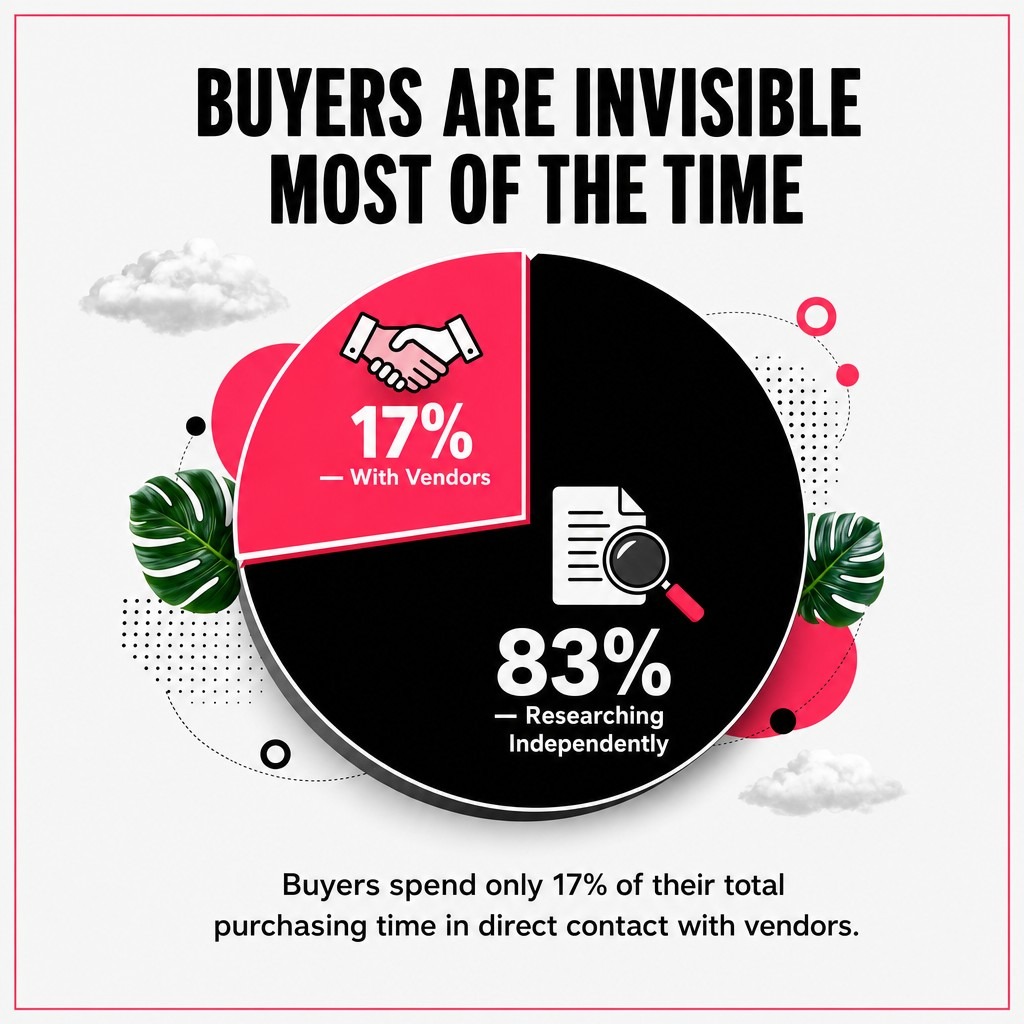
And here is the part that should concern every manufacturing marketer: research from Deeto on the B2B buyer journey shows buyers spend only 17% of their total purchasing time in direct contact with vendors. The other 83% is spent researching independently, building internal consensus, and waiting for budget approvals.
Your prospects are invisible to you for most of the process. But they are still thinking, comparing, and deciding. A remarketing strategy keeps your brand present during those long stretches of silence.
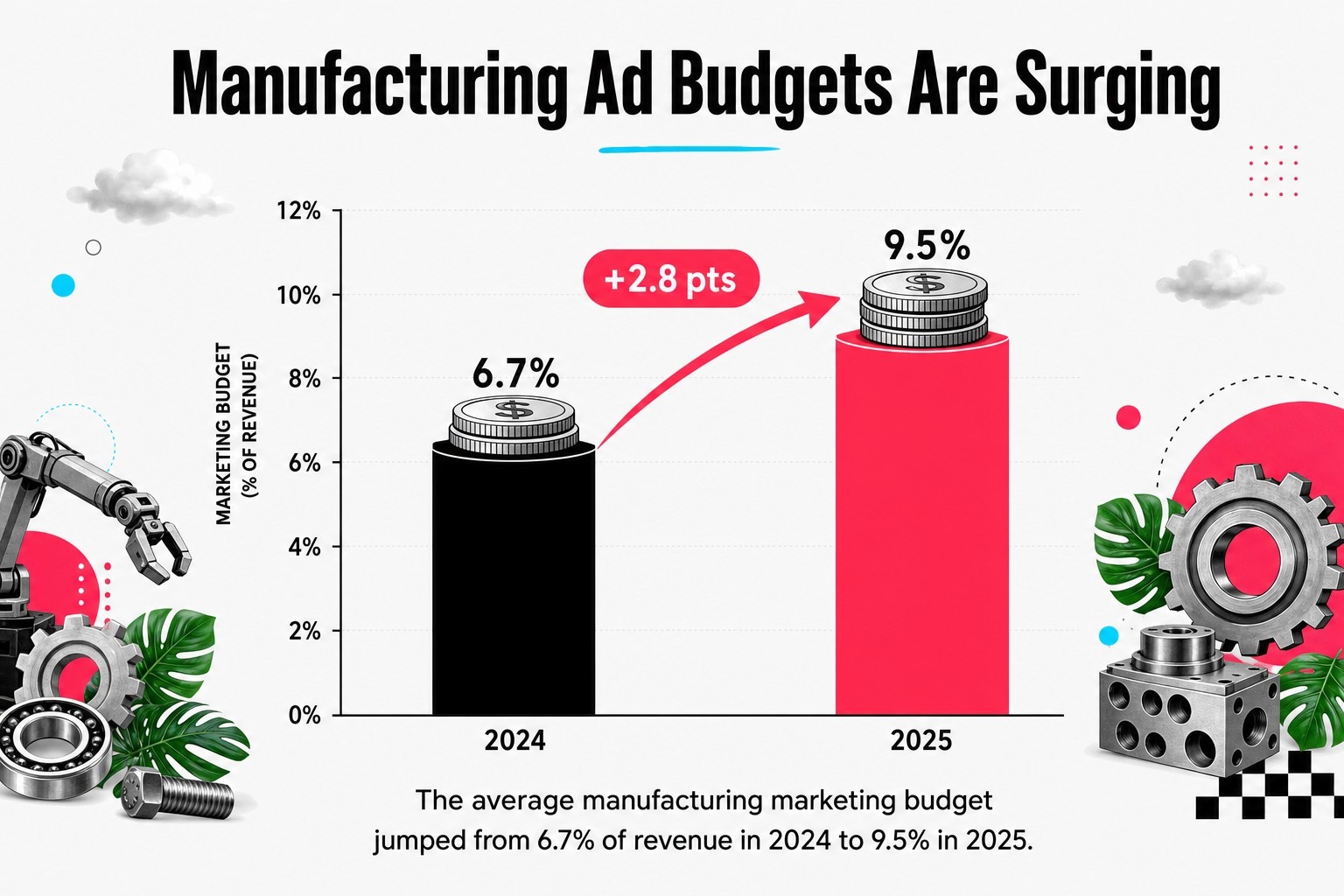
Without remarketing, you spend your entire lead generation budget attracting visitors once, then watching them drift toward whoever shows up next in their feed. With it, you stay on the radar of the exact people who already showed interest. That is a fundamentally better use of your manufacturing marketing budget, especially as manufacturing marketing statistics show the average manufacturing marketing budget jumped from 6.7% of revenue in 2024 to 9.5% in 2025. More money is flowing into this space. Spend it where it counts.
For a broader look at how digital marketing fits into your revenue strategy, the data-driven digital marketing guide for manufacturers covers the full strategic picture worth reading alongside this.
Audience segmentation is the single most important setup decision in any B2B manufacturing remarketing program, because "everyone who visited your website" is not an audience strategy.
A procurement officer comparing three vendors on your pricing page has completely different needs than an engineer who spent four minutes reading your technical specifications. Serving them the same ad is the equivalent of handing both people the same brochure and hoping for the best.
Build your retargeting audiences around behavior, not just page visits. Here are four segments that consistently perform for B2B manufacturers:
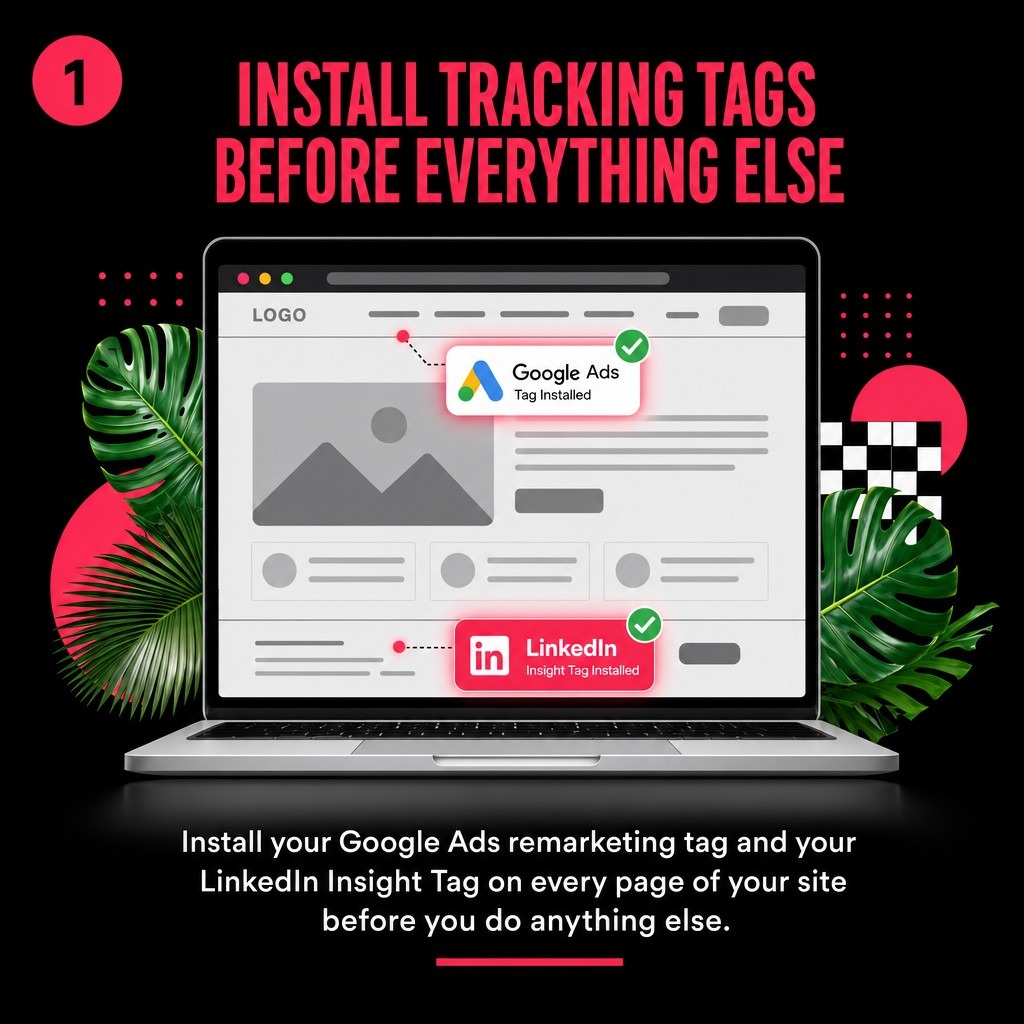
Install your Google Ads remarketing tag and your LinkedIn Insight Tag on every page of your site before you do anything else. Both are free. Without them, you have no audiences to target.
Exclude recent converters and current customers from your cold retargeting pools. Chasing someone who already signed a contract is a waste of budget and slightly embarrassing.
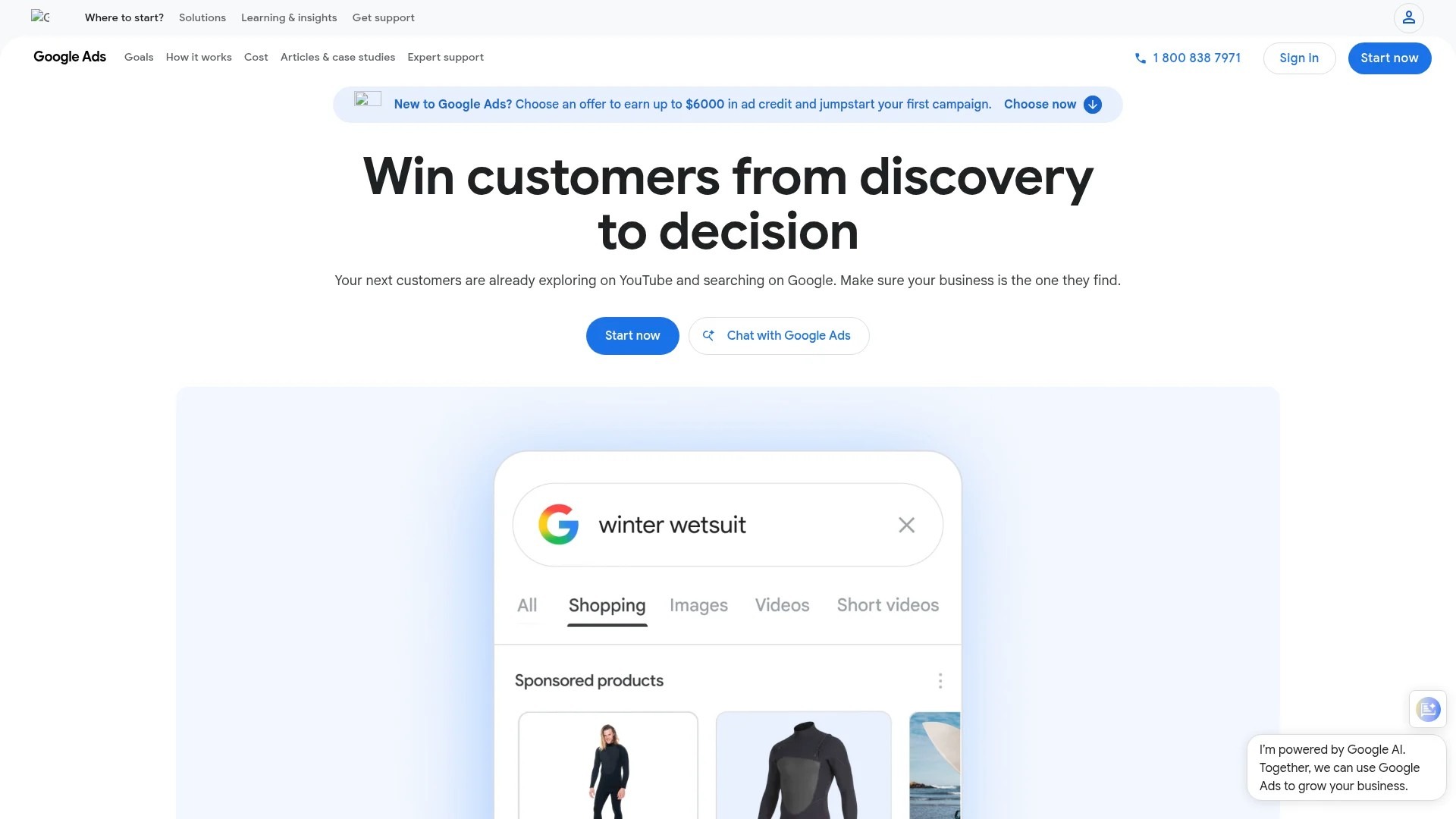
Google Ads and LinkedIn Ads serve different roles in a B2B manufacturing remarketing strategy, and running both in coordination outperforms either channel alone.
Data on retargeting performance across B2B companies shows that remarketing increases brand awareness by 71%, improves customer retention by 59%, and drives social engagement up 58%. Those numbers span channels, which is the point: your buyer encounters your brand across multiple surfaces, and that repetition builds the trust that eventually converts.
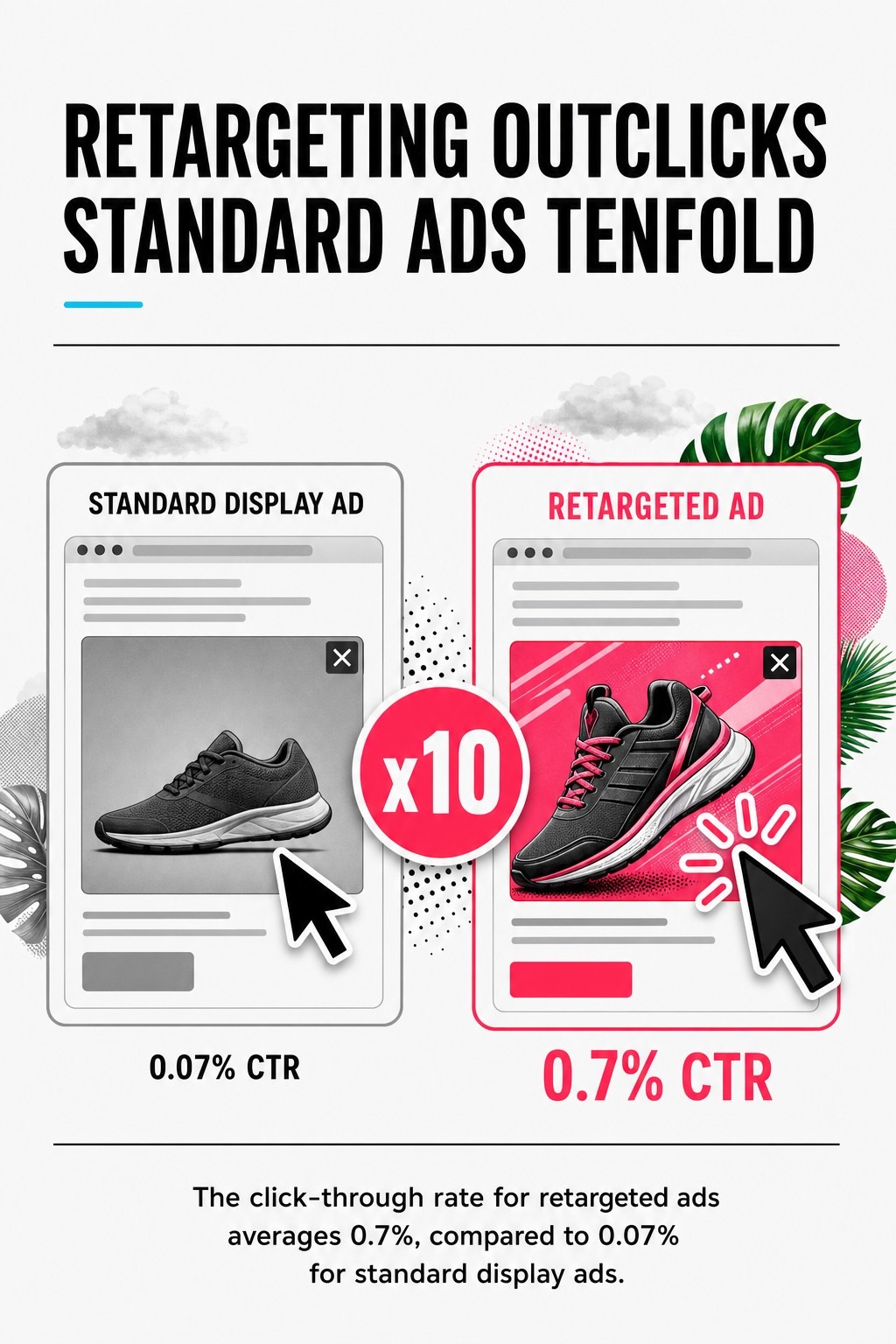
Google Ads display remarketing reaches prospects across millions of websites through the Google Display Network. The click-through rate for retargeted ads averages 0.7%, compared to 0.07% for standard display ads. That is a tenfold improvement in attention for the same impression. For B2B manufacturers running display ads to cold audiences and wondering why nothing clicks, this number explains a lot.
Use Google Ads for broad retargeting at scale: keeping your brand visible to product-page visitors, driving RFQ completions, and pushing case study downloads to warm prospects.
LinkedIn Ads give you something Google cannot: job title targeting. You can serve a remarketing ad specifically to the procurement director at a mid-sized aerospace manufacturer who visited your website last week. That precision matters enormously when your buying committee includes engineers, operations leads, and finance approvers who all need different messages.
Research on B2B buying journey complexity found that the journey from first LinkedIn ad impression to revenue averages 320 days. That is not a reason to avoid LinkedIn. It is a reason to start now and stay patient, because the manufacturers who quit after 60 days are handing their position to whoever stays in.
For a detailed breakdown of Google Ads approaches built specifically for manufacturers, the B2B Google Ads guide for manufacturers is worth your time.
Effective B2B manufacturing remarketing creative speaks to a specific person's specific problem, not to a generic "decision-maker" who exists only in a spreadsheet.
Your three primary buyer personas in manufacturing each respond to different messages. Engineers want technical proof: specs, tolerances, certifications, and data. Procurement officers want vendor reliability, pricing transparency, and delivery track records. C-suite decision-makers want ROI, risk reduction, and strategic fit. One ad trying to do all three jobs does none of them well.
Match your ad format to where the prospect is in the buying journey. Awareness-stage retargeting works well with short educational content. According to Content Marketing Institute research on manufacturing content marketing, the two most popular content types among manufacturing marketers are short articles and posts (89%) and videos (85%). Both formats translate directly into high-performing remarketing ad creative.
A few practical creative rules that hold up in B2B manufacturing remarketing:
Content marketing feeds this whole engine. If you need to build out your asset library, the complete guide to B2B content marketing for manufacturers covers exactly what to create and why.
Account-based marketing (ABM) and remarketing are the most natural pairing in B2B manufacturing, because both start with a specific target account rather than a broad audience.
ABM means identifying your ideal customer profile (ICP), building a list of named target accounts, and running marketing activity focused on those specific companies. When you layer remarketing on top of ABM, you are not just retargeting visitors generically. You are serving precise ads to known contacts at named accounts who visited your site, and you can track engagement at the account level.
To connect ABM and remarketing in practice:
ABM-led remarketing takes more setup time. It also produces significantly better pipeline quality, which is the metric manufacturing sales teams actually care about.
Email remarketing for B2B manufacturing works by triggering sequences based on specific prospect behaviors, rather than blasting the same message to your full contact list on a schedule.
Industry data on retargeting adoption shows 52% of B2B marketers use retargeting as a core lead nurturing tool. Email sequences triggered by website behavior are the non-paid complement to your paid remarketing, and they work together.
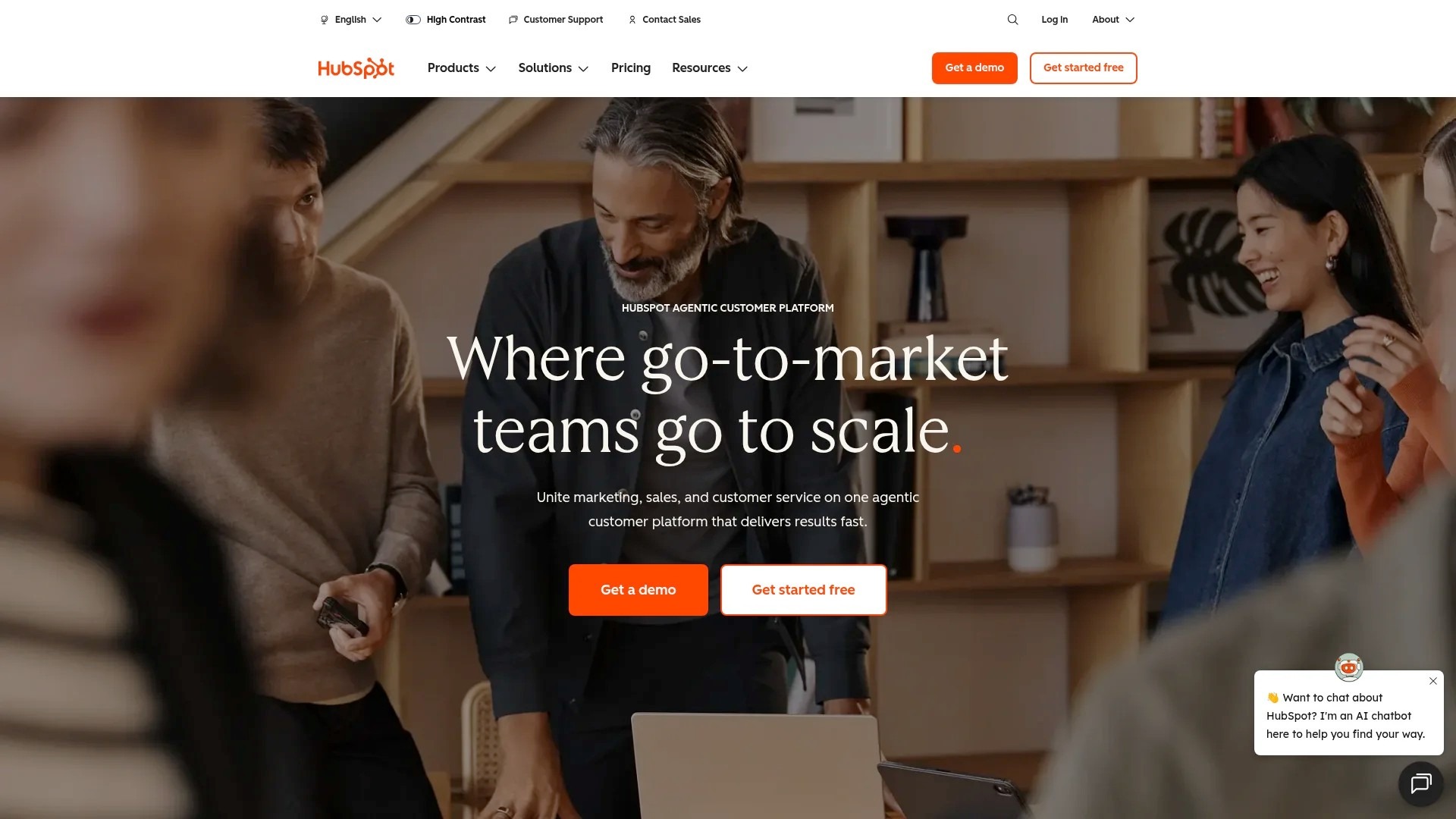
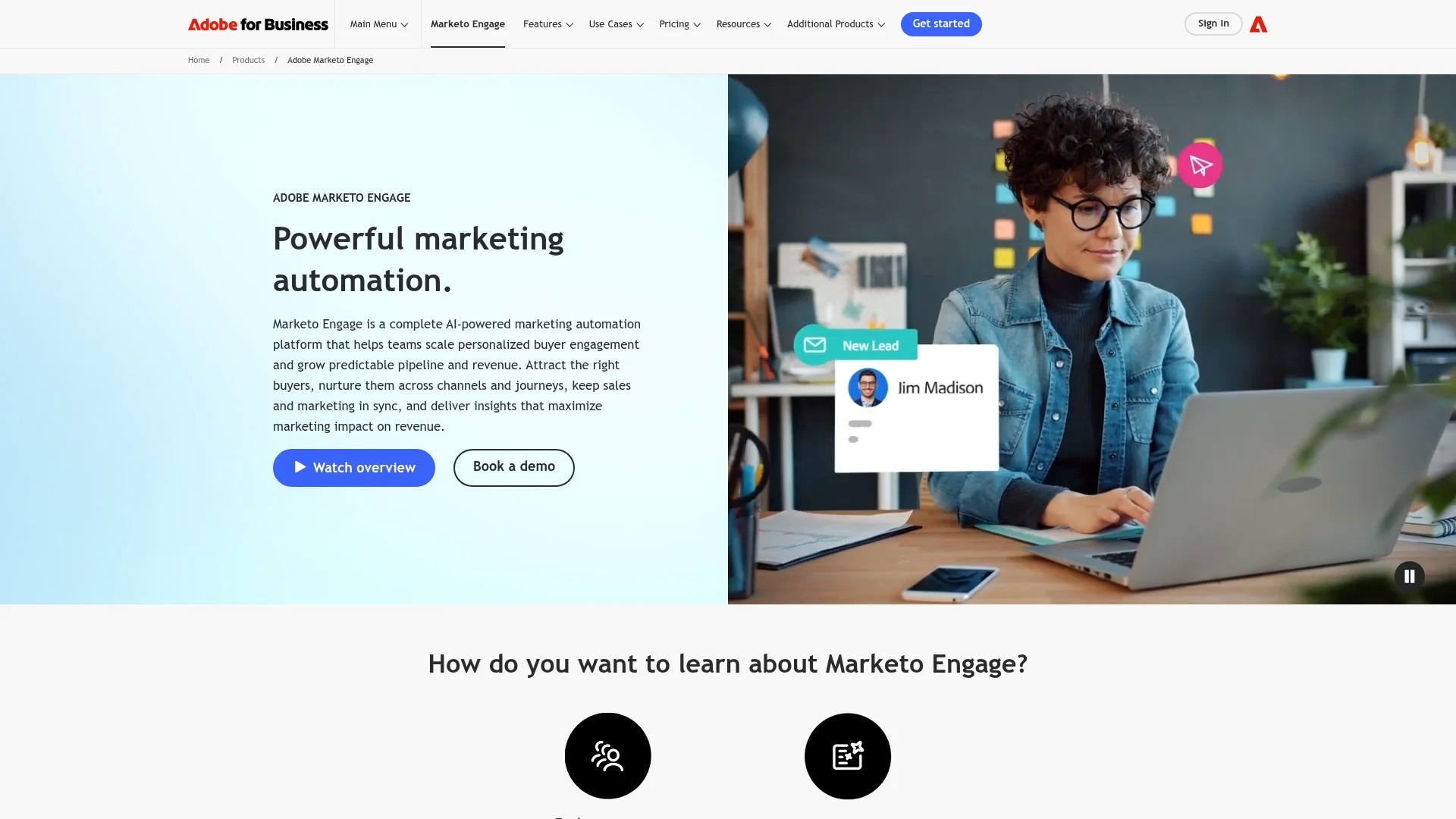
Set up behavior-triggered email sequences using a platform like HubSpot or Marketo. A prospect who downloads your case study on industrial filtration systems should receive a follow-up email within 24 hours that addresses the next logical question, not a generic "thanks for downloading" note.
Connect your email platform to your Google Ads and LinkedIn Ads accounts. When a lead opens three emails without converting, that behavior should trigger an increase in paid remarketing frequency. When they book a demo, that should pause retargeting immediately. These connections require CRM integration, but most major platforms support it natively now.
The goal is a coordinated sequence where your prospect feels like your messaging understands their situation, not like they are on the receiving end of four disconnected campaigns that have never heard of each other.
For more on building pipeline through coordinated lead nurturing, the B2B lead generation strategies for pipeline building covers the full lead nurturing architecture.
B2B manufacturing remarketing requires different KPIs than ecommerce, because you are not measuring impulse purchases on a 24-hour attribution window.
The metrics that matter in a long-cycle manufacturing marketing program are view-through conversions (not just click-through), time-to-conversion by audience segment, cost per qualified lead by channel, and pipeline influence attributed to remarketing touches. Click-through rate alone tells you almost nothing about whether your campaign is working.
Set your attribution window to at least 30 days for click conversions and 7 days for view-through in Google Ads. Shorter windows systematically undercount remarketing's contribution to deals that close after months of nurturing. You will make the wrong budget decisions if you measure a 10-month sales cycle with a 7-day attribution window.
Run monthly audience audits. Segment performance shifts over time. An audience that performed well 90 days ago may be exhausted or irrelevant now. Refresh your audience exclusions, update your creative, and check whether your highest-spending segments are still producing qualified leads or just burning budget.
Scale by channel performance, not by gut feeling. If LinkedIn Ads is producing qualified procurement contacts at a lower cost per lead than Google Ads display, shift budget there. If a specific remarketing audience (say, technical spec page visitors with 3+ visits) converts at twice the rate of other segments, increase that segment's bid adjustment.
The manufacturers who scale remarketing successfully are the ones who treat campaign data as a decision-making tool, not a reporting formality. Review performance weekly during early campaign phases. Monthly once you have stable baselines.
For the full picture on measuring manufacturing lead generation performance, the manufacturing lead generation guide covers measurement frameworks built for this industry specifically.
Remarketing for B2B manufacturers is not complicated at the concept level. You had visitors who left. You want them back. You serve them relevant ads and emails until they are ready to talk. The execution is where most manufacturing companies either skip steps or give up too early.
The order matters. Segment your audiences first. Install your tracking tags before anything else. Build persona-specific creative. Connect your ABM target accounts to your ad platforms. Automate your email sequences to fire on behavior. Then measure with an attribution window that actually matches your sales cycle length.
You do not need all six steps running perfectly in week one. Pick the highest-impact starting point: your Google Ads remarketing tag and one audience segment built around your highest-intent page visitors. Get that live this week. Add LinkedIn Ads targeting next. Build from there.
The manufacturers winning on digital right now are not the ones with the biggest budgets. They are the ones staying visible to the right people for the full 10-month journey. That is exactly what a well-built remarketing strategy does.