
You need heavy equipment leads that turn into real purchase orders, not tire-kickers pricing out excavators they'll never buy.
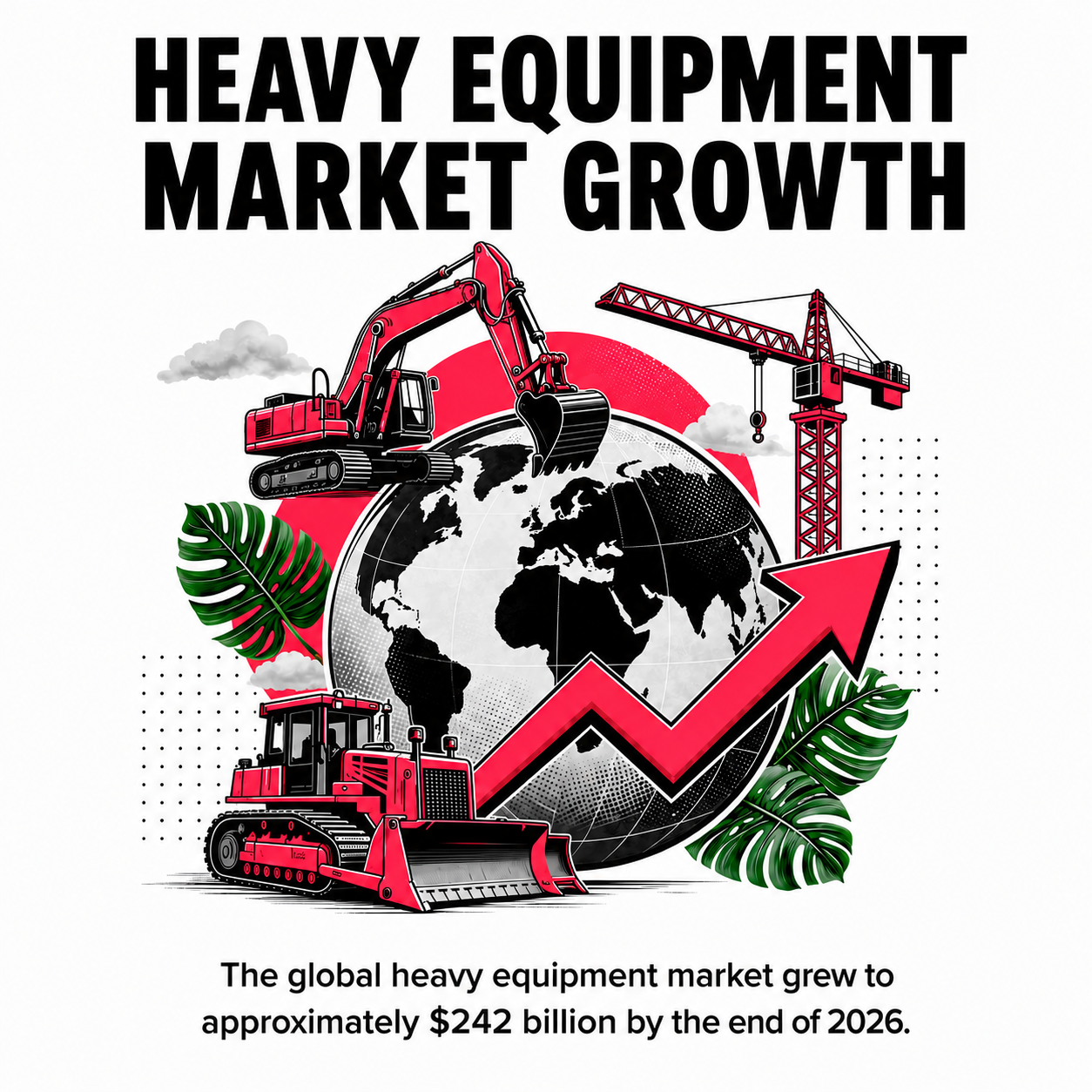
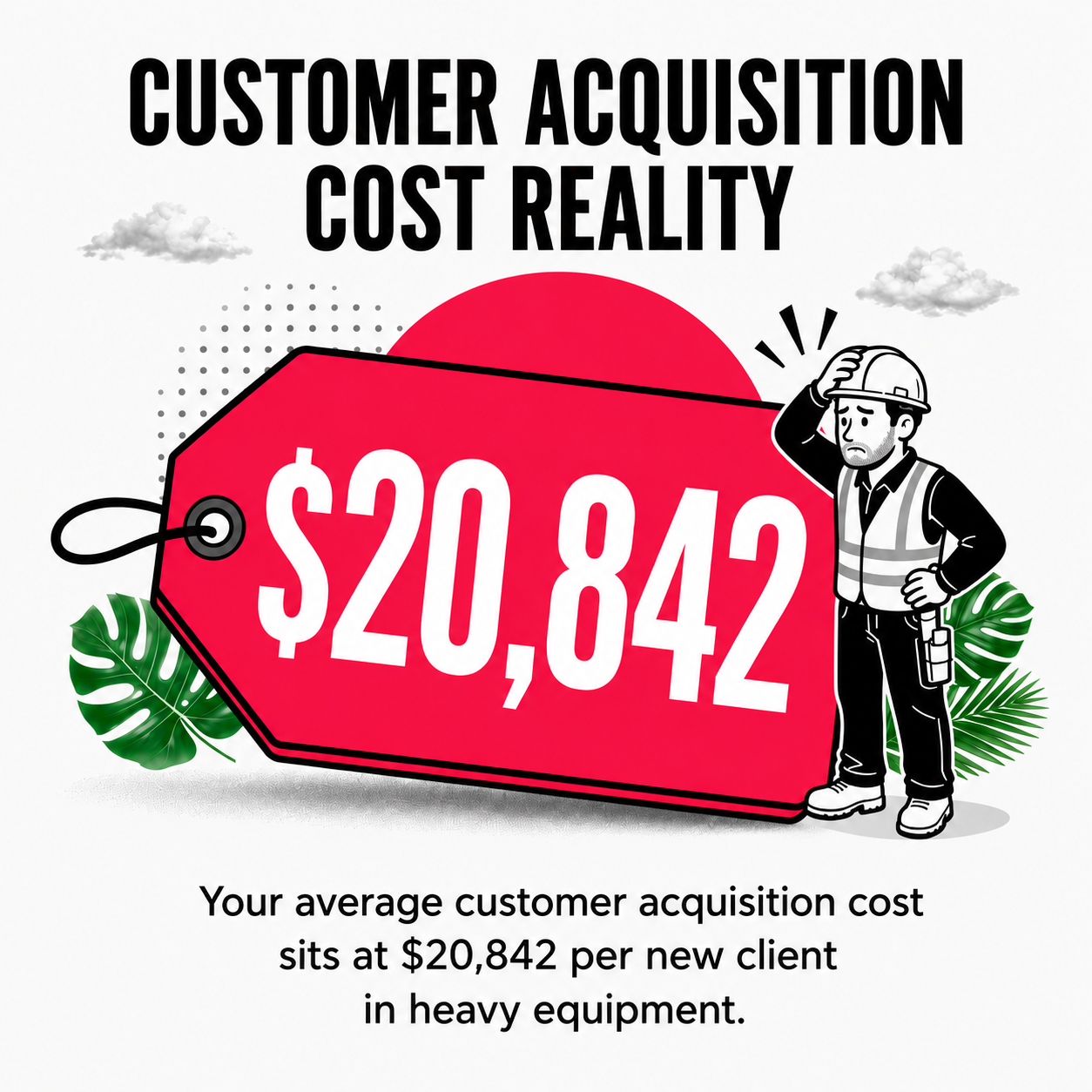
The global heavy equipment market grew to approximately $242 billion by the end of 2026. That sounds like opportunity. But here's the catch: your average customer acquisition cost sits at $20,842 per new client.
Every unqualified lead costs you money you won't get back.
I run SCUBE Marketing, and I've spent years watching heavy equipment companies burn through marketing budgets chasing leads that evaporate. The companies that win don't just generate more leads. They generate the right leads using strategies that actually match how contractors and fleet managers buy equipment.
This guide walks you through five proven strategies that lower your cost per lead while improving lead quality. We're covering SEO that puts you in front of buyers searching for specific equipment types, PPC campaigns that target purchase-ready prospects, content marketing that builds authority with decision-makers, local optimization for dealers, and email nurturing that converts researchers into buyers.
By the end, you'll know exactly which channels to prioritize and how to implement each strategy without wasting budget on approaches that don't work for construction equipment sales.
Traditional marketing doesn't work the way it used to for heavy equipment companies.
Trade shows and print ads still have their place. But your buyers aren't waiting until they see your booth to start their research. They're online right now, comparing specs, reading reviews, and shortlisting suppliers before they ever contact anyone.
The number of stakeholders involved in B2B purchases increased two to three-fold between 2018 and 2025. That means more people need to sign off on a single excavator purchase than ever before.
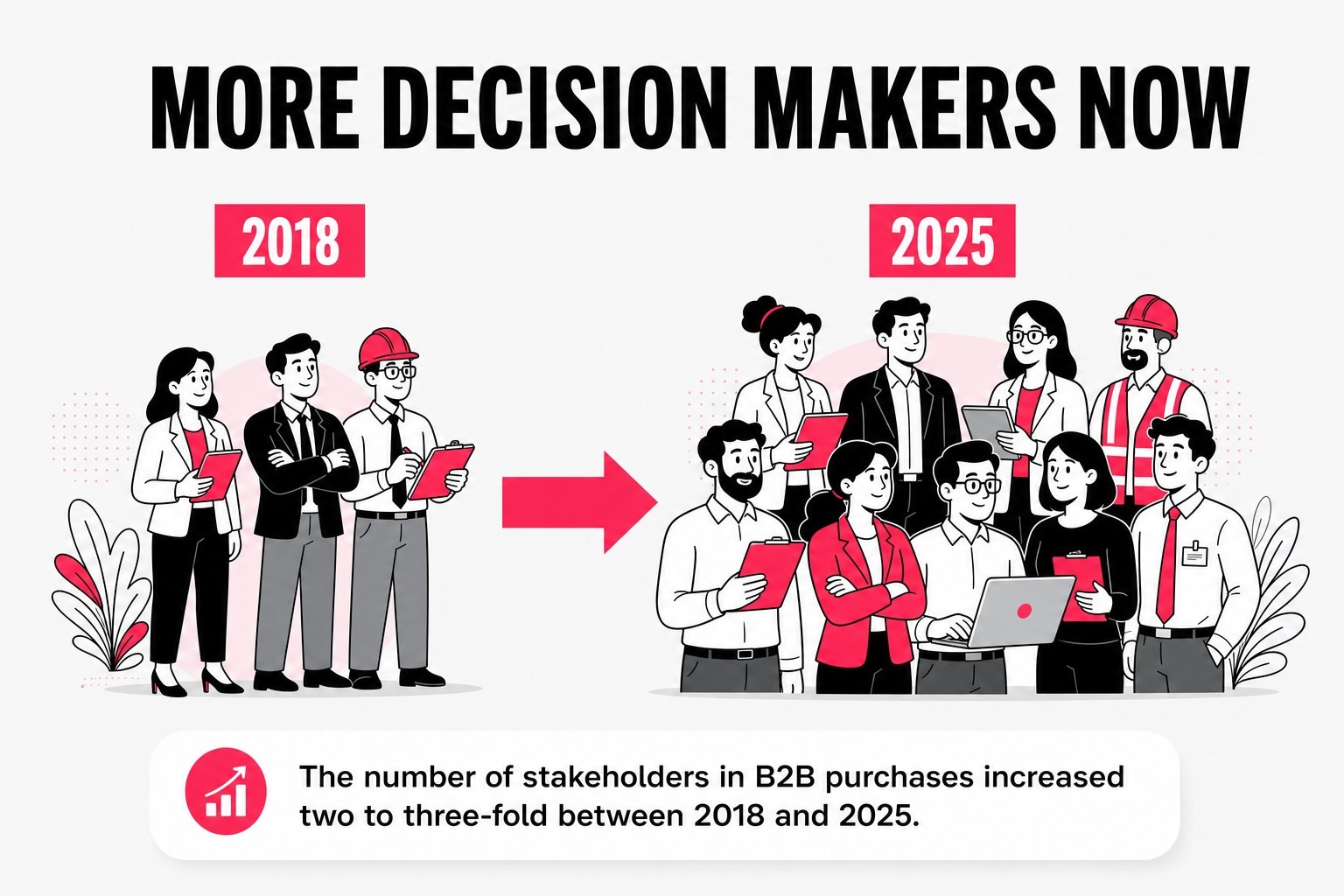
Each stakeholder does their own research. Each one looks for different information. And they're all online.
Here's what that means for your lead generation:
The construction equipment market reached $148.02 billion in 2024. Competition for those dollars is fierce.
You can't afford to spend $20,842 acquiring customers who were never going to buy. You need strategies that filter out unqualified prospects before they eat up your sales team's time.
Digital marketing for heavy equipment companies works when it mirrors the actual buyer journey. That journey starts with search, moves through research and comparison, involves multiple stakeholders, and ends with a decision that took months to make.
The five strategies we're covering match that journey. Each one targets a different stage and serves a specific purpose in moving qualified leads toward purchase.
Search engine optimization puts your heavy equipment company in front of buyers at the exact moment they're searching for what you sell.
Someone types "excavator rental Chicago" into Google. If you're not ranking on page one, you don't exist to that buyer. If you are ranking, you just captured a high-intent lead who's actively looking to rent equipment in your market.
That's the power of SEO for heavy equipment leads.
Generic keywords like "construction equipment" are too broad and too competitive. You need to target specific equipment types, models, and use cases that match what you actually sell.
Focus on keywords like:
Create dedicated landing pages for each major equipment category you offer. Each page should include detailed specifications, pricing information, availability, and clear calls to action.
Search engines reward comprehensive content that directly answers what users are searching for.
Most heavy equipment purchases happen locally or regionally. Buyers want to see equipment in person, work with nearby dealers, and avoid long-distance shipping costs.
Your local SEO strategy needs to include:
When someone searches for "heavy equipment near me," Google looks at proximity, relevance, and prominence. Your local optimization determines whether you show up in those map results.
Heavy equipment buyers need technical information before they contact you. They want to know specs, compare models, understand applications, and verify that your equipment meets their project requirements.
Build content around:
This content serves two purposes. It answers buyer questions and establishes your site as an authoritative resource. Both improve your search rankings and generate qualified leads.
SEO can achieve cost per lead as low as roughly $30 in general B2B contexts. That's dramatically lower than your current customer acquisition cost.
For more detailed strategies on optimizing your equipment company's search presence, check out our guide on heavy equipment marketing.
Pay-per-click advertising gets you in front of heavy equipment leads faster than SEO. But it costs more per click, so you need targeting that filters out people who aren't ready to buy.
The difference between profitable PPC and wasted budget comes down to how well you target purchase intent.
Not all searches indicate buying intent. Someone searching "what is an excavator" is researching basic information. Someone searching "buy Cat 320 excavator Illinois" is ready to make a purchase.
Target keywords that include:
Exclude informational queries and job-seeking terms that attract the wrong traffic. Your negative keyword list should be extensive.
Send PPC traffic to dedicated landing pages, not your homepage. Each ad group should match a specific landing page that addresses exactly what the user searched for.
If someone clicks your ad for "dozer rental pricing," they should land on a page about dozer rentals with clear pricing information. Not a generic equipment page where they have to hunt for what they need.
Landing pages need:
Our PPC for heavy equipment guide covers the complete setup process for construction equipment campaigns.
Heavy equipment buyers typically work within specific geographic regions. National campaigns waste money on clicks from people outside your service area.
Set up location targeting that focuses on:
Use location bid adjustments to increase bids in your strongest markets and decrease them in marginal areas.
Most heavy equipment leads don't convert on their first website visit. The purchase cycle is long, multiple stakeholders need input, and buyers compare several suppliers before deciding.
Remarketing keeps your company in front of prospects who already showed interest. Create audience lists based on:
Show remarketing ads that address common objections, highlight financing options, or showcase customer testimonials. Make it easy for prospects to return and take the next step.
For strategies specific to reaching high-value construction buyers, read our post on paid search for construction equipment.
Heavy equipment buyers spend months researching before they contact suppliers. Content marketing positions your company as the authoritative source they turn to during that research phase.
When your content answers their questions, you build trust before the sales conversation even starts.
Buyers need to compare different equipment types, models, and configurations. They're trying to figure out which excavator size works for their projects or whether to buy versus lease.
Build comparison content that includes:
Don't just promote your inventory. Give honest comparisons that help buyers make informed decisions. That honesty builds credibility.
Contractors and fleet managers search for operational information, maintenance guidance, and best practices. Create content that serves those needs.
Technical guides might cover:
This content attracts organic traffic from people actively using heavy equipment. They may not be ready to buy today, but when they need new equipment or parts, they remember the company that helped them solve problems.
Buyers want proof that your equipment performs in real-world conditions. Case studies show exactly that.
Strong case studies include:
Focus on projects similar to what your target buyers handle. If you sell to municipal contractors, showcase municipal projects. If you serve mining companies, feature mining applications.
Content marketing generates leads when you make it easy for engaged readers to take the next step.
Add clear calls to action on every piece of content:
Gate your most valuable content behind lead forms. Buyers will exchange contact information for comprehensive buying guides, ROI calculators, or detailed comparison reports.
For additional tactics on converting website visitors into qualified leads, check out our guide on CRO tactics for equipment dealers.
Heavy equipment dealers and rental companies serve specific geographic markets. Local SEO ensures you show up when buyers in your area search for equipment.
Google's local search results appear above organic listings. That prime real estate captures the most valuable heavy equipment leads in your market.
Your Google Business Profile is often the first thing prospects see when they search for equipment in your area. An incomplete or outdated profile costs you leads.
Optimize every section:
Add attributes that matter to equipment buyers: "Delivery available," "Financing options," "Certified technicians," "24/7 emergency service."
Reviews influence local search rankings and buyer decisions. Heavy equipment companies obtain approximately 4.98% of new clients through referrals. Online reviews function as digital referrals.
Build your review volume by:
Respond to every review, positive and negative. Thank customers for positive feedback. Address concerns raised in negative reviews professionally and offer to resolve issues offline.
Local citations are mentions of your business name, address, and phone number on other websites. They validate your location and improve local search rankings.
Submit your business information to:
Ensure your NAP information is identical across all citations. Inconsistencies confuse Google and hurt your rankings.
If you serve multiple markets, create dedicated pages for each location. These pages should include:
Location pages help you rank for searches like "excavator rental Denver" and "construction equipment supplier Phoenix."
Most heavy equipment leads aren't ready to buy when they first contact you. The average sales cycle runs months. Email marketing keeps you top of mind throughout that cycle.
Email is a channel that drives more purchases than any other marketing channel. For heavy equipment companies, email nurturing ranks among the top three critical channels.
Not all heavy equipment leads have the same needs. Contractors looking to rent a backhoe for a two-week project need different information than fleet managers planning equipment purchases for next year.
Segment your lists by:
Send targeted content that matches each segment's specific interests and needs.
Create automated email sequences that educate prospects about equipment selection, applications, and buying considerations.
An effective welcome series might include:
Space these emails out over several weeks. Don't overwhelm prospects with daily messages.
Regular email newsletters keep your company visible without being pushy. Share content that helps subscribers:
The goal is to be helpful, not just promotional. Buyers will engage with emails that deliver genuine value.
Automated emails triggered by specific actions or behaviors convert better than generic broadcasts.
Set up triggers for:
Behavioral emails reach prospects at moments when they're actively engaged with your offerings.
Monitor email metrics to identify what resonates with your heavy equipment leads:
Test different subject lines, send times, and content formats. Use data to refine your approach and improve results.
These five strategies work best when they work together. Each channel supports the others and creates multiple touchpoints with heavy equipment leads.
Your integrated approach should look like this:
SEO and content marketing attract prospects during early research. PPC advertising captures high-intent searchers ready to request quotes. Local SEO ensures nearby buyers find you. Email marketing nurtures leads through the long sales cycle.
Different stages of the buyer journey require different content types and channels.
Align your marketing activities with where prospects are in their journey.
Track which channels generate the most qualified heavy equipment leads and the lowest cost per acquisition.
Monitor these metrics for each channel:
Shift budget toward channels that deliver the best return. Don't spread resources equally across strategies that perform differently.
Not all leads have equal value. Lead scoring helps your sales team prioritize follow-up based on purchase likelihood.
Assign points for:
High-scoring leads get immediate sales attention. Lower-scoring leads stay in nurturing campaigns until they show stronger buying signals.
Marketing and sales need to work together on heavy equipment lead generation. Regular communication ensures marketing delivers the leads sales can actually close.
Establish feedback loops:
When marketing and sales align on target accounts, results improve dramatically.
You can't improve what you don't measure. Track the right metrics to understand which lead generation strategies deliver results for your heavy equipment company.
Focus on metrics that connect marketing activities to business outcomes:
Set benchmarks based on your historical data. Track improvement over time rather than comparing to industry averages that may not reflect your specific market.
Your CRM system contains valuable insights about which marketing sources produce the best customers.
Analyze:
Telematics and machine data give contractors real-time visibility into usage, downtime, and performance. Similarly, your marketing data should give you visibility into what's working and what's wasting budget.
Digital marketing for heavy equipment companies improves through constant testing and refinement.
Run experiments on:
Make one change at a time so you can attribute results to specific modifications. Small improvements compound over time into significant performance gains.
You now have five proven strategies for generating qualified heavy equipment leads. The question is where to start.
Begin with the channel that matches your current strengths and fills your biggest gap.
If you need faster results and have budget available, start with PPC advertising targeted at high-intent searches. You'll generate leads immediately while building your longer-term organic presence.
If you're playing the long game and want sustainable lead flow, invest in SEO and content marketing first. Build the foundation that continues generating leads for years.
If you have an existing customer base but inconsistent lead generation, focus on email marketing and referral programs to maximize the value of relationships you already have.
Don't try to launch all five strategies simultaneously. Pick one, implement it properly, measure results, then add the next strategy. Focused execution beats scattered effort every time.
The heavy equipment market continues growing, but so does competition for those buyers. The companies that win aren't necessarily the ones with the biggest inventory. They're the ones that show up when buyers are searching, provide the information prospects need, and stay visible throughout the lengthy purchase cycle.
Start with one strategy this week. Your future customer acquisition cost will thank you.