
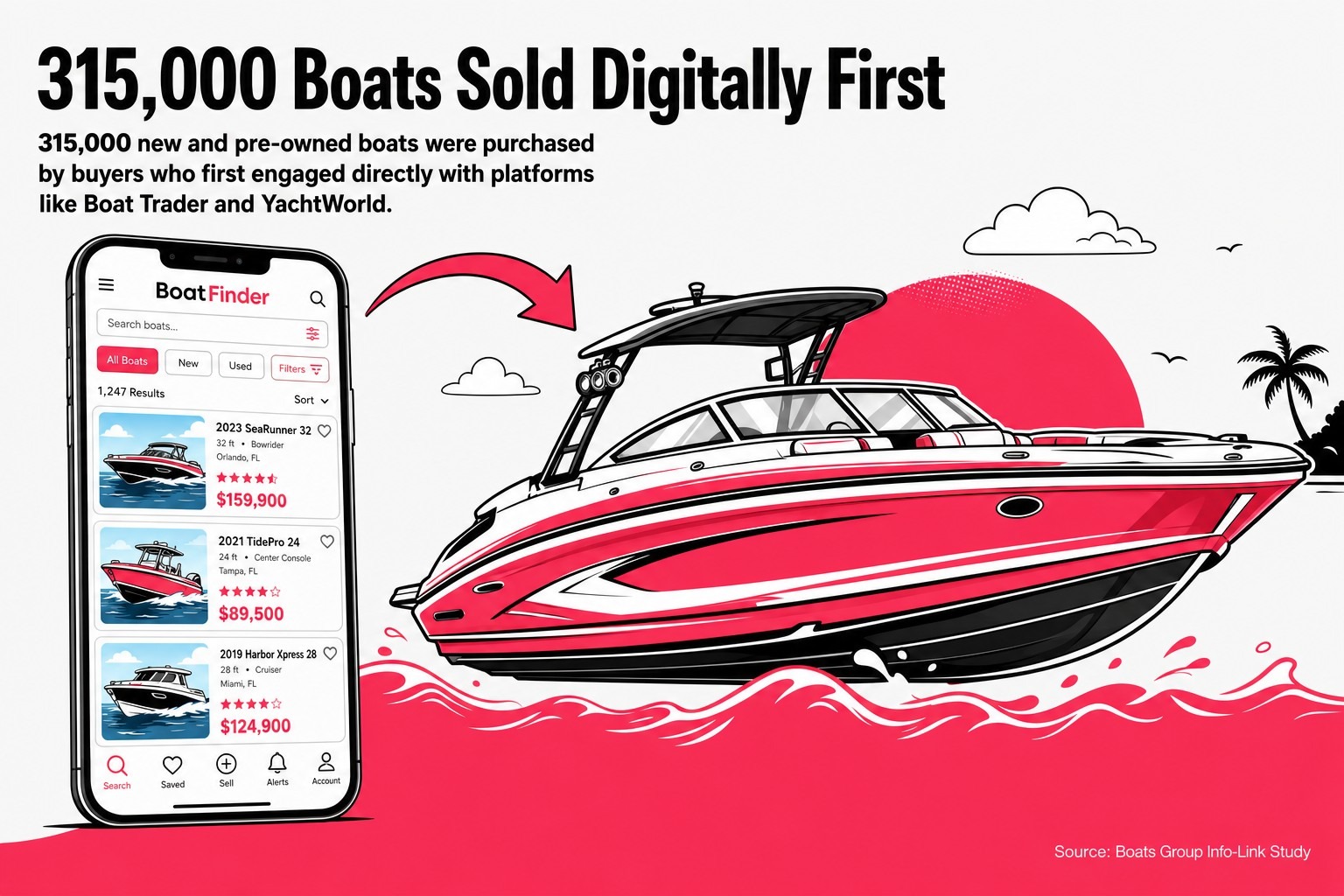
Marine industry digital marketing works best when it matches how buyers actually behave: researching online, comparing listings on platforms like Boat Trader and YachtWorld, and only then walking into a dealership. According to Boats Group's Info-Link study, 315,000 new and pre-owned boats were purchased by buyers who first engaged directly with those platforms. The digital purchase journey is not coming. It is already the default in the maritime industry.
And yet most marine businesses treat their websites like a digital brochure from 2009. I see it constantly. Great products, real expertise, and a contact form with eleven fields nobody ever finishes. The gap between what marine businesses offer and how they present it online is a genuine opportunity. This post is for anyone ready to close that gap.
Want to see our full marine marketing content catalog? Check out our marine marketing and ecommerce guide.
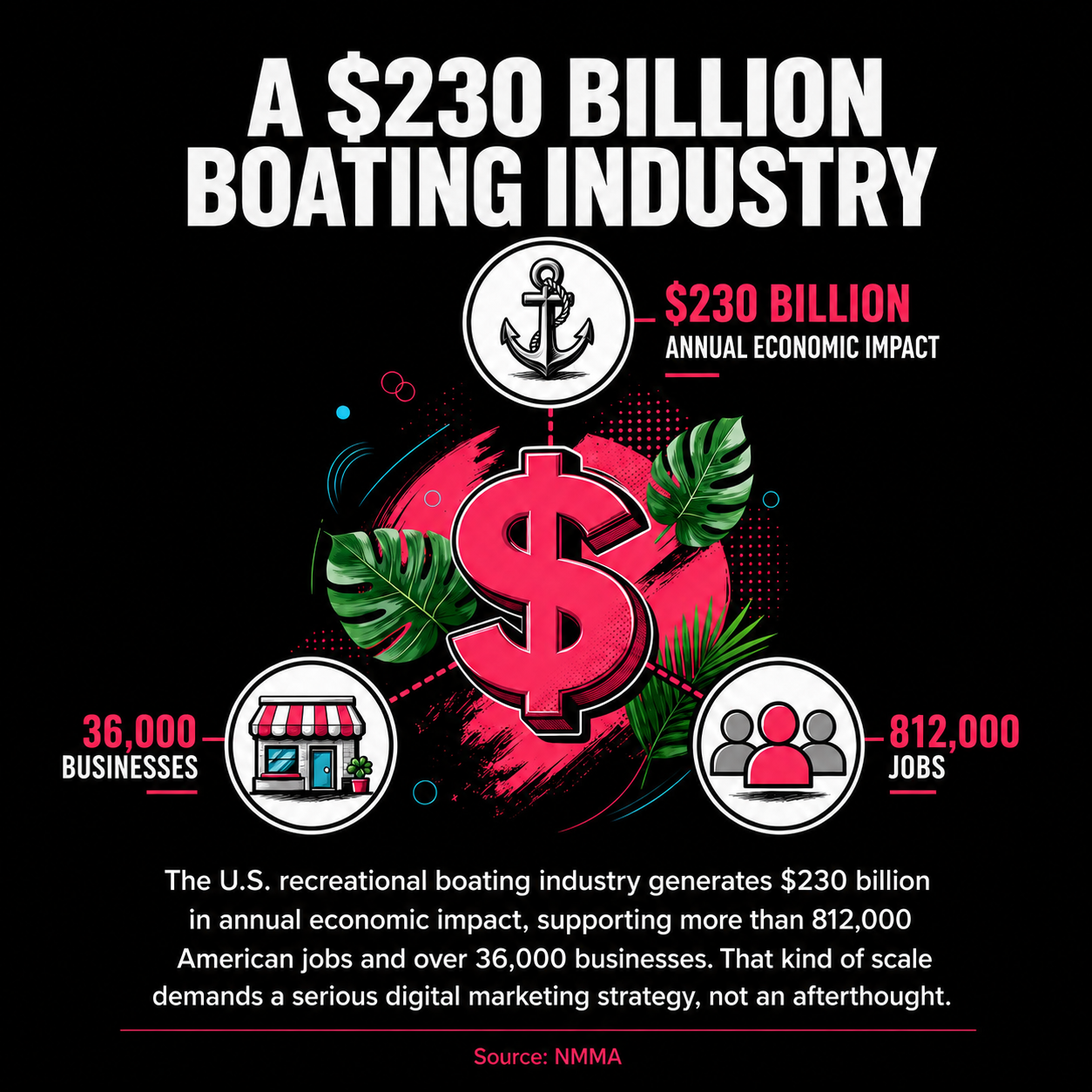
The U.S. recreational boating industry generates $230 billion in annual economic impact, supporting more than 812,000 American jobs and over 36,000 businesses. That kind of scale demands a serious digital marketing strategy, not an afterthought.
The buyer picture matters here. NMMA's demographic research found the traditional boat owner has a median age of 54, is more likely to be male and high-income, and sits six years older than the U.S. median. That is not a demographic glued to TikTok, but it is absolutely online, comparing prices, reading reviews, and watching product videos before committing.
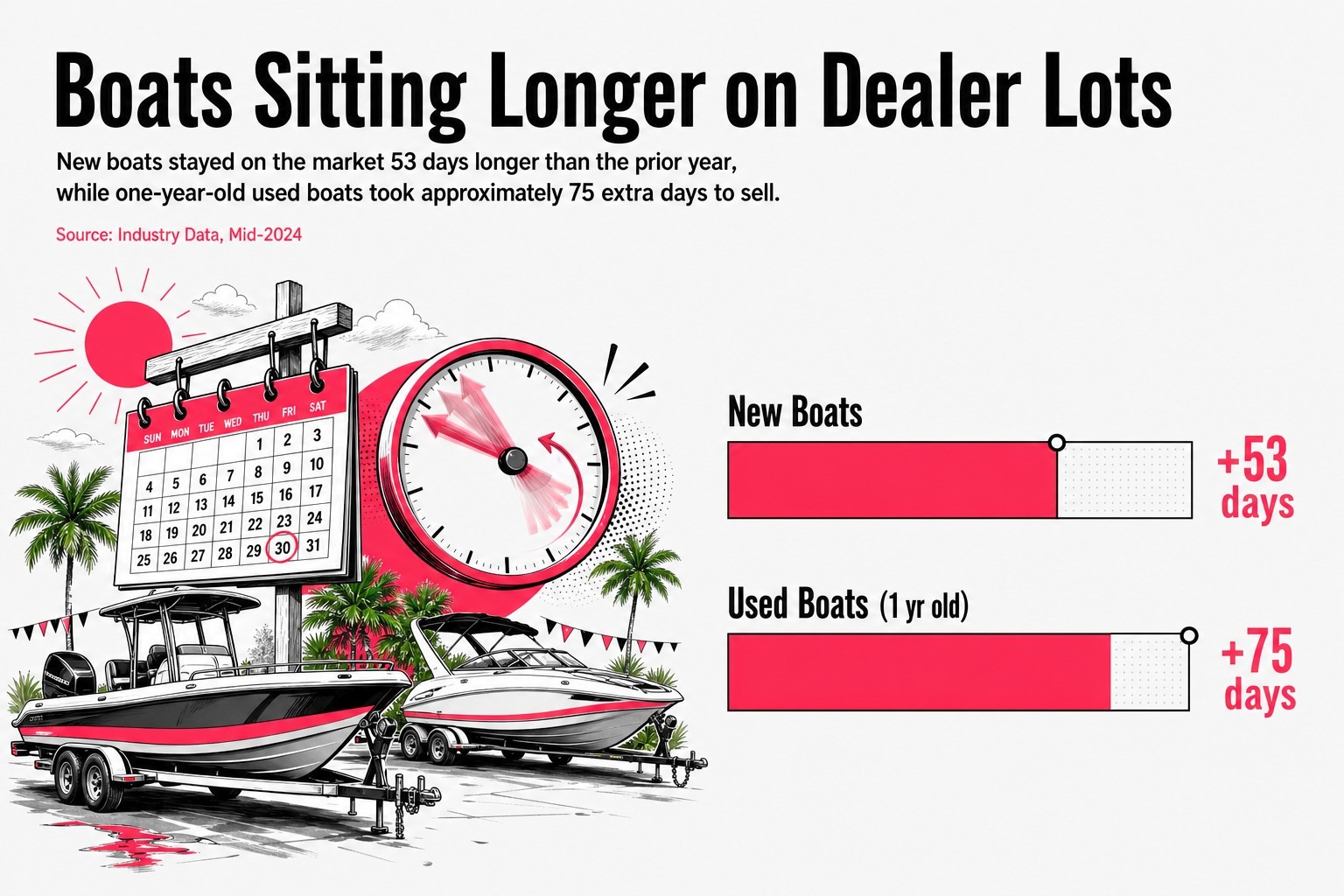
Inventory pressure adds urgency. Industry data from mid-2024 showed new boats staying on the market 53 days longer than the prior year, while one-year-old used boats took approximately 75 extra days to sell. Longer days-on-lot means one thing: dealers who generate demand online move units faster. Everyone else waits.
Marine businesses that treat digital marketing as optional are handing market share to the ones who do not.
A strong digital marketing strategy for the maritime industry runs across multiple channels, and each one serves a different part of the buyer's journey. No single channel wins alone.
The core channels that consistently deliver for marine businesses are:
The mix changes depending on whether you sell direct to consumers or work through a B2B dealer channel. An OEM targeting shipowners and offshore project managers needs different messaging than a marine dealership running summer promotions. Most marine businesses need both plays running at the same time, just with different emphasis.
For a deeper look at how these channels apply specifically to parts and accessories, our complete guide to marine and boating parts marketing and ecommerce covers the full picture.
Search engine optimization for marine businesses lives or dies on specificity: generic terms like "boats for sale" are competitive to the point of absurdity, while terms like "center console boats under $50,000 near Tampa" convert at a far higher rate.
Most marine websites suffer from the same SEO problems. Thin product descriptions. No location pages. Zero blog content. The fix is not complicated, but it does require commitment.
Start with your product and category pages. Each page needs a unique title tag, a meta description that sells the click, and body copy that actually describes what you sell. "2024 Yamaha 150HP Four-Stroke Outboard In Stock" beats "Product Page 47" in every way that matters to Google's search algorithms.
Location-based SEO matters enormously for marine dealerships. Build dedicated pages for each geographic market you serve, with real content about local waterways, launch ramps, and dealer services. That specificity is what gets you into local pack results.
Blog content targeting buyer-intent searches, maintenance how-tos, and model comparison guides builds organic traffic over time. It also positions your brand as a resource, not just a retailer. That credibility compounds. A marine business that consistently publishes useful content earns links, earns trust, and earns rankings that PPC cannot replicate.
Our guide on content marketing for the marine aftermarket goes further on building out that strategy channel by channel.
Social media engagement in the marine industry is low by cross-industry standards, which makes the opportunity clearer. The 'Social Media Insights – Boating Industry 2026' study by Interconnection Consulting found the average engagement rate across boating brands sits at just 0.8%, while Instagram specifically hits 1.3%.
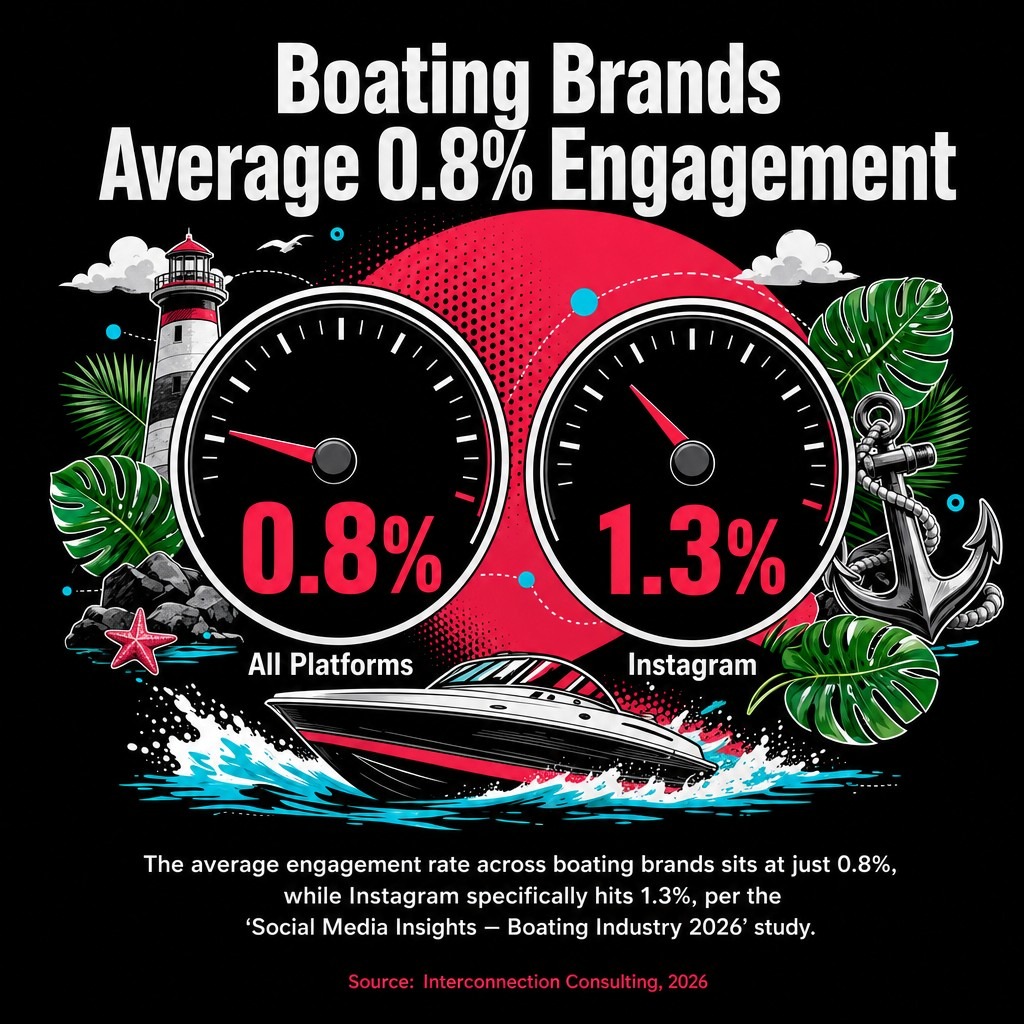
That 0.8% average is a low bar. It means most boating brands post content their audience mildly tolerates. The brands that outperform do so by posting content their audience actually wants: on-the-water footage, product walkthroughs, real customer trips, and seasonal maintenance reminders that feel genuinely useful rather than promotional.
Facebook remains the strongest platform for reaching the core 45-65 demographic, particularly for marine dealerships running targeted paid campaigns. The targeting options for boat owners, fishing enthusiasts, and high-income buyers are precise.
Instagram is where lifestyle content earns engagement. Sunset shots from the water, fishing catches, family day trips. These posts build community rather than convert directly, but they keep your brand top-of-mind when a buyer is ready to act.
LinkedIn is non-negotiable for B2B maritime marketing. Shipowners, offshore project managers, and procurement leads for commercial fleets spend time on LinkedIn. If you sell to those audiences, your content strategy there looks nothing like your Instagram feed. Technical credibility, case-specific content, and direct outreach to decision-makers.
Email marketing for marine dealerships and maritime companies is the most underused channel in the industry, and the most forgiving when you get the basics right.
The boating buyer has a long consideration cycle. Someone who enters your CRM after downloading a rigging guide might not be ready to buy for six months. Email marketing lets you stay present through that cycle without spending ad dollars every week to do it.
A marine dealership's email list should not be treated as one audience. Segment by boat type interest, ownership status (current owner vs. prospect), past purchase history, and service record. A current Yamaha outboard owner needs different content than someone who filled out a "new boats under $100k" inquiry form last spring.
Build automation sequences for the moments that matter: post-purchase onboarding, seasonal winterization reminders, annual service prompts, and model-year update announcements. These are not fancy. They just need to be relevant and timed well.
SMS works particularly well for marine businesses running boat show promotions, end-of-season clearance events, or limited inventory alerts. Open rates for SMS outperform email significantly, but the channel demands restraint. One or two messages a month on something genuinely worth reading. More than that and people opt out fast.
If you are pairing this with CRM and marketing automation tools, platforms like Salesforce or HubSpot handle the segmentation and sequence logic cleanly for dealer-scale operations.
Content marketing for the maritime sector earns two things simultaneously: SEO value from search engines and trust from buyers who are doing research before they ever talk to a salesperson.
The proof is in the campaign data. Discover Boating's summer 2024 marketing campaign drove 23% of total site traffic for the fiscal year, with 4.5 million visitors and 1.06 million introductions to brands, boats, and dealers. A well-funded content and media effort moves real numbers in this industry.
Video is where marine marketing has the clearest advantage over most other industries. Boats are visually compelling. On-water product demonstrations, sea trial footage, rigging tutorials, and customer testimonials all convert better on video than in text.
YouTube is the distribution priority for long-form video content. A 10-minute sea trial walkthrough of a new model can rank in search, earn watch time, and build genuine purchase intent. Pair that with shorter clips repurposed for Instagram Reels and Facebook to get the most from each shoot.
For digital marketing for marine accessories specifically, video product demonstrations drive meaningful conversion lifts at the bottom of the funnel. More on that approach in our digital marketing guide for marine accessories.
PPC advertising for marine businesses works best as a demand-capture tool: you are visible when buyers are actively searching, and you can turn spend up or down to match seasonality.
Google Ads campaigns targeting high-intent queries ("buy Boston Whaler dealer," "outboard motor service near me," "fiberglass boat repair quotes") deliver the most qualified leads at the moment they are ready to act. Budget allocation should weight toward spring and pre-summer, when boating purchase intent spikes.
Facebook and Instagram paid campaigns give marine businesses access to layered audience targeting that organic reach cannot match. Targeting by boat ownership interest, household income, geographic proximity to water, and past behavior on boating platforms gets your ads in front of people who are already in the market.
Retargeting is the paid channel most marine businesses skip. Anyone who visited your inventory pages, watched your video content, or engaged with your social posts is a warm lead. A retargeting campaign hitting those audiences with specific offers or inventory alerts costs a fraction of cold acquisition and converts at a meaningfully higher rate.
For broader context on how budget allocation works across paid channels in industrial and niche sectors, our industrial advertising budget guide covers the strategic framework cleanly.
A specialist marine digital marketing agency brings context that a general marketing agency simply does not have: the vocabulary of the industry, the buyer psychology, the seasonal rhythms, and the channel mix that actually works for maritime businesses.
The gap shows up fast. A generalist agency will write copy that says "great boats at great prices." A specialist writes copy that speaks to deadrise angles, fuel efficiency at cruise RPM, and why a particular hull handles a chop that matters to your specific buyer. One of those converts. One does not.
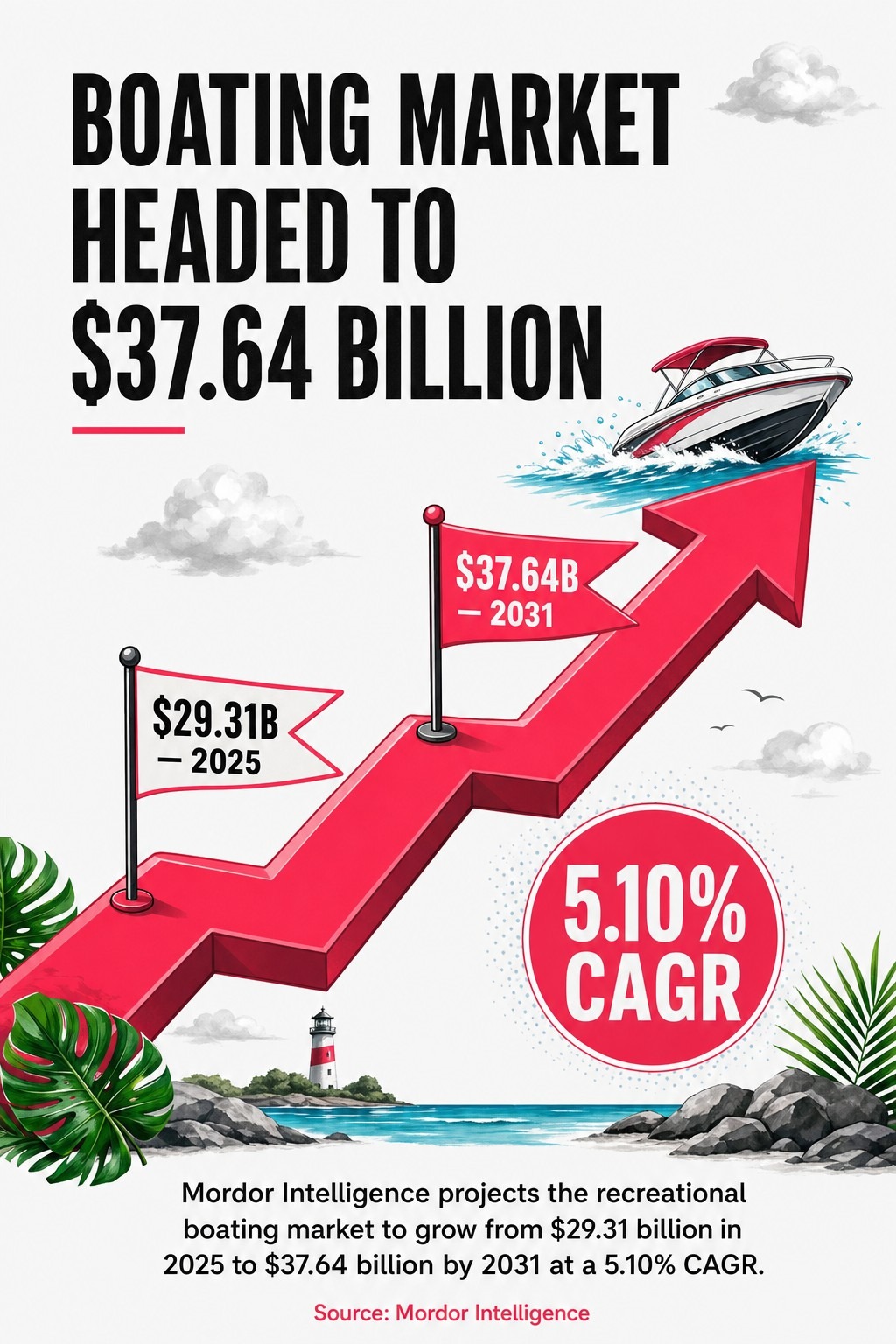
The maritime industry's scale demands that specificity. An estimated 85 million Americans go boating each year, and Mordor Intelligence projects the recreational boating market to grow from $29.31 billion in 2025 to $37.64 billion by 2031 at a 5.10% CAGR. That is a market worth targeting precisely, not broadly.
The right marine marketing agency acts as a partner in the full commercial sense: they understand long sales cycles, can connect CRM data to campaign performance, and know when to push brand awareness versus lead generation depending on the season and inventory position. That alignment between marketing activity and business outcomes is what separates a vendor from a genuine growth partner.
If you are building out the strategy layer before you hire agency support, our data-driven digital marketing guide for manufacturers covers the foundational framework that translates directly to the marine dealer channel.
The marine industry is not short of buyers. Over 36,000 marine businesses are competing for them. The ones with a serious digital marketing strategy in place are not waiting for the market to recover. They are out there building the audience now, and they will be the ones converting when buyers are ready to pull the trigger. That is the only timing that matters.