
Marine accessory retailers operate in a market valued at $30-31 billion globally, with digital channels driving most purchase research. 65% of boat owners start their parts search on Google rather than at dealerships, making search visibility critical for capturing high-intent buyers. Mobile devices account for roughly 65% of website traffic in 2026, requiring retailers to prioritize mobile-first experiences and fast-loading product pages. Shopping campaigns that include part numbers, voltage ratings, and compatibility data in feed titles consistently outperform generic listings by matching buyer search behavior. Email segmentation by boat type, activity, or purchase history enables targeted product recommendations that drive repeat purchases and increase customer lifetime value.
I've spent years optimizing eCommerce campaigns, and marine accessories present a unique opportunity. The market is resilient, the customers are passionate, and the digital channels are underutilized by many traditional retailers. If you're selling marine parts and accessories online, you're competing for buyers who know exactly what they need but struggle to find it quickly. Win that search moment, and you win the sale.
The marine accessories market sits inside a larger recreational boating ecosystem. The global recreational boating market is valued at around $30–31 billion in the mid-2020s and projected to grow at roughly a 5% compound annual rate through the end of the decade. That growth creates steady demand for replacement parts, upgrades, and seasonal accessories.
New boat sales fluctuate with economic conditions. U.S. new boat retail unit sales declined by approximately 9% in 2025 compared with 2024. But boat ownership remains strong, and owners maintain their vessels year after year. That means consistent aftermarket demand even when new boat sales soften.
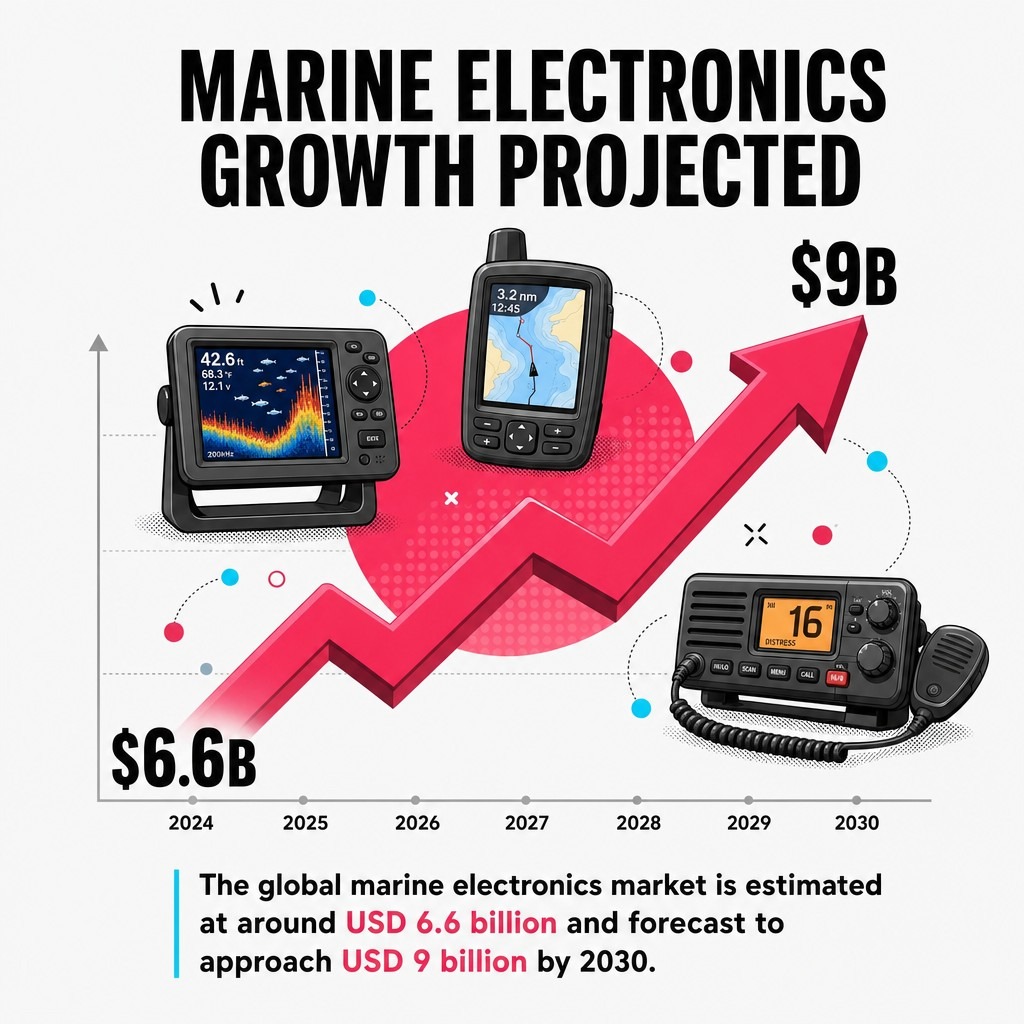
Electronics represent a high-growth segment. The global market for marine electronics is estimated at around $6.6 billion in the mid-2020s and is forecast to approach $9 billion by 2030. Navigation systems, fish finders, communication devices, and safety equipment drive this expansion as boaters upgrade older technology.
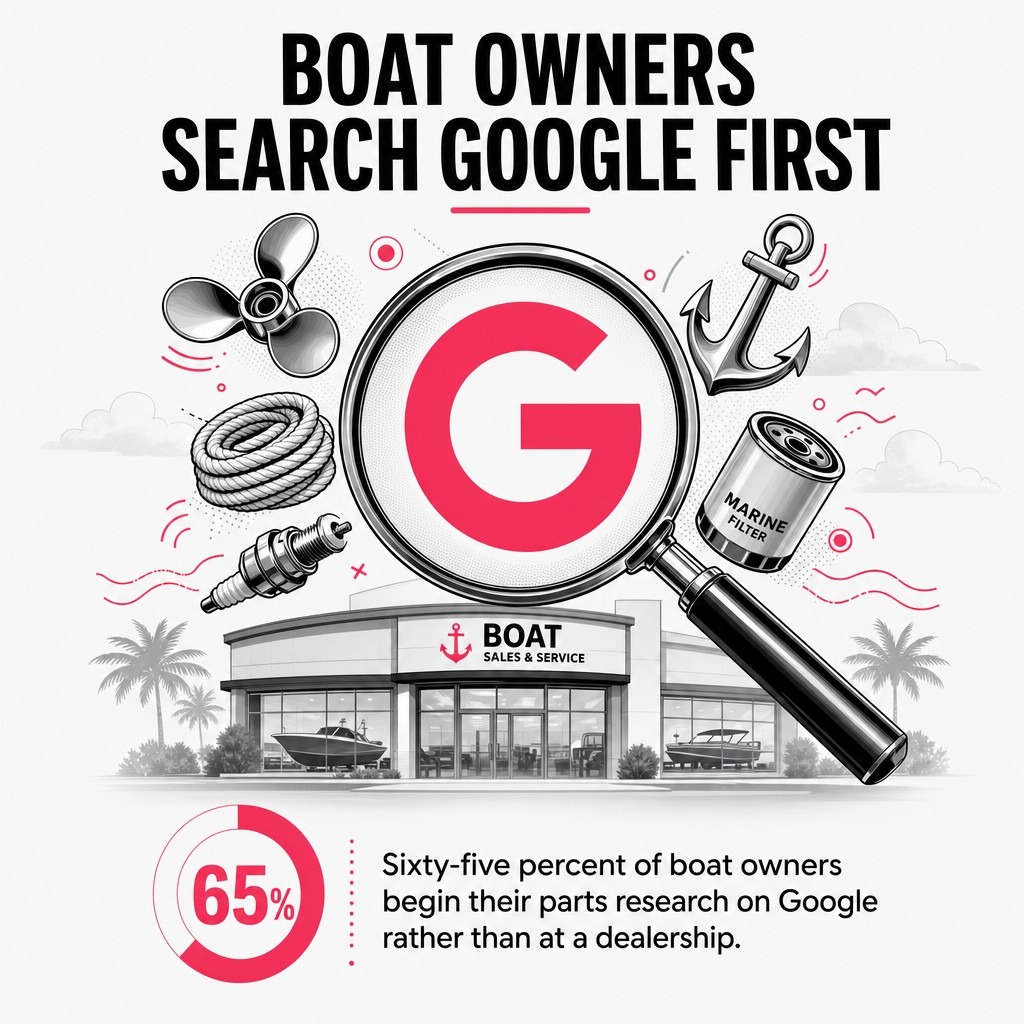
Most boat owners no longer walk into a dealership as their first step. 65% of boat owners begin their parts research on Google rather than at a dealership. They search for part numbers, compatibility specs, or problem-solution queries like "replace bilge pump for 24-foot cruiser."
This behavior creates a clear advantage for retailers who optimize product data and capture search demand early. Buyers arrive with intent, not just curiosity. They need a specific part, and they're ready to purchase once they confirm compatibility and price.
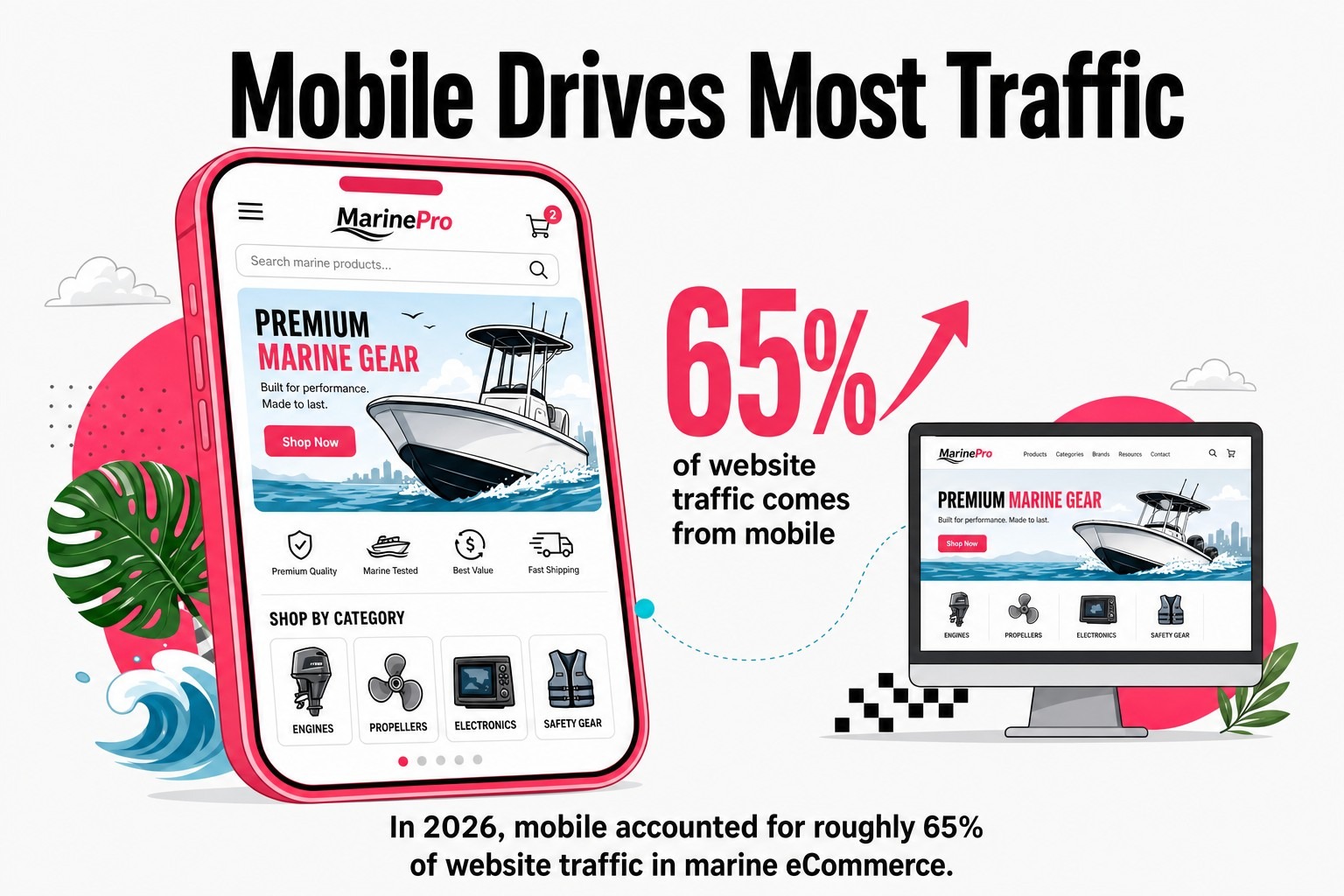
Boaters browse from docks, marinas, and garages. In 2026, mobile accounted for roughly 65% of website traffic. Your product pages, checkout flow, and site speed must work flawlessly on mobile devices or you lose the majority of potential buyers before they reach the purchase button.
Mobile shoppers expect fast load times and simple navigation. If your site takes more than three seconds to load or requires multiple taps to find product specs, they'll bounce to a competitor. Mobile-first design isn't optional in marine eCommerce anymore.
Now that you understand where buyers start their search, the next step is making sure your products appear when they type those queries into Google. SEO for marine accessories focuses on structured product data, technical compatibility keywords, and local search signals that connect you with nearby boaters.
Marine parts require precise compatibility information. Buyers search for "bilge pump 12V 750 GPH" or "anchor windlass rope chain combo 1/4 inch." Generic product titles like "Bilge Pump" won't capture those high-intent searches.
Shopping campaigns with feed titles that include part numbers, voltage ratings, and compatibility data capture high-intent demand more effectively. Structure your product feeds to match how buyers search: brand, part number, specs, and compatibility details in the title.
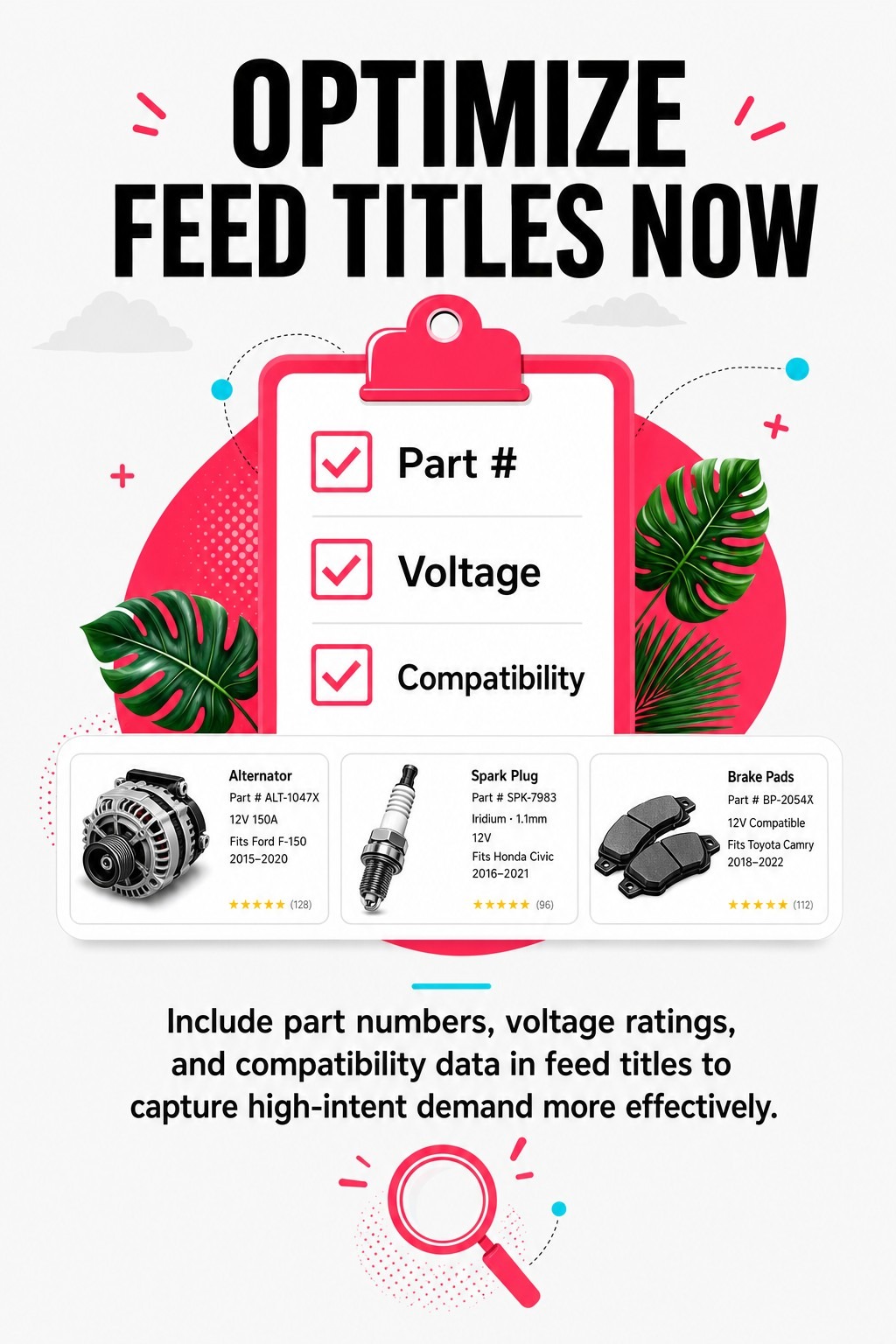
Include manufacturer part numbers in your page titles, meta descriptions, and H1 headings. Add voltage, size, thread type, and material specs to your product descriptions. Use schema markup to tell search engines exactly what each product is and what it fits.
Boat owners search for installation guides, troubleshooting advice, and product comparisons. Create content that answers these queries and positions your products as the solution.
Write installation guides for common upgrades: "How to Install a VHF Radio on a Center Console Boat" or "Replacing Your Boat's Raw Water Impeller: Step-by-Step Guide." Link to the exact products needed within the guide.
Publish comparison articles: "LED vs Incandescent Navigation Lights: Which Should You Choose?" or "Lithium vs AGM Marine Batteries: Performance and Cost Analysis." These articles capture buyers in the research phase before they've chosen a specific product.
For more guidance on marketing marine safety equipment online, focus on regulatory compliance language and certification details that buyers need to verify before purchasing.
Many boaters prefer to pick up parts locally to avoid shipping delays. Optimize your Google Business Profile with accurate hours, location, and inventory details. Use location-specific keywords in your content: "marine parts Miami" or "boat accessories Charleston."
Encourage reviews from local customers. Positive reviews improve local search rankings and build trust with buyers who want to verify your reputation before purchasing expensive equipment.
With your product data structured for search visibility, paid advertising accelerates your reach to high-intent buyers. Google Shopping campaigns deliver immediate traffic when optimized correctly, and paid search ads capture buyers searching for specific parts or brands.
Organize Shopping campaigns by product category: electronics, safety equipment, anchoring systems, electrical components, plumbing parts. This structure allows you to allocate budget based on profit margins and competition levels.
High-margin categories like electronics and navigation systems can support higher cost-per-click bids. Commodity items like hoses and fittings require tighter bid management to maintain profitability.
Use custom labels in your product feed to flag high-value items, seasonal products, or clearance inventory. Adjust bids based on these labels to prioritize products that drive the most profit.
Your product feed determines what information appears in Shopping ads. Include brand, part number, voltage, size, and compatibility details in the title field. Add high-quality product images with white backgrounds and multiple angles.
Write detailed product descriptions that include installation requirements, material specs, and compatibility notes. Google uses this data to match your products to relevant searches.
Update your feed daily to reflect accurate inventory levels and pricing. Out-of-stock items waste ad spend and frustrate buyers who click expecting to purchase.
Bid on your own brand terms to protect against competitors appearing above your organic listings. Create branded campaigns with high-quality landing pages that showcase your full product range and customer reviews.
Target competitor brand searches when you offer equivalent or superior products. If a buyer searches for "Minn Kota trolling motor," show them your selection of comparable models with competitive pricing.
For tactical advice on eCommerce paid search strategy, focus on negative keyword management and bid adjustments based on device and location performance.
Once buyers click your ads or organic listings, your website must convert that traffic into sales. Marine accessory sites require fast load times, clear product categorization, and compatibility filters that help buyers find the right part quickly.
Design your site for mobile users first, then adapt for desktop. Use large tap targets for navigation, simple menu structures, and vertical scrolling that works naturally on phone screens.
Optimize images for mobile bandwidth. Compress product photos to load in under two seconds without sacrificing quality. Use lazy loading to prioritize above-the-fold content.
Test your checkout flow on actual mobile devices. Eliminate unnecessary form fields and enable autofill for address and payment information. Every extra tap increases cart abandonment.
Marine buyers need to filter by boat make, model, year, and part category. Implement faceted search that allows multiple filter selections: "Garmin fish finders for 2020 Boston Whaler under $500."
Add a compatibility checker that asks buyers for their boat details and shows only compatible products. This tool reduces returns and builds confidence in the purchase decision.
Include site search with autocomplete and typo tolerance. Marine part names vary by manufacturer, and buyers might search for "bildge pump" or "impellor" instead of the correct spelling.
Display customer reviews prominently on product pages. Marine buyers research thoroughly before purchasing, and reviews from other boat owners carry significant weight.
Show real-time inventory levels: "Only 3 left in stock" or "Ships within 24 hours." This information helps buyers decide whether to purchase now or look elsewhere.
Offer multiple shipping options with clear delivery dates. Many marine parts are time-sensitive, and buyers will pay for expedited shipping if you make the option visible.
With your site converting traffic efficiently, social media extends your reach to boaters browsing outside search engines. Marine audiences are active on Facebook, Instagram, and YouTube, sharing photos, asking questions, and researching products.
Facebook groups dominate marine community discussions. Join groups focused on boat ownership, fishing, sailing, and specific boat brands. Participate authentically by answering questions and sharing expertise without spamming product links.
Instagram works well for visual products: upgraded helm stations, lighting systems, and cosmetic accessories. Post installation photos, customer boats, and behind-the-scenes content from your warehouse or marina.
YouTube supports long-form educational content. Create installation tutorials, product reviews, and maintenance guides that position your brand as a trusted resource.
Share customer boat photos and tag the products they installed. User-generated content builds social proof and creates aspirational imagery that attracts new buyers.
Post seasonal content tied to boating activity: spring commissioning tips, summer fishing gear, winterization checklists. Align your content calendar with the boating season in your primary markets.
Run contests that encourage participation: "Show us your best boat upgrade" or "Tag us in your fishing photos." Offer product discounts or gift cards as prizes to drive engagement.
Use Facebook and Instagram ads to promote new products, seasonal sales, and clearance inventory. Target boat owners based on interests, behaviors, and page likes related to boating.
Create carousel ads that showcase multiple products in a single ad unit. Highlight different specs or use cases for each product to capture varied buyer interests.
Retarget website visitors who viewed products but didn't purchase. Show them the exact products they browsed, along with customer reviews and limited-time discounts to encourage conversion.
After converting first-time buyers through search, ads, and social media, email marketing drives repeat purchases and increases customer lifetime value. Marine customers need ongoing maintenance parts, seasonal accessories, and upgrade products throughout their boat ownership journey.
Email segmentation by boat type, activity, or purchase history facilitates targeted recommendations. A pontoon boat owner needs different products than a center console fishing boat owner.
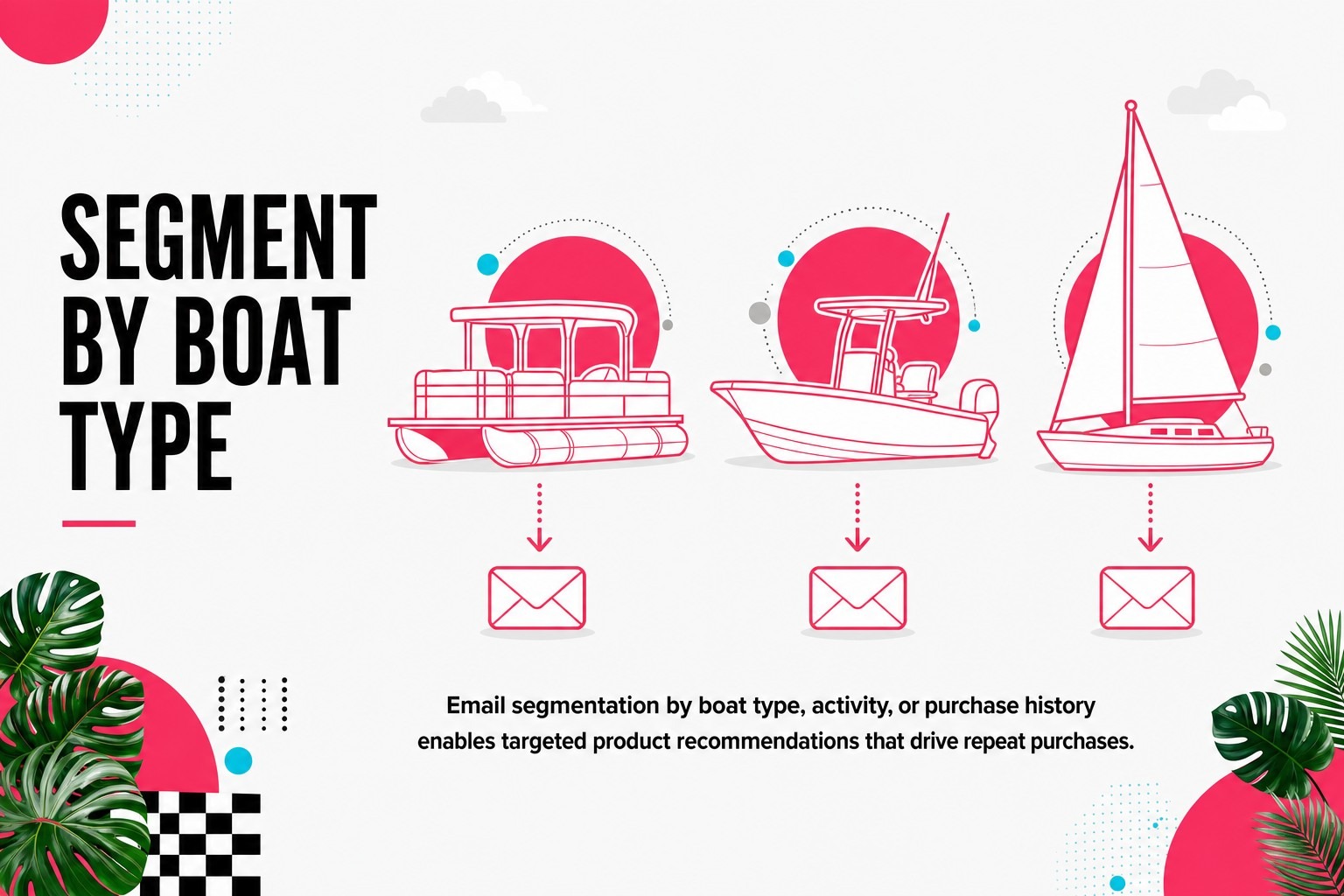
Segment your list by boat size, propulsion type, primary activity, and geographic location. Send fishing gear recommendations to buyers who purchased rod holders, not to sailors who bought rigging supplies.
Track purchase history to identify cross-sell opportunities. If someone bought a VHF radio, recommend compatible antennas, mounts, and extension cables in follow-up emails.
Send pre-season emails with commissioning checklists and product recommendations: "Get Your Boat Ready for Summer: Essential Parts and Upgrades."
Time winterization emails to match your customers' geographic locations. Buyers in northern climates need winterization supplies in October, while southern buyers keep boating through winter.
Create automated maintenance reminder sequences based on product purchase dates. If someone bought an engine impeller, email them six months later with a replacement reminder and easy reorder link.
Marine parts have high cart abandonment rates because buyers often research multiple sites before purchasing. Send abandoned cart emails within one hour of abandonment, while the buyer is still actively shopping.
Include product images, specs, and a direct link to complete the purchase. Offer free shipping on orders over a certain threshold to overcome price resistance.
Send a second email 24 hours later with customer reviews or a limited-time discount code. Test different incentives to determine what drives the highest recovery rate.
For more on driving repeat business, explore advanced remarketing strategies for eCommerce brands.
With marketing channels active across search, social, and email, tracking performance determines where to allocate budget and effort. Marine retailers need to measure not just revenue, but also margin, customer acquisition cost, and lifetime value by product category.
Track revenue per channel, but also monitor contribution margin by product category. High-revenue electronics might have lower margins than smaller accessories, affecting overall profitability.
Measure customer acquisition cost separately for new customers versus repeat buyers. Paid search might bring expensive first-time buyers, while email marketing generates low-cost repeat purchases.
Calculate customer lifetime value by segmenting customers by boat type and purchase frequency. Identify your most valuable segments and allocate marketing budget to attract similar buyers.
Marine buyers rarely convert on first visit. They research, compare prices, read reviews, and return multiple times before purchasing. Use multi-touch attribution to credit all touchpoints in the buyer journey.
Implement Google Analytics 4 with enhanced eCommerce tracking. Tag all marketing campaigns with UTM parameters to track performance by source, medium, and campaign.
Review assisted conversion reports to identify channels that start the buyer journey versus channels that close sales. Organic search might generate awareness, while paid search captures final purchase intent.
Test one variable at a time to isolate performance impact. Change product page layouts, shipping threshold messaging, or email subject lines individually.
Run A/B tests on high-traffic pages and email campaigns. Test product image angles, add-to-cart button placement, and urgency messaging to improve conversion rates.
Review test results monthly and implement winning variations sitewide. Small conversion rate improvements compound across thousands of sessions to drive significant revenue growth.
To deepen your understanding of customer behavior across digital channels, read our guide on understanding customer behavior online in 2025.
After building your digital marketing foundation, the final step is differentiating your business from competitors. Marine accessories is a crowded market with national retailers, manufacturer-direct sites, and local shops all competing for the same buyers.
Monitor competitor pricing on high-volume products, but don't automatically match every price drop. Instead, compete on total value: fast shipping, expert support, compatibility guarantees, and easy returns.
Offer price matching with clear terms to capture buyers who find lower prices elsewhere. This policy reduces price sensitivity while maintaining margin on most transactions.
Bundle complementary products to create value without discounting individual items. Pair a fish finder with a mounting bracket and power cable at a package price that beats buying separately.
For guidance on staying competitive without sacrificing margin, explore Google Shopping price comparison strategies.
Marine electronics and electrical systems intimidate many boat owners. Offer installation support, compatibility verification, and technical phone support to reduce purchase anxiety.
Create detailed installation guides for complex products. Include wiring diagrams, mounting instructions, and troubleshooting tips that help DIY boaters complete projects successfully.
Provide live chat support during business hours. Technical questions require real-time answers, and chat converts hesitant browsers into confident buyers.
Host local events at marinas: product demos, installation clinics, or seasonal meetups. These events build relationships with local boaters and generate word-of-mouth referrals.
Sponsor fishing tournaments, sailing races, or boating clubs. Event sponsorships increase brand visibility and associate your business with the boating lifestyle.
Create a customer loyalty program that rewards repeat purchases and referrals. Offer points redeemable for discounts or exclusive access to new products.
You've now got the complete framework for building awareness and driving sales in marine accessories. The market is growing, buyers are searching online, and digital channels deliver measurable results when executed correctly.
Start by auditing your product data structure. Fix your feed titles to include part numbers and specs. That single change improves Shopping campaign performance immediately.
Next, prioritize mobile optimization. Test your site on multiple devices and fix any friction in the mobile checkout flow. With 65% of traffic coming from mobile, this directly impacts revenue.
Build out your email segmentation strategy. Group customers by boat type and purchase history, then send targeted recommendations that match their specific needs.
The marine retailers winning in 2026 aren't the biggest, they're the ones who understand buyer behavior and optimize every touchpoint. You can compete with national chains by delivering faster answers, better compatibility data, and more relevant product recommendations.
Pick your first optimization project and implement it this week. Measure the results, learn from the data, and move to the next improvement. That consistent optimization beats one-time campaigns every time.