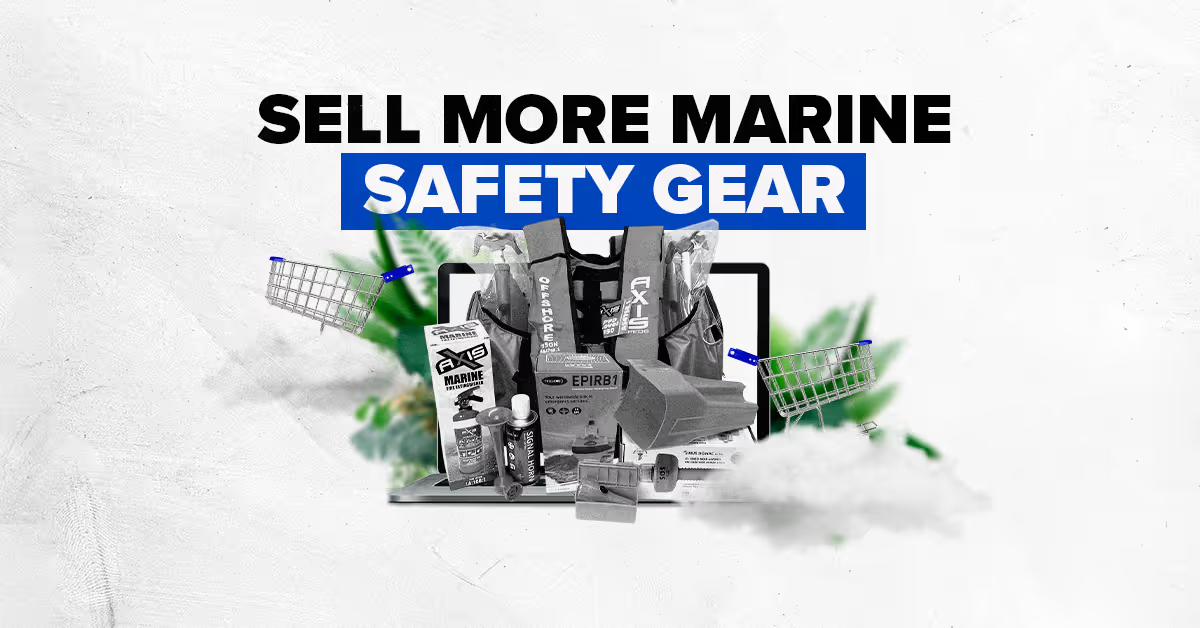
Marine safety equipment marketing presents a unique challenge. These products are not impulse purchases. They are essential marine safety equipment designed to protect lives during maritime activities, yet potential buyers are often scattered across marinas, boat shows, regulatory websites, and online research platforms.
The marine industry is experiencing strong market growth as safety awareness and regulatory compliance continue to shape purchasing behavior. The marine power market alone is expected to grow from USD $1.7 billion in 2024 to USD $6.7 billion by 2034, representing a 14.7% CAGR. As a result, demand for reliable safety equipment and certified marine safety products is increasingly moving online.

This guide outlines proven digital strategies for marketing marine safety equipment and marine safety products online. It focuses on reaching buyers during active research, presenting safety systems clearly, and building trust in a market where regulatory standards and safety compliance matter more than price alone.
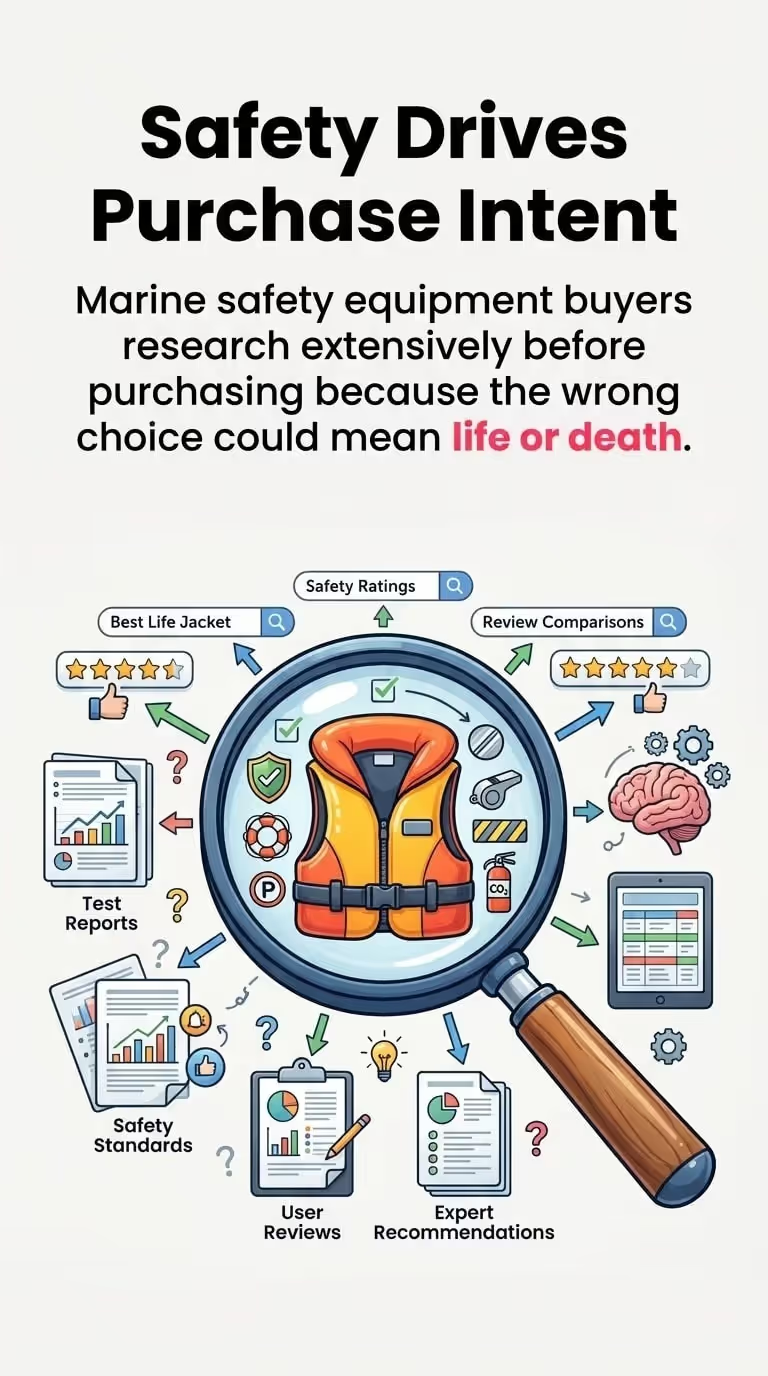
The marine safety equipment market operates differently from traditional ecommerce categories. Buyers conduct extensive research because selecting the wrong safety equipment can directly affect maritime operations and human safety.
Typical buyers include recreational boaters, commercial vessel operators, charter services, and maritime instructors. While their needs differ, all rely on equipment that meets maritime safety standards and demonstrates clear regulatory compliance.
Recreational boaters often begin researching marine safety equipment after a safety incident, inspection reminder, or regulatory update. Commercial operators prioritize safety compliance, certification documentation, and scalable maritime safety systems that align with inspection requirements.
The buying cycle for marine safety products is longer than average ecommerce purchases. Buyers compare specifications, review certifications, and evaluate safety measures carefully before committing. This research-driven behavior makes educational content a critical part of effective marketing.
Marine safety products span multiple categories, each influenced by specific safety standards and replacement requirements.
Life jackets and flotation devices remain among the most searched marine safety equipment categories due to strict passenger and vessel-type regulations. These products must meet defined maritime safety standards to be legally compliant.
Fire extinguishers, flares, and visual distress signals form another essential category. These safety systems are governed by expiration timelines, creating predictable replacement demand within the marine safety products market.
Navigation lights, sound-producing devices, and emergency communication tools support broader maritime safety systems by improving vessel visibility and response capability. Demand for these products fluctuates with maritime traffic levels and inspection cycles.
Stringent safety regulations significantly influence buyer behavior in the marine safety market. Searches related to required equipment, inspections, and certifications represent high-intent traffic for safety-focused businesses.
Websites that clearly communicate regulatory compliance, applicable safety regulations, and product certifications consistently outperform those that focus only on features. Structured content explaining required marine safety equipment by vessel type improves trust and reduces buyer hesitation.
In addition to federal requirements, regional regulatory bodies may impose additional mandates related to environmental protection and vessel safety. Addressing these variations through targeted content strengthens authority within the broader global marine safety landscape.
Search engine optimization for marine safety equipment begins with understanding how buyers search within the maritime industry. Boaters and maritime operators combine technical terminology with broader safety concerns, often influenced by safety regulations, inspection requirements, and real-world maritime activities.
For businesses focused on marine safety equipment marketing, SEO success depends on aligning content with how customers evaluate safety equipment, compliance requirements, and operational risk during the research phase.
Keyword strategy should reflect this behavior. Core terms typically include marine safety equipment, safety equipment, and product-specific queries tied to maritime safety standards, such as vessel size, activity type, and usage conditions. Long-tail searches like “required safety gear for coastal sailing” or “safety equipment for commercial vessels” indicate strong buying intent and support higher conversion rates.
Effective keyword research in the marine safety market requires familiarity with maritime terminology, regional language differences, and varying experience levels among maritime operators.
On-page optimization plays a critical role in improving visibility within the marine safety products market. Product pages should include detailed specifications that support regulatory compliance, such as certification references, technical ratings, and compatibility with specific maritime operations.
Category pages should be structured around clear safety systems and use cases. For example, flotation categories can group personal flotation devices, throwable equipment, and specialized safety gear while reinforcing maritime safety systems and applicable safety standards.
Structured data markup further strengthens SEO performance by helping search engines interpret marine safety products accurately. Proper markup improves eligibility for enhanced search results and increases visibility for buyers conducting compliance-driven searches.
Educational content is essential for capturing organic traffic in the global marine safety landscape. Resource libraries that explain safety measures, inspection readiness, and maintenance schedules address high-intent search behavior tied to safety compliance.
Articles focused on preparation and replacement cycles perform particularly well. Seasonal content aligned with maritime activities supports market demand during peak boating periods, while instructional guides reinforce trust in reliable safety equipment.
Video content also strengthens SEO performance. Demonstrations of safety technologies and correct equipment usage enhance operational efficiency for maritime operators while increasing engagement and dwell time.
Technical SEO ensures that content supporting maritime safety solutions is accessible when buyers need it most. Mobile performance is especially important, as research often occurs at marinas, ports, or during offshore operations.
Clear site architecture improves usability and supports maritime safety system discovery. Logical pathways from high-level safety categories to individual marine safety products reduce friction and strengthen internal linking signals.
Internal linking should reinforce relationships between complementary safety systems. Connecting related equipment supports search visibility while guiding buyers toward complete compliance solutions.
Paid search campaigns within the marine safety market require precision. Profitability depends on filtering out low-intent traffic while capturing buyers actively seeking compliant safety equipment.
Search advertising performs well in this sector because buyer intent is explicit and compliance-driven. Campaigns that highlight safety standards, certifications, and inspection readiness attract higher-quality traffic and support stronger conversion rates.
Brand-focused campaigns are particularly effective when marketing established marine safety products. Aligning ad copy with regulatory language and buyer expectations improves trust and click-through performance.
Shopping campaigns are well suited to marine safety products because visual indicators of certification and build quality reinforce credibility. Optimized product feeds that include brand, equipment type, approval rating, and core specifications support market expansion efforts.
Search campaign structure should mirror how buyers evaluate maritime safety systems. Separating campaigns by equipment category allows better control over bidding, messaging, and seasonal adjustments.
Ad copy should consistently emphasize safety compliance, regulatory alignment, and suitability for specific maritime activities. These signals reinforce authority and align closely with buyer intent.
Demand for marine safety equipment follows predictable seasonal patterns tied to maritime traffic and inspection cycles. Spring preparation periods typically produce rapid market growth, while replacement-driven searches occur year-round for expired or regulated equipment.
Increase bids 30-50% during spring preparation months. Scale back during winter when search volume drops, except in warm-water regions.
Adjusting bids during high-demand periods and aligning campaigns with replacement timelines improves efficiency while supporting long-term market dynamics within the marine industry.
Social media marketing for marine safety products is most effective when it prioritizes education over promotion. Buyers engage with content that improves maritime safety, supports informed risk assessment, and reinforces responsible maritime activities, rather than overt sales messaging.
For businesses focused on marine safety equipment marketing, social platforms offer an opportunity to build trust by demonstrating real-world safety practices and reinforcing safety compliance across different vessel types and boating scenarios.
Facebook groups dedicated to boating and maritime communities provide valuable engagement opportunities. These groups allow brands to participate in discussions around safety measures, regulatory mandates, and best practices for safe maritime operations.
Instagram supports visual storytelling that highlights reliable safety equipment in authentic marine environments. Images and short videos showing correct product usage reinforce heightened awareness and encourage safer behavior among recreational and commercial boaters.
YouTube plays a critical role in demonstrating safety systems in action. Long-form content such as tutorials, inspections, and maintenance guides helps explain how marine safety equipment supports operational readiness and long-term safety outcomes.
Platform-specific strategies improve engagement and align with consumer preferences within the maritime industry.
Facebook content performs best when it emphasizes community-driven safety education. Stories highlighting how proper safety equipment prevented incidents or improved emergency response reinforce safety standards and responsible maritime behavior.
Instagram content is most effective when products are shown in real maritime contexts. Visual examples of properly fitted life jackets, compliant fire extinguishers, and organized marine safety products demonstrate practical safety solutions rather than abstract features.
Short-form educational videos are particularly effective for reinforcing safety measures. Brief demonstrations focused on sizing, inspection, and correct usage enhance operational efficiency for boaters preparing for inspections or seasonal use.
Strong community engagement strengthens credibility within the global marine safety ecosystem. Encouraging customers to share photos and experiences promotes enhancing maritime safety through peer-led education.
Seasonal safety campaigns aligned with inspection periods and boating season preparation help address market demand driven by regulatory timelines. These campaigns support both awareness and market growth without relying on aggressive promotion.
Collaborations with boating educators and safety professionals further strengthen authority. Partnerships that focus on education rather than promotion reinforce trust and align with broader maritime safety solutions.
Paid social advertising supports targeted visibility for marine safety equipment by focusing on relevance rather than volume. Precision targeting based on maritime interests and boating behavior reduces wasted spend while improving conversion quality.
Retargeting strategies are particularly effective due to extended research cycles in the marine safety market. Remaining visible during the consideration phase helps guide buyers toward compliant safety systems when purchase decisions are finalized.
Seasonal campaigns tied to inspection deadlines or replacement cycles align with stringent safety regulations and encourage timely action without pressure-based messaging.
E-commerce platforms supporting marine safety products market requirements must address specialized buyer needs. Standard ecommerce functionality often lacks features necessary for evaluating compliance, suitability, and operational readiness.
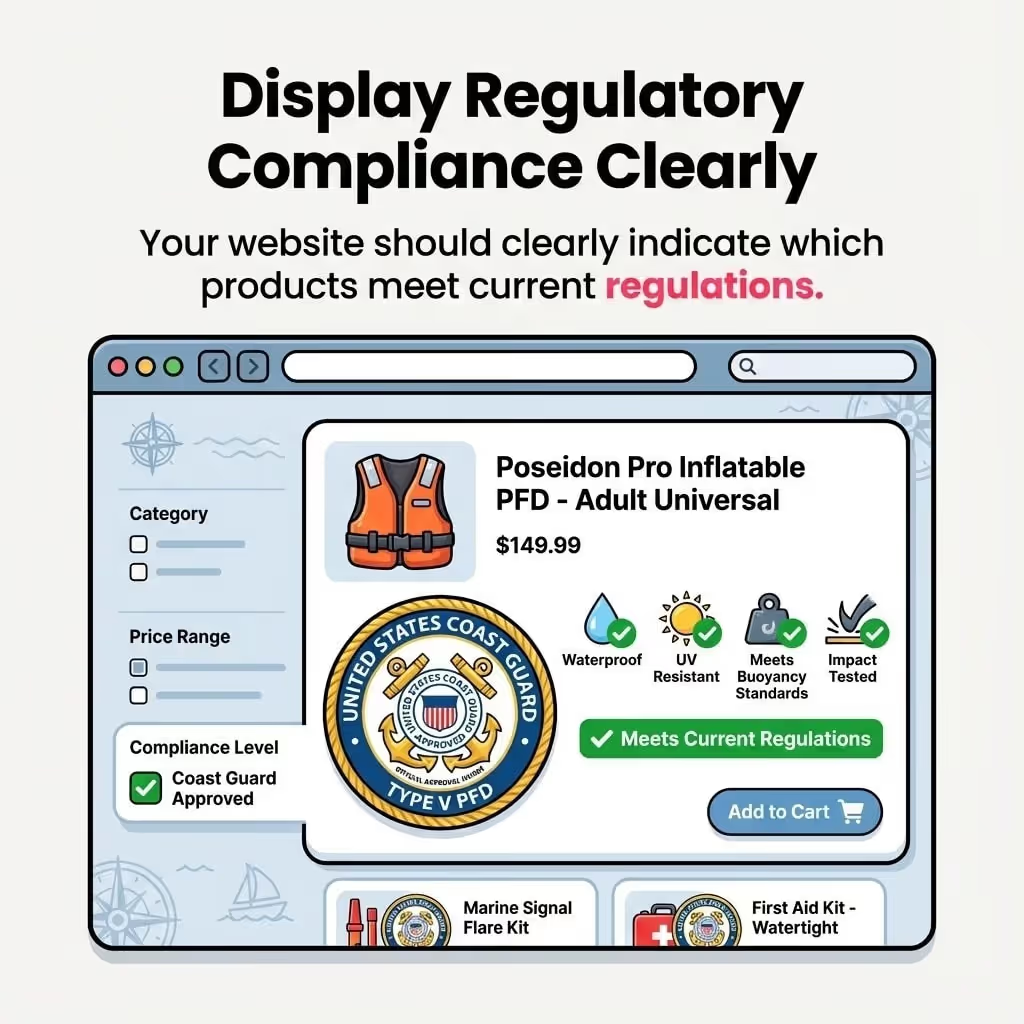
Product filtering should reflect safety regulations and vessel-specific requirements. Filters based on certification type, vessel size, and operational conditions improve usability while supporting regulatory compliance.
Recommendation engines that suggest complete safety systems enhance the buying experience and improve operational efficiency by reducing guesswork during equipment selection.
Product pages should prioritize compliance clarity. Prominently displaying certification details and applicable maritime safety standards helps buyers quickly confirm suitability for their vessels and operating environments.
Wearable safety equipment requires detailed sizing and fit guidance. Clear instructions supported by visual references reduce returns and reinforce confidence in high quality safety equipment.
Expiration timelines should be clearly explained for regulated items. Transparency around replacement cycles supports safety compliance while reinforcing responsible ownership.
Shopping carts can actively support safety measures by identifying gaps in required equipment. Compliance checks help buyers confirm readiness before checkout and reduce post-purchase uncertainty.
Bundled safety packages aligned with vessel size and usage simplify purchasing while supporting market expansion through higher order values.
Subscription options for replacement-driven products align with predictable market dynamics and support recurring revenue while improving safety outcomes.
Mobile optimization is critical for supporting maritime operators researching equipment in real-world settings such as marinas and ports. Fast access to specifications and approvals improves decision-making under time constraints.
Simplified checkout experiences benefit repeat buyers replacing expired equipment. Mobile-friendly reordering supports efficiency and customer retention.
Access to expert consultation via mobile further strengthens trust. Some marine safety equipment purchases require clarification, and direct support improves conversion while reinforcing brand authority.
Content marketing positions marine safety brands as trusted resources within the maritime industry, not just product sellers. Educational content supports maritime safety, improves safety compliance, and builds long-term trust among boaters researching responsible maritime activities.
For businesses focused on marine safety equipment marketing, high-performing content addresses real-world safety concerns, inspection readiness, and evolving safety regulations.
A strong content foundation includes comprehensive safety guides covering everything from basic safety measures to advanced preparation for offshore operations. Vessel-specific resources such as “Required Safety Equipment for Center Console Boats” or “Sailboat Safety Gear Checklist” attract targeted search traffic while reinforcing maritime safety standards.
Educational content shortens the buying cycle. When users research marine safety equipment and regulatory requirements on your site, they are more likely to purchase from a source they already trust.
Video content plays a key role in explaining safety systems and reducing uncertainty around regulated equipment. Demonstrations showing how safety equipment fits, functions, and performs in real marine environments help reinforce proper usage and compliance.
Seasonal preparation videos focused on inspections and readiness support operational efficiency for boaters preparing for peak seasons. Tutorials filmed at marinas or during boating events also strengthen credibility by reflecting authentic maritime operations.
Customer testimonial videos recorded in real-world settings further reinforce trust and highlight the role of reliable safety equipment in improving safety outcomes.
Blog content supports ongoing education within the global marine safety ecosystem. Posts explaining regulatory updates, inspection requirements, and changes issued by regulatory bodies consistently attract high-intent traffic.
Seasonal safety topics align well with market demand and predictable boating patterns. Summer content may focus on weather-related risks, while fall content addresses cold-water conditions and reduced visibility during maritime activities.
Comparison guides help buyers evaluate safety equipment options clearly. Content comparing flotation types or usage scenarios supports informed decision-making while reinforcing safety standards.
Downloadable resources extend the value of educational content while supporting safety compliance. Printable checklists, inspection logs, and maintenance schedules help boaters manage ongoing safety measures.
State- or destination-specific compliance guides further reinforce authority by addressing variations in safety regulations across marine environments. These tools position your brand as a long-term safety partner rather than a transactional retailer.
Email marketing supports retention by reinforcing education, timing, and safety compliance rather than constant promotion. Subscribers value guidance that helps them manage marine safety products responsibly.
Lead magnets such as compliance guides and inspection schedules attract qualified subscribers who already demonstrate heightened awareness of safety requirements. Segmenting audiences by vessel type and usage ensures messaging aligns with real maritime activities.
Remarketing performs particularly well in the marine safety market due to predictable replacement cycles driven by stringent safety regulations.
A strong welcome series establishes safety credibility immediately. The first message should deliver a high-value educational resource that reinforces maritime safety standards.
Subsequent messages can introduce product categories with emphasis on regulatory compliance, product quality, and suitability for different maritime operations. Gathering vessel and activity data early supports more accurate segmentation and long-term relevance.
Seasonal campaigns align with inspection schedules and preparation periods. Spring reminders focus on equipment checks and replacement needs following winter storage.
Increase bids 30-50% during spring preparation months. Scale back during winter when search volume drops, except in warm-water regions.
Mid-season messaging supports expanded maritime activities as boaters venture farther offshore and require additional safety systems. Fall campaigns emphasize winterization, storage, and expiration tracking.
Automated reminders improve operational efficiency while supporting safety outcomes. Triggered emails based on expiration timelines help customers maintain compliant safety equipment without manual tracking.
Personalized reminders based on past purchases reinforce trust and support predictable replacement behavior, strengthening long-term retention.
Ongoing educational emails keep subscribers engaged while reinforcing safety measures. Monthly safety tips, regulatory updates, and customer stories support awareness without aggressive selling.
Real-world examples showing how proper marine safety equipment prevented incidents reinforce the importance of quality, compliance, and preparedness.
The marine safety products market continues to expand as regulatory oversight, vessel traffic, and risk awareness increase across commercial and recreational boating. Demand is driven by compliance requirements, inspection cycles, and growing emphasis on preparedness across marine environments.
The broader maritime safety system market is experiencing steady market growth, supported by rising vessel registrations, offshore activities, and increased investment in maritime infrastructure. Regulatory mandates issued by national and international bodies contribute to consistent replacement cycles, reinforcing predictable market demand for compliant safety systems.
Industry data points to significant growth during the current forecast period, particularly in regions with expanding maritime trade and offshore operations. Replacement-driven purchasing behavior remains a core contributor to revenue, as many marine safety products are subject to expiration timelines or updated safety standards.
Changes in consumer behavior also play a role. Heightened awareness of safety risks and evolving inspection requirements are contributing to increasing demand for complete safety solutions rather than individual components. This shift supports broader market expansion and creates opportunities for bundled offerings aligned with vessel type and usage.
From a strategic perspective, understanding market share, purchasing cycles, and compliance-driven demand helps businesses align inventory, pricing, and promotional timing with real-world maritime activity patterns.
Technological innovation is reshaping how safety systems are deployed and managed across the maritime industry. Technological advancements in monitoring, communication, and data integration are improving response times and reducing operational risk.
Modern advanced technologies now support real-time visibility into vessel status and environmental conditions. Real time monitoring systems enable maritime operators to detect anomalies early, improving decision-making and incident prevention.
Emerging safety technologies increasingly integrate automation and analytics. Advanced safety technologies, such as predictive alerts and condition-based tracking, support proactive maintenance strategies. These systems enhance readiness by identifying potential failures before they compromise safety.
The adoption of predictive maintenance capabilities further improves lifecycle management of critical safety equipment. By analyzing usage data and environmental exposure, operators can schedule maintenance more accurately, improving reliability and reducing downtime.
Collectively, these technological innovations strengthen maritime domain awareness and support more resilient safety systems, particularly in complex operating environments where human response time alone is insufficient.
The global marine safety landscape varies significantly by region, shaped by regulatory maturity, maritime traffic volume, and infrastructure investment. Understanding these regional dynamics is essential for positioning safety solutions effectively.
North America represents a mature market with well-established safety regulations and strong enforcement mechanisms. Demand here is driven by compliance adherence, replacement cycles, and recreational boating activity.
The Asia Pacific region is experiencing rapid expansion due to growth in global trade, port development, and commercial shipping. Increased vessel density and infrastructure investment contribute to rising demand for compliant safety systems across maritime operations.
In the Middle East and Middle East Africa, offshore operations, energy transport, and port modernization are key drivers. Safety investment in these regions is closely tied to industrial activity and environmental protection initiatives.
The competitive landscape includes both global manufacturers and specialized providers offering certified equipment and integrated safety systems. Major companies such as Viking Life-Saving Equipment and OSI Maritime Systems operate across multiple regions, often supported by strategic partnerships with operators, governments, and training organizations.
As the market evolves, alignment with regional requirements and participation in global supply chains will continue to shape growth opportunities across the marine safety sector.
Strategic partnerships play a critical role in expanding reach across the marine industry, often delivering more sustainable results than standalone advertising. Partnerships help position brands within trusted maritime environments where safety decisions are already being made.
Marina partnerships create consistent referral opportunities. Marina staff frequently advise boat owners on required safety equipment, making them valuable touchpoints for reinforcing safety standards and compliance expectations.
Boating education organizations also represent strong partnership opportunities. Groups involved in training and certification rely on reliable safety equipment to support maritime safety education and inspection readiness.
Boat dealers and service centers contribute to the broader maritime safety market by identifying outdated or missing equipment during routine servicing. These partners support replacement-driven market demand and reinforce safety awareness.
Affiliate programs extend reach within the global marine safety ecosystem by leveraging trusted voices. Educational creators and boating-focused publishers influence purchasing decisions through real-world testing and demonstrations.
Affiliates producing safety-focused content help reinforce safety compliance and correct usage of marine safety products. Providing samples for authentic reviews supports credibility while contributing to long-term market expansion.
Higher commissions for educational content encourage partners to focus on guidance rather than promotion, aligning with enhancing maritime safety outcomes.
Boat shows and maritime events offer direct exposure to engaged audiences actively evaluating safety systems. Sponsorships focused on education rather than promotion strengthen trust and reinforce maritime safety standards.
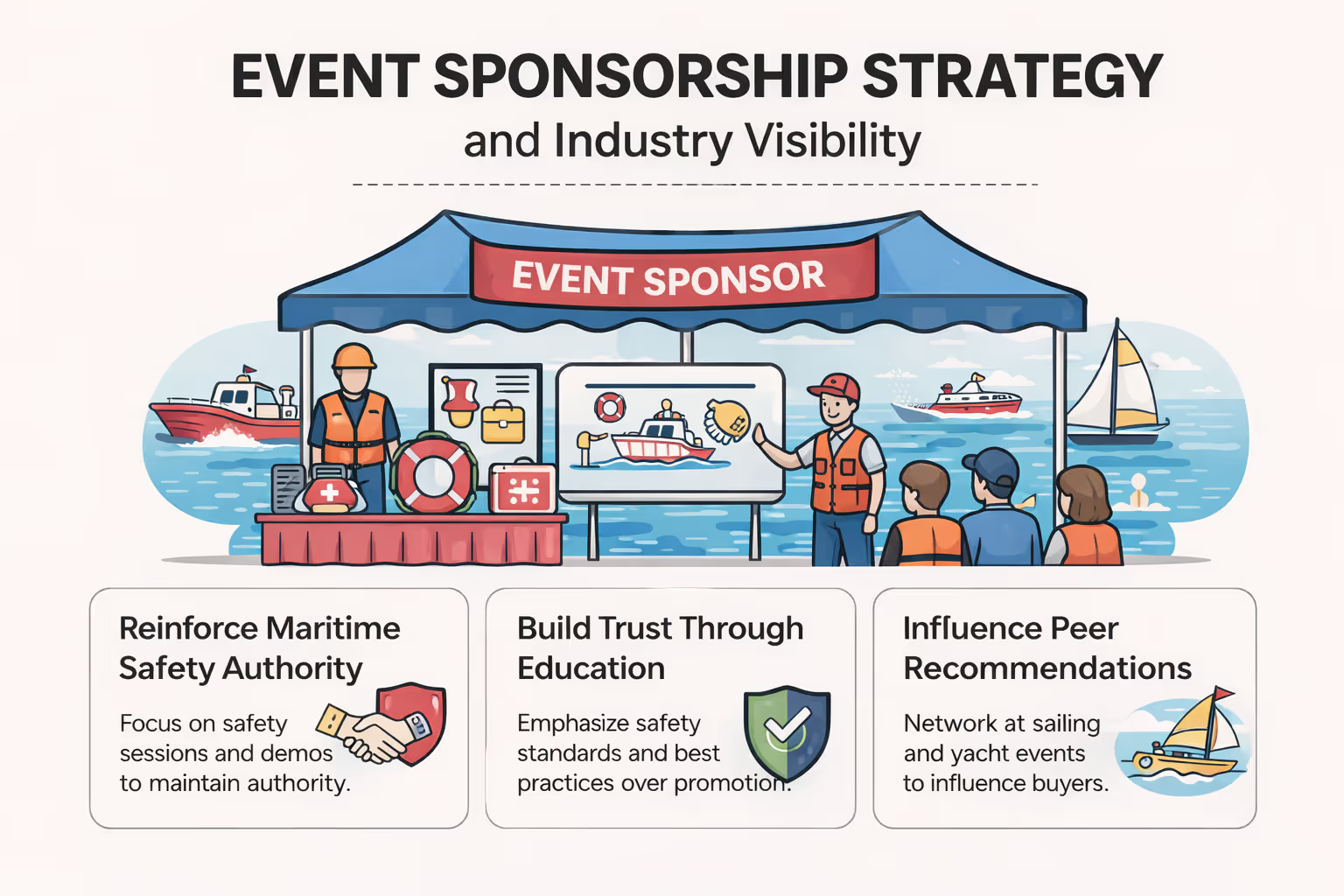
Safety-oriented events such as training sessions, inspections, and rescue demonstrations align naturally with safety regulations and regulatory messaging. Participation in these events reinforces authority within the maritime safety market.
Sailing clubs and yacht associations also influence purchasing behavior through peer recommendations. These environments amplify awareness of high quality safety equipment and best practices.
Active involvement in marine trade associations strengthens credibility within the competitive landscape. Industry associations often collaborate with regulatory bodies, making them valuable platforms for understanding evolving regulatory mandates.
Contributing expert content to industry publications reinforces authority while supporting education around safety measures and compliance requirements. Conference participation further supports wholesale relationships and long-term partnerships across the marine safety products market.
Measuring performance helps identify which strategies support sustainable market growth within the marine sector. Conversion rates by product category reveal how buyers respond to different types of safety equipment.
Average order value reflects the effectiveness of bundling and system-based recommendations. Sites that promote complete safety systems often outperform single-product strategies.
Customer acquisition cost by channel highlights which investments support long-term market dynamics. Comparing SEO, paid search, social, and email performance ensures resources align with market demand.
Tracking rankings for core safety terms helps evaluate visibility across the marine safety products market. Monitoring performance across branded and non-branded queries supports strategic planning.
Paid campaign analysis should focus on return efficiency rather than volume. Performance varies by product category, reflecting differences in buyer confidence and risk assessment.
Email engagement metrics provide insight into consumer preferences. Segmented campaigns aligned with vessel type and usage consistently outperform generic messaging.
Understanding customer behavior clarifies how buyers move through the research and purchase process. Some marine safety products convert quickly, while others require extended evaluation tied to compliance and suitability.
Seasonal analysis reveals predictable demand patterns influenced by maritime activities and inspection cycles. Aligning spend with these patterns improves operational efficiency.
Cart abandonment analysis highlights common friction points such as uncertainty around requirements, sizing, and regulatory clarity.
Monitoring competitors supports informed decision-making in a low-margin environment. Evaluating pricing, product range, and positioning helps maintain relevance within the marine safety system market.
Analyzing competitor content reveals which topics drive engagement and trust. Competitive insights also inform paid strategies, helping brands respond effectively to shifting industry trends.
As operations scale, disciplined budget management becomes increasingly important to support sustainable expansion across channels without sacrificing compliance or quality.
Successful marine safety equipment marketing is built on trust, education, and a deep understanding of how boaters evaluate risk, compliance, and reliability. By combining search visibility, educational content, targeted advertising, and strong industry relationships, safety-focused brands can reach buyers at the exact moment decisions are made.
As regulations evolve and safety awareness continues to grow, businesses that prioritize clarity, compliance, and long-term value will be best positioned to compete and scale in the marine industry.
The target market for marine safety equipment includes recreational boaters, commercial vessel operators, charter businesses, and maritime training providers. Demand is driven by regulatory requirements, inspection cycles, and increasing focus on maritime safety across different vessel types and operating environments. The marine market shows strong growth with Europe holding 38.8% market share, indicating significant opportunities across geographic regions and vessel types.
Consistent replacement needs and heightened safety awareness create ongoing opportunities across the global marine industry.
Selecting the right channels for marine safety equipment marketing depends on how buyers research safety requirements and compliance obligations. Search-based channels perform well because boaters actively seek guidance on regulations, inspections, and required equipment.
Social platforms support education and community engagement, while email marketing reinforces retention and predictable replacement cycles. Each channel should be tested and scaled based on performance data rather than assumptions.
Educational content focused on safety compliance, correct equipment usage, and inspection preparation consistently performs best. Buyers respond well to video demonstrations, safety checklists, and regulatory guides that reduce uncertainty and build confidence.
Content that explains how safety systems function in real maritime conditions is especially effective for higher-consideration purchases.
Advanced communication technologies improve safety awareness by enabling faster information exchange between vessels, operators, and safety systems. These technologies support clearer alerts, improved coordination during emergencies, and more reliable dissemination of safety guidance.
When integrated into modern safety systems, advanced communication tools enhance response efficiency and support better decision-making in dynamic maritime environments.