
Budget allocation in industrial advertising isn't about splitting your dollars evenly. It's about matching spend to where your buyers actually make decisions.
Most manufacturing companies pour money into channels that feel safe but don't convert. They overspend on brand awareness channels while starving the bottom-funnel tactics that drive actual orders.
The challenge gets tougher when you consider how industrial buying works. You're not selling to impulse shoppers. You're reaching engineers who research for months, procurement teams that demand specifications, and executives who sign off on six-figure purchases.
I've spent years helping manufacturers fix their channel mix. The pattern is always the same: too much faith in what worked in 2015, not enough testing of what works now.
This guide shows you how to build a channel allocation strategy that matches how industrial buyers actually research and purchase. You'll learn which channels deserve the bulk of your budget, how to balance traditional and digital tactics, and where to test new opportunities without betting the farm.
Industrial advertising targets business-to-business buyers who purchase equipment, materials, or services for manufacturing and production. Unlike consumer marketing, these campaigns reach decision-makers who evaluate technical specifications and long-term ROI.
The industrial buying process involves multiple stakeholders. An engineer might discover your product through a Google search. A purchasing manager reviews your specs in a comparison guide. A plant manager reads case studies. The CFO needs proof of ROI before approving the purchase.
Your channel allocation determines which of these touchpoints you can afford to own.
Traditional industrial advertising relied on print ads in trade magazines, booths at industry trade shows, and direct mail campaigns to plant managers. These tactics still work for certain audiences, but they're expensive and hard to measure.
Digital advertising changed the game by making every dollar trackable. You can see which keywords drive inquiries, which LinkedIn ads generate qualified leads, and which email campaigns move prospects through your pipeline.
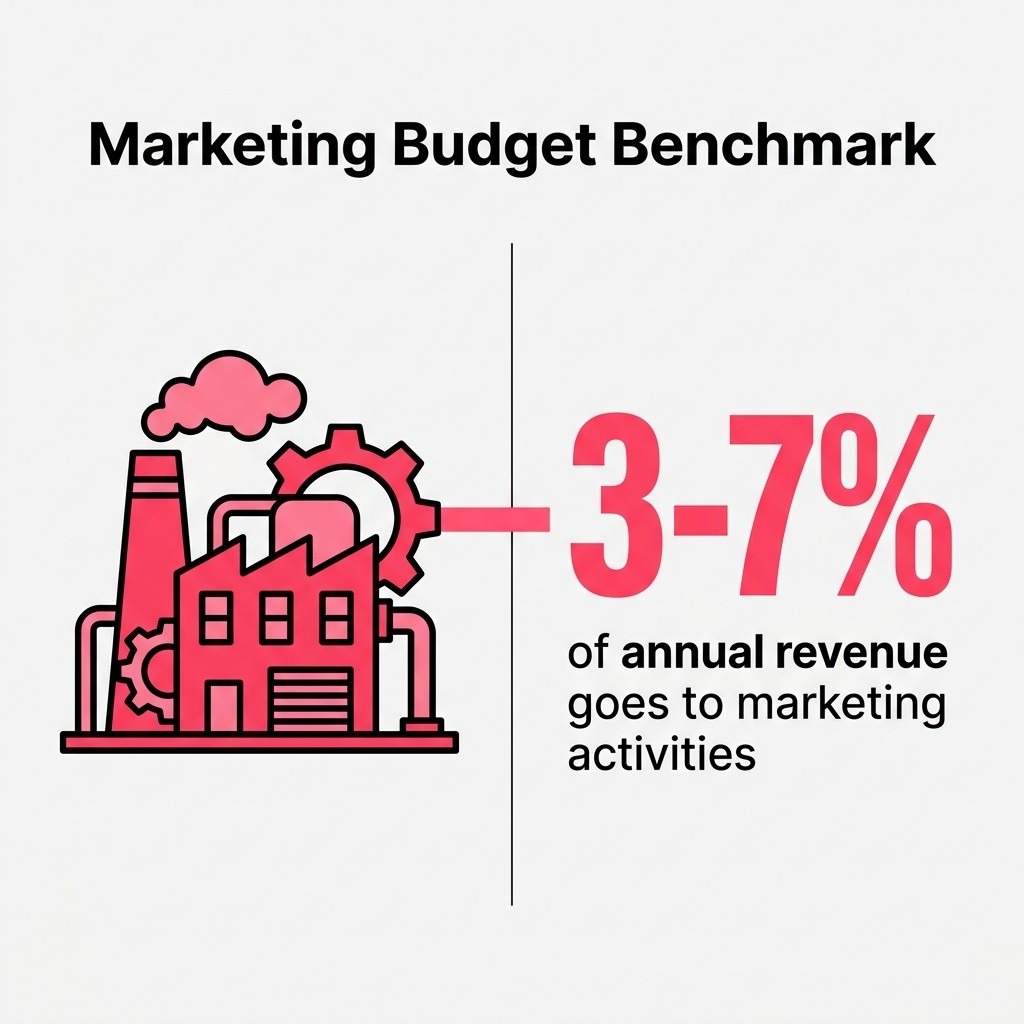
The shift matters because manufacturing companies typically allocate between 3 and 7% of their annual revenue to marketing activities. When your total budget might be $300,000 or less, every misallocated dollar hurts.
Channel mix determines your return. Spend too much on brand awareness channels and you'll run out of money before reaching buyers ready to purchase. Invest too heavily in bottom-funnel tactics and you'll fight over the same small pool of in-market buyers.
Industrial buyers move through distinct research phases. Each phase requires different advertising channels.
The awareness stage starts when someone realizes they have a problem. A production manager notices equipment failures increasing. A plant engineer sees competitors achieving better efficiency. A procurement specialist gets pressure to reduce costs.
At this stage, buyers search for information about solutions. They read educational content, watch explainer videos, and download industry reports. They're not ready to talk to sales yet. They're building their understanding of what's possible.
The consideration phase begins when buyers identify potential solutions. Now they're comparing approaches, evaluating vendors, and building requirements documents. They download spec sheets, attend webinars, and request case studies.
The decision phase involves final vendor selection. Buyers want pricing, implementation timelines, and ROI calculations. They're talking to sales teams, checking references, and negotiating terms.
Your channel allocation must support all three phases.
Different channels excel at different phases. Search engine optimization and content marketing dominate the awareness phase. When someone searches "how to reduce conveyor belt downtime," they're looking for education, not vendors.
Pay-per-click advertising works across all phases but requires different approaches. Awareness-phase PPC targets informational keywords. Decision-phase PPC targets product comparisons and vendor searches.
LinkedIn advertising reaches buyers during active research. It's particularly effective for the consideration phase when buyers are evaluating multiple vendors.
Email marketing nurtures prospects from awareness through decision. It keeps your company visible during the long industrial sales cycle.
Trade shows and in-person events accelerate consideration and decision phases. They let buyers meet your team, see demonstrations, and ask detailed technical questions.
Industrial purchases take months or years. A manufacturer buying a new production line might research for eighteen months before making a decision.
This timeline demands sustained presence across multiple channels. A single LinkedIn ad won't close a deal. Neither will one trade show appearance or a few Google ads.
Your budget allocation must fund consistent visibility throughout the entire journey. That means balancing quick-win channels with long-term relationship builders.
Five digital channels form the foundation of most successful industrial advertising strategies. Each serves a specific purpose in your buyer journey.
SEO builds organic traffic to your website by ranking for keywords your buyers search. It's the most cost-effective channel over time because you're not paying per click.
The catch is it takes months to see results. You need technical website optimization, educational content targeting buyer questions, and backlinks from industry sites.
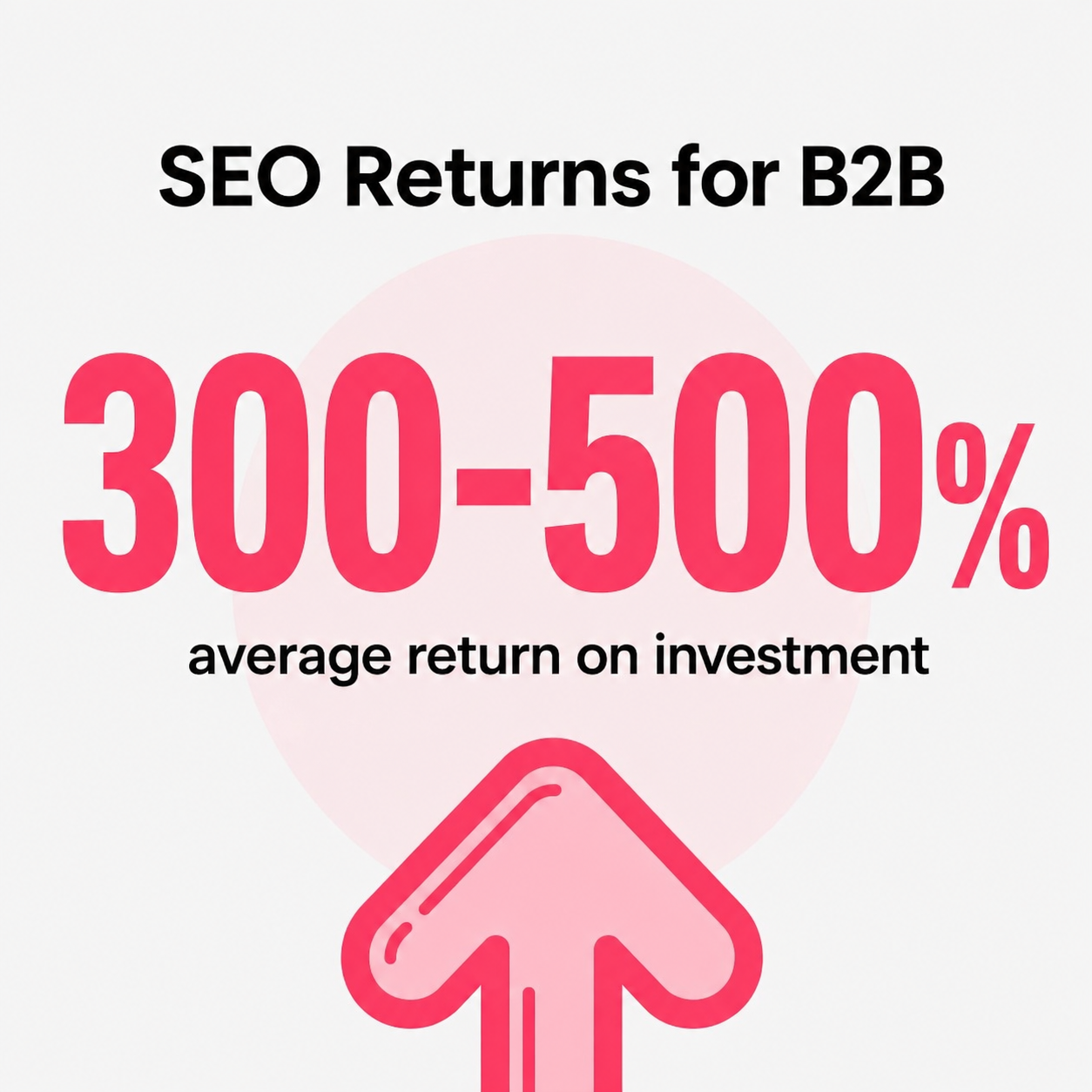
For B2B companies, SEO achieves an average return of 300-500%. That exceptional return comes from owning visibility for high-intent keywords like "industrial pump suppliers Chicago" or "conveyor system specifications."
SEO works best when paired with content marketing. You create detailed guides, comparison articles, and technical resources that rank for buyer questions. These pages attract prospects at the awareness phase and nurture them toward consideration.
PPC puts your ads at the top of search results for specific keywords. Unlike SEO, you get immediate visibility. The downside is you pay for every click whether it converts or not.
Google Ads works well for industrial companies because buyers search with clear intent. Someone searching "hydraulic press 200 ton capacity" is likely in-market for that exact product.
The key is matching your ad spend to keyword intent. Decision-phase keywords like "buy industrial compressor" cost more per click but convert at higher rates. Awareness-phase keywords like "compressor maintenance tips" cost less but rarely drive immediate sales.
Your PPC budget should weight toward bottom-funnel keywords if you need leads fast. Allocate a smaller portion to top-funnel terms for long-term pipeline building.
LinkedIn lets you target ads to specific job titles, industries, and company sizes. This precision matters when selling to a narrow audience like "plant managers at automotive parts manufacturers with 200-500 employees."
The platform works well for the consideration phase. Your ads appear while buyers are researching solutions and evaluating vendors. You can promote case studies, webinars, and product comparisons directly to decision-makers.
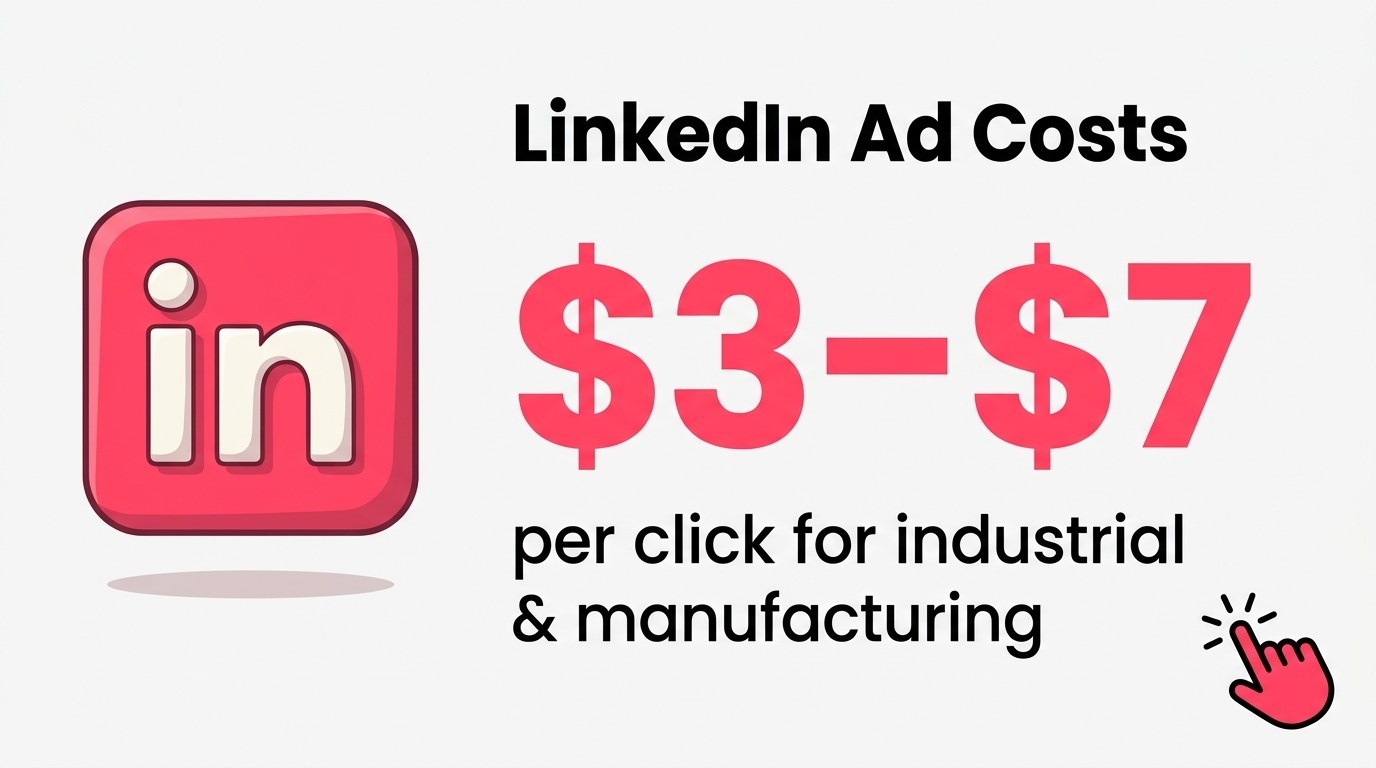
The challenge is cost. LinkedIn advertising costs for industrial and manufacturing companies range from $3 to $7 per click. That's significantly higher than Google Ads for many keywords.
Justify LinkedIn spend by focusing on high-value accounts. Use account-based marketing strategies to target specific companies rather than broad audience segments.
Email keeps you visible throughout the long industrial sales cycle. You can segment lists by buyer phase, send educational content to early-stage prospects, and share product updates with existing customers.
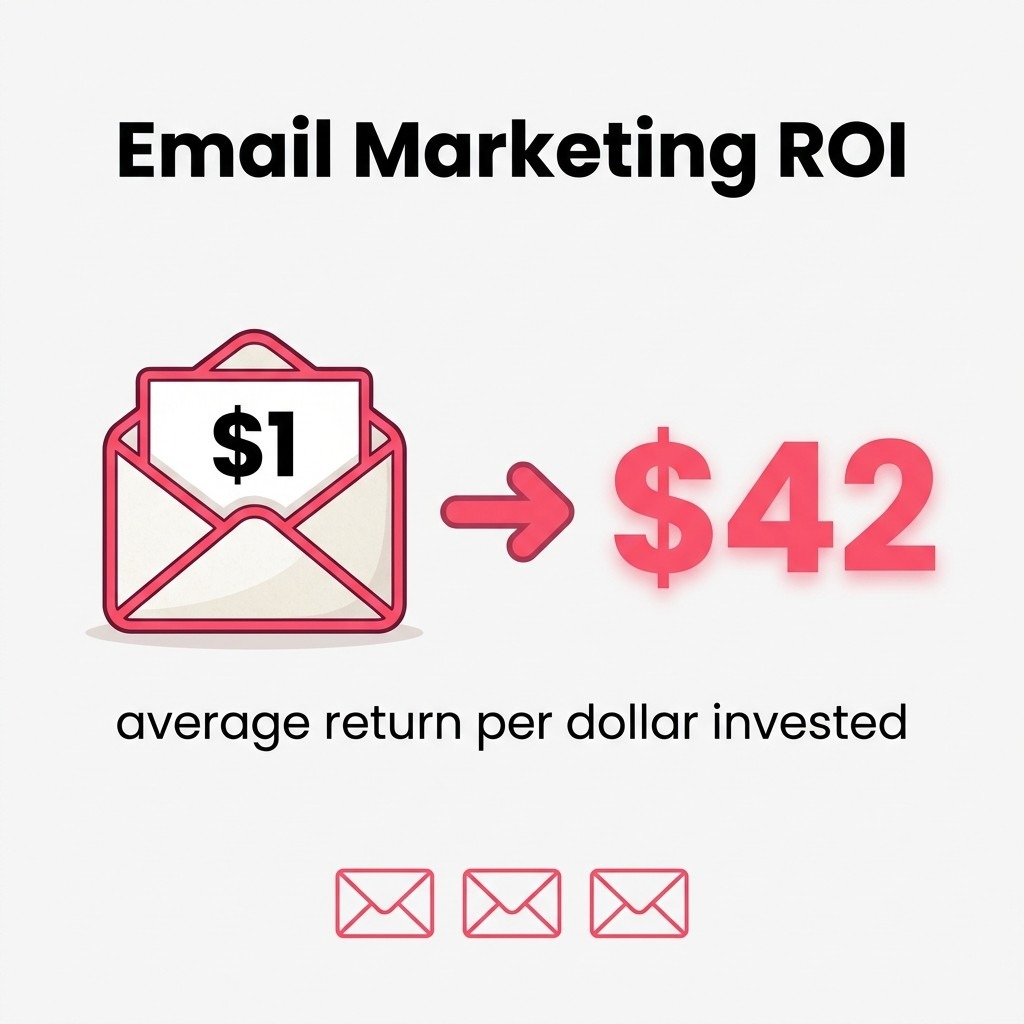
The ROI is compelling. Email marketing delivers exceptional returns, with companies achieving an average return of $42 for every dollar invested.
Email works best when paired with marketing automation. Set up triggered sequences that send relevant content based on prospect behavior. Someone who downloads a technical guide gets a follow-up email with case studies. A prospect who visits your pricing page receives ROI calculators.
Build your list through gated content on your website, trade show sign-ups, and webinar registrations. The quality of your list matters more than size. A thousand engaged prospects beat ten thousand unqualified contacts.
Content marketing creates the educational resources that fuel your other channels. Blog posts support SEO. White papers give PPC ads something valuable to promote. Case studies provide email content and sales enablement tools.
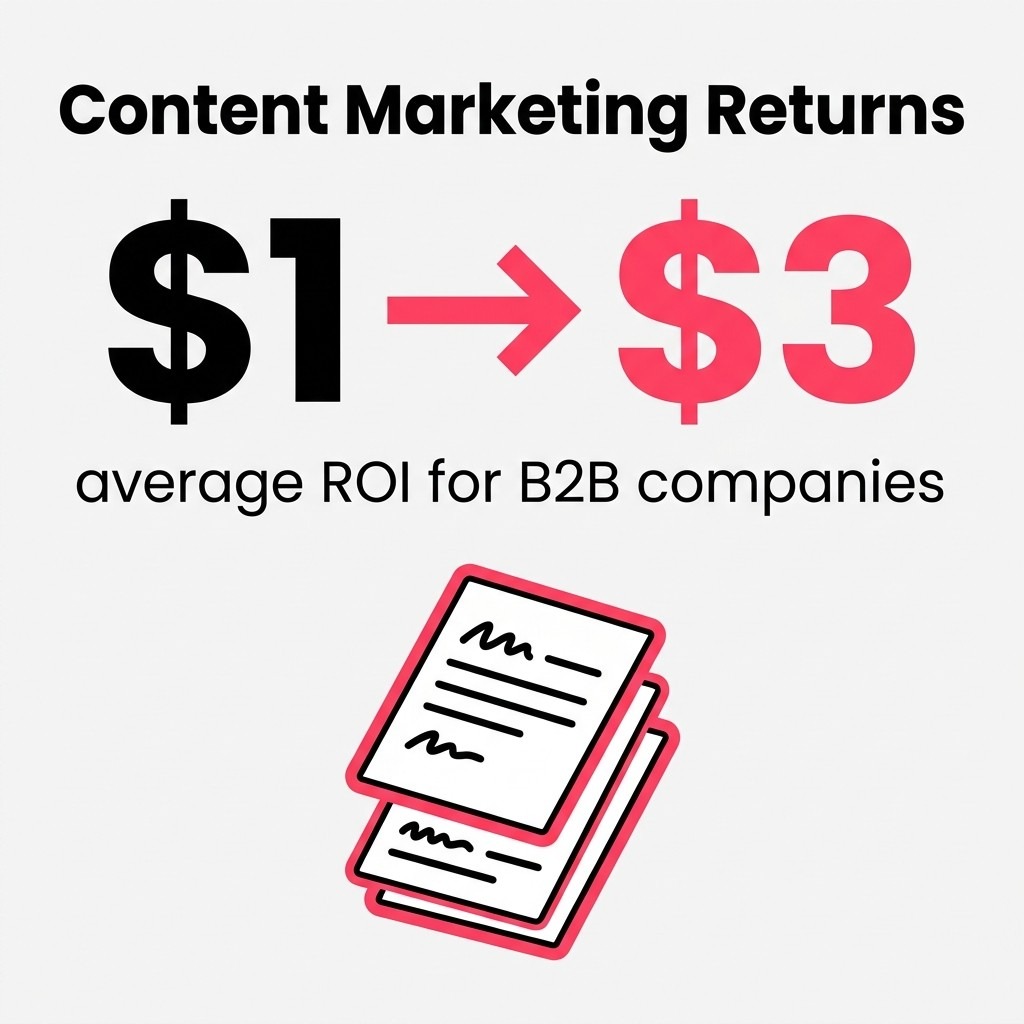
For B2B companies, content marketing generates an average return of $3 for every dollar invested. That return comes from content that continues working long after you publish it.
Industrial buyers want technical depth. Create detailed guides that answer specific questions about applications, specifications, and implementation. A comprehensive article about selecting the right industrial pump for chemical processing might rank for years and generate consistent leads.
Content also supports account-based marketing. Create custom content for specific target accounts, addressing their unique challenges and use cases.
Trade shows, print advertising, and direct mail still work for certain industrial sectors. The question is whether they deserve budget when digital channels offer better tracking and often better returns.
Industry trade shows let buyers see equipment demonstrations, meet your team, and compare vendors side-by-side. They accelerate the sales cycle for prospects already in consideration phase.
The costs add up fast. Booth space, travel, materials, and staff time can reach $50,000 or more for a single show. You need a plan to generate enough qualified leads to justify that investment.
Trade shows work best as part of an integrated strategy. Promote your booth attendance through email and LinkedIn ads before the event. Collect detailed lead information during the show. Follow up with personalized email sequences afterward.
Measure success by pipeline value, not just lead count. Ten qualified prospects worth $100,000 each beat a hundred tire-kickers who'll never buy.
Print ads in industry magazines reach a specific audience while they're consuming relevant content. A full-page ad in a plastics industry magazine puts your brand in front of injection molding decision-makers.
The challenge is measurement. You can't track which readers visit your website or request information based on a magazine ad. You're buying brand awareness without clear attribution.
Print works better for companies with brand recognition challenges than for established players. If you're entering a new market or launching a new product line, print builds credibility alongside your digital efforts.
Keep print budgets small, typically under 15% of total advertising spend. Test publications with small ads before committing to expensive spreads.
Direct mail campaigns send physical materials to specific prospects. A dimensional mailer with a sample product part might break through the noise when emailing the same prospect gets ignored.
This tactic makes sense for account-based marketing to high-value prospects. If closing a single deal generates $500,000 in revenue, spending $200 per prospect on creative direct mail is justified.
Integrate direct mail with digital touchpoints. Send a package, follow up with an email referencing it, retarget the recipient with LinkedIn ads. The combination creates more impact than any single channel.
Budget allocation starts with understanding your specific situation. A company with strong brand recognition needs different channel mix than a newcomer to the market.
Calculate your current channel performance before changing anything. Track the full customer journey, not just last-click attribution. A prospect might discover you through organic search, engage with LinkedIn ads, download a white paper via email, and finally convert through a sales call.
Your analytics should show the actual path to conversion, not just the final touchpoint. Use multi-touch attribution to understand which channels assist conversions even when they don't get credit for the final click.
Evaluate channel costs honestly. PPC costs include management time or agency fees, not just ad spend. SEO costs include content creation, technical optimization, and link building. Trade shows include booth design, staff time, and follow-up costs.
Your channel mix should reflect what you're trying to achieve. Different goals require different approaches.
If you need immediate leads this quarter, weight your budget toward bottom-funnel channels. Allocate 60-70% to PPC targeting high-intent keywords and retargeting campaigns. Add 20% to email campaigns targeting existing prospects. Reserve 10-20% for longer-term SEO and content work.
If you're building long-term market position, flip those percentages. Put 50-60% into SEO and content marketing. Allocate 25-30% to PPC and LinkedIn advertising. Use 10-15% for email nurture campaigns.
If you're launching in a new market segment, you need awareness. Budget 40% for LinkedIn advertising and industry-specific content marketing. Reserve 30% for trade shows and industry events. Use 30% for PPC and retargeting.
A practical starting allocation follows the 70-20-10 rule. Dedicate 70% of budget to proven channels that consistently generate returns. Allocate 20% to promising channels you're scaling. Reserve 10% for testing new opportunities.
For most industrial companies, the 70% goes to search marketing. That includes both SEO work and PPC campaigns targeting your core keywords. These channels have proven ROI and predictable performance.
The 20% funds channels you're actively improving. Maybe LinkedIn ads show promise but need optimization. Perhaps your email list is growing and nurture sequences are improving. This portion helps you expand beyond your core channels.
The 10% lets you test without risking the farm. Try YouTube ads targeting specific industries. Test display remarketing to stay visible during long sales cycles. Experiment with podcast sponsorships in relevant industry shows.
Here's how successful industrial advertisers typically distribute their budgets across channels. These percentages assume a digitally-focused strategy with selective traditional tactics.
Reduce search marketing allocation if you already dominate rankings for your core keywords. You're getting organic traffic whether you invest more or not. Shift budget to channels that can expand your reach.
Increase LinkedIn spending if you're targeting specific accounts or job titles. The precision targeting justifies higher costs when you're reaching exactly the right decision-makers.
Cut trade show budgets if attendance at your key events is declining or if your sales cycle doesn't require in-person relationship building. Some industrial purchases happen entirely digitally now.
Boost content marketing investment if your sales team reports prospects arrive at calls highly educated. That signals content is working and probably deserves more budget.
Many industrial sectors have seasonal buying patterns. Construction equipment sales peak in spring. Industrial supply purchasing increases in Q4 as companies spend remaining budget. Chemical processing upgrades cluster around scheduled maintenance shutdowns.
Adjust your channel mix to match these patterns. Increase PPC spending during peak buying seasons when conversion rates rise. Pull back during slow periods and reallocate to content creation and SEO work that builds long-term visibility.
Email campaigns can remind prospects about upcoming seasonal deadlines. "Plan your spring equipment purchases now" messages in January reach buyers before they start active vendor searches.
Allocation decisions should flow from performance data, not gut feelings. Track specific metrics for each channel to understand true ROI.
SEO performance shows in organic traffic growth, keyword rankings for target terms, and most importantly, organic leads generated. Track the full funnel, from rankings to traffic to conversions.
PPC metrics include cost per click, conversion rate, cost per lead, and ultimately cost per customer. A keyword that costs $8 per click but converts at 10% beats a $2 keyword that converts at 1%.
LinkedIn advertising needs careful monitoring because costs run high. Track engagement rates, click-through rates, and lead quality, not just volume. Ten highly qualified leads beat fifty tire-kickers.
Email marketing metrics span list growth rate, open rates, click-through rates, and conversion rates for specific campaigns. Watch for list fatigue, which shows up as declining engagement over time.
Content marketing measurement includes content-assisted conversions, time on page, and how often sales teams use specific pieces. Popular content that never converts might be attracting the wrong audience.
Industrial buyers touch multiple channels before converting. Someone might discover you through organic search, engage with a LinkedIn ad, download a guide via email, and convert through a retargeting ad weeks later.
Last-click attribution gives all credit to the retargeting ad. That's misleading because the earlier touchpoints did essential work.
Set up multi-touch attribution in your analytics platform. See which channels assist conversions even when they don't close the deal. This reveals the true value of awareness and consideration-phase channels.
You might discover SEO and content marketing generate far more value than last-click data suggests. That insight should influence your allocation decisions.
Different channels attract customers with different lifetime values. PPC might generate quick sales with lower average order values. SEO might attract larger prospects with bigger budgets who become long-term customers.
Track which channels generate the most valuable customers, not just the most customers. A channel that costs twice as much per lead but generates customers worth three times more deserves higher budget allocation.
Look at retention rates by acquisition channel too. Customers who find you through educational content might stay longer than those who clicked a promotional ad.
I've seen manufacturers waste significant budget on the same avoidable mistakes. Here's what to watch for.
Trying to maintain presence across ten channels with a modest budget means you're underfunding everything. You won't have enough budget for any channel to work properly.
Pick three to five core channels and fund them properly. A well-executed strategy across three channels beats a weak presence across eight.
This is particularly common when companies feel obligated to be on every social platform. You don't need TikTok when selling industrial compressors to plant managers. Focus on LinkedIn where your buyers actually spend time.
Channels work better together than in isolation. Content marketing fuels SEO, provides assets for PPC promotion, and fills email newsletters. LinkedIn ads can retarget website visitors from organic search.
Budget for these connections. When you create a major piece of content, allocate promotion budget to amplify it through PPC and LinkedIn. The combined impact exceeds what either channel achieves alone.
Your testing budget shouldn't be random experiments. Pick specific hypotheses to test. Maybe video ads on LinkedIn will outperform static images for your audience. Perhaps longer-form content converts better than quick tips.
Run structured tests with clear success metrics. If video ads don't improve conversion rates after $2,000 in spend, you have your answer. Move that budget to something else.
Document what you learn. Next year's allocation should benefit from this year's test results.
Impressive numbers that don't drive business results waste budget. A thousand LinkedIn post likes matter less than ten demo requests. High website traffic from irrelevant keywords doesn't help if visitors bounce immediately.
Optimize for metrics that connect to revenue. Lead generation, sales qualified leads, pipeline value, customer acquisition cost, and actual closed deals. Everything else is interesting but not decision-worthy.
Now put these principles into action. Start with your total available budget and work through a systematic allocation process.
Most industrial companies should invest 3-7% of revenue in marketing. Within that, advertising might represent 40-60% of total marketing spend, with the rest going to staff, tools, and other expenses.
A manufacturer with $10 million revenue might budget $400,000 for marketing. Of that, $200,000 goes to advertising across all channels.
Be realistic about what you can spend consistently. Better to maintain a modest budget year-round than to blow a large budget in Q1 and go dark the rest of the year.
Work backward from revenue targets to required lead volume. If you need $2 million in new revenue, your average deal is $50,000, and your close rate is 20%, you need 200 sales qualified leads.
If your lead-to-SQL conversion is 25%, you need 800 total leads. Now calculate what each channel must contribute and what that'll cost based on your current cost-per-lead metrics.
This math reveals whether your budget matches your goals. If the numbers don't work, you either need more budget or more realistic targets.
Assign 70% of budget to your proven performers. For most industrial companies, that's search marketing combining SEO and PPC.
Within search marketing, split based on current performance and timeline. If you need leads this quarter, weight toward PPC. If you're building for next year, favor SEO investment.
Allocate 20% to channels showing promise. Maybe LinkedIn ads are generating quality leads but need optimization. Perhaps your email list is growing and engagement is improving.
Give these channels enough budget to scale properly. Underfunding a promising channel prevents you from learning whether it can become a core performer.
Set aside 10% for experiments. Test new platforms, try different ad formats, or explore emerging channels like podcast sponsorships.
Commit to specific tests for the quarter. Don't let this become a slush fund for random tactical ideas.
Map your allocation across the year, increasing spend during peak buying seasons and pulling back during slow periods. Build a complete industrial digital marketing plan that accounts for these cyclical patterns.
This prevents the common mistake of maintaining steady spending when buyer behavior changes dramatically by season.
Budget allocation isn't a one-time decision. Your channel mix should evolve as you gather performance data and as your market changes.
Start by auditing your current spending. Where does each dollar go now? What returns are you actually getting from each channel? The answers might surprise you.
Set up proper tracking before changing anything. You can't optimize what you don't measure. Implement multi-touch attribution, connect your CRM to your analytics, and establish clear conversion tracking for every channel.
Test systematically rather than making dramatic shifts. Move 10% of budget from underperforming channels to promising ones. Run that for a quarter and evaluate. Gradual reallocation based on data beats radical changes based on hunches.
The manufacturers who dominate their markets aren't necessarily outspending competitors. They're allocating smarter, measuring better, and adjusting faster based on what actually drives revenue.
Your channel mix should evolve quarterly as you learn what works for your specific products, buyers, and market conditions. See how strategic paid media allocation drives measurable results for B2B industrial companies.
The perfect allocation doesn't exist. But a data-informed, systematically tested, and regularly adjusted approach gets you closer every quarter.