

Creating an effective automotive catalog may look simple at first, but doing it well takes both structure and strategy. In the automotive aftermarket, the quality of your product data directly affects sales, customer confidence, and day-to-day operations. A strong catalog does more than showcase a product line.
It helps customers find the right parts, reduces returns, improves fitment accuracy, and supports smoother inventory control. Done well, aftermarket catalog management becomes a real advantage for any business that wants to grow.
In this guide, the focus is on the core elements of designing an automotive catalog that performs in both print and digital environments. Whether a company wants to sell exhaust systems, maintenance parts, or performance upgrades, these principles help create a more optimized, reliable, and easier-to-use parts catalog.
Automotive catalogs differ from general retail catalogs in one important way: they depend heavily on vehicle fitment information. Unlike many other products, automotive parts must match a specific make, model, year, and sometimes even engine, trim, or drivetrain configuration. When that information is wrong, the result is not just inconvenience. It can lead to errors, returns, poor reviews, and even safety concerns.
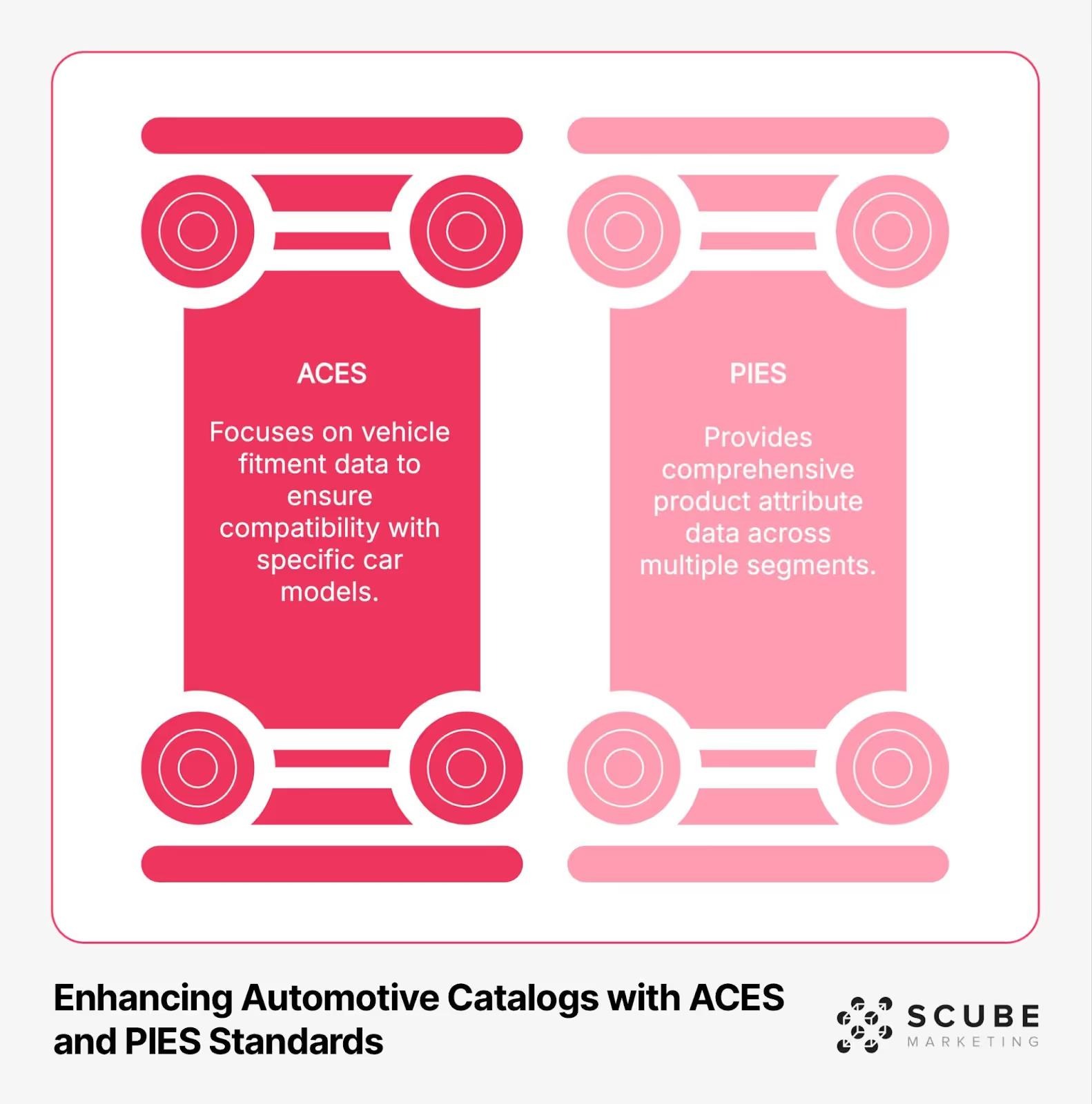
The foundation of a strong automotive catalog is standardized data. In the automotive aftermarket industry, two key industry standards support this process: ACES (Aftermarket Catalog Exchange Standard) and PIES (Product Information Exchange Standard).
ACES focuses on vehicle fitment data, while PIES covers comprehensive product attributes such as dimensions, pricing, and materials. When implemented together, these standards significantly reduce order errors by establishing universal terminology for fitment data and product details. (Source: Feedonomics)
For auto parts companies, adopting these standards is no longer just a best practice. It is becoming essential for staying competitive online. Even for a smaller company, understanding how ACES and PIES data work helps build a catalog that can scale over time without creating unnecessary worry around accuracy or compatibility.
Before getting into the technical side, it helps to look at what makes an automotive catalog effective in the first place. The best catalogs are not just product lists. They are practical tools that improve search, simplify selection, and help users move from interest to purchase with more confidence.
An effective automotive catalog needs a clear structure so users can quickly find what they need. In most cases, that means organizing parts by:
The organization should reflect how your customers actually search. If a website focuses on a specific market segment or a specific type of vehicle, then the layout should align with that buyer behavior. A well-planned buyers guide or filter map can also support faster discovery.
When creating vehicle listings in your catalog, certain information fields are mandatory for proper identification. These include the 17-character VIN (Vehicle Identification Number), drivetrain type, and the vehicle's condition status. Additionally, listings must use standardized body style designations, with 11 officially recognized options including sedan, SUV, and crossover. (Source: Connecto.io)
The table below shows the essential vehicle information that should appear in every listing:
Including this level of detail improves fitment accuracy, reduces incomplete data, and gives both retailers and end users a more accurate path to the correct part.
Images play a major role in catalog performance. Modern standards for digital listings continue to rise, especially in the automotive space. For dealer-quality listings, separate exterior and interior 360° views are now expected for each model entry. (Source: Connecto.io)
The table below outlines current image requirements for a professional automotive catalog:
High-quality images and even supporting videos improve visibility, reduce hesitation, and give customers more confidence before they buy. In digital environments, strong visuals do a lot of the heavy lifting.
Looking for a clear, connected view of how auto parts marketing actually works across SEO, PPC, feeds, and marketplaces? Explore our complete guide to auto parts marketing and ecommerce →
Beyond part numbers and pricing, a useful catalog should include detailed product specifications, such as:
The more complete the product information, the easier it becomes for users, suppliers, and distributors to evaluate suitability. Detailed specifications also improve service quality by reducing customer questions and helping teams support the buying process more effectively.
A catalog that looks good but lacks technical consistency will struggle to perform across platforms and systems. That is why understanding the data standards behind a well-built automotive catalog is so important.
The automotive aftermarket industry relies on standardized data formats to ensure compatibility across different systems. ACES files use XML format and receive monthly updates from the Auto Care Association to maintain current vehicle configurations. Meanwhile, PIES version 7.2 organizes product data into 10 distinct segments covering everything from hazardous materials information to marketing copy. (Source: APA Engineering)
These two standards support different but connected purposes:
Using both creates a more complete approach to catalog management, helping a business clearly define what a product is and what vehicle it fits.
Behind effective catalogs are strong databases. The Vehicle Configuration Database (VCdb) is especially valuable because it contains vehicle configurations dating back to 1896. This historical coverage makes it possible to support classic and vintage fitment scenarios. (Source: Feedonomics)
The Parts Configuration Database (PCdb), meanwhile, provides standardized part classifications across different manufacturers, creating a common language for categorization. (Source: APA Engineering)
The following table illustrates how these databases work together to provide data-driven insights into the automotive aftermarket industry:
When these resources are used properly, the catalog can connect with industry platforms more effectively and support better performance across channels.
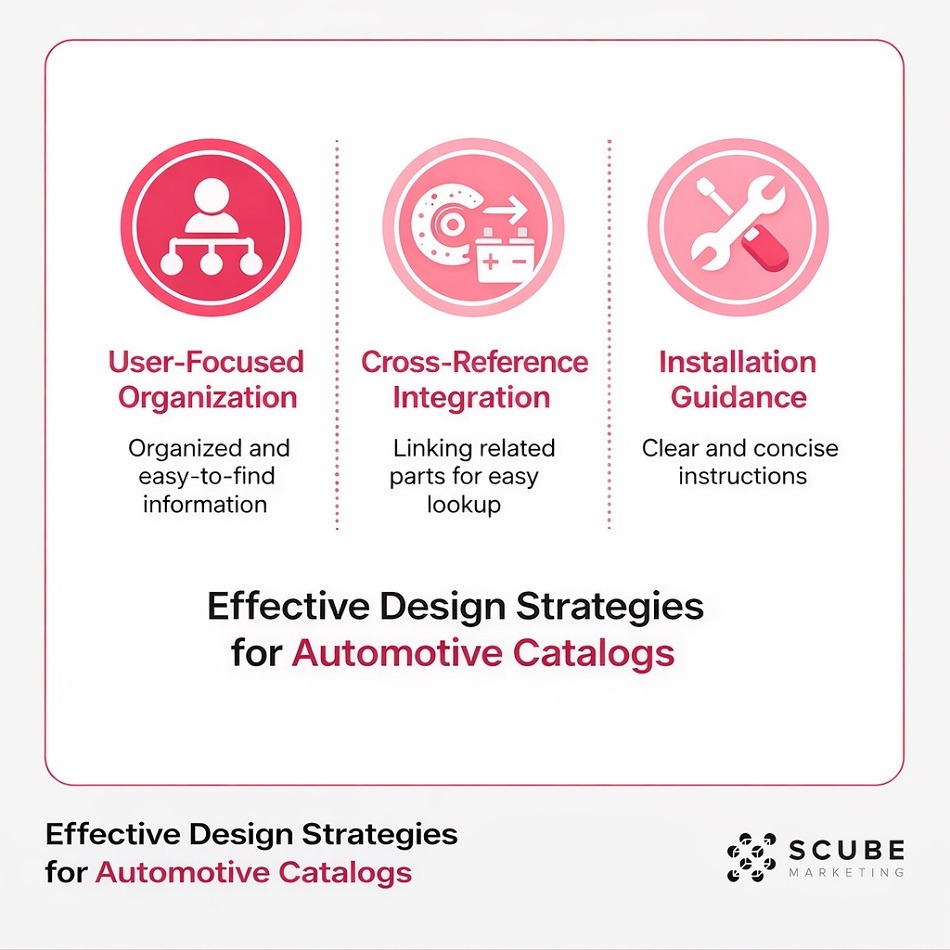
Once the technical foundation is in place, design becomes the next priority. Good catalog design helps customers move faster, reduces friction, and makes the overall experience feel more intuitive.
In my work with automotive clients on e-commerce success strategies, the catalogs that perform best are built around the customer’s real decision-making process. Instead of overwhelming people with a massive list of products, the information is presented in a logical sequence:
This approach aligns with how people actually search and makes the experience feel much smarter and more grounded in user intent.
Cross-reference data adds serious value to a catalog. It helps people find parts even when they begin from a different reference point. Useful cross-reference content often includes:
This improves access to the right parts and creates more sales opportunities, especially when customers are comparing options across brands or trying to match older references.
A strong catalog should also help customers understand how a part is used. Even simple guidance can make a major difference. Useful additions include:
This reduces uncertainty, lowers return risk, and positions the business as a helpful resource instead of just a seller. For digital catalogs, it can also support search visibility with more relevant content.
This is the area where many businesses struggle. Strong design matters, but without disciplined processes behind the scenes, even a good-looking catalog can break down fast. This is where aftermarket catalog management becomes critical.
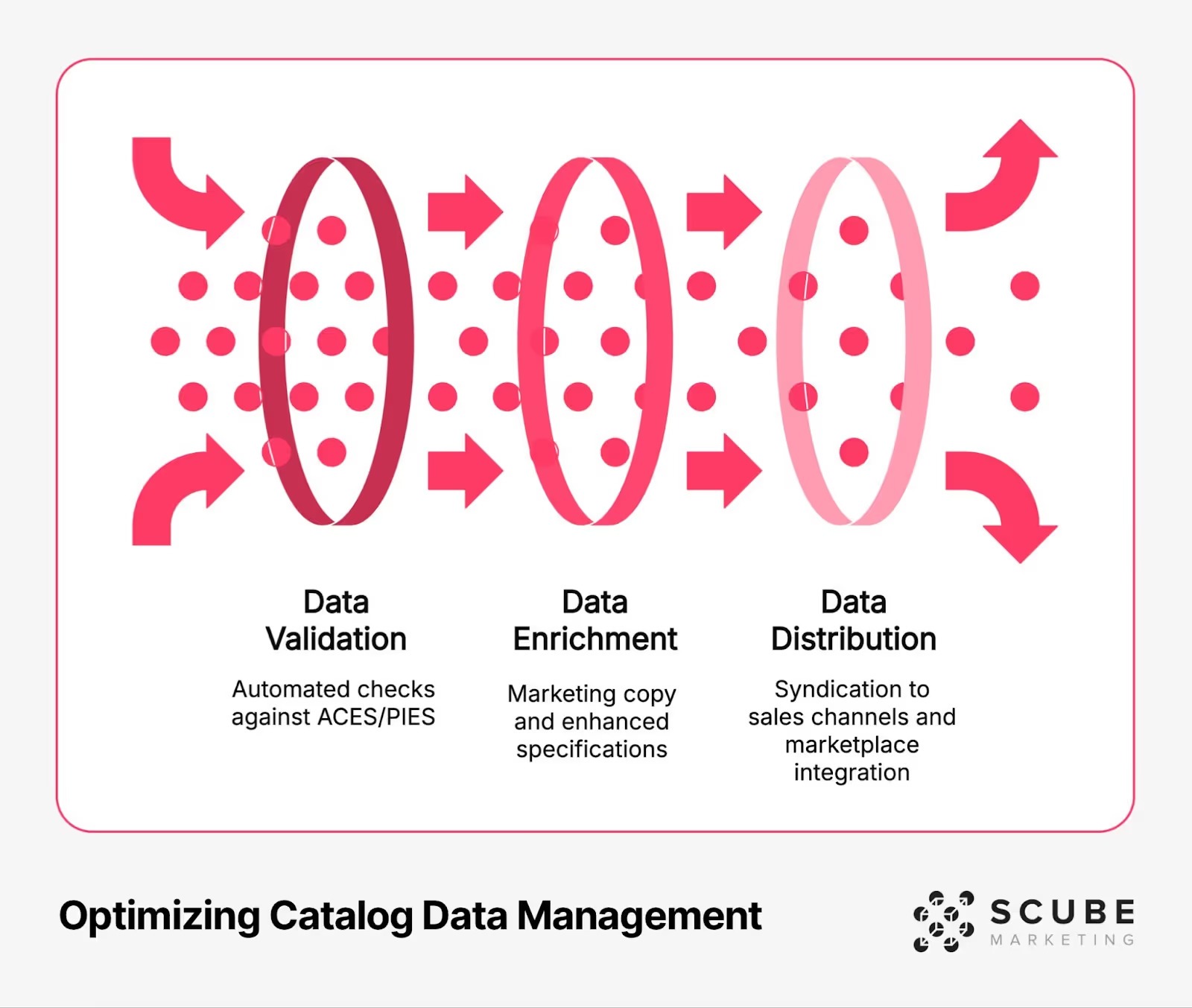
The foundation of an effective catalog is a clear and disciplined process for handling catalog data. A strong framework should cover the following:
This approach helps ensure the catalog stays maintained, consistent, and scalable. It also gives the team better insight into what needs to be improved as the catalog grows in size and complexity.
A catalog should never operate in isolation. To improve value across the business, it should connect with core systems such as inventory, ecommerce, warehousing, and order processing.
First, integration with inventory systems helps show real-time stock levels. Next, synchronization with the ecommerce platform supports accurate pricing and availability. Warehouse systems benefit from clear product data to improve picking accuracy, while customer-facing systems gain better information for post-sale support. This also strengthens automotive content marketing by ensuring product information stays consistent, accurate, and useful across every customer touchpoint.
An integrated setup reduces fragmentation, improves the ability to align information across channels, and ensures that customers see reliable product details. For companies in the automotive aftermarket, this kind of connected data flow supports stronger growth and fewer fulfillment problems.
Today’s catalog needs to work across multiple environments. Print still matters in some areas of the industry, but digital channels often drive the broadest reach and fastest updates.
Print remains relevant, especially in B2B and shop environments. When designing for print, it helps to focus on:
A good print catalog can still be a powerful reference tool for buyers, shops, and counter staff.
Digital catalogs offer stronger flexibility, faster updates, and easier scale. For modern aftermarket catalog management, digital performance matters because it affects visibility, user experience, conversion, and automotive inventory accuracy across channels.
Key areas of focus include:
These features improve customer confidence and help the catalog stay optimized for both usability and conversion.
Many automotive businesses also sell through marketplaces such as Amazon, eBay Motors, Walmart, and specialty platforms. Each one has different requirements, so it is important to prepare the catalog with these expectations in mind.
Planning for these requirements early saves time and reduces rework later, especially when expanding product distribution across retailers and new channels.
No catalog should be treated as finished forever. The strongest results come from ongoing improvement based on user behavior, reports, and direct customer feedback.
Before fully launching a catalog, it helps to test it using methods such as:
These methods help uncover weak points before they become larger issues.
The most effective catalogs follow a repeatable cycle:
This approach supports more stable catalog management over time and helps the catalog stay aligned with changing market demand, customer behavior, and product expansion.
A catalog should be measured by how well it performs, not just how polished it looks. The most reliable way to evaluate aftermarket catalog management is through performance indicators tied to real business outcomes.
The following KPIs can help measure success:
These metrics provide direct feedback on how well the catalog supports customer decision-making and revenue generation.
Quantitative metrics are essential, but qualitative input matters too. Useful feedback methods include:
This kind of feedback often reveals issues that hard numbers alone do not show. It also helps teams better understand what customers need from the catalog and where improvements will have the greatest impact.
Designing an effective automotive catalog means balancing technical accuracy with a smooth user experience. When aftermarket catalog management is built on strong standards like ACES and PIES, detailed fitment information, and a consistent improvement process, the result is a catalog that supports stronger sales, fewer returns, and better operational efficiency.
A catalog is not just a list of products. It is a core business asset that shapes how customers discover products, how teams manage information, and how the company grows across channels. With the right support, systems, and strategy in place, a well-designed automotive catalog can also strengthen automotive ecommerce solutions, create long-term value, and help businesses compete more effectively in a demanding market.