

If you’ve worked in the automotive aftermarket industry, you’ve most likely encountered ACES and PIES. These data standards form the foundation of modern digital catalogs, inventory management, and scalable ecommerce platforms that power growth across the automotive aftermarket.
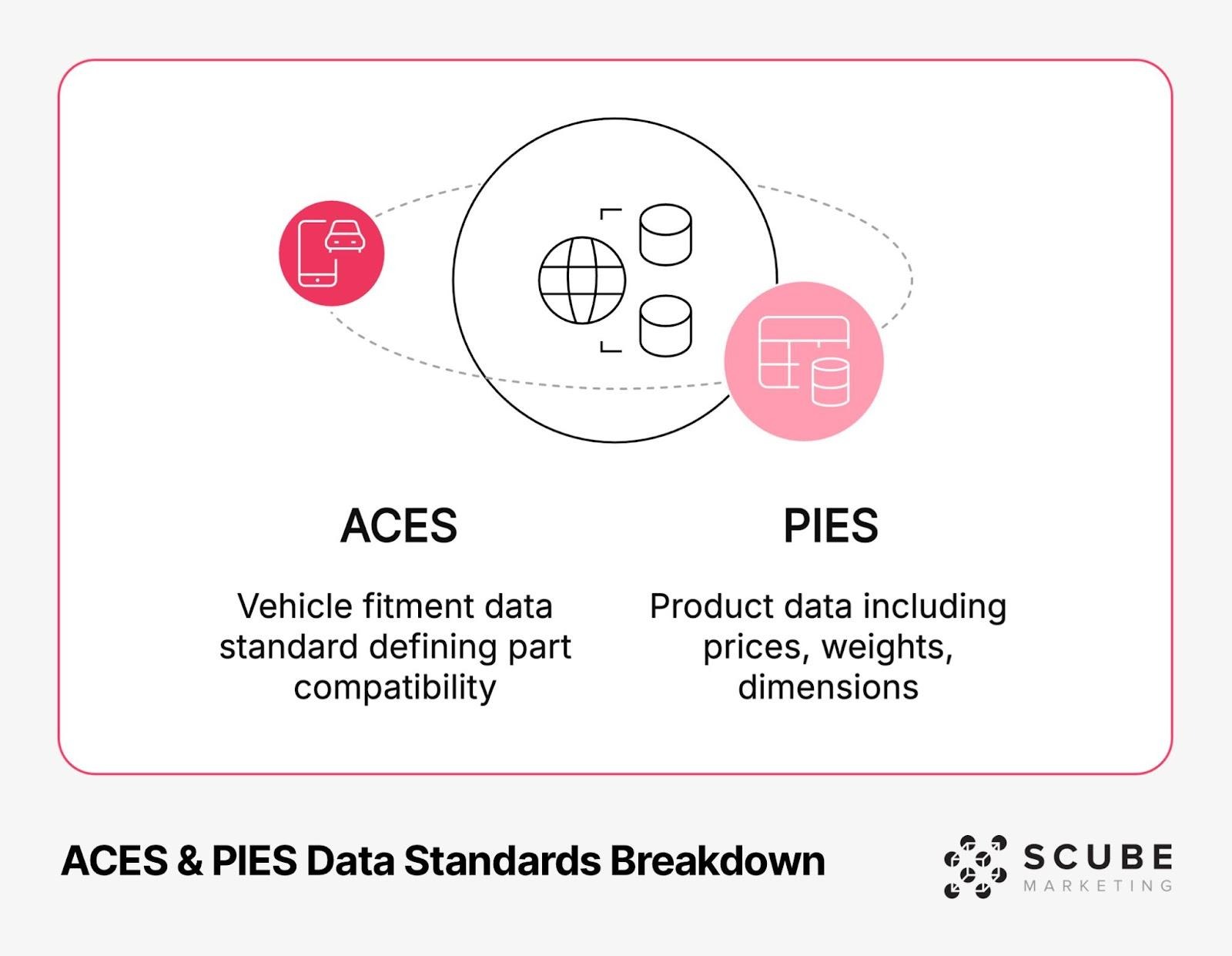
ACES (Aftermarket Catalog Exchange Standard) manages vehicle fitment data, defining which automotive parts match specific vehicle attributes such as engine type, transmission type, fuel type, and trim level. This information is structured using the vehicle configuration database (VCDB) and related databases to ensure standardized data and reliable fitment information.
PIES (Product Information Exchange Standard) handles product data, including product attributes, product specifications, pricing, digital assets, and brand information. It supports machine-readable formats like XML format or XML file, enabling consistent product listings across online retailers and marketplaces.
Together, ACES and PIES create a unified parts data ecosystem. This system ensures accurate product listings, connects customers with compatible parts, and improves the overall customer experience. For equipment companies, manufacturers, and retailers, this is critical to maintaining a strong position in the competitive automotive industry.
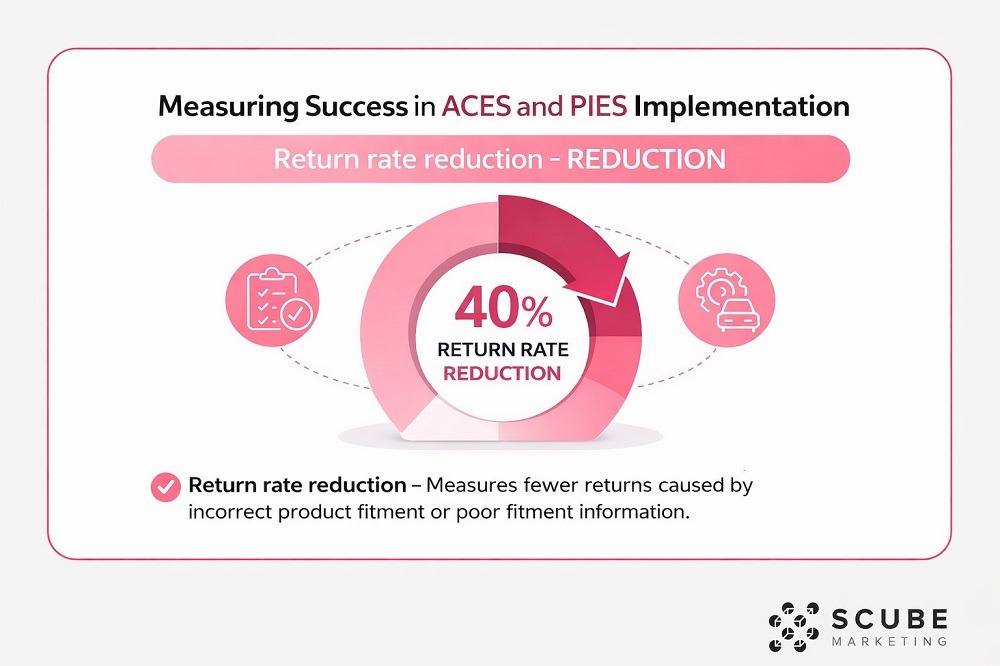
For eCommerce businesses, ACES and PIES data is more than a technical layer; it directly impacts sales, inventory management, and supply chain efficiency. Clean, structured fitment data reduces returns, improves conversions, and ensures customers find exact parts without confusion.
From experience working with brands like FindPigtails.com, businesses that properly manage ACES and PIES often outperform competitors due to better data accuracy, cleaner product details, and more reliable product fitment across channels.
For brands that don't have the internal infrastructure to maintain this at scale, see how we approach disco →
Managing ACES and PIES across large-scale product listings comes with real complexity. Most challenges stem from the volume of parts data, evolving PIES standards, and fragmented data management systems.
The sheer volume of product data involved in managing thousands of SKUs across automotive parts catalogs can lead to critical errors in fitment information or pricing, especially when data accuracy is not maintained across multiple databases and systems. These issues often cascade into returns, poor customer experience, and long-term reputation damage within the automotive aftermarket industry. (Source: Credencys)
The complexity is significant:
Common issues include:
Even small gaps in data accuracy can lead to incorrect purchases, returns, and poor customer experience.
The technology standards committee under the Auto Care Association continuously updates aces data and pies data standards to reflect changes in the automotive aftermarket. For example, newer updates support more flexible formats beyond traditional XML format, increasing the need for adaptable data management systems.
This creates ongoing challenges:
Siloed systems remain one of the biggest barriers in managing ACES and PIES effectively. When ERP, PIM, and ecommerce platforms fail to communicate seamlessly, data management becomes fragmented, leading to inconsistencies in product data, fitment information, and product listings across channels. (Source: Sitation)
Without proper integration, businesses struggle to maintain standardized data, which directly impacts data accuracy, inventory management, and overall customer experience in the automotive aftermarket.
These integration challenges typically appear in the following ways:
Disconnected systems also make it harder to maintain consistency across databases, align product attributes, and ensure accurate product fitment for vehicle parts. Over time, this creates friction across the supply chain and reduces trust among customers and online retailers.
Looking for a clear, connected view of how auto parts marketing actually works across SEO, PPC, feeds, and marketplaces? Explore our complete guide to auto parts marketing and ecommerce →
Optimizing ACES and PIES data is not just about compliance; it’s about improving performance across sales, data accuracy, and operational efficiency.
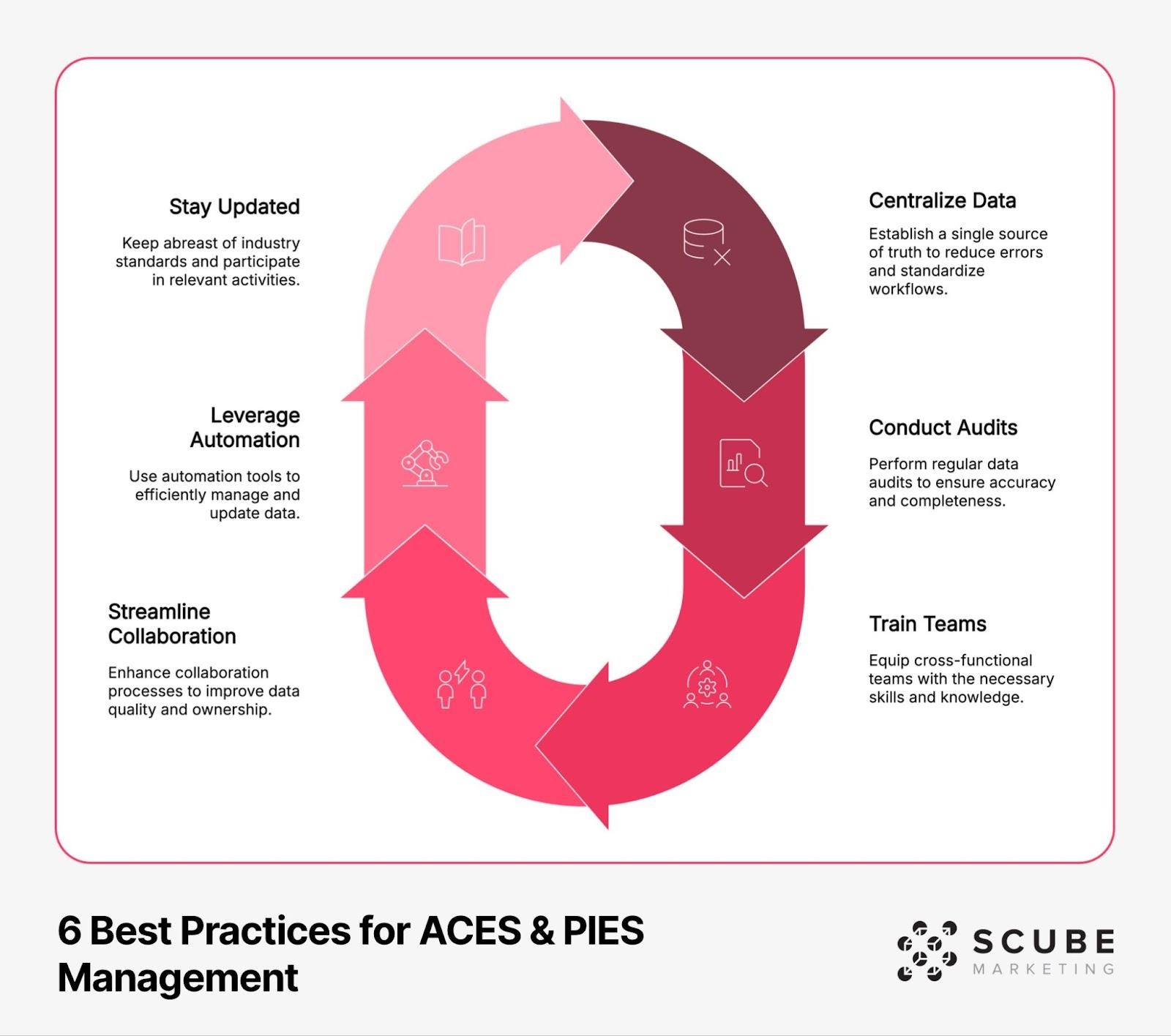
Implementing a robust Product Information Management (PIM) system creates a single source of truth for all automotive parts and product data. For businesses managing aces and pies, this centralized approach ensures consistent fitment data, accurate product attributes, and reliable product listings across all ecommerce platforms.
PDM Automotive's PIM solution has been shown to reduce fitment errors through automated audits and centralized data management, improving overall data accuracy and operational efficiency. (Source: PDM Automotive)
A dedicated PIM system offers several advantages:
A well-implemented PIM also helps maintain alignment between manufacturers, retailers, and online retailers, ensuring consistent brand information, product specifications, and digital assets across channels.
When selecting a PIM solution, it’s important to choose one with built-in validation for ACES and PIES data, including compatibility with the vehicle configuration database (VCDB) and product attribute database (PAdb). This ensures compliance with current data standards while streamlining the entire product information exchange standard workflow.
Consistent audits ensure data accuracy and prevent issues before they impact customers.
Effective audits include:
Regular validation keeps product fitment reliable and improves trust across online retailers.
Managing ACES and PIES is not just a technical task; it requires alignment across teams. Technical knowledge gaps often create barriers to effective data management and accurate use of the vehicle configuration database (VCDB). Workshops focused on interpreting complex VCdb codes (for example, understanding the difference between "Engine CC" and "Engine Cubic Centimeters") significantly improve team alignment and data accuracy. (Source: APA Engineering)
Each department plays a role:
Training ensures consistent handling of standardized data across the business.
Efficient collaboration improves data accuracy and reduces errors across the supply chain.
Best practices include:
This helps maintain consistency across digital catalogs and improves the overall customer experience. How can data-driven strategies improve performance? High-quality product data and fitment information aligned with ACES and PIES improve Google Shopping visibility, increasing click-through rates and conversions.
Manual data management is inefficient and error-prone, especially when handling large volumes of product data and fitment data. Modern APIs can sync PIM systems with ecommerce platforms, enabling real-time updates and reducing the risk of outdated or incorrect information reaching customers. (Source: Spark Shipping)
Effective automation tools for managing ACES and PIES include:
These tools improve efficiency, support inventory management, and enhance overall customer experience.
Staying aligned with evolving data standards is essential for maintaining accurate ACES and PIES workflows and ensuring consistent product data across ecommerce platforms. The Auto Care Association requires access to key databases like the vehicle configuration database (VCDB) and product attribute database (PAdb) to support compliance and reliable fitment information. (Source: Auto Care Association)
To stay current, businesses should:
This ensures long-term consistency, better customer experience, and stronger performance across the automotive aftermarket.
Understanding whether your ACES and PIES strategy is delivering results requires clear measurement. Strong data management backed by structured product data and accurate fitment data should translate directly into operational and commercial improvements.
Businesses that implement PIM-driven workflows for ACES and PIES data often see faster product onboarding, cleaner product listings, and better alignment across ecommerce platforms and online retailers.
Key performance indicators to track include:
For eCommerce businesses, these metrics directly impact sales and performance. Clean, structured product data improves visibility in paid channels, enhances click-through rates, and drives higher conversions, especially when combined with optimized product feeds and accurate vehicle parts mapping.
Managing ACES and PIES effectively requires the right mix of tools, integrations, and industry resources. These solutions help maintain data accuracy, streamline inventory management, and ensure compliance with evolving data standards.
Tool / Resource
These tools help businesses manage large volumes of parts data, maintain consistent product listings, and ensure compatibility across systems.
Industry organizations play a key role in maintaining and evolving aces pies frameworks:
The technology standards committee regularly updates requirements, helping businesses stay aligned with the current version of standards.
The automotive aftermarket industry is evolving rapidly, and ACES and PIES will continue to expand to support new technologies, vehicles, and rising customer expectations. Key trends include enhanced digital assets like 360° images, electric vehicle integration with new vehicle attributes, real-time synchronization across inventory management and product listings, AI-driven validation for better data accuracy, and expanded vehicle configuration database integration.
Adapting requires flexible data management systems that support evolving product information exchange standard requirements. Businesses that invest in structured product data, accurate fitment information, and aligned supply chain systems gain a competitive edge. Strong product attributes and consistent product details improve customer experience, reduce returns, and drive higher conversions in the automotive aftermarket.