You're selling thousands of SKUs to contractors, builders, and retailers across dozens of channels. Your margins are tight, your competition is fierce, and you need every marketing dollar to count.
Most distributors I work with make the same mistake. They treat PPC like a checkbox on their digital marketing to-do list.
They run some Google Shopping campaigns. Maybe dabble in LinkedIn ads. Track a few clicks and conversions. But they're missing the real opportunity.
Here's what actually works: distributor marketing strategy built on ruthlessly efficient PPC tactics that target high-intent buyers at the exact moment they're comparing suppliers. You need campaigns optimized for thin margins, long sales cycles, and buyers who care more about delivery times than brand storytelling.
I'll show you how to build that system. We'll cover audience segmentation that separates $500 orders from $50,000 contracts, bidding strategies that work when your average order value varies by 10x, and campaign structures that actually make sense for distributors selling both B2B and B2C.
By the end, you'll have a framework that turns PPC from a cost center into your most predictable revenue driver.
Distributor marketing isn't just slapping products on Google Shopping and hoping contractors find you. It's how you position your entire distribution business to manufacturers upstream and buyers downstream.
Your job is to make manufacturers want to work with you and make buyers choose you over direct-from-manufacturer options or competing distributors.
Most distributors focus all their marketing energy on the buyer side. They optimize product pages, run shopping campaigns, and try to rank for product keywords.
That's half the game.
The other half is partner relationship marketing. How do you prove to manufacturers that you're worth the margin they give up? How do you become their preferred channel partner instead of just another name on their distributor list?
Your distributor marketing strategy needs to address both. PPC gives you the data to prove your value to both audiences.
Distributors sit in a unique position. You have manufacturers above, customers below, and competing distributors on all sides.
Your marketing strategies need to work across all three relationships simultaneously.
This is where most distribution strategy falls apart. You can't just copy B2C ecommerce tactics or standard B2B lead generation playbooks.
You need campaigns built for the specific economics of distribution. Thin margins, high SKU counts, variable order values, and buyers who sometimes need a single part tomorrow and sometimes need a full job lot next quarter.
Standard ecommerce PPC advice assumes you control pricing, own the brand relationship, and have consistent margins across products.
Distributors have none of those luxuries.
Your manufacturers set minimum advertised prices. Your brand equity depends entirely on partner relationships. Your margin on a $12 fitting is completely different from your margin on a $4,000 HVAC unit.
You can't bid the same way on both. You can't use the same ROAS targets. You can't even use the same campaign structures.
That's why distributor marketing requires a completely different approach to digital marketing channels and PPC specifically.
If you're selling to both contractors and homeowners, you already know they behave completely differently. 83% of B2B decision-makers are willing to make online transactions of at least $10 million, but they're using different channels and making decisions on different timelines.
Your B2C customers search "best kitchen faucet" and buy within hours. Your B2B customers search "industrial valve supplier Chicago" and take three weeks to evaluate options.
Same products. Completely different marketing strategies.
B2B buyers are comparing distributors, not just products. They care about account terms, delivery reliability, technical support, and whether you stock the obscure parts they'll need next month.
Your B2B marketing needs to address those concerns before they ever fill out a contact form.
PPC for B2B distribution means targeting problem-aware searches. Contractors don't search for "PVC pipe." They search for "same-day PVC delivery near me" or "plumbing supply house that stocks Viega."
These searches convert at much higher rates because the searcher already knows what they need and is just looking for the right supplier.
LinkedIn CPC typically averages $5 to $7 for typical B2B campaigns, making it viable for high-value B2B accounts but completely uneconomical for individual product sales.
That's the B2B vs B2C split in action.
B2C buyers don't care about your partner relationships or inventory depth. They want the product, the price, and fast shipping.
Your B2C marketing should focus entirely on product-level conversions. Google Shopping campaigns, product-specific landing pages, reviews, and competitive pricing.
The economics are different too. 34% of B2B online sales are driven by self-service commerce, meaning even business buyers are shopping like consumers when the purchase is small enough.
You need campaigns that can serve both the contractor buying a single emergency replacement part and the homeowner tackling a DIY project.
The mistake most distributors make is running the same campaigns for both audiences. You end up with B2B searchers landing on consumer-focused product pages and B2C buyers hitting "request a quote" forms.
Separate campaigns, separate landing pages, separate bid strategies.
Google Shopping is where most distributors start with PPC. It's also where most distributors waste the most money.
The default approach is to upload your entire catalog, set a target ROAS, and let Google's Smart Bidding figure it out.
That works great if you're selling shoes with consistent 40% margins. It's a disaster for distributors.
Your catalog has $8 fittings with 15% margins sitting next to $800 assemblies with 35% margins. Google doesn't know the difference. It just sees two products and bids based on historical conversion data.
You need campaign structures that respect your actual economics.
Start by segmenting your catalog into margin tiers. High-margin products get their own campaigns with aggressive ROAS targets. Low-margin products get defensive campaigns optimized for volume, not profit percentage.
Create separate campaigns for:
Each gets different bidding strategies and different success metrics.
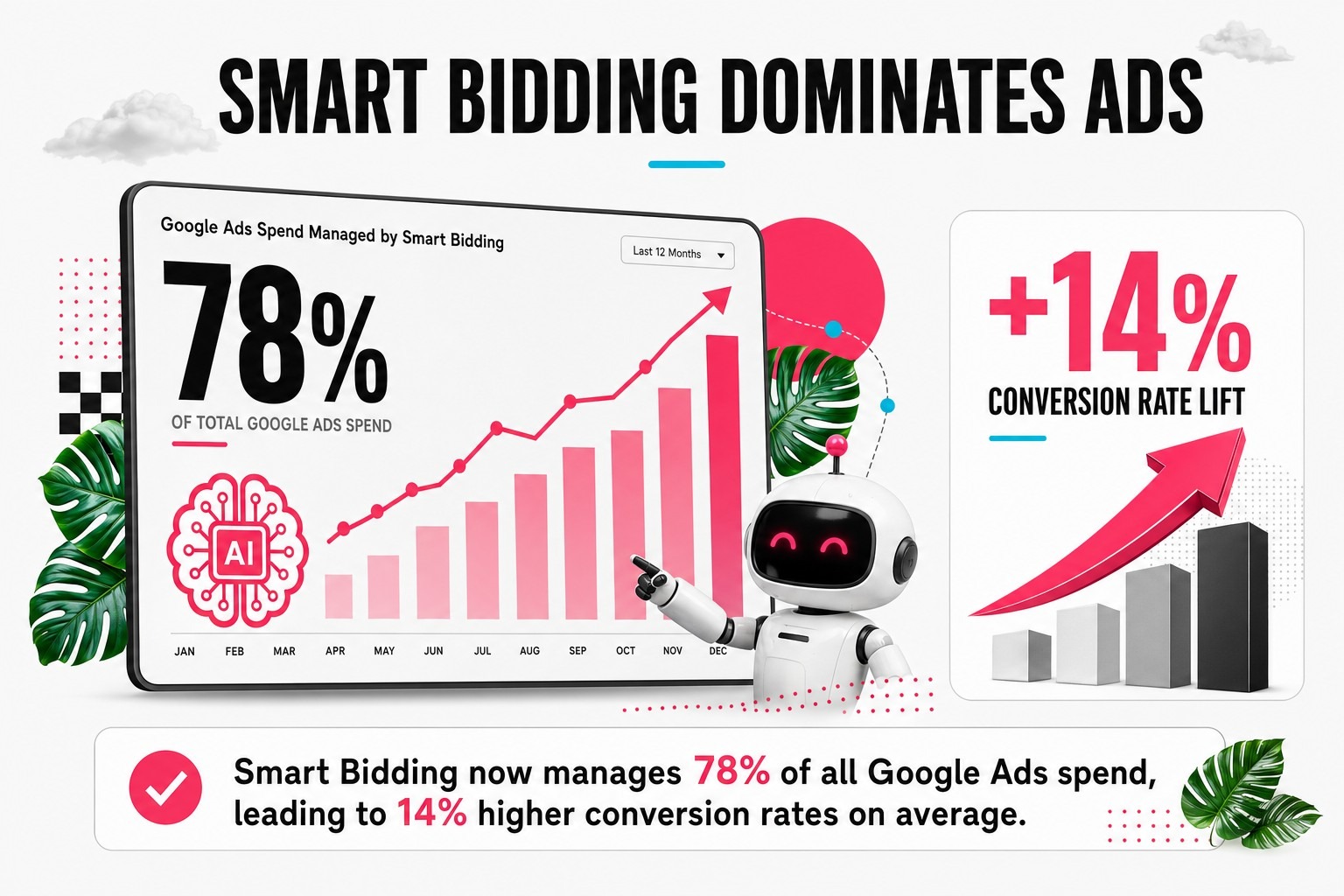
Smart Bidding now manages 78% of all Google Ads spend, leading to 14% higher conversion rates on average, but only when you give it campaigns with similar margins and conversion values to optimize against.
If you dump everything into one campaign, Smart Bidding optimizes for average performance across wildly different products. You end up overspending on low-margin items and underinvesting in your most profitable SKUs.
Most distributors structure Shopping campaigns by manufacturer or category. That makes sense for organization but terrible sense for bidding.
Instead, structure by business priority.
Put your exclusive distribution products at the top. These are items where you're the only source or one of few distributors. You can bid aggressively because you're not competing on price alone.
The next tier is competitive products where you have good margins and strong inventory positions. Bid based on profitability, not just ROAS.
The bottom tier is commodity products where you're competing primarily on price and delivery. These need defensive bidding to capture existing customers and high-intent searchers, but you can't afford to chase every click.
This structure lets you allocate budget to products based on strategic value, not just historical click-through rates.
Shopping campaigns work for product searches. Search campaigns work for supplier searches.
When someone types "electrical supply house near me" or "HVAC parts distributor," they're not shopping for a specific product. They're shopping for a supplier relationship.
These searches convert at much higher lifetime values than individual product searches.
Your search campaigns should target supplier-intent keywords, not product-intent keywords. Let Shopping handle "3/4 inch ball valve." Use Search to capture "industrial valve distributor Boston."
Build search campaigns around these keyword themes:
These searchers are further down the funnel than you think. They've already decided they need a distributor. They're just choosing which one.
Your landing pages need to address that decision. Don't send them to product pages. Send them to pages that explain your account process, delivery capabilities, inventory depth, and technical support.
Include clear calls to action for opening an account, not just making a single purchase.
If you're competing with other distributors in your market, you need campaigns targeting their brand names.
When someone searches "Competitor Name delivery times" or "Competitor Name customer service," they're expressing dissatisfaction with their current supplier.
Your ad should speak directly to that dissatisfaction. "Same products, better service" or "Next-day delivery on orders by 3pm" or "No backorders on our top 1,000 SKUs."
These campaigns have lower search volumes than product campaigns, but much higher conversion values. You're not just winning a sale. You're potentially winning an entire account.
The average cost per lead through paid channels is $310, which sounds expensive until you realize a single contractor account can be worth tens of thousands in annual revenue.
Most distributors ignore LinkedIn because the cost per click seems insane compared to Google.
That's the wrong comparison.
LinkedIn isn't competing with Google Shopping campaigns for $50 orders. It's competing with field sales calls and trade show booths for landing $500,000 accounts.
If you're targeting facility managers, purchasing departments, or contractor principals, LinkedIn is the only platform where you can reach them based on actual job titles and company characteristics.
Use LinkedIn's account targeting to focus your spend on specific companies you want as customers.
Upload a list of target accounts based on your ideal customer profile. Maybe it's manufacturing facilities with 200+ employees in your delivery area. Or commercial contractors with at least $10M in annual revenue.
Create ads specifically for those decision-makers. Don't sell products. Sell partnership value.
"Managing supply for 50+ facilities? We handle just-in-time delivery for manufacturers across the Midwest" performs better than "Buy industrial supplies."
Your landing page should offer something valuable beyond a product catalog. Maybe it's a facility supply audit, a delivery optimization consultation, or a comparison of your stocking program versus their current approach.
LinkedIn campaigns work best as the top of a longer nurture sequence, not direct conversion campaigns.
Someone clicks your ad, downloads your capability guide, and enters a 60-day email sequence that gradually demonstrates your value as a distribution partner.
You're building the partner relationship before they ever place their first order.
Track LinkedIn campaign success by account opens and first-year customer value, not by immediate ROAS. B2B buyers use an average of 10 channels as they go through their purchasing journey, so your LinkedIn campaign is just one touchpoint in a much longer evaluation process.
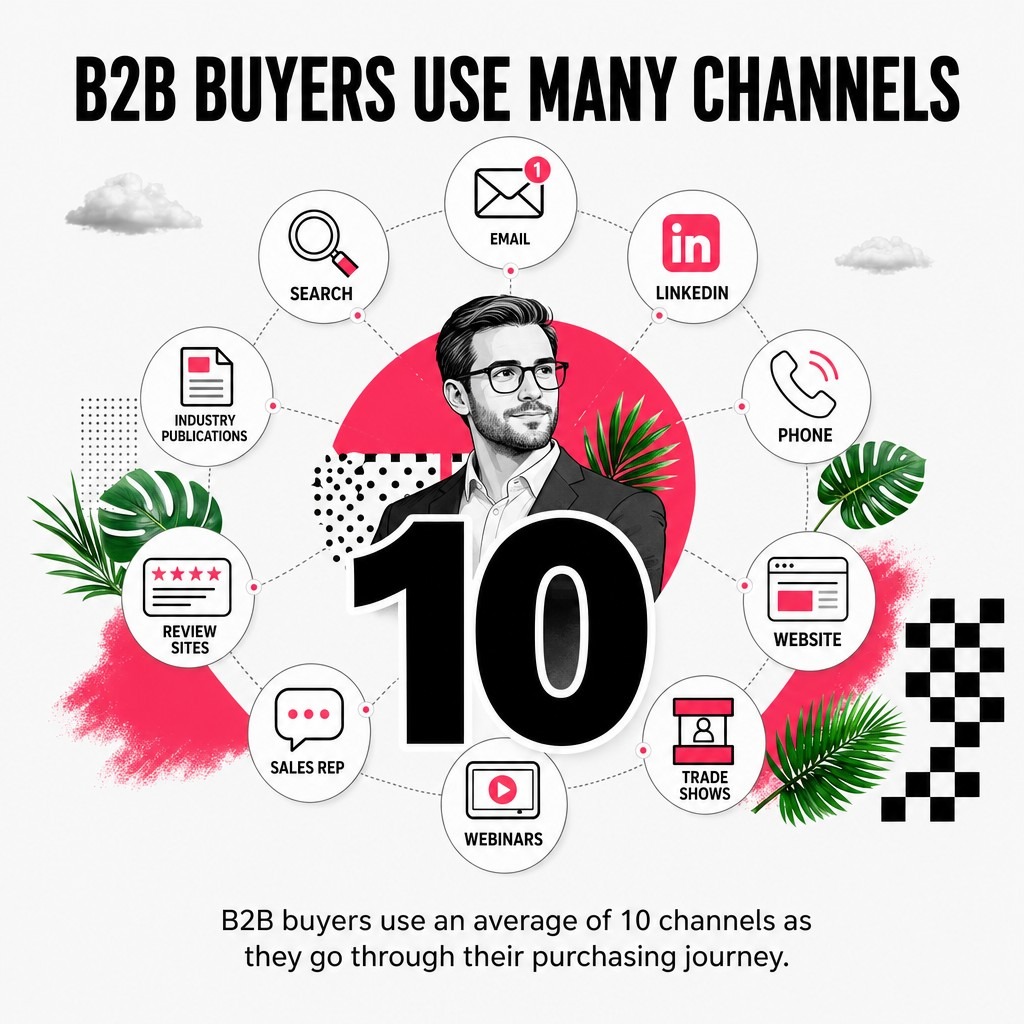
That's exactly why you need it. You want to be in that consideration set early, before they've narrowed down to two or three final suppliers.
Your manufacturers probably offer marketing development funds (MDF) or co-op advertising programs. Most distributors leave this money on the table.
PPC is the perfect way to use these funds while building data that proves your value to manufacturers.
When you run brand-specific campaigns for a manufacturer's products, you generate data on search volumes, conversion rates, customer acquisition costs, and market demand.
That data makes you more valuable to the manufacturer than distributors who just stock products and wait for orders.
For each major manufacturer you carry, create dedicated Shopping and Search campaigns featuring only their products.
Use their brand terms in search campaigns. Create Shopping campaigns with their brand name prominently featured in titles and descriptions.
Track performance separately so you can show the manufacturer exactly how much demand you're generating for their products.
When it's time to negotiate better terms or exclusive distribution rights, you have hard data showing the marketing investment you're making in their brand.
This is partner enablement at its most practical. You're not just reselling products. You're actively building market demand for specific manufacturers.
Use your PPC data to propose formal incentive programs with manufacturers.
"We'll invest $5,000 per month in PPC for your product line if you provide co-op funding at 50% and give us preferred pricing on orders generated through these campaigns."
Now you're running profitable marketing campaigns with half the cost covered by manufacturer funds, while building the partner relationship that leads to better margins and exclusive distribution deals.
The manufacturers win because you're expanding their market reach. You win because you're running marketing strategies at a fraction of normal cost while strengthening relationships that drive your entire business model.
B2B buyers visit your site multiple times before converting. They're comparing specifications, checking stock, getting pricing, and building project quotes.
If you're only tracking last-click conversions, you're missing most of the customer journey.
Remarketing campaigns keep you in front of buyers during those long research cycles. When they're finally ready to place the order, you want to be the first name they remember.
Create remarketing audiences based on behavior, not just site visits.
Build separate lists for:
Each audience gets different messaging and different offers.
Catalog browsers see educational content and product selection guides. Cart abandoners see promotional offers or free shipping thresholds. Past customers see new product announcements or seasonal promotions.
This is where digital marketing strategies significantly outperform traditional distributor marketing. You can tailor messages to exactly where each buyer sits in their journey.
If someone visits your site from a PPC ad but doesn't convert, get them into an email sequence.
Use Google's Customer Match to build remarketing audiences from your email lists. When someone on your email list searches for your products or competitors, your ads appear with higher priority.
Combine this with proper email marketing materials that educate buyers about your capabilities, highlight inventory availability, and showcase technical support resources.
The goal isn't just remarketing ads. It's a complete omnichannel approach where PPC, email, and sales training all work together to move B2B buyers through longer purchase cycles.
Learn how to build complete B2B lead generation strategies that connect PPC to email nurturing and sales follow-up.
Contractors search for distributors while standing at job sites. They need parts now, not next week.
Your mobile PPC strategy needs to address that urgency and local intent.
"Near me" searches convert at exceptionally high rates because the searcher has immediate purchase intent. They're literally looking for the closest supplier with the part in stock.
If your campaigns aren't optimized for local inventory visibility and mobile conversions, you're missing the highest-intent searches in your market.
Google's Local Inventory Ads show which distributors have specific products in stock at nearby locations.
When someone searches for a part, they see which stores have it available for immediate pickup. That's incredibly powerful for emergency purchases and time-sensitive projects.
Set up local inventory feeds that update in real-time with your actual stock levels. When you show "In stock at our Northwest location," you're not just advertising. You're solving the customer's actual problem.
Make your landing pages mobile-optimized with prominent "Call now" and "Get directions" buttons. The contractor at a job site isn't going to fill out a contact form. They're going to call or drive to your location.
For mobile search campaigns, optimize for phone calls instead of website visits.
Use call extensions, call-only ads, and location extensions. Make it as easy as possible for someone to call your counter and ask if you have the part they need in stock.
Track these calls as conversions. When someone calls asking about product availability, that's often a higher-intent lead than someone who fills out a web form.
Train your counter staff to ask how callers found you. When you can connect phone call conversions back to specific PPC campaigns, you can optimize for the channels that drive actual walk-in business, not just web traffic.
Standard ecommerce metrics don't tell the full story for distributors.
ROAS matters, but it's not the only thing that matters. Customer lifetime value, account opens, repeat purchase rates, and average order value growth tell you whether your marketing strategies are actually building a sustainable distribution business.
You need tracking that connects PPC campaigns to long-term customer relationships, not just individual transactions.
A contractor might click a Google ad, visit your site three times over two weeks, call to ask about account terms, and finally place their first order in person at your counter.
Last-click attribution gives all the credit to "direct." You'd think PPC didn't work.
That's wrong and expensive.
Implement multi-touch attribution that tracks the entire customer journey. Use Google Analytics 4's data-driven attribution model or invest in proper attribution software that connects online campaigns to offline sales.
When you can see that your LinkedIn campaign started a relationship that turned into a $200,000 annual account, you'll invest differently than when you only see the $0 immediate ROAS.
Businesses earn $2 for every $1 spent on PPC advertising, but that average hides huge variations between one-time buyers and repeat customers.
Track CAC separately for first-time customers versus repeat purchasers. Your remarketing campaigns should have much lower CAC because you're targeting people who already know your business.
Calculate LTV by customer segment. B2B accounts acquired through Search campaigns might have 10x higher LTV than B2C customers acquired through Shopping campaigns, even if the immediate ROAS is lower.
This is where performance measurement becomes strategic. You're not just optimizing campaigns. You're building a complete data-driven decision framework for how you allocate marketing budget across different customer segments and channels.
You don't need to implement everything at once. Start with the foundations and layer in complexity as you prove results.
Here's how to roll out a complete distributor marketing strategy over the next 90 days.
Start with Google Shopping campaigns segmented by margin tier. Get your high-margin products their own campaigns with aggressive bidding.
Set up basic conversion tracking that captures both ecommerce transactions and form submissions. Install call tracking on your main phone numbers.
Launch search campaigns targeting your top supplier-intent keywords for your primary service area.
This gives you immediate traffic and conversions while you build more sophisticated campaigns.
Add remarketing campaigns for cart abandoners and catalog browsers. Set up Customer Match audiences from your email list.
If you're targeting B2B accounts, launch your first LinkedIn campaigns focusing on job titles and company characteristics that match your ideal customers.
Implement manufacturer co-op campaigns for your top two or three brand partners. Show them the early data and start conversations about formal MDF programs.
Refine your attribution model to track multi-touch journeys. Connect PPC data to your CRM so you can see which campaigns drive high-LTV customers.
Launch local inventory ads if you have physical locations. Optimize mobile campaigns specifically for click-to-call conversions.
Start monthly reporting that shows account opens, repeat purchase rates, and customer LTV by acquisition channel, not just ROAS.
By day 90, you should have a complete distributor marketing strategy running profitably with clear data on what's working and what needs adjustment.
Most distributors treat PPC like a necessary evil. Something you do because everyone expects an ecommerce site to run Google ads.
That's the wrong mindset and it shows in the results.
The distributors winning right now are using PPC as a strategic weapon. They're building partner relationships with data, proving their value to manufacturers, and capturing high-intent buyers at exactly the right moment in their purchasing journey.
Start with margin-based Shopping campaigns. That's your foundation. Get profitable revenue flowing before you expand to more complex strategies.
Add supplier-intent search campaigns as soon as Shopping is stable. Those campaigns build customer relationships, not just transactions.
Layer in remarketing, LinkedIn, and manufacturer co-op programs as you prove each channel works.
The goal isn't to run every possible campaign. It's to build a distribution strategy where your marketing strategies actually support your business model instead of fighting against it.
Thin margins, complex partner relationships, and variable customer values aren't problems. They're just conditions that require smarter campaign structures and better measurement.
See how we helped a B2B distributor triple revenue using the exact strategies in this guide.
Build campaigns that respect your economics. Measure what actually drives your business. Use the data to strengthen partner relationships.
That's how you turn PPC from a cost center into your most predictable revenue driver.