HVAC parts suppliers competing for bulk orders face a unique challenge. Your buyers aren't homeowners browsing Facebook.
They're procurement managers at 3 AM searching "commercial HVAC compressor OEM replacement." They're facilities directors comparing part specifications across three tabs. They're contractors who need 50 units by Tuesday.
Most PPC advice targets residential service calls. That's useless for parts suppliers.
I've spent years helping B2B industrial suppliers turn search traffic into purchase orders. The difference between a $200 residential service call and a $15,000 bulk parts order isn't just the dollar amount.
It's everything about how the campaign works.
This guide walks through exactly how to structure PPC campaigns that reach purchasing decision-makers, not homeowners. You'll learn which ad types work for long B2B sales cycles, how to optimize for bulk order conversions, and why your keyword strategy needs to target part numbers instead of problems.
By the end, you'll have a complete framework for building PPC campaigns that generate qualified B2B leads and measurable increases in wholesale orders.
PPC stands for pay-per-click advertising. You only pay when someone clicks your ad.
For HVAC parts suppliers, this matters more than most industries realize. Every click costs money, but not every click becomes a $10,000 order.
The economics work differently in B2B. A residential HVAC company can profit from a $150 service call generated by a $12 click. You need clicks that lead to bulk purchases or long-term supply contracts.
PPC platforms display your ads when potential buyers search for specific terms on Google, browse industry websites, or match your target audience criteria on LinkedIn. You bid on keywords, create ads, set budgets, and track which clicks convert into actual orders.
Google Ads is the top pay-per-click platform in the HVAC industry, but parts suppliers need to approach it differently than service providers do.
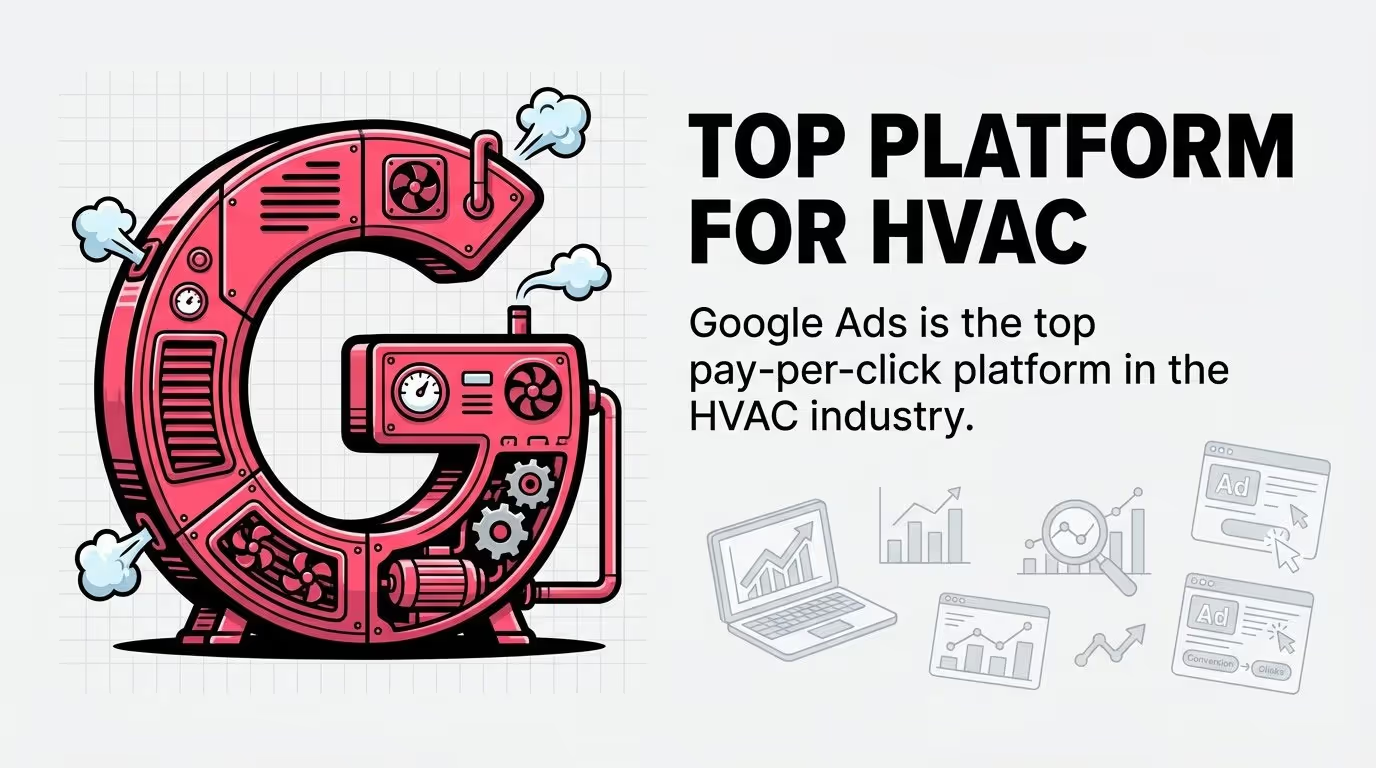
Google Ads leads HVAC PPC—use it differently for parts supply vs. residential services.
Google runs an auction every time someone searches. Your bid amount doesn't guarantee ad placement.
Quality Score matters more. Google calculates this based on your ad relevance, expected click-through rate, and landing page experience. A $5 bid with a Quality Score of 8 often beats a $7 bid with a Quality Score of 4.
For parts suppliers, this creates opportunity. Your landing pages showing technical specifications, bulk pricing, and fast shipping can achieve higher Quality Scores than generic HVAC service pages.
Facilities managers don't search "HVAC repair near me." They search "Carrier 06E compressor specifications" or "bulk HVAC capacitor supplier California."
Their searches include part numbers, manufacturer names, quantity indicators, and technical specifications. They're comparing suppliers, checking availability, and researching before requesting quotes.
Your PPC campaigns need to capture these high-intent searches. Someone searching a specific part number is much closer to purchasing than someone searching "air conditioner not working."
78% of mobile device users who perform local searches for home services make a purchase within 24 hours, showing how quickly high-intent searches convert when you target the right buyers.
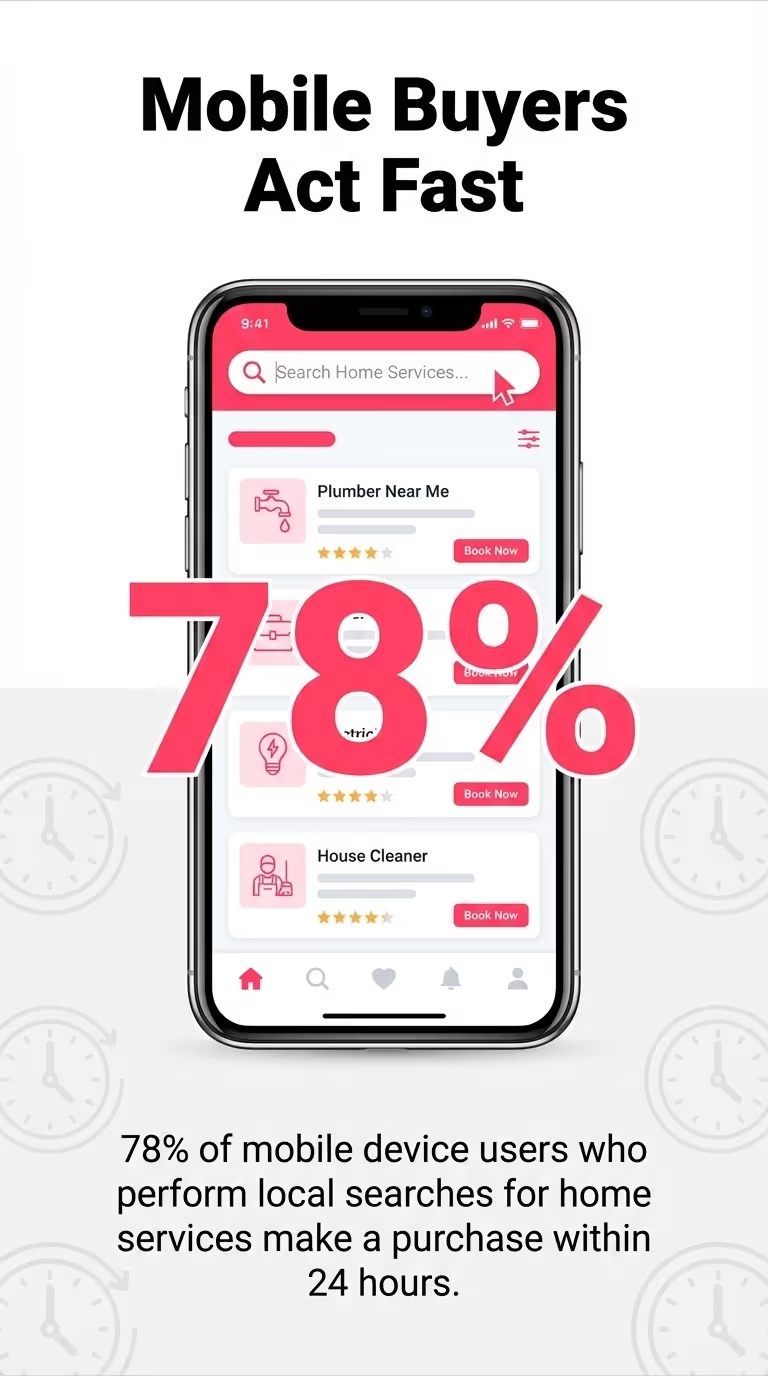
High-intent mobile searchers act fast—capture them with precise, part-number keywords.
Your competitors are already bidding on your best keywords. While you're waiting for organic SEO results, they're capturing every contractor searching for bulk orders right now.
PPC provides immediate visibility. Launch a campaign today and appear in search results within hours. Compare that to six months of SEO work before ranking on page one.
The targeting precision makes PPC perfect for B2B. You can show ads only to users searching commercial HVAC terms, only during business hours, only in regions where you ship.
New product lines need immediate exposure. You can't wait months for organic rankings when you've just added a new manufacturer to your inventory.
PPC lets you test messaging instantly. Run three different ad copies for a week. See which generates more quote requests. Shift budget to winners.
Seasonal demands in HVAC create urgency windows. When summer approaches and contractors stock up, PPC ensures you're visible during those critical weeks.
B2B sales cycles require tracking. PPC platforms show exactly which keywords generate quote requests, which ads lead to phone calls, and which landing pages convert visitors into leads.
This data transforms how you allocate marketing budgets. Instead of guessing which trade shows generated leads, you know precisely that "$150 spent on 'commercial HVAC parts bulk' generated three qualified leads worth $45,000."
Integration with CRM systems lets you track PPC leads through your entire sales pipeline. You can calculate that Google Ads leads convert at 12% while display ads convert at 4%.
Understanding lead generation metrics helps you optimize campaigns based on actual revenue impact, not just click volumes.
Building on why PPC matters, let's examine how the system actually operates for parts suppliers. Understanding these mechanics prevents expensive mistakes.
Every PPC campaign follows the same structure: campaign level settings, ad groups, keywords, ads, and landing pages. Each level serves specific purposes.
Campaign level controls budget, location targeting, and schedule. Set a daily budget of $100, target only California and Nevada, run ads only during business hours.
Ad groups cluster related keywords together. Create separate ad groups for different product categories, manufacturers, or buyer types.
One ad group might target "Carrier commercial parts" with keywords like "Carrier compressor bulk," "Carrier parts distributor," and "wholesale Carrier HVAC parts." Your ads and landing page focus specifically on Carrier products.
Another ad group targets "emergency HVAC parts same day" with rush delivery messaging and a landing page highlighting your fast shipping.
This organization improves Quality Score. Google rewards relevance between keywords, ads, and landing pages. Generic campaigns that send all traffic to your homepage score poorly.
Broad match shows ads for related variations. Bid on "HVAC compressor" and you might appear for "home air conditioner repair" or "compressor noise troubleshooting."
That's wasteful for B2B suppliers. You'll pay for clicks from homeowners who'll never place bulk orders.
Phrase match requires your keyword phrase to appear in order. "HVAC compressor" matches "commercial HVAC compressor supplier" but not "compressor for HVAC systems."
Exact match shows ads only for that specific term. [HVAC compressor] only triggers for exactly that phrase. This provides maximum control but limits reach.
Parts suppliers should start with exact and phrase match. You want precision, not volume. After identifying which searches actually convert, gradually expand.
HVAC PPC campaigns typically achieve conversion rates between 1-4% when properly optimized, and Quality Score plays a major role in reaching those benchmarks.
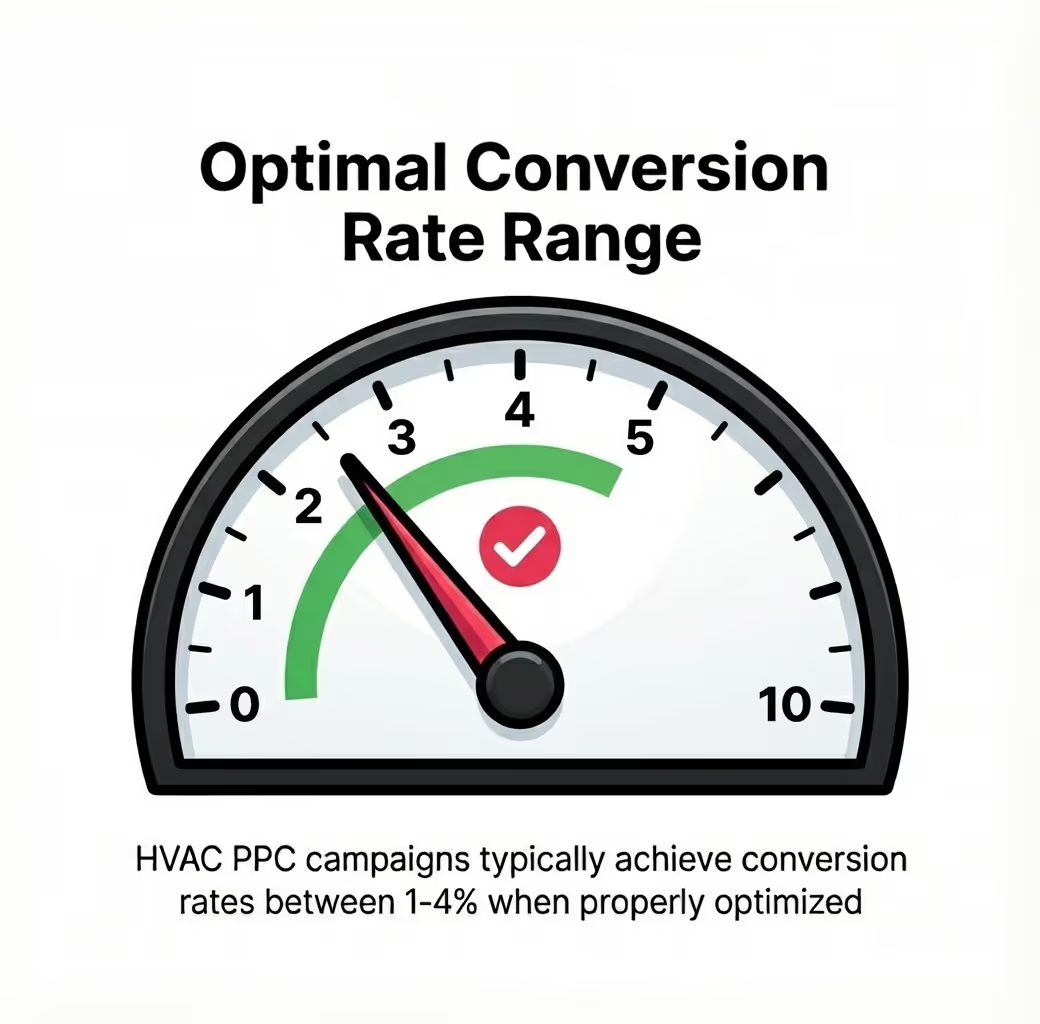
Well-optimized HVAC PPC often converts at 5–10%—tight keyword, ad, and page alignment is key.
Higher Quality Scores reduce your cost per click. A Quality Score of 8 might pay $3.50 per click while a competitor with Quality Score of 5 pays $5.20 for the same position.
Improve Quality Score by ensuring tight alignment. If your ad group targets "Copeland compressor parts," your ads should mention Copeland compressors, and your landing page should show Copeland inventory.
Now that you understand PPC mechanics, search ads become your primary weapon. These text ads appear when buyers actively search for exactly what you sell.
Search ads work because they match user intent perfectly. Someone searching "buy commercial HVAC parts bulk" is ready to compare suppliers.
Your ad appears above organic results, clearly marked as a sponsored listing. It includes a headline, description, URL, and extensions showing additional information.
Generic ads lose to specific ones. "HVAC Parts Supplier" tells buyers nothing. "Same-Day Commercial HVAC Parts | 50,000+ SKUs In Stock" communicates real value.
Include your differentiators in headlines. If you offer net 30 terms, say so. If you ship within 2 hours, make that your main message. If you specialize in obsolete parts, lead with that.
Description text should address B2B buyer concerns. Mention minimum order quantities, technical support availability, and OEM partnerships.
Strong calls-to-action for B2B differ from consumer ads. Instead of "Shop Now," use "Request Quote," "Check Inventory," or "Download Catalog."
Sitelink extensions add extra links below your main ad. Use them to showcase categories like "Commercial Compressors," "Control Boards," or "Bulk Pricing."
Callout extensions highlight features without extra links. Display "Free Shipping Over $500," "Technical Support Included," or "Authorized Distributor."
Call extensions add your phone number directly to ads. Contractors often prefer calling for urgent needs. Investing in call tracking provides data on calls received via ads, helping you understand which campaigns drive phone leads.
Location extensions show your address for local suppliers. Buyers searching "HVAC parts supplier Los Angeles" see exactly where you're located.
Part numbers convert better than generic terms. "Copeland CR18K6E-PFV" attracts someone who knows exactly what they need. They're not researching, they're buying.
Manufacturer names plus "distributor" or "supplier" indicate wholesale intent. "Carrier parts distributor" filters out homeowners looking for service.
Add "bulk," "wholesale," or "commercial" to keywords. These terms signal B2B buyers and reduce wasted clicks from residential searchers.
Technical specifications work well. "3-ton scroll compressor 208-230V" shows someone with technical knowledge making a professional purchase.
Geographic terms matter for regional suppliers. "HVAC parts Phoenix" or "commercial HVAC supplier Southwest" target your service area.
The strategies in this bulk B2B order PPC guide apply directly to parts suppliers targeting wholesale buyers.
While search ads capture active buyers, display advertising keeps your brand visible during extended B2B research phases. Parts procurement often takes weeks.
Display ads appear as banners on websites across the internet. Google display ad campaigns reach over 90% of the global internet audience, putting your brand in front of buyers as they research specifications and compare suppliers.
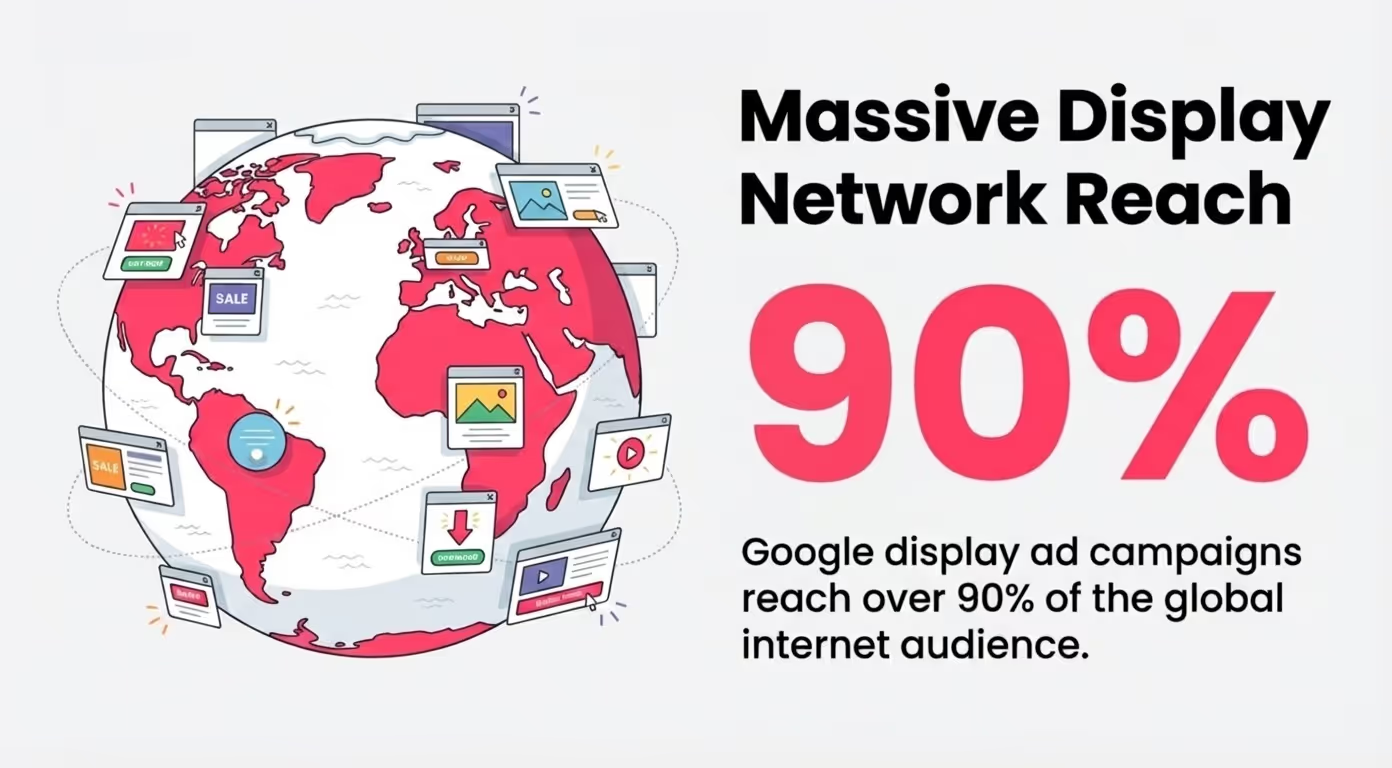
Google’s Display Network covers 90% of the web—ideal for remarketing across long B2B buying cycles.
For HVAC parts suppliers, display works best for remarketing. Someone visited your compressor category page but didn't request a quote. Show them ads reminding them of your inventory as they continue researching.
Create audience lists based on website behavior. Visitors who viewed product pages but didn't submit a quote form become one audience. People who abandoned their shopping cart become another.
Different audiences need different messages. Cart abandoners might respond to a free shipping offer. Product researchers might need a downloadable specification sheet.
Set frequency caps to avoid annoying potential customers. Seeing your ad 3 times per week keeps you top-of-mind. Seeing it 20 times per day creates negative associations.
Use remarketing duration strategically. B2B buyers research for weeks, so keep remarketing active for 30-60 days instead of the standard 7 days used for consumer products.
Product images work better than stock photos. Show actual inventory, not generic HVAC system pictures.
Highlight B2B-specific benefits. "Net 30 Terms Available," "Technical Support Included," or "Same-Day Shipping" resonate with commercial buyers.
Include specific product categories. "2,000+ Commercial Compressors In Stock" provides more value than "HVAC Parts Available."
Consider animated ads that showcase inventory breadth. Rotate through different product categories to demonstrate your range.
Display costs less per click than search but converts at lower rates. This works for parts suppliers because customer lifetime value is high.
One bulk order customer might generate $50,000 annually. Spending $200 on display ads to stay visible during their research phase makes sense.
Display works particularly well for new market entry. Breaking into a new region where buyers don't know your brand requires repeated exposure.
Combine display with search for maximum impact. Buyers who see your display ads multiple times are more likely to click your search ads later.
Moving beyond Google's ecosystem, LinkedIn provides access to the exact job titles who approve HVAC parts purchases. This platform works differently but delivers exceptional B2B results.
LinkedIn lets you target "Facilities Manager" or "Procurement Director" or "Building Maintenance Supervisor" at companies with 500+ employees in specific industries.
This precision eliminates waste. Every click comes from someone whose job involves buying what you sell.
Job title targeting reaches decision-makers directly. Target "Purchasing Manager," "Operations Director," or "Facilities Supervisor."
Company size filtering ensures you reach organizations that place bulk orders. Filter for 100+ employees or 500+ employees depending on your ideal customer.
Industry targeting shows ads only to people working in sectors that need HVAC parts. Target "Facilities Services," "Commercial Real Estate," or "Property Management."
Geographic targeting focuses on your service area. No point showing ads to facilities managers in states where you don't ship.
Sponsored content appears in LinkedIn feeds like regular posts. Share content about new product lines, inventory updates, or technical resources.
Message ads send direct messages to targeted prospects. Use these for special promotions or new supplier announcements.
Dynamic ads personalize automatically with the viewer's profile photo and details. "John, find commercial HVAC parts at wholesale prices" creates attention.
Lead gen forms collect information without leaving LinkedIn. Offer a downloadable catalog in exchange for contact details.
Educational content performs better than sales pitches. Share maintenance tips, specification guides, or industry updates.
Position yourself as a resource, not just a vendor. "How to Select Commercial Compressors for Extreme Climates" demonstrates expertise.
Case studies showing successful partnerships work well. "How We Kept a 500-Unit Property Complex Running During Peak Summer" proves capability.
Product announcements gain traction when framed as solutions. "New Copeland Partnership Brings Faster Delivery Times" matters more than "We Now Carry Copeland."
LinkedIn campaigns cost more per click than Google, but the audience quality justifies the expense. One facilities manager contact can generate ongoing orders for years.
For parts suppliers serving specific geographic areas, Local Service Ads create a different opportunity. These ads appear at the very top of Google results, above traditional search ads.
Local Service Ads display your business name, rating, location, hours, and a "Google Guaranteed" badge. They emphasize trust and proximity.
The payment model differs too. You pay per lead, not per click. Someone calls or messages through the ad, and you're charged a fixed amount regardless of order size.
Regional suppliers benefit most. If you primarily serve California or Texas or the Northeast, Local Service Ads ensure nearby buyers see you first.
Same-day or emergency services gain advantage. Contractors needing parts immediately prioritize local suppliers who can deliver within hours.
The "Google Guaranteed" badge builds trust with new customers. Google's vetting process signals legitimacy that helps unknown suppliers compete with established names.
Google requires business verification, including license checks and background checks. This process takes 2-3 weeks but creates significant trust signals.
Select service areas carefully. Define exactly which ZIP codes or cities you serve for different delivery timeframes.
Set budget controls by leads, not dollars. Decide you want 20 leads per week maximum, and Google stops showing your ads after you hit that number.
Response time matters enormously. Google tracks how quickly you respond to leads and prioritizes businesses that answer within minutes.
Detailed business descriptions filter leads. Specify "Wholesale HVAC Parts for Commercial Contractors" rather than generic "HVAC Parts."
Service listings should emphasize B2B focus. List services like "Bulk Parts Orders," "Commercial HVAC Supplies," or "Contractor Accounts."
Photos showing your warehouse, inventory, and team establish credibility. Buyers want to see you're a real business with actual stock.
Collect and showcase reviews aggressively. Local Service Ads display review counts prominently, and higher ratings appear first.
Understanding ad formats prepares you to allocate budgets effectively. B2B HVAC suppliers face different economics than consumer businesses.
Start with customer lifetime value calculations. If an average new customer generates $30,000 in first-year orders, you can afford substantial acquisition costs.
Calculate your acceptable cost per acquisition. If you convert 10% of quote requests and close 30% of quotes, you need 33 leads to generate one customer. At $30,000 value, you could spend $3,000 per customer acquisition and still profit.
Begin with search ads taking 60-70% of budget. These capture high-intent buyers actively searching for your products right now.
Allocate 20-30% to remarketing and display. These campaigns build awareness and re-engage researchers over longer decision cycles.
Reserve 10-20% for LinkedIn if you're targeting larger facilities and property management companies. The higher costs are offset by decision-maker access.
Test budgets in $500-1,000 increments weekly. This provides enough data to evaluate performance without risking excessive amounts on unproven campaigns.
Manual bidding gives maximum control initially. Set exact bid amounts for each keyword based on expected value.
Part numbers and high-intent terms justify higher bids. Someone searching a specific product code is worth more than someone searching generic terms.
Geographic bid adjustments make sense for uneven markets. Bid 40% more in regions with higher demand or less competition.
Daypart bidding optimizes for B2B hours. Increase bids 20% during business hours (8 AM - 5 PM weekdays) and decrease them evenings and weekends when contractors aren't actively purchasing.
Automated bidding becomes effective after collecting conversion data. Google's algorithms need 30+ conversions to optimize effectively. Start manual, switch to automated after gathering sufficient data.
Following ROI optimization strategies ensures your budget delivers measurable returns rather than just generating clicks.
Identify your constraint: leads or budget. If you're generating more qualified leads than your sales team can handle, you're lead-constrained. Pause growth and focus on conversion rate optimization.
If you're converting every lead but want more volume, you're budget-constrained. Increase spending on best-performing campaigns by 20-30% increments.
Calculate incremental return on ad spend for each increase. Sometimes doubling your budget doesn't double your results due to audience saturation.
Watch for diminishing returns. Your first $1,000 might generate 15 leads. The next $1,000 might only generate 10. Scale until the incremental cost per lead exceeds your acceptable threshold.
Ad clicks mean nothing without conversions. Your landing pages determine whether visitors become leads or bounce back to search results.
B2B landing pages need different elements than consumer pages. Facilities managers aren't impulse buying. They're evaluating whether you're a legitimate, reliable supplier.
Match landing page content to ad promises exactly. If your ad mentions same-day shipping, your landing page should prominently feature shipping speed. Disconnect between ad and page kills conversion rates.
Clear headline reinforcing the ad message. If they clicked "Commercial Copeland Compressors," your headline should say "Copeland Commercial Compressors - In Stock & Ready to Ship."
Product availability information. Show real-time stock status or at minimum guarantee items are "In Stock" rather than making buyers wonder.
Technical specifications visible without digging. B2B buyers need specs to verify compatibility. Don't hide this behind multiple clicks.
Trust signals scattered throughout. Display manufacturer partnerships, industry certifications, years in business, and customer testimonials from other contractors.
Multiple contact methods. Some buyers prefer quote forms. Others want to call immediately. Offer both options prominently.
Reduce form fields to minimum necessary. Company name, contact name, phone, email, and product interest suffice initially. Don't demand extensive information before making contact.
Explain what happens next. "We'll email a quote within 2 hours" or "Our team will call within 30 minutes" sets clear expectations.
Offer multiple form variants for different buyer stages. A quick "Check Availability" form with just phone and part number works for urgent needs. A detailed "Request Quote" form serves buyers comparing multiple suppliers.
Thank you pages should provide next steps and additional resources. "While you wait for our quote, download our commercial compressor selection guide."
B2B buyers increasingly research on mobile devices during site visits or between meetings. Your landing pages must function perfectly on smartphones.
Click-to-call buttons should appear prominently at the top of mobile pages. A contractor on a job site wants to call immediately, not fill out forms.
Simplify navigation for smaller screens. Desktop pages with complex menus become unusable on mobile. Streamline to essential elements only.
Load speed matters more on mobile. Compress images, minimize scripts, and ensure pages load in under 3 seconds even on slower connections.
Test every form on actual phones. Forms that work perfectly on desktop often have frustrating issues on mobile where fields are too small or keyboard behavior is wonky.
Improving conversion rates often delivers better ROI than increasing ad spend, making landing page optimization a priority for parts suppliers.
Optimized landing pages mean nothing without measurement systems proving what's working. B2B campaigns require tracking that connects PPC clicks to actual revenue.
The average conversion rate for HVAC services is 3.1%, providing a baseline for evaluating your campaign performance against industry standards.
Conversion tracking starts with defining what counts as a conversion. Quote form submissions clearly qualify. Phone calls from click-to-call ads count too. Downloads of your catalog might indicate serious interest.
Google Ads conversion tracking requires adding code to thank you pages. When someone submits a quote form, they see a confirmation page with tracking code that reports back to Google.
Phone call tracking needs special numbers. Use call tracking software that provides unique phone numbers for each campaign. When someone calls, the system records which ad generated that call.
Offline conversion import connects CRM data to Google Ads. When a lead from your PPC campaign closes 60 days later, import that conversion back to Google. This teaches the algorithm which leads actually generate revenue.
Value-based tracking assigns different values to different conversions. A quote request for 100 compressors is worth more than a catalog download. Assign values that reflect true business impact.
Cost per lead measures efficiency. Divide total ad spend by leads generated. If you spent $2,000 and got 25 quote requests, your cost per lead is $80.
Lead-to-customer conversion rate shows sales team effectiveness. Track what percentage of PPC leads eventually place orders. If only 5% convert, either lead quality is poor or sales follow-up needs improvement.
Customer acquisition cost combines marketing and sales expense. Add cost per lead plus the sales team time investment required to close deals.
Return on ad spend calculates revenue generated per dollar spent. If $2,000 in ads generated $18,000 in orders, your ROAS is 9:1.
Time to conversion matters in B2B. Track how long from first click to closed sale. Parts suppliers often see 30-60 day cycles. Understanding this prevents prematurely judging campaign success.
B2B buyers interact with your brand multiple times before purchasing. They click a search ad, visit your site, leave, see a display ad, return later, and finally submit a quote request.
Last-click attribution gives all credit to the final interaction. This undervalues earlier touchpoints that introduced your brand.
First-click attribution credits the initial ad. This ignores the remarketing and nurturing required to close B2B sales.
Linear attribution spreads credit evenly across all touchpoints. This provides more balanced understanding of how campaigns work together.
Data-driven attribution uses machine learning to assign credit based on actual conversion patterns. This requires sufficient conversion volume to work effectively.
Most parts suppliers should start with last-click for simplicity, then graduate to data-driven attribution after collecting 50+ conversions monthly.
With measurement systems tracking performance, you need strategies for outperforming competitors bidding on the same keywords. HVAC parts supply is competitive.
Research competitor ad copy systematically. Search your target keywords and document what competitors emphasize. If everyone claims "lowest prices," that angle is saturated.
Auction insights reports in Google Ads show who else is bidding on your keywords. You'll see impression share, overlap rate, and position metrics for each competitor.
Inventory depth differentiates commodity suppliers. If you stock 50,000 SKUs while competitors stock 10,000, that's your angle.
Manufacturer relationships create unique positioning. Authorized distributor status for premium brands justifies higher prices and attracts buyers requiring OEM parts.
Technical support included with orders provides value beyond price. Contractors appreciate suppliers who help troubleshoot compatibility issues.
Delivery speed matters in emergency situations. Same-day shipping in major metros or 2-hour pickup options create competitive moats.
Payment terms appeal to growing contractors. Net 30 or net 60 terms help buyers manage cash flow better than credit card requirements.
Simply bidding higher isn't sustainable. Large competitors with deeper pockets will always outspend you on generic terms.
Target long-tail keywords competitors ignore. "Copeland scroll compressor 3 ton 208-230v single phase" is more specific than "HVAC compressor" and attracts more qualified buyers.
Use negative keywords aggressively. Add terms like "repair," "residential," "installation," and "DIY" to prevent wasting budget on non-buyers.
Schedule ads during hours when competitors pause. If major competitors only run ads 9-5, running 24/7 captures after-hours emergency searchers.
Geographic targeting in underserved markets works better than competing in saturated major metros. A dominant position in Albuquerque often generates better ROI than fighting for scraps in Los Angeles.
Applying advanced geo-targeting strategies helps parts suppliers focus spending on markets where they have operational advantages.
Position one isn't always optimal. Top positions cost 40-60% more than positions 2-3 but often don't generate proportionally more conversions.
Test positions 2-4 for comparison keywords where buyers evaluate multiple suppliers anyway. They'll click several ads regardless.
Fight for position one on brand terms and specific part numbers. When someone searches your company name or a product you specialize in, dominance matters.
Competitive positioning becomes more critical during seasonal demand fluctuations. HVAC parts suppliers face dramatic seasonal patterns that require proactive budget management.
Summer cooling season drives compressor, capacitor, and refrigerant demand. Spring and fall represent shoulder seasons with moderate activity. Winter shifts toward heating components and slower overall volume.
Anticipate seasonal changes 45-60 days early. Contractors stock up before peak season hits. Increase budgets in April for summer preparation, not July when peak demand arrives.
Allocate 40-50% of annual PPC budget to May through August if cooling dominates your business. Scale back to 15-20% during winter months unless you have strong heating products.
Maintain minimum presence year-round rather than pausing entirely. Complete shutdowns mean rebuilding Quality Scores and momentum when you restart.
Shift product focus seasonally. Promote compressors and condensers in summer. Emphasize heat exchangers and control boards in winter.
Adjust keyword strategy by season. "Emergency AC parts" works in July. "Furnace parts same day" works in December.
Many competitors reduce spending during slow seasons. This creates opportunity for market share gains at lower costs.
Increase impression share during off-season when competition decreases. Dominate search results for 70% less cost per click than peak season.
Build remarketing audiences during slow periods. Visitors who research in November might purchase in March. Tag them early and re-engage when buying season starts.
Test new campaigns and keywords during low-cost months. Experiments that would waste money in July become affordable learning opportunities in January.
Heat waves and cold snaps create sudden demand spikes. Monitor weather forecasts and increase budgets before extreme weather hits.
Create rapid-response campaigns for emergency keywords. When temperatures hit 110°F, searches for "emergency AC compressor" spike. Have campaigns ready to activate.
Geographic targeting follows weather patterns. Heat wave in Phoenix means increasing Arizona budgets. Hurricane approaching Florida means storm preparation parts campaigns.
Set up automated rules that increase budgets when impression share drops below thresholds. This captures unexpected demand without manual intervention.
Seasonal optimization works better when PPC coordinates with your broader marketing strategy. Isolated campaigns miss synergies that amplify results.
Content marketing and PPC complement each other perfectly. Technical blog posts about compressor selection attract organic traffic. Remarket to those visitors with PPC ads highlighting your inventory.
Email campaigns to existing customers work alongside PPC for new customer acquisition. Different channels, different audiences, unified revenue growth.
Upload customer email lists to Google and LinkedIn as exclusion audiences. Don't waste PPC budget advertising to people already buying from you.
Use customer match audiences for retention campaigns. Target existing customers with ads promoting new product lines or seasonal specials.
Coordinate messaging between email and PPC. If your email campaign promotes a spring sale, your PPC ads should mention the same promotion.
Capture emails from PPC traffic. Build email lists from quote requests, catalog downloads, and form submissions generated through ads.
PPC provides immediate keyword research for SEO. Keywords that convert well in paid campaigns should guide organic content creation.
Use PPC to test messaging before investing in content. If "same-day shipping" messaging drives conversions in ads, emphasize it in organic content.
Dominate search results by appearing in both paid and organic listings. Visibility in both sections increases overall click-through rate.
Reduce PPC spend on keywords where you rank organically in position 1-2. Shift that budget to keywords where you lack organic presence.
Use PPC remarketing to follow up trade show attendance. Upload attendee lists and target them with reminder ads after the event.
Direct mail to targeted businesses can be reinforced with LinkedIn ads. Mail catalogs to facilities management companies, then show them LinkedIn ads.
Create special landing pages for offline campaigns. Mail postcards with unique URLs, then drive PPC traffic to those same pages to amplify exposure.
Track cross-channel attribution. When someone receives a catalog, sees a PPC ad, and then calls, which channel gets credit? Proper tracking reveals how channels work together.
Understanding how multiple PPC strategies work together helps suppliers create cohesive campaigns rather than isolated efforts.
Even with channel integration, specific mistakes drain budgets without delivering results. I've seen these patterns repeatedly with HVAC parts suppliers.
Treating PPC like residential service advertising wastes money immediately. The keywords, messaging, and expectations are completely different for B2B parts supply.
Sending all traffic to your homepage converts poorly. Someone searching "Copeland compressor CR18" needs to land on Copeland compressor pages, not generic homepages.
Spreading budgets too thin across too many campaigns prevents any single campaign from gathering sufficient data. Better to fully fund three campaigns than underfund ten.
Overinvesting in brand terms while ignoring generic terms misses new customer acquisition. Yes, your brand keywords convert well, but they're mostly people who already know you.
Pausing campaigns completely during slow seasons means rebuilding from zero every time. Better to reduce to 20% of peak budget than pause entirely.
Failing to adjust bids by device, location, and time wastes money. Mobile clicks at 2 AM from 500 miles away rarely become customers.
Using broad match keywords for B2B terms attracts residential searchers. Someone searching "broken air conditioner" isn't looking for wholesale parts suppliers.
Ignoring negative keywords allows wasted spend. Add "repair," "fix," "DIY," "residential," and hundreds of other terms that indicate non-buyers.
Geographic targeting that's too wide dilutes effectiveness. If you only ship profitably within 500 miles, why advertise nationally?
Audience targeting that includes everyone means targeting no one. LinkedIn campaigns that target "all professionals" waste money on irrelevant clicks.
Missing mobile optimization loses half your traffic. B2B buyers research on phones constantly, especially contractors in the field.
Complicated quote forms with 15 required fields create abandonment. Reduce to essential information only.
Slow loading pages kill conversions. B2B buyers won't wait 8 seconds for your page to load when competitors load in 2 seconds.
Generic messaging that doesn't address B2B concerns fails. Contractors need bulk pricing, net terms, and same-day shipping, not consumer-focused copy.
Not tracking phone calls misses huge conversion data. Many B2B buyers prefer calling to form submission.
Stopping optimization after initial setup leaves money on the table. Continuous testing and refinement separate winners from mediocre campaigns.
Judging success too quickly causes premature campaign termination. B2B sales cycles mean you need 60-90 days of data before making major decisions.
Focusing solely on cost per click ignores what matters: cost per customer acquisition and return on ad spend.
Yes, PPC delivers strong results for B2B when properly targeted. Google Ads achieves 200% ROI with 98% of B2B marketers using it. LinkedIn generates superior lead quality with 14-18% conversion rates from marketing-qualified leads to sales-qualified leads, making PPC proven for B2B lead generation.
Start with $2,000-5,000 monthly minimum to generate sufficient data. This typically produces 15-30 qualified leads monthly depending on competition and targeting. Scale up based on customer lifetime value once you validate ROI.
Initial traffic starts within 24-48 hours of launch. Meaningful lead generation typically begins within the first week. However, B2B sales cycles mean you need 60-90 days to evaluate true ROI as leads convert to customers.
Maintain year-round presence but adjust budgets seasonally. Allocate 40-50% of annual budget to peak seasons while keeping 10-15% active during slow months. This maintains Quality Scores and captures off-season researchers who buy during peak season.
Google Ads should be your foundation, capturing 60-70% of budget. Add LinkedIn when targeting larger facilities and enterprise buyers where decision-maker access justifies higher costs. Most suppliers see better ROI starting with Google then expanding to LinkedIn.