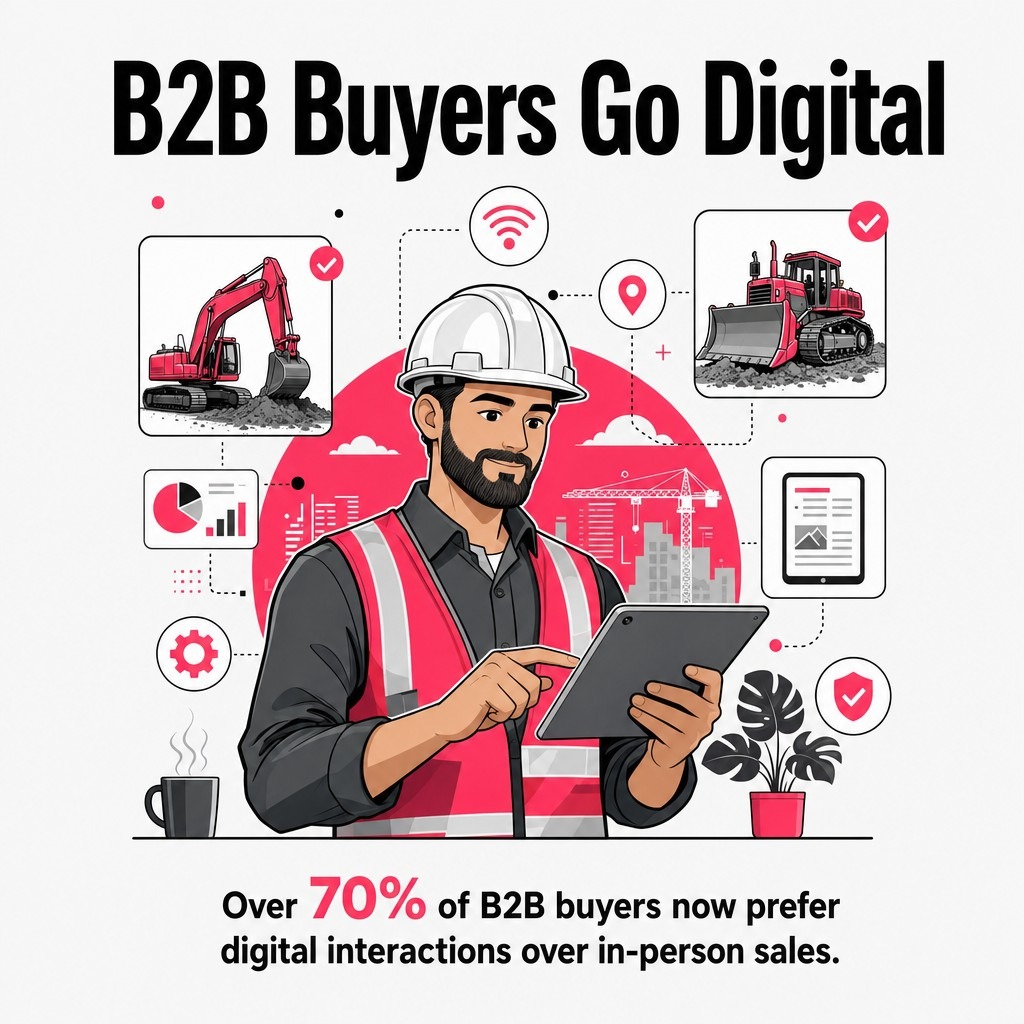
The heavy equipment industry stands at a crossroads that's harder to miss than a Cat D11 in your driveway. Over 70% of B2B buyers now prefer digital interactions over in-person sales, and they're using tools that didn't exist when you bought your first excavator.
Traditional heavy equipment advertising relied on trade shows, dealer relationships, and print catalogs. Those still matter, but they're no longer enough. Your potential customers are researching construction equipment online at 2 AM, comparing specs on mobile devices, and watching demo videos before they ever call a dealer.
I've watched eCommerce brands master digital marketing for years at SCUBE Marketing. The heavy equipment industry faces similar challenges with longer sales cycles and higher price points. The difference? Your customers aren't impulse buyers browsing Instagram for a bulldozer.
This guide covers everything from search engine optimization to social media strategy, all tailored for heavy equipment companies ready to compete in 2026. You'll learn which digital marketing channels actually work for machinery sales and how to measure real ROI from your advertising spend.
By the end, you'll have a complete digital-first marketing strategy that generates qualified leads instead of wasting budget on channels your buyers abandoned years ago.
Your customers don't buy heavy equipment the way they did five years ago. The sales cycle now starts online, often months before anyone picks up a phone.
73% of B2B buyers currently employ AI tools like ChatGPT and Perplexity during purchase research. They're asking these platforms which excavator has the best fuel efficiency or which loader handles best in muddy conditions.

Traditional advertising assumed buyers would visit your booth at ConExpo or call your sales team. 67% of B2B buyers state that they prefer a rep-free experience. They want to research specifications, compare models, and narrow their choices before talking to anyone.
More digital information doesn't slow down purchases. The average B2B sales cycle length decreased from 11.3 months in 2024 to 10.1 months in 2025. Buyers come to conversations better informed and closer to decisions.
Your heavy equipment marketing needs to meet buyers wherever they research. That means search engines, social media platforms, industry forums, and yes, AI search tools.
Digital-first doesn't mean abandoning trade shows or dealer relationships. It means ensuring your online presence works as hard as your sales team.
Search engines aren't just Google anymore. Potential customers ask ChatGPT and Perplexity for equipment recommendations the same way they'd ask a trusted colleague.
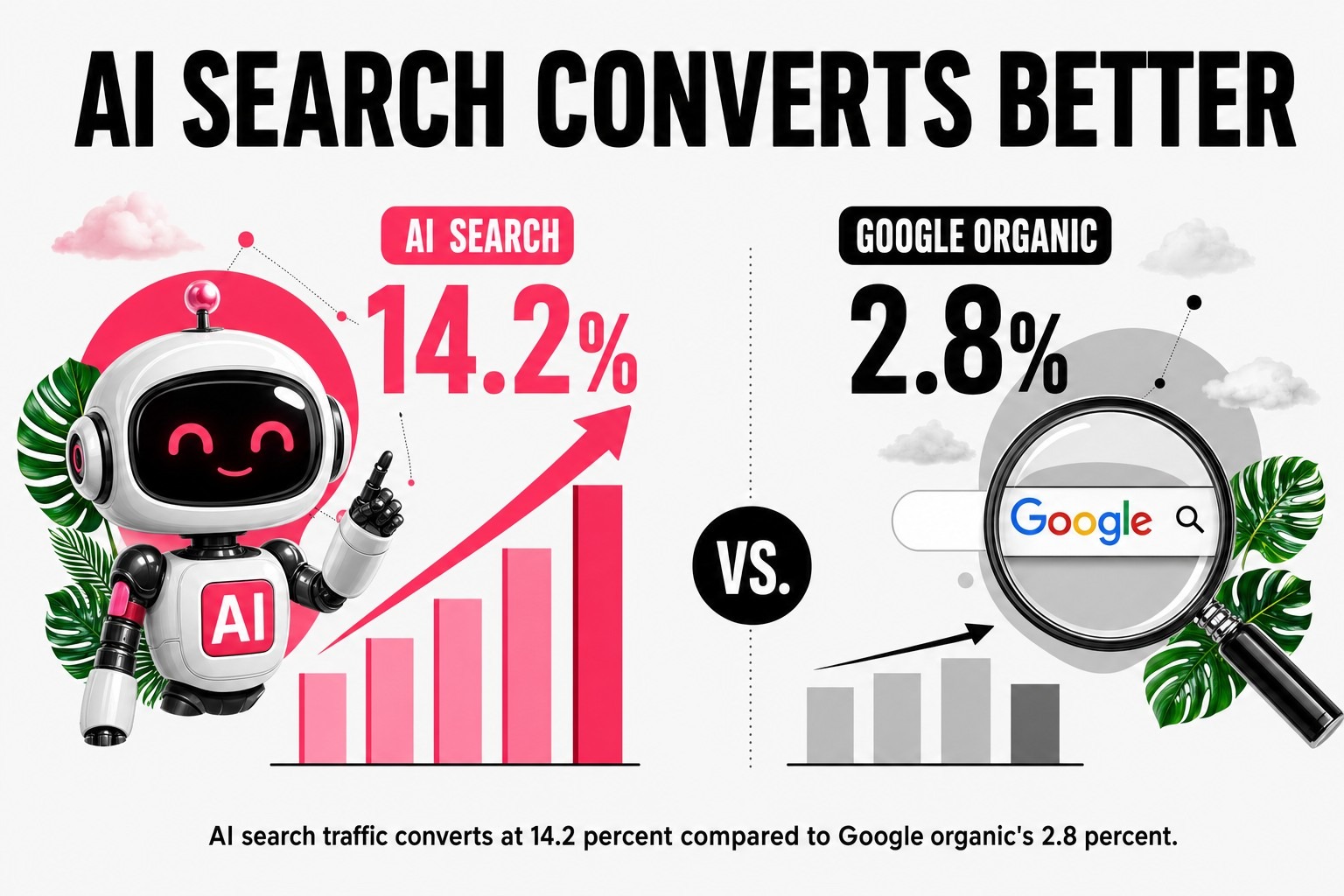
The conversion performance of AI search substantially exceeds traditional search, with AI search traffic converting at 14.2% compared to Google organic's 2.8%. When AI tools recommend your heavy equipment, those leads close at five times the rate.
The catch? AI tools pull information from authoritative content across the web. If your website lacks detailed specifications, comparison data, and educational content, you're invisible to these new search behaviors.
SEO for heavy equipment isn't just for software companies and bloggers. For heavy equipment dealers and manufacturers, organic search represents the most cost-effective way to reach buyers actively researching purchases.
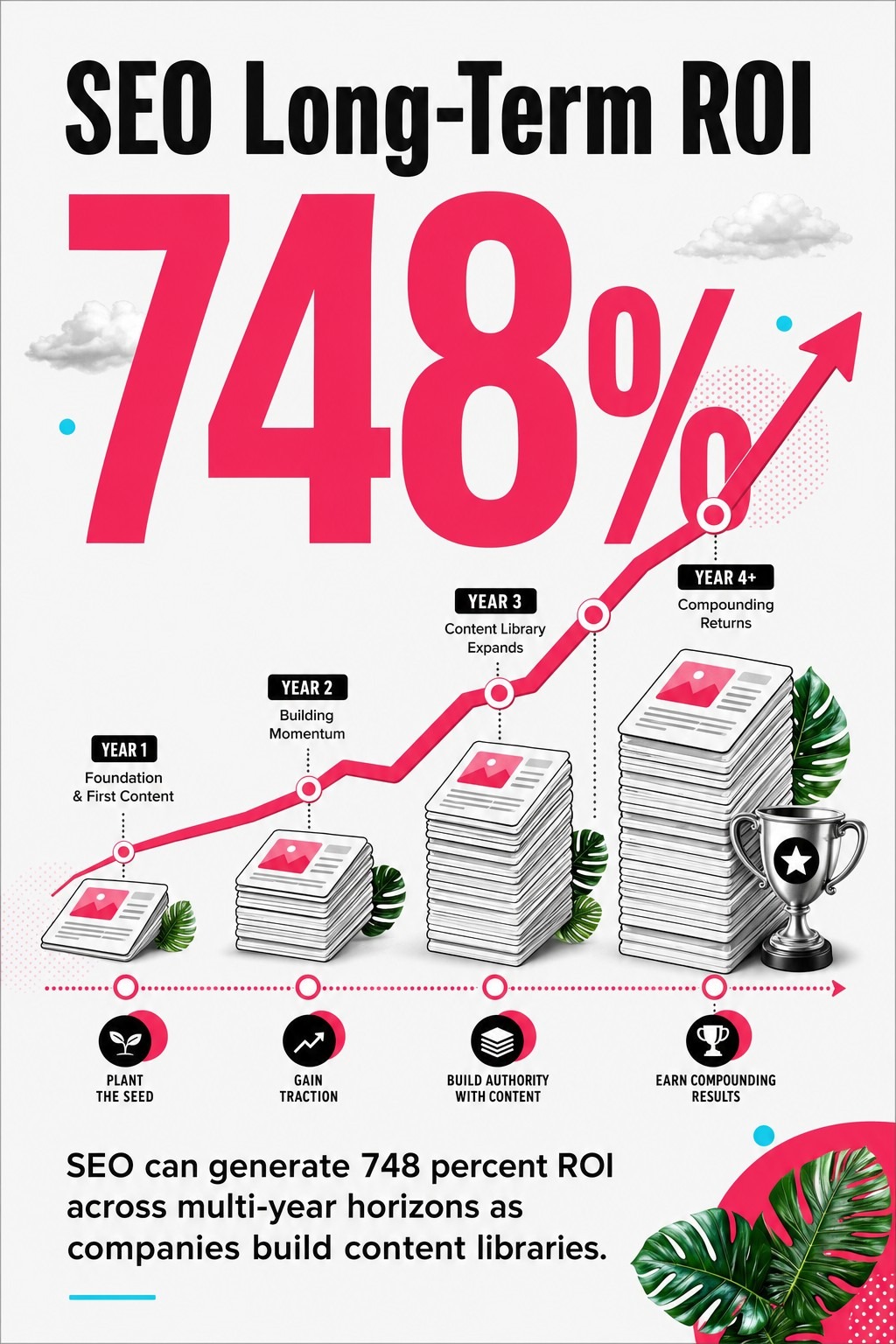
SEO can generate 748% ROI across multi-year horizons as companies build content libraries that accumulate organic traffic over time. Unlike paid ads that stop when budgets run out, quality content continues attracting potential customers for years.
Your website needs to answer every question a buyer might ask before calling. That starts with understanding what keywords they actually use.
Generic keywords like "excavator" attract browsers. Specific keywords like "30-ton excavator with thumb attachment for rocky terrain" attract buyers comparing final options.
Build your keyword strategy around buyer intent levels. Early-stage researchers search for "types of construction equipment for site preparation." Mid-stage buyers search for "Caterpillar 320 vs Komatsu PC300 comparison." Late-stage buyers search for "Cat 320 dealers near Denver with financing."
Create content targeting all three stages. Early-stage content builds brand awareness. Mid-stage content positions your equipment favorably. Late-stage content captures ready-to-buy leads.
Google rewards comprehensive, helpful content that genuinely serves user needs. For heavy equipment, that means detailed specification pages, comparison guides, application-specific recommendations, and maintenance information.
Every equipment model deserves its own landing page with complete specifications, high-quality images from multiple angles, application scenarios, and customer testimonials. Don't just list horsepower and weight. Explain which jobs each model handles best and why.
Blog content should answer questions your sales team hears repeatedly. "How much excavator do I need for a basement dig?" "What attachments work best for land clearing?" "Should I buy or rent a skid steer for a six-month project?"
Fast-loading mobile sites aren't optional anymore. Global mobile ad spend exceeds $430 billion in 2026, with mobile absorbing 74% of total digital advertising investment worldwide. Your customers research heavy equipment on phones between job sites.
Optimize product images without sacrificing quality. Use structured data markup so Google understands your equipment specifications. Create XML sitemaps that help search engines find every model page.
Site speed matters more than fancy animations. A three-second delay costs you potential leads who click back to competitors with faster sites.
Heavy equipment buyers prefer local dealers for service, parts availability, and immediate support. Your local SEO determines whether nearby contractors find you or your competition.
Google Business Profile optimization starts with complete, accurate information. List every equipment category you sell, upload photos of your yard and showroom, and post updates about new inventory arrivals.
Encourage customers to leave Google reviews after purchases or service appointments. Respond to every review, positive or negative. Detailed reviews mentioning specific equipment models boost your visibility for those searches.
Create dedicated pages for each service area you cover. "Heavy Equipment Sales in Phoenix" shouldn't be a thin page with generic content. Include local project references, terrain-specific recommendations, and regional regulations that affect equipment choices.
Blog about local construction projects, infrastructure development, and industry news. "Road Construction Projects Creating Demand for Asphalt Equipment in Colorado" targets local buyers and establishes local expertise.
Build citations in industry directories, local business listings, and construction association websites. Consistent NAP (name, address, phone) information across all listings strengthens local search visibility.
General contractors, excavation specialists, and landscaping companies all search differently. Create content targeting each customer segment's specific language and concerns.
Excavation contractors search for "high-reach excavators for deep foundation work." Landscaping companies search for "compact track loaders for residential properties." Road contractors search for "asphalt pavers with automatic grade control."
Your content should speak their language and address their specific applications. Generic equipment descriptions miss opportunities to connect with specialized buyers.
PPC advertising for heavy equipment requires different strategies than consumer products. Your cost per click might be higher, but each lead represents a potential six-figure sale.
Google Ads campaigns for heavy equipment need careful keyword selection, targeted landing pages, and conversion tracking that follows leads through long sales cycles.
Start with high-intent keywords that indicate buying readiness. "Equipment financing near me" shows more purchase intent than "types of excavators." "Request quote" keywords convert better than informational searches.
Sending PPC traffic to your homepage wastes money. Create dedicated landing pages for each equipment category with clear calls to action.
Include detailed specifications, multiple photos, financing options, and prominent quote request forms. Add customer testimonials from similar projects and highlight dealer advantages like service response times.
Remove navigation menus that encourage clicking away. Your goal is quote requests, not website exploration.
Heavy equipment purchases take months. Buyers visit your site multiple times before contacting sales. 92% of marketers report that retargeting performs better than most other digital advertising strategies.
Set up retargeting campaigns that show relevant ads to previous website visitors. Someone who viewed excavator pages sees excavator ads. Someone who downloaded a financing guide sees financing-focused messages.
Adjust messaging based on how recently they visited. Recent visitors see product-focused ads. Older visitors see new inventory announcements or limited-time offers.
Nobody buys a bulldozer through a shopping cart. Your conversion tracking needs to capture phone calls, quote requests, brochure downloads, and showroom visit bookings.
Use call tracking numbers on landing pages to attribute phone leads to specific campaigns. Set up conversion tracking for form submissions, PDF downloads, and financing calculator usage.
Connect your CRM to Google Ads so you can track which campaigns generate quotes that become purchases. Optimize for customer acquisition cost, not just click cost.
Social media isn't just for B2C brands. Construction professionals spend significant time on Facebook, LinkedIn, and YouTube researching equipment and industry trends.
Your social media strategy should educate, demonstrate value, and build relationships with potential customers. It's less about going viral and more about staying visible to your target audience.
LinkedIn reaches decision-makers at construction companies, contractors, and fleet managers. Share industry insights, equipment application tips, and company updates.
Post customer success stories highlighting specific projects and equipment used. Tag customers (with permission) to expand reach through their networks.
Join LinkedIn groups where contractors and construction professionals gather. Participate in discussions, answer equipment questions, and establish expertise without aggressive selling.
Facebook works well for reaching smaller contractors and local construction companies. Post new inventory arrivals, special promotions, and equipment demonstration videos.
Use Facebook's local targeting to reach businesses within your service area. Promote seasonal equipment like snow removal attachments to relevant geographic regions.
Facebook Live videos showing equipment walkarounds or operation demonstrations generate engagement and questions from potential buyers.
Video content sells heavy equipment better than static images. 87% of marketers reported satisfaction with their video marketing return on investment in 2025.
Create equipment operation videos, maintenance tutorials, and application-specific demonstrations. "How to Use a Compact Track Loader for Landscape Grading" helps buyers visualize using your equipment.
Optimize video titles and descriptions with relevant keywords. Add timestamps for different topics covered. Include links to equipment specification pages in video descriptions.
Organic social media builds awareness, but paid social advertising targets specific buyer segments. Use LinkedIn's job title and industry targeting to reach construction company owners and fleet managers.
Facebook's location and interest targeting works well for reaching contractors in specific service areas. Create lookalike audiences based on current customer lists.
Test video ads showing equipment in action. Carousel ads work well for highlighting multiple models or attachments.
Content marketing for heavy equipment goes beyond blog posts. It's about creating genuinely useful resources that help buyers make informed decisions.
Your content should answer questions, compare options, and provide practical guidance. The goal isn't clicks, it's building trust with potential customers before they're ready to buy.
Buyers spend significant time comparing models and brands. Create detailed comparison guides that objectively present options, including competitors.
"Caterpillar 320 vs Komatsu PC300: Complete Specification Comparison" serves buyers researching both models. Include honest assessments of each machine's strengths for different applications.
Don't just promote your preferred brands. Buyers appreciate objective information and trust dealers who acknowledge when competitors offer advantages for specific applications.
Different projects require different equipment. Create buying guides for specific applications: "Choosing the Right Excavator for Utility Trenching," "Loader Selection for Snow Removal Contractors," "Compact Equipment for Residential Construction."
These guides help buyers understand which features matter for their specific work. They also position you as an expert advisor, not just a salesperson.
Gated content like specification sheets, ROI calculators, and equipment selection worksheets capture lead information while providing genuine value.
Create an equipment cost comparison calculator that helps buyers evaluate purchase versus rental decisions. Build maintenance cost estimators for different equipment types.
These tools give you contact information for follow-up while helping buyers justify equipment investments to their stakeholders.
Real project examples show how equipment performs in actual conditions. Create detailed case studies highlighting customer challenges, equipment solutions, and project results.
Include specific details: project scope, equipment models used, unexpected challenges overcome, and measurable outcomes. Photos or videos of equipment on the job site add credibility.
Get customer testimonials on camera discussing why they chose your dealership and how the equipment performed. Video testimonials convert better than written quotes.
Email marketing keeps your dealership visible throughout long sales cycles. Buyers might visit your site once, but regular emails maintain awareness until they're ready to purchase.
Segment your email list by buyer stage, equipment interests, and customer type. New subscribers get educational content. Repeat visitors get product-focused messages. Previous customers get service reminders and upgrade opportunities.
Email subscribers want to know about new arrivals, especially for popular models with limited availability. Send timely notifications when sought-after equipment comes in stock.
Include specifications, pricing, current location, and contact information for immediate inquiries. Add high-quality photos showing the equipment's condition.
Create urgency with "first to respond" language for particularly desirable units.
Automated email series educate buyers who aren't ready to purchase immediately. Create sequences for different buyer journeys: "New Contractor Equipment Guide," "Fleet Expansion Planning Series," "Equipment Financing Explained."
Space emails three to five days apart. Each message should provide complete value while naturally leading to the next topic.
Include clear calls to action for buyers who become ready to purchase mid-series.
Equipment demand fluctuates seasonally. Email promotions aligned with busy seasons capture buyers preparing for upcoming work.
Promote snow removal equipment in late summer when contractors plan for winter. Highlight landscaping equipment in early spring before the busy season.
Special financing offers deserve dedicated email campaigns with clear terms, qualifying equipment, and application deadlines.
Your website is your most important digital marketing asset. It needs to serve multiple purposes: educate buyers, showcase inventory, capture leads, and support sales conversations.
Fast load times, mobile optimization, and intuitive navigation aren't negotiable. Buyers researching on job sites won't wait for slow pages or struggle with desktop-only layouts.
Every piece of equipment deserves a dedicated page with complete information. Include year, make, model, hours, condition, specifications, features, applications, and pricing (or "call for price" if preferred).
Use high-resolution photos from multiple angles. Include interior cab shots, undercarriage views, and close-ups of attachments or features.
Add comparison tools letting buyers view multiple units side-by-side. Include availability status and location for immediate inquiries.
Contractors research equipment between job sites using mobile devices. Your entire site needs to work perfectly on phones.
Click-to-call buttons should be prominent on every page. Quote request forms need large, easy-to-tap fields. Images should load quickly without eating mobile data.
Test your site on actual phones, not just desktop browser emulators. Real-world mobile performance differs from simulated testing.
Multiple contact options accommodate different buyer preferences. Phone numbers, contact forms, live chat, text messaging, and email addresses should all be easily accessible.
Place quote request forms prominently on equipment pages. Keep forms short: name, email, phone, and equipment interest. You can gather details in follow-up conversations.
Use exit-intent popups offering valuable downloads in exchange for email addresses. "Download Our Equipment Comparison Guide" captures leads from browsers not yet ready to request quotes.
Trade shows remain important for heavy equipment marketing. Digital strategies enhance rather than replace these events.
Promote booth attendance through email campaigns, social media posts, and PPC ads targeting event attendees. Create landing pages with booth numbers, demonstration schedules, and appointment booking.
Capture leads digitally at events using tablets or phones instead of business card fishbowls. Immediately enter contacts into your CRM with notes about interests and conversations.
Most trade show value comes from follow-up. Email everyone who visited your booth within 48 hours with personalized messages referencing your conversation.
Segment leads by interest level. Hot prospects get immediate sales calls. Warm leads enter nurture email sequences. Cold contacts get monthly newsletters.
Share booth photos and demonstration videos on social media. Tag attendees who gave permission and encourage them to share their own event photos.
ConExpo happens every three years. Your digital marketing works every day between events.
Build awareness continuously so trade show booth visitors already recognize your brand. Use digital channels to maintain contact with prospects met at previous events.
Create content addressing questions that come up repeatedly at trade shows. If booth visitors always ask about financing options, publish a comprehensive financing guide online.
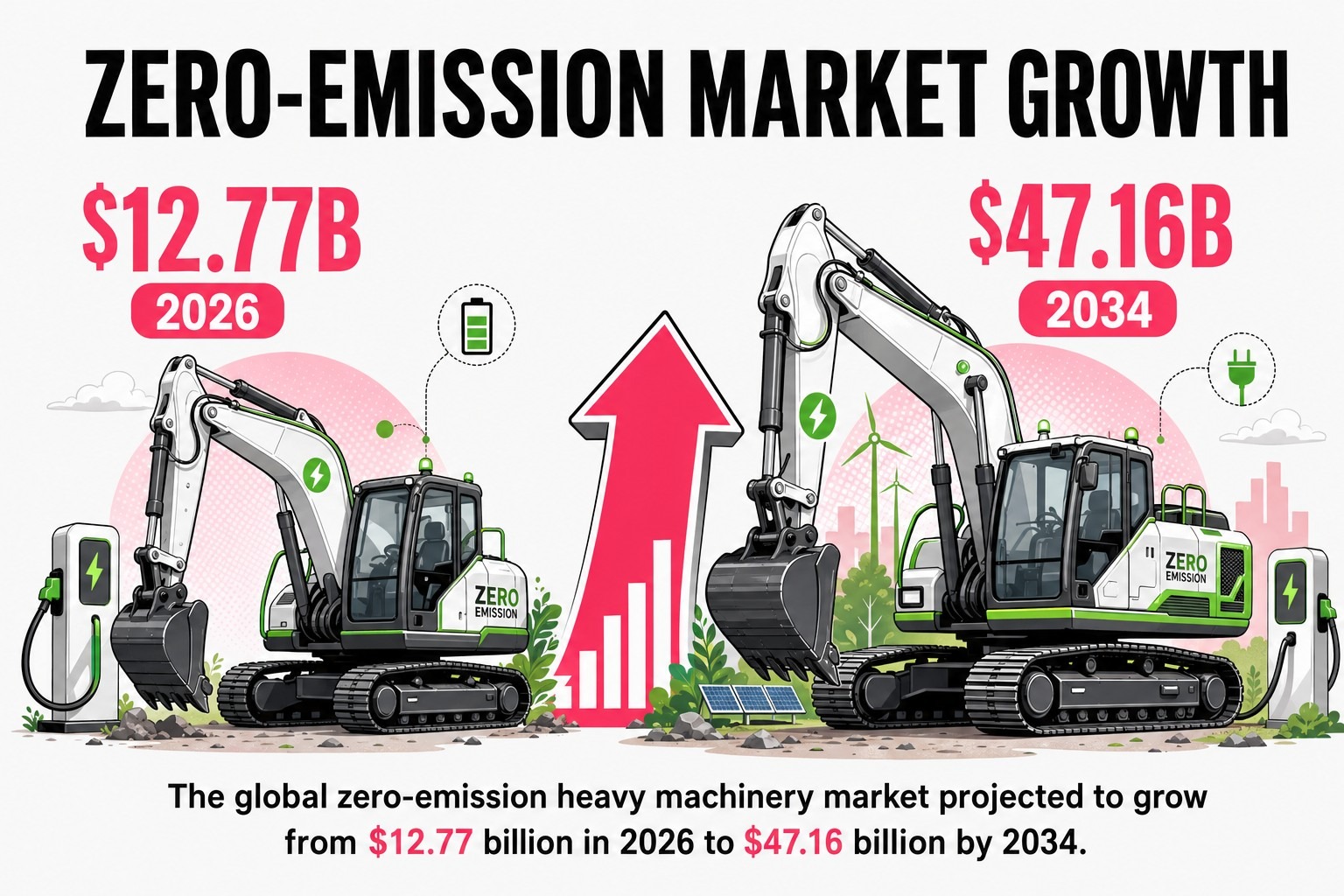
Environmental regulations and sustainability goals drive demand for electric and alternative-fuel heavy equipment. The global zero-emission heavy machinery market projected to grow from $12.77 billion in 2026 to $47.16 billion by 2034.
This creates marketing opportunities for dealers offering electric or hybrid models. Your content should address buyer concerns about range, charging infrastructure, performance, and total cost of ownership.
Many contractors remain skeptical about electric equipment performance. Create content demonstrating real-world applications, runtime data, and cost comparisons versus diesel equivalents.
Address charging logistics directly. "How to Plan Charging Infrastructure for Electric Equipment Fleets" helps buyers overcome implementation concerns.
Highlight government incentives, rebate programs, and emissions compliance benefits. Many buyers don't realize significant financial incentives exist for zero-emission equipment purchases.
Contractors who adopt electric equipment early gain competitive advantages on projects with strict emissions requirements. Create content highlighting these opportunities.
"How Electric Equipment Wins Indoor Demolition Contracts" shows practical applications where emissions-free operation provides decisive advantages.
Share case studies from early adopters who've successfully integrated electric equipment. Their experiences answer questions from skeptical buyers.
Digital marketing only works when you measure results and optimize based on data. Track the right metrics and adjust strategies accordingly.
Website analytics should track traffic sources, page engagement, conversion rates, and lead quality. Connect these metrics to actual sales through CRM integration.
Cost per lead matters, but cost per sale matters more. Track how many leads from each channel become actual equipment sales.
Monitor quote request volume and quality. A campaign generating 50 unqualified leads performs worse than one generating 10 qualified prospects.
Measure time from first website visit to quote request to sale. This reveals which channels attract buyers earlier in the decision process.
Heavy equipment buyers interact with multiple marketing channels before purchasing. Attribution modeling shows which touchpoints contribute to eventual sales.
A buyer might discover you through organic search, return via PPC ads, download a comparison guide, attend a trade show, and finally request a quote after receiving an email promotion.
Multi-touch attribution gives credit to each interaction instead of only the last one. This reveals the true value of awareness-building channels like content marketing and social media.
Review performance monthly and adjust budget allocation toward highest-performing channels. If organic search generates the lowest cost per sale, invest more in SEO and content creation.
Test continuously. Try different ad copy, landing page designs, email subject lines, and social media content. Small improvements compound over time.
Don't abandon strategies too quickly. Heavy equipment sales cycles mean results lag behind implementation by months. Give new approaches adequate time before judging effectiveness.
Digital marketing isn't a project with an endpoint. It's an ongoing program requiring consistent effort and budget.
Start with high-impact activities that generate results quickly. PPC ads and retargeting produce immediate traffic. Then layer in longer-term strategies like SEO and content marketing.
Successful industrial marketing requires dedicated resources, whether internal staff or agency partners who understand heavy equipment sales.
Small dealerships might start with part-time internal effort supplemented by specialized contractors for technical tasks like SEO and PPC management.
Larger operations benefit from hybrid models: internal team members who understand the industry working with agency specialists who bring digital expertise.
Avoid expecting general marketing staff to master specialized skills like Google Ads optimization or technical SEO. These require dedicated focus and experience.
Allocate marketing budget across multiple channels rather than concentrating on single tactics. Diversification reduces risk and reaches buyers at different stages.
Consider this framework: 30-40 percent for PPC and paid social (immediate results), 25-30 percent for SEO and content marketing (long-term growth), 15-20 percent for email and marketing automation, 10-15 percent for events and trade shows with digital integration.
Adjust these percentages based on performance data and business priorities. New dealerships need more immediate lead generation from PPC. Established dealers benefit from sustained SEO investment.
Review your complete digital marketing strategy quarterly. Analyze what's working, what's underperforming, and what new opportunities exist.
Assess competitor activity. Which channels are they using? What content are they creating? Where are there opportunities to differentiate?
Stay current with digital marketing changes. New platforms emerge, algorithms update, and buyer behaviors evolve. Quarterly reviews keep your strategy relevant.
Moving from traditional heavy equipment advertising to digital-first approaches feels overwhelming. The key is starting with manageable steps that build momentum.
Begin by optimizing what already exists. Improve your current website before launching new channels. Clean up your Google Business Profile before investing heavily in local SEO.
Choose one new digital channel to add quarterly. Don't try launching PPC, content marketing, and social media simultaneously. Master each before expanding.
The buyers are already digital. Your marketing needs to meet them there. Companies that delay this transition fall further behind competitors who've already adapted.
Start this week by auditing your current digital presence. Search for your dealership and equipment models you sell. What appears? What's missing? Where are obvious gaps?
That audit reveals your starting point. Pick the highest-impact improvement and implement it. Then move to the next. Six months of consistent effort transforms your digital marketing presence.
Your competitors are making this shift. The question isn't whether to embrace digital-first heavy equipment advertising. It's whether you'll lead the transition or scramble to catch up.