
Electrical wholesale SEO works differently than retail because you're not chasing homeowners searching "replace light switch." You're targeting electricians, contractors, and builders who search "Schneider 40A RCBO wholesale" or "electrical supplier near construction site." The difference isn't subtle. It's the gap between ranking for people who buy one item versus professionals who spend $50,000 annually on electrical components.
Most electrical wholesalers make the same mistake. They optimize for consumer searches and wonder why their website traffic doesn't convert into trade accounts.
Your real competitors aren't the local hardware stores showing up in Google Maps. They're other electrical wholesale distributors who've figured out how to rank for brand-specific product searches, service area combinations, and trade-focused keywords. The companies winning these searches understand that B2B wholesale SEO requires a completely different site structure, content strategy, and local optimization approach than consumer retail.
This guide shows you exactly how to build an SEO strategy that attracts qualified trade buyers. We'll cover the fundamental differences between wholesale and retail SEO, how to structure your product catalog for search visibility, which keywords actually drive trade customer leads, and how to dominate local search results when electricians need supplies during active jobs.
By the end, you'll know how to build service pages that rank for trade-intent searches, optimize your Google Business Profile for contractor visibility, and create content that positions your company as the go-to supplier when professionals need electrical components.
The electrical wholesale industry operates in a distinct search environment. The market reached $259.0 billion in 2026 with 12,148 businesses competing, but most of those companies are invisible to their actual target customers in search results.

Consumer electrical retailers rank for "how to install dimmer switch" and "best outdoor lighting." Electrical wholesalers need to rank for "ABB Tmax XT breakers wholesale pricing" and "electrical supplier open Saturday Sydney."
The buying process is completely different too. A homeowner searches once, buys once, and disappears. A qualified electrician finds your site, bookmarks it, creates an account, and potentially generates tens of thousands in annual revenue. One trade customer equals hundreds of retail customers in lifetime value.
Trade buyers search with precision. They know exact part numbers, brands, and specifications. An electrician searching "Clipsal C-Bus dimmer 4-gang" has project plans in hand and needs that specific product tomorrow morning.
Consumer searches are exploratory. "Dimmable light switches" could mean anything. That searcher might buy online, might visit a hardware store, might hire an electrician instead. The intent is weak.
Your keyword strategy needs to prioritize these high-intent trade searches. Product pages optimized for exact model numbers and brand combinations will outperform generic category pages every time.
A consumer might spend $200 on electrical supplies for a home renovation project. That's their total lifetime value to your business if they're shopping retail.
An electrician working on commercial fit-outs spends $3,000 to $8,000 monthly on electrical components. A builder managing multiple residential projects needs consistent supply relationships. A maintenance contractor requires emergency access to specific parts.
One qualified trade account appearing in your search rankings matters more than fifty consumer visitors who'll never create a wholesale account. Your SEO investment should reflect this math.
Your physical competitors and your search competitors rarely overlap perfectly. The electrical wholesale distributor down the street might have terrible SEO while an online-only competitor dominates the exact product searches your customers use.
Start by searching the specific product combinations your trade customers need. "Legrand RCD bulk pricing," "Hager MCB supplier," "Schneider contactors wholesale." Who appears in positions one through three?
Those are your actual competitors in search. Not the companies with bigger warehouses or longer trading histories. The distributors who've invested in SEO and structured their sites to capture trade-intent searches.
Open competitor sites that rank well. Examine how they organize product categories. Most successful electrical wholesale sites use a three-tier structure.
First tier: Product category (circuit protection, cable management, lighting control). Second tier: Brand (ABB, Schneider Electric, Legrand). Third tier: Product line or specific models.
This structure lets them create individual pages for "Schneider circuit breakers" and "ABB motor starters." Each page targets the combined brand plus product search that electricians actually use.
Compare this to your current site. Do you have dedicated pages for brand-category combinations? Or generic category pages trying to rank for everything?
Local electrical wholesale searches have different competition levels than national product searches. "Electrical wholesaler Melbourne" might have twenty serious competitors. "Schneider Acti9 RCBO" has hundreds nationally.
Your strategy needs both angles. Dominate local searches for "electrical supplier near me" and "electrical wholesale [your city]" while also building product pages that rank nationally for specific brand and model searches.
Local dominance drives walk-in traffic and emergency supply runs. National product rankings capture electricians planning projects who'll call for quotes regardless of location.
The wrong keywords waste your entire SEO budget. Ranking first for "residential electrical supplies" might generate traffic, but if you're optimized for trade accounts, that traffic converts poorly.
Over 58% of B2B buyers now prefer online platforms for procurement, and those buyers search differently than consumers from the first query.

Trade-intent keywords include brand names, model numbers, wholesale indicators, and bulk quantities. "Schneider contactors wholesale," "Clipsal switches bulk," "ABB breakers supplier pricing."
Consumer-intent keywords focus on installation, problems, and general product types. "How to wire a light switch," "best outdoor lights," "circuit breaker keeps tripping."
Start with your actual product catalog. List every major brand you stock. Combine each brand with your product categories.
ABB + circuit breakers. Schneider + contactors. Legrand + cable management. Hager + distribution boards. These combinations form your primary keyword targets.
Add location modifiers for local searches. "ABB circuit breakers Sydney," "Schneider supplier Melbourne," "electrical wholesale Perth."
Include service-based keywords electricians use when planning jobs. "Emergency electrical supplies," "same-day electrical delivery," "trade counter open Saturday."
Don't expect consumer-level search volumes. "Light switches" might have 10,000 monthly searches. "Clipsal Iconic switches wholesale" might have 150.
Those 150 searches are qualified electricians with immediate purchase intent. The 10,000 includes DIY homeowners, students researching electrical basics, and people with no buying intent.
Target keywords with clear trade intent even when volume looks low. Ten qualified leads beat a thousand unqualified visitors.
Your site architecture determines whether Google understands what you sell and who you sell it to. Poor structure means even perfect content won't rank.
Electrical wholesale catalogs need hierarchy that mirrors how trade buyers think. They don't browse "electrical products." They search "Schneider Acti9 range" or "industrial cable glands."
Create dedicated sections for each major brand. Under each brand, build category pages. Under categories, list specific product lines and models.
Your main categories should match trade terminology. Circuit protection, cable management, industrial controls, lighting control systems, switchboards and enclosures.
Each category page needs subcategories organized by function and application. Circuit protection splits into RCDs, MCBs, RCBOs, contactors, overload relays.
Avoid consumer language like "switches and sockets." Use "wiring devices" or "installation equipment." Your category names signal whether you're a trade supplier or retail store.
Every major brand you stock deserves a dedicated landing page. "Schneider Electric Products," "ABB Industrial Solutions," "Legrand Electrical Equipment."
These pages should list every product category you carry from that brand. Include links to category-brand combination pages.
When an electrician searches "Schneider supplier," your Schneider brand page should appear. From there, they navigate to the specific product category they need.
Individual product pages need technical specifications electricians require. Amp ratings, IP ratings, compliance certifications, dimensional specifications, mounting options.
Include model numbers in page titles and URLs. "Schneider-Acti9-RCBO-40A-30mA" beats "residual-current-circuit-breaker-product-127."
Add PDF datasheets, wiring diagrams, and installation guides. Trade buyers need this technical documentation to specify products correctly.
Local SEO dominates the electrical wholesale sector because trade buyers need physical access to products. Approximately 70% of leads come from SEO and Google Business profiles with 71% of clicks still favoring organic results.

An electrician on a job site who runs short of conduit fittings searches "electrical supplier near me" or "electrical wholesaler open now." You need to appear in those map results.
Local SEO for wholesale differs from service business local SEO. You're not chasing residential customers in neighborhoods. You're targeting commercial areas, industrial zones, and construction corridors.
Define your actual service radius. Most electrical wholesalers serve a 20-50km radius from each branch location. Map this precisely.
Create dedicated location pages for each suburb or commercial district you serve. "Electrical Wholesale [Suburb]" pages targeting local searches.
Include distance and drive time information. "15 minutes from [major commercial area]" or "convenient to [industrial estate]" helps electricians plan supply runs.
If you operate multiple branches, each location needs its own optimization approach. Separate Google Business Profiles, unique location pages, distinct local content.
Don't duplicate content across location pages. Each branch page should highlight that specific location's inventory specialties, trade counter hours, and proximity to major commercial areas.
Link location pages to local project case studies or industry-specific content. "Supplying commercial projects in [area]" or "Industrial electrical solutions for [region]."
Your Google Business Profile determines whether you appear in the map pack when electricians search for suppliers. Map pack visibility drives immediate trade counter traffic and same-day orders.
Most electrical wholesalers set up their profile once and forget it. Optimized profiles get updated weekly, respond to every review, and actively use posts to highlight inventory and promotions.
Start with accurate category selection. "Electrical Wholesaler" is your primary category. Add "Electrical Supply Store," "Industrial Equipment Supplier," and "Building Materials Supplier" as secondary categories.
Your business description needs keywords electricians actually search. Don't write marketing fluff about "quality service and competitive prices."
List specific brands you stock, product categories you specialize in, and services that matter to trade buyers. "Stocking Schneider, ABB, Legrand, and Hager electrical products. Same-day delivery available. Trade accounts welcome. Open Saturday mornings."
Include your service radius and proximity to major commercial or industrial areas. "Serving electricians and contractors across [region]. Located minutes from [major industrial area]."
Google Posts appear in your Business Profile when people search for your company. Use them to highlight new stock arrivals, special pricing on bulk orders, or extended trade counter hours.
"New: Schneider Acti9 range now in stock. Full inventory of MCBs, RCDs, and RCBOs. Trade pricing available."
Post at least twice monthly. These updates signal active business operations and give electricians current information about inventory availability.
Your profile photos should show your trade counter, product displays organized by brand, and warehouse inventory depth. Not staged corporate headshots.
Include photos of your delivery vehicles, bulk inventory storage, and technical staff helping trade customers. These visual signals confirm you're a serious wholesale operation.
Add product category photos showing your range in specific areas. "Our cable management section," "Industrial control inventory," "Schneider Electric dedicated display."
NAP stands for Name, Address, Phone number. Google validates your business legitimacy by checking whether your NAP appears consistently across the web.
Every listing, directory, supplier website, and mention of your business should show identical business information. "Acme Electrical Wholesale Pty Ltd" everywhere, not "Acme Electrical Wholesale" on some listings and "Acme Wholesale" on others.
Phone number format matters too. Choose one format (with or without country code, with or without spaces) and use it everywhere. (02) 9555 1234 or 02 9555 1234 or 0295551234. Pick one.
General business directories matter less than industry-specific citations. Getting listed on electrical industry portals, trade supplier directories, and contractor resource sites carries more weight.
Contact your major suppliers (Schneider, ABB, Legrand, Hager) and ask to be listed in their distributor locators. These citations from authoritative industry sources significantly boost local SEO.
Join local electrical contractor associations and ensure your business appears in their member directories. Master Electricians associations, trade contractor organizations, building industry groups.
Search your business name plus your city. Check the first 50 results for any mention of your company. Note every instance where NAP information appears incorrectly.
Use Google's business search to find duplicate or outdated listings. Claim or remove duplicates, update incorrect information, and ensure only one accurate listing exists per location.
Set up quarterly NAP audits. Information drift happens as directories update, suppliers refresh their databases, or old listings resurface. Consistent monitoring prevents citation inconsistencies that confuse Google.
Content separates wholesale distributors who rank from those who don't. Product pages alone won't beat competitors who've invested in educational content, technical guides, and application resources.
B2B e-commerce overall reached $2.3 trillion in 2024 and continues expanding, driven partly by buyers who research online before contacting suppliers. Your content needs to serve this research phase.
Electricians searching "how to select RCBO rating" or "difference between Type A and Type AC RCD" are researching products they'll soon purchase. If your content answers these questions, you become the supplier they contact.
Create detailed technical guides for product selection, application requirements, and installation considerations. "Selecting the Right Circuit Protection for Commercial Applications," "Cable Sizing Guide for Three-Phase Motors."
These guides should reference specific products you stock. "For this application, we recommend the Schneider Acti9 iC60N MCB or the ABB S200 series."
Include downloadable PDFs. Trade buyers save technical resources for job planning. When they're ready to order, your company name is on the guide they reference.
Electricians often need to compare equivalent products from different brands. "Schneider Acti9 vs ABB S200 MCBs" or "Clipsal vs Legrand Cable Management Systems."
These comparison pages rank well and drive high-intent traffic. Someone comparing specific products is actively specifying equipment for an upcoming project.
Be objective in comparisons. List actual specifications, pricing tiers, and application strengths. Don't just promote whichever brand offers better margins.
Create content around specific industry applications. "Electrical Products for Data Center Installations," "Mining Industry Electrical Supply Requirements," "Commercial Kitchen Electrical Components."
Link to relevant product categories and brands. "For data center applications, explore our range of industrial electrical equipment including UPS-compatible circuit protection."
This content attracts electricians specializing in specific sectors. A data center electrician who finds your data center guide becomes a repeat customer for future projects.
On-page optimization makes the difference between page two and page one rankings. Every product page, category page, and content page needs attention to title tags, meta descriptions, header structure, and internal linking.
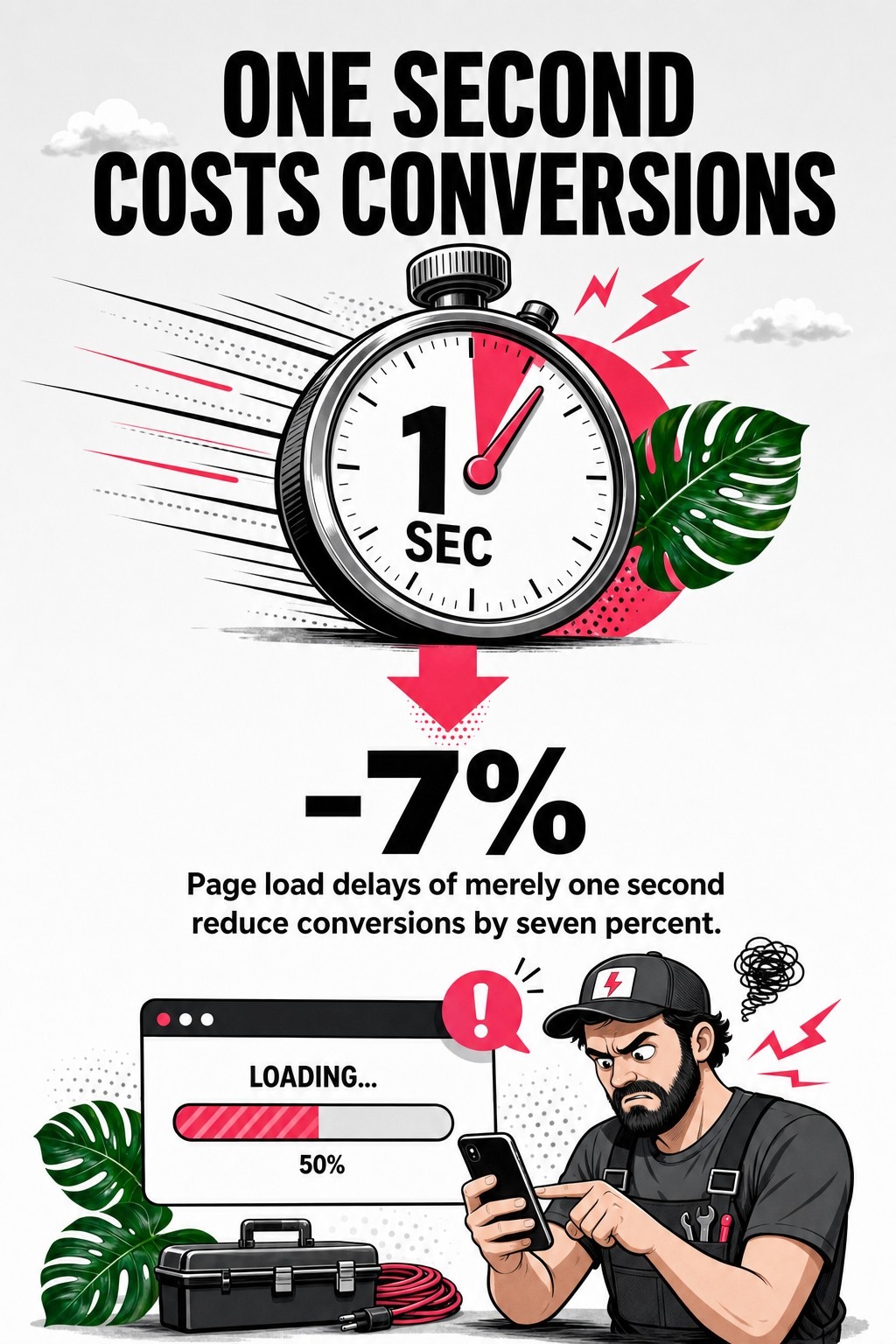
Website speed represents a fundamental ranking factor with page load delays of merely one second reducing conversions by 7%. Fast-loading product pages with proper optimization outrank slow sites every time.
Start with title tags that include your target keyword, brand name, and clear product identification. "Schneider Acti9 RCBOs - 10A to 63A | Acme Electrical Wholesale" beats "Product Category - RCBOs."
Meta descriptions don't directly influence rankings, but they determine click-through rates from search results. Higher click-through rates signal relevance and improve rankings indirectly.
Write descriptions that speak to trade buyers. "Full range of Schneider Acti9 RCBOs in stock. 10A to 63A ratings, Type A and Type AC. Same-day dispatch. Trade accounts available."
Include specific product details, availability information, and service benefits. Electricians click listings that confirm you stock exactly what they need.
Structure content with clear header hierarchy. H1 for the main product or page title. H2 for major sections. H3 for subsections.
Product pages might use: H1: "Schneider Acti9 RCBOs," H2: "Product Specifications," H2: "Available Ratings," H2: "Technical Documentation," H2: "Related Products."
Include keywords naturally in headers. "Available RCBO Ratings and Configurations" is better than just "Available Options."
Link related products, complementary items, and relevant content throughout your site. Product pages should link to brand pages, category pages, and technical guides.
Use descriptive anchor text. "See our complete range of electrical safety equipment for trade professionals" beats "click here."
Create logical pathways through your site. Circuit breaker pages link to distribution board pages. Cable management systems link to cable and conduit products.
Technical SEO determines whether search engines can properly crawl, understand, and rank your site. E-commerce platforms like Magento, OroCommerce, and Shopify Plus require real-time pricing and inventory data synced with ERP and PIM systems.
Your platform needs clean URL structures, proper canonical tags, XML sitemaps, and schema markup for products. Many electrical wholesalers run outdated platforms with technical SEO issues blocking their rankings.
Start with site speed optimization. Compress images, enable caching, use content delivery networks. Product pages should load in under three seconds on mobile connections.
Schema markup tells Google exactly what your page contains. Product schema includes price, availability, brand, model number, and ratings.
Implement proper schema on every product page. This enables rich results in search, showing price and availability directly in Google results.
Use organization schema on your homepage and location pages. This helps Google understand your business structure, locations, and contact information.
Electricians search from job sites on mobile devices. Your site must function perfectly on phones and tablets.
Test product search functionality on mobile. Can users easily find specific model numbers? Does the search suggest products as they type? Can they filter by brand and specification?
Optimize for thumb-friendly navigation. Large buttons, clear spacing, simple forms for quote requests or account creation.
Electrical wholesale sites often create duplicate content by accident. The same product appears under multiple categories. Brand pages duplicate product descriptions. Filter URLs create multiple versions of category pages.
Use canonical tags to specify the preferred version of each page. If a product appears in three categories, the canonical tag tells Google which URL to rank.
Implement parameter handling in Google Search Console. Tell Google to ignore filter parameters that create duplicate URLs.
Reviews influence both rankings and conversion rates. Google uses review quantity and quality as local ranking signals. Trade buyers check reviews before opening accounts with new suppliers.
Most electrical wholesalers have few reviews because they don't actively request them. Your trade account customers are willing to leave reviews if asked at the right moment.
Build review requests into your account management process. After completing a large order, email the customer thanking them and asking for a Google review.
Respond to every review, positive and negative. Responses show active business management and provide opportunities to include keywords naturally.
Positive review response: "Thanks for the feedback! We're glad our range of Schneider and ABB products met your project needs. Looking forward to supporting your next installation."
Negative review response: "We apologize for the stock issue. We've expanded our inventory of industrial controls to prevent future shortages. Please contact our trade counter manager directly to discuss your account."
Reviews that mention specific products, brands, or services strengthen your local SEO. "Great supplier for Clipsal products, always in stock" is better than "Good service."
When requesting reviews, give customers specific prompts. "We'd love your feedback on our Schneider product range, trade counter service, or delivery times."
These detailed reviews create keyword-rich content directly in your Google Business Profile, boosting rankings for brand and product searches.
Traffic metrics mean nothing if leads don't convert to trade accounts. Your SEO measurement needs to track both search visibility and business outcomes.
Track keyword rankings for your primary brand plus product combinations. "Schneider circuit breakers [city]," "ABB contactors wholesale," "Legrand cable management supplier."
Monitor organic traffic to category pages, brand pages, and product pages separately. Which pages drive the most qualified traffic? Which convert visitors to quote requests or account applications?
Not all form submissions or calls are equal. Track which traffic sources generate trade account applications versus consumer inquiries.
Create separate tracking for trade counter visits, delivery inquiries, bulk pricing requests, and account applications. These are your high-value conversions.
Compare conversion rates across different keyword types. Do brand-specific searches convert better than category searches? Does local traffic convert better than national product searches?
Work with your sales team to track which new accounts originated from organic search. Tag leads in your CRM by source.
Calculate customer lifetime value for accounts acquired through SEO versus other channels. If SEO-sourced accounts spend more or stay longer, increase your SEO investment.
Track account creation velocity. Are you adding more trade accounts month over month? Is the average account value increasing? These metrics justify continued SEO investment.
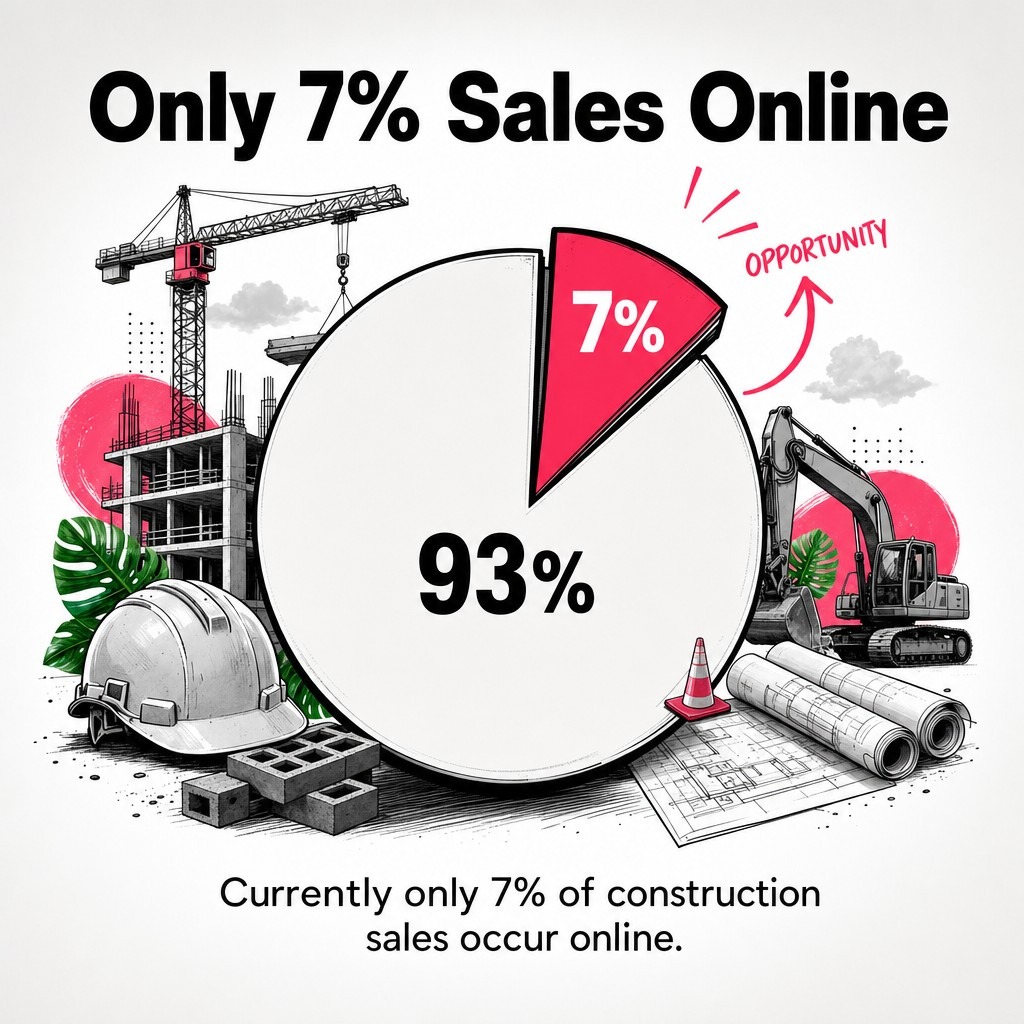
Currently only 7% of construction sales occur online, which means electrical wholesale companies investing in SEO now gain first-mover advantages before competition intensifies.
Most of your competitors neglect SEO entirely. They rely on existing relationships, walk-in traffic, and sales rep outreach. This creates opportunities for wholesalers willing to invest in proper optimization.
Focus on areas where competitors are weakest. If no local competitor has strong brand-specific product pages, build comprehensive pages for every major brand you stock. If competitor websites lack technical content, create detailed guides and comparison resources.
SEO advantage compounds over time. Competitors can't quickly replicate years of consistent content creation, link building, and review generation.
The distributor who publishes technical guides monthly for two years builds authority that new competitors can't match overnight. B2B SEO success requires sustained strategic effort rather than one-time optimization.
Commit to long-term content development. Add product pages, technical resources, and application guides consistently. This sustained effort creates ranking momentum competitors struggle to overcome.
Your supplier relationships offer SEO advantages competitors might not access. Major manufacturers (Schneider, ABB, Legrand) often provide technical content, product images, and specifications you can use on your site.
Request high-resolution product images, detailed specifications, and technical documentation from suppliers. Better product pages improve both SEO and conversion rates.
Ask suppliers to link to your distributor profile from their website. Links from manufacturer websites to authorized distributors carry significant SEO value.
Start with a complete site audit. Identify missing brand pages, incomplete product specifications, and content gaps your competitors have filled.
Prioritize quick wins first. Set up or optimize your Google Business Profile this week. Fix NAP inconsistencies across major directories. Add schema markup to your best-selling product pages.
Build a three-month content calendar focusing on technical guides for your most profitable product categories. Target two substantial guides monthly rather than weekly superficial posts.
Track rankings for twenty core keywords combining your top brands with primary product categories. Monthly ranking checks show whether your optimization efforts are working.
Review lead quality monthly. Are trade account applications increasing? Are quote requests coming from more qualified electricians and contractors? Adjust your keyword targeting and content focus based on which topics drive the best leads.
The electrical wholesale companies dominating search results today started optimizing years ago. Your best time to start was three years ago. Your second-best time is right now.