You can't sell arc-rated gloves to a procurement manager using the same language you'd use for a safety officer. They search differently, research differently, and buy differently. That's why SEO strategies in manufacturing focus on technical foundations such as keyword research and on-page optimization.
The best electrical PPE companies win organic search by understanding one simple truth: buyer personas aren't marketing fluff.
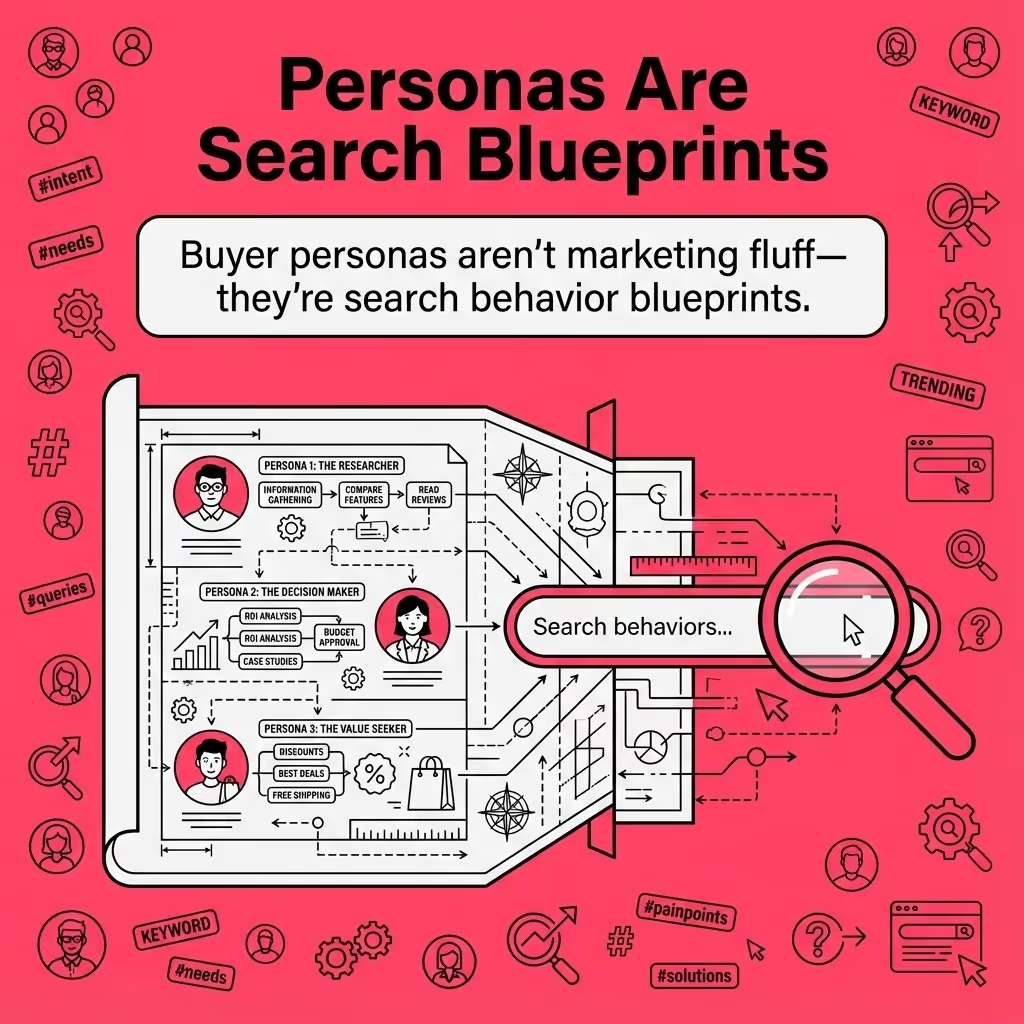
Personas are search behavior blueprints—not fluff. Optimize for the exact terms your buyers use.
They're search behavior blueprints. When you map who's searching to what they're searching for, your content shows up at exactly the right moment. Your keyword research becomes precise. Your content strategy stops wasting budget on generic terms that bring tire-kickers instead of qualified leads.
I've spent years helping B2B ecommerce brands crack this code. The difference between ranking for "safety gloves" (which brings hobbyists) versus "ASTM D120 Class 00 electrical gloves 500V" (which brings serious industrial buyers) comes down to persona-driven SEO strategy.
Here's what we'll cover: defining buyer personas for technical products, building personas using real customer data, connecting personas to keyword research, creating content that matches search intent across the buyer journey, and avoiding the mistakes that tank your organic search performance.
By the end, you'll have a framework for targeting the actual decision makers searching for electrical PPE right now.
A buyer persona is a research-based profile of your ideal customer. It's not a guess about who might buy from you.
It combines demographic data (job title, company size, location), psychographic information (goals, challenges, values), and behavioral patterns (how they search, what content they consume, where they spend time online).
For SEO purposes, a buyer persona becomes your search behavior map. It tells you which keywords your target audience actually types into Google. It reveals their search intent at each stage of the buyer journey. It shows you what questions they need answered before they'll trust you with a purchase order.
An SEO persona goes deeper than traditional marketing personas because it focuses specifically on organic search behavior. What technical specifications do they include in searches? Do they use industry jargon or plain language? Are they searching for compliance standards, product comparisons, or vendor reviews?
Here's the key difference: traditional buyer personas help with messaging. SEO personas help with discoverability.
When you know your electrical PPE buyer persona searches for "arc flash protection NFPA 70E requirements" instead of "electric safety gear," you optimize for the terms that actually bring qualified leads. You create content around the pain points that drive searches in the first place.
The beauty of persona-based SEO? You stop competing for generic, high-volume keywords. You start dominating the specific, lower-competition terms your ideal customer uses when they're ready to buy.
Electrical PPE purchases aren't impulse buys. They're complex B2B transactions involving multiple stakeholders, strict compliance requirements, and significant budgets.
That complexity makes buyer personas absolutely essential for SEO success.
Without personas, you're optimizing blind. You might rank for "electrical gloves" and get traffic from DIY homeowners when you sell wholesale to industrial facilities. You waste content marketing resources answering questions your actual buyers never ask.
B2B industrial marketing approaches target qualified leads in technical sectors because generic approaches fail spectacularly in specialized markets.
Consider the different buyers in electrical PPE purchasing:
Each persona searches differently. The safety manager types "ASTM F496 electrical glove testing frequency" into Google. The procurement officer searches "electrical PPE bulk supplier ISO certified." The electrician wants "most comfortable arc-rated gloves Class 2."
When you understand these personas, your ecommerce SEO strategy becomes surgical. You create separate content pieces targeting each search pattern. You structure your site architecture around how different personas navigate their research process.
The ROI impact? You attract visitors who actually convert. Your organic search traffic becomes qualified leads instead of random browsers. Your content strategy aligns with real purchase behavior instead of guesswork.
That's why buyer personas aren't optional for electrical PPE SEO. They're the foundation everything else builds on.
Before you can optimize for buyer personas, you need to identify who they actually are. Not who you think they are. Who your customer data proves they are.
Start with your existing customers. Pull CRM records from the past 18 months. Look for patterns in job titles, company types, order sizes, and purchase frequencies.
Most electrical PPE companies serve three to five distinct buyer personas. Here's how to categorize them:
The Safety Compliance Officer focuses on regulatory requirements and risk mitigation. They research OSHA standards, NFPA guidelines, and ASTM specifications. Their pain points center on audit readiness and worker protection liability.
The Procurement Manager cares about vendor reliability, pricing structures, and supply chain stability. They compare multiple suppliers and negotiate contracts. Their goals involve cost reduction while maintaining quality standards.
The Facility Operations Manager thinks about practical implementation. They need products that work in their specific environment, stand up to daily use, and integrate with existing safety programs.
The End User (Electrician/Technician) prioritizes comfort, functionality, and trust. They often influence purchasing decisions by requesting specific brands or refusing to use inadequate equipment.
The Executive Decision Maker approves budgets and sets safety culture priorities. They respond to ROI arguments, liability reduction, and brand reputation.
The best persona data comes from direct customer research. Schedule 20-minute interviews with 3-5 customers representing each persona type. Ask about their research process before they found you.
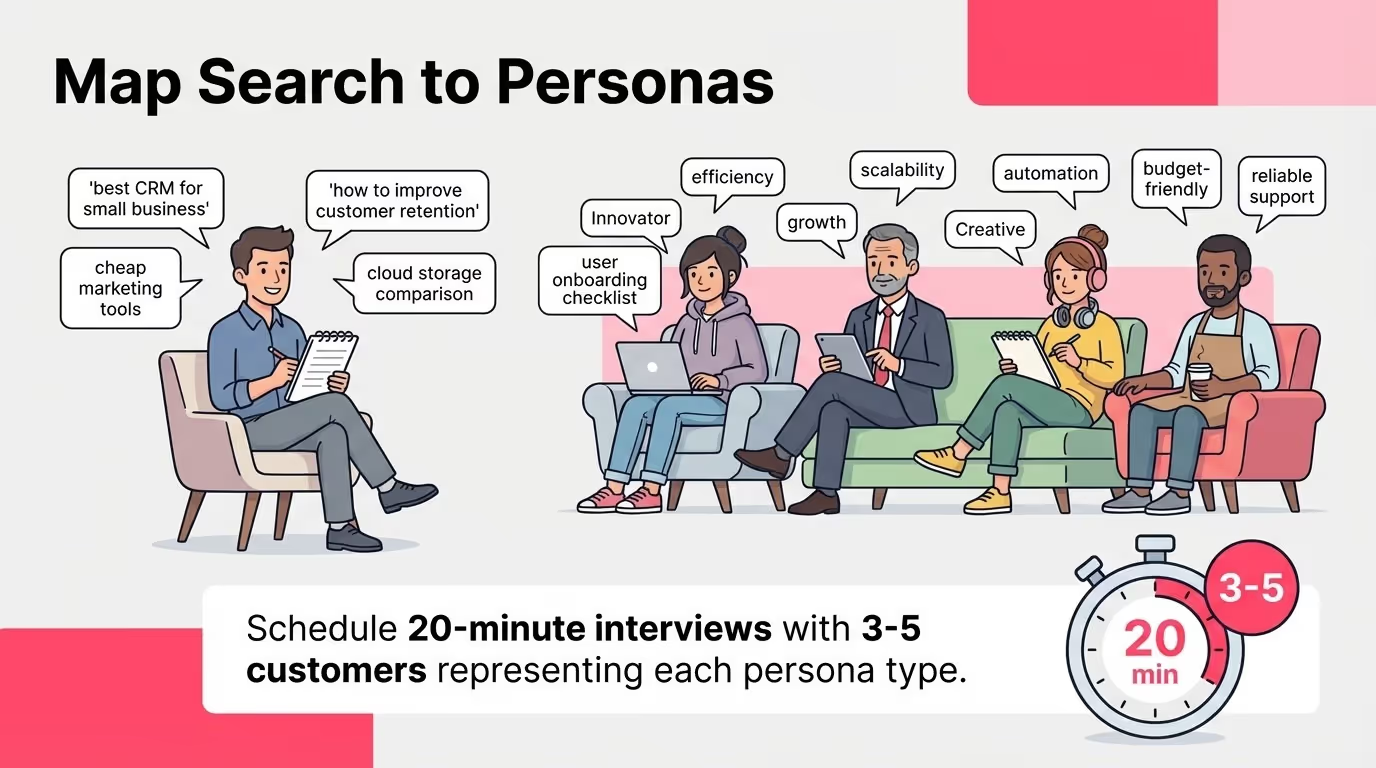
Interview 3–5 customers per persona to map real search behavior and decision criteria.
What search terms did they use? Which websites did they visit? What information did they need that was hard to find? What almost made them choose a competitor?
Supplement interviews with behavioral data. Use Google Analytics to identify which pages different visitor segments engage with. Check your site search data to see what terms people use on your own website.
Review customer support tickets and sales call notes. The questions prospects ask before buying reveal their knowledge gaps and decision criteria.
Now you're ready to build persona profiles that actually improve your SEO strategy.
Creating actionable buyer personas requires a systematic approach. Follow these steps to build personas that directly inform your keyword research and content strategy.
Gather everything you've collected: CRM exports, interview transcripts, analytics reports, and support ticket themes. Organize this data by identifying recurring patterns across customers.
Look for commonalities in demographics (industry, company size, location), behaviors (how they found you, what content they consumed), and motivations (why they chose you over competitors).
Group customers who share similar characteristics, goals, and search behaviors. You're looking for distinct patterns that justify separate persona profiles.
For electrical PPE, you might segment by role (safety vs. procurement), industry vertical (utilities vs. manufacturing vs. construction), or company size (enterprise vs. small business).
Don't create too many personas. Three to five well-researched personas work better than ten superficial ones. Each persona should represent a meaningful segment that searches and buys differently.
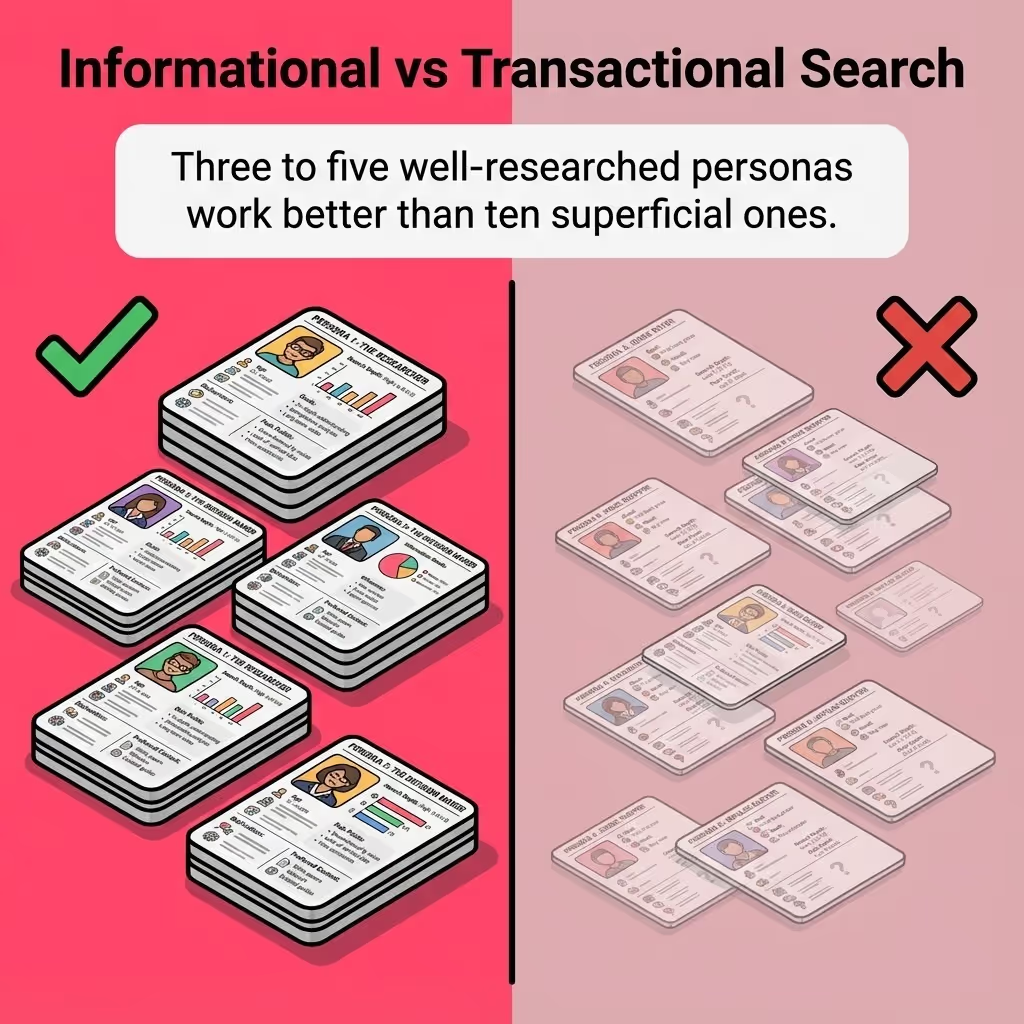
Focus on 3–5 strong personas. Depth beats breadth for both informational and transactional intent.
Give each persona a name and create a one-page profile including:
The quote part matters. Real customer language reveals how they actually talk about problems, which directly informs your keyword targeting.
This is where personas become SEO gold. For each profile, document their typical search journey:
Awareness stage searches: What do they search when they first recognize a problem? (Example: "OSHA electrical safety requirements 2025")
Consideration stage searches: What comparisons and evaluations do they conduct? (Example: "Class 2 vs Class 3 electrical gloves when to use")
Decision stage searches: What final information do they need before purchasing? (Example: "electrical PPE supplier bulk pricing ISO certified")
Include the actual keyword phrases they'd use. Note whether they search with technical terminology or plain language. Identify long-tail keywords specific to their role and concerns.
Share your persona profiles with your sales team. Do these match who they talk to daily? Test your persona assumptions against real customer conversations.
Use your personas for 90 days, then revisit them. Update based on what you learn from which content performs best and which keywords actually convert.
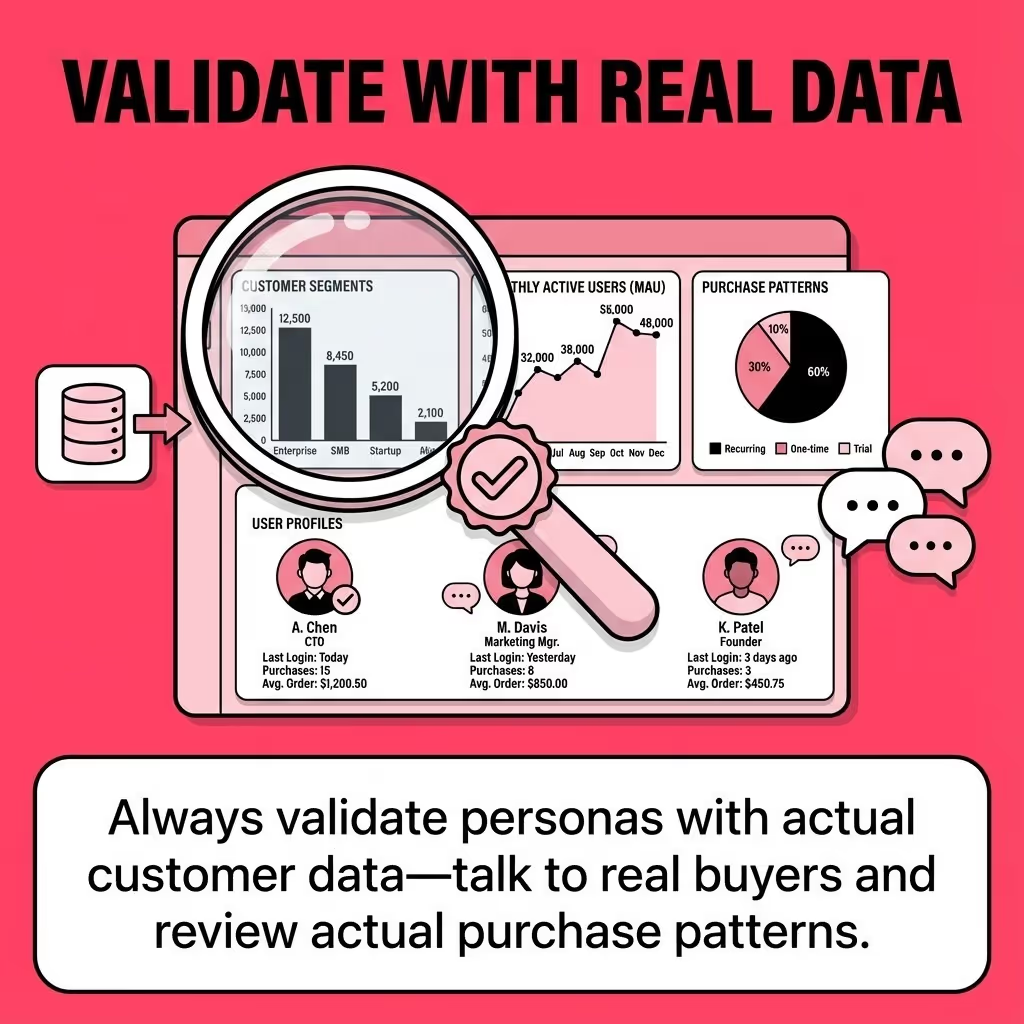
Validate with real data: talk to buyers, review purchase patterns, refine personas quarterly.
Buyer personas aren't static documents. They're living guides that evolve as you gather more data and as market conditions change.
Now we get to where buyer personas transform your SEO performance: keyword research that actually drives qualified leads.
Traditional keyword research starts with tools. Persona-based keyword research starts with people. You're not looking for high-volume terms. You're hunting for the exact phrases your target audience uses when they need what you sell.
Take each buyer persona and brainstorm their search vocabulary. What technical terms do they know? What problems do they describe? What questions keep them up at night?
The Safety Compliance Officer searches for regulation-focused terms: "NFPA 70E arc flash PPE categories," "ASTM electrical glove testing requirements," "Cal/OSHA electrical safety program template."
The Procurement Manager uses vendor evaluation language: "electrical PPE supplier quality certifications," "bulk arc-rated clothing pricing," "electrical safety equipment vendor comparison."
The End User Electrician looks for practical information: "best insulated gloves for fine motor work," "most durable arc flash suits," "comfortable electrical safety boots all day wear."
Notice how different these keyword sets are? That's the power of persona-based research. You're not competing for the same generic terms as everyone else.
Industry-specific buyer personas address how different technical buyers search for specialized equipment, which means you must match search intent at every stage.
Informational intent: Persona wants to learn, not buy yet. Target keywords like "what is arc flash boundary calculation" or "how often to test electrical gloves."
Commercial intent: Persona is comparing options. Go after "best electrical PPE brands for utilities" or "Class 00 vs Class 0 electrical gloves comparison."
Transactional intent: Persona is ready to purchase. Optimize for "buy ASTM D120 electrical gloves bulk" or "electrical PPE supplier quote request."
Create separate keyword lists for each persona at each journey stage. This gives you a content roadmap that covers every search scenario your target audience encounters.
Persona-driven keyword research naturally surfaces long-tail keywords. These specific, lower-volume terms convert better because they match precise search intent.
"Safety gloves" has high search volume but terrible conversion. It's too vague. Home gardeners search that term.
"ASTM F496 Class 2 electrical insulating gloves 17000V" has lower volume but brings exactly the industrial buyer you want. That's a qualified lead searching with a purchase order ready.
Build your SEO strategy around 20-30 long-tail keywords per persona. You'll rank faster (less competition), convert better (higher intent), and attract the right traffic (qualified prospects).
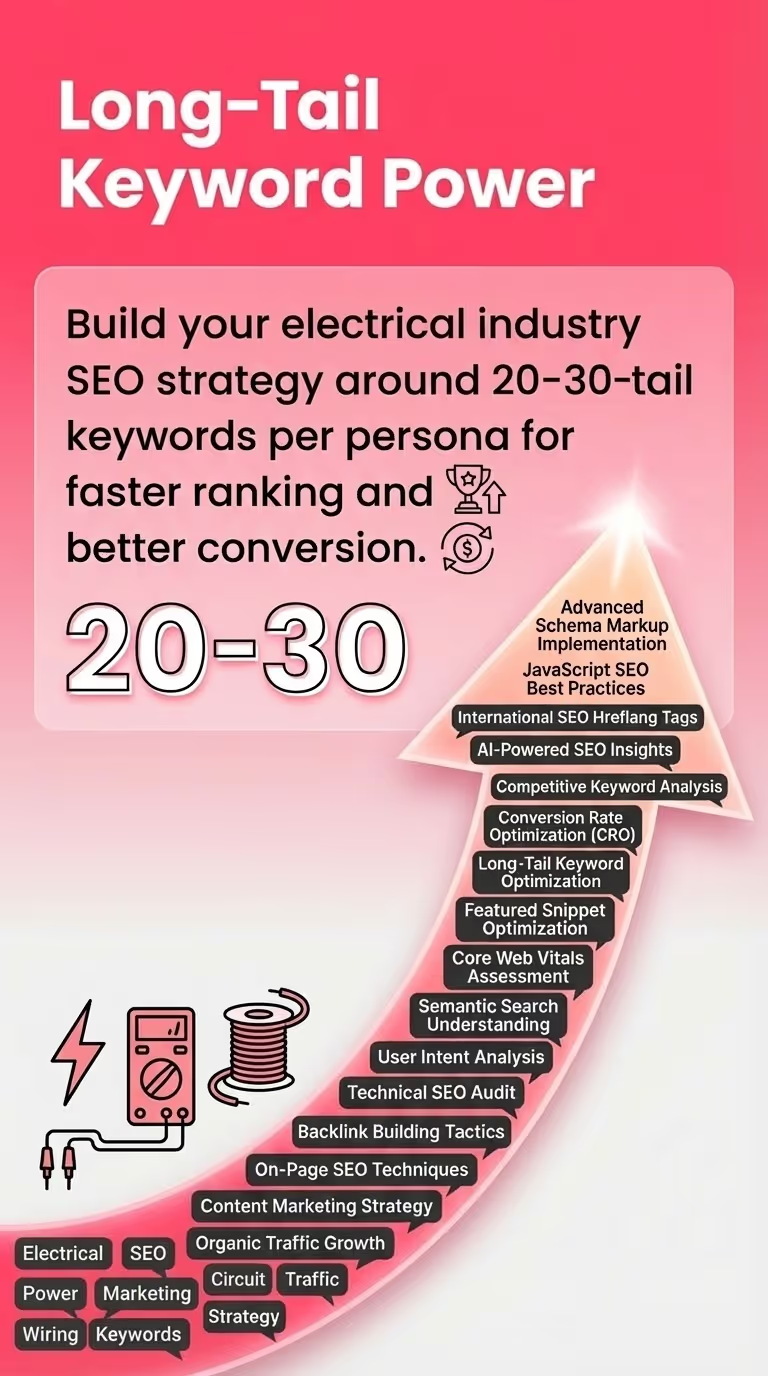
Power of long-tail: 20–30 keywords per persona = faster rankings and higher conversion.
Your competitors probably aren't doing persona-based keyword research. That creates opportunities.
Look at what keywords they rank for. Then identify the persona-specific terms they're missing. Those gaps become your low-hanging fruit for quick ranking wins.
Use keyword research tools to validate search volume and competition, but always filter results through your persona lens. Does this keyword match how your target buyer actually searches? If not, ignore it no matter how attractive the metrics look.
You've got personas. You've got keywords. Now you need content that connects the two and ranks in organic search.
Content creation for buyer personas means matching format, depth, and messaging to how each persona consumes information and makes decisions.
Different personas prefer different content formats. Understanding customer behavior means recognizing these preferences and delivering accordingly.
Safety Compliance Officers need detailed guides and compliance resources. Create long-form content like "Complete Guide to NFPA 70E PPE Category Requirements" or "Electrical Safety Program Template for OSHA Compliance."
Procurement Managers want comparison content and vendor evaluation tools. Build pages like "Electrical PPE Supplier Evaluation Checklist" or "Class 2 vs Class 3 vs Class 4 Electrical Gloves: Cost-Benefit Analysis."
End Users respond to practical how-to content and peer validation. Publish "How to Choose Electrical Gloves That Actually Fit Well" or include testimonials from electricians about product durability.
Executive Decision Makers need ROI-focused case studies and industry trend analysis. Develop "How Upgrading Electrical PPE Reduces Workers Comp Claims" or "2025 Electrical Safety Investment Trends."
Each piece of content should target a specific persona at a specific journey stage with appropriate search intent.
Top-of-funnel awareness content answers educational searches. Write blog posts targeting informational keywords like "what are the different classes of electrical gloves" or "arc flash risk assessment basics."
Middle-of-funnel consideration content supports evaluation. Create comparison guides, product category pages, and detailed specifications that target commercial intent keywords.
Bottom-of-funnel decision content removes final purchase barriers. Build product pages optimized for transactional keywords, FAQ pages addressing common objections, and vendor comparison content.
Content strategies for technical products include safety standards and regulatory requirements because that's what technical buyers need to make confident decisions.
Some content can serve multiple personas simultaneously. The trick is structuring it correctly.
Take a comprehensive product page for Class 2 electrical gloves. Use headings to segment information by persona needs:
This approach lets different personas find what they need while maximizing the SEO value of a single page.
Create your core content in text format for SEO, then repurpose it across formats different personas prefer.
Turn a detailed compliance guide into a downloadable PDF checklist. Convert product comparison content into a comparison table or video. Transform case studies into infographics for social sharing.
Each format extends your content's reach while serving persona preferences. The underlying keyword strategy and messaging remain consistent, but the packaging adapts.
Your overall SEO strategy needs to accommodate all personas at all stages. That requires deliberate site architecture and content organization.
Structure your website to match how different personas navigate their research process. Create clear pathways for each persona type.
Consider these navigation elements:
This structure helps both users and search engines understand your content organization. It also creates internal linking opportunities that guide personas through their buyer journey.
Optimize technical elements for persona-specific search behavior:
Title tags and meta descriptions: Write these for your target persona. "ASTM D120 Class 2 Electrical Gloves | Bulk Pricing for Industrial Buyers" speaks to procurement personas differently than "Class 2 Electrical Gloves | Comfortable Protection for Daily Use" speaks to end users.
Schema markup: Use product schema to display specs that matter to technical buyers. Include FAQPage schema for pages answering common persona questions.
URL structure: Create logical, keyword-rich URLs that indicate content purpose. "/compliance/nfpa-70e-ppe-requirements/" signals content for safety compliance personas.
Map your existing content against your persona keyword lists. Where are the gaps?
You might discover you have tons of product pages (decision stage content) but nothing for awareness stage searches. Or you're serving one persona well but completely ignoring another.
Creating compelling content for technical industries requires covering the full spectrum of buyer needs, not just the easy wins.
Prioritize content creation based on:
Build a 90-day content calendar targeting your highest-priority persona-keyword combinations.
Track metrics that matter for persona-driven strategy:
Organic traffic by persona segment: Use UTM parameters and page groupings in Google Analytics for lead generation tracking to see which personas you're attracting.
Keyword rankings by persona category: Group your target keywords by persona and journey stage. Track ranking improvements for each group.
Content engagement by persona type: Monitor time on page, scroll depth, and conversion rates for content targeting different personas.
Lead quality by traffic source: Are organic visitors from persona-optimized content converting better than generic traffic? They should be.
Adjust your strategy based on what the data shows. If one persona segment is driving great traffic but poor conversions, you might need to refine that persona definition or adjust your content's call-to-action.
Even with good intentions, companies make predictable mistakes applying buyer personas to SEO strategy. Avoid these pitfalls.
The biggest mistake is building personas from gut feelings rather than customer research. Your assumptions about who buys from you and why are probably partially wrong.
Real customer interviews reveal surprising insights. The decision maker you thought was the facility manager might actually be the front-line electrician who refuses to use inferior equipment. The pain points you assumed were about price might actually center on product availability and shipping speed.
Always validate personas with actual customer data. Talk to real buyers. Review actual purchase patterns. Test your assumptions against reality.
Some companies create 10+ buyer personas because they want to cover every possible customer type. This dilutes your SEO efforts across too many keyword sets and content themes.
Focus on the three to five personas that represent your core customer base and highest revenue potential. You can't effectively optimize for everyone, so prioritize ruthlessly.
High search volume tempts SEO teams to target keywords that don't match their personas' actual needs. You end up ranking for terms that bring the wrong traffic.
A keyword with 100 monthly searches from your exact target persona beats a keyword with 10,000 searches from people who will never buy. Reaching technical buyers and procurement professionals through industry-specific content requires precision, not volume.
Always filter keyword opportunities through your persona lens. Does this match how my target buyer actually searches? If not, move on.
The flip side mistake: creating content you think your persona needs without validating that anyone searches for it.
Just because something matters to your persona doesn't mean they're searching for it on Google. You need both persona alignment AND keyword validation.
Before creating any content, confirm there's actual search demand for the topic. Use keyword research tools, check Google autocomplete suggestions, and review competitor rankings.
Buyer behavior changes. Regulations update. Technology advances. Your personas from three years ago might not reflect current reality.
Schedule quarterly persona reviews. Interview recent customers. Monitor how search patterns shift. Update your persona profiles and keyword strategies accordingly.
Static personas become stale personas. Keep them fresh with ongoing research and refinement.
Your buyer personas shouldn't just inform SEO. They should guide your entire marketing strategy, from audience targeting in social media to email campaigns to sales enablement.
When SEO, content marketing, paid search, and sales all work from the same persona definitions, your entire customer experience becomes more consistent and effective.
Share your personas across teams. Use them in planning meetings. Reference them in creative briefs. Make them the foundation of how you think about customers, not just an SEO exercise.
Determine your buyer persona by gathering data from customer surveys, interviews, and analytics. Analyze CRM records and social media insights. Identify common patterns in demographics, behaviors, and pain points. Validate findings against real customer behavior through A/B testing and sales team feedback.
Write a good buyer persona by including a memorable name and photo, demographic snapshot, day-in-the-life scenario, top three goals and challenges, common objections with solutions, preferred content types and channels, and direct quotes from real customer interviews. Make it specific and actionable, not generic.
Key elements include demographics (age, income, job title), psychographics (values, interests, lifestyle), behavioral patterns (preferred channels, content consumption), goals and challenges, decision criteria, pain points, buying behavior, preferred communication channels, and objections or barriers to purchase.