
The global LED lighting market was valued at approximately $106.90 billion in 2025 and is projected to reach $197.03 billion by 2033, growing at a CAGR of 8.0%, according to Grand View Research's LED lighting industry analysis. The commercial segment alone accounts for roughly 50–52% of that global revenue. And yet, most LED manufacturers are losing B2B deals not because their products are inferior, but because their digital presence disappears exactly when a procurement manager or facilities engineer starts researching suppliers online.
I work with manufacturers every day who make genuinely excellent products and still wonder why the phone isn't ringing. The answer is almost always the same: your buyer found someone else first. This guide lays out exactly what LED manufacturer marketing needs to look like to fix that.
The industrial and commercial LED lighting market was valued at $54.4 billion in 2024 and is projected to reach $162.1 billion by 2034 at a CAGR of 11.6%, according to GM Insights' commercial LED lighting market report. That kind of growth attracts competitors fast. And when a crowded market fills with similar-looking products, marketing becomes the differentiator.
Price pressure is real. Mordor Intelligence's LED lighting market report notes that commoditization in basic LED luminaires is already fueling downward price pressure. If you're competing on spec sheets and unit cost alone, you're in a race you probably won't win against manufacturers with lower overhead.
The shift to digital procurement makes this urgent. WebFX's industrial marketing statistics show that 57% of industrial B2B buyers make purchase decisions before they ever interact directly with a manufacturing company. More than half your potential customers have already shortlisted suppliers before anyone on your sales team picks up the phone.

And it's accelerating. Gartner's 2026 B2B buyer survey found that 67% of B2B buyers now prefer a rep-free experience, up from 61% the prior year, with 45% reporting they used AI tools during a recent purchase. Your digital marketing isn't a supplement to your sales team. For a growing share of buyers, it IS your sales team.

For LED manufacturers serious about revenue growth, building digital infrastructure is no longer optional. It's the foundation everything else sits on.
B2B lighting procurement follows a predictable research path that LED manufacturer marketing must intercept at every stage, from early awareness through to vendor selection.
Most LED manufacturers treat their marketing like a brochure: here's what we make, here's a phone number. But the B2B buyer journey for lighting products looks nothing like that. It's longer, more research-intensive, and involves multiple stakeholders with competing priorities.
The key buyer personas in LED lighting procurement include facilities managers focused on energy efficiency and operational cost, electrical engineers evaluating technical specifications and compatibility, architects and designers selecting products for aesthetic and compliance requirements, and procurement specialists comparing total cost of ownership across vendors.
Each persona searches differently. A facilities manager googles "commercial LED retrofit cost savings." An electrical engineer searches for "LED driver compatibility DLC listed." An architect might look for "architectural linear LED fixtures IP65." One product line, four completely different search behaviors. Your digital marketing must speak to all of them.
The B2B buyer journey for lighting procurement runs through three distinct phases, and most LED manufacturer marketing only shows up in one of them.
The goal of your digital marketing strategy is to appear at all three stages, not just when someone is ready to buy.
SEO for LED manufacturers works best when technical product searches, application-specific queries, and energy efficiency keywords are targeted together across a structured site architecture.
Most lighting manufacturer websites I look at are built for aesthetics, not search. Beautiful imagery, minimal text, and zero chance of ranking for anything beyond the brand name. That's fine for a design portfolio. It's a problem when your buyer is searching "high bay LED fixtures warehouse 200W" at 10pm and your site isn't in the results.
Effective SEO for LED lighting companies means building keyword coverage across three layers. First, product-level terms: specific fixture types, wattages, color temperatures, certifications like DLC or Energy Star. Second, application-level terms: "LED lighting for cold storage," "parking garage LED retrofit," "office LED panel fixtures." Third, problem-solution terms: "reduce lighting energy costs," "replace fluorescent tubes with LED," "smart lighting controls integration."
Each layer targets a different buyer mindset. Product terms catch the engineer already in evaluation mode. Application terms catch the facilities manager in awareness mode. Problem-solution terms catch the executive signing off on a capital project. Cover all three, and you show up throughout the B2B buyer journey.
Your product pages need to do the work your sales team used to do in person. That means spec tables with searchable attributes, downloadable photometric data, IES files, and installation guides. It means structured data markup so Google can surface product details in search results. And it means page speed that doesn't make a procurement manager wait six seconds for your catalog to load.
Internal linking matters here too. Each product page should connect to relevant application guides, and each application guide should link back to the products it recommends. This architecture tells search engines and buyers alike that you understand how your products are actually used.
For a deeper look at the full technical framework, this complete guide to industrial manufacturing marketing and ecommerce covers the website architecture patterns that generate consistent organic lead flow.
PPC campaigns for LED manufacturers generate the highest-quality leads when Google Search ads target specification-level queries and LinkedIn Ads reach decision-makers by job title and industry simultaneously.
Paid advertising is where LED manufacturer marketing either gets very efficient or very expensive. The difference is targeting precision. A generic campaign driving traffic to a homepage is expensive noise. A campaign driving "commercial LED retrofit contractor" searches to a landing page with a sample request form is a lead generation machine.
Start with exact match and phrase match campaigns around your highest-margin product categories. LED high bay fixtures, linear strip lights for industrial applications, outdoor area lighting, and smart lighting controls each deserve their own ad groups with product-specific landing pages.
Negative keywords matter as much as target keywords. "LED strip lights bedroom," "LED Christmas lights," and "LED nail lamp" will drain a B2B budget without producing a single qualified lead. Build your negative keyword list before you spend the first dollar.
Use Google's Customer Match and similar audience features to retarget visitors who viewed specific product pages but didn't request a quote. A facilities manager who looked at your high bay fixtures last Tuesday and just searched for a competitor is still a warm lead.
LinkedIn is the most direct path to the decision-makers who approve LED lighting procurement budgets. Sponsored content targeting facilities managers, electrical engineers, and procurement directors at commercial real estate firms, manufacturing plants, and municipal governments can put your LED lighting solutions in front of exactly the right people.
Lead generation forms built into LinkedIn ads, where buyers can request a spec sheet or sample without leaving the platform, consistently outperform landing page redirect campaigns for B2B industrial products. The friction is lower, and your brand awareness with that audience compounds over time.
Content marketing for LED manufacturers builds the brand authority that converts online research into sales conversations, particularly for the 57% of B2B buyers who make purchasing decisions before contacting a supplier.
Authority isn't claimed. It's demonstrated. And in the LED lighting space, there's an enormous gap between manufacturers who publish genuinely useful technical content and those who post product announcements nobody reads. That gap is your opportunity.
The content formats that work hardest for lead generation in LED manufacturer marketing are application guides (how to select the right fixtures for cold storage, outdoor parking, healthcare facilities), energy efficiency calculators that let buyers model their own ROI, technical white papers on topics like smart lighting integration and IoT controls, and comparison resources that help buyers evaluate products against competing solutions including fluorescent legacy systems.
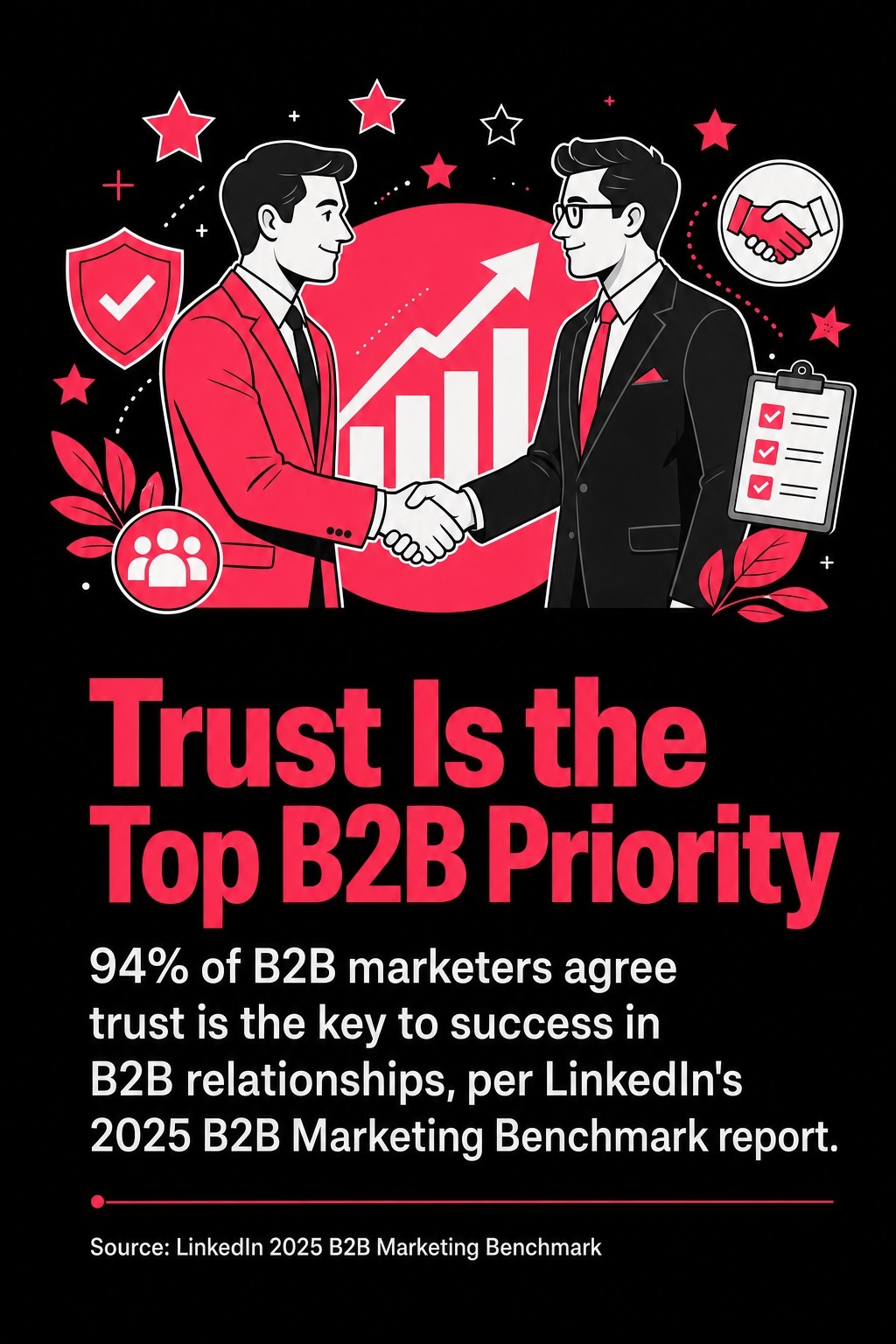
Educational content isn't just lead generation. LinkedIn's 2025 B2B Marketing Benchmark report found that 94% of B2B marketers agree trust is the key to success in B2B relationships, and 42% of senior B2B marketers cite increasing brand awareness and reputation among decision-makers as their top business priority. Content is the mechanism that builds both.
The smart lighting market was valued at $9.86 billion in 2025 and is projected to reach $17.38 billion by 2030, according to MarketsandMarkets' smart lighting market forecast. Buyers in this segment aren't just shopping for fixtures. They're evaluating partners who understand IoT integration, controls systems, and energy management platforms.
If your content marketing positions your company as the LED manufacturer that actually understands where commercial lighting is headed, you attract a completely different buyer than the one comparing price-per-unit on a spec sheet. That's the positioning that survives commoditization.
B2B content marketing for manufacturers requires a different editorial calendar than consumer content. The buying cycles are longer, the content needs to be more technical, and the distribution channels are different. Start with two to three pillar pieces and build from there.
Social media marketing for LED lighting manufacturers drives B2B brand awareness most effectively through LinkedIn for professional audience targeting and YouTube for technical product demonstrations.
I'll be direct: Instagram and Facebook are low-priority for most B2B LED manufacturer marketing. They can support brand visibility, particularly for architectural and design-focused product lines, but they're not where procurement directors are approving vendor shortlists. LinkedIn and YouTube are where the B2B work happens.
The Content Marketing Institute's manufacturing content marketing research found that 76% of manufacturing marketers are now using generative AI tools, an adoption rate matching other B2B sectors. This matters because your competitors are scaling content production. Standing still is falling behind.
Your company page on LinkedIn is less important than the personal profiles of your technical sales team, engineering leads, and executive team. Buyers evaluate people before they evaluate companies. Posts from your chief engineer explaining how to calculate lighting power density for ASHRAE compliance will consistently outperform product launch announcements from your brand page.
Build a content rhythm: one educational post per week from a company spokesperson, one product application post from the brand page, and one industry news commentary that connects market trends to your product line. That cadence builds social media presence without requiring a full-time social media team.
YouTube is underused by lighting manufacturers and overused by consumers. For B2B LED lighting companies, a channel with product installation walkthroughs, photometric data explanations, and smart lighting configuration guides serves as a 24/7 technical sales resource. Buyers watch these videos during their evaluation phase. A 12-minute video showing your fixture installed in a real warehouse environment answers objections your sales team would otherwise spend weeks addressing.
Email marketing for LED manufacturers drives consistent B2B lead generation when campaigns are segmented by buyer role, product category interest, and stage in the procurement cycle rather than sent as broadcast messages to an undifferentiated list.
Most manufacturer email lists are a graveyard of trade show contacts who never opened a single message. That's a segmentation problem, not an email problem. The fix isn't a better subject line. It's building sequences that deliver the right content to the right buyer at the right moment.
Segment your email list by at minimum four dimensions: job function (engineer, facilities manager, procurement, executive), industry vertical (commercial real estate, manufacturing, municipal, healthcare), product interest based on pages visited or content downloaded, and stage in the sales cycle.
A facilities manager who downloaded your energy efficiency white paper should receive a sequence focused on ROI calculations and case studies, not a product catalog. An electrical engineer who viewed your LED driver specifications should receive technical comparison content and a sample request offer. The message needs to match where they are, not where you want them to be.
Use Mailchimp, HubSpot, or a comparable marketing automation platform to build trigger-based sequences. When a visitor downloads a product spec sheet, an automated sequence should follow up with a related application guide, then a customer reference story, then a direct sales contact offer. Three to five emails over two to three weeks, timed to the natural pace of B2B procurement research.
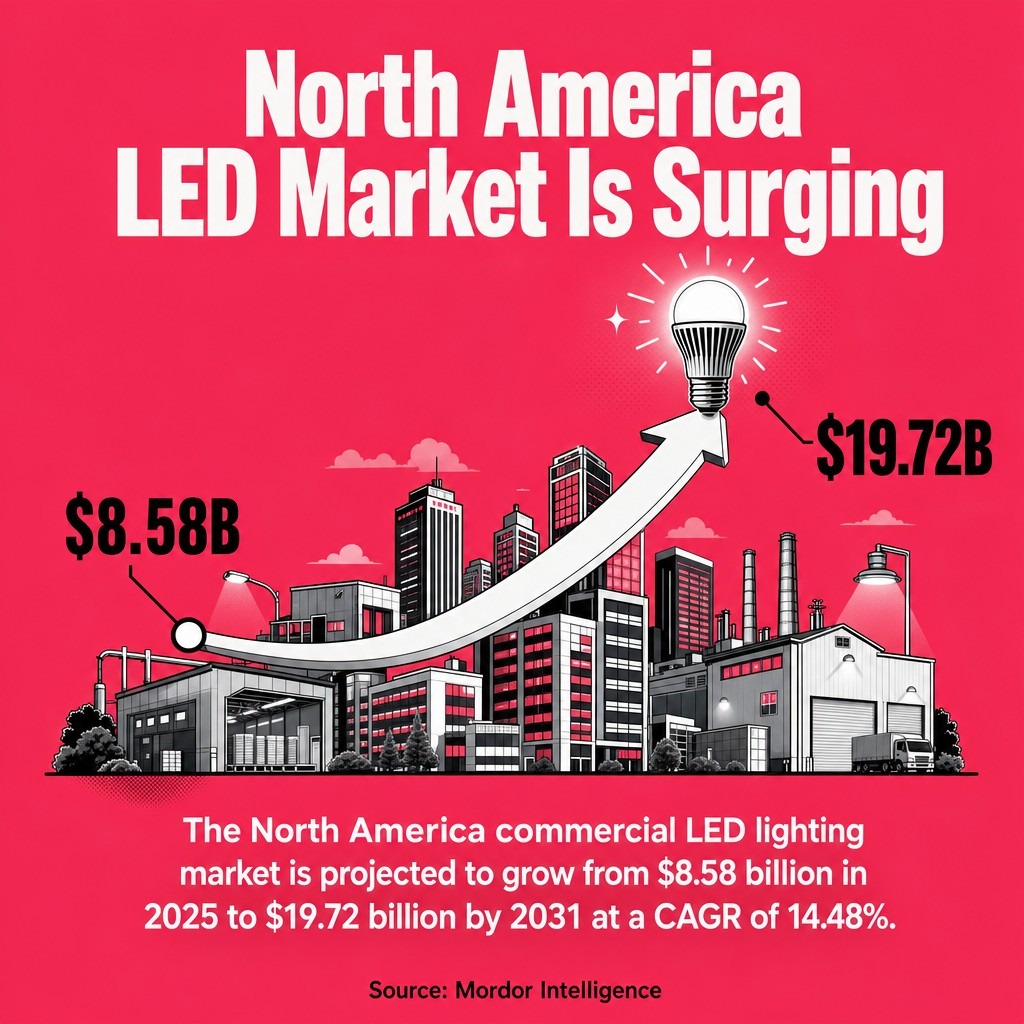
The North America commercial LED lighting market is projected to grow from $8.58 billion in 2025 to $19.72 billion by 2031 at a CAGR of 14.48%, according to Mordor Intelligence's North America commercial LED lighting market report. That growth means new buyers entering the market constantly. An automated nurture sequence means your brand awareness compounds with every new prospect who finds you, without adding headcount.
LED manufacturer marketing performance is best measured through a connected set of KPIs that track the full path from digital traffic to sales pipeline, not just top-of-funnel vanity metrics.
I see manufacturers celebrate website traffic increases while their sales pipeline stays flat. Traffic is not a business outcome. A thousand visits from the wrong audience is less valuable than fifty visits from procurement managers at commercial construction firms. Measurement has to connect marketing activity to revenue impact.
The four metrics that connect digital marketing to B2B sales outcomes for lighting manufacturers are:
Use Google Analytics 4 with conversion events mapped to sample requests, spec sheet downloads, and contact form submissions. Connect it to your CRM, whether that's Salesforce or another platform, so you can trace a closed deal back to the search query that started the buyer's journey.
Set quarterly benchmarks, not annual ones. The LED lighting market moves fast enough that a campaign that performed well in Q1 may need adjustment by Q3 as competitive bidding shifts and seasonal procurement cycles change. Review your channel mix every ninety days against your cost per qualified lead targets, and be willing to cut what isn't producing pipeline regardless of how much time was invested in building it.
For a structured approach to tracking and improving B2B marketing ROI for manufacturers, the key is building your measurement framework before you scale your spending, not after.
The opportunity in LED manufacturer marketing is genuinely significant right now, and most of your competitors are underinvesting in digital. That's the actual competitive advantage sitting in front of you.
Start with three things. First, audit your website for SEO gaps on your highest-margin product categories. Second, set up a basic lead nurture sequence for anyone who downloads content or requests specifications. Third, build a LinkedIn content calendar with your most technically credible team members as the voices.
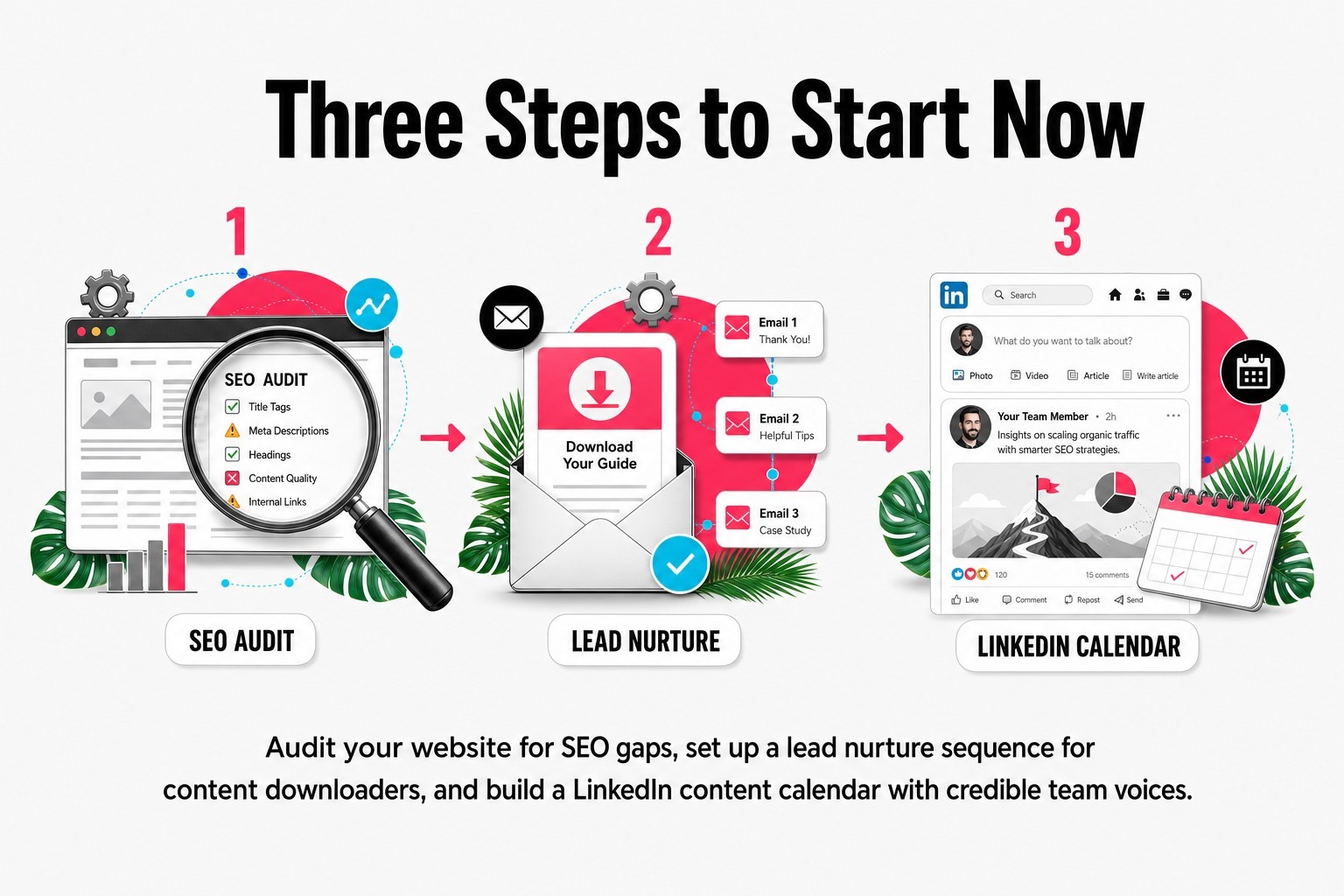
Those three steps alone will put most LED lighting manufacturers ahead of where they are today. Not because the tactics are secret, but because most companies never get past the planning stage.
If you want a full framework built around the specifics of B2B industrial marketing, the complete guide to electrical parts digital marketing covers the channel-by-channel strategy in detail. The market growth is there. The buyers are already online researching. The only question is whether they find you or your competitor first.