
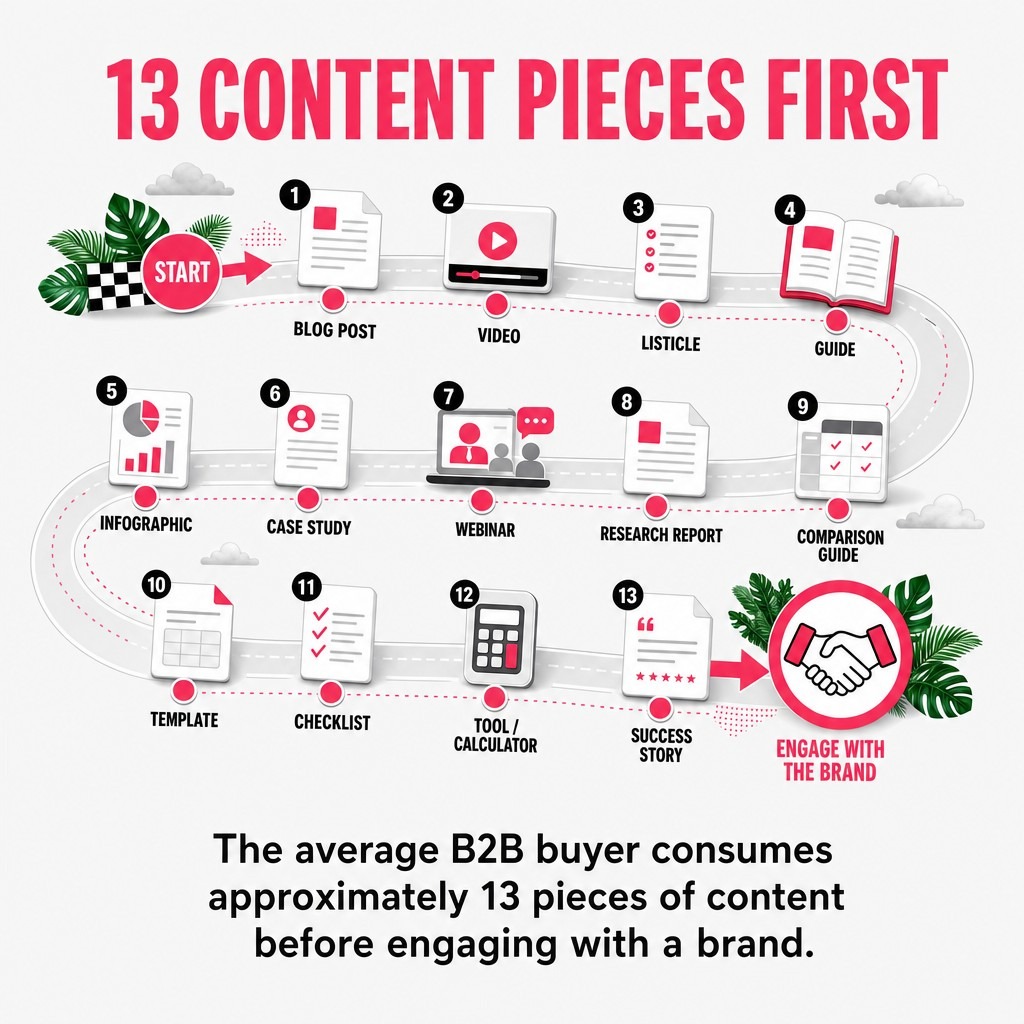
B2B distributors build authority by producing content that serves the average buyer's 13-piece consumption path before initial contact. The average B2B buyer consumes approximately 13 pieces of content before engaging with a brand, making owned content the primary trust mechanism in long-cycle sales. Video achieves 72% engagement rates while interactive formats convert at double the rate of static alternatives. Content distribution through owned channels costs 62% less per lead than outbound methods while generating three times more pipeline.
I've watched distribution companies spend years competing on price alone, then flip to content-driven positioning and suddenly own their niche. The shift isn't about becoming a publisher. It's about answering the questions your buyers already type into search bars at 11 PM when they're trying to solve a problem your product addresses.
B2B distributor content marketing is the systematic production and distribution of educational material that positions your company as the expert source in your product category. You're building a library that answers buyer questions at every stage, from "what is this thing" to "why choose you over the competitor down the street."
Distribution businesses operate as value-added intermediaries between manufacturers and end users. Your content strategy needs to reflect that position. You're not the manufacturer explaining product specs. You're the guide who knows which product solves which problem, which applications work in which environments, and which configurations save money over the product lifecycle.
The mechanics are straightforward. You create content addressing real buyer questions. You distribute it through channels your buyers actually use. You measure what moves prospects closer to purchase. Content marketing generates three times more leads than outbound marketing at 62% lower cost, which matters when you're operating on distributor margins.
B2B distribution sales cycles run 3-18 months depending on product complexity and purchase authority. Your content needs to support that entire timeline. Early-stage content addresses category education and problem identification. Mid-stage content covers product comparison and application guidance. Late-stage content handles vendor selection criteria and implementation planning.
Most distributors skip the early and middle stages completely. They jump straight to product PDFs and pricing requests. That works when buyers already know what they need. It fails when buyers are still figuring out if they have a problem worth solving.
High-quality content helps build trust, which is especially important in distribution. Buyers are often making long-term product decisions, and the cost of choosing the wrong supplier or solution can be high because switching later is not simple.
Search volume for distributor-specific keywords is often low. "Industrial valve supplier Ohio" gets 50 monthly searches, not 50,000. That's fine. You're not building a media company. You're building authority with the specific people who need exactly what you sell.
Authority content ranks for low-volume, high-intent keywords that indicate purchase readiness. It gets shared internally within buying committees. It gets bookmarked and returned to during vendor evaluation. It doesn't need millions of views. It needs to be the resource procurement teams cite when justifying vendor selection.
Price competition destroys distributor margins. When buyers see you as interchangeable, they optimize for cost. When buyers see you as the expert who helps them avoid expensive mistakes, price becomes one factor among many.
Content shifts the conversation from "who's cheapest" to "who knows this category best." You're demonstrating expertise buyers can't get from manufacturer spec sheets or competitor catalogs. That expertise has value buyers will pay for.
The math works in your favor. 73% of B2B marketers maintain documented content marketing strategies, but most distributors still rely on product catalogs and sales calls. You're competing against businesses that haven't figured out content yet. The bar is low.
Distributors operating on 15-25% margins can't afford extended price wars. Content marketing protects margins by reducing price sensitivity. When you're the company that published the troubleshooting guide that saved a buyer three days of downtime, you've earned pricing power.
Content also shortens sales cycles for qualified buyers. Instead of explaining basic product categories on every discovery call, you send links to existing content that handles education. Your sales team spends time on high-value conversations with buyers who already understand what you sell.
The lead generation economics are clear. Lower cost per lead, higher lead quality, shorter sales cycles for informed buyers. Those three factors compound to increase revenue per sales rep while decreasing customer acquisition cost.
B2B purchases involve 6-10 stakeholders on average. Your content needs to speak to engineers evaluating specifications, procurement teams managing budgets, and executives approving large expenditures. Each role has different questions and concerns.
Single-purpose content struggles here. A technical datasheet doesn't help the CFO justify the purchase. A business case white paper doesn't help the engineer validate compatibility. You need content variety addressing the full committee.
Distribution companies with strong content libraries give buying committees everything they need to build internal consensus. That speeds decisions and reduces the "we're still evaluating options" limbo that kills deals.
B2C content marketing prioritizes volume, virality, and emotional connection. B2B distributor content prioritizes depth, accuracy, and problem-solving utility. The audience sizes are different. The decision-making processes are different. The content requirements are completely different.
B2C buyers make quick, often emotional purchases with limited research. B2B buyers conduct extensive research, consult colleagues, and evaluate multiple vendors over months. Your content needs to serve that evaluation process, not interrupt it with clever hooks.
The risk profiles differ too. B2C buyers risk $50 and an hour of regret if they choose wrong. B2B buyers risk hundreds of thousands of dollars, operational downtime, and career consequences if they select the wrong distributor. Your content needs to reduce that risk perception.
B2C content avoids complexity to maximize audience size. B2B distributor content embraces complexity because your buyers need it. Engineers want torque specifications and material compatibility charts. Plant managers want installation procedures and maintenance schedules. Give them detail.
Most distributors dumb down content trying to appeal to everyone. That's a mistake. Your buyers are professionals solving technical problems. They appreciate precision and completeness. Surface-level content signals you don't actually understand the products you sell.
The sweet spot is comprehensive technical accuracy presented in organized, scannable formats. Full detail for those who need it, clear structure for those scanning for specific information.
B2C content pushes immediate purchase. B2B distributor content supports 6-18 month evaluation processes. That changes everything about content strategy, measurement, and distribution.
You're not optimizing for this week's conversions. You're building a resource library that supports buyers wherever they are in their journey. Some content serves buyers just beginning research. Other content serves buyers deep in vendor comparison. Both matter.
This means measuring content performance on engagement depth and time spent, not just immediate lead generation. A technical guide that buyers bookmark and return to three times over four months is working, even if it doesn't generate immediate form fills.
B2B distributor content distribution splits into three categories: owned media (properties you control), earned media (coverage and mentions you don't pay for), and paid media (promotional placements you purchase). Each channel serves different purposes in the buyer journey.
Owned channels give you complete control and zero distribution cost after initial setup. Earned channels provide third-party credibility. Paid channels deliver immediate reach to specific audiences. Most distributors over-invest in paid and under-invest in owned, which is backward.
The priority order for distributors is owned first, earned second, paid third. Build your owned content library. Get it earning organic traffic and engagement. Then amplify through earned and paid channels as needed.
Your website blog is the foundation. Every piece of content you create should live on your domain first. You own the traffic. You control the user experience. You capture the SEO value. Other distribution channels are amplification, not replacement.
Email marketing connects you directly with buyers who've opted in to hear from you. Email remains the highest-ROI channel for B2B content distribution because it reaches decision-makers in environments where they're already processing business information.
Product documentation and resource libraries serve buyers actively evaluating your offerings. These aren't marketing fluff. They're detailed technical resources, compatibility guides, and application instructions that help buyers determine if your products solve their problems.
Trade publications, industry forums, and association websites reach your buyers when they're seeking expert perspectives. Contributing content to these channels builds authority beyond your own properties.
The key is contributing genuine expertise, not thinly veiled sales pitches. Industry editors want content that serves their audiences. Give them detailed how-to guides, market analysis, or technical troubleshooting advice that happens to demonstrate your knowledge.
Speaking at industry events and webinars extends your earned media reach. The content you present becomes slides, recordings, and follow-up articles that continue delivering value long after the event.
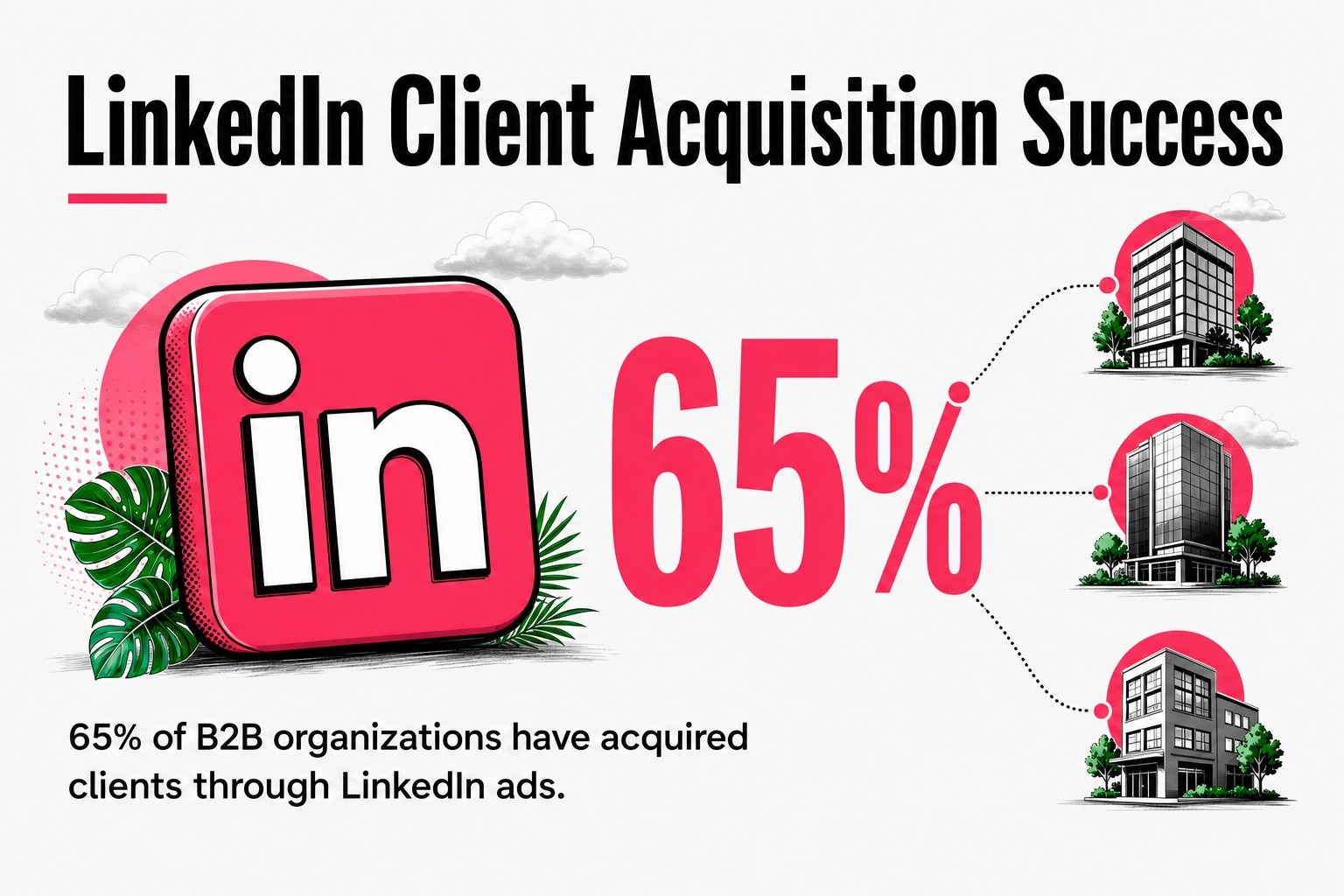
65% of B2B organizations have acquired clients through LinkedIn ads, making it the primary paid channel for distributor content. LinkedIn's professional targeting lets you reach specific job titles, industries, and company sizes with content relevant to their roles.
Google Ads serves buyers actively searching for solutions in your category. The intent is high. The competition is often low for specific distributor keywords. Running search ads to deep content pages (not just product pages) captures buyers in research mode.
Industry publication sponsorships place your content in environments where buyers are already consuming related information. Native advertising in trade publications performs well because readers are in learning mode, not ad-avoidance mode.
B2B distributors need a mix of content formats to answer different buyer questions and match different consumption preferences. Some prospects want detailed written guides, others want quick video explanations, and many appreciate downloadable templates. A varied content mix helps you serve the full audience and move buyers through the research process.
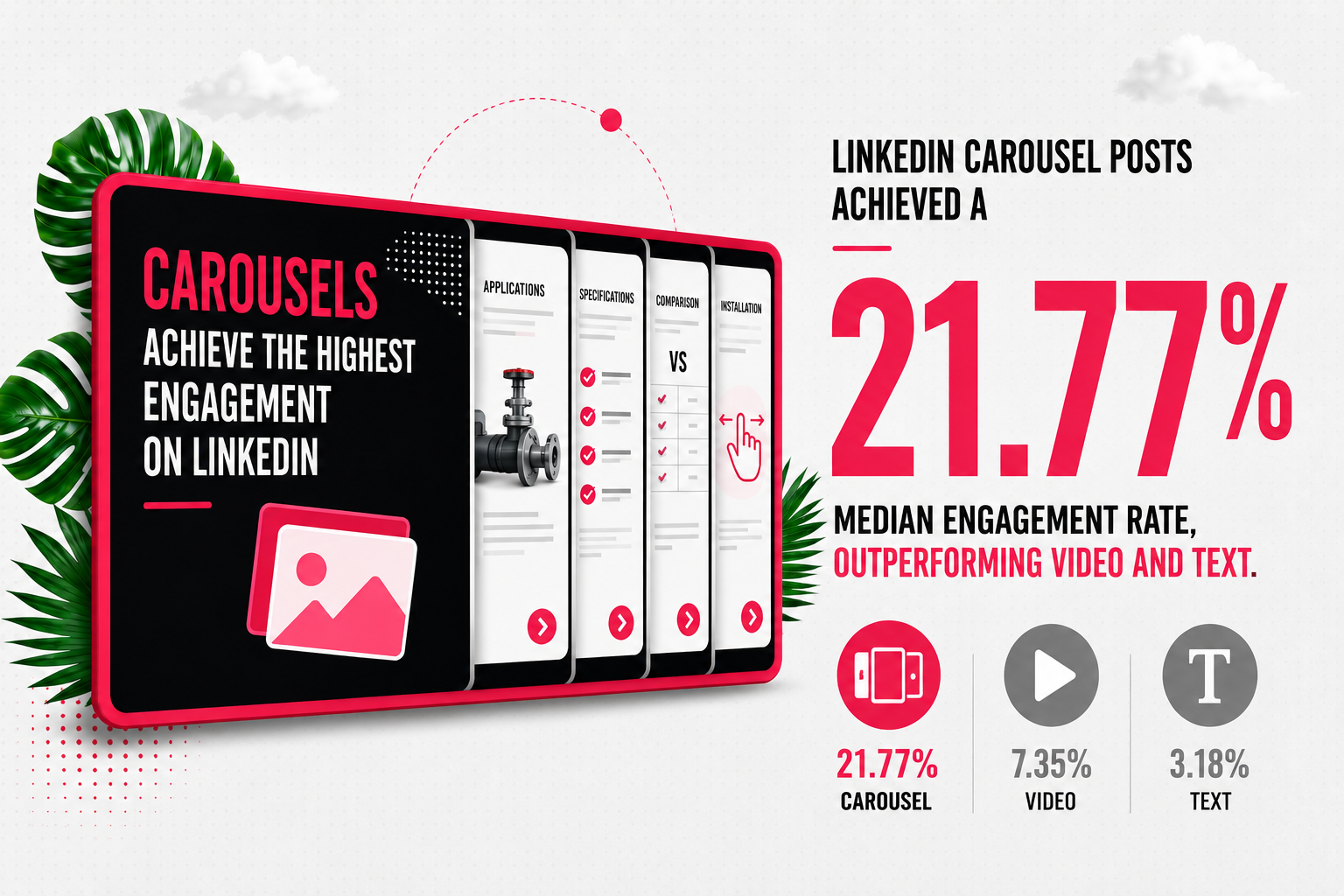
Video is still valuable for distributors because it shows product applications, explains complex installations, and puts a human face on technical expertise. But the strongest engagement format on LinkedIn is actually carousels: Buffer’s analysis of millions of social posts found LinkedIn carousel posts achieved a median engagement rate of 21.77%, outperforming video and text. That makes carousels a strong option when you want to educate buyers, break down specifications, or present product comparisons in a format that encourages interaction.
The format selection depends on the question you're answering. Product comparison questions need structured comparison guides or tables. Installation questions need video or illustrated step-by-step instructions. Business case questions need white papers with ROI calculations.
Installation guides, specification sheets, and compatibility matrices are marketing content, not just product support. These documents prove you understand the products you distribute and the applications where buyers use them.
Most distributors hide technical documentation behind login walls or save it for post-purchase. That's backward. Making detailed technical content publicly available demonstrates confidence in your expertise and helps buyers evaluate products before contacting sales.
The SEO value is significant too. Technical documentation ranks for long-tail search queries that indicate high purchase intent. "Compatible hydraulic fittings for Parker 43 series" is a low-volume search, but anyone typing it is deep in specification and probably ready to buy.
Case studies work for distributors when they focus on application details, not customer testimonials. Buyers want to know how your products solved problems similar to theirs. The customer name matters less than the technical details of the solution.
Structure case studies around the problem, solution approach, product selection rationale, implementation process, and measurable outcomes. Give buyers a template they can apply to their own situations.
Include enough detail that readers learn something actionable even if they don't buy from you. That generosity builds trust and positions you as genuinely helpful, not just selling.
Product demonstration videos show buyers exactly what they're getting. Installation tutorial videos reduce post-purchase support costs while giving prospects confidence they can implement successfully. Troubleshooting videos become evergreen resources that rank in search and answer common questions.
Video production doesn't require expensive equipment. A smartphone, decent lighting, and clear audio are sufficient for technical content where information matters more than production polish. Buyers value clarity over cinematography.
Transcribe videos and publish transcripts alongside the video. This improves accessibility, creates SEO-friendly text content, and serves buyers who prefer reading to watching.
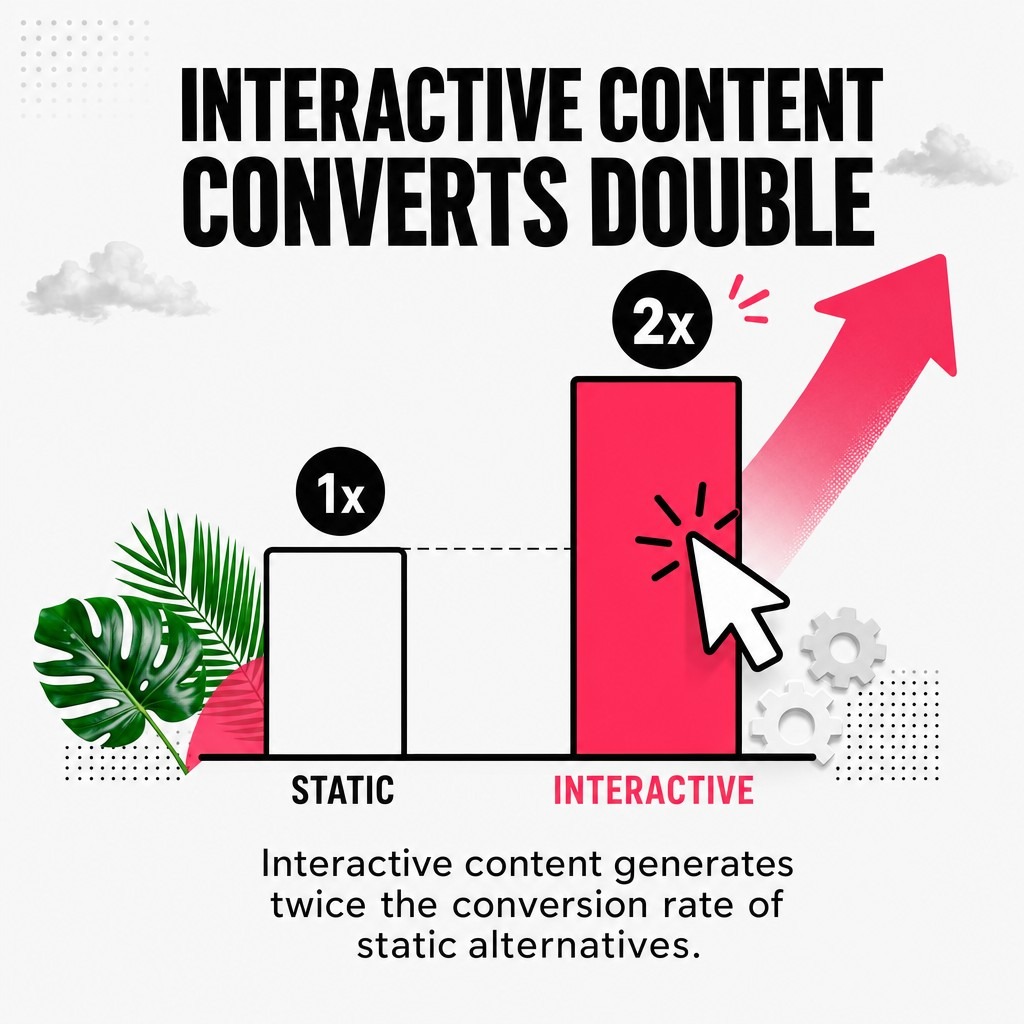
Interactive content generates twice the conversion rate of static alternatives. Product configurators, ROI calculators, and compatibility checkers give buyers hands-on tools that help them evaluate solutions while capturing valuable lead data.
A hydraulic system pressure calculator serves buyers in the research phase while demonstrating your understanding of application requirements. An energy savings calculator helps buyers build business cases for product upgrades. These tools provide utility beyond standard content.
Interactive content also creates natural follow-up opportunities. A buyer who uses your ROI calculator is signaling strong purchase intent and specific product interest. That's a qualified lead worth immediate sales follow-up.
A content strategy for B2B distributors starts with buyer question research, not keyword research. What questions do buyers ask before purchase? What objections do they raise? What information do they need to get internal approval? Your content strategy answers those questions systematically.
Talk to your sales team. They hear the same questions repeatedly. Which products cause confusion? What do buyers misunderstand about applications? Where do deals stall because buyers lack information? Every repeated question is a content opportunity.
Analyze your sales process for information gaps. Where do buyers get stuck? What information do they request? What do they Google during sales calls? Build content that fills those gaps proactively.
Create a spreadsheet listing every question buyers ask during the sales process. Organize by buyer journey stage (awareness, consideration, decision). Assign each question a content format (blog post, video, calculator, case study). Prioritize by question frequency and impact on purchase decisions.
This inventory becomes your content roadmap. You're not guessing what buyers want. You're documenting what they actually ask for. Every piece of content maps directly to a buyer need.
Update the inventory quarterly as market conditions change and new questions emerge. Your content strategy evolves with your buyers' needs.
Consistency beats quality in content marketing. Publishing good content monthly beats publishing perfect content quarterly. Buyers need to see regular updates demonstrating ongoing expertise and market knowledge.
Plan content three months ahead. This gives you time to research, create, and refine without rushing. Include product launches, industry events, and seasonal buying patterns in your calendar.
Batch similar content types. Write three blog posts in one sitting. Record five product videos in one afternoon. Batching improves efficiency and maintains consistent quality across pieces.
Most distributors underestimate content marketing resource requirements. Quality content requires research time, creation time, editing time, and distribution time. Half-effort produces forgettable content that wastes investment.
Start with achievable volume. One detailed blog post weekly plus one video monthly is better than sporadic bursts of activity. Build internal processes before scaling production.
Assign clear ownership. Someone needs to be responsible for content strategy, creation, and distribution. Splitting responsibilities across people with other priorities guarantees inconsistent execution.
SEO for distributor content focuses on long-tail, high-intent keywords that competitors ignore. You're not competing for "industrial supplies." You're targeting "Grainger alternative for pneumatic fittings Ohio" or "Parker hydraulic hose distributor same-day delivery."
These specific searches have low volume but high conversion rates. The buyers typing them know exactly what they need. Your content just needs to show up when they search.
Technical content naturally attracts these searches. Detailed product guides, specification comparisons, and application instructions rank for the exact terms buyers use when researching specific products.
Use your buyer question inventory as keyword starting points. How do buyers phrase those questions in search engines? What terminology do they use? Industry jargon or plain language?
Check Google autocomplete for your product categories. Type partial queries and see what Google suggests. Those suggestions reflect real search patterns. They're content opportunities.
Analyze competitor content but don't just copy their topics. Look for gaps they're not addressing. What questions aren't they answering? Where is their content thin or outdated?
Technical content needs structured formatting for both readers and search engines. Use descriptive headings that include relevant terms. Break complex information into scannable sections. Include tables for specifications and comparisons.
Product names, model numbers, and specification terms belong in headings, first paragraphs, and image alt text. These are the exact terms buyers search. Make them prominent.
Link related content internally. Your product comparison guide should link to individual product pages. Your installation guide should link to compatible product listings. Internal linking helps search engines understand content relationships while helping buyers find related information.
Many distributors serve specific geographic regions. Local SEO captures buyers searching for nearby suppliers. Include location terms in content naturally. "Industrial valve supplier serving Northeast Ohio" works better than "Industrial valve supplier" for regional buyers.
Create location-specific content addressing regional market conditions, delivery capabilities, and local industry presence. A blog post about serving automotive manufacturers in Michigan resonates differently than generic automotive content.
Claim and optimize your Google Business Profile. Many distributor searches include location intent. "Hydraulic hose supplier near me" triggers local results. Your profile needs current information, photos, and regular updates.
Social media for distributors isn't about going viral. It's about maintaining presence where buyers research vendors and staying visible during long sales cycles. LinkedIn dominates B2B social because it reaches decision-makers in professional contexts.
LinkedIn works for distributors because buyers use it to research vendors, follow industry trends, and evaluate expertise. Your content reaches them where they're already processing business information.
Other platforms matter based on your industry. YouTube serves buyers searching for product videos and how-to content. Twitter works for real-time industry news and event coverage. Facebook groups sometimes host niche industry communities worth joining.
Share your owned content on LinkedIn but add context in the post copy. Don't just drop links. Explain why the content matters. What question does it answer? Who benefits from reading it?
Original LinkedIn posts sharing industry insights, market trends, or technical tips perform well without requiring full blog posts. Short-form content maintains visibility between major content pieces.
Engage with industry conversations. Comment on posts from manufacturers, customers, and industry publications. Thoughtful comments raise your profile and demonstrate expertise without requiring content creation.
YouTube is the second-largest search engine. Buyers search it for product demonstrations, installation guides, and troubleshooting help. A well-optimized video library captures that search traffic.
Optimize video titles and descriptions for search. Include product names, model numbers, and specific applications. Use the same keyword research that guides your blog content.
Create playlists organizing videos by product category, application type, or buyer journey stage. Playlists keep viewers engaged with multiple videos and improve session duration signals that help search rankings.
Industry-specific forums and online communities are where practitioners discuss real problems and seek recommendations. Participating builds visibility with highly qualified audiences.
Focus on providing genuine help, not promoting your business. Answer technical questions. Share relevant resources. Build reputation as someone who knows the category. The business development happens naturally when members need what you sell.
Monitor forums for questions your content already answers. Linking to your comprehensive guides as helpful resources serves the questioner while driving qualified traffic to your site.
Content marketing measurement for distributors tracks three levels: content engagement, lead generation, and revenue influence. Each level matters for understanding what's working and where to invest more.
Content engagement metrics (pageviews, time on page, bounce rate) show whether content resonates with audiences. Low engagement signals content isn't serving buyer needs or isn't reaching the right audience.
Lead generation metrics (form fills, content downloads, contact requests) show whether content moves buyers toward purchase conversations. Content that engages but doesn't generate leads needs stronger calls-to-action or better journey mapping.
B2B distributor sales cycles make attribution complex. Buyers consume multiple content pieces over months before converting. First-touch attribution credits the initial content. Last-touch credits the final piece before conversion. Multi-touch attempts to credit everything in between.
No attribution model is perfect for long cycles. Use multiple views. Which content drives initial engagement? Which content appears frequently in converting buyer journeys? Which content gets shared in late-stage sales conversations?
Sales team feedback provides qualitative attribution data. What content do buyers mention on calls? Which resources do sales reps share most frequently? What content helps close deals? This feedback supplements analytics.
Content marketing ROI compares content investment (creation and distribution costs) against attributed revenue. The challenge is connecting content to revenue in long, multi-touch sales processes.
Track revenue from deals where content played a documented role. Sales notes mentioning content pieces. Email threads where sales shared resources. Closed deals from leads who engaged heavily with content before converting.
Compare cost per lead from content marketing against other channels. Content typically delivers lower cost per lead than paid advertising while generating higher-quality leads because buyers self-educate before engaging sales.
Revenue results lag content publication by months. Watch leading indicators that predict future performance. Organic traffic growth shows content gaining search visibility. Email list growth shows growing audience interest. Content downloads indicate buyers finding value.
Track qualified lead percentage from content sources. If content generates high volume but low quality leads, you're attracting the wrong audience or need better lead qualification. Quality matters more than quantity for distributor sales.
Monitor sales cycle length for content-engaged leads versus other sources. Content should educate buyers and accelerate decisions. If content-engaged leads take longer to close, your content isn't effectively addressing buyer objections.
Content repurposing multiplies value from single creation efforts. A detailed blog post becomes a video script, LinkedIn post series, email newsletter, and slide deck for sales presentations. You're extracting maximum utility from research and creation investment.
Plan repurposing during content creation. Write blog posts with video adaptation in mind. Create comprehensive guides that split into multiple social posts. Design case studies that work as PDF downloads and web pages.
The effort invested in one cornerstone piece produces 10-15 derivative content pieces across formats and channels. That's efficient distribution that maintains consistent messaging across buyer touchpoints.
Create comprehensive hub content (2,000+ word guides) addressing major buyer questions. This content lives on your site and serves as authoritative reference material. Spoke content (social posts, videos, email newsletters) links back to hubs while addressing specific aspects in more detail.
Hubs build SEO authority and serve buyers seeking complete information. Spokes maintain regular publishing frequency and reach buyers on different channels. Together they create a content ecosystem serving buyers wherever they are.
The hub-and-spoke model creates a sustainable content production system that doesn't require constant new research. You're building depth around core topics rather than constantly chasing new subjects.
Email sequences automatically distribute content to segmented audiences based on their interests and buyer journey stage. New subscribers get foundational content. Engaged leads get advanced technical resources. Late-stage prospects get business case content.
Segment your email list by product interest, industry, role, and engagement level. Send content relevant to each segment. A plant manager needs different content than a purchasing agent. Generic email blasts waste the specificity your content provides.
Monitor email performance by segment. Which content drives engagement? What subject lines generate opens? Which calls-to-action produce clicks? Use data to refine targeting and content selection.
Organize content for sales team access. Create shared folders categorized by buyer journey stage, product category, and objection type. Sales reps should find relevant content in seconds, not minutes.
Train sales teams on content application. Which piece addresses which buyer concern? When in the sales process should each resource be shared? Content only enables sales if sales knows it exists and how to use it.
Track which content sales shares most frequently. High-usage content proves valuable. Low-usage content either needs promotion to sales or doesn't serve real sales needs. Let usage patterns guide content updates and future creation.
Starting B2B distributor content marketing doesn't require massive investment or complete strategy documentation. You need three things: buyer question research, an editorial calendar with your first 12 content pieces planned, and commitment to consistent execution.
Month one focuses on foundation. Interview your sales team. Document buyer questions. Audit existing content. Set up analytics. Choose your primary distribution channels. Create your first four content pieces addressing the most common buyer questions.
Month two scales production. Publish weekly. Experiment with formats. Start email list building. Engage on LinkedIn. Create your content repurposing workflow. Build the habits that sustain long-term content marketing.
Month three optimizes based on data. Which content performs best? What channels drive engagement? Where are buyers dropping off? Double down on what works. Adjust what doesn't. Refine your approach based on real performance.
Your goal isn't perfection. It's momentum. Every piece of content published is a permanent asset serving buyers. Every question answered is a sales conversation shortened. Every technical guide created is a competitor you're out-educating.
The distributors who own their niches aren't smarter or better funded. They're consistent. They publish helpful content addressing real buyer needs. They show up week after week. And over time, that consistency compounds into category authority competitors can't match.
Start with one buyer question this week. Create content answering it. Publish and distribute it. Then do it again next week. That's the strategy.