
Construction company marketing works best when your digital presence reflects the reliability of your work and the equipment you use. While the construction industry continues to grow, many construction companies still rely on trade shows, referrals, and in-person relationships. Those marketing efforts still matter, but they no longer cover the full buying journey, especially as heavy construction equipment industry growth trends (2025–2030) continue to push the market forward.
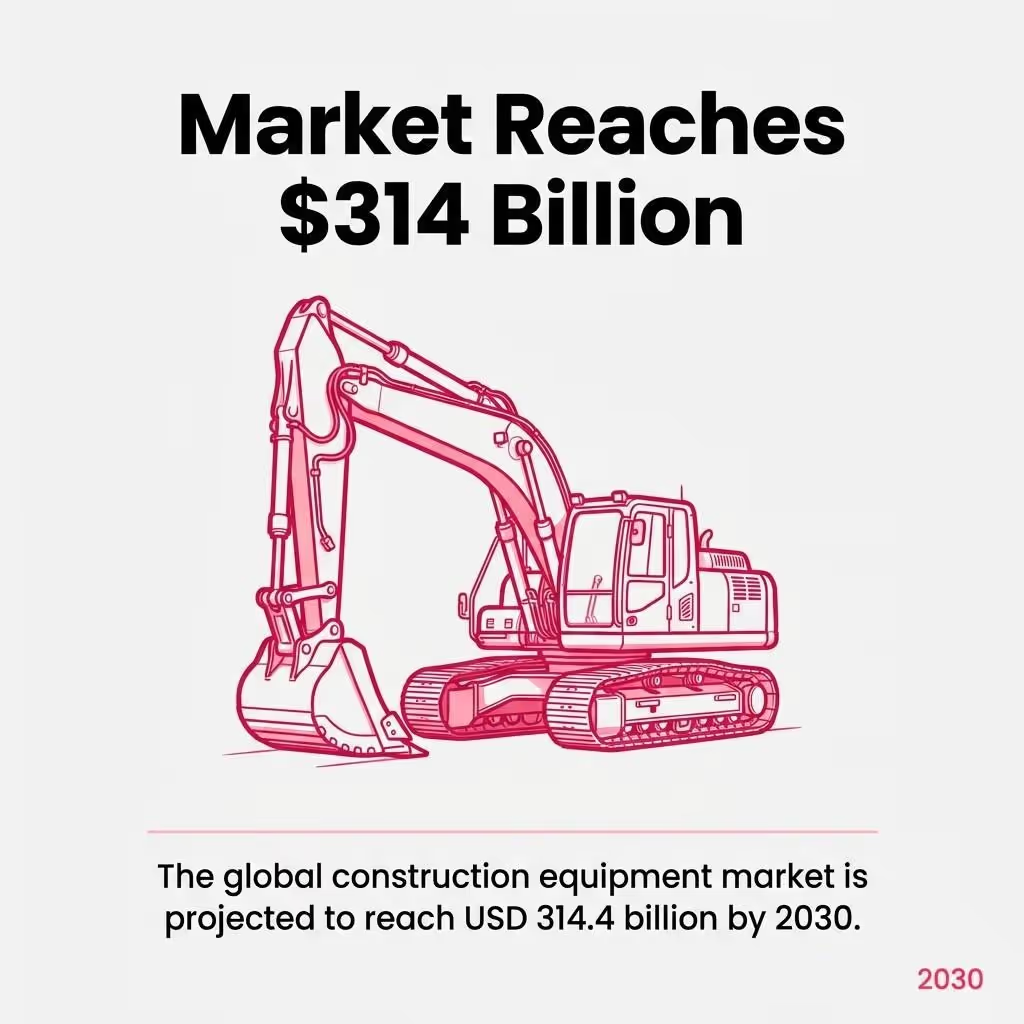
Most potential clients research online before requesting project proposals or contacting a marketing team. They compare services, review successful projects, and look for trust signals like reviews and before-and-after photos. With the global construction equipment market projected near $314B by 2030, a strong online presence matters.
This guide explains how to build a digital foundation that generates leads, increases website traffic, and converts prospective customers into new clients. It covers website improvements, SEO, content marketing, and channels that perform. It also includes construction equipment lead generation tactics.
Construction companies operate in a high-consideration market with longer sales cycles and multiple decision-makers. Clients do not choose a contractor the way they buy consumer products. They evaluate risk, timelines, pricing, safety, experience, and proof of results across multiple touchpoints.
A construction marketing strategy must account for this reality. Purchase decisions may involve owners, procurement, project managers, real estate agents, and industry professionals. Each stakeholder evaluates different criteria. Some focus on schedule certainty and project updates, others focus on cost control, quality, and whether the company has completed projects similar to theirs. Your marketing materials and digital presence should address those concerns clearly, without relying on generic claims.
Most construction buying journeys follow a predictable path. A company identifies a need, researches options, evaluates providers, and then shortlists a few construction companies for quotes and project proposals. This research happens online. Many prospective customers visit a construction equipment company website or contractor site long before they contact anyone.
They look for proof and specifics. That includes service area clarity, residential construction examples, safety credentials, construction marketing ideas translated into real outcomes, and evidence of successful projects. If your website content is thin, outdated, or hard to navigate, potential customers leave and move on. When your professional website answers questions clearly and shows completed projects, it supports the buyer’s decision and helps generate leads.
Digital transformation is accelerating in construction, and the U.S. construction equipment rental market outlook reinforces rising expectations for a modern, credible online presence. Rental and equipment demand also shape how companies market.
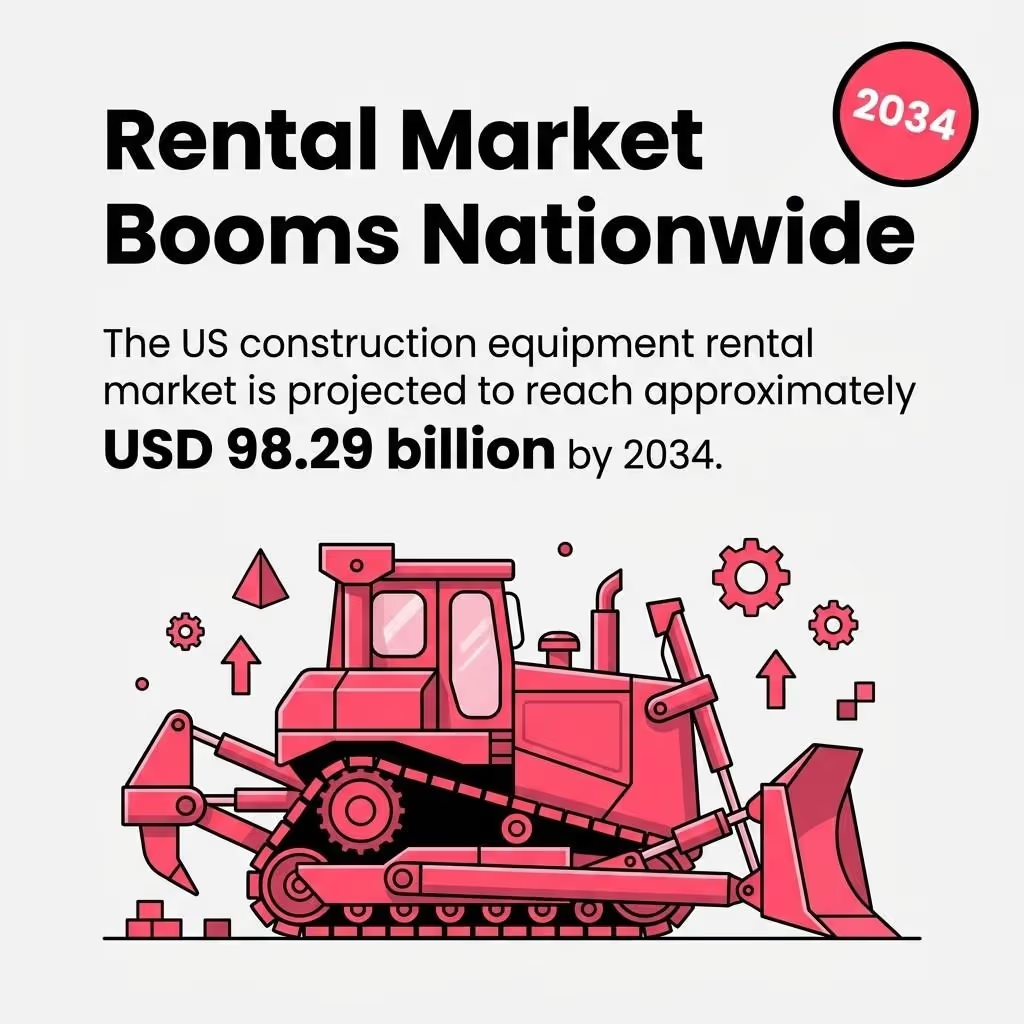
For businesses involved in construction equipment rental marketing or heavy equipment marketing, your digital presence must support both buyer and renter paths. With the U.S. equipment rental market projected to reach $98.29B by 2034, clear renter-focused information alongside buyer resources helps capture demand and improve conversions.
Rental customers care about availability, delivery, terms, and turnaround time. Buyers want specifications, service support, and total cost guidance. Smart construction companies separate these journeys using dedicated landing pages and lead capture forms, so each target audience gets the information they need without friction.
Your website is one of your most important marketing channels. It supports your sales team, educates potential customers, and creates a steady flow of qualified lead opportunities. Many construction companies lose new business because their website hides key information, lacks high quality images, or makes it difficult for prospects to take the next step.
A high-performing construction equipment company website and contractor site should be visually appealing, fast, and easy to use. It should clearly communicate services, service area coverage, and why clients should trust your business.
Start with a mobile-first professional website. Many prospects browse on-site or after hours, so pages must load quickly and work well on smartphones. Your contact page should be easy to find, and calls-to-action should appear throughout the site to help visitors request a quote, book a site visit, or start a project inquiry.
If you handle equipment sales or rentals, apply construction equipment website optimization principles to product pages. Each page should include clear specifications, configurations, use cases, and downloadable information. This supports construction equipment SEO and improves construction equipment lead generation. For construction services, add project galleries, before and after photos, and location pages to improve local SEO and visibility in local directories.
For equipment brands, heavy equipment marketing depends on visuals that communicate capability. Use professional images and simple navigation so prospects can compare models, attachments, and applications. Add construction equipment case studies that show outcomes in real conditions, not just feature lists. This also supports construction equipment content marketing and heavy equipment manufacturer marketing.
For construction services, showcase completed projects with short explanations of scope, timeline, and results. Add project updates and highlight safety practices. Strong proof improves brand recognition and helps build relationships with future customers. A clear portfolio also strengthens referral programs because existing customers can share links that demonstrate your work.
Your website should make it easy to convert visitors into new leads. Use clear calls-to-action for quotes, callbacks, and consultations. Offer downloadable marketing materials that provide value, such as checklists, project planning guides, or equipment comparison sheets. These assets support construction equipment content marketing and help you collect contact information for follow-up.
For higher-intent visitors, add short forms on key pages such as service pages, project pages, rental pages, and product pages. Track conversions and improve forms over time. This improves lead quality and helps your marketing plan produce more clients without increasing spend.
Search engine optimization is one of the most consistent marketing techniques for construction companies. Potential customers often search with location intent, so local SEO should be part of your construction marketing strategy from day one. Ranking in local results helps you generate leads from people actively searching for construction services in your local area.
Claim and improve your Google Business Profile with accurate service area details, business hours, and categories. Add high quality images, include project photos, and encourage existing customers to leave positive reviews. Respond to reviews and publish updates about completed projects, promotions, and company news. This improves social proof and supports construction marketing efforts without relying only on digital advertising.
For companies involved in equipment rentals or service, include key offerings clearly and keep listings up to date across local directories. Profile accuracy is often a deciding factor for local customers comparing options.
Start with keyword research and on-page improvements. Use your primary topic, construction company marketing, to guide page structure and site hierarchy, then build supporting pages around service categories, locations, and project types. SEO for Manufacturers relies on the same fundamentals. Use internal linking to help search engines understand your site and guide visitors toward conversion.
If you sell or rent equipment, target construction equipment SEO terms and build pages for specific models, categories, and rental services. For example, construction equipment digital marketing and heavy equipment digital presence both depend on content that matches search intent and provides real information, not generic descriptions.
Construction marketing works best when content answers real questions. Publish content that supports prospects during decision-making, such as budgeting guidance, timelines, permitting considerations, materials selection, and contractor comparison checklists. For equipment-focused companies, publish content for construction equipment marketing strategy topics like maintenance, specs, productivity, and jobsite safety.
Update content regularly and expand sections that attract traffic. This helps maintain search rankings and improves lead generation over time. The goal is to build brand recognition and trust while making it easy for new customers to take action.
See Also: Content Marketing Guide for “Boring” Industries
Social media is most effective for construction companies when it supports credibility, relationships, and visibility. The goal is not viral reach. The goal is consistent exposure to the right target market and industry professionals, supported by social media engagement that shows real work.
Heavy equipment LinkedIn marketing helps with reaching contractor decision-makers. Additionally, heavy equipment YouTube marketing and construction equipment video marketing work best through demonstrations and project walkthroughs. Facebook and Instagram support local awareness, community events, and customer trust when used for real project storytelling rather than generic posts.
Email marketing remains a dependable digital marketing channel for long sales cycles. It helps you stay visible during long decision-making periods and supports follow-up after quotes, project proposals, and inquiries.
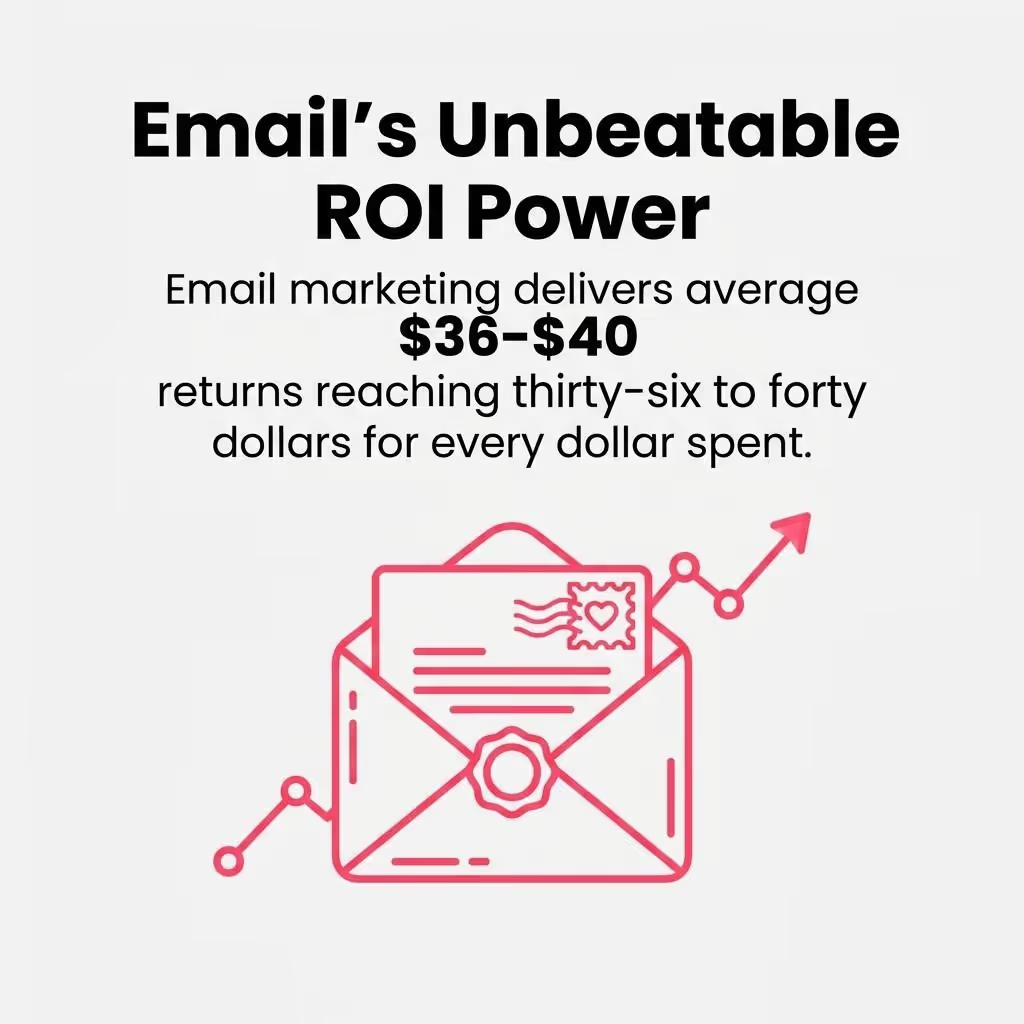
Use construction equipment email marketing for quote nurturing, maintenance updates, product launches, or rental reminders. Email marketing returns $36–$40 per $1, making it a strong channel for nurturing long, complex equipment sales cycles. For construction services, use email to share project updates, referral programs, seasonal offers, and helpful guidance.
Segment email lists by customer type and interest. That improves response rates and helps move prospects through the pipeline without aggressive sales language.
Construction equipment video marketing and heavy equipment YouTube marketing help prospects evaluate products and services without needing immediate sales contact. Video also supports construction company marketing because it provides proof in a format that is easy to consume.
For equipment companies, produce short demos, operator testimonials, and maintenance walkthroughs. For construction services, produce short project walkthroughs, before and after clips, and process explainers. Host videos on YouTube, embed them on relevant pages, and repurpose clips for social media platforms. This improves website traffic, supports search engine optimization, and builds trust faster than text alone.
In construction company marketing, trust is often the deciding factor. Whether a prospect is hiring a contractor, choosing a subcontractor, or evaluating an equipment partner, they want proof that the work is reliable and the business is easy to deal with.
Your digital presence should make that proof easy to find. Positive reviews, clear testimonials, and strong case studies help prospective customers evaluate quality before they request project proposals or contact your team.
Actively request reviews from satisfied clients. The best time to ask is shortly after a project milestone, handover, or successful delivery, when results are fresh and the customer experience is positive. Make the review process simple. Provide direct links to your Google Business Profile, relevant local directories, or your preferred testimonial collection tool. Some clients may need light guidance, so suggest specific topics such as communication, reliability, site management, safety, timelines, or aftercare.
Respond to every review professionally. Thank customers for positive reviews and address concerns in negative reviews without being defensive. This shows accountability to both reviewers and future prospects. Display reviews prominently on your website. Create a dedicated testimonials page and feature selected reviews on service pages, location pages, and key landing pages where visitors make decisions.
Detailed case studies show how your company performs in real conditions. Choose projects that reflect common customer needs such as residential construction, commercial builds, renovations, fit-outs, or specialist work. Structure each case study around the challenge, the plan, the work delivered, and the outcome. Include measurable results where possible, such as timeframe, scope delivered, reduced downtime, fewer change requests, or smoother delivery compared to previous projects.
Add high-quality photos that demonstrate the work clearly. Before and after photos help prospects understand the transformation, while in-progress images build credibility around the process and site standards. Include short customer quotes for authenticity. Direct client language carries more weight than generic claims and supports stronger brand recognition.
Customer relationships extend beyond the first project. Strong construction marketing outcomes often come from repeat business, referral programs, and long-term relationships with existing clients.
Post-project support matters. Clear follow-up, responsive communication, and practical guidance increase the likelihood of repeat work and referrals. These touchpoints are also where many positive reviews originate.
Stay connected through helpful updates. Share project updates, seasonal reminders, maintenance guidance when relevant, and industry insights that demonstrate ongoing value rather than promotional noise.
Where appropriate, invite key customers into feedback loops for service improvement. This builds loyalty and helps sharpen your marketing plan because you learn what clients actually value.
Digital marketing works best when integrated with real-world relationship building. Construction companies still win work through trust, reputation, and local visibility.
Trade shows and local events can support construction company marketing when digital tactics amplify them. Promote event attendance through email marketing and social media. If relevant, create an event landing page where attendees can schedule meetings or request information.
Capture leads digitally using mobile forms or QR codes that link to a short contact form. This prevents lost details and supports faster follow-up.
Follow up quickly after events with personalized emails referencing the conversation and the next step. Timely follow-up keeps your company top of mind.
Active participation in industry associations builds credibility. Sponsoring events, contributing insights, and engaging with industry professionals support brand recognition and create networking opportunities.
Share association involvement through your digital channels to extend offline activity into online visibility. Speaking opportunities and presentations can be repurposed into blog content, social posts, and email campaigns.
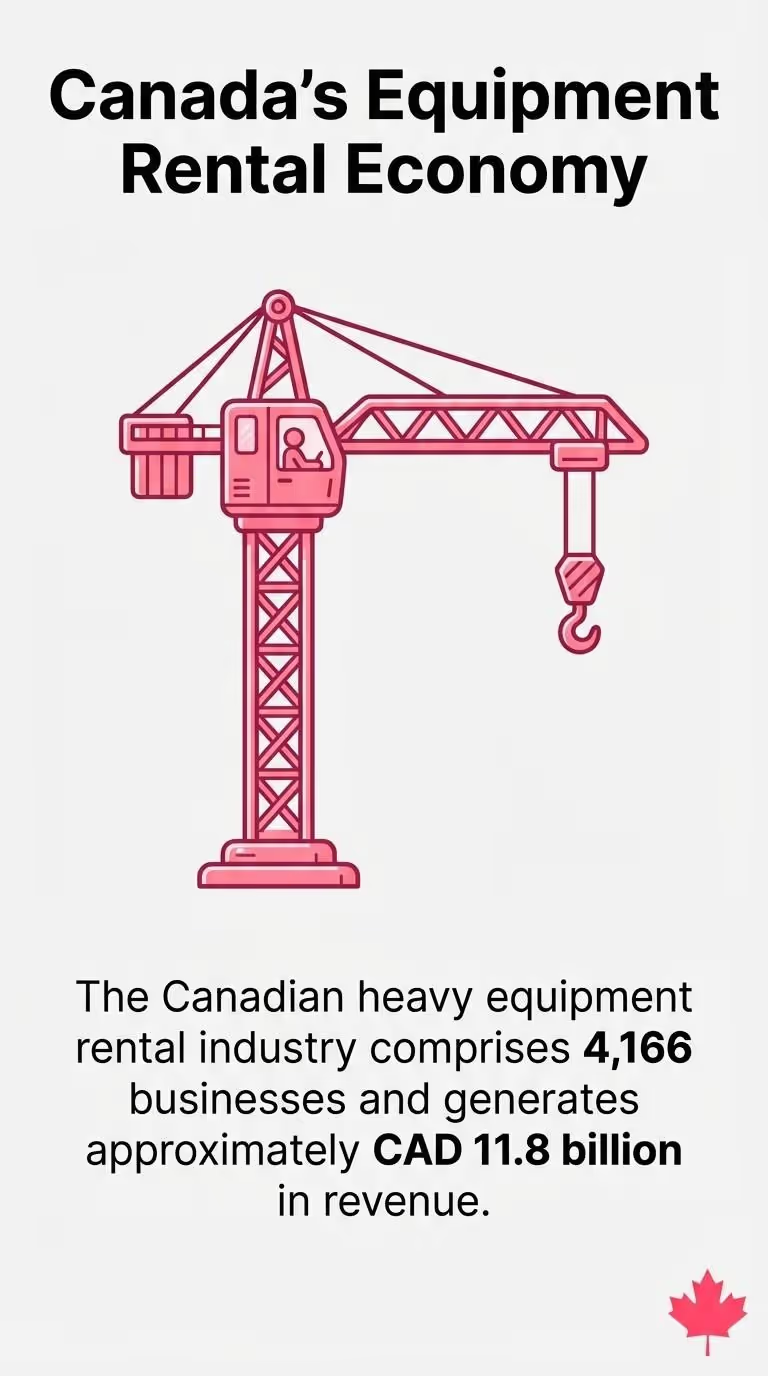
Local visibility matters in construction. Community events, partnerships with trade schools, and sponsorship of local industry initiatives help establish trust in your service area. In Canada, the heavy equipment rental industry includes 4,166 businesses and generates about CAD $11.8 billion in revenue, showing strong local market potential.
Partner with construction trade schools and vocational programs by providing equipment for training or sponsoring student competitions. Sponsor charity builds, safety seminars, and networking events. Document involvement with photos and short stories to support social media engagement.
An effective construction marketing strategy depends on tracking outcomes and adjusting based on data.
Track website traffic sources so you know what drives visibility across marketing channels. Separate organic search, paid advertising, social media, and referrals.
Measure lead actions that matter, such as contact page submissions, quote requests, phone calls, consultation bookings, and project proposal requests. Track which channels generate the highest-quality leads, not just the most traffic.
Calculate customer acquisition cost by channel. Compare results across marketing efforts so the budget goes toward what reliably generates new leads and new business.
See also: How to Choose The Best Online Traffic Sources for Your E-Commerce Business
Track how long leads take to convert. Construction sales cycles vary depending on project type, scope, and client segment.
Identify which touchpoints influence decisions most. Ask new clients what they reviewed before contacting you and what became the deciding factor. This helps you invest in what actually drives conversions.
Review performance monthly. Look for patterns in lead quality, conversion rate, and website traffic. Test improvements systematically. A/B test landing pages, CTAs, and email subject lines to find what improves responses.
Align marketing metrics with sales team feedback. Regular alignment helps ensure your marketing techniques attract the right target audience and support the sales process.
Building an effective construction company marketing requires consistent effort across a few core areas. Start with the fundamentals.
First, improve your website. Ensure it loads fast, works on mobile, and clearly shows your construction services, completed projects, service area, and contact information. Add high-quality images, before and after photos where relevant, and clear calls-to-action.
Next, optimize your Google Business Profile. Keep it up to date, add project photos, and build positive reviews consistently. Choose one or two social media platforms where your target market actually spends time and post consistently.
Start collecting email addresses through your website so you have a channel you control. From there, build toward more advanced tactics like digital advertising, remarketing, and marketing automation. Each improvement strengthens the next. A stronger digital presence compounds over time and supports future services, future customers, and repeat business.