
Truck parts buyers search differently than almost any other eCommerce audience. They don't browse. They hunt for exact fitment, specific part numbers, and vehicle compatibility. If your website can't speak their language in search results, you're invisible.
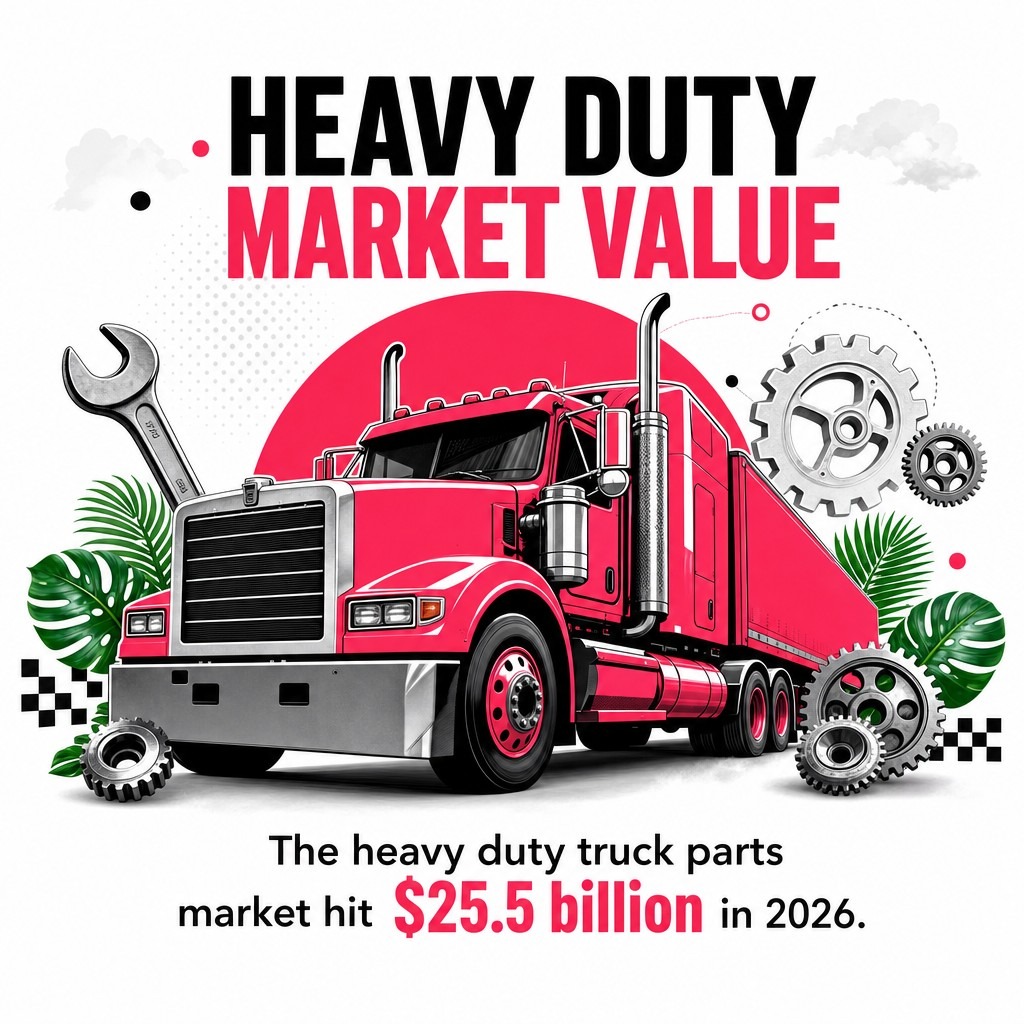
The heavy duty truck parts market hit $25.5 billion in 2026, and most of that money flows through search engines. But here's what makes truck parts SEO different: you're not just competing for keywords. You're competing to answer highly technical queries from two completely different buyer types.
B2B fleet managers search with procurement checklists and bulk order intent. DTC truck owners search with problem symptoms and fitment anxiety. Both need precise answers fast, or they click away to your competitor.
I've watched auto parts sellers struggle with this split personality for years at Scube Marketing. You can't just optimize product pages and hope for the best. Truck parts SEO requires structured fitment data, part number indexing, and content that serves both the mechanic ordering 50 brake drums and the owner-operator replacing one alternator.
This guide shows you how to build that dual-channel search strategy. You'll learn the six search patterns that drive truck parts traffic, how to structure your site for year/make/model queries, and why AI search changes everything for technical product discovery.
Most eCommerce SEO advice assumes customers browse categories and compare features. Truck parts buyers skip all that.
They arrive with a part number scribbled on a work order. They search with a VIN decoder open in another tab. They need confirmation that part XYZ-123 fits their 2018 Kenworth T680 before their truck sits idle another day costing them revenue.
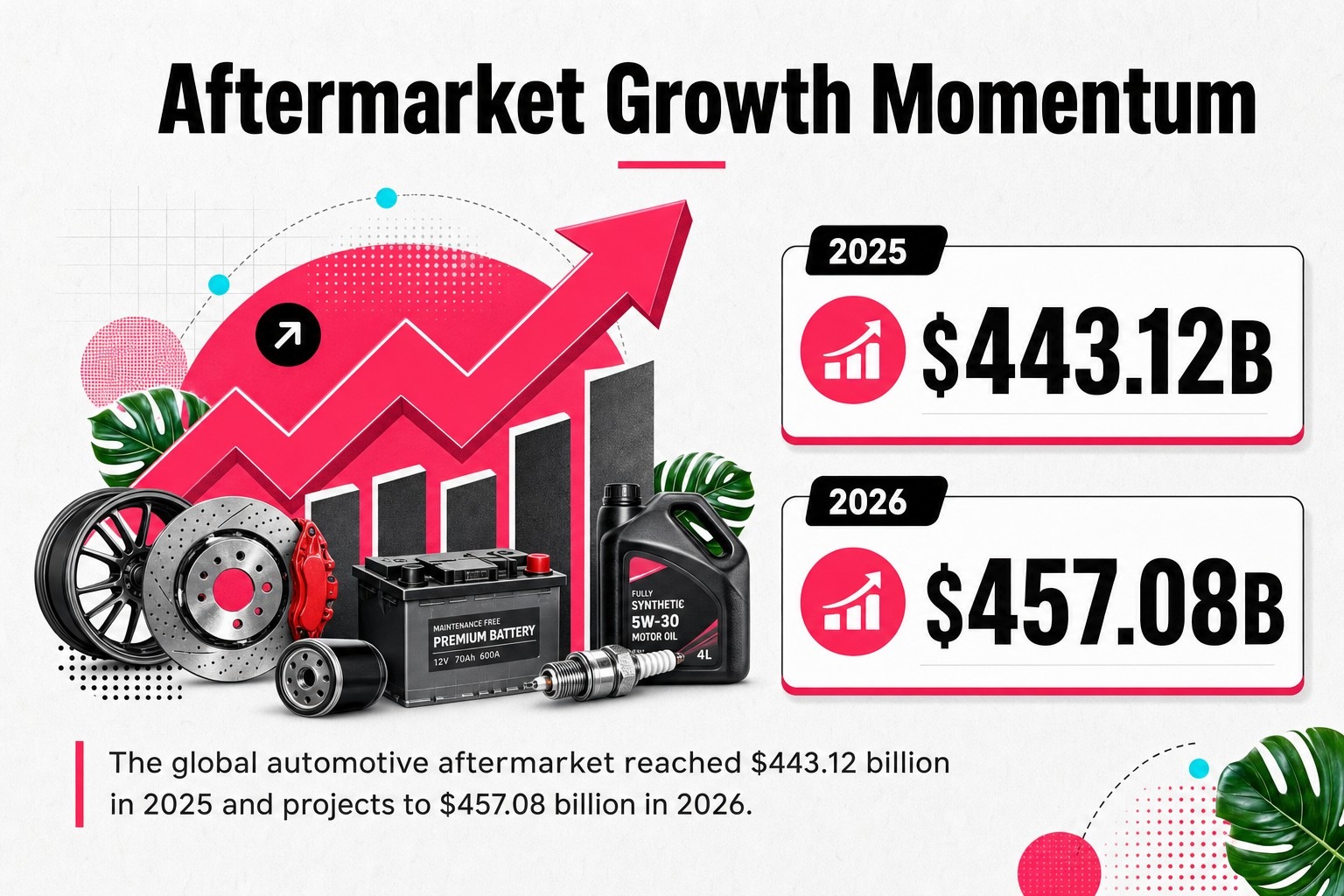
The global automotive aftermarket reached $443.12 billion in 2025 and projects to $457.08 billion in 2026, driven largely by commercial vehicle maintenance cycles. When a Class 8 truck needs parts, downtime costs operators $500-800 per day in lost revenue.
Search intent reflects that urgency. Nobody's reading blog posts about "top 10 best air filters." They're typing "Donaldson P608306 cross reference Freightliner Cascadia" at 6 AM before the shop opens.
Your SEO strategy needs to serve two audiences who search completely differently.
B2B fleet buyers search with precision. They know OEM part numbers, understand VMRS codes, and often search for bulk pricing or dealer-direct inventory. Their queries look like "Meritor brake drum 3600AX192 price 10+ units" or "Wabco air dryer cartridge R955300 wholesale."
DTC owner-operators search with problems and vehicle details. They type "2015 Peterbilt 579 check engine light P0087" or "Cummins ISX turbo actuator replacement part." They need fitment confirmation and installation context, not just product specs.
If your product pages only speak to one audience, you're cutting your addressable search traffic in half.
Generic product descriptions don't rank for truck parts queries. Fitment data serves as the central organizing principle for effective truck parts SEO, connecting each part to every vehicle application it's engineered to fit.
Without structured year/make/model compatibility data, search engines can't match your inventory to vehicle-specific queries. A brake rotor listing without fitment metadata won't appear when someone searches "2019 Kenworth T880 front brake rotor."
ACES and PIES standards exist for this exact reason. When your product data includes proper vehicle application records, you become discoverable for the hundreds of year/make/model combinations each part serves.
Truck parts searches cluster into six distinct patterns. Each requires different optimization tactics and serves different stages of the buyer journey.
Understanding these patterns helps you structure product pages, category hierarchies, and content that captures traffic across the full search spectrum.
The highest-intent queries in truck parts SEO are exact part number searches. Someone typing "Bendix 288757N" knows exactly what they need and is ready to buy.
Optimize for these by including OEM part numbers, cross-reference numbers, and superseded part numbers in your product titles, descriptions, and structured data. Create dedicated fields for manufacturer part numbers separate from your internal SKUs.
Index common cross-references too. If your Gates belt replaces Continental 4060995 and Dayco 89366, both those numbers should appear in searchable text on your product page.
The most common search pattern combines vehicle details with generic part types: "2020 Freightliner Cascadia air filter" or "Peterbilt 389 headlight assembly."
These searchers need fitment confirmation more than product features. Your product pages must explicitly state compatible years, makes, and models in both human-readable text and structured schema markup.
Don't hide fitment behind "check compatibility" tools that require interaction. Search engines can't crawl dropdown selectors. Put year/make/model compatibility directly in your page content.
Broader queries like "heavy duty truck brake pads" or "semi trailer suspension parts" indicate early research stages. These buyers don't have specific part numbers yet.
Optimize category pages for these terms. Create dedicated landing pages for popular part type + vehicle type combinations. Structure your site hierarchy to match how people actually search: by vehicle application first, then by system, then by specific part.
DTC buyers often search with problems, not part names. "Truck blowing white smoke" or "air brake system won't build pressure" are diagnostic queries that need content-based answers.
Build a diagnostic content hub that maps common problems to potential part failures. Each article should explain symptoms, diagnosis steps, and link to relevant parts. This content captures early-stage traffic and guides searchers toward product pages.
Use schema markup to structure troubleshooting content so it can appear in Google AI Overviews when people ask diagnostic questions.
Technical buyers search for spec details before purchasing. "Eaton Fuller 10-speed gear ratios" or "Cummins X15 vs ISX fuel economy" indicate research-stage traffic.
Create comparison content and spec sheets that rank for these queries. Link to relevant product categories from technical content. These pages rarely convert directly but build authority and capture traffic that converts later.
Urgent part needs generate "near me" and location-based searches. "Truck parts Denver" or "semi trailer parts open now Phoenix" indicate immediate purchase intent.
Optimize Google Business Profile listings if you have physical locations. Build location-specific landing pages that combine inventory availability with local search terms. Implement local inventory ads through Google Merchant Center for real-time stock visibility.
Product pages are where truck parts SEO succeeds or fails. You need pages that satisfy search algorithms, B2B buyers with technical requirements, and DTC buyers needing fitment confirmation.
Most truck parts sellers fail here because they treat product pages like digital catalog entries. Search engines and buyers both need more.
Your product title should follow this pattern: [Brand] [Part Number] [Part Type] for [Primary Vehicle Application].
Example: "Meritor R955300 Air Dryer Cartridge for Freightliner Cascadia 2008-2023"
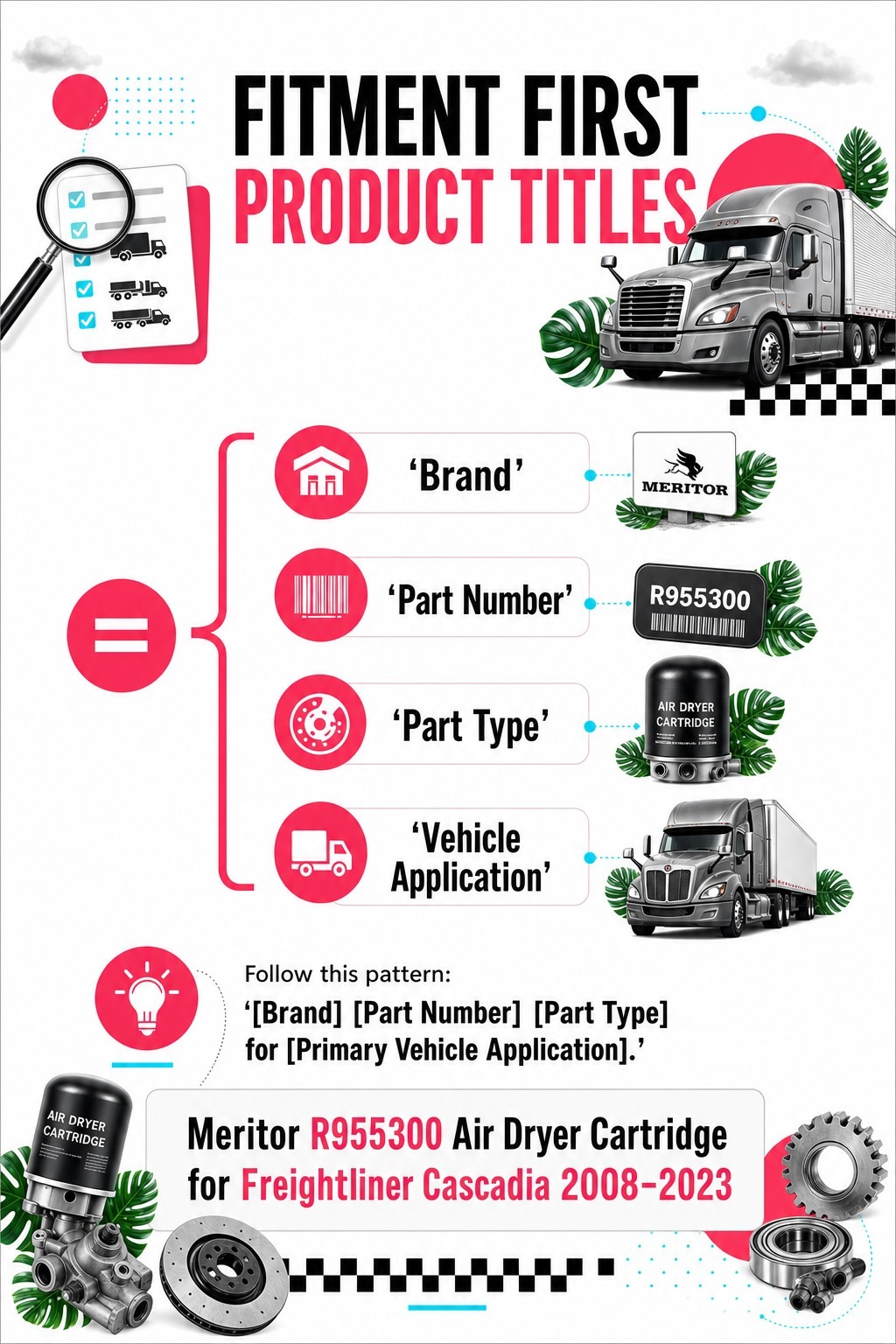
This format captures part number searches, branded searches, generic part type searches, and year/make/model queries in a single optimized title. It tells both search engines and buyers exactly what fits.
Avoid generic titles like "Air Dryer Cartridge - R955300." That's catalog thinking, not search thinking.
List compatible vehicles prominently near the top of your product page. Don't bury fitment in tabs or accordion menus that search crawlers might miss.
Structure compatibility lists by year range, then make, then model. Format like this:
Each vehicle mention becomes keyword-rich content that helps your page rank for year/make/model queries.
Create a dedicated "Replaces / Cross-References" section listing all equivalent part numbers from different manufacturers. Include OEM numbers, major brand cross-references, and superseded part numbers.
Format this as both a bulleted list for human readers and structured markup for search engines. Every cross-reference number is another potential search query that can land on your page.
B2B buyers search for technical specs. Create a structured specifications table with searchable technical details:
Search engines index these values. Someone searching "150 PSI air dryer cartridge M22 thread" can discover your product through technical specs alone.
Owner-operators need more context than fleet maintenance managers. Add brief installation notes that answer common DTC questions without overwhelming B2B buyers who just want specifications.
Include expected labor time, required tools, and whether professional installation is recommended. This content reduces purchase hesitation and captures long-tail queries like "how to replace Freightliner air dryer cartridge."
Category pages capture broader search traffic than product pages. Someone searching "semi truck brake parts" isn't ready for specific product pages yet. They're evaluating options and comparing suppliers.
Your category pages need to rank for these part type queries while efficiently guiding visitors toward specific products that fit their vehicles.
Structure your site hierarchy to match search behavior. Most truck parts buyers think vehicle-first, then part type.
Build category pages like: Freightliner Parts > Cascadia Parts > Brake System > Brake Drums.
This creates URL structures and breadcrumb trails that include vehicle names, making your category pages discoverable for vehicle-specific part type searches.
Category pages need year/make/model filtering that works for both search engines and visitors. Implement filters that create indexable URLs, not just JavaScript that rearranges content client-side.
Use clean URL parameters like /brake-pads?year=2020&make=kenworth&model=t680 that search engines can crawl and index as distinct pages targeting specific vehicle applications.
Add 300-500 words of category-specific content below your product grid. Explain what buyers should consider when selecting parts in this category, common applications, and key compatibility factors.
This content helps category pages rank for informational queries while establishing your expertise. Link to related categories and relevant diagnostic content to strengthen internal linking structure.
Google's search quality guidelines emphasize Experience, Expertise, Authoritativeness, and Trustworthiness. For truck parts sellers, E-E-A-T signals determine whether you rank above marketplace aggregators and manufacturer sites.
Auto parts SEO demands technical credibility that generic eCommerce sites don't need to prove.
Demonstrate real-world parts knowledge through content that only industry insiders could write. Create installation guides that reference specific torque specs, diagnostic procedures that explain pressure testing sequences, and compatibility notes that warn about known fitment issues.
Surface-level content copied from manufacturer catalogs doesn't signal experience. Detailed technical notes, troubleshooting tips, and application warnings do.
Use ACES and PIES data standards to structure your vehicle and product information. This demonstrates industry expertise and helps search engines understand your technical content.
Implement proper schema markup for auto parts (Product schema with vehicle property). Reference industry standard part categorization systems like VMRS. These technical implementations signal expertise to search algorithms.
For a deep dive into fitment data implementation, see our complete guide to ACES and PIES for auto parts SEO.
Display authorized dealer badges, manufacturer partnerships, and official distributor status prominently. Link to manufacturer product pages and reference official part numbers throughout your content.
These signals show search engines you're a legitimate parts source, not a dropshipper or aggregator scraping content from other sites.
Show real inventory availability, display return policies clearly, and provide detailed contact information including phone support hours. B2B buyers especially need confidence you're a real business, not a thin affiliate site.
Customer reviews with purchase verification add trust signals. Encourage reviews that mention specific vehicle applications and installation experiences.
Google AI Overviews represent a permanent shift in how search results are presented and how truck parts businesses must approach content creation.
When someone searches "what causes white smoke from diesel engine," Google's AI now synthesizes answers from multiple sources before showing traditional organic results. Your content needs to feed those AI summaries or you'll lose visibility.
AI Overviews pull from well-structured content with clear question-answer formats. Create FAQ sections on product pages that directly answer common fitment and specification questions.
Format content with clear headers that match natural language queries. Instead of "Specifications," use "What vehicles does this air filter fit?" as your H3 heading.
Use numbered lists for step-by-step procedures. AI systems extract list-based content more reliably than paragraph-based explanations.
Implement Product schema with vehicle-specific properties. Use HowTo schema for installation guides. Add FAQPage schema to structured Q&A content.
This structured data helps AI systems understand your content context and extract relevant information for generated answers. It also improves traditional search result display with rich snippets.
AI search favors sites with interactive tools that help users find exact parts. Excelerator Parts offers real-time dealer inventory and accurate VIN-based part lookup, which enhances discoverability through AI-powered search assistants.
Build VIN decoders, fitment selectors, and cross-reference tools that provide immediate answers to part identification queries. These tools generate engagement signals that improve overall site authority.
Truck parts sites face unique technical challenges. Large catalogs with hundreds of thousands of SKUs create indexation issues. Vehicle application data generates millions of potential URL combinations. Technical SEO foundations prevent these factors from tanking your search visibility.
Prioritize which products get indexed. Use robots.txt and meta robots tags to prevent low-value pages from wasting crawl budget. Focus indexation on in-stock items, popular parts, and vehicle-specific landing pages.
Implement XML sitemaps segmented by product category and update frequency. Submit priority sitemaps more frequently to ensure new inventory gets crawled quickly.
Vehicle filters generate countless URL variations. /brake-pads?make=kenworth&model=t680&year=2020 is valuable. /brake-pads?sort=price&color=red&page=3 is duplicate content.
Use canonical tags to consolidate duplicate filter combinations. Implement rel=prev/next for paginated results. Block low-value parameter combinations in robots.txt.
Our on-page SEO checklist for auto parts pages covers faceted navigation handling in detail.
Truck parts pages carry heavy loads: fitment tables, specification charts, cross-reference lists, high-resolution images. This content is necessary but can kill Core Web Vitals scores.
Lazy-load fitment tables below the fold. Compress product images without sacrificing zoom capability. Use efficient table markup instead of images for specification displays.
Implement server-side rendering for critical above-the-fold content while deferring lower-priority elements. Target Largest Contentful Paint under 2.5 seconds even with content-heavy product pages.
Many truck parts searches happen from shop floors on mobile devices. Mechanics look up part numbers while standing next to broken equipment.
Ensure part numbers, fitment information, and "Add to Cart" buttons are immediately visible on mobile without scrolling. Make click targets large enough for work-gloved fingers. Test mobile experience in poor lighting conditions that mimic shop environments.
Product pages capture transactional searches. Content pages capture the informational queries that precede purchases. The e-commerce automotive aftermarket is worth $128.61 billion in 2026, growing at 16.65% CAGR, driven partly by buyers researching problems before buying solutions.

A diagnostic content strategy captures this early-stage traffic and guides it toward your products.
Create articles that address common truck problems and systematically explain potential causes. "Why is my truck blowing white smoke?" becomes a content hub that discusses head gasket failures, injector problems, and turbo issues.
Each potential cause links to related product categories. Turbo problems link to turbo actuators and cartridges. Injector issues link to fuel system parts.
This content ranks for problem-based queries while naturally guiding traffic toward transactional pages without aggressive selling.
Fleet managers and owner-operators search for maintenance schedules. "Freightliner Cascadia maintenance schedule" or "Cummins ISX oil change interval" are informational queries with commercial intent.
Build comprehensive maintenance guides organized by vehicle make/model and mileage intervals. Link each maintenance task to relevant parts. Include part numbers and quantities needed for each service.
HowTo content ranks well and serves DTC buyers who do their own repairs. "How to replace Kenworth air compressor" targets someone about to purchase that part.
Create step-by-step installation guides with proper HowTo schema markup. Include tool requirements, torque specifications, and time estimates. Link directly to the parts featured in each guide.
Build comparison content for parts where buyers evaluate options. "Synthetic vs conventional oil for diesel engines" or "Meritor vs Haldex brake systems" capture research-stage traffic.
These pages rank for comparison keywords while linking to relevant product categories and establishing topical authority.
For strategic keyword targeting approaches, review our keyword research guide for auto parts niches.
Truck parts searches often include location qualifiers when urgent needs arise. "Semi truck parts Dallas" or "24 hour truck parts Phoenix" indicate immediate purchase intent from buyers who need parts now.
Local SEO captures this high-intent traffic if you have physical locations or regional service areas.
Claim and optimize your Google Business Profile for each physical location. Use the category "Truck Parts Supplier" or "Auto Parts Store" as appropriate.
Add extensive business information: detailed service descriptions, product categories carried, truck brands serviced, and emergency hours if you offer 24/7 service.
Upload photos of your inventory, storefront, and service counter. Encourage customers to leave reviews that mention specific parts purchased and vehicle applications.
Build unique landing pages for each service location or major market. Don't just duplicate content across locations.
Include location-specific details: local inventory highlights, regional vehicle populations you serve (heavy construction markets, long-haul trucking hubs, etc.), and location-specific contact information.
Implement local inventory ads through Google Merchant Center if you have physical locations. These ads show real-time product availability at nearby stores.
Feed your inventory system to Merchant Center with location-specific stock levels. This captures "near me" searches and drives foot traffic from urgent part needs.
The harsh reality: 50% of aftermarket purchases are finalized on Amazon or mega-marketplaces. You can't ignore marketplace channels, but complete dependence on Amazon is strategic suicide.

The solution is a dual-channel approach that leverages marketplace traffic while building owned-channel authority.
Use Amazon and eBay for product discovery and brand awareness. Optimize marketplace listings with complete fitment data, detailed specs, and professional images.
Price marketplace listings slightly higher than your owned site. Use marketplace sales to drive email capture and retargeting audience building. Redirect marketplace customers to your site for future purchases through packaging inserts and follow-up communications.
Invest most of your SEO effort in your owned eCommerce site. Marketplace rankings are rented and algorithm-dependent. Organic search traffic to your site is owned equity.
Build content depth that marketplaces can't match: comprehensive fitment databases, technical resources, diagnostic content, and installation support. These assets drive long-term organic traffic that converts at higher margins than marketplace sales.
Understanding the rise of DTC in the automotive aftermarket helps inform this channel balance strategy.
Marketplace customers are rented. Site customers are owned. Focus on converting first-time buyers into repeat customers through email marketing and CRM.
Build automated campaigns around maintenance intervals and reorder cycles. Fleet customers especially respond to proactive outreach for scheduled maintenance parts.
The B2B loyalty strategies that work for auto parts apply directly to truck parts distribution.
Standard eCommerce metrics don't fully capture truck parts SEO success. You need metrics that reflect your dual B2B/DTC audience and the role of technical content in the buyer journey.
Track rankings and impressions segmented by search pattern type. Monitor separately:
This segmentation shows which search patterns you're winning and where opportunities remain.
Diagnostic content and technical guides rarely convert directly. Implement assisted conversion tracking to measure content's influence on purchases.
Track paths where users read diagnostic content, then return later to purchase related parts. This reveals content ROI that direct attribution misses.
Separate analytics for B2B and DTC traffic when possible. Average order values, conversion rates, and product preferences differ dramatically between segments.
Use checkout data to classify orders by customer type, then work backward to understand how each segment discovers your site and which content types drive conversions.
Monitor engagement metrics on fitment tools, VIN decoders, and cross-reference lookups. High engagement with technical tools indicates you're serving real user needs, which correlates with improved search rankings over time.
Track tool usage alongside conversions to identify which interactive features most effectively guide users toward purchases.
The truck parts market is evolving quickly. The heavy-duty truck parts aftermarket market grew from $89.06 billion in 2024 to $92.73 billion in 2025, expected to reach $114.14 billion by 2030. That growth brings search behavior changes you need to anticipate.
Electrical components are experiencing accelerated growth at 17.66% CAGR, driven partly by electric vehicle adoption in commercial fleets.
Build category pages and content for electric truck components now, before competition intensifies. Optimize for queries like "electric truck battery replacement" and "electric semi maintenance parts" early.
Photo-based part identification and visual search are becoming standard. Buyers photograph broken parts and expect search results that identify them.
Invest in image recognition technology and ensure your product images are high-quality from multiple angles. Optimize image alt text with detailed part descriptions to improve visual search discoverability.
Mechanics use voice search while working on vehicles. "Order Freightliner Cascadia cabin air filter" from a voice assistant represents hands-free purchasing.
Optimize for natural language queries and ensure your site works with voice-activated shopping tools. Test your product names for voice recognition accuracy.
Truck parts SEO isn't a quick win channel. It's a 12-18 month investment in technical infrastructure, content depth, and authority building. But the payoff is sustainable organic traffic that doesn't depend on marketplace algorithms or paid advertising budgets.
Start with fitment data. Without structured year/make/model compatibility information, nothing else works. Implement ACES/PIES standards if you haven't already.
Optimize your highest-volume product pages first. Identify which parts have the most search demand and ensure those pages have complete fitment information, cross-reference numbers, and technical specifications.
Build diagnostic content that maps to your best-selling categories. Every popular product category needs supporting content that captures problem-based searches.
Implement proper schema markup site-wide. Product schema, HowTo schema, and FAQPage schema improve both traditional search results and AI Overview inclusion.
Track performance by search pattern type, not just overall traffic. This shows you which optimization tactics are working and where to focus next.
The truck parts market is growing fast, and most of that growth flows through search engines. Build the technical SEO foundation now, and you'll capture increasing search traffic as the market expands.
For comprehensive implementation guidance across both organic and paid channels, see our complete aftermarket auto parts eCommerce success strategies.