

Paid search for HVAC parts succeeds when campaigns target spec-driven installer queries, not generic homeowner searches. HVAC contractors searching for "24VAC relay SPDT" or "Trane XR80 blower assembly" convert at higher rates because they need the part now and know exactly what fits.
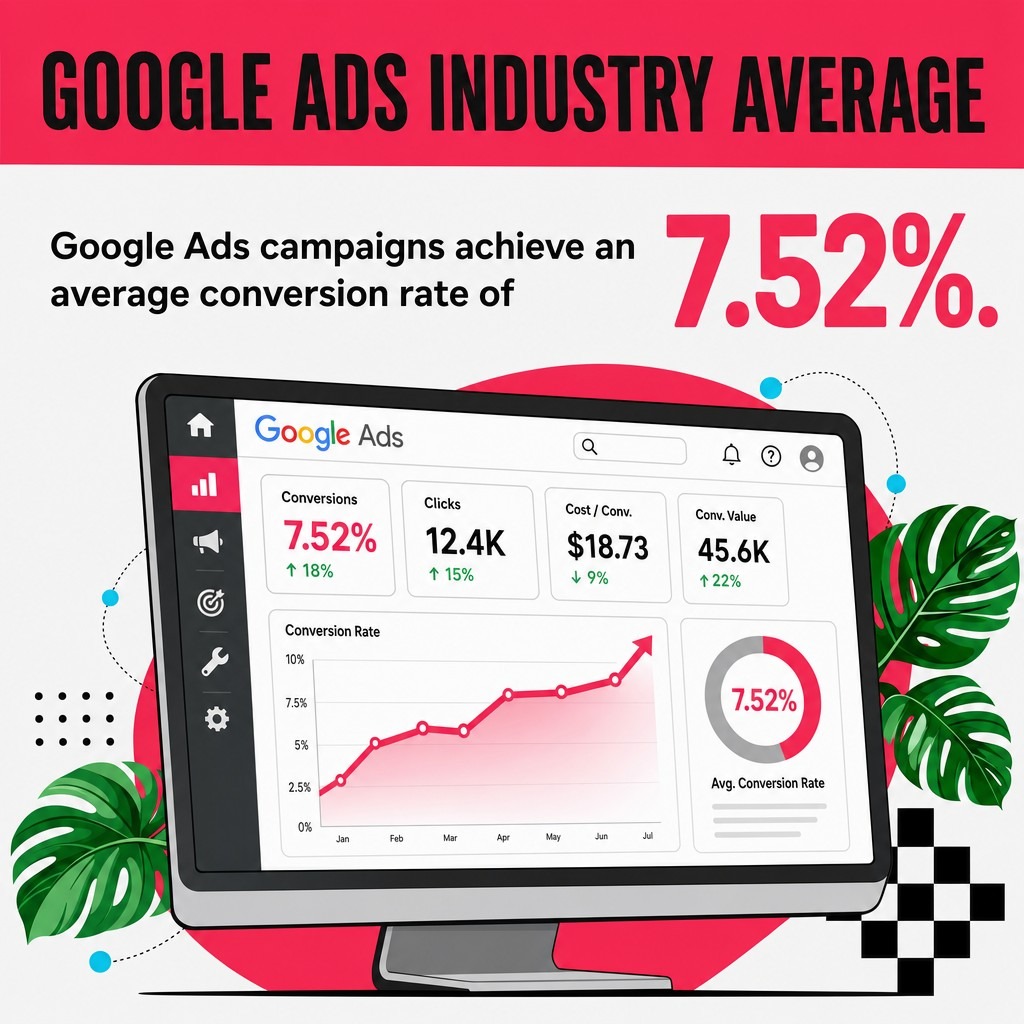
Google Ads campaigns achieve an average conversion rate of 7.52% across industries, but HVAC parts campaigns targeting professional installers routinely beat that when structured around part numbers, compatibility specs, and same-day availability.
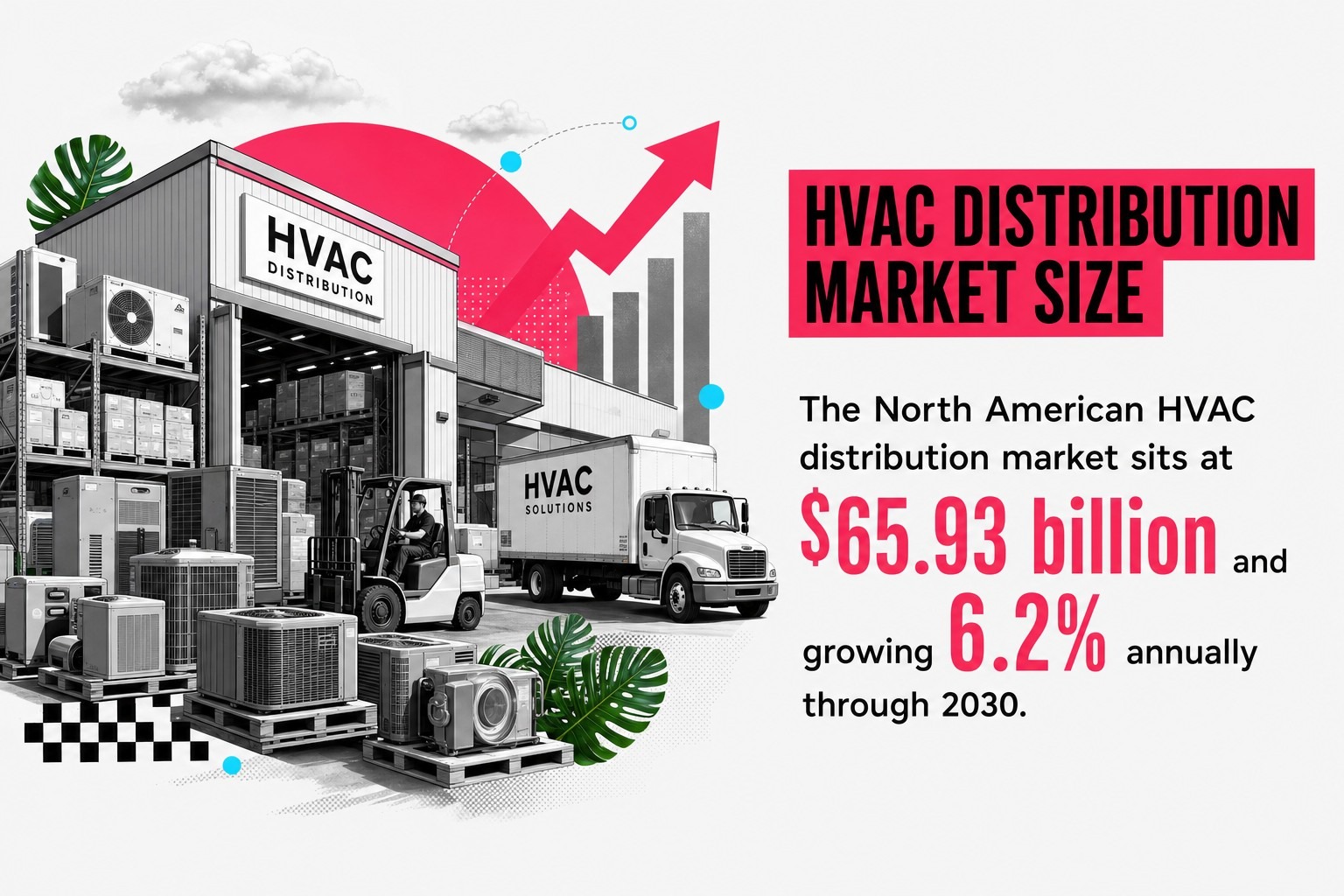
The North American HVAC distribution market sits at $65.93 billion and growing 6.2% annually through 2030, and installers now expect the same online ordering speed they get from consumer platforms.
Winning the installer's click means understanding how contractors search under pressure, what information closes the sale, and how to structure campaigns that intercept high-intent queries at the exact moment a job depends on finding the right part fast.
I've spent years building paid search campaigns for parts distributors, and HVAC is one of the toughest verticals to crack. Not because the fundamentals differ, but because the stakes do.
When an installer's standing in a customer's flooded basement at 9 PM searching for a circulation pump, your ad either solves the problem or wastes everyone's time.
Most HVAC parts paid search campaigns fail because they're built for the wrong audience. Homeowners Googling "air conditioner not cooling" want service, not parts. Installers searching "Carrier 58MCA blower motor" want inventory confirmation and a checkout button.
This guide shows you how to structure paid search campaigns that speak installer language, intercept high-intent queries, and turn urgent searches into same-day orders.
The HVAC parts market operates in two separate universes that rarely overlap in search behavior.
Homeowners research problems and solutions. They type "furnace making loud noise" or "AC unit freezing up" into Google, scan articles about possible causes, then call a contractor. These searches generate clicks but almost never convert to parts purchases, because consumers don't install their own HVAC equipment and can't legally buy refrigerant-containing components in most states.
Professional installers search like engineers. They enter part numbers, model compatibility specs, dimensional requirements, and voltage ratings because they already diagnosed the problem and know what fixes it. A search for "Honeywell ST9120C4057 fan timer" comes from someone who opened the control panel, identified the failed component, and needs it delivered before the customer's warranty callback window closes.
The total global HVAC market is estimated to be $346.7 billion by 2028 according to BCC Research. But only a fraction of this flows through ecommerce channels where paid search matters.

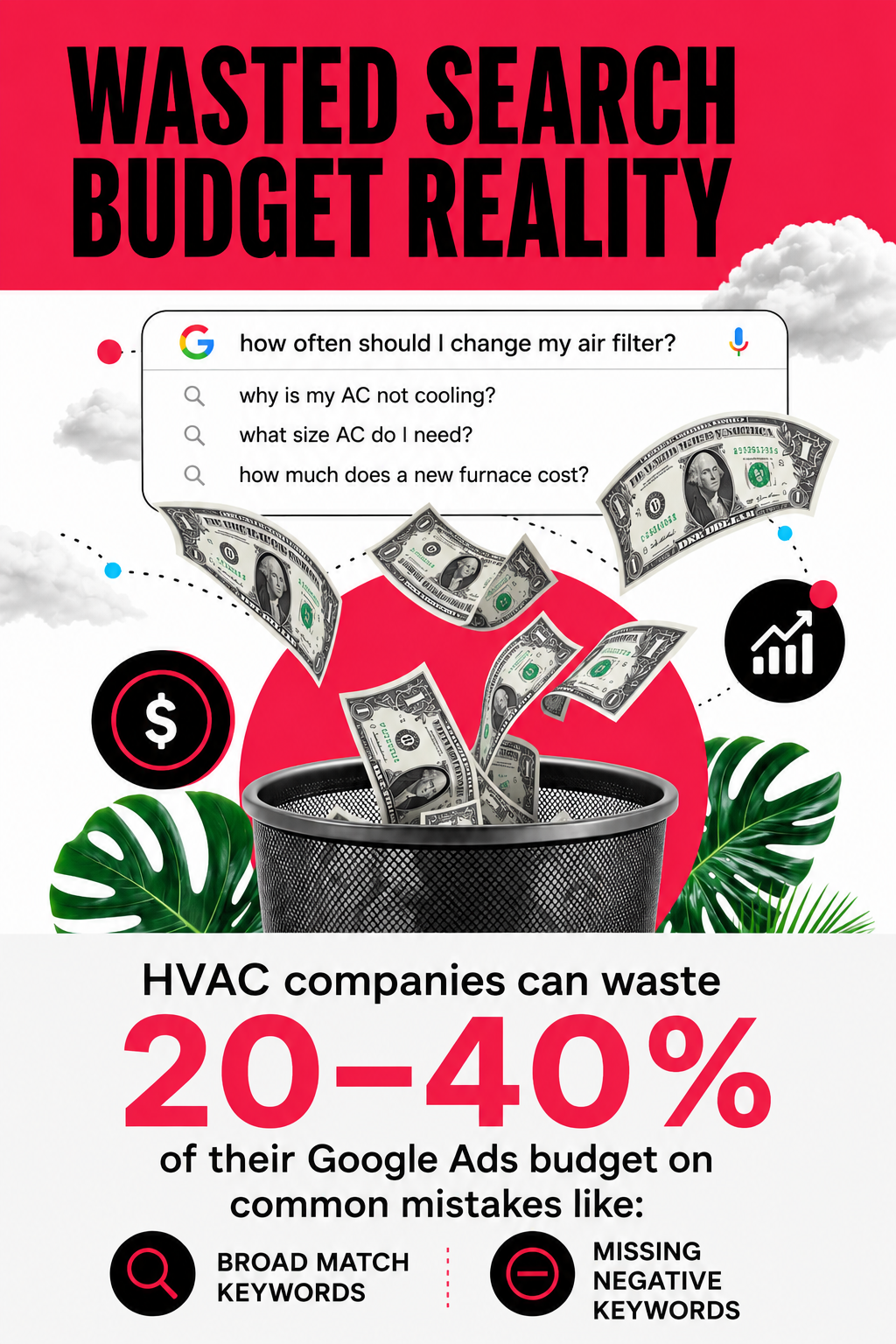
Industry analysis shows HVAC companies can waste 20-40% of their Google Ads budget on common mistakes like broad match keywords and missing negative keywords. For distributors focused on high-margin replacement parts, the real opportunity lies in targeting transactional, high-intent queries from professional installers who previously called local distributors but now expect to find parts online immediately.
The fix starts with accepting a painful truth: lower click volume from the right audience beats high traffic from people who can't complete a purchase.
Installers don't browse. They hunt. When a compressor fails during a heat wave, the contractor on-site searches with the urgency of someone losing money by the hour.
Their queries follow predictable patterns: manufacturer name plus model number, part function plus dimensional spec, OEM part number plus "compatible replacement," or system model plus "parts diagram." They rarely scroll past the first three organic results or the top two ad positions.
If your ad doesn't immediately confirm you stock the part and can ship today, they're already clicking your competitor.
Device context changes everything. Desktop searches happen during quoting and planning, when contractors have time to compare prices and research alternatives. Mobile searches happen on the job site, often with the failed part sitting in the truck and the customer asking when service will be complete.
Mobile queries convert faster but abandon harder; if your product page takes more than three seconds to load or doesn't show inventory status above the fold, the installer moves on.
The Amazon effect in HVAC equipment buying means installers now expect consumer-grade ecommerce experiences from industrial distributors. They want instant inventory confirmation, transparent pricing without "call for quote" gates, shipping cost calculated before checkout, and order tracking that updates in real time.
When your paid search ad promises "in stock," but the product page makes them fill out a form to check availability, you've already lost the sale.
The expectation gap hits hardest on mobile. Installers searching from a job site won't pinch-zoom a desktop-formatted parts catalog or call a sales line that puts them on hold. If your mobile experience requires more than four taps to add a part to cart and see the total cost including shipping, you're competing with one hand behind your back.
Traditional HVAC distributors built their businesses on relationship sales and phone orders. That model still works for planned projects and bulk orders, but it fails for emergency replacement parts where speed determines the winner.
Generic "HVAC parts" campaigns dump installers and homeowners into the same bucket, then wonder why conversion rates stay below 2%. Winning campaigns separate audiences by search intent before the first ad runs.
Start with campaign structure that mirrors how installers actually search, not how you organize your product catalog.
Create dedicated campaigns for manufacturer part numbers, OEM codes, and model-specific components. These are your highest-intent, highest-conversion searches.
Build ad groups around individual part numbers or tight clusters of related codes. Someone searching "Copeland ZP31K5E-PFV-830" knows exactly what compressor they need and probably has the old one sitting in their truck. Your ad should confirm you stock that exact part, show availability status, and link directly to the product page with that part number in the headline.
Use Google Ads exact match keywords for part numbers, then add close variants for common misspellings and format differences. Part numbers get typed in a hurry: "ZP31K5EPFV830" without hyphens, "ZP-31K5E" with different separators, "Copeland ZP31K5E" with or without manufacturer prefix.
Your product feed must include every possible part number variation in the title and description, because Google matches ads based on what's in your landing page content. If your product page only lists the manufacturer part number but installers also search by the legacy code or cross-reference number, you're invisible to half your potential buyers.
Most HVAC parts searches include specifications rather than exact part numbers, especially when the installer needs a compatible replacement or upgrade. Structure these campaigns around technical attributes: voltage ratings, tonnage capacity, dimensional constraints, connection types, and compatibility requirements.
An ad group for "24V HVAC transformers" should include keywords like "24VAC 40VA transformer," "Class 2 transformer HVAC," "24 volt 50VA control transformer," and similar spec combinations.
The challenge with spec-based campaigns is balancing specificity and volume. Too broad and you're showing ads for "HVAC transformer" to electrical contractors working on industrial systems. Too narrow and you miss installers who use slightly different terminology.
Solve this with negative keywords that exclude industrial, commercial, and residential homeowner searches. Add "residential furnace transformer" to a negatives list if you only sell commercial equipment. Block "how to replace transformer" and "transformer troubleshooting" to avoid DIY homeowner traffic.
Installers often start with the equipment model, not the part that failed. They search "Trane XR80 parts," "Carrier Infinity blower motor," or "Lennox SLP98V control board" because that's what's written on the equipment data plate in front of them.
These campaigns require stronger technical content in your ads and landing pages. Your ad should acknowledge the system model but guide the installer toward identifying the specific component: "Trane XR80 Parts – Which Component Failed? Fast Cross-Reference to Exact Part Numbers."
Landing pages for model-based searches need compatibility lookup tools or clear navigation to component categories. The installer clicking a "Carrier Infinity parts" ad expects to see blower motors, control boards, capacitors, and other common failure points organized by compatibility, not buried in a site-wide search results page.
PPC for HVAC parts suppliers works best when campaigns mirror the installer's diagnostic workflow: identify the system, narrow to the component category, confirm the exact part number.
HVAC installers don't respond to clever wordplay or emotional appeals. They respond to three things: proof you have the part, confirmation you can ship it fast, and clarity on what it costs.
Your ad headlines need to match the search query as closely as Google's character limits allow, include the manufacturer name and part number when relevant, and state availability status if you can ship same-day or next-day.
Bad headline: "Quality HVAC Parts – Shop Now"
Good headline: "Copeland ZP31K5E Compressor – In Stock, Ships Today"
The good version matches the search query, confirms availability, and implies speed. The bad version wastes 30 characters saying nothing an installer cares about.
Use the first description line to reinforce compatibility and build confidence. Installers abandon searches when they're not 100% certain the part fits, so your ad should remove doubt before they click.
Example: "Direct replacement for Copeland ZP31K5E-PFV-830. 3-ton, R-410A, 208-230V. Free tech support to confirm fit."
The second description line should address the two most common objections: price transparency and shipping speed. "Competitive wholesale pricing. Ships same day from our Michigan warehouse. Order by 3 PM ET."
Avoid vague promises like "fast shipping" or "competitive prices." Installers want specifics: same-day, next-day, or two-day shipping windows, and some indication of cost even if you can't show exact pricing in ads.
Structured snippets, callouts, and sitelinks matter more in B2B parts campaigns than consumer retail. Use them to answer installer objections before they become reasons not to click.
Callout extensions: "Same-Day Shipping," "No Minimum Order," "OEM and Compatible Parts," "Technical Support Included"
Structured snippets: List brands you carry, shipping options available, services offered (cross-referencing, compatibility lookup, bulk quoting)
Sitelinks: Link to your returns policy, shipping information, technical resources, and account login page. Installers who've bought from you before want a fast path back to reorder.
Your ad can be perfect, but if the landing page doesn't answer the installer's core question in three seconds or less, you've wasted the click.
The installer's first question: "Is this the exact part I need?" Your product page must confirm part numbers, compatibility, and specifications above the fold without scrolling.
Put the manufacturer part number, OEM code, and any cross-reference numbers in the product title. Show a high-resolution product image with zoom capability. List technical specifications in a scannable table, not buried in paragraph text.
The installer's second question: "Do you have it, and when can I get it?" Show real-time inventory status: "In Stock – 7 Units Available" or "Ships in 2-3 Business Days." Avoid vague language like "available" or "call to confirm."
If you're out of stock, say so and offer a compatible alternative with a clear explanation of what's different.
Display shipping options and costs before the installer adds the part to cart. Surprise shipping fees at checkout kill B2B conversions harder than retail because the installer needs to factor delivery cost into their customer quote.
Most emergency replacement searches happen on mobile. Your product page must load in under three seconds on 4G connections and display all critical information without horizontal scrolling.
Test your product pages on an actual phone, not a desktop browser resized to mobile dimensions. Can you read the part number without zooming? Is the "Add to Cart" button large enough to tap without accidentally hitting adjacent elements? Does the specifications table reflow to a single column, or does it force horizontal scrolling?
HVAC parts product page templates that convert on mobile put inventory status, pricing, and the primary CTA in the first screen, followed by specifications and compatibility information, then product images and technical documents.
Installers trust distributors who demonstrate technical knowledge. Your product pages should include compatibility notes, installation tips, and cross-reference information that helps confirm fit.
"This control board replaces Honeywell ST9120C4057, ST9120C-4057, and White-Rodgers 50E47-843. Compatible with 90%+ AFUE furnaces using 24VAC control voltage. Requires recalibration after installation – see tech bulletin."
That paragraph answers three questions installers ask before buying: does it replace my exact part, will it work with my system, and are there installation gotchas I need to plan for? Adding that content takes five minutes and prevents returns from installers who ordered the wrong part.
Include PDF spec sheets, wiring diagrams, installation instructions, and compatibility charts as downloadable resources. Installers often need to reference technical documents while working, and providing them builds trust that you understand their workflow.
HVAC parts keywords don't behave like consumer retail searches. You might get 10 searches per month for a specific compressor part number, but those 10 searches come from installers who need that exact part and will pay premium prices for same-day availability.
Traditional automated bidding strategies fail in low-volume, high-intent verticals because Google's algorithms need conversion data to optimize. When you're getting 50 clicks per month across a campaign and converting 15% of them, there's not enough signal for Smart Bidding to work effectively.
Start with manual CPC bidding and adjust based on part margin, not traffic volume.
Your highest-margin parts deserve your highest bids, even if search volume is microscopic. A compressor that costs you $400 and sells for $650 can support a $15 cost-per-click profitably. A capacitor that costs $8 and sells for $18 can't justify bids above $2 even if the conversion rate is identical.
Calculate your maximum profitable CPC for each product category: (average selling price - cost of goods - fulfillment cost - overhead allocation) × conversion rate = max CPC bid.
If you're converting 20% of clicks and your net margin after all costs is $100 per sale, you can afford to pay up to $20 per click and break even. Bid 50-70% of that maximum to leave room for profitability: $10–$14 per click in this example.
Most HVAC distributors bid far too conservatively on high-margin emergency parts because they're spooked by low impression volume. They'll bid $2 per click on a keyword that gets 20 monthly searches, miss 80% of available impressions by ranking fourth or fifth, and wonder why paid search "doesn't work" for parts.
Installer search behavior follows predictable daily patterns. Emergency searches spike 8 AM–6 PM Monday through Saturday, when contractors are actively working jobs. Evening and Sunday searches skew toward planning and quoting, not urgent purchases.
Increase bids 20-40% during peak job-site hours (9 AM–4 PM weekdays) when urgency drives conversion rates up. Reduce bids 30-50% during evenings and weekends when search intent shifts toward research and price comparison.
Ecommerce paid search marketing strategy for B2B parts requires aligning bid adjustments with the buyer's work schedule, not the consumer shopping patterns Google's automated strategies assume.
If you can't ship same-day or next-day to a region, don't waste budget targeting it. Installers searching for emergency parts will pay premium prices for speed but won't wait three days when a local competitor can deliver tomorrow.
Set up location-based bid adjustments that match your fulfillment capabilities. Increase bids 30-50% within same-day delivery zones, keep bids at baseline in next-day territories, and reduce bids 40-60% in regions requiring 3+ day ground shipping unless you're targeting planned maintenance purchases rather than emergency replacements.
Consider multiple warehouses or partnerships with regional distributors if you're trying to compete nationally. One warehouse serving the entire country means you'll lose most emergency replacement searches to local suppliers who can deliver faster.
HVAC parts demand follows weather patterns and equipment service cycles more predictably than almost any other vertical.
Air conditioning compressors, capacitors, and contactors fail during summer heat waves when systems run continuously under maximum load. Furnace control boards, igniters, and gas valves fail during winter cold snaps when heating systems cycle frequently.
Your campaign budgets and bid strategies should shift with the seasons, not run flat year-round.
Cooling-related parts searches spike 300-500% from June through August in most North American markets. Compressor failures, refrigerant leaks, and capacitor burnouts dominate service calls.
Increase budgets 40-60% for cooling components during peak summer months. Prioritize compressor campaigns, capacitor campaigns, and condenser fan motor campaigns with higher bids and expanded keyword coverage.
Add weather-triggered bid adjustments if your campaign management platform supports them. Heatwave days generate 2-3× normal search volume for emergency cooling parts as systems fail under sustained high loads.
Watch for geographic variations: southern markets start heating up in April and stay hot through October, while northern markets see compressed cooling seasons June through August. Adjust your campaign calendars regionally rather than applying national date ranges.
Heating component searches follow the inverse pattern: furnace ignitors, control boards, blower motors, and pressure switches fail when heating systems run continuously during cold weather.
Shift 50-70% of your budget from cooling to heating campaigns starting in October. Prioritize furnace component keywords, heat pump parts, and boiler components with seasonal bid increases.
The most profitable heating searches happen during polar vortex events and sustained sub-freezing weather. Furnace failures during extreme cold create genuine emergencies where installers will pay premium prices for immediate availability.
Spring and fall are transition periods when both heating and cooling searches drop as systems sit idle. Don't waste budget maintaining high bids across all categories during slow periods.
Use shoulder seasons to test new keywords, refresh ad creative, and optimize landing pages without burning through budget during low-conversion periods. Shift focus to maintenance parts, preventive replacement components, and planned project materials rather than emergency replacements.
Consider running brand-building campaigns during slow seasons when CPCs drop 40-60%. Installers researching suppliers during downtime become customers when emergency needs hit during peak season.
Getting campaign structure and bidding right doesn't matter if your technical setup blocks conversions or wastes budget on unqualified traffic.
Start with conversion tracking that distinguishes installers from homeowners, new customers from repeat buyers, and quote requests from completed purchases.
Set up multiple conversion actions with different values assigned based on revenue potential. A completed purchase is worth more than an account registration, which is worth more than a quote request, which is worth more than a phone call.
Track micro-conversions that indicate installer intent even when they don't immediately purchase: part number searches using your site search tool, technical document downloads, compatibility cross-reference lookups, and "notify when in stock" signups.
Use enhanced conversions or server-side tracking to maintain visibility as browser-based tracking degrades. B2B buyers often research on mobile but complete purchases on desktop, or visit multiple times before converting, so cookie-based attribution misses the full journey.
Eliminating homeowner traffic is more important than adding installer keywords. A well-maintained negative keyword list cuts wasted spend 30-50% in HVAC parts campaigns.
Block DIY and troubleshooting searches: "how to replace," "DIY repair," "fix it yourself," "install video," "troubleshoot," "not working," "repair guide"
Block information-seeking queries: "what is," "how does," "why is my," "causes of," "symptoms," "diagnosis," "problems with"
Block residential homeowner signals: "cost to replace," "HVAC company near me," "hire installer," "technician," "service call," "repair service"
Review your search terms report weekly for the first month, then bi-weekly after that. Homeowner searches are infinite and creative; you'll constantly find new patterns to block.
Organize campaigns by product category and search intent, not by how your warehouse organizes inventory. Installers don't care that you store compressors and condensers in the same section; they search for them differently and convert at different rates.
Create separate campaigns for:
This structure lets you adjust bids, budgets, and ad creative independently based on how each search type performs. When you lump everything into one "HVAC Parts" campaign, you end up under-bidding on high-value searches and over-bidding on low-intent traffic.
Performance Max campaign structuring principles from adjacent parts verticals apply to HVAC: segment by margin and intent, not by taxonomy.
Return on ad spend matters, but it's not the only metric that determines whether your paid search campaigns are working.
Track customer acquisition cost separately for new vs. repeat buyers. A $75 CPA to acquire a new installer who places $3,000 in orders over the next 12 months is profitable. The same $75 CPA for a one-time $150 order is not.
Average order value from paid search traffic should be higher than your blended site average, because you're targeting professional installers buying emergency parts at premium prices rather than consumers price-shopping.
If your paid search AOV is below your site average, you're probably attracting too much homeowner traffic or targeting low-margin commodity parts that contractors cross-shop aggressively.
Repeat purchase rate from first-time paid search customers tells you whether you're acquiring valuable accounts or one-time transactional buyers. Professional installers who find reliable suppliers return for future orders; homeowners never return because they don't regularly buy HVAC parts.
Cart abandonment rate segmented by traffic source reveals landing page and checkout friction. If abandonment from paid search traffic is 20+ percentage points higher than organic or direct traffic, your ad promises don't match the landing page experience or your checkout process loses B2B buyers.
Installers research on mobile, price-check on desktop, and sometimes phone in orders instead of completing online checkout. Standard last-click attribution misses the role paid search plays in customer acquisition.
Use data-driven attribution or position-based attribution models that credit touchpoints throughout the journey. The installer who clicks your ad on mobile Tuesday afternoon, visits direct Wednesday morning, and completes a purchase Thursday over the phone was still acquired through paid search even though last-click attribution credits direct traffic.
Track phone call conversions from ads, click-to-call extensions, and numbers on landing pages. Phone orders are still common in B2B parts transactions, especially for complex compatibility questions or bulk orders.
Survey new customers about how they found you. Simple post-purchase questionnaires reveal that 20-30% of customers who report finding you through "search" actually clicked a paid ad but don't distinguish organic from paid results.
Most HVAC parts campaigns fail in predictable ways. Once you know the patterns, fixes are straightforward.
Targeting "Carrier parts" or "Trane distributor" keywords seems smart but rarely converts profitably. Installers with strong brand preferences won't switch suppliers based on an ad, and competitors will bid up costs defending their brand terms.
Fix: Test competitor keywords at low bids (20-30% of your branded CPCs) to capture genuine comparison shoppers, but don't fight bidding wars over trademark terms. Better ROI comes from capturing part-number searches regardless of which manufacturer made the component.
Broad match on "HVAC compressor" triggers ads for "how to troubleshoot HVAC compressor," "HVAC compressor noise causes," "residential HVAC compressor repair cost," and hundreds of other homeowner searches.
Fix: Use phrase match and exact match as your primary keyword types, with broad match modifier only on highly specific technical terms where unintended meanings are unlikely. Maintain negative keyword lists of 500+ terms blocking DIY, informational, and homeowner searches.
Complete HVAC parts marketing strategy requires dedicated landing pages, not generic navigation dumps.
Fix: Every part-number keyword should link to that specific product page. Every spec-based search should link to a filtered category page showing only compatible parts. Every system-model search should link to a compatibility guide or cross-reference tool. Never send paid traffic to your homepage and expect installers to navigate your site structure.
Distributors optimized for desktop wholesale customer relationships often serve broken, unusable mobile experiences to installers searching from job sites.
Fix: Test your entire purchase path on mobile monthly. Can someone search for a part, view specifications, check availability, add to cart, and complete checkout using only their phone? If any step requires a phone call or desktop computer, you're losing mobile conversions.
Start with a focused test campaign targeting 50-100 of your highest-margin replacement parts that have specific part numbers and clear installer search patterns.

Build exact-match keyword campaigns around those part numbers, create dedicated product landing pages optimized for mobile conversion, write ad copy that confirms availability and shipping speed, and set manual CPC bids based on profit margin math.
Run the test campaign for 30 days with daily budget pacing that ensures full impression coverage during business hours. Track conversions at the transaction level and tag whether buyers are new or returning customers.
After 30 days you'll have conversion rate data by product category, average order value from paid search traffic, customer acquisition cost numbers, and clear visibility into which product categories drive profitable paid search growth.
Expand into your next 200-300 parts, add spec-based campaigns alongside exact-match part numbers, and begin seasonal budget shifting to match heating and cooling cycles.
Professional installers are already searching for your parts. The question is whether they're finding your ad or your competitor's when they need a part today and their job depends on fast delivery.