<script async src="https://subscribe-forms.beehiiv.com/embed.js"></script><iframe src="https://subscribe-forms.beehiiv.com/8b57459e-5b92-4526-9f3d-5a2d4aa6dd36" class="beehiiv-embed" data-test-id="beehiiv-embed" frameborder="0" scrolling="no" style="width: 879px; height: 468px; margin: 0; border-radius: 14px 14px 14px 14px !important; background-color: transparent; box-shadow: 0 0 #0000; max-width: 100%;"></iframe>
Marine parts retailers face a profitability puzzle most other ecommerce businesses don't encounter. You're managing thousands of SKUs across dozens of manufacturers. Each part fits specific engine models from specific years.
Your average order value hovers around $150. Profit margins squeeze tight at around 15%.
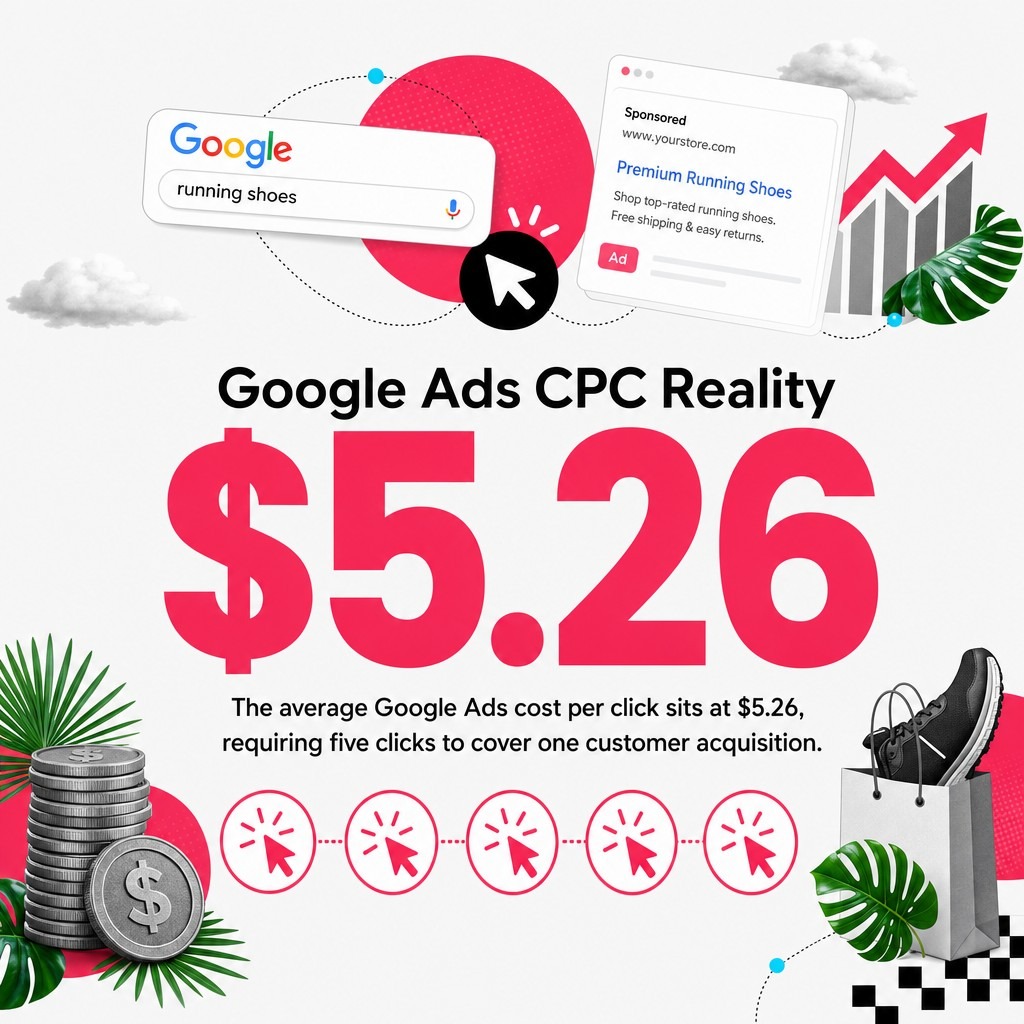
When the average Google Ads cost per click sits at $5.26, you need five clicks just to cover the cost of acquiring one customer who converts. That math doesn't work unless your campaigns are precise.
The marine aftermarket differs fundamentally from selling apparel or electronics. A customer searching for "fuel pump" isn't just any customer. They need a specific fuel pump for a 2018 Yamaha F150 outboard. Send them to a generic category page, and they'll bounce faster than a hydrofoil.
I've spent years optimizing PPC for parts-heavy ecommerce catalogs. The marine segment presents unique challenges that require specific solutions. This guide walks through the exact framework that makes marine parts advertising profitable, from feed architecture to seasonal budget allocation.
You'll learn how to structure campaigns around compatibility data. How to leverage manufacturer brand equity in your ad copy. Which metrics actually matter when your margins are thin. And how to compete against Amazon without burning through your budget in three weeks.
Most PPC advice assumes you're selling products with broad appeal. The tactics that work for fashion brands or consumer electronics fail spectacularly in the marine parts world.
Standard campaign structures organize products by category. "Outboard Parts" becomes one ad group. "Inboard Parts" becomes another. This approach ignores how boat owners actually shop.
A boat owner doesn't wake up thinking "I need outboard parts today." They know their engine stopped because the fuel pump failed. They search for their specific engine model plus the part name.
Your catalog complexity compounds the challenge. You're not selling ten variations of the same shirt in different colors. You're managing fuel pumps that fit forty different Yamaha models, thirty Mercury models, and twenty Suzuki models.
Each manufacturer uses different part numbering systems. Yamaha uses one format. Mercury uses another. Aftermarket suppliers create their own reference numbers.
When someone searches for "Yamaha 6P2-24410-00," they want exactly that part number. Show them a category page with fifty fuel pumps, and they'll click back to find a retailer who surfaces the exact match.
North America holds 47.10% of the recreational boating market share, which means millions of boats need parts. But those boats span decades of model years and hundreds of configurations.

A single propeller might fit twenty different boat and engine combinations. Your product data needs to capture all those fitment relationships. Most ecommerce platforms don't handle this level of complexity out of the box.
Google Shopping requires clean, structured data. When your product titles contain compatibility information, character limits become a nightmare. Do you prioritize the part name or the model numbers it fits?
The wrong choice tanks your Quality Score. Low Quality Scores mean higher costs per click. Higher costs mean worse profitability on already thin margins.
Demand for boats and marine parts peaks between March and August. During those six months, you need aggressive bidding to capture ready buyers.
Come September, search volume drops by 60% or more in northern markets. Running the same campaigns year-round wastes budget when nobody's searching.
But you can't just pause campaigns for six months. You'll lose all your Quality Score momentum. Your ad rank history resets. When March arrives, you're starting from scratch against competitors who maintained presence.
Seasonal businesses need different budget allocation strategies. Most PPC frameworks assume consistent demand patterns throughout the year.
Amazon owns a massive share of online marine parts sales. They have unlimited budget for brand terms. They can afford to bid aggressively on generic searches because their average order value and customer lifetime value dwarf yours.
You can't win a bidding war against Amazon on broad match keywords. "Boat parts" as a search term costs too much and converts too poorly for independent retailers.
Your advantage lies in specificity. You know marine products better than Amazon's algorithm. You can answer technical questions. You stock hard-to-find parts for older models.
But translating that expertise into profitable PPC requires a completely different campaign architecture than standard ecommerce playbooks recommend.
Your product feed determines everything in Google Shopping campaigns. Feed quality directly impacts your costs, your impression share, and ultimately your profitability.
Google's algorithm evaluates hundreds of signals to determine which products to show for which searches. Product titles carry the most weight. Get titles wrong, and even high bids won't save your visibility.
Marine parts present unique product feed challenges. You need to balance technical specifications with searchable terms. Include too much detail, and titles get truncated. Include too little, and you miss relevant searches.
Effective marine parts titles follow a specific hierarchy. Lead with the brand because boat owners search by manufacturer first. A Yamaha owner searches "Yamaha fuel pump," not "fuel pump Yamaha."
After the brand, include the part type. "Yamaha Fuel Pump" works better than "Fuel Pump for Yamaha Outboard Motors" because the second version wastes characters before getting to the core terms.
Next comes the critical OEM part number. Many marine searches include exact part numbers. "Yamaha Fuel Pump 6P2-24410-00" captures those high-intent searches.
Finally, add key compatibility information if character limits allow. "Yamaha Fuel Pump 6P2-24410-00 for F150 Outboard" provides maximum specificity.
Test your titles against actual search query reports. Which variations trigger impressions for your target searches? Which get clicks? The data reveals patterns that generic ecommerce advice misses.
Google Shopping allows five custom label fields. Use them strategically to segment products by characteristics that matter for bidding.
Custom Label 0 might segment by profit margin tier. High-margin products (above 20%) get one label. Medium-margin products (15-20%) get another. Low-margin products (below 15%) get a third label.
This segmentation lets you bid more aggressively on profitable products. When the auto parts industry operates with an average gross profit margin of 15.01%, you need surgical control over which products get premium placement.

Custom Label 1 could segment by brand tier. Yamaha, Mercury, and Suzuki command strong brand recognition. Aftermarket brands require different bidding strategies because customers show less brand loyalty.
Custom Label 2 might indicate product velocity. Fast-moving parts deserve higher bids because they convert more reliably. Slow-moving inventory needs conservative bidding to avoid wasted spend.
Custom Label 3 could flag seasonal products. Engine winterization supplies need aggressive bidding in October and November, then minimal spend during summer months.
Custom Label 4 might separate parts by compatibility complexity. Universal-fit products need simpler landing pages. Model-specific parts require detailed fitment information to convert.
Product images impact click-through rates more than most retailers realize. Marine parts especially benefit from high-quality, detailed photography.
Show the actual part, not a generic stock photo. Customers want to verify they're ordering the correct component. Clear images of mounting points, connectors, and unique identifying features build confidence.
Include size references when possible. A quarter or ruler in the frame helps customers visualize scale. Many marine parts look similar at first glance. Size context differentiates products.
For electrical components, show both the part and its connector. Boat owners often identify parts by the style of electrical connector, not by technical specifications.
White backgrounds work best for Google Shopping ads. Complex backgrounds or lifestyle images reduce click-through rates because customers can't clearly see the product details.
Standard campaign structures fail for marine parts because they organize products by internal categories rather than customer search patterns. Your campaigns should mirror how boat owners actually look for parts.
The most effective structure separates campaigns by brand and product type combination. "Yamaha Engine Parts" becomes one campaign. "Mercury Engine Parts" becomes another. "Yamaha Electrical Parts" gets its own campaign separate from engine components.
This granular approach lets you adjust bids based on brand performance. Yamaha searches might convert better than aftermarket searches, justifying higher bids for Yamaha-specific campaigns.
Boat owners demonstrate strong brand loyalty. A Yamaha owner will specifically search for Yamaha parts even when compatible aftermarket options exist. Capturing these branded searches requires dedicated campaigns.
Create separate campaigns for each major brand you carry. Yamaha gets one campaign. Mercury gets another. Suzuki, Honda, Evinrude, and other major brands each get dedicated campaigns.
Within each brand campaign, separate ad groups by product category. Yamaha fuel systems, Yamaha electrical components, Yamaha propellers. Each ad group targets search queries specific to that brand-category combination.
This structure dramatically improves Quality Scores. Your ad copy can emphasize the specific brand. Landing pages showcase only that manufacturer's products. Relevance scores increase, lowering your costs.
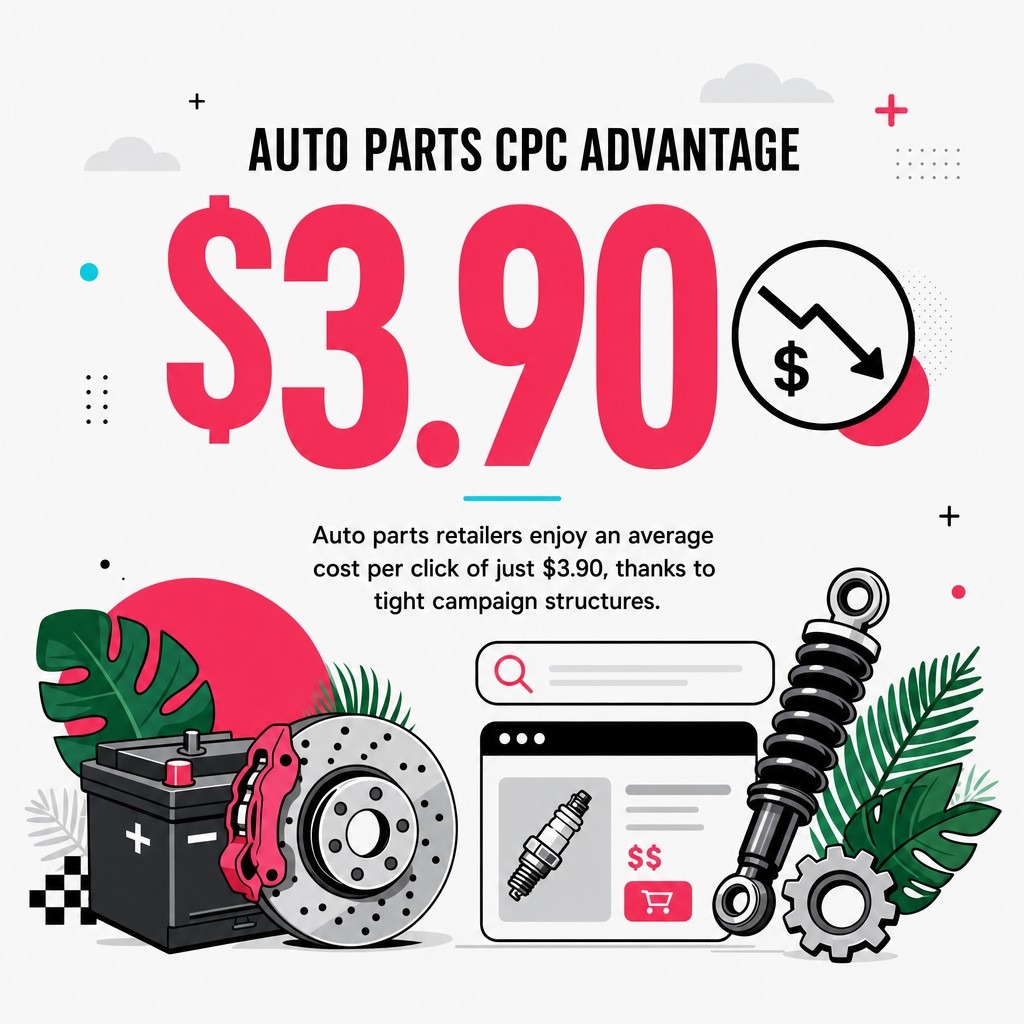
When auto parts retailers enjoy an average cost per click of just $3.90, tight campaign structures make that efficiency possible. Apply the same principle to marine parts.
Your most valuable searches include specific model numbers. "Yamaha F150 fuel pump" indicates a customer who knows exactly what they need. These searches deserve premium placement.
Create dedicated ad groups for your most popular engine models. If you sell significant volume of Yamaha F150 parts, build an entire ad group around F150-specific searches.
The ad copy can speak directly to F150 owners. "Genuine Yamaha F150 Parts - In Stock." This specificity increases click-through rates dramatically compared to generic "Yamaha parts" ads.
Landing pages for model-specific ad groups should filter products to show only compatible parts. An F150 owner doesn't want to wade through parts for F200 or F250 engines.
The conversion rate on model-specific campaigns typically runs 2-3x higher than generic category campaigns. The improved performance justifies higher cost-per-click investments.
Customers searching for exact OEM part numbers represent your highest-intent traffic. Someone typing "6P2-24410-00" knows precisely what they need. They're ready to buy.
Create dynamic search ad campaigns that target part number queries. Use your product feed to automatically generate ads for every part number in your catalog.
These campaigns typically show lower search volume but convert at exceptional rates. When the automotive repair, services, and parts category achieved an average conversion rate of 14.67%, part number searches often exceed even that strong benchmark.
The customers clicking these ads have already identified the exact part they need. They're comparing prices and availability across retailers. Your job is simply to appear in that consideration set.
Bid aggressively on part number searches. The return on ad spend justifies premium positioning because these clicks convert reliably.
Annual budget planning fails for marine parts because demand concentrates in six months. Spreading budget evenly across twelve months means under-investing during peak season and over-investing during winter.
Your budget allocation should follow actual search volume patterns. If 70% of annual marine parts searches happen between March and August, allocate 70% of your annual PPC budget to those months.
But don't go dark completely during off-season months. Maintaining some level of campaign activity preserves your Quality Scores and ad rank momentum.
Start ramping budgets in February, before peak season hits. This gives campaigns time to gather performance data and optimize before the rush of March demand arrives.
During March through August, run campaigns at maximum sustainable budget. This is when boat owners are actively maintaining and upgrading their vessels. Miss these months, and you've missed the year.
Prioritize fast-moving products during peak season. Your bestselling items should never run out of impression share during high-demand months. Use Target Impression Share bidding to maintain visibility on core products.
For high-margin specialty parts, switch to Target ROAS bidding during peak season. Let Google's algorithm find customers willing to pay premium prices for hard-to-find components.
September through February requires a different strategy. Search volume drops, but smart retailers use this period for strategic positioning.
Reduce daily budgets by 60-70% compared to peak season levels. Focus spending on evergreen products that sell year-round. Anodes, maintenance supplies, and repair parts maintain steadier demand than seasonal items.
Use off-season months to test new ad copy and landing page variations. Lower traffic volumes mean less risk when experimenting. Successful tests can be scaled when peak season returns.
Geographic targeting becomes more important during winter months. Southern states and coastal regions maintain higher search volumes than northern inland markets. Shift budget toward warmer climates where boating continues year-round.
Consider expanding into related categories during off-season. Boat owners research upgrades and plan projects during winter months even if they won't install parts until spring. Educational content and how-to guides can capture this research-phase traffic.
Beyond seasonal patterns, weather events create demand spikes. Early warm spells in March trigger urgent parts orders as boat owners rush to get vessels ready.
Set up weather-based automated rules in Google Ads. When temperatures exceed 60 degrees in major boating markets, automatically increase daily budgets by 25-30%.
Storm events create emergency repair demand. Hurricane season along the Atlantic and Gulf coasts generates urgent searches for replacement parts. Having campaigns ready to scale quickly captures this unplanned demand.
Monitor marine industry news sources for events that might spike demand. Boat shows, fishing tournaments, and holiday weekends all create temporary surges in parts searches.
Your landing pages determine whether clicks convert into sales. Marine parts landing pages need to answer one critical question immediately: "Will this part fit my boat?"
Most ecommerce landing page advice focuses on lifestyle imagery and benefit-driven copy. Marine parts customers want technical specifications and compatibility confirmation.
When landing pages that load in under three seconds demonstrate 32% higher conversion rates, speed matters. But content relevance matters even more for technical products.
Place compatibility information at the top of every product page. Before price, before add-to-cart buttons, answer the fit question.
Use a filterable compatibility table that shows every boat, engine, and model year combination the part fits. A customer should be able to Ctrl+F their specific model number and confirm compatibility in seconds.
For parts with universal fit, state that explicitly. "Fits all Yamaha 4-stroke outboards 2010-present" gives clear parameters.
Include both OEM part numbers and common aftermarket equivalents. A customer might know the OEM number but want aftermarket options. Showing cross-references builds confidence.
Marine parts buyers want detailed specifications. Dimensions, materials, included hardware, installation requirements. These details reduce uncertainty and prevent returns.
Create specification tables with consistent formatting across all products. Customers comparing multiple options can quickly evaluate differences when data appears in the same structure.
Include high-resolution images showing mounting points and connection interfaces. Many marine parts require specific hole patterns or connector types. Visual confirmation prevents incorrect purchases.
For complex products, provide installation difficulty ratings. "Basic Installation" versus "Professional Installation Recommended" sets appropriate expectations.
Roughly one-third or more of consumers cite social proof as an influence on their purchasing decisions. Marine parts customers especially value peer reviews because incorrect parts mean wasted time and money.

Display review counts prominently near pricing. Parts with 50+ reviews convert significantly better than products with only 5 reviews, even if average ratings are similar.
Highlight reviews that mention specific boat models. "Worked perfectly on my 2019 Yamaha F150" provides more value than "Great product."
Show real installation photos from customers when available. Seeing a part installed on an actual boat builds confidence more effectively than manufacturer stock photos.
Offer easy returns for incorrect orders. State your return policy clearly on product pages. The security of knowing they can return incompatible parts reduces purchase anxiety.
Standard ecommerce metrics don't tell the complete story for marine parts retailers. Average order value, profit margins, and customer lifetime value create unique benchmarks.
When average ecommerce return on advertising spend in 2025 stands at approximately 2.87:1, that benchmark may not apply to your marine parts business. Thin margins require different ROAS targets.
Focus on metrics that connect directly to profitability, not vanity metrics that look impressive but don't translate to sustainable growth.
Revenue-based ROAS misleads when products have different profit margins. A 4:1 ROAS on a product with 10% margins generates less profit than a 3:1 ROAS on a product with 25% margins.
Calculate ROAS using gross profit instead of revenue. If you spend $100 on ads and generate $400 in revenue with 15% margins, your gross profit is $60. Your actual ROAS is 0.6:1, not 4:1.
This metric reveals which campaigns actually drive profitable growth. Many "successful" campaigns become losers when analyzed through a profit lens.
Use gross profit ROAS as your primary bidding metric. Set up conversion value rules in Google Ads that pass profit data instead of revenue data. Let the algorithm optimize for real profitability.
Not all marine parts justify the same acquisition costs. High-margin specialty parts can support higher CPAs than commodity items.
Track CPA separately for different product tiers. Your target CPA for Yamaha OEM parts should differ from aftermarket alternatives because margins vary.
Expensive products like complete engine assemblies or advanced electronics justify higher acquisition costs because average order values are substantial. Smaller consumables need aggressive CPA targets because margins are thin.
Build separate campaign portfolios for different CPA tier products. Don't force all products into a single target CPA that compromises either high-value or low-value campaigns.
Marine parts customers return repeatedly. A boat owner buying a fuel filter today will need another filter next season. Someone replacing a propeller might upgrade electronics next month.
Calculate true customer lifetime value across multiple purchases. First-order ROAS might look marginal, but if customers return three times over two years, the initial acquisition cost becomes highly profitable.
Adjust target CPAs for first-time customers versus returning customers. You can afford to pay more to acquire new customers because their lifetime value extends beyond the first transaction.
Set up customer match campaigns targeting previous purchasers. These audiences convert at dramatically higher rates and justify premium bids.
Basic campaign structures get you competitive. Advanced tactics create sustainable advantages that competitors struggle to replicate.
The marine parts retailers winning on PPC use strategies that require more setup work but deliver significantly better long-term results.
Standard remarketing shows customers products they viewed previously. Dynamic remarketing for marine parts should go further by showing compatible products they haven't viewed yet.
If a customer viewed a fuel pump for a Yamaha F150, your remarketing should show other F150-compatible parts. Filters, impellers, anodes, spark plugs. Products that fit the same engine the customer owns.
This approach turns single-item browsers into multi-item buyers. When global average cart abandonment rate sits at 70.19% across all industries, remarketing helps recapture that lost revenue.
Build remarketing audiences based on product categories viewed. Engine parts viewers get shown related engine components. Electrical component viewers see compatible wiring and accessories.
West Marine is preparing to file for bankruptcy as of May 2026. Market disruptions create opportunities to capture displaced customers.
Run branded search campaigns targeting competitor names when major retailers face challenges. Customers searching for troubled retailers are actively looking for alternatives.
Your ad copy should position your business as the stable, reliable option. "Family-Owned Marine Parts Since 2005 - Fast Shipping" emphasizes continuity when customers worry about order fulfillment.
Be strategic about which competitors to target. Major retail chains with strong brand recognition cost more to conquest. Regional competitors with similar product selections offer better ROAS.
YouTube video advertising can effectively drive consideration among potential customers. Marine parts benefit from video because complex products need visual explanation.
Create short product installation videos showing your parts being installed on actual boats. A 60-second video demonstrating fuel pump replacement is more persuasive than any written product description.
Target YouTube ads to marine-related channels. Boating vlogs, fishing channels, and marine maintenance content attract your ideal customers. In-stream ads on these channels reach engaged audiences.
Use custom intent audiences based on marine-related searches. Someone who recently searched for "boat engine troubleshooting" is an ideal prospect for repair parts.
YouTube campaigns work best for building awareness and consideration, not direct response. Measure success through assisted conversions and view-through conversions, not last-click attribution.
Marine parts PPC profitability comes down to three fundamentals: precise targeting, accurate product data, and realistic margin expectations.
Your campaigns need to match how boat owners actually search. Brand-first, model-specific, part-number-focused. Generic category campaigns waste budget on low-intent traffic that doesn't convert.
Product feeds must balance technical accuracy with searchable terms. Titles that lead with brand and include OEM part numbers capture high-intent searches. Custom labels let you bid strategically based on margins and velocity.
When 81% of online shoppers expect a seamless transfer between devices throughout a buying journey, your landing pages need to answer the compatibility question instantly. Fitment tables above the fold convert browsers into buyers.
Seasonal budget management concentrates spending during peak months while maintaining year-round presence. Weather-based triggers let you scale quickly when demand spikes.
The metrics that matter are gross profit ROAS and category-specific CPAs. Revenue-based reporting hides unprofitable campaigns that look successful on the surface.
Start with one brand-specific campaign. Master the structure, prove the profitability, then expand to other manufacturers. Marine parts PPC works when you build campaigns around customer search behavior rather than internal product categories.
Check out our complete guide to marine and boating parts marketing for additional strategies beyond PPC. For tactical guidance on automotive parts PPC that applies directly to marine, see Google Ads strategies for parts sellers. And if you're struggling with product feed optimization, explore our product feed optimization guide for detailed technical implementation.