Social proof in the marine industry combines customer reviews, testimonials, user-generated content, and expert endorsements to build trust and drive boat sales.
When over 99% of consumers check online reviews when shopping, your marine business must showcase authentic experiences from real boat owners. Reviews reduce purchasing uncertainty for expensive marine equipment. They provide the credibility potential customers need before committing thousands of dollars to boats, motors, or marine accessories.
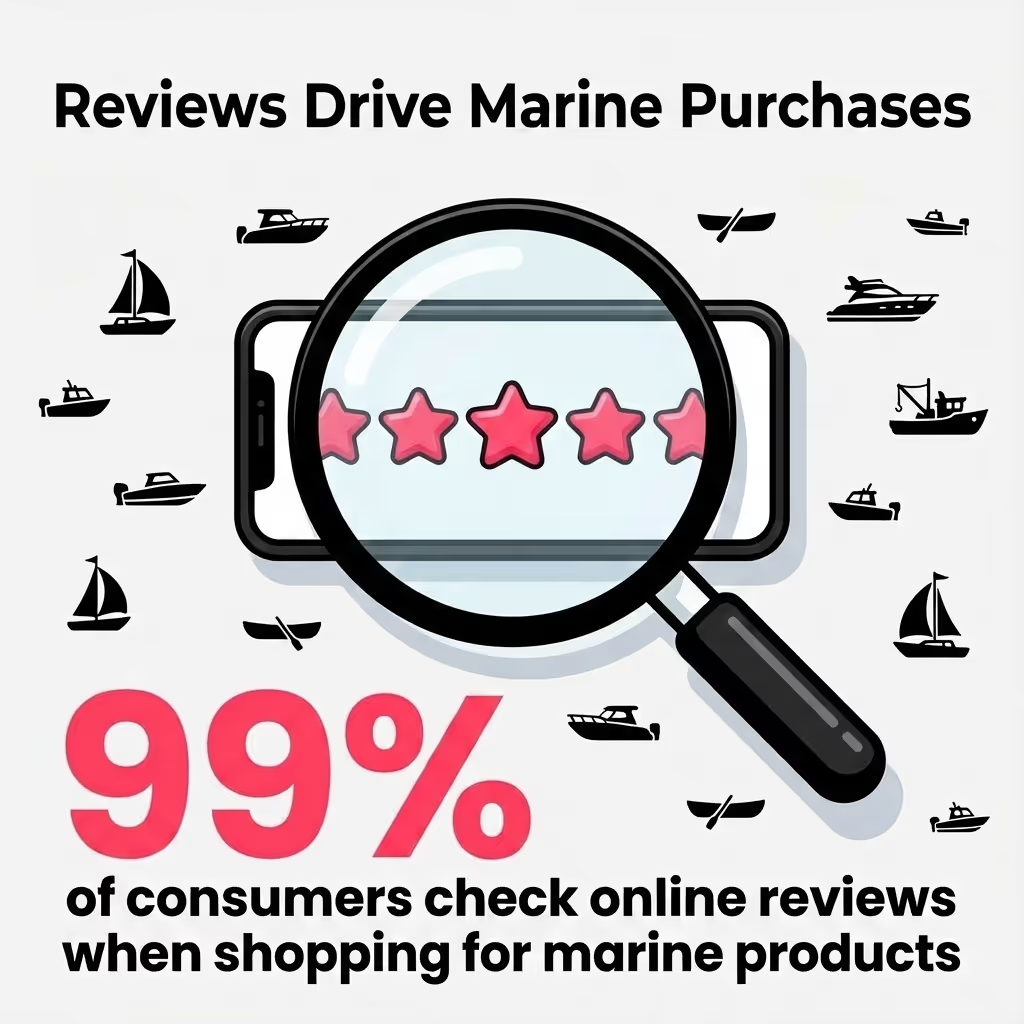
Over 99% of consumers check online reviews when shopping for marine products.
The marine industry faces unique challenges. Buyers don't impulse-purchase a $50,000 boat like they'd buy running shoes. They research, compare, and scrutinize every detail. They want proof the investment will deliver safety, reliability, and value.
That's where social proof becomes your secret weapon. Real boat owners sharing their experiences on product pages, social media platforms, and your website create authenticity money can't buy. When potential customers see photos of families enjoying their new pontoon boat or read testimonials about excellent customer service from your marina, trust builds naturally.
I've spent years optimizing ecommerce campaigns for specialized industries. The marine market reminds me of automotive aftermarket sales. Both involve high-consideration purchases where buyers demand proof before spending. Both require multiple touchpoints across social media, review platforms, and your own website before conversion happens.
This guide shows you how to collect, showcase, and leverage social proof to increase boat sales and build lasting credibility. You'll learn which types of social proof work best for marine businesses, how to automate review collection, and where to display testimonials for maximum conversion impact. We'll cover everything from customer reviews to influencer endorsements, with specific strategies for boat dealers, yacht brokers, and marine parts retailers.
Social proof represents the psychological phenomenon where people follow others' actions when making decisions. In marketing terms, it's the trust signals that validate your marine business through external voices.
Think about the last boat show you attended. You probably noticed crowds gathering around certain displays. That's social proof in action. When potential customers see others interested in a product, they perceive it as more valuable.
For marine businesses, social proof takes several forms. Customer reviews on your website show real experiences. Star ratings on Google Business Profile help searchers compare marinas. Photos of customers with their new boats create aspirational content. Video testimonials demonstrate actual product performance on the water.
Research indicates roughly one-third or more of consumers cite social proof as an influence on their purchasing decisions. In the marine industry, that percentage likely runs higher. Boat buyers scrutinize every detail before investing.
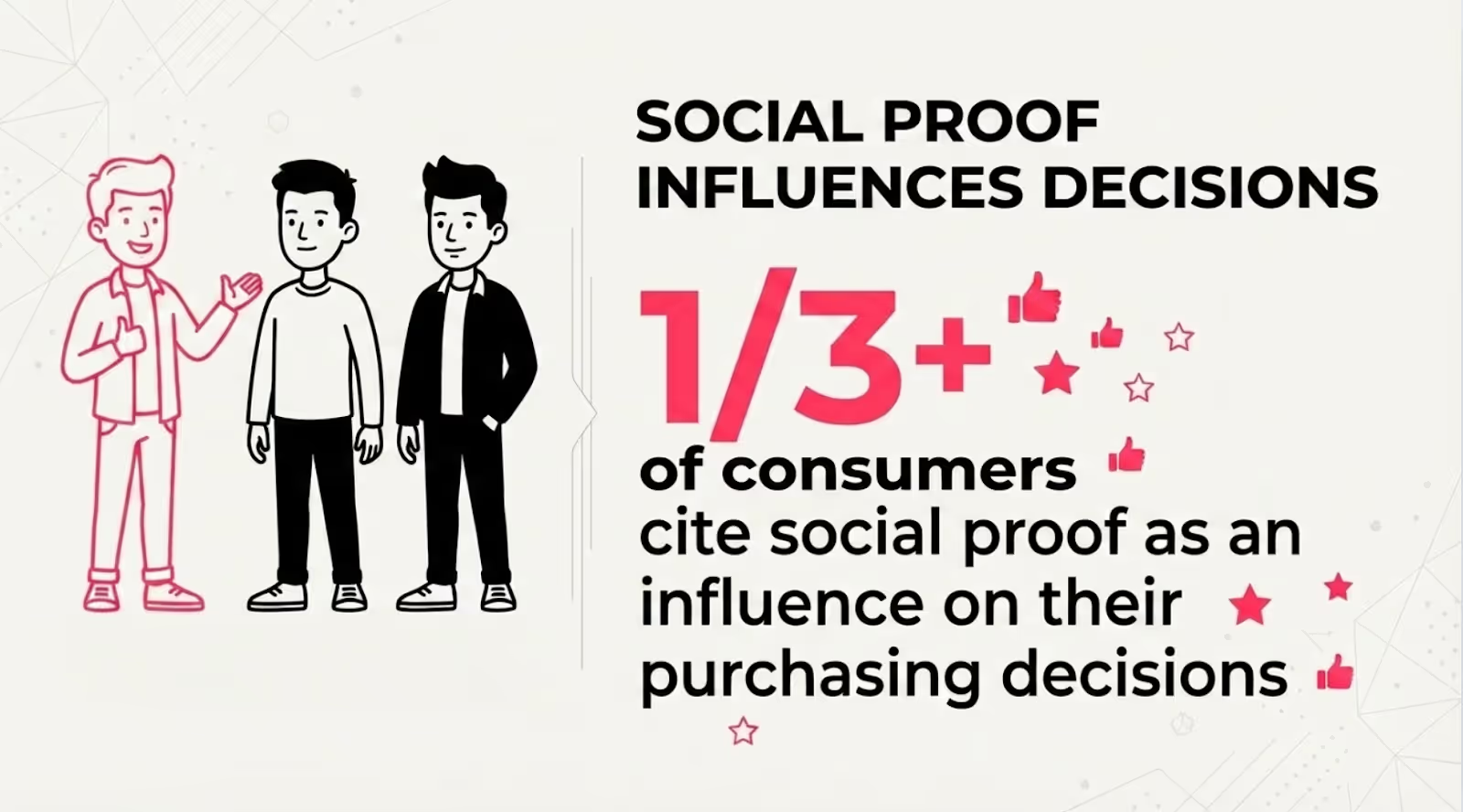
Roughly one-third or more of consumers say social proof influences their purchase decisions.
The marine purchasing decision involves multiple stakeholders. Spouses discuss budget. Kids want specific features. Safety concerns dominate conversations. Social proof addresses these varied concerns by showing how other families successfully navigated the same decision.
Marine purchases carry higher stakes than typical consumer products. A faulty boat part creates safety risks. Poor customer service leaves buyers stranded. Quality issues waste thousands of dollars.
Buyers enter the market with healthy skepticism. They've heard horror stories. They know friends who bought lemons. Your marketing claims sound like every other dealer's promises.
Social proof cuts through this skepticism. When buyers see consistent four-star ratings across 200 reviews, they trust the pattern. When they watch video testimonials from local boaters, they see themselves in those stories. When industry experts endorse your marine products, credibility transfers.
Studies show 74% of consumers trust brands more when they have positive reviews. This trust mechanism works through several psychological principles.
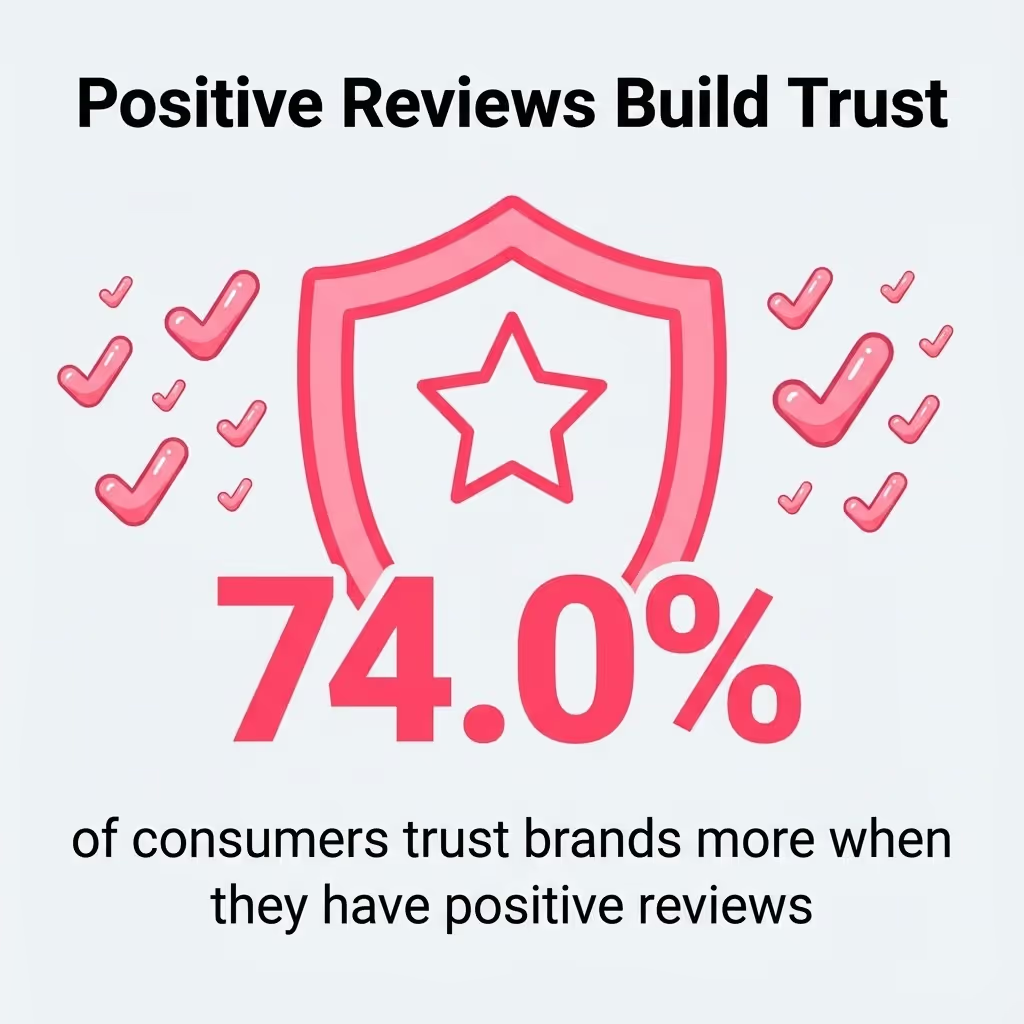
74% of consumers trust brands more when they have positive reviews.
First, social proof reduces perceived risk. Seeing others succeed with your product makes failure seem less likely. Second, it provides third-party validation your marketing can't deliver. Third, it creates community belonging. Buyers want to join the group of satisfied boat owners.
For marine businesses, this translates to shorter sales cycles and higher conversion rates. Potential customers arrive at your showroom already convinced. They've seen your reviews, read your testimonials, and watched your customer videos. The sale becomes a formality rather than a persuasion battle.
Not all social proof delivers equal impact. Different types serve different purposes in the marine buying journey. Understanding these distinctions helps you build a complete social proof strategy.
The most effective marine businesses combine multiple social proof types. They layer customer reviews with user-generated content, add expert endorsements, and showcase community engagement. This multi-channel approach addresses different buyer concerns at various decision stages.
Customer reviews form the foundation of marine social proof. These written testimonials appear on product pages, Google Business Profile, and third-party platforms. They provide specific details about performance, customer service, and value.
Star ratings offer quick visual trust signals. A 4.5-star average across 150 reviews immediately communicates quality. Potential customers scan these ratings before reading detailed reviews. They filter low-rated products from consideration instantly.
The power of reviews lies in specificity. Generic praise like "great boat" helps less than detailed feedback like "handled rough water beautifully during our Lake Michigan crossing." Marine buyers want concrete evidence about performance in conditions they'll face.
Research indicates around 82% of shoppers look for negative reviews. Smart marine businesses don't hide criticism. They respond professionally and demonstrate customer service quality through review responses.
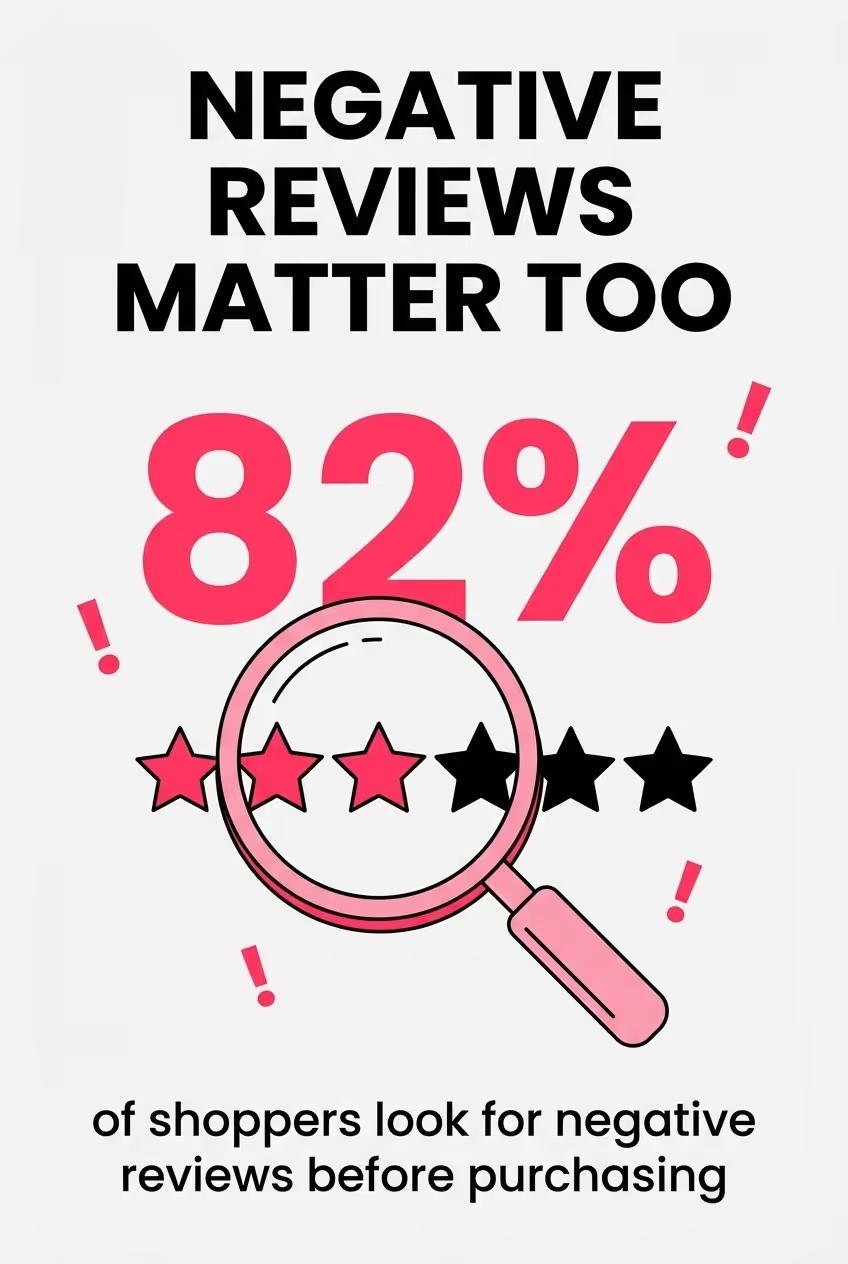
About 82% of shoppers actively look for negative reviews before purchasing.
Photos and videos from actual boat owners create powerful authenticity. These visual testimonials show products in real-world conditions rather than staged marketing shots.
A customer photo of their family fishing from your boat speaks louder than professional photography. It's relatable. Potential buyers envision their own families in that scene. The authenticity resonates because it's clearly not manufactured.
Video testimonials amplify this effect. Watching a boat owner enthusiastically describe their purchase experience creates emotional connection. Their genuine excitement transfers to viewers. Their specific details address common concerns.
Detailed, high-quality product reviews rank among the most influential types of user-generated content for purchase decisions. Encourage customers to share comprehensive experiences rather than brief comments.
Formal testimonials differ from spontaneous reviews. These curated statements highlight specific benefits and address common objections. Marine businesses often feature these prominently on homepages and category pages.
Case studies take testimonials deeper. They tell complete stories about customer challenges, your solution, and measurable results. For marine businesses, case studies might detail how your service department kept a customer's boat running through a season or how your sales team found the perfect yacht within budget.
The narrative structure of case studies engages readers emotionally. They follow the journey from problem to solution. They see themselves in the customer's situation. They imagine achieving similar success.
Expert endorsements leverage authority transfer. When respected marine publications review your boats or industry experts recommend your marina, their credibility enhances your brand.
Influencer marketing works similarly but targets specific communities. Consumers often trust smaller creators and niche experts more than traditional celebrities. A fishing influencer with 10,000 engaged followers might drive more boat sales than a general lifestyle influencer with millions.
Marine businesses should identify micro-influencers in specific niches. The bass fishing community differs from the sailing community. Target influencers whose audiences match your ideal customers.
Social media engagement creates visible community proof. High follower counts signal popularity. Active comment sections demonstrate customer satisfaction. Shared customer posts extend your reach organically.
Approximately 58% of U.S. shoppers have purchased products after finding them on social media. Your social media presence doesn't just build awareness. It directly influences purchasing decisions through visible social proof.
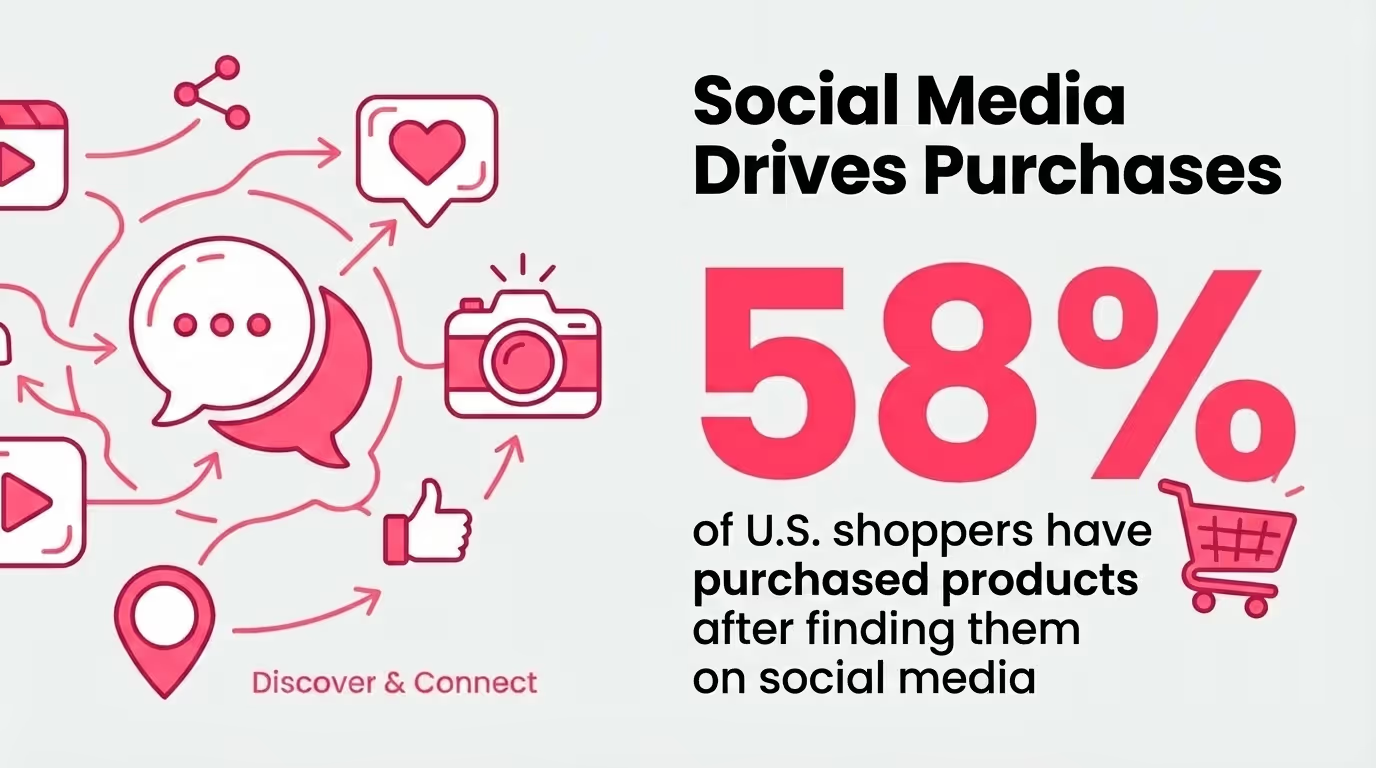
About 58% of U.S. shoppers have purchased after discovering products on social media.
User tags in Instagram posts, Facebook check-ins at your marina, and YouTube videos featuring your products all create social proof. They show active, engaged customers choosing your marine business. Potential buyers notice these signals consciously and subconsciously.
Customer reviews require systematic collection. They don't accumulate automatically. You need processes that encourage satisfied customers to share experiences while making review submission easy.
Many marine businesses assume happy customers will naturally leave reviews. This assumption costs them critical social proof. Most satisfied buyers never think to write reviews unless prompted.
Timing determines review quality and quantity. Request reviews when customer satisfaction peaks. For boat sales, this often occurs shortly after delivery when excitement runs high. For marine service, it happens after successful repairs or winterization.
Avoid requesting reviews too early. Customers need time to form opinions. A boat owner can't evaluate reliability after one weekend trip. A marina member can't assess service quality after one docking.
Create a review request calendar. For boat sales, request initial reviews at 30 days for delivery experience and again at 90 days for product performance. For ongoing services, request reviews quarterly or after significant interactions.
Review automation ensures consistency without sacrificing personalization. Email automation platforms can trigger review requests based on purchase dates or service completion.
Your review request emails should include several elements. Start with genuine gratitude for their business. Provide direct links to review platforms. Explain why reviews matter to your marine business. Make the process require minimal effort.
Multiple touchpoints increase response rates. Send an initial email request. Follow up with a text message reminder. Have sales staff mention reviews during follow-up calls. Each touchpoint should feel helpful rather than pushy.
Every extra step in the review process reduces completion rates. Streamline the path from request to published review.
Provide direct links to specific platforms rather than general instructions. Link to your Google Business Profile review page, your Facebook review section, and relevant third-party platforms. Mobile-optimize everything since many customers will respond from phones.
Consider incentivizing reviews appropriately. Don't pay for positive reviews, which violates platform policies and damages credibility. Instead, enter all reviewers into monthly drawings for marine accessories. The incentive rewards participation without buying specific ratings.
Organizations monitoring and responding to online feedback improve satisfaction significantly. Your review responses demonstrate customer service quality to potential buyers reading those reviews.
Thank customers for positive reviews. Address their specific comments to show genuine attention. Mention details they shared to personalize your response.
Handle negative reviews with grace and professionalism. Acknowledge concerns. Apologize for shortcomings. Offer solutions publicly and take detailed discussions private. Your response often matters more than the original complaint.
Potential customers reading reviews notice response patterns. Consistent, professional engagement signals strong customer service. Defensive or absent responses raise red flags about how you handle problems.
Visual content from real customers creates authenticity marketing photography can't match. These images and videos show products in genuine use conditions. They're relatable because they look like content potential customers might create themselves.
Many marine businesses overlook this powerful social proof form. They focus on professional photography while ignoring the authentic content customers generate daily. This oversight wastes valuable trust-building material.
Most boat owners already photograph their marine experiences. They share sunset cruises, fishing catches, and family outings. Your job involves channeling this existing behavior toward your marketing channels.
Create a branded hashtag for your marine business. Promote it during sales transactions, on receipts, and through signage. Encourage customers to tag your business in social media posts. Make it easy and rewarding to share their experiences.
Run photo contests that incentivize submission. "Best catch from our boats" or "most beautiful sunset from your yacht" contests generate substantial user-generated content. Offer marina credits or marine accessories as prizes.
Always secure permission before using customer content in marketing. Create simple release forms customers sign when submitting photos. Include permission requests in your photo contest terms.
When customers tag you in social media posts, ask permission to repost or use in marketing. Most customers feel honored by the request and readily agree. A simple direct message requesting permission protects you legally while maintaining relationships.
User-generated content shouldn't hide in your Instagram stories. Feature it prominently on product pages, homepage galleries, and email campaigns.
Create dedicated website sections for customer photos. Organize them by boat model, use case, or location. Potential buyers browsing your pontoon boats want to see real families using those boats in varied conditions.
Include user-generated content in email newsletters. Share customer stories and photos monthly. This content performs well because subscribers recognize it as authentic rather than sales-focused.
Print customer photos in showroom displays. Nothing builds trust like walking into a dealership and seeing dozens of happy customer faces surrounding product displays.
Video testimonials provide the most compelling user-generated content. They're harder to fake than text reviews. Viewers see and hear genuine emotion. Details come through naturally in conversation.
Make video testimonials easy to create. Offer to record them during boat pickup. Provide simple smartphone filming guides for customers who prefer recording at home. Keep the process low-pressure and informal.
The best video testimonials follow simple structures. Customers describe their needs, explain why they chose your marine business, detail their experience, and share results. These elements address key concerns potential buyers have.
Feature video testimonials on high-traffic pages. Place them on your homepage, category pages, and dedicated testimonial sections. Embed them in product pages where relevant. User-generated content including videos builds trust more effectively than branded content.
While spontaneous reviews provide authenticity, curated testimonials let you highlight specific benefits and address common objections. Case studies take this further by telling complete customer success stories.
These structured social proof formats work best when integrated throughout your website rather than isolated on a single testimonials page. Potential customers encountering testimonials at key decision points experience reduced purchasing friction.
The best testimonials come from customers whose experiences address common buyer concerns. For boat dealerships, this might include first-time boat buyers, upgraders from smaller boats, or customers who switched from competitors.
Look for customers with articulate, specific feedback. General praise like "great service" helps less than detailed statements like "the service team diagnosed our engine issue in 20 minutes and had us back on the water that afternoon."
Diversity matters in testimonial collection. Feature various customer types, boat uses, and demographics. Fishing enthusiasts want to see testimonials from other anglers. Families want feedback from other families. Sailing purists want sailor perspectives.
Case studies follow a problem-solution-results framework. They tell stories potential customers relate to while demonstrating your marine business's value.
Start with customer background and challenges. A case study might open with: "The Johnson family had outgrown their 18-foot bowrider but worried about affording the step up to a 24-foot cabin cruiser."
Detail your solution approach. Explain how your sales team addressed their concerns, financing options you provided, or creative trade-in arrangements. This section showcases your problem-solving abilities.
Conclude with measurable results. "The Johnsons now enjoy weekend getaways with their expanded family, and the monthly payment came in $200 under their budget through our seasonal financing program."
Testimonials placed strategically throughout your website provide social proof at critical decision moments. Don't relegate them to a single page visitors might never find.
Place testimonials on product pages matching customer experiences. If a testimonial praises a specific boat model's fishing capabilities, feature it prominently on that model's page.
Include testimonials near conversion points. Add them above "Schedule Test Drive" buttons or beside financing application forms. Social proof at these moments reduces hesitation.
Homepage testimonials establish immediate credibility. Feature 3-4 strong testimonials prominently. Rotate them regularly to showcase various customer types and benefits.
Expert endorsements and influencer partnerships provide borrowed credibility. When respected voices in the marine community recommend your business, their authority transfers to your brand.
The marine industry offers numerous endorsement opportunities. Industry publications review boats. Fishing guides prefer specific equipment. Sailing instructors recommend particular marinas. Each endorsement reaches targeted audiences with high purchase intent.
Industry experts include marine journalists, boat testing professionals, and recognized authorities in specific boating categories. Their endorsements carry significant weight because audiences trust their expertise.
Approach experts strategically. Research which publications and professionals cover your marine category. Study their content to understand their perspective and audience. Craft personalized outreach explaining why your products merit their attention.
Provide experts with exceptional experiences. Offer product demonstrations, facility tours, or exclusive access. Let them form genuine opinions rather than pressuring for positive coverage. Authentic endorsements matter more than purchased praise.
When you receive positive expert coverage, leverage it extensively. Feature reviews on product pages. Quote experts in marketing materials. Share their content across social media. Expert endorsements deserve prominent placement because they significantly influence boat sales.
Marine influencers range from professional fishing guides with large followings to weekend boaters with engaged niche audiences. The key lies in audience alignment rather than follower counts.
Social proof is amplified in close-knit communities. A micro-influencer deeply embedded in the bass fishing community drives more relevant engagement than a general lifestyle influencer with broader reach.
Identify influencers whose audiences match your customer demographics. Use social media search to find creators in your niche. Examine their engagement rates, not just follower counts. Look for authentic interaction with their audience.
Structure mutually beneficial partnerships. Provide influencers with products, services, or experiences they'll genuinely value. Allow creative freedom in how they share with their audience. Authentic influencer content performs better than scripted promotions.
One-off influencer posts provide limited value. Long-term ambassador relationships create sustained social proof and deeper audience connections.
Select ambassadors who align with your brand values and demonstrate genuine enthusiasm for your marine products. Their authentic advocacy resonates more powerfully than transactional promotion.
Support ambassadors with exclusive access, early product releases, or special pricing. Treat them as partners rather than vendors. The strongest ambassador relationships feel collaborative rather than commercial.
Feature ambassador content prominently. Create dedicated sections on your website showcasing ambassador stories. Share their content across your social media channels. This amplification benefits both parties while providing substantial social proof.
Social media platforms serve dual purposes for marine businesses. They generate awareness while simultaneously building trust through visible social proof. Your social media presence itself becomes a trust signal.
Potential customers evaluate your social media before purchasing. They examine your follower count, engagement rates, and customer interactions. They read comments on your posts. They notice how you handle questions and complaints. Every interaction contributes to their trust assessment.
Active, engaged social media communities signal thriving businesses with satisfied customers. When potential buyers see vibrant comment sections and regular customer posts, they perceive a trustworthy brand.
Encourage customer interaction through strategic content. Ask questions that prompt responses. "Where was your favorite boating destination this season?" generates more engagement than "Check out our new inventory."
Share customer content regularly. Repost customer photos, celebrate their fishing catches, and highlight their boating adventures. This practice shows appreciation while encouraging others to share. Social media community building creates ongoing social proof.
Respond to every comment and message promptly. Public responsiveness demonstrates customer service quality. Potential customers watching these interactions form opinions about how you'd treat them.
Transform your social media feed into a continuous stream of social proof. Balance promotional content with customer stories, user-generated content, and testimonial highlights.
Create recurring content series featuring customers. "Customer Spotlight Saturdays" or "Testimonial Tuesdays" provide structure while ensuring regular social proof content. These series become anticipated content customers enjoy.
Share behind-the-scenes content showing real operations. Photos of your service team working, videos of boat deliveries, or stories about your staff create authenticity. This transparency builds trust by humanizing your marine business.
Paid social media advertising amplifies your social proof to targeted audiences. Rather than generic product promotion, feature customer testimonials, review highlights, and user-generated content in ads.
Create video ad campaigns using customer testimonials. These perform exceptionally well because they combine paid reach with authentic social proof. Viewers respond more positively to real customer stories than polished brand messages.
Use social media platform features that highlight reviews. Facebook allows review display in local business ads. Instagram Shopping features can showcase review ratings. These platform-native social proof elements enhance ad performance.
Testing social media engagement strategies helps identify which social proof formats resonate with your specific marine market.
Your website serves as the central hub for all social proof elements. While reviews appear on third-party platforms and customer content lives on social media, your website consolidates everything into a cohesive trust-building experience.
Strategic social proof placement throughout your website reduces friction at every stage of the buyer journey. Visitors encounter relevant trust signals exactly when they need reassurance.
Your homepage establishes first impressions. Social proof here builds immediate credibility that carries visitors deeper into your site.
Feature overall star ratings prominently. Display total review counts from major platforms. "4.8 stars from 347 reviews" immediately signals quality.
Include 2-3 powerful testimonials above the fold. Select quotes addressing common concerns or highlighting key differentiators. Keep them concise for quick scanning.
Add trust badges and certifications. Industry association memberships, manufacturer certifications, and awards all provide visual credibility markers. Group these together for impact.
Product pages represent critical decision points. Social proof here directly influences purchasing decisions and boat sales.
Display product-specific reviews prominently. Allow filtering by star rating and sorting by recency or helpfulness. Make reviews easy to read and search.
Include user-generated photos in product galleries. Mix professional photography with customer images showing real-world use. This combination provides both aspirational and relatable visuals.
Add "customers who bought this also viewed" sections. This social proof form guides discovery while demonstrating popularity. Marine buyers often need multiple products, making cross-selling social proof particularly effective.
Feature model-specific testimonials near purchase buttons. A strong testimonial at the conversion point provides final reassurance hesitant buyers need.
While social proof should appear throughout your site, dedicated pages allow deeper exploration. Create robust testimonial pages, review aggregation sections, and customer gallery pages.
Organize testimonials by customer type, boat category, or use case. This organization helps visitors find relevant experiences quickly. Filtering options enhance usability for specific interest areas.
Aggregate reviews from multiple platforms on a single page. Rather than forcing visitors to check Google, Facebook, and other platforms separately, compile everything together. Display source attribution to maintain credibility.
Create visual customer galleries organized by boat model or activity type. These galleries serve as inspiration while demonstrating product popularity and versatility.
Social proof investments require measurement to justify resources and optimize strategies. Track specific metrics that connect social proof efforts to boat sales and revenue.
Many marine businesses collect social proof without measuring its impact. They accumulate reviews and testimonials but never quantify the conversion influence. This oversight makes optimization impossible and hides significant value.
Start with foundational metrics. Track total review count across all platforms. Monitor average star ratings. Measure review acquisition rate over time.
Examine conversion rate differences between product pages with robust social proof versus those lacking reviews. This comparison quantifies social proof's direct impact on boat sales.
Monitor time on site and page depth for visitors who engage with social proof elements. Users reading reviews and watching testimonials demonstrate higher purchase intent. Track how many of these engaged visitors convert.
Measure social media engagement rates on posts featuring customer content versus brand-created content. User-generated content typically generates higher engagement, validating its effectiveness.
Connect social proof to revenue through attribution modeling. When customers mention reviews in purchase conversations, note these influences in your CRM. Track which social proof touchpoints contributed to each sale.
Survey customers about decision influences. Post-purchase surveys asking "what factors most influenced your decision?" reveal social proof's importance. Many buyers cite reviews and testimonials as primary influences.
Compare average order values between customers who engage with social proof and those who don't. Engaged buyers often spend more because trust enables upselling.
Use performance data to refine your social proof strategy. Double down on formats driving the strongest results. Eliminate efforts showing minimal impact.
Test different testimonial placements. Try various review display formats. Experiment with user-generated content integration. Measure each variation's impact on conversion rates and boat sales.
Social proof advertising strategies become more effective when optimized based on marine industry performance data.
Understanding social proof principles matters less than implementing systematic collection and display strategies. Your action plan should address immediate quick wins while building long-term social proof assets.
Start with foundational elements before pursuing advanced strategies. Master review collection before launching influencer campaigns. Perfect testimonial display before creating elaborate case studies. Progressive implementation prevents overwhelm while ensuring solid fundamentals.
Week one focuses on review collection infrastructure. Set up automated review request emails triggered by purchase completion. Create direct links to your Google Business Profile review page. Draft personalized review request templates.
Week two addresses existing customer outreach. Email recent customers requesting reviews. Personally contact satisfied customers you remember. Aim for 20 new reviews across platforms.
Week three integrates existing social proof into your website. Add review widgets to product pages. Feature your best testimonials on the homepage. Create a customer gallery page for existing photos.
Week four launches ongoing systems. Implement permanent review automation. Create social media content calendars featuring customer content. Establish monthly social proof collection goals.
With foundations established, expand into sophisticated social proof techniques. Begin formal case study development. Identify ideal customers and conduct detailed interviews. Write three comprehensive case studies showcasing different customer types.
Launch influencer outreach. Research marine influencers in your market. Develop partnership proposals. Start conversations with 10 potential ambassadors.
Implement user-generated content campaigns. Create branded hashtags. Launch photo contests. Develop incentive programs encouraging customer content creation.
Optimize social proof placement based on early performance data. Test different configurations. Measure impact on conversion rates and boat sales.
Sustained social proof development builds compounding advantages. Your review count grows continuously. Your user-generated content library expands. Your influencer relationships deepen.
Establish quarterly review goals. Aim for steady growth rather than sporadic bursts. Target specific review counts on key platforms. Monitor competitive review volumes and stay ahead.
Develop systematic case study creation. Complete one detailed case study monthly. Cover various customer types, product categories, and use cases. Build a library addressing diverse buyer concerns.
Expand influencer programs. Convert successful trial partnerships into long-term ambassador relationships. Continuously identify new influencers as your program matures.
Building a boat parts blog complements social proof by providing content that attracts potential customers who then encounter your reviews and testimonials.
Review and refine strategies quarterly. Analyze performance data. Identify top-performing social proof formats. Eliminate low-impact activities. Invest more resources in proven strategies.
Social proof transforms marine marketing from one-way promotion into community-driven persuasion. Your satisfied customers become your most effective salespeople. Their authentic experiences resonate with potential buyers facing similar decisions.
The marine industry's high-consideration purchases make social proof particularly powerful. Boat buyers need reassurance before committing significant money. Reviews reduce perceived risk. Testimonials demonstrate value. User-generated content creates emotional connection. Expert endorsements provide validation.
Start building your social proof foundation today. Send review requests to recent customers. Feature existing testimonials prominently. Share customer photos on social media. Each small action compounds into substantial trust-building momentum.
Remember that social proof collection never ends. Make it a permanent part of your marine business operations. Embed review requests into standard processes. Continuously gather testimonials. Regularly collect user-generated content. Maintain ongoing influencer relationships.
Your competitors collect social proof or they don't. Those who systematically build trust through customer voices will dominate boat sales. Those who rely solely on traditional marketing will struggle against accumulated social proof advantages.
The customers you've already served represent untapped marketing power. Give them opportunities to share experiences. Make it easy to leave reviews. Encourage content creation. Showcase their stories prominently. Their voices will sell boats more effectively than any marketing campaign.
Explore more marine marketing strategies that complement your social proof efforts and drive sustained boat sales growth.